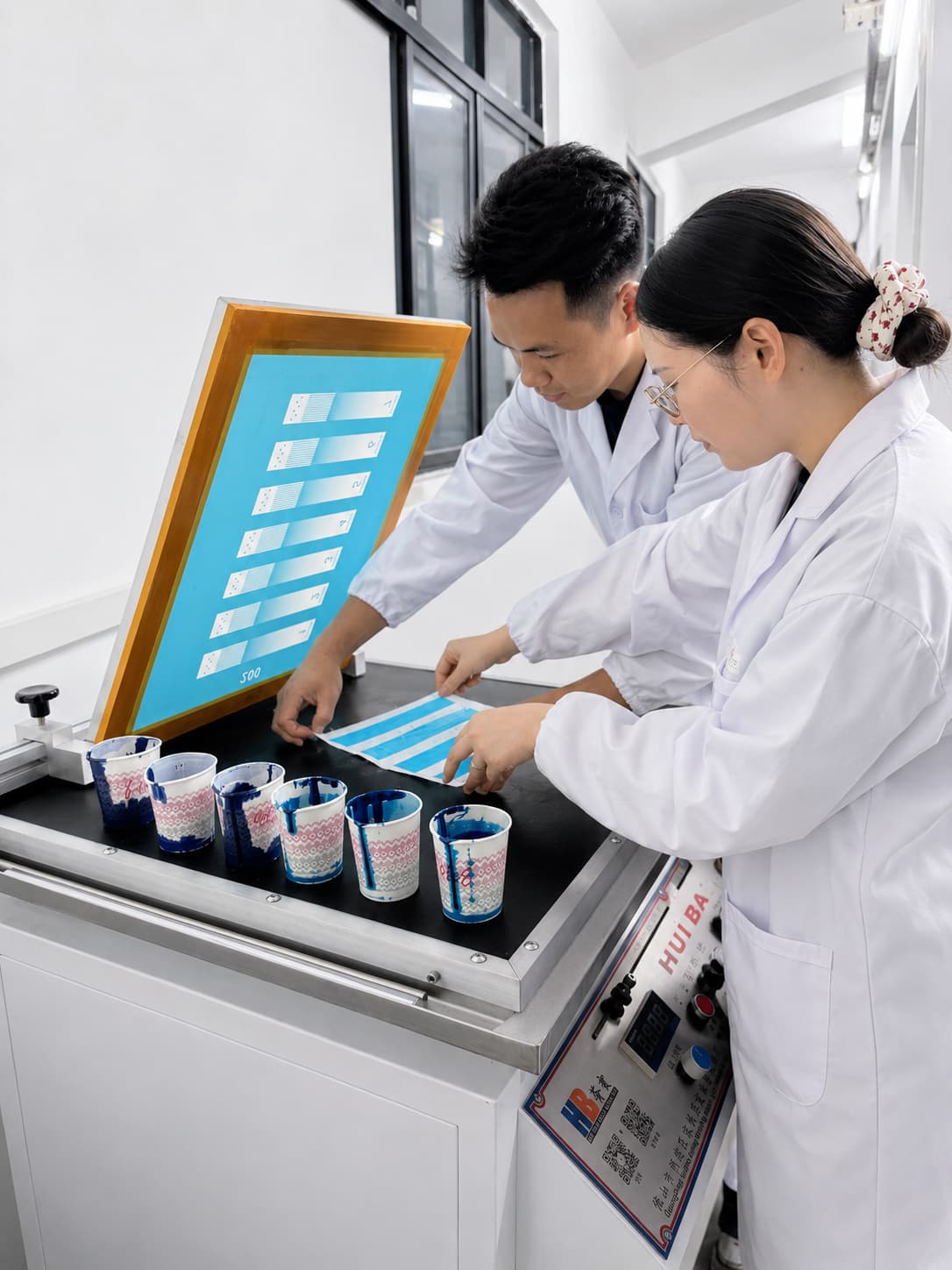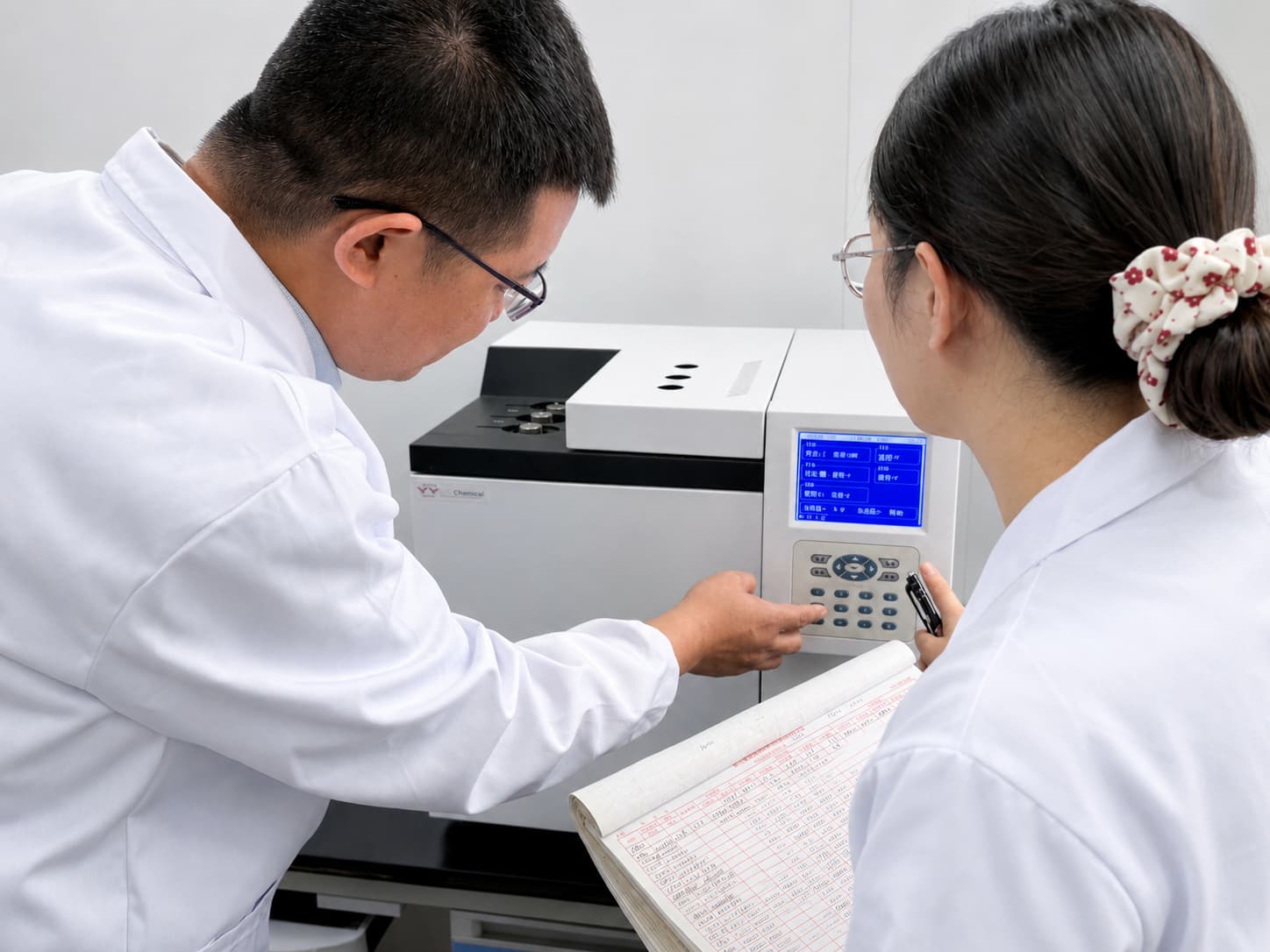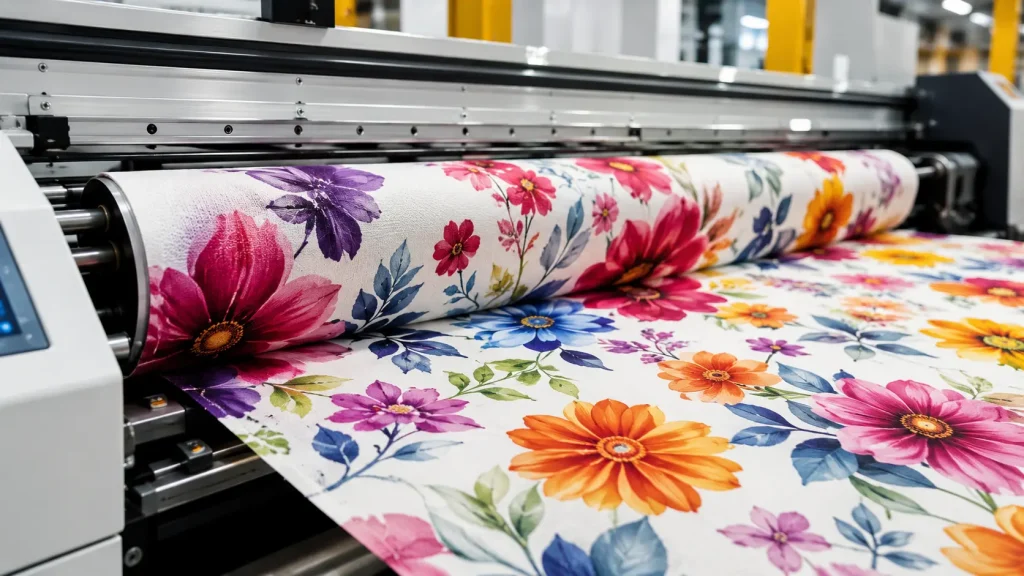
Sodium alginate can be evaluated in selected disperse-printing formulations for polyester; it is not ruled out merely by the fibre name. Its established reactive-printing use does not prove that the same grade or recipe will suit polyester. Identify the dye system, printing route and fixation process, then compare complete-paste handling and the finished textile against an approved reference.
| Fiber and color route | Role of sodium alginate | Selection rule |
|---|---|---|
| Cotton or viscose with reactive dyes | Established printing-paste thickener route | Confirm viscosity method, filtration, dye/alkali compatibility, print definition and wash-off. |
| Polyester with disperse dyes | Usually not the preferred default | Evaluate a disperse-printing thickener or CMS/synthetic route in the complete paste and heat-fixation process. |
| Cotton-polyester blend | Depends on whether one or two dye classes are used | Separate the cellulosic and polyester requirements; do not assume one thickener will optimize both stages. |
| Pigment printing on polyester or blends | Dye-fiber reaction is not the controlling mechanism | Select a binder-compatible rheology system and test handle, crocking, curing and print definition. |
Bu Soru Neden Ortaya Çıkıyor?
Reaktif Baskıda Sodyum Aljinatın İtibarı
Alginate’s use in reactive printing can lead buyers to consider it for another fibre or dye route. Treat that history as a reason to investigate, not as proof of transferability. Grade, formulation and processing evidence remain necessary.
Polyester’e Uygulanamayan Varsayım
Reactive printing and disperse printing require different dye–fibre and processing conditions. Some thickener functions, such as controlling paste flow and deposition, remain relevant across routes, while chemical compatibility and removal must be checked within each formulation.
Polyester Neden Farklı Bir Boyama Yaklaşımı Gerektirir?
Dağınık Boyalar ve Polyester Üzerinde Sabitlenme Şekli
Polyester, reaktif boyamada kullanılan kovalent bağlanma mekanizması için uygun reaktif hidroksil grupları içermeyen sentetik bir elyaftır. Polyester, dispers boyalar kullanılarak renklendirilir — bunlar, baskı macununda ince parçacıklar halinde dağılmış (çözünmemiş) olan, suda çözünmeyen küçük boya molekülleridir ve yüksek sıcaklıkta sabitleme işlemi sırasında polyester elyaf yapısına yayılırlar.
Select fixation conditions from the actual disperse dye system, fabric and equipment. Record the fabric thermal history and residence time rather than copying a generic steaming or dry-heat temperature. A set point from a different machine does not demonstrate equivalent fixation.
Reaktif Boya Kimyası Neden Polyesterde Uygulanamaz?
The reactive-dye compatibility argument alone does not select a polyester thickener. For disperse printing, evaluate dye-dispersion compatibility, paste deposition, migration during drying or fixation, removal and finished fastness. Failure at one stage should not be attributed to the polymer name without comparison evidence.
When Sodium Alginate Needs a Disperse-Printing Trial
Useful Rheology Does Not Guarantee Fixation
FAO’s technical chapter describes selected alginate-paste approaches for disperse dyes on synthetic fibres. That establishes a reason to test, not a guarantee for any FSX grade. Compare the candidate with the current paste under a defined preparation, deposition, fixation and wash-off method.
Pratik Macunla İlgili Performans Sorunları
Separate wet-paste stability before printing from the behavior of a dried printed layer during fixation. Changes in stored paste viscosity do not alone establish what happens to print definition after drying and heat exposure. Measure these stages separately and retain an approved comparison.
Confirm the complete disperse formulation’s pH, water quality, salts and auxiliaries with the dye and thickener suppliers. Test compatibility after the real addition sequence; do not assume that a reactive stock paste can be reused unchanged or that every disperse formulation has one identical pH requirement.
Sodyum Aljinatın Polyesterde Hâlâ Rol Oynadığı Alanlar
Keep direct disperse printing, digital direct printing and sublimation transfer separate. A polymer evaluated in a textile pretreatment or printing paste is not automatically suitable for the printhead ink. For transfer printing, also distinguish paper treatment from fabric treatment before discussing any alginate application.
Polyester Üzerine Dispers Boya Baskısında Hangi Kıvam Artırıcılar Kullanılır?
Disperse Baskı için Sentetik Kıvam Artırıcılar
Start from a commercial grade recommended for the particular disperse-printing process. Modified polysaccharide, compound and synthetic routes may be candidates depending on their declared application and test result. A broad chemical-family label is not sufficient evidence of suitability.
The current FSX CMS product range lists a disperse-printing route. Confirm the exact grade document and process scope before arranging a comparison. This product-page classification is not a substitute for polyester trials or a declaration that all CMS products have one composition.
Validate the Complete Process, Not a Thermal-Stability Label
A grade described as thermally stable still requires evaluation of print sharpness, color, removal and fastness through the chosen fixation route. Do not assume that every synthetic thickener performs better than every polysaccharide, or that a wet-paste viscosity result predicts the dried print’s performance.
A Four-Gate Trial for Polyester Thickener Selection
This is a suggested comparison plan. Start with the current approved paste, the same polyester fabric and dye system, and a declared candidate dose. Any tuned recipe is a separate trial, not an unexplained change to the reference.
| Gate | Compare under matched conditions | Decision |
|---|---|---|
| Prepare and hold | Hydration, filtration, full-paste flow and the required holding period | Investigate preparation and compatibility before printing a problematic paste. |
| Print and deposit | Screen transfer, deposited amount, edge definition and running behavior | Resolve deposition differences before interpreting shade as a fixation change. |
| Dry and fix | Actual heat history, dwell and image change at the defined stages | Confirm that the process window remains practical on the intended equipment. |
| Wash and release | Required shade, fastness, residual paste and fabric hand | Approve only the grade–recipe–fabric–process combination tested. |
Pamuk-Polyester Karışımları Üzerine Baskı
İki Aşamalı Baskı Sorunu
First define the required effect on each fibre in a cotton–polyester blend. A dual reactive/disperse route and a pigment route raise different questions; neither the fibre percentages nor an alginate label determines a universal recipe. Document the intended colour coverage and process stages before selecting the thickener.
Karışımlı Baskı için Pratik Yaklaşımlar
Üretiminizde pamuk-polyester karışımları kullanılıyorsa ve şu anda tek bir kombine pasta sistemi kullanıyorsanız, her iki elyaf bileşeninde de renk verimi ve haslık değerlerinin gereksinimlerinizi karşılayıp karşılamadığını değerlendirin. Polyester bileşeni, pamuk bileşenine kıyasla daha zayıf renk derinliği veya haslık gösteriyorsa, koyulaştırıcı seçimi de dahil olmak üzere kombine pasta formülasyonu, dispers boyanın performansını sınırlıyor olabilir.
If a combined or staged process is proposed, compare both fibre components through the complete fixation and post-treatment route. Seek a formulation-specific review before changing sequence or chemistry; this article does not rank one-stage and two-stage printing universally.
Lif ve Boyama Sisteminiz İçin Doğru Kıvamlaştırıcıyı Nasıl Belirleyebilirsiniz?
Herhangi bir baskı uygulaması için kıvam arttırıcı seçimini kesinleştirmeden önce aşağıdakileri doğrulayın:
- Fabric and intended effect: identify fibre composition, construction and required coverage.
- Dye or ink system: distinguish reactive, disperse and pigment chemistry.
- Product location: identify printing paste, textile pretreatment, paper treatment or another function.
- Grade declaration: check the current TDS and ask whether the exact candidate is recommended for this route.
- Approval evidence: require the complete printing and post-treatment comparison.
Sık Sorulan Sorular
Can sodium alginate be used for disperse printing on polyester?
It can be a candidate in selected formulations, but no general approval follows from the name. Confirm grade compatibility, filtration, deposition, fixation and wash-off against the current process.
Why does sodium alginate work well in reactive printing but not automatically in polyester printing?
Reactive printing on cellulosic fibers and disperse printing on polyester use different dye chemistries and fixation conditions. A thickener successful in one route does not automatically provide the rheology, stability or removal behavior required in the other.
What thickener should be tested for polyester disperse printing?
Start with a grade designed for disperse printing, such as an appropriate CMS or synthetic thickener route. Match the recommendation to the dye system, auxiliaries, machine, fixation method and fabric.
What about cotton-polyester blends?
First determine whether the mill uses one color class, two dye classes or separate process stages. The cellulosic and polyester components may require different chemistry and testing.
Which tests should be completed before changing the thickener?
Compare hydration, complete-paste viscosity, multi-speed flow, filtration, storage stability, screen or machine transfer, print definition, color yield, fixation, wash-off and fabric handle.
FSX Chemical, Elyaf Türüne Uygun Tedarik Sürecini Nasıl Destekliyor?
FSX publishes sodyum aljinat ve CMS thickener product routes. For polyester disperse printing, begin with the declared application of the exact candidate and your dye, fabric and fixation conditions. Product listings alone do not establish approval in your mill.
Use sample matching to provide the fabric, dye or ink route and current thickener or TDS. A useful next step is a defined comparison rather than an assumption that either alginate or a synthetic route must win.
Sonraki adımlar:
- TDS Talep Et — Dikkate aldığınız herhangi bir sodyum aljinat veya CMC sınıfı için amaçlanan elyaf türünü ve boya sınıfını teyit edin
- Teknik Ekibimizle İletişime Geçin — hangi ürünlerimizin sizin özel elyaf ve boyama sisteminize uygun olduğu konusunda rehberlik için
- Blend Baskı Hakkında Bilgi Alın — Pamuk-polyester karışımları için formülasyon yapıyorsanız, çift boya sınıfındaki selülozik bileşen konusunda size tavsiyelerde bulunabiliriz yaklaşım📧 E-posta: Service@fsxchemical.com