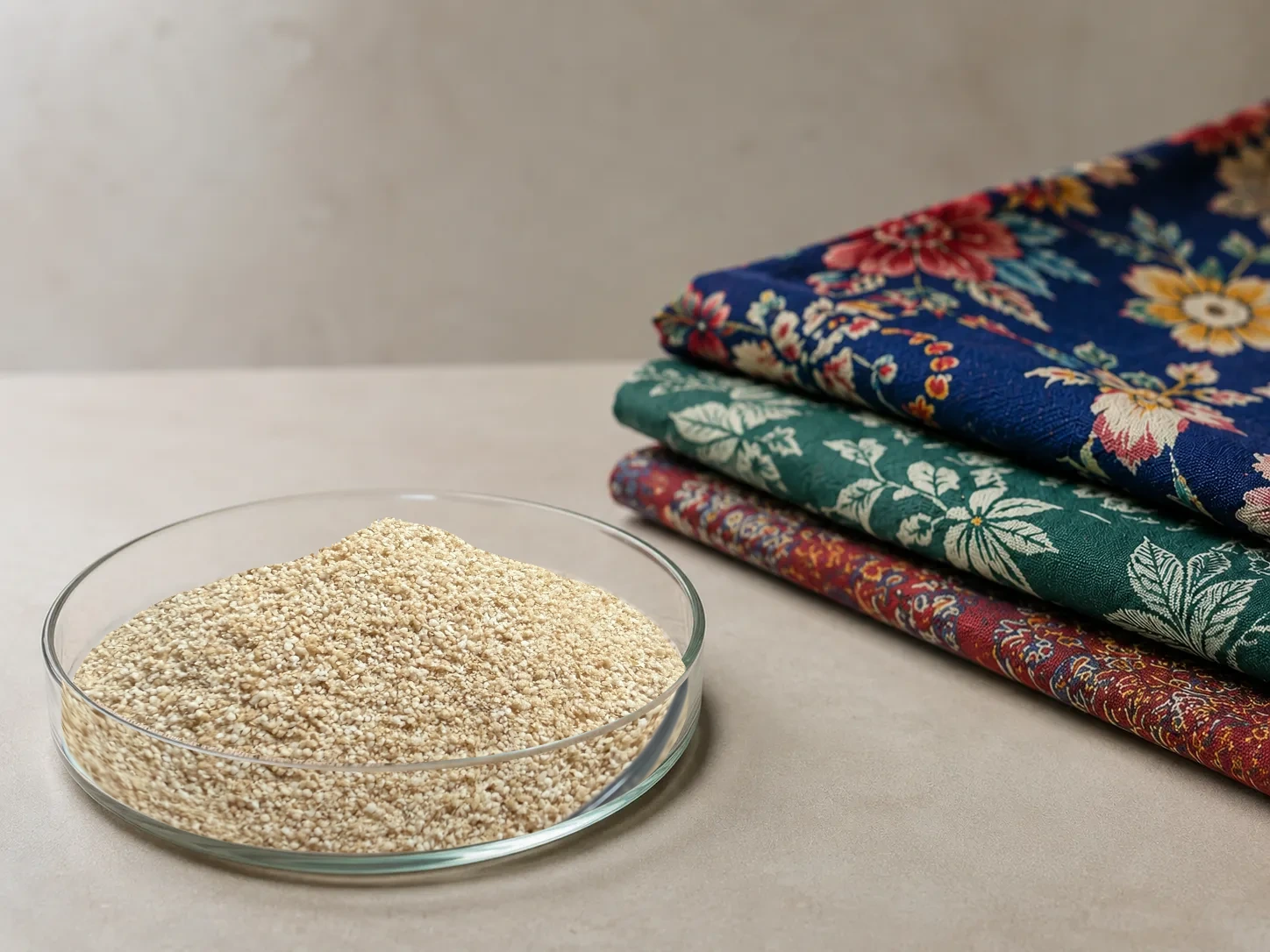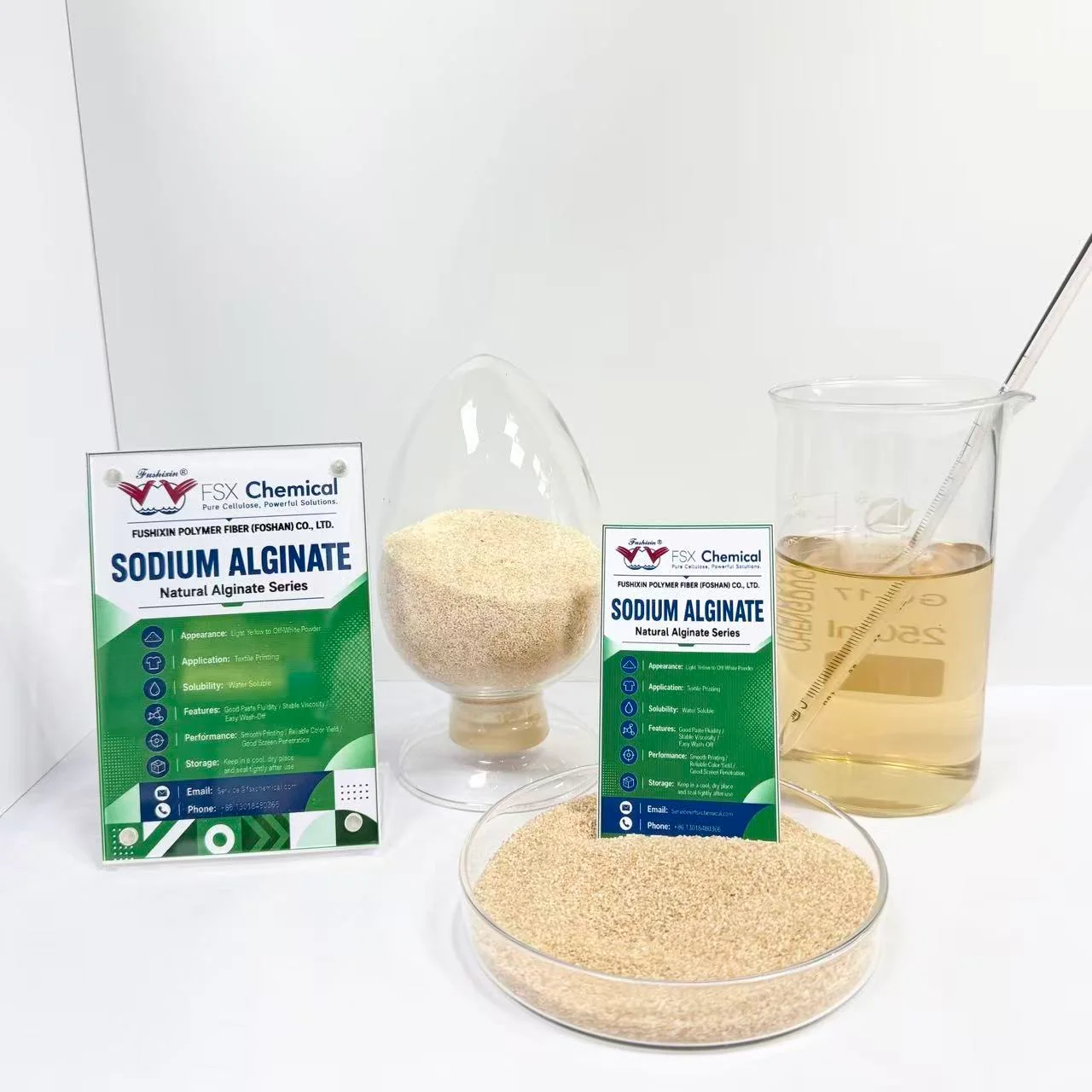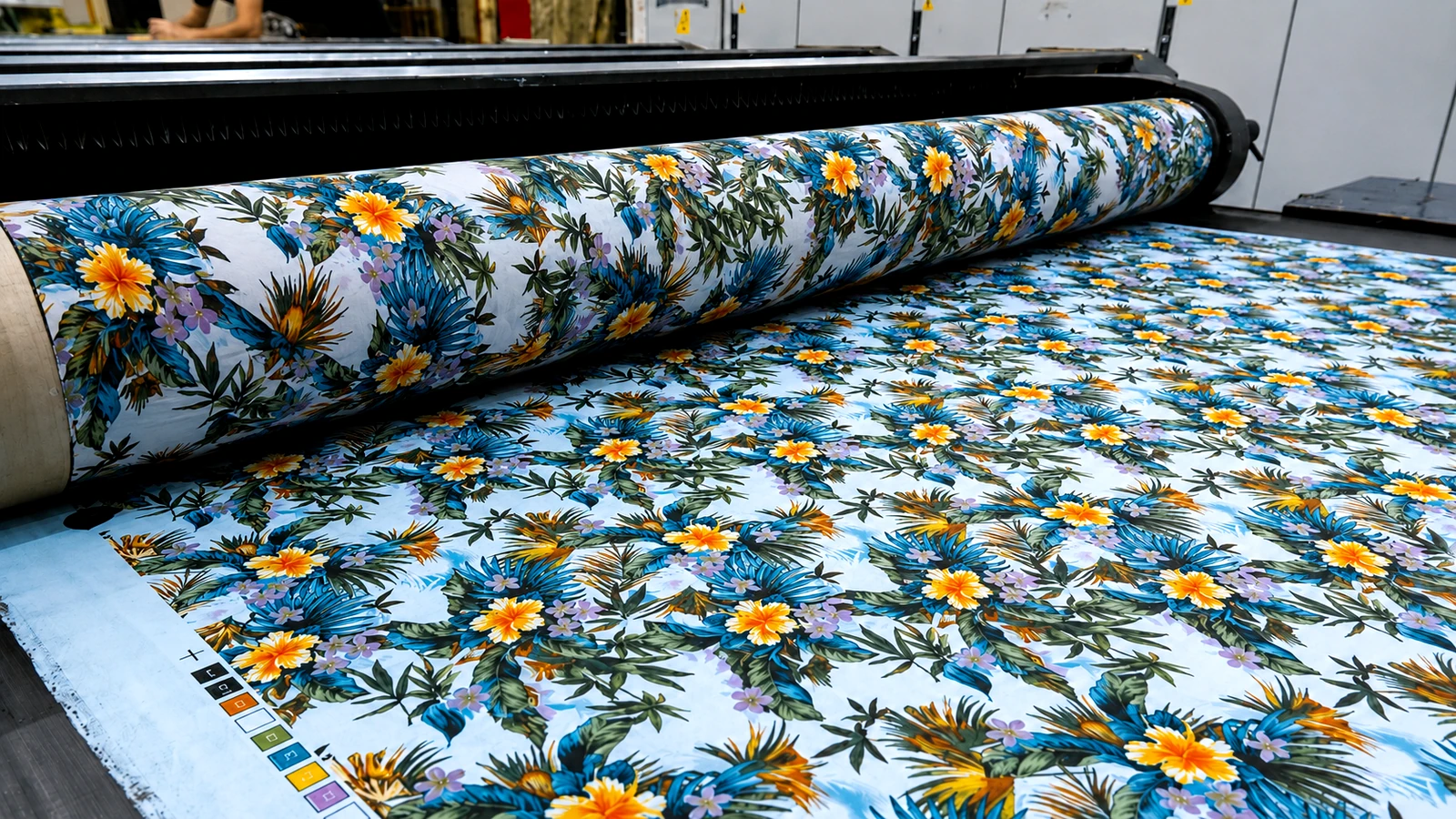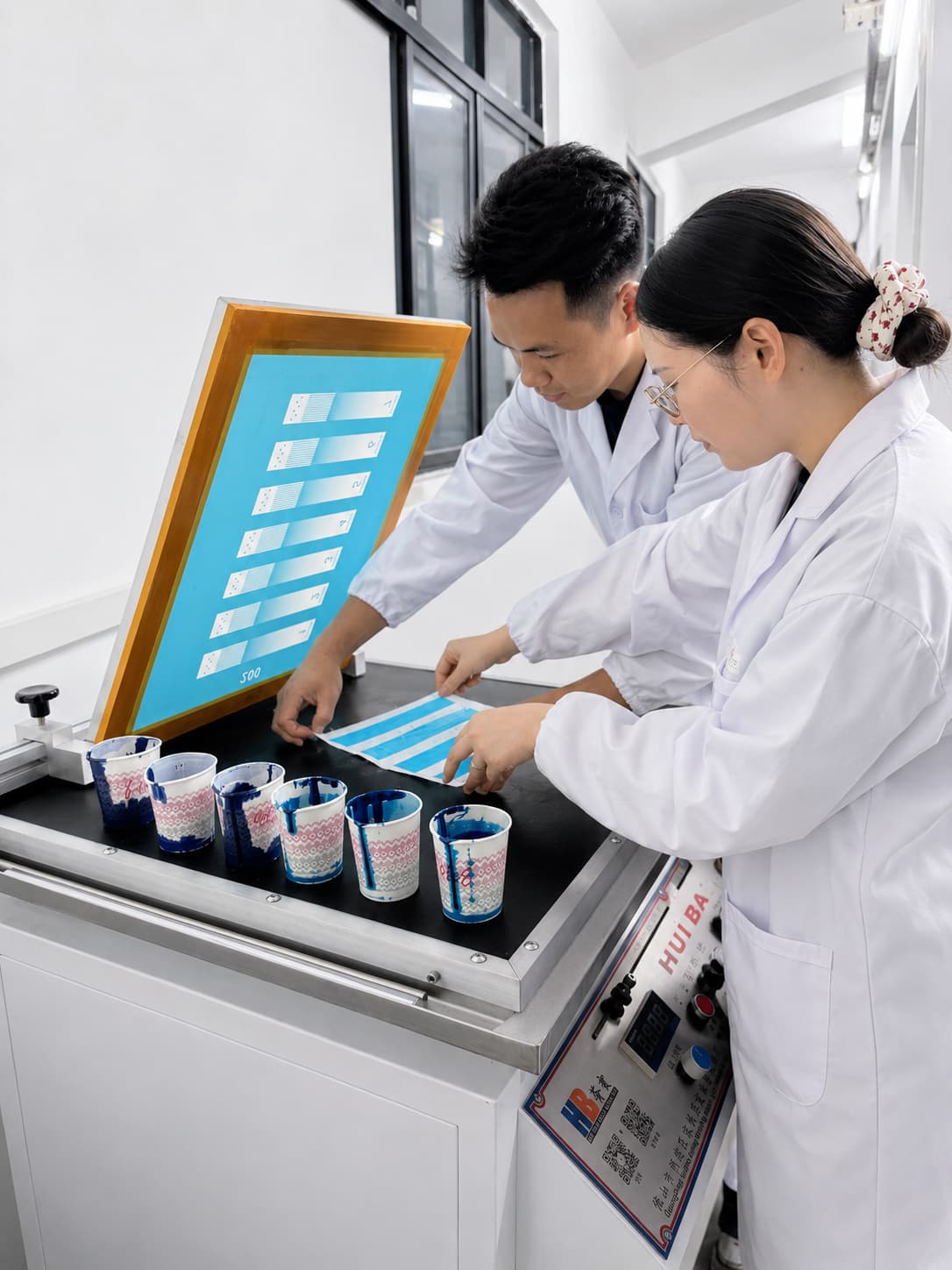

















Select a low-viscosity sodium alginate supplier by matching a method-defined grade to your reactive-printing paste, then comparing preparation behavior and finished-print results under the same conditions. Low viscosity alone does not mean faster hydration, less residue or suitability for ink circulated through a printhead. Identify the commercial grade and agree sample-to-bulk controls before ordering.
Sodium alginate is commonly used as a thickener in reactive textile printing paste. In some applications, buyers may prefer a lower viscosity grade or a grade with better dispersion and hydration behavior. However, “low viscosity” and “high solubility” should be verified through technical documents and sample testing, not only by supplier descriptions.
This guide explains how buyers can evaluate low viscosity sodium alginate for textile printing and related formulation applications by reviewing specifications, testing samples, and confirming batch consistency before bulk purchase.
What Low Viscosity Sodium Alginate Means in Practice
Low Viscosity Should Be Defined by Test Method
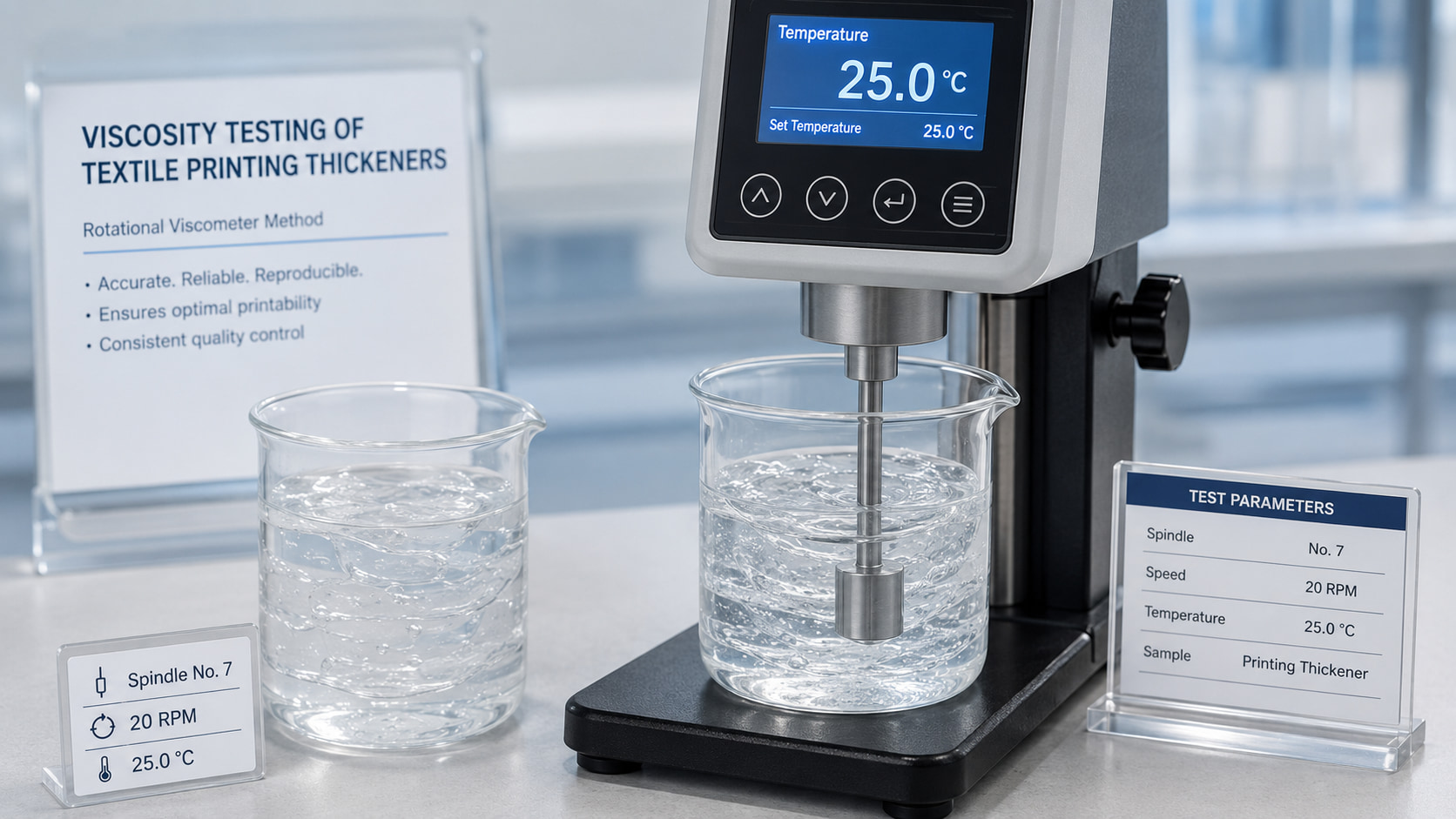
Low viscosity is relative to a stated method. Record concentration and its basis (for example, mass percent of as-supplied product or a stated dry basis), instrument model, geometry or spindle, speed, sample temperature, container and volume, reading time and sample preparation. Do not compare values obtained by different methods as if they were the same grade specification.
Before comparing suppliers, buyers should ask how the viscosity was tested and whether the method is similar to their own internal evaluation process.
High Solubility Depends on Preparation Conditions
Sodium alginate can dissolve in water, while poor powder dispersion can form slowly hydrating lumps. Alginate-manufacturer dissolution guidance explains this distinction. Record powder wetting and dispersion, viscosity development under a defined method, and residual material separately. A low-viscosity result is not a solubility measurement or proof of faster preparation.
Use the supplier-approved preparation method and the mill’s actual water and equipment. Record powder feed rate, mixer geometry and speed, temperature and observation times; do not prescribe one universal mixing speed or hydration time. A repeatable viscosity plateau is an operational checkpoint, not proof that every particle has dissolved.
Low Viscosity Is Not Always the Best Choice
A lower viscosity grade may be useful for certain preparation or formulation requirements, but it may not provide enough thickening effect for every printing paste system.
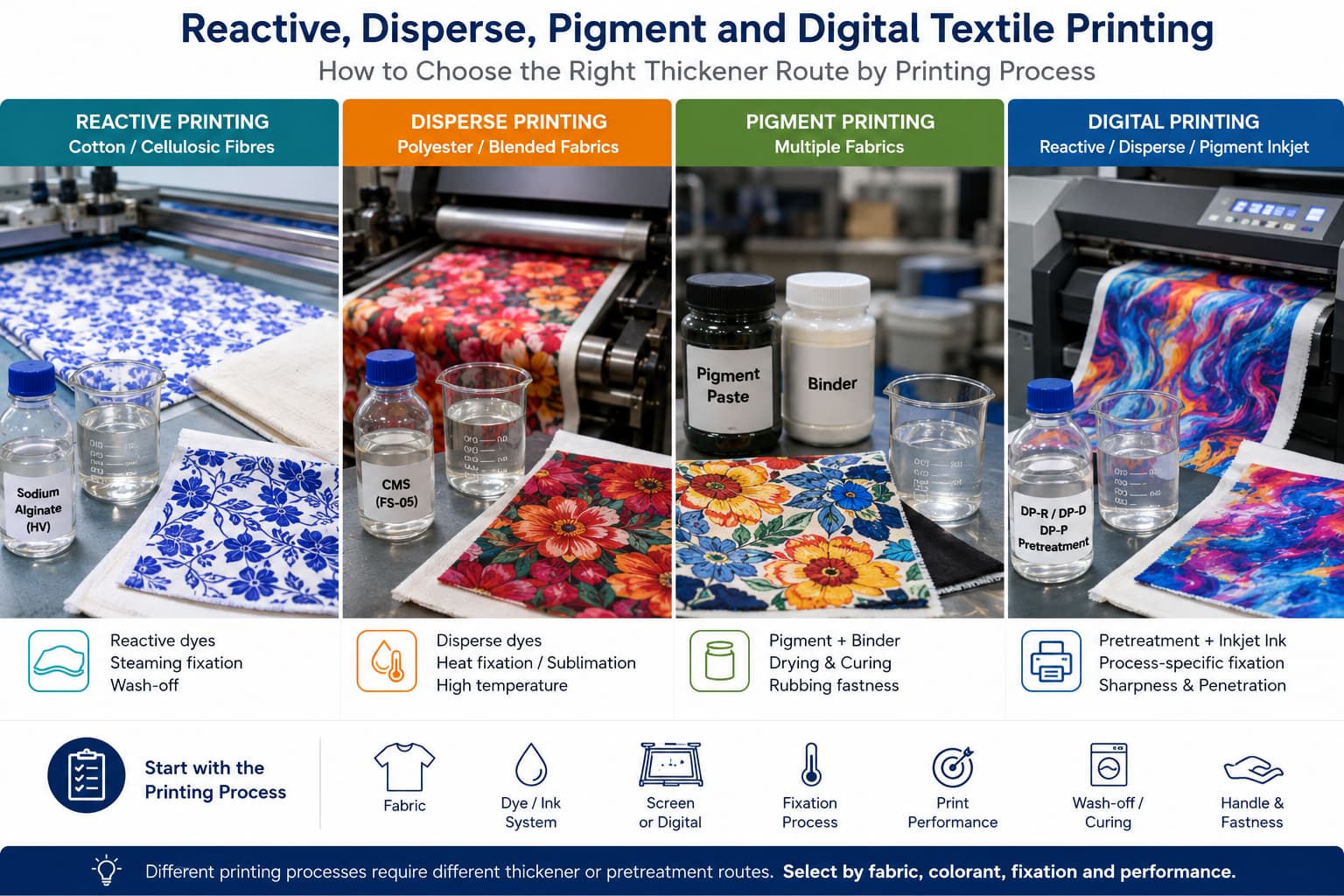
The suitable grade should be selected according to the printing process, target paste viscosity, fabric type, dye system, and production conditions.
Main Applications Buyers May Consider
Reaktif Tekstil Baskı Pastası
Sodium alginate is commonly used as a thickener in reactive textile printing paste. Buyers usually pay attention to viscosity, paste formation, dissolution behavior, filtration, and handling during printing.
If a low viscosity grade is being considered, buyers should confirm whether it can still meet the required paste structure and application behavior.
Screen Printing and Rotary Printing Preparation
For screen printing and rotary printing preparation, paste smoothness, filtration behavior, and viscosity stability can affect production handling.
The sodium alginate grade should be tested under real preparation conditions, including the buyer’s water quality, stirring method, and paste concentration.
Printing Ink or Related Formulation Testing
Conventional printing paste and fabric pretreatment are separate from ink that circulates through an inkjet printhead. Do not add ordinary textile alginate to nozzle ink on the basis of a low bulk-viscosity result or a screen-printing trial. That use requires dedicated ink formulation and qualification for the named printhead and ink-delivery system.
For any proposed inkjet-ink use, ask the ink and printhead suppliers to define the compatibility and jetting tests for the actual system. FUJIFILM’s printhead technology paper identifies ink compatibility and nozzle-surface durability as selection considerations. It does not qualify any FSX alginate grade, and a paste TDS is not inkjet approval.
Alıcıların Gözden Geçmesi Gereken Temel Özellikler
Viscosity Range and Testing Method
Viscosity is one of the most important parameters when sourcing low viscosity sodium alginate. Buyers should review the viscosity range together with the test concentration, temperature, instrument method, and unit.
Bu ayrıntılar olmadan, farklı tedarikçilerden gelen viskozite değerleri doğrudan karşılaştırılamayabilir.
Ağ Gözü Boyutu ve Çözünme Davranışı
Mesh size can influence how sodium alginate disperses and hydrates during paste preparation. However, actual dissolution behavior also depends on the buyer’s preparation method.
Compare preparation time, visible lumps and a defined filtration result separately. Record filter medium and aperture, effective area, feed mass and concentration, temperature, pressure or gravity conditions, and test duration. Retained material may include gels, undissolved powder or other insolubles; this check alone is not a purity assay.
Nem, pH ve Görünüm
Nem, pH ve görünüm temel ancak önemli kalite göstergeleridir. Bunlar, depolama, elleçleme, kalite kontrol ve tekrar satın alma süreçlerini etkiler.
Bu parametreler, TDS’de gözden geçirilmeli ve her üretim partisi için COA verileriyle teyit edilmelidir.
Parti Tutarlılığı
For repeat orders, batch consistency matters. If viscosity, moisture, pH, or dissolution behavior changes significantly between batches, the buyer may need to adjust the formulation again.
COA incelemesi, alıcıların parti verilerinin kararlaştırılan spesifikasyon aralığı içinde kalıp kalmadığını doğrulamasına yardımcı olur.

Alıcıların Talep Etmesi Gereken Belgeler
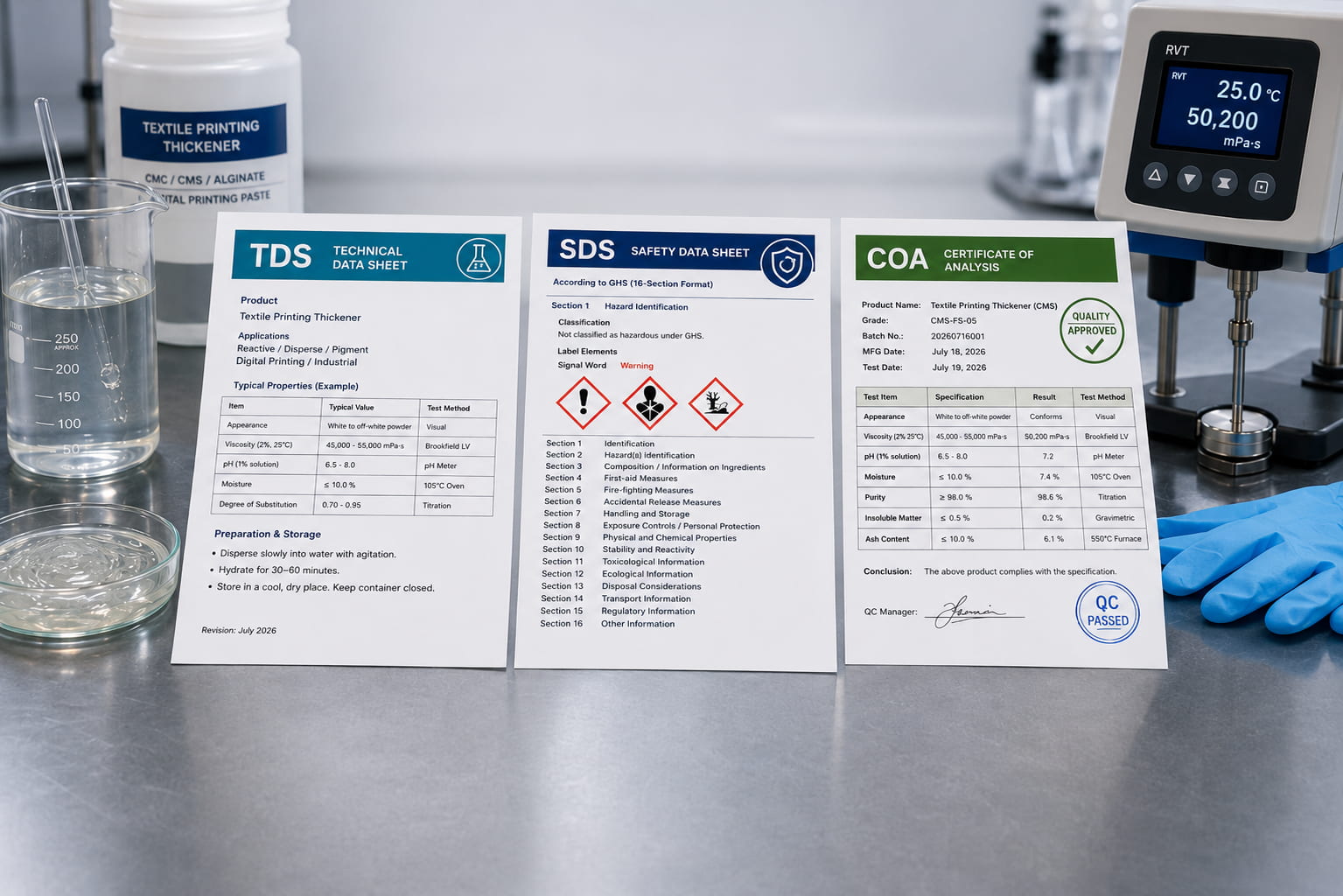
Teknik Şartname İncelemesi için TDS
Teknik Veri Sayfası, alıcıların standart teknik özellik yelpazesini incelemelerine yardımcı olur. Bu sayfada görünüm, viskozite, elek gözü boyutu, nem, pH, depolama koşulları ve test yöntemi gibi temel parametreler yer almalıdır.
For low viscosity sodium alginate, the viscosity test method should be clearly stated because it directly affects grade comparison.
Toplu Onay için COA
The supplier’s COA reports selected test results for an identified commercial grade and lot. Check the methods, units and agreed limits, and confirm that the lot number matches the bags. A supplier COA is not independent verification of every result or proof of full printing performance; carry out the agreed incoming checks separately.
Buyers can compare COA records across shipments to check whether key parameters remain stable over time.
Gerektiğinde Güvenlik Bilgi Formu (SDS) ve İhracat Belgeleri
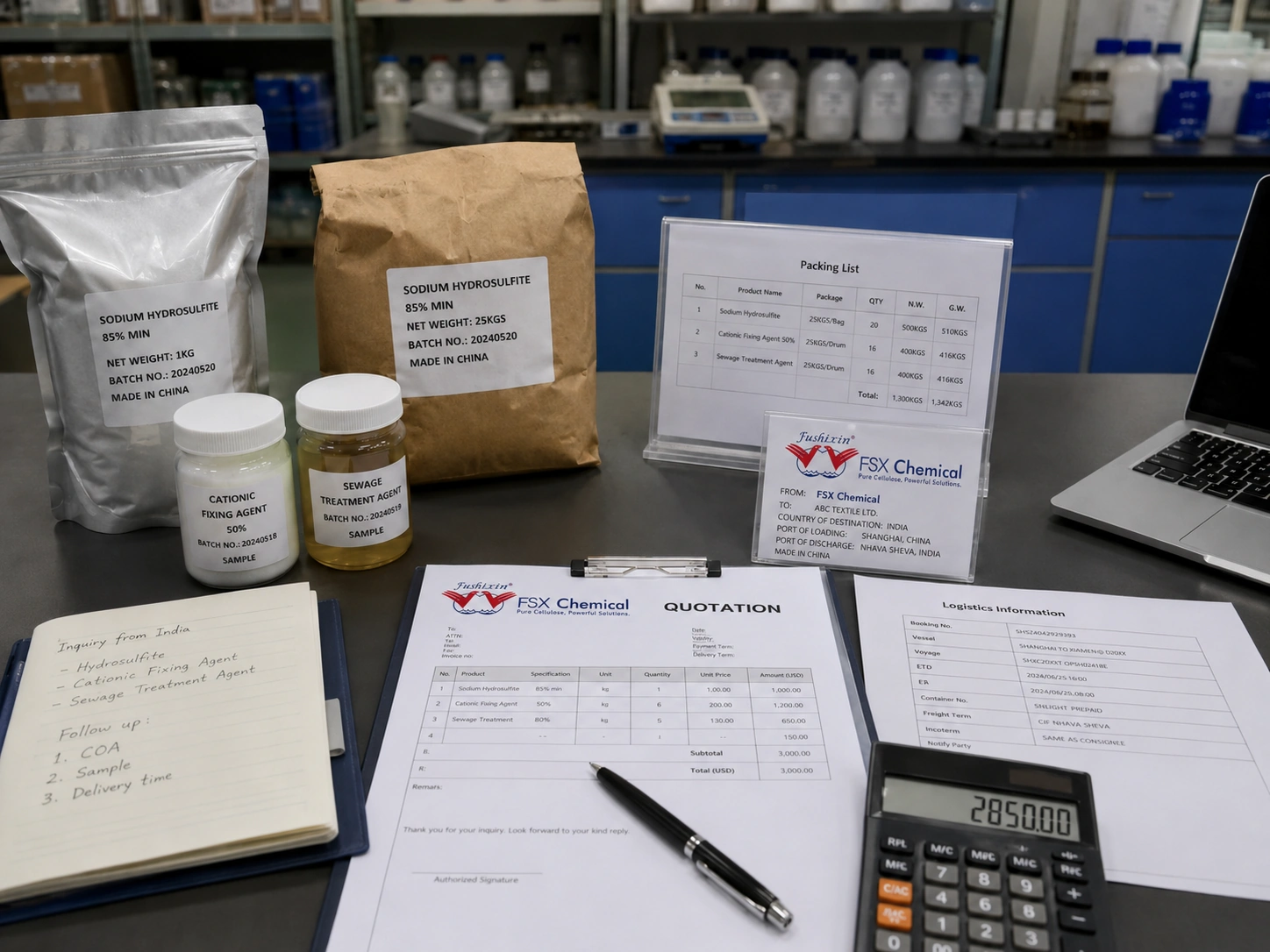
Uluslararası satın alımlarda, alıcıların ayrıca Güvenlik Bilgi Formu (SDS), fatura, sevk irsaliyesi, etiketler ve ihracatla ilgili diğer belgelere ihtiyaçları olabilir. Gerekli belge listesi, hedef ülkeye, ürün türüne ve şirket içi satın alma sürecine göre değişiklik gösterebilir.
İç inceleme veya gümrükle ilgili iletişimde gecikmelerin yaşanmaması için, sevkiyat öncesinde belge gereklilikleri teyit edilmelidir.
Additional Statements or Test Documents
If the buyer needs confirmation related to restricted substances, environmental claims, customer audit requirements, or internal supplier approval, these requirements should be clearly requested before order confirmation.
A practical supplier should explain which documents can be provided and which claims require third-party testing or formal certification.
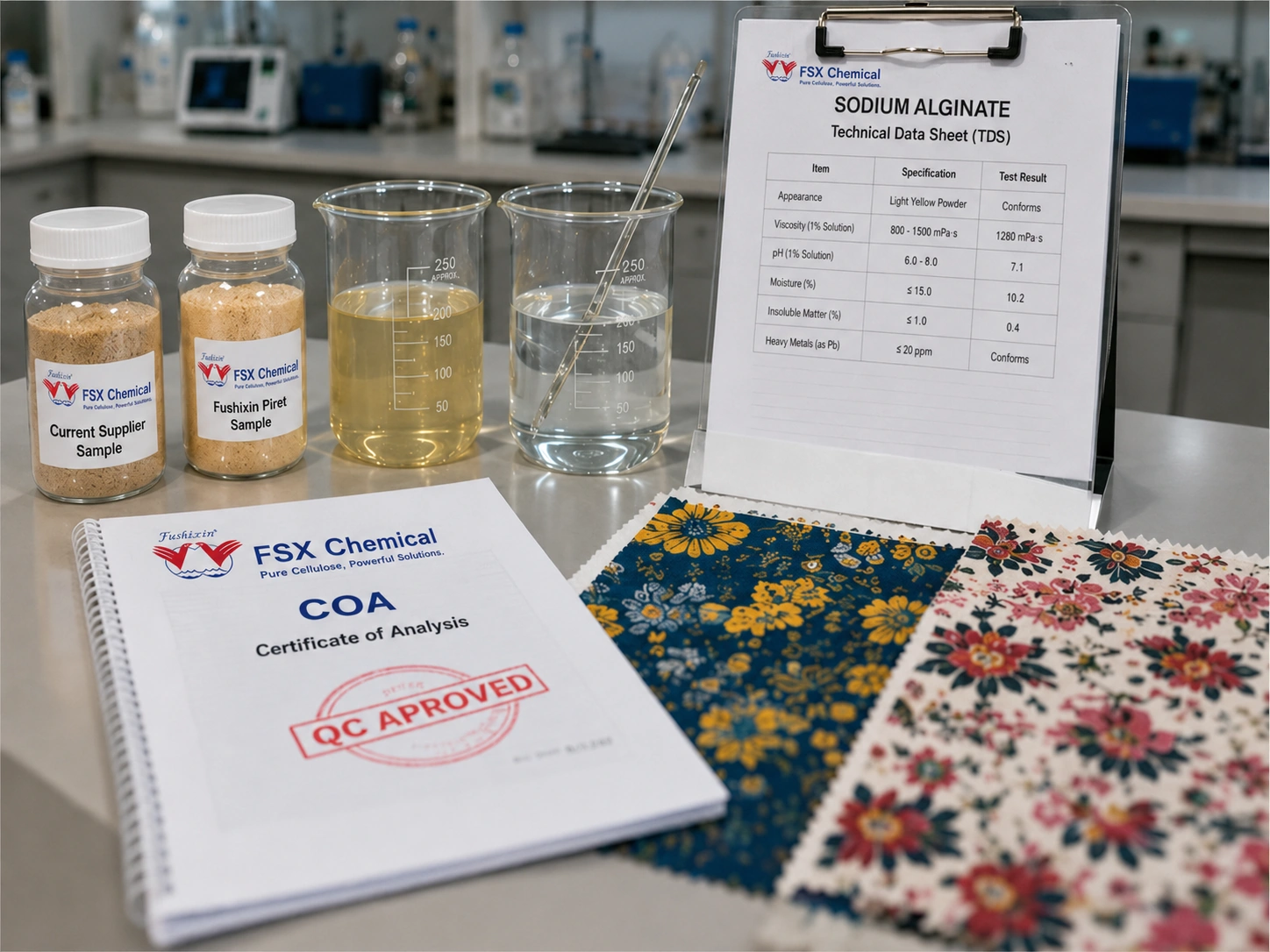
How to Test Low Viscosity Sodium Alginate Before Bulk Purchase
Test in the Actual Formulation
Sample testing should be done in the buyer’s own formulation whenever possible. Dyes, auxiliaries, water quality, pH, stirring method, paste concentration, and storage time can all affect final behavior.
Sadece temiz suda yapılan testler, söz konusu kalitenin üretime uygun olup olmadığını doğrulamak için yeterli olmayabilir.
Observe Dissolution and Paste Handling
Testler sırasında alıcılar, çözünme hızını, macunun pürüzsüzlüğünü, topaklanma durumunu, süzülme özelliğini, viskozite kararlılığını ve uygulama kolaylığını gözlemlemelidir.
Use preparation observations together with the specification and the finished print. Hold dye system, fabric, deposition and fixation/washing conditions constant when comparing grades; then assess definition, color result, wash-off and hand against the agreed reference. Equal measured paste viscosity does not establish equal printing performance.
| Comparison checkpoint | Kaydedilecek bilgiler | What it cannot establish alone |
|---|---|---|
| Toz ekleme | Water identity, feed rate, mixer settings and lump observations. | Equilibrium solubility or production performance. |
| Defined-age solution | Repeat viscosity readings at stated times and temperature, with the same method. | Complete molecular dissolution or inkjet suitability. |
| Filtreleme | Specified filter, loading and flow conditions, with a repeatable residue/flow assessment. | Chemical identity or purity of retained material. |
| Complete print trial | Matched paste, fabric and process; approved finished-print criteria. | Approval for every future fabric, formulation or bulk lot. |
This is a proposed comparison record. Set acceptance limits from the approved reference and intended process; the table contains no FSX test result or universal pass limit.
Onaylanmış Numune ile Toplu Sevkiyatı Karşılaştırın
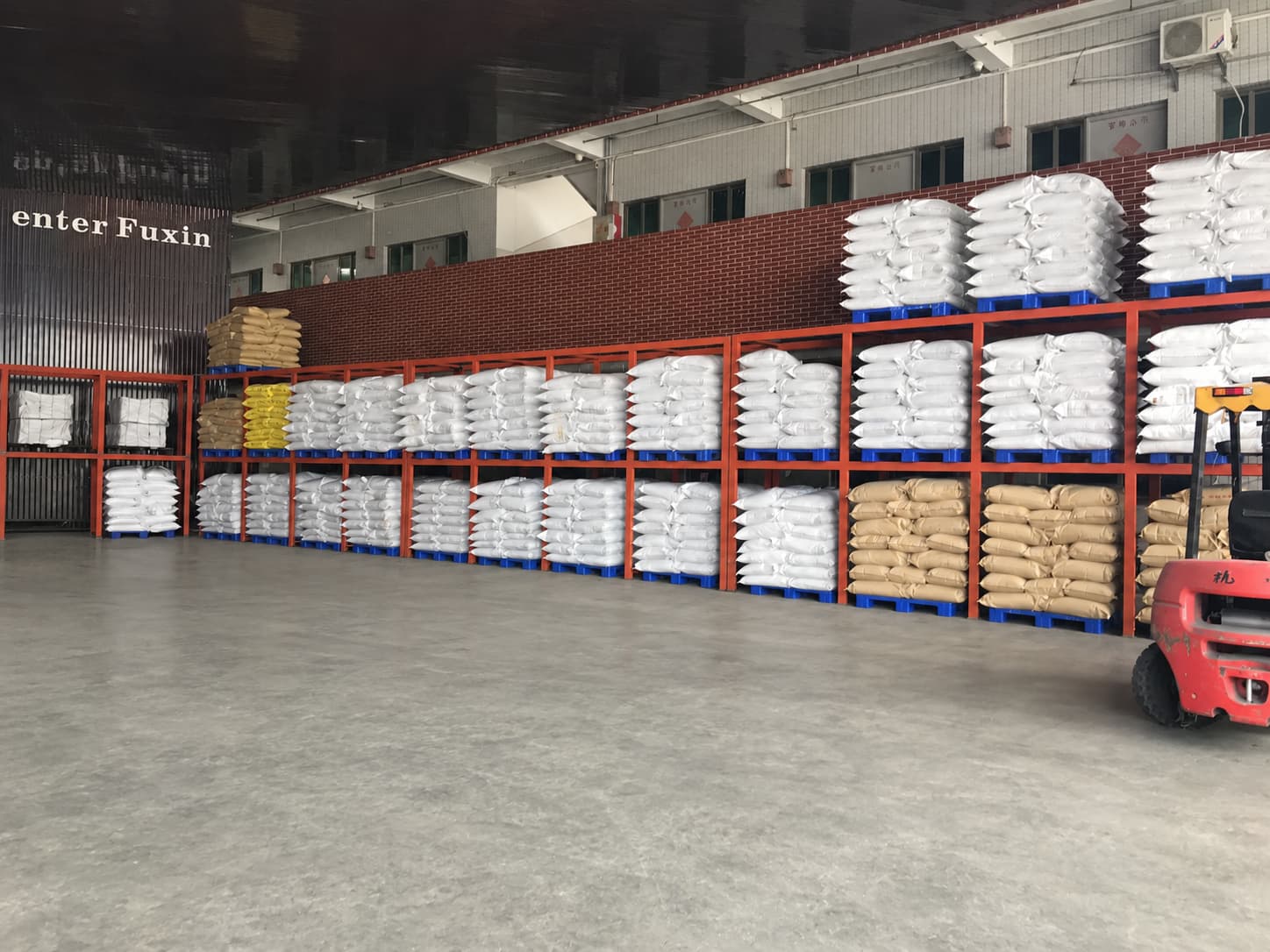
Toplu siparişi onaylamadan önce, alıcılar onaylanmış numune ile toplu sevkiyatın aynı viskozite aralığı, elek gözü boyutu, ambalaj biçimi, parti izlenebilirliği ve COA gerekliliklerine uygun olup olmadığını kontrol etmelidir.
Bu, numune ile toplu numune arasındaki uyumsuzluk riskini azaltmaya yardımcı olur.
Common Mistakes When Choosing Low Viscosity Sodium Alginate
Choosing Only by the Lowest Viscosity
The lowest viscosity option may not provide the required paste structure or application behavior. Buyers should choose a grade that matches the target formulation instead of selecting only by a lower number.
Assuming High Solubility Without Testing
Replace a broad “high solubility” promise with a stated preparation test: dispersion behavior, observation time, method-defined viscosity development and residue under the agreed conditions. Different water or addition conditions require a new comparison; do not equate easy wetting with complete dissolution.
Relying on Broad Supplier Claims
Claims such as “eco-friendly,” “high-performance,” “global supply,” or “fast delivery” should be supported by documents, agreed terms, or test data when they are important to the purchasing decision.
For practical sourcing, buyers should focus on specification, sample testing, COA data, packaging, and export document support.
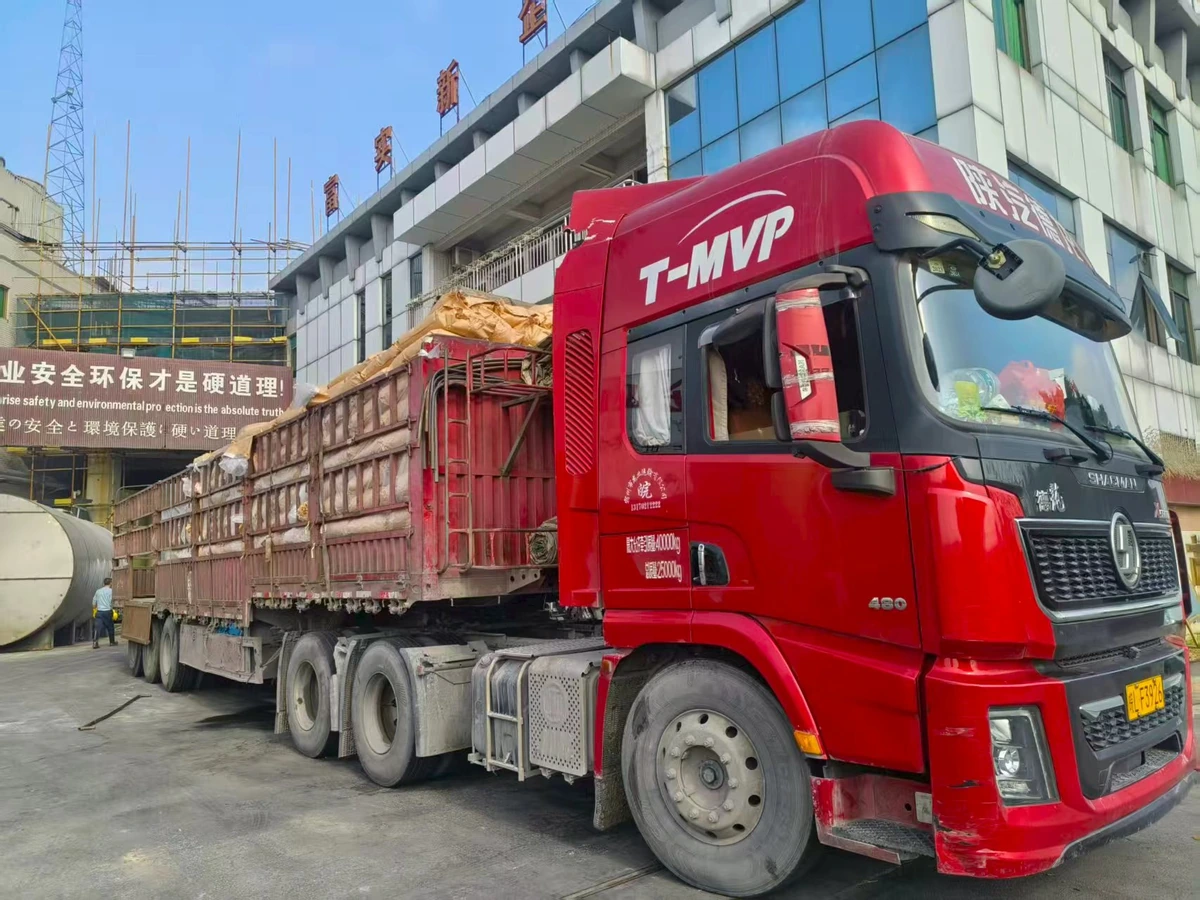
FSX Chemical, Sodyum Aljinat Alıcılarına Nasıl Destek Sağlıyor?
Review FSX Chemical’s sodium alginate grade information and request current documents for the commercial grade being considered. Use the supplier’s current preparation instructions as the starting point for a controlled mill comparison.
Our support is focused on practical grade matching and export procurement. We can provide TDS, COA, SDS where applicable, sample support, and grade matching suggestions based on the customer’s printing process, target viscosity, fabric type, formulation conditions, packaging needs, and document requirements.
We do not suggest confirming low viscosity sodium alginate only by product name, broad solubility claims, or price. The recommended grade should be reviewed through technical documents and tested in the buyer’s own formulation before bulk purchase.
Sonraki Adımlar
- Hedef Viskozitenizi Belirleyin — share the required viscosity range, test concentration, temperature, instrument method, and unit if available.
- TDS Talep Et — viskozite aralığını, elek gözü boyutunu, pH değerini, nem oranını, görünümü, depolama koşullarını ve test yöntemini gözden geçirin.
- COA Talep Et — sevkiyat öncesinde parti verilerinin kararlaştırılan spesifikasyon aralığına uygun olup olmadığını doğrulayın.
- Ürün Sınıfı Eşleştirme Talep Edin — share your printing process, fabric type, formulation conditions, and existing product grade if available.
- Örnek İsteyin — Toplu siparişleri onaylamadan önce, önerilen sodyum aljinat türünü kendi macun hazırlama veya formülasyon koşullarınızda test edin.
- Ambalaj ve İhracat Belgelerini Doğrulama — Sevkiyat öncesinde çanta boyutunu, etiketleri, parti izlenebilirliğini, Güvenlik Bilgi Formu’nu (SDS), faturayı, sevk irsaliyesini ve diğer gerekli belgeleri kontrol edin.
- FSX Chemical ile İletişime Geçin — share the current viscosity method, preparation issue and intended product addition point. Email: service@fsxchemical.com.