Textile Printing Thickening Agents: A Process Selection Guide
Textile printing thickening agents control much more than viscosity. This 2026 guide explains sodium alginate,...
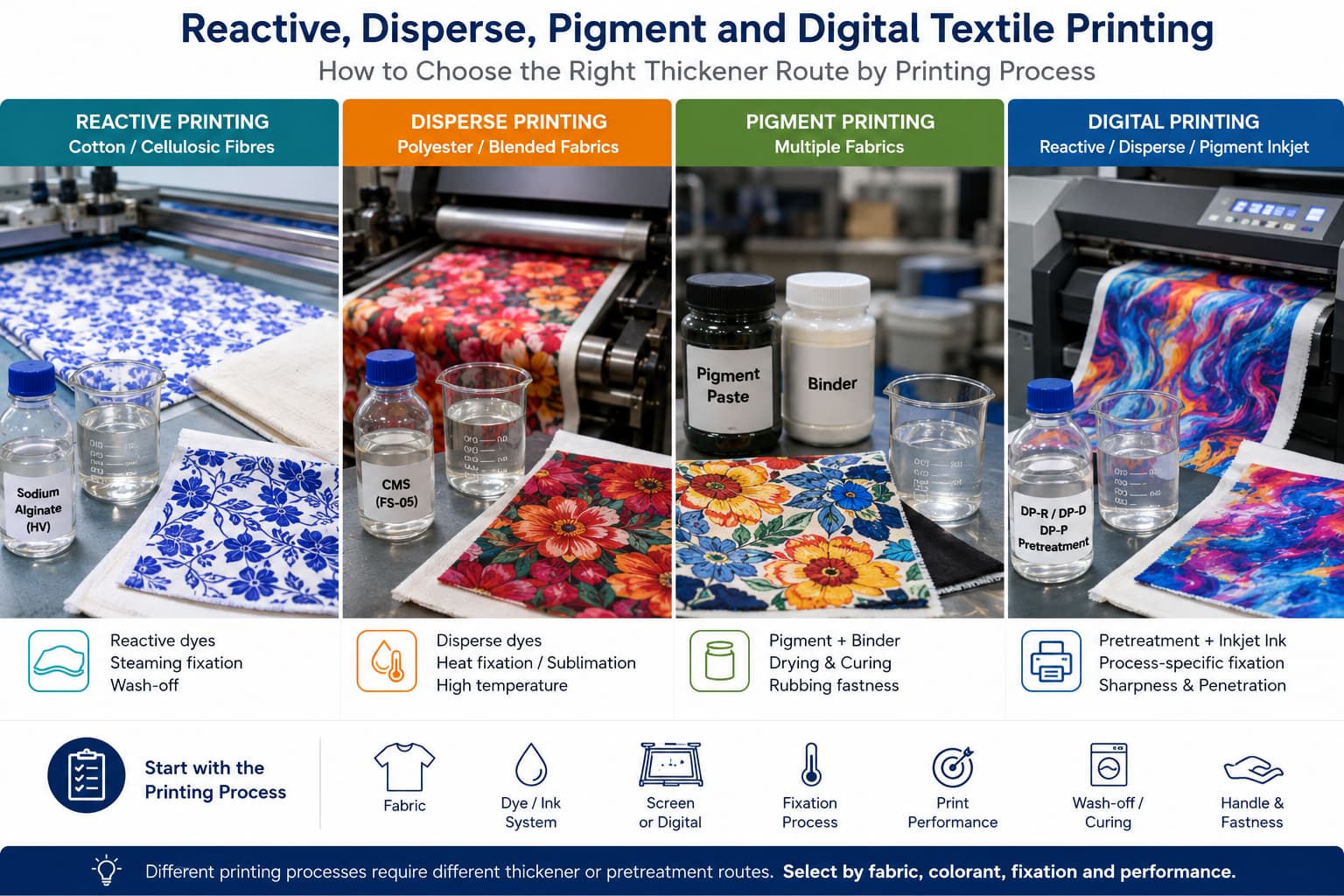
Textile printing thickening agents control paste flow and application behaviour. Choose a route by the dye or ink system, fabric, printing method and addition point, then compare the complete formulation under stated test conditions. Sodium alginate, CMC, FSX CMS, synthetic or compound thickeners and digital pretreatments are useful selection routes, but they are not five mutually exclusive chemical classes or interchangeable products.
Thickening agents are among the most important functional materials in textile printing chemistry. They help create the paste structure needed to transport dyes, pigments and auxiliaries through preparation, application and fixation without allowing uncontrolled spreading across the fabric.
Yet selecting a textile printing thickener has become more complex than choosing a high-, medium- or low-viscosity product.
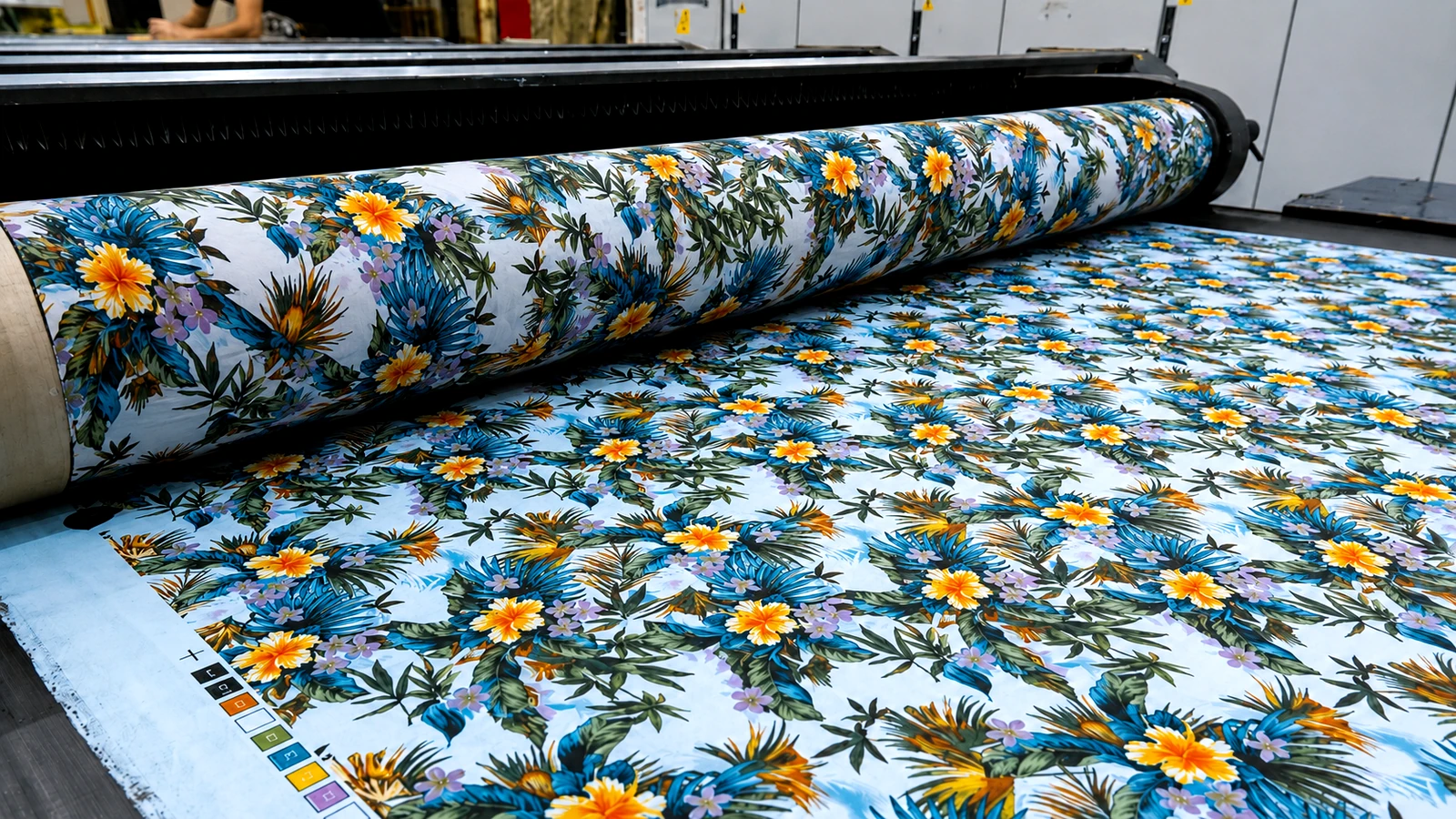
Modern printing mills may operate flat-screen, rotary-screen and digital inkjet lines. They may print cotton with reactive dyes, polyester with disperse colorants, pigment systems on multiple fibers or several technologies inside the same facility.
These processes do not require identical rheology or chemical compatibility. A thickener that performs well in one system may be a poor choice in another, even when the viscosity appears similar.
Start with the printing chemistry and operating conditions, then validate the candidate route on the actual fabric. Use the focused guides below when the question is grade matching, viscosity drift, process choice or cost comparison.
What Are Textile Printing Thickening Agents?
Textile printing thickening agents are polymers or formulated rheology-control systems used to create the flow properties required in printing pastes and textile pretreatment formulations.
Their purpose is not simply to make a liquid thicker. They help control how the paste behaves while being mixed, stored, pumped, transferred through a screen or applied to a textile surface.
A printing thickener can influence
Paste viscosity
Властивість розрідження під дією зсуву
Відновлення конструкції
Уривок з фільму
Paste transfer
Fabric penetration
Lateral spreading
Чітке окреслення контурів
Рівномірність по всій площі
Стабільність утримання
Because these properties interact with dyes, pigments, salts, alkalis, binders and fabric surfaces, thickener selection must be tied to the complete application.
Why Thickeners Matter Beyond Viscosity
Viscosity is one of the most frequently quoted specifications for a textile printing thickener, but viscosity alone cannot describe how a paste behaves during printing.
A laboratory measurement normally represents one concentration, temperature and shear condition.
A printing machine exposes paste to changing mechanical conditions during holding, pumping, screen passage and fabric transfer. A viscosity increase as shear falls is not, by itself, evidence of time-dependent structural rebuilding.
This creates several different requirements
At relatively low shear, sufficient structure may help maintain paste stability.
Under higher shear, easier flow may support pumping and application.
After transfer to the fabric, structural recovery can help limit uncontrolled spreading.
This is why two thickeners with similar viscosity can produce noticeably different printing results.
Five Commercial Selection Routes and Their Boundaries
Thickener Route
What It Is
Common Evaluation Direction
Main Selection Factors
Альгінат натрію
Seaweed-derived polysaccharide
Conventional reactive printing
Viscosity, rheology, filtration, definition and wash-off
CMC
Cellulose-derived modified polymer
Selected printing and compound systems
DS, viscosity, hydration, rheology and compatibility
CMS
FSX commercial synthetic printing-thickener family; confirm the exact grade
Selected disperse, reactive and compound systems depending on grade
Viscosity, screen behavior, stability, wash-off and cost in use
Synthetic / Compound Thickener
Formulated rheology-control system
Pigment and process-specific formulations
Binder compatibility, electrolyte tolerance, rheology and dosage
Паста для цифрового друку
Inkjet pretreatment or functional paste system
Reactive, disperse or pigment digital printing
Ink system, fabric, pickup, filtration, definition and fixation
These headings group practical sourcing and application questions. They overlap: a commercial family may contain formulated products, while digital printing paste describes an application route rather than one polymer chemistry. Select by the documented product and process, not by the category label alone.
The correct starting point depends on the dye or ink chemistry, fabric, printing machine, pretreatment method, fixation route and finished-textile requirements.
1. Sodium Alginate
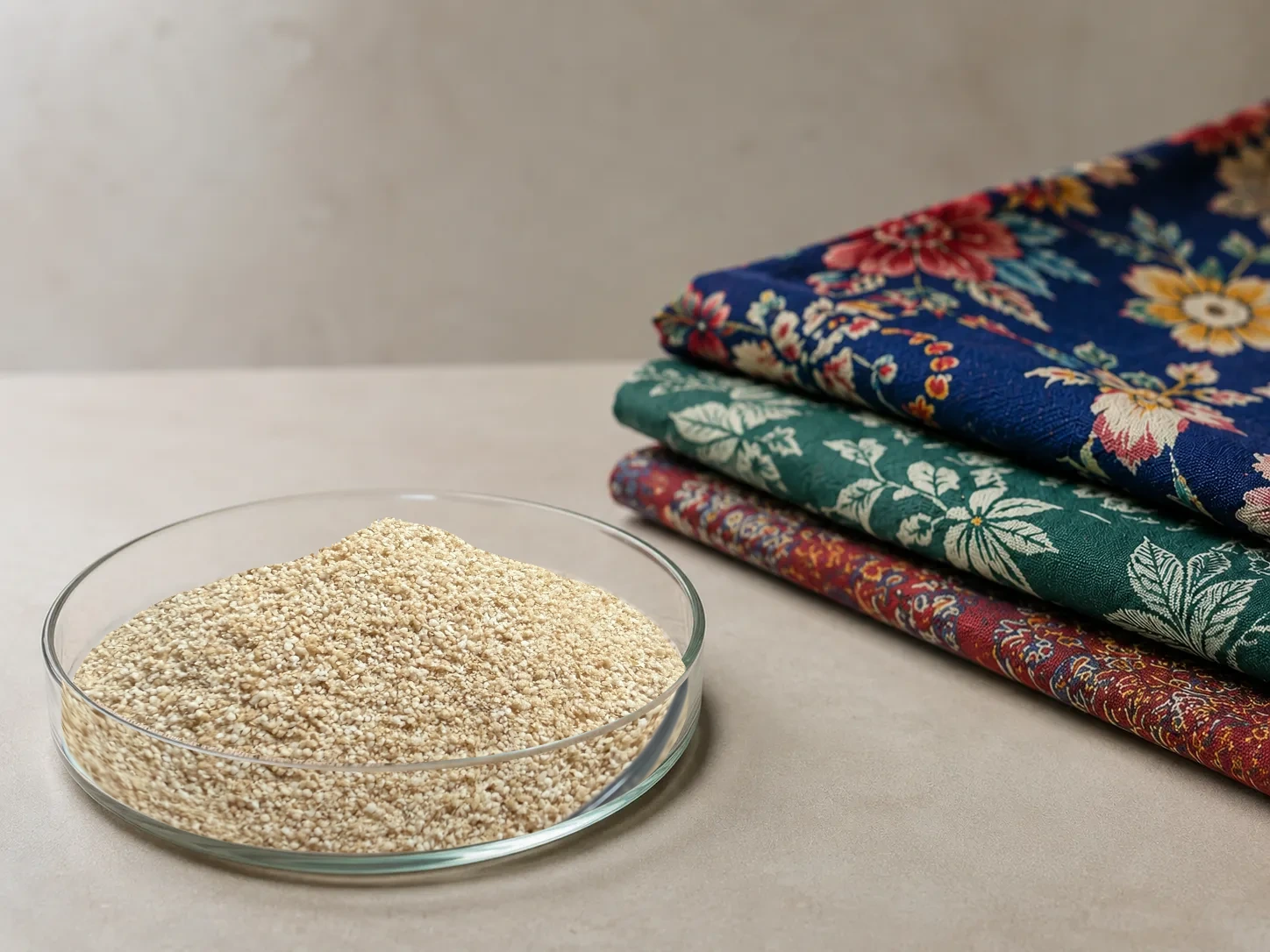
Альгінат натрію is one of the best-known thickening routes for conventional reactive textile printing on suitable cellulosic fabrics.
It is derived from brown algae and is available in different viscosity and application grades.
Why sodium alginate is important in reactive printing
Its chemistry and established application behavior make it a common benchmark when formulating reactive printing pastes.
Important purchasing parameters include
Actual viscosity specification
Viscosity test concentration
Instrument and speed
Гідратація
Фільтрація
Реологія
Сумісність з реактивною пастою
Визначення терміна «друк»
Фіксація та змивання
Do not buy sodium alginate from HV, MV or LV alone
High-, medium- and low-viscosity labels are supplier classification systems rather than universal international quality grades.
Buyers should compare the actual viscosity value and complete test method before assuming two grades are equivalent.
2. Carboxymethyl Cellulose (CMC)
Карбоксиметилцелюлоза , commonly known as CMC, is a water-soluble cellulose derivative used across many industrial rheology applications.
Selected CMC grades can also be evaluated in textile printing, viscosity-control and compound-thickener systems.
CMC selection involves more than viscosity
Ступінь заміщення
В’язкість
Концентрація тестового розчину
Розчинення
Гідратація
Фільтрація
Реакція електролітів
Реологія
Complete-formula compatibility
Degree of substitution matters
Degree of substitution, or DS, can influence solubility and ionic behavior. However, a higher DS should not automatically be interpreted as higher product quality.
CMC is not automatically a 1:1 alginate replacement
Replacing sodium alginate with CMC changes the polymer chemistry. Such a change should be treated as a formulation-development project and confirmed with actual printing trials.
3. FSX CMS: A Synthetic Printing-Thickener Family
FSX CMS is a commercial synthetic printing-thickener family. Do not interpret the abbreviation as proof of carboxymethyl starch composition. Confirm the exact grade, product form and documented application in the current TDS.
Depending on the grade and formulation, CMS can be evaluated in disperse, selected reactive, compound and specialty printing routes.
Important CMS evaluation factors include
Commercial grade
Viscosity and method
Гідратація
Фільтрація
Уривок з фільму
Стабільність утримання
Color-paste compatibility
Змити, якщо це необхідно
Effective dosage
CMS and cost optimization
CMS is sometimes evaluated as part of a lower-cost or blended thickener strategy.
The correct economic comparison should use the optimized dosage and final printing result rather than raw-material price alone.
4. Synthetic and Compound Thickeners
Not every textile printing process is best served by one natural or modified polysaccharide.
Synthetic rheology modifiers and compound thickener systems can be designed to provide a different balance of flow, structural recovery, electrolyte tolerance and effective dosage.
Compound systems can combine functions such as
Базова в'язкість
Shear thinning
Відновлення конструкції
Стабільність пасти
Толерантність до електролітів
Уривок з фільму
Визначення терміна «друк»
Оптимізація витрат
Pigment printing requires special attention
In pigment printing, the thickener needs to operate inside a system that may also contain pigment dispersion, binder and curing auxiliaries.
Binder compatibility and final fabric handle can therefore be as important as viscosity.
It is better understood as a process-specific textile pretreatment or functional paste route selected according to digital ink chemistry and the fabric.
Reactive digital printing
Pretreatment is evaluated for ink migration, definition, fixation, wash-off and final fabric quality on suitable cellulosic fabrics.
Disperse digital printing
For polyester, distinguish direct disperse printing onto fabric from sublimation transfer through printed paper. Evaluate a fabric pretreatment where the direct process specifies one; do not infer the same addition point or pretreatment requirement for transfer printing.
Pigment digital printing
Pigment systems require particular attention to binder compatibility, curing, rubbing performance, definition and hand feel.
Digital printing paste is not digital ink
Textile pretreatment thickeners should not simply be added directly into inkjet ink. The ink and the fabric-side pretreatment perform different functions and should be formulated and evaluated separately.
Viscosity vs Rheology
Viscosity describes resistance to flow under defined measurement conditions. Rheology describes the broader way a material flows and changes structure when mechanical conditions change.
For textile printing, rheology often explains differences that a single viscosity number cannot.
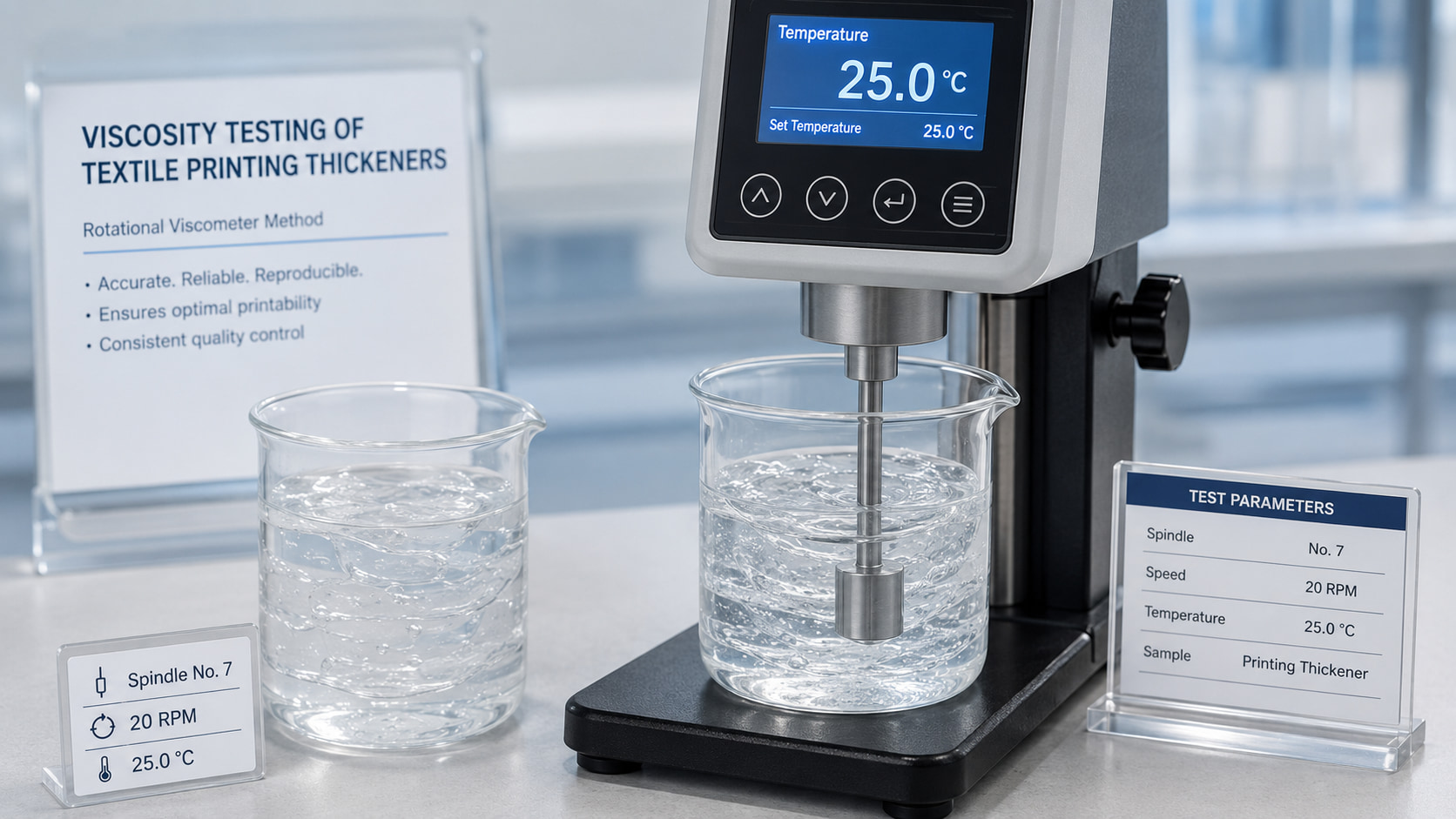
A reliable viscosity comparison should record
Концентрація продукту
Джерело води
Preparation procedure
Час гідратації
Температура вимірювання
Інструмент
Spindle or rotor
Швидкість обертання
Час читання
Two TDS values should not be compared directly if the measurement methods are different.
Shear Thinning and Structural Recovery
Many printing pastes are designed to become easier to flow as shear increases.
This can support pumping and passage through a screen while preserving useful structure under lower-shear conditions.
After printing, recovery matters
After transfer, paste flow must become sufficiently limited to preserve the design. If time-dependent recovery is part of the proposed explanation, measure it with a defined shear-and-rest history rather than infer it from a single-speed viscosity result.
Too little recovery can contribute to
Blurred edges
Color bleeding
Loss of fine lines
Poor small-text reproduction
Too much structure can also be undesirable
Excessive resistance can reduce paste transfer or create poor large-area coverage.
The objective is therefore rheological balance rather than maximum viscosity.
Hydration and Dissolution
Poor polymer preparation can create inaccurate laboratory results and unnecessary production problems.
Регулювання подачі порошку
Introduce powdered thickener using a repeatable method that minimizes persistent lumps and uneven wetting.
Allow sufficient hydration
Some polymers continue developing viscosity after mixing. Correcting the batch too early can lead to excessive final viscosity.
Standardize mixing
Mixer type, speed, batch size, temperature and total mixing time should remain consistent when comparing products.
Preparation behavior should be considered part of thickener performance, not simply a laboratory inconvenience.
Фільтрація та пропускання через сито
Filtration is a critical practical parameter for textile printing thickeners.
Undissolved polymer, gel particles or incompatible material can contribute to screen problems and production interruptions.
Use a standardized filtration method
Keep concentration, hydration, sample quantity, filter material and opening size consistent.
Inspect the residue
Residue can come from incomplete hydration, gel formation, contamination or precipitation after other chemicals are added.
Test the complete paste
A stock thickener may filter well in water but behave differently after dyes, salts, alkalis or binders enter the formulation.
Хімічна сумісність
The thickener operates as part of a chemical system rather than in isolation.
Depending on the printing route, compatibility should be checked with
Reactive dyes
Disperse colorants
Pigment dispersions
Salts
Alkalis
Binders
Humectants
Wetting agents
Defoamers
Other polymers
Staged addition during troubleshooting can help identify which component changes viscosity, stability or filtration.
Choosing a Thickener for Reactive Printing
Sodium alginate is a common benchmark starting route for conventional reactive printing on cotton, viscose and other suitable cellulosic fabrics.
Evaluate
В’язкість
Реологія
Фільтрація
Уривок з фільму
Color-paste compatibility
Чітке окреслення контурів
Рівномірність по всій площі
Фіксація
Змивається
Готова тканинна ручка
CMC, CMS or compound systems may be evaluated in selected formulations, but a direct one-to-one substitution should not be assumed.
Choosing a Thickener for Disperse Printing
Disperse printing is primarily associated with polyester, and the thickener must be selected around the colorant, textile, machine and thermal fixation process.
CMS and application-specific compound routes can be evaluated for
Стабільність пасти
Уривок з фільму
Transfer
Рівномірність по всій площі
Thermal-process compatibility
Finished polyester quality
A thickener successful in reactive cotton printing should not automatically be transferred to polyester disperse printing.
Choosing a Thickener for Pigment Printing
Pigment printing depends on a different chemistry because the colorant typically relies on a binder system and curing process.
Evaluate the thickener together with
Пігментна дисперсія
Папка
Електроліти
Curing auxiliaries
Fabric finish
Final evaluation should include
Визначення терміна «друк»
Color uniformity
Curing behavior
Rubbing performance
Fabric hand feel
Choosing Chemistry for Digital Textile Printing
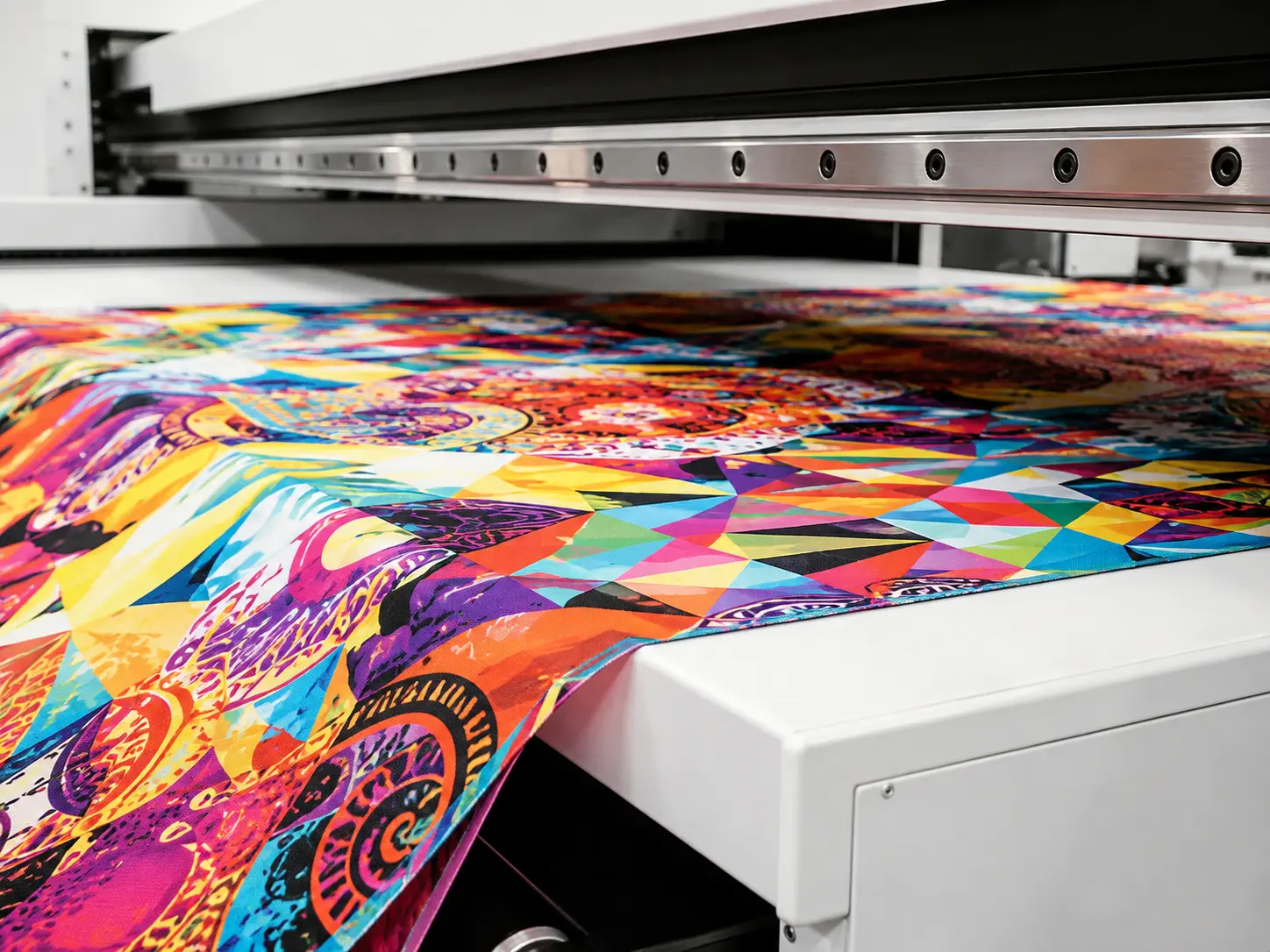
Digital textile printing requires process-specific pretreatment rather than a conventional screen-printing paste transferred unchanged into an inkjet process.
A practical workflow is
Fabric → Pretreatment → Drying → Inkjet Printing → Fixation or Curing → Washing or Finishing
Selection should begin with
Reactive, disperse or pigment ink
Склад тканини
Pretreatment equipment
Збір відходів перед обробкою
Сушіння
Required print definition
Fixation or curing process
A digital pretreatment system should be judged from the finished textile, not only its viscosity before printing.
Flat-Screen vs Rotary-Screen Printing
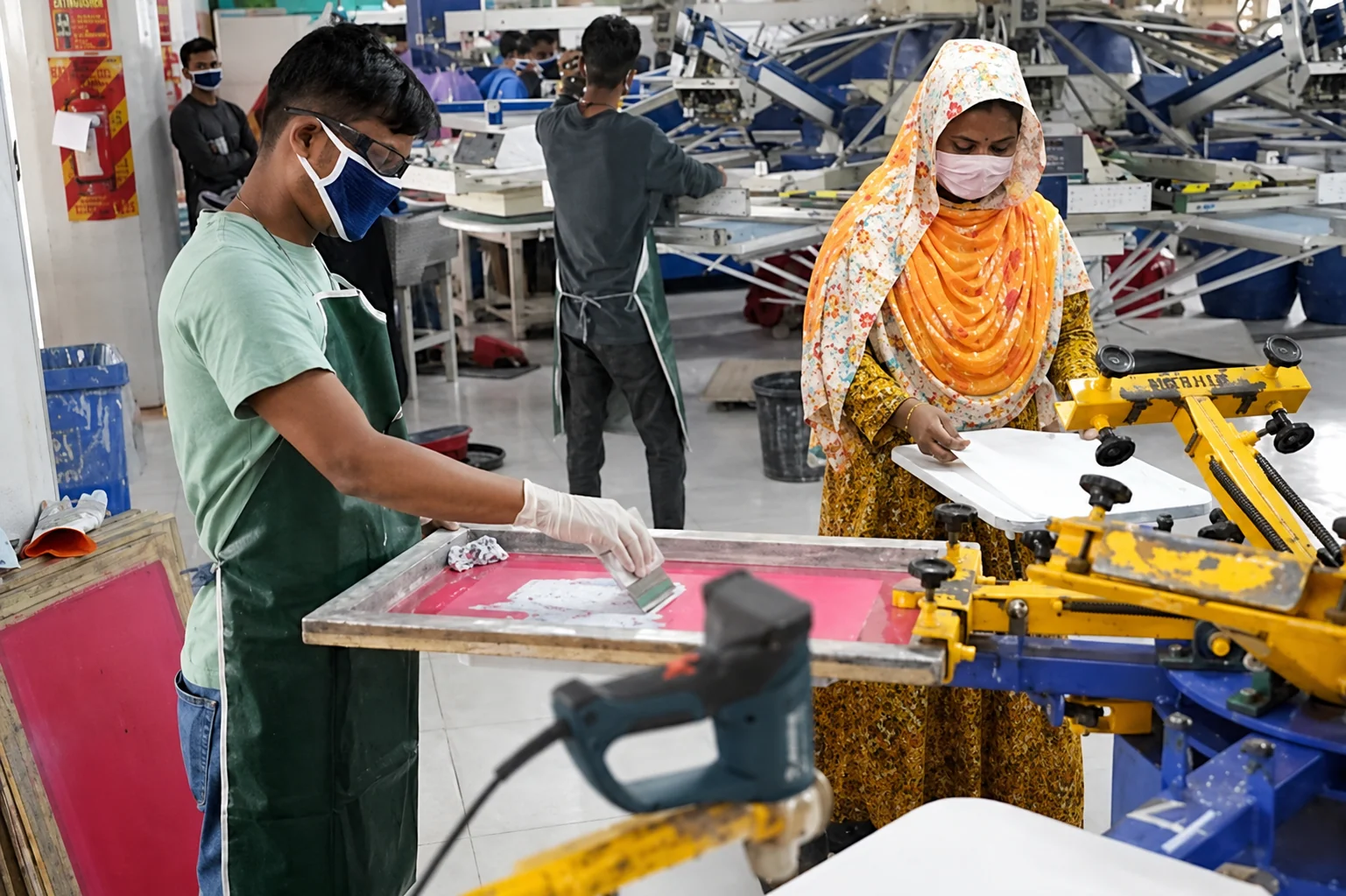
Flat-screen and rotary-screen printing expose paste to different application mechanics.
Flat-screen printing
Important variables include squeegee pressure, squeegee speed, screen parameters, paste transfer and repeat-to-repeat consistency.
Rotary-screen printing
Continuous production places greater emphasis on stable circulation, practical filtration, pumping and long-run paste stability.
A thickener should therefore be tested on equipment representative of the intended production process.
Тонкі лінії проти великих суцільних ділянок
Different design elements stress the printing paste in different ways.
Fine lines reveal
Spreading control
Відновлення конструкції
Уривок з фільму
Small-detail transfer
Large solid areas reveal
Transfer uniformity
Вирівнювання
Проникнення
Paste delivery consistency
A useful diagnostic design should contain both fine details and large solid areas.
Understanding HV, MV and LV Grades
High viscosity, medium viscosity and low viscosity are common commercial grade descriptions, especially for sodium alginate.
These terms should not be interpreted as universal international specifications.
HV does not mean highest quality
A high-viscosity product simply represents a different viscosity direction under the supplier’s defined test conditions.
MV may be preferable in another process
A medium-viscosity grade can sometimes provide easier preparation, transfer or dosage control depending on the formulation.
Always request the actual method
Concentration, temperature, instrument, spindle and speed are more useful for supplier comparison than HV, MV or LV alone.
Why the Same Viscosity Does Not Mean the Same Product
Matching one viscosity number is a useful starting point but does not prove product equivalence.
Two thickeners with similar viscosity may still differ in:
Polymer chemistry
Molecular characteristics
Ступінь заміщення
Purity-related parameters
Particle characteristics
Hydration rate
Властивість розрідження під дією зсуву
Відновлення конструкції
Реакція електролітів
Фільтрація
Application testing remains necessary even when the candidate matches the reference viscosity.
Essential Thickener Testing Parameters
Professional thickener evaluation should occur at several levels.
Raw product or stock solution
Зовнішній вигляд
Moisture or solids where applicable
pH
В’язкість
Гідратація
Фільтрація
Complete printing paste
Viscosity after chemical addition
Реологія
Physical stability
Піна
Фільтрація
Стабільність утримання
Printing application
Уривок з фільму
Paste transfer
Визначення
Проникнення
Рівномірність по всій площі
Finished textile
Color result
Фіксація
Wash-off where relevant
Fastness where relevant
Fabric handle
Recommended Laboratory Trial Workflow
Step 1: Define the application
Record the printing route, fabric, dye or ink system and equipment.
Step 2: Select the current benchmark
Use the commercial product already approved in production whenever possible.
Step 3: Align the test methods
Standardize concentration, preparation, hydration, temperature, viscosity method and filtration.
Step 4: Prepare reference and candidate together
Keep laboratory variables as consistent as possible.
Step 5: Compare stock properties
Evaluate hydration, viscosity, pH, filtration and appearance.
Step 6: Prepare the complete printing paste
Use the actual dyes, pigments and auxiliaries required by production.
Step 7: Test holding stability
Repeat critical measurements after a realistic waiting period.
Step 8: Print the same fabric
Use the same design and machine conditions for both products.
Step 9: Complete normal post-treatment
Perform fixation, washing or curing according to the real production process.
Step 10: Optimize dosage
After the candidate passes the baseline comparison, determine its practical operating concentration separately.
Production Scale-Up
Laboratory approval is not the final stage of thickener qualification.
Larger mixing equipment, pump shear, circulation, long holding times and production speed can expose differences that are not visible in a small laboratory batch.
Use a controlled production trial
Keep the formulation, fabric and machine conditions as stable as practical while evaluating the candidate.
Monitor the whole production run
Compare fabric from the beginning, middle and end.
Record operational behavior
Paste preparation
Насосне обладнання
Фільтрація
Screen cleaning
Machine interruptions
Витрата пасти
Finished-fabric quality
Troubleshooting Common Thickener Problems
Проблема
Possible Cause
Що слід перевірити
Viscosity too low
Dosage, incomplete hydration or test-method difference
Concentration, mixing, hydration and measurement method
Viscosity too high
Overdosage, evaporation or temperature difference
Solids, water loss, temperature and formulation
High filter residue
Lumps, gels, contamination or incompatibility
Preparation and staged chemical addition
Погана проникність екрану
Filtration or unsuitable rheology
Residue, viscosity, screen and shear behavior
Print bleeding
Excess lateral flow, substrate wetting or later-stage migration
Locate when the defect appears; then compare paste flow, fabric, liquid load and drying or fixation
Broken fine lines
Poor transfer or screen restriction
Paste transfer, viscosity, filtration and equipment
Paste changes during storage
Temperature, evaporation or chemical instability
Holding conditions, pH and complete formulation
Lab trial passes but production fails
Scale-up difference
Mixing, circulation, holding time and machine conditions
Not every printing defect is caused by the thickener. Fabric, colorant, machine condition, fixation and operator variables should also be investigated.
Загальна вартість експлуатації
Thickener price per kilogram is only one part of the purchasing decision.
Material cost
Compare delivered price at the optimized dosage.
Preparation cost
Consider hydration time, mixing, energy, filtration and labor.
Machine cost
Include screen cleaning, downtime, pump problems and production speed.
Waste cost
Include filter residue, leftover paste and off-specification batches.
Quality cost
Include reprinting, rejected fabric and additional post-treatment.
The lowest-priced thickener is therefore not automatically the lowest-cost printing solution.
Choose the Next Technical Question
Use this overview to choose a route, then follow the guide that addresses the unresolved decision. A product name or a viscosity result is a starting point, not an application approval.
Question now
Useful next guide
Decision boundary
Which commercial grade could replace the current product?
Buyers can begin with either the printing application or a product already approved in their factory.
Через Зразки та підбір , the current TDS, physical sample, viscosity method and printing conditions can be used to select a technically relevant trial grade.
До корисної інформації належать:
Current manufacturer and commercial grade
TDS або останній COA
Фізичний еталонний зразок
В'язкість та повна методика випробувань
Поточна доза
Printing formulation
Reactive, disperse, pigment or digital process
Склад тканини
Printing equipment
Fixation or curing process
Current problem or improvement target
Estimated commercial requirement
The objective is to identify a suitable candidate for controlled comparison rather than assume that a similar product name or viscosity guarantees equivalent printing performance📧 Електронна пошта: Service@fsxchemical.com
Дізнайтеся, чому показники в’язкості загущувачів для текстильного друку не можна порівнювати без урахування таких параметрів, як концентрація, температура, прилад, шпиндель, швидкість, метод підготовки та тривалість випробування.
Дізнайтеся, як підібрати загущувач та методи попередньої обробки для реактивного, дисперсного, пігментного та цифрового друку на текстилі з урахуванням вимог до тканини, барвника або чорнила, фіксації, змивання та якості друку.
Порівняйте CMC, CMS, альгінат натрію та пасту для цифрового друку на текстилі. Дізнайтеся, як кожен із цих матеріалів підходить для реактивних, дисперсних, пігментних та цифрових технологій друку, а також на що покупцям слід звернути увагу перед тестуванням зразків, підбором сорту та оптовою закупівлею.
Альгінат натрію широко використовується у текстильному друці як стабільний та стійкий до прання загущувач для реактивних друкарських паст. Дізнайтеся, як перед придбанням оцінити клас в’язкості, ступінь чистоти та придатність продукту для конкретного застосування, а також як компанія FSX Chemical надає підтримку покупцям з усього світу, надаючи технічні дані та зразки.
Choose CMC for textile printing by application, DS, viscosity method and formulation trials. Use a practical checklist to compare grades before bulk purchase.
Карбоксиметилцелюлоза використовується як загущувач і стабілізатор у водорозчинних чорнилах, глибокому друці та підготуванні до струменевого друку. Цей посібник містить інформацію про основні параметри сортів та рекомендації щодо вибору постачальників для відділів закупівель.
Вибір відповідного постачальника CMC — це не лише порівняння цін. У цьому посібнику викладено критерії оцінки, перелік необхідної документації та процедуру тестування, яких повинні дотримуватися відділи закупівель перед тим, як укласти договір на оптове замовлення.
Друкарська паста на основі CMC використовується у пігментному, реактивному та цифровому текстильному друку. У цьому посібнику пояснюється, які параметри мають значення, як порівнювати постачальників та що слід уточнити перед тим, як оформити оптове замовлення.
І альгінат натрію, і КМК використовуються як загусники в текстильному друку, але вони підходять для різних систем фарбування та умов виробництва. У цьому посібнику пояснюються основні відмінності та випадки, коли слід застосовувати кожну з цих речовин.
Цифровий струменевий друк на текстилі має інші вимоги до пасти та попередньої обробки, ніж трафаретний друк. У цьому посібнику пояснюється, як альгінат натрію використовується в цифровому текстильному друці та які параметри якості повинні вказувати фахівці з закупівель.
CMC харчового та промислового призначення мають однакову хімічну основу, але суттєво відрізняються за рівнем чистоти, діапазоном DS та нормативними вимогами. У цьому посібнику пояснюються основні відмінності та причини, через які використання неправильного сорту може спричинити проблеми у виробництві.
Prepare sodium alginate printing paste with a grade-specific concentration and controlled powder dispersion. Validate hydration, viscosity, filtration, air removal and holding time before production.
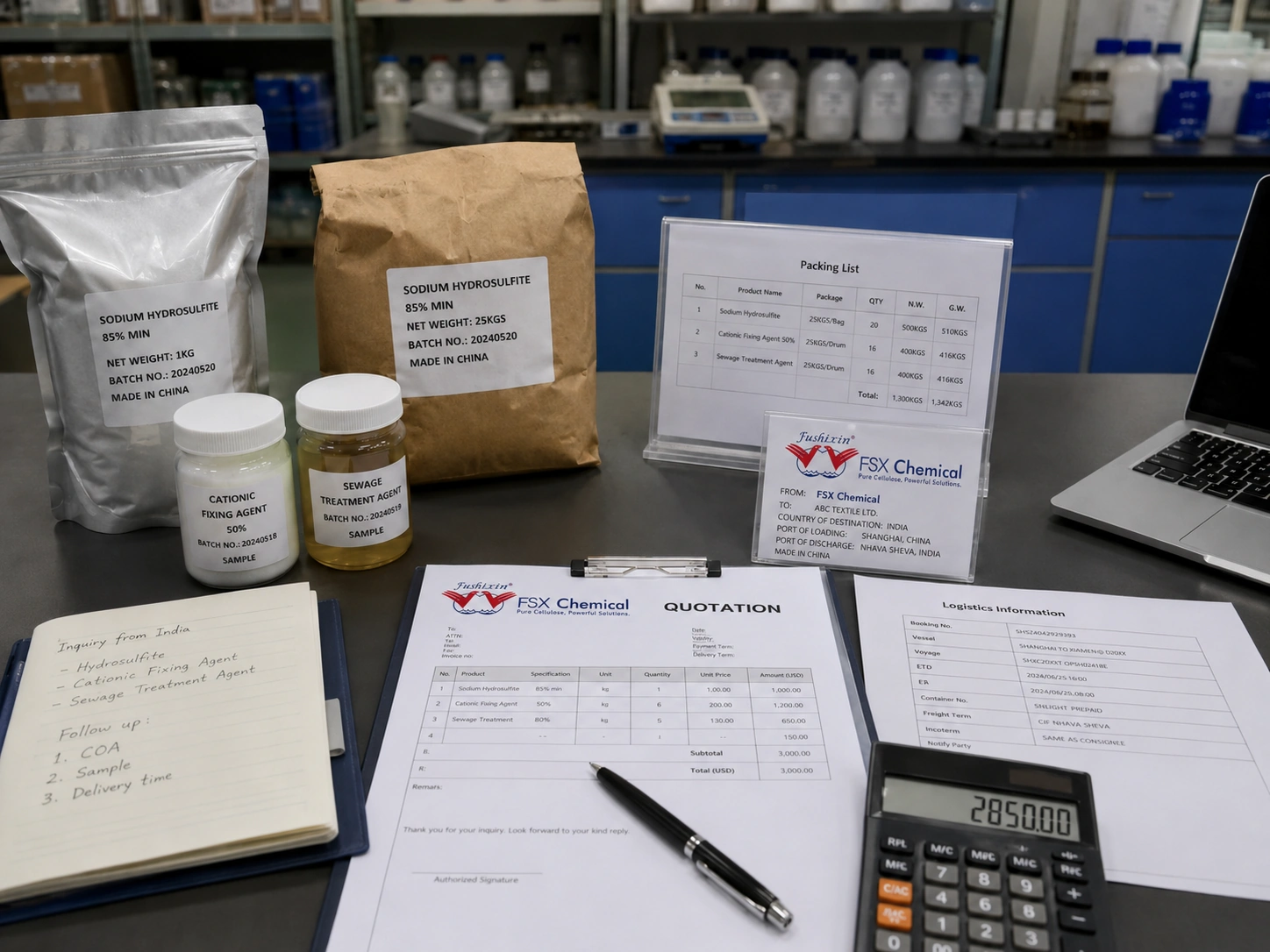
Надайте назву продукту, сферу застосування, кількість, місце призначення, а також будь-які технічні специфікації (TDS),
зразки фотографій або документів, які у вас вже є. Компанія FSX Chemical розгляне цю
інформацію та надасть рекомендації щодо подальших кроків: підготовки комерційної пропозиції, підбору зразків
або вибору продукту.
Інформація про товарНазва товару, сорт, модель, фото етикетки або код постачальника.
Доступні документиTDS, SDS, COA, фото зразка, перелік продукції або дані випробувань.
Деталі замовленняОрієнтовна кількість, упаковка, країна призначення, порт або умови торгівлі.
Заявка чи проблемаПроцес друку на текстилі, вимоги до складу, поточні проблеми або цільові показники ефективності.