Textile Printing Thickening Agents: A Process Selection Guide
Textile printing thickening agents control much more than viscosity. This 2026 guide explains sodium alginate,...
Textile printing thickening agents control paste flow and application behaviour. Choose a route by the dye or ink system, fabric, printing method and addition point, then compare the complete formulation under stated test conditions. Sodium alginate, CMC, FSX CMS, synthetic or compound thickeners and digital pretreatments are useful selection routes, but they are not five mutually exclusive chemical classes or interchangeable products.
Thickening agents are among the most important functional materials in textile printing chemistry. They help create the paste structure needed to transport dyes, pigments and auxiliaries through preparation, application and fixation without allowing uncontrolled spreading across the fabric.
Yet selecting a textile printing thickener has become more complex than choosing a high-, medium- or low-viscosity product.
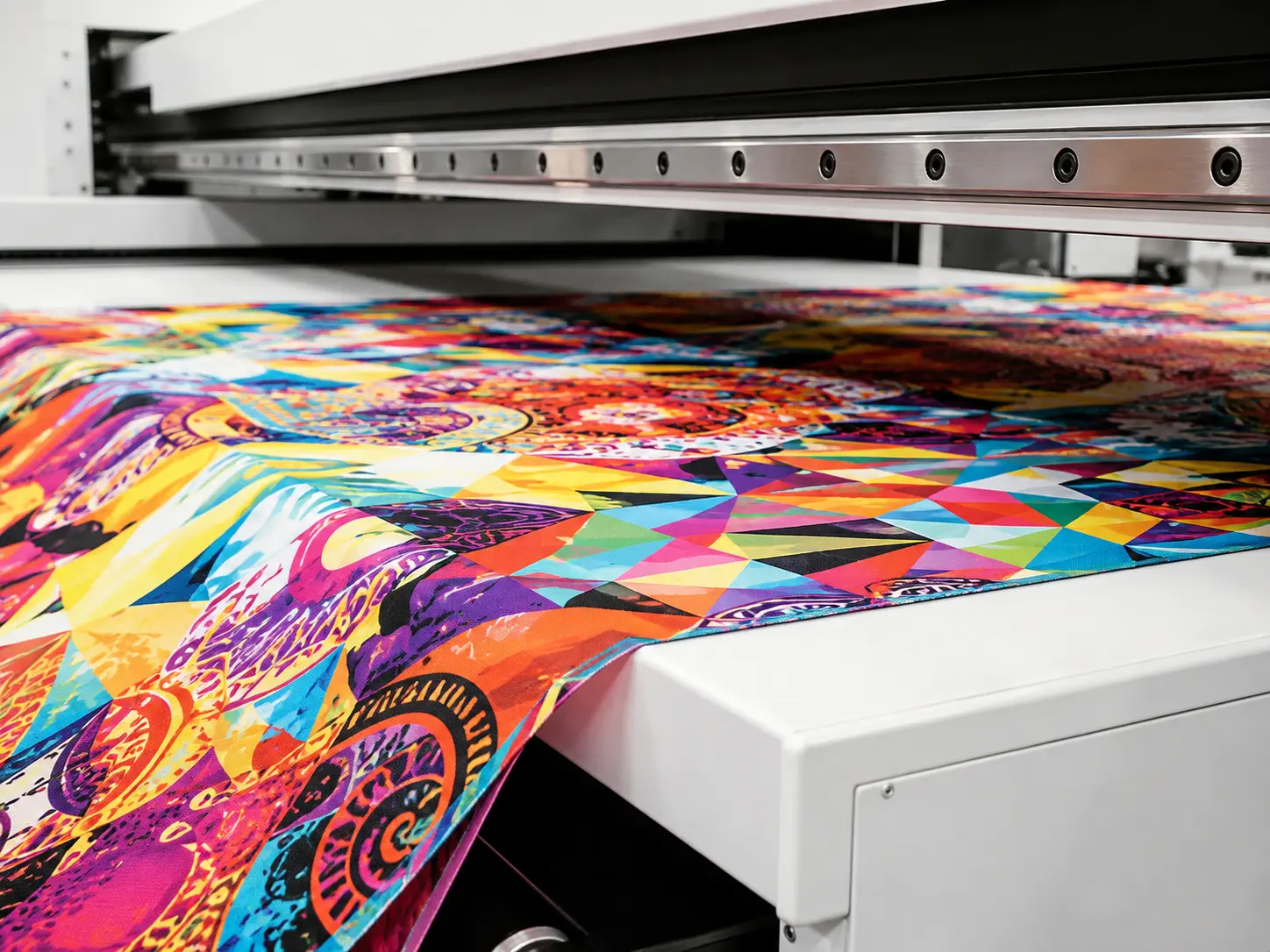
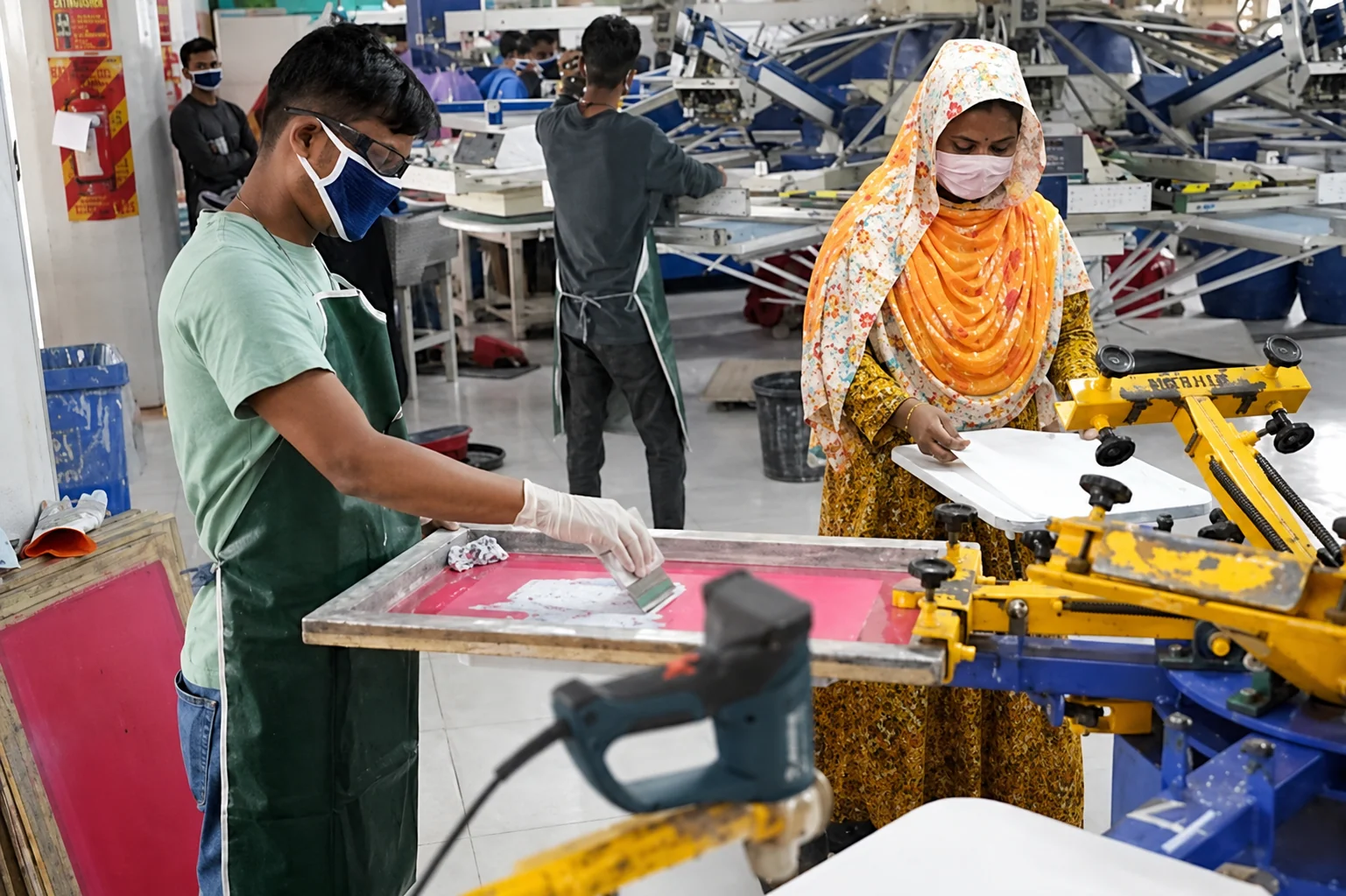
Modern printing mills may operate flat-screen, rotary-screen and digital inkjet lines. They may print cotton with reactive dyes, polyester with disperse colorants, pigment systems on multiple fibers or several technologies inside the same facility.
These processes do not require identical rheology or chemical compatibility. A thickener that performs well in one system may be a poor choice in another, even when the viscosity appears similar.
Start with the printing chemistry and operating conditions, then validate the candidate route on the actual fabric. Use the focused guides below when the question is grade matching, viscosity drift, process choice or cost comparison.
What Are Textile Printing Thickening Agents?
Textile printing thickening agents are polymers or formulated rheology-control systems used to create the flow properties required in printing pastes and textile pretreatment formulations.
Their purpose is not simply to make a liquid thicker. They help control how the paste behaves while being mixed, stored, pumped, transferred through a screen or applied to a textile surface.
A printing thickener can influence
Paste viscosity
Shear-thinning behavior
Structural recovery
Paglilipat sa screen
Paste transfer
Fabric penetration
Lateral spreading
Fine-line definition
Solid-area uniformity
Pagpapanatili ng katatagan
Because these properties interact with dyes, pigments, salts, alkalis, binders and fabric surfaces, thickener selection must be tied to the complete application.
Why Thickeners Matter Beyond Viscosity
Viscosity is one of the most frequently quoted specifications for a textile printing thickener, but viscosity alone cannot describe how a paste behaves during printing.
A laboratory measurement normally represents one concentration, temperature and shear condition.
A printing machine exposes paste to changing mechanical conditions during holding, pumping, screen passage and fabric transfer. A viscosity increase as shear falls is not, by itself, evidence of time-dependent structural rebuilding.
This creates several different requirements
At relatively low shear, sufficient structure may help maintain paste stability.
Under higher shear, easier flow may support pumping and application.
After transfer to the fabric, structural recovery can help limit uncontrolled spreading.
This is why two thickeners with similar viscosity can produce noticeably different printing results.
Five Commercial Selection Routes and Their Boundaries
Thickener Route
What It Is
Common Evaluation Direction
Main Selection Factors
Sodium Alginate
Seaweed-derived polysaccharide
Conventional reactive printing
Viscosity, rheology, filtration, definition and wash-off
CMC
Cellulose-derived modified polymer
Selected printing and compound systems
DS, viscosity, hydration, rheology and compatibility
CMS
FSX commercial synthetic printing-thickener family; confirm the exact grade
Selected disperse, reactive and compound systems depending on grade
Viscosity, screen behavior, stability, wash-off and cost in use
Synthetic / Compound Thickener
Formulated rheology-control system
Pigment and process-specific formulations
Binder compatibility, electrolyte tolerance, rheology and dosage
Pasta para sa digital na pagpi-print
Inkjet pretreatment or functional paste system
Reactive, disperse or pigment digital printing
Ink system, fabric, pickup, filtration, definition and fixation
These headings group practical sourcing and application questions. They overlap: a commercial family may contain formulated products, while digital printing paste describes an application route rather than one polymer chemistry. Select by the documented product and process, not by the category label alone.
The correct starting point depends on the dye or ink chemistry, fabric, printing machine, pretreatment method, fixation route and finished-textile requirements.
1. Sodium Alginate
Sodium alginate is one of the best-known thickening routes for conventional reactive textile printing on suitable cellulosic fabrics.
It is derived from brown algae and is available in different viscosity and application grades.
Why sodium alginate is important in reactive printing
Its chemistry and established application behavior make it a common benchmark when formulating reactive printing pastes.
Important purchasing parameters include
Actual viscosity specification
Viscosity test concentration
Instrument and speed
Pag-hydrate
Pagsasala
Rheolohiya
Reactive-paste compatibility
I-print ang depinisyon
Fixation and wash-off
Do not buy sodium alginate from HV, MV or LV alone
High-, medium- and low-viscosity labels are supplier classification systems rather than universal international quality grades.
Buyers should compare the actual viscosity value and complete test method before assuming two grades are equivalent.
2. Carboxymethyl Cellulose (CMC)
Karboximetil selulosa , commonly known as CMC, is a water-soluble cellulose derivative used across many industrial rheology applications.
Selected CMC grades can also be evaluated in textile printing, viscosity-control and compound-thickener systems.
CMC selection involves more than viscosity
Degree of substitution
Lapot
Subukan ang konsentrasyon
Pagkakalas
Pag-hydrate
Pagsasala
Electrolyte response
Rheolohiya
Complete-formula compatibility
Degree of substitution matters
Degree of substitution, or DS, can influence solubility and ionic behavior. However, a higher DS should not automatically be interpreted as higher product quality.
CMC is not automatically a 1:1 alginate replacement
Replacing sodium alginate with CMC changes the polymer chemistry. Such a change should be treated as a formulation-development project and confirmed with actual printing trials.
3. FSX CMS: A Synthetic Printing-Thickener Family
FSX CMS is a commercial synthetic printing-thickener family. Do not interpret the abbreviation as proof of carboxymethyl starch composition. Confirm the exact grade, product form and documented application in the current TDS.
Depending on the grade and formulation, CMS can be evaluated in disperse, selected reactive, compound and specialty printing routes.
Important CMS evaluation factors include
Commercial grade
Viscosity and method
Pag-hydrate
Pagsasala
Paglilipat sa screen
Pagpapanatili ng katatagan
Color-paste compatibility
Wash-off where applicable
Effective dosage
CMS and cost optimization
CMS is sometimes evaluated as part of a lower-cost or blended thickener strategy.
The correct economic comparison should use the optimized dosage and final printing result rather than raw-material price alone.
4. Synthetic and Compound Thickeners
Not every textile printing process is best served by one natural or modified polysaccharide.
Synthetic rheology modifiers and compound thickener systems can be designed to provide a different balance of flow, structural recovery, electrolyte tolerance and effective dosage.
Compound systems can combine functions such as
Base viscosity
Shear thinning
Structural recovery
Katatagan ng pandikit
Electrolyte tolerance
Paglilipat sa screen
I-print ang depinisyon
Cost optimization
Pigment printing requires special attention
In pigment printing, the thickener needs to operate inside a system that may also contain pigment dispersion, binder and curing auxiliaries.
Binder compatibility and final fabric handle can therefore be as important as viscosity.
It is better understood as a process-specific textile pretreatment or functional paste route selected according to digital ink chemistry and the fabric.
Reactive digital printing
Pretreatment is evaluated for ink migration, definition, fixation, wash-off and final fabric quality on suitable cellulosic fabrics.
Ikalat ang digital na pagpi-print
For polyester, distinguish direct disperse printing onto fabric from sublimation transfer through printed paper. Evaluate a fabric pretreatment where the direct process specifies one; do not infer the same addition point or pretreatment requirement for transfer printing.
Digital na pagpi-print ng pigmento
Pigment systems require particular attention to binder compatibility, curing, rubbing performance, definition and hand feel.
Digital printing paste is not digital ink
Textile pretreatment thickeners should not simply be added directly into inkjet ink. The ink and the fabric-side pretreatment perform different functions and should be formulated and evaluated separately.
Viscosity vs Rheology
Viscosity describes resistance to flow under defined measurement conditions. Rheology describes the broader way a material flows and changes structure when mechanical conditions change.
For textile printing, rheology often explains differences that a single viscosity number cannot.
A reliable viscosity comparison should record
Konsentrasyon ng produkto
Pinagmumulan ng tubig
Pamamaraan ng paghahanda
Oras ng pag-hydrate
Temperatura ng pagsukat
Instrument
Spindle or rotor
Bilisan ng pag-ikot
Oras ng pagbabasa
Two TDS values should not be compared directly if the measurement methods are different.
Shear Thinning and Structural Recovery
Many printing pastes are designed to become easier to flow as shear increases.
This can support pumping and passage through a screen while preserving useful structure under lower-shear conditions.
After printing, recovery matters
After transfer, paste flow must become sufficiently limited to preserve the design. If time-dependent recovery is part of the proposed explanation, measure it with a defined shear-and-rest history rather than infer it from a single-speed viscosity result.
Too little recovery can contribute to
Blurred edges
Color bleeding
Loss of fine lines
Poor small-text reproduction
Too much structure can also be undesirable
Excessive resistance can reduce paste transfer or create poor large-area coverage.
The objective is therefore rheological balance rather than maximum viscosity.
Hydration and Dissolution
Poor polymer preparation can create inaccurate laboratory results and unnecessary production problems.
Control powder addition
Introduce powdered thickener using a repeatable method that minimizes persistent lumps and uneven wetting.
Allow sufficient hydration
Some polymers continue developing viscosity after mixing. Correcting the batch too early can lead to excessive final viscosity.
Standardize mixing
Mixer type, speed, batch size, temperature and total mixing time should remain consistent when comparing products.
Preparation behavior should be considered part of thickener performance, not simply a laboratory inconvenience.
Filtration and Screen Passage
Filtration is a critical practical parameter for textile printing thickeners.
Undissolved polymer, gel particles or incompatible material can contribute to screen problems and production interruptions.
Use a standardized filtration method
Keep concentration, hydration, sample quantity, filter material and opening size consistent.
Suriin ang natirang bahagi
Residue can come from incomplete hydration, gel formation, contamination or precipitation after other chemicals are added.
Test the complete paste
A stock thickener may filter well in water but behave differently after dyes, salts, alkalis or binders enter the formulation.
Chemical Compatibility
The thickener operates as part of a chemical system rather than in isolation.
Depending on the printing route, compatibility should be checked with
Reactive dyes
Disperse colorants
Pigment dispersions
Mga asin
Mga alkali
Mga binder
Mga pampanatili ng kahalumigmigan
Mga ahente ng pagbabad
Pang-alis ng bula
Iba pang mga polymer
Staged addition during troubleshooting can help identify which component changes viscosity, stability or filtration.
Choosing a Thickener for Reactive Printing
Sodium alginate is a common benchmark starting route for conventional reactive printing on cotton, viscose and other suitable cellulosic fabrics.
Evaluate
Lapot
Rheolohiya
Pagsasala
Paglilipat sa screen
Color-paste compatibility
Fine-line definition
Solid-area uniformity
Pagkakatakda
Huhugasan
Final fabric handle
CMC, CMS or compound systems may be evaluated in selected formulations, but a direct one-to-one substitution should not be assumed.
Choosing a Thickener for Disperse Printing
Disperse printing is primarily associated with polyester, and the thickener must be selected around the colorant, textile, machine and thermal fixation process.
CMS and application-specific compound routes can be evaluated for
Katatagan ng pandikit
Paglilipat sa screen
Paglilipat
Solid-area uniformity
Thermal-process compatibility
Finished polyester quality
A thickener successful in reactive cotton printing should not automatically be transferred to polyester disperse printing.
Choosing a Thickener for Pigment Printing
Pigment printing depends on a different chemistry because the colorant typically relies on a binder system and curing process.
Evaluate the thickener together with
Pigment dispersion
Binder
Electrolytes
Curing auxiliaries
Fabric finish
Final evaluation should include
I-print ang depinisyon
Color uniformity
Curing behavior
Pagganap ng pag-pahid
Fabric hand feel
Choosing Chemistry for Digital Textile Printing
Digital textile printing requires process-specific pretreatment rather than a conventional screen-printing paste transferred unchanged into an inkjet process.
A practical workflow is
Fabric → Pretreatment → Drying → Inkjet Printing → Fixation or Curing → Washing or Finishing
Selection should begin with
Reactive, disperse or pigment ink
Fabric composition
Pretreatment equipment
Pretreatment pickup
Pagpatuyo
Required print definition
Fixation or curing process
A digital pretreatment system should be judged from the finished textile, not only its viscosity before printing.
Flat-Screen vs Rotary-Screen Printing
Flat-screen and rotary-screen printing expose paste to different application mechanics.
Pagpi-print sa patag na screen
Important variables include squeegee pressure, squeegee speed, screen parameters, paste transfer and repeat-to-repeat consistency.
Rotary na pagpi-print sa salaan
Continuous production places greater emphasis on stable circulation, practical filtration, pumping and long-run paste stability.
A thickener should therefore be tested on equipment representative of the intended production process.
Fine Lines vs Large Solid Areas
Different design elements stress the printing paste in different ways.
Fine lines reveal
Spreading control
Structural recovery
Paglilipat sa screen
Small-detail transfer
Large solid areas reveal
Transfer uniformity
Leveling
Pagpasok
Paste delivery consistency
A useful diagnostic design should contain both fine details and large solid areas.
Understanding HV, MV and LV Grades
High viscosity, medium viscosity and low viscosity are common commercial grade descriptions, especially for sodium alginate.
These terms should not be interpreted as universal international specifications.
HV does not mean highest quality
A high-viscosity product simply represents a different viscosity direction under the supplier’s defined test conditions.
MV may be preferable in another process
A medium-viscosity grade can sometimes provide easier preparation, transfer or dosage control depending on the formulation.
Always request the actual method
Concentration, temperature, instrument, spindle and speed are more useful for supplier comparison than HV, MV or LV alone.
Why the Same Viscosity Does Not Mean the Same Product
Matching one viscosity number is a useful starting point but does not prove product equivalence.
Two thickeners with similar viscosity may still differ in:
Polymer chemistry
Molecular characteristics
Degree of substitution
Purity-related parameters
Particle characteristics
Hydration rate
Shear-thinning behavior
Structural recovery
Electrolyte response
Pagsasala
Application testing remains necessary even when the candidate matches the reference viscosity.
Essential Thickener Testing Parameters
Professional thickener evaluation should occur at several levels.
Raw product or stock solution
Mukha
Moisture or solids where applicable
pH
Lapot
Pag-hydrate
Pagsasala
Complete printing paste
Viscosity after chemical addition
Rheolohiya
Physical stability
Bula
Pagsasala
Pagpapanatili ng katatagan
Printing application
Paglilipat sa screen
Paste transfer
Definition
Pagpasok
Solid-area uniformity
Finished textile
Color result
Pagkakatakda
Wash-off where relevant
Fastness where relevant
Tela na hawakan
Recommended Laboratory Trial Workflow
Step 1: Define the application
Record the printing route, fabric, dye or ink system and equipment.
Step 2: Select the current benchmark
Use the commercial product already approved in production whenever possible.
Step 3: Align the test methods
Standardize concentration, preparation, hydration, temperature, viscosity method and filtration.
Step 4: Prepare reference and candidate together
Keep laboratory variables as consistent as possible.
Step 5: Compare stock properties
Evaluate hydration, viscosity, pH, filtration and appearance.
Step 6: Prepare the complete printing paste
Use the actual dyes, pigments and auxiliaries required by production.
Step 7: Test holding stability
Repeat critical measurements after a realistic waiting period.
Step 8: Print the same fabric
Use the same design and machine conditions for both products.
Step 9: Complete normal post-treatment
Perform fixation, washing or curing according to the real production process.
Step 10: Optimize dosage
After the candidate passes the baseline comparison, determine its practical operating concentration separately.
Production Scale-Up
Laboratory approval is not the final stage of thickener qualification.
Larger mixing equipment, pump shear, circulation, long holding times and production speed can expose differences that are not visible in a small laboratory batch.
Use a controlled production trial
Keep the formulation, fabric and machine conditions as stable as practical while evaluating the candidate.
Monitor the whole production run
Compare fabric from the beginning, middle and end.
Record operational behavior
Paste preparation
Pumping
Pagsasala
Screen cleaning
Machine interruptions
Paste consumption
Finished-fabric quality
Troubleshooting Common Thickener Problems
Problema
Posibleng sanhi
What to Check
Viscosity too low
Dosage, incomplete hydration or test-method difference
Concentration, mixing, hydration and measurement method
Masyadong mataas ang lapot
Overdosage, evaporation or temperature difference
Solids, water loss, temperature and formulation
High filter residue
Lumps, gels, contamination or incompatibility
Preparation and staged chemical addition
Poor screen passage
Filtration or unsuitable rheology
Residue, viscosity, screen and shear behavior
Print bleeding
Excess lateral flow, substrate wetting or later-stage migration
Locate when the defect appears; then compare paste flow, fabric, liquid load and drying or fixation
Broken fine lines
Poor transfer or screen restriction
Paste transfer, viscosity, filtration and equipment
Paste changes during storage
Temperature, evaporation or chemical instability
Holding conditions, pH and complete formulation
Lab trial passes but production fails
Scale-up difference
Mixing, circulation, holding time and machine conditions
Not every printing defect is caused by the thickener. Fabric, colorant, machine condition, fixation and operator variables should also be investigated.
Total Cost in Use
Thickener price per kilogram is only one part of the purchasing decision.
Gastos ng materyal
Compare delivered price at the optimized dosage.
Gastos sa paghahanda
Consider hydration time, mixing, energy, filtration and labor.
Machine cost
Include screen cleaning, downtime, pump problems and production speed.
Gastos sa basura
Include filter residue, leftover paste and off-specification batches.
Quality cost
Include reprinting, rejected fabric and additional post-treatment.
The lowest-priced thickener is therefore not automatically the lowest-cost printing solution.
Choose the Next Technical Question
Use this overview to choose a route, then follow the guide that addresses the unresolved decision. A product name or a viscosity result is a starting point, not an application approval.
Question now
Useful next guide
Decision boundary
Which commercial grade could replace the current product?
Buyers can begin with either the printing application or a product already approved in their factory.
Sa pamamagitan ng Mga Halimbawa at Pagtutugma , the current TDS, physical sample, viscosity method and printing conditions can be used to select a technically relevant trial grade.
Kasama sa kapaki-pakinabang na impormasyon ang
Kasalukuyang tagagawa at komersyal na grado
TDS o kamakailang COA
Pisikal na sangguniang halimbawa
Viskosidad at kumpletong pamamaraan ng pagsubok
Kasalukuyang dosis
Printing formulation
Reactive, disperse, pigment or digital process
Fabric composition
Kagamitan sa pagpi-print
Fixation or curing process
Current problem or improvement target
Estimated commercial requirement
The objective is to identify a suitable candidate for controlled comparison rather than assume that a similar product name or viscosity guarantees equivalent printing performance📧 I-email: Service@fsxchemical.com
Alamin kung bakit hindi maaaring ikumpara ang mga halaga ng viskosidad ng pampapalapot sa pagpi-print ng tela nang hindi tinutugma ang konsentrasyon, temperatura, instrumento, spindle, bilis, paraan ng paghahanda, at oras ng pagsubok.
Matutong pumili ng pampatigas at mga paraan ng paunang paggamot para sa reaktibo, disperse, pigment, at digital na pagpi-print sa tela batay sa tela, tina o tinta, fiksasyon, paghuhugas, at mga kinakailangan sa kalidad ng pagpi-print.
Ihambing ang CMC, CMS, sodium alginate, at digital printing paste para sa pagpi-print ng tela. Alamin kung paano nababagay ang bawat uri sa mga prosesong reaktibo, disperse, pigment, at digital, at kung ano ang dapat suriin ng mga mamimili bago magsagawa ng pagsubok ng sample, pagtutugma ng grado, at malakihang pagbili.
Malawakang ginagamit ang sodium alginate sa pagpi-print ng tela bilang matatag at maaaring hugasan na pampalapot para sa reaktibong pasta sa pagpi-print. Alamin kung paano suriin ang grado ng viskosidad, kadalisayan, at pagiging angkop sa aplikasyon bago bumili, at kung paano sinusuportahan ng FSX Chemical ang mga mamimili sa buong mundo sa pamamagitan ng teknikal na datos at mga sample.
Choose CMC for textile printing by application, DS, viscosity method and formulation trials. Use a practical checklist to compare grades before bulk purchase.
Ang carboxymethyl cellulose ay ginagamit bilang pampalapot at pampatatag sa mga tinta na nakabase sa tubig, sa gravure printing, at sa paunang paggamot para sa inkjet. Saklaw ng gabay na ito ang mga pangunahing parameter ng grado at mga konsiderasyon sa pagkuha para sa mga koponan sa pagbili.
Ang pagpili ng tamang tagapagtustos ng CMC ay higit pa sa paghahambing ng presyo. Saklaw ng gabay na ito ang mga pamantayan sa pagsusuri, ang listahan ng mga dokumento, at ang proseso ng pagsubok na dapat sundin ng mga koponan sa pagbili bago mag-commit sa maramihang order.
Ang CMC-based printing paste ay ginagamit sa pigment, reactive, at digital na pagpi-print ng tela. Ipinapaliwanag ng gabay na ito kung aling mga parameter ang mahalaga, kung paano ihambing ang mga supplier, at kung ano ang dapat hilingin bago maglagay ng maramihang order.
Parehong ginagamit ang sodium alginate at CMC bilang pampalapot sa pagpi-print ng tela, ngunit angkop ang mga ito sa iba't ibang sistema ng pangkulay at kondisyon ng proseso. Ipinapaliwanag ng gabay na ito ang mga pangunahing pagkakaiba at kung kailan dapat gamitin ang bawat isa.
Ang digital inkjet printing sa tela ay may iba't ibang kinakailangan sa paste at paunang paggamot kumpara sa screen printing. Ipinapaliwanag ng gabay na ito kung paano ginagamit ang sodium alginate sa digital na pagpi-print ng tela at kung anong mga parameter ng grado ang dapat tukuyin ng mga koponan sa pagbili.
Ang CMC na pang-pagkain at pang-industriya ay pareho ang batayang kemistri ngunit malaki ang pinagkaiba sa kadalisayan, saklaw ng DS, at mga kinakailangang regulasyon. Ipinapaliwanag ng gabay na ito ang mga pangunahing pagkakaiba at kung bakit nagdudulot ng mga problema sa produksyon ang paggamit ng maling uri.
Prepare sodium alginate printing paste with a grade-specific concentration and controlled powder dispersion. Validate hydration, viscosity, filtration, air removal and holding time before production.
Ibahagi ang pangalan ng produkto, aplikasyon, dami, destinasyon, at anumang TDS, larawan ng sample o dokumento na mayroon ka na. Susuriin ng FSX Chemical ang impormasyon at irekomenda ang susunod na hakbang para sa quotation, pagtutugma ng sample, o pagpili ng produkto.
Impormasyon ng ProduktoPangalan ng produkto, grado, modelo, larawan sa etiketa o sanggunian ng tagapagtustos.
Magagamit na mga dokumentoTDS, SDS, COA, larawan ng sample, listahan ng produkto o datos ng pagsubok.
Mga Detalye ng OrderTinatayang dami, pag-iimpake, bansang patutunguhan, pantalan o termino sa kalakalan.
Aplikasyon o IsyuProseso ng pagpi-print sa tela, pangangailangan sa pormulasyon, kasalukuyang isyu o target na pagganap.