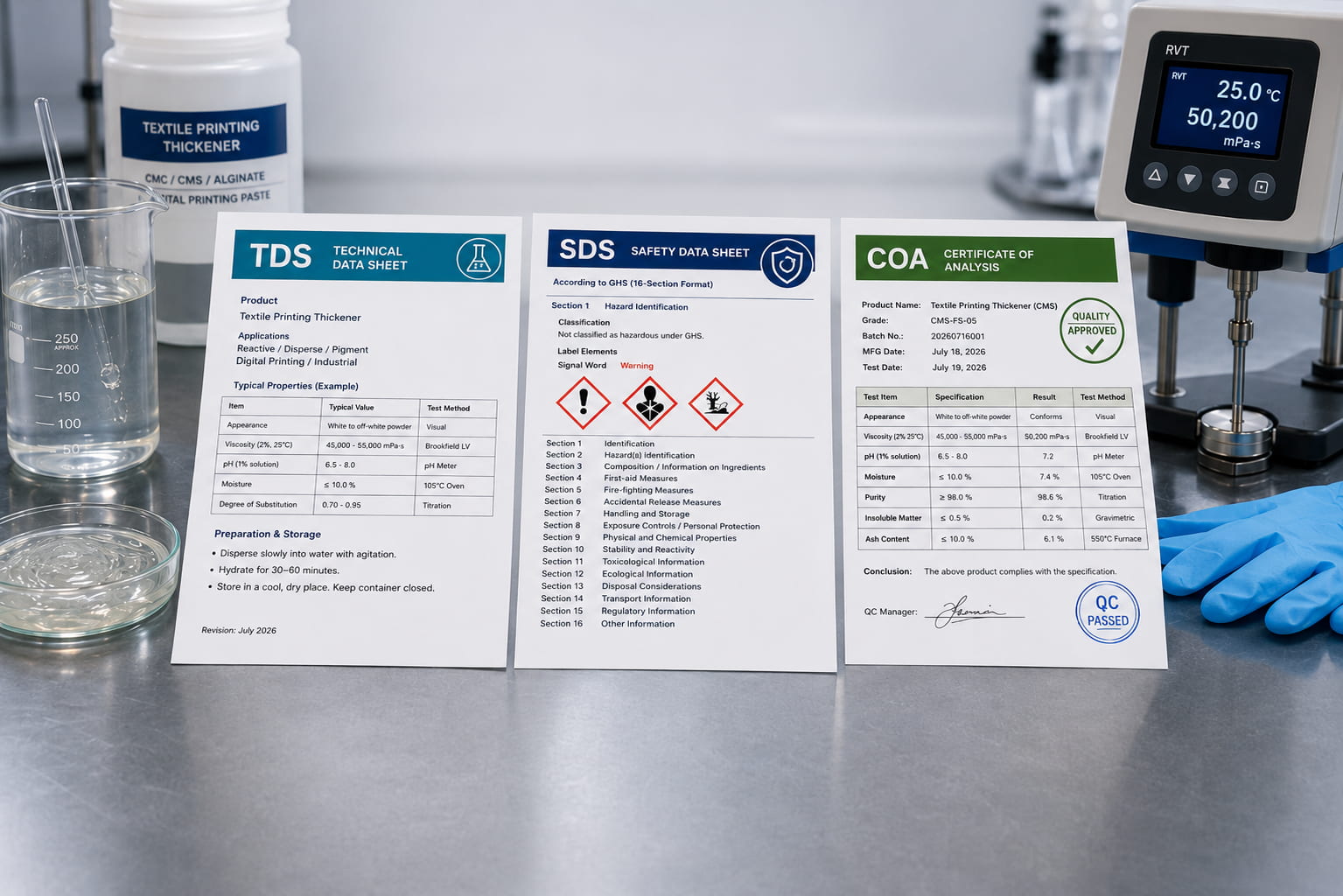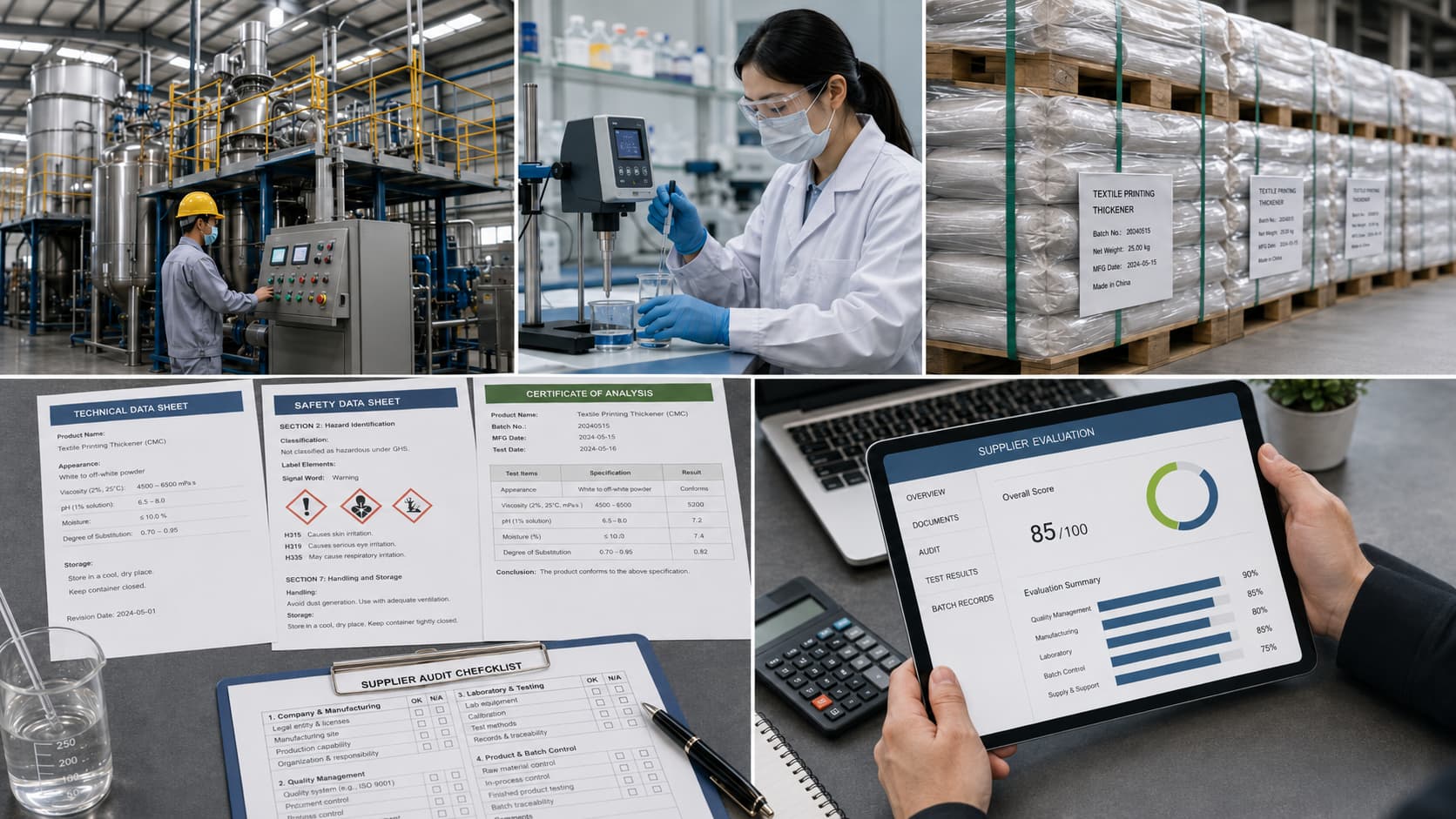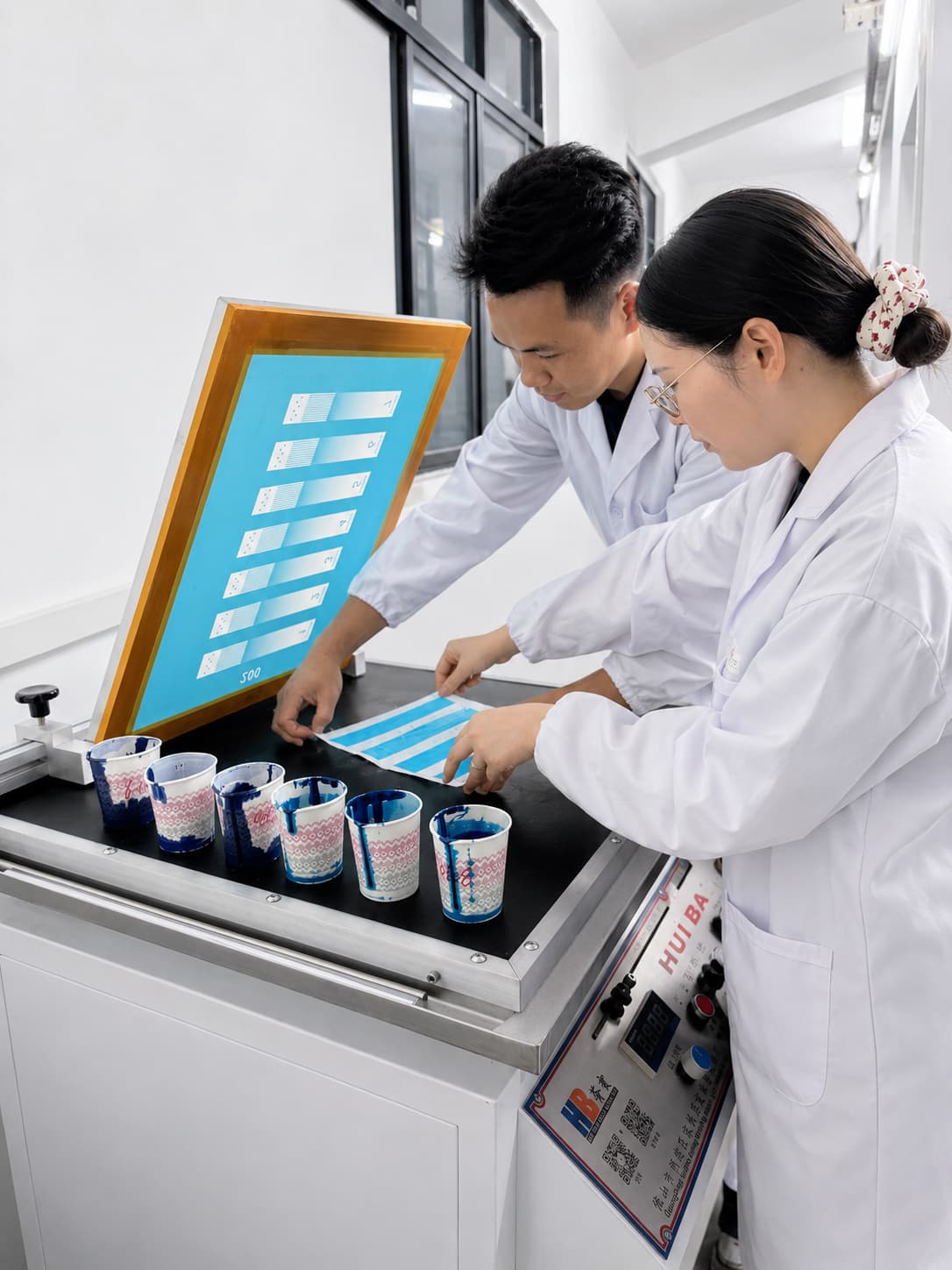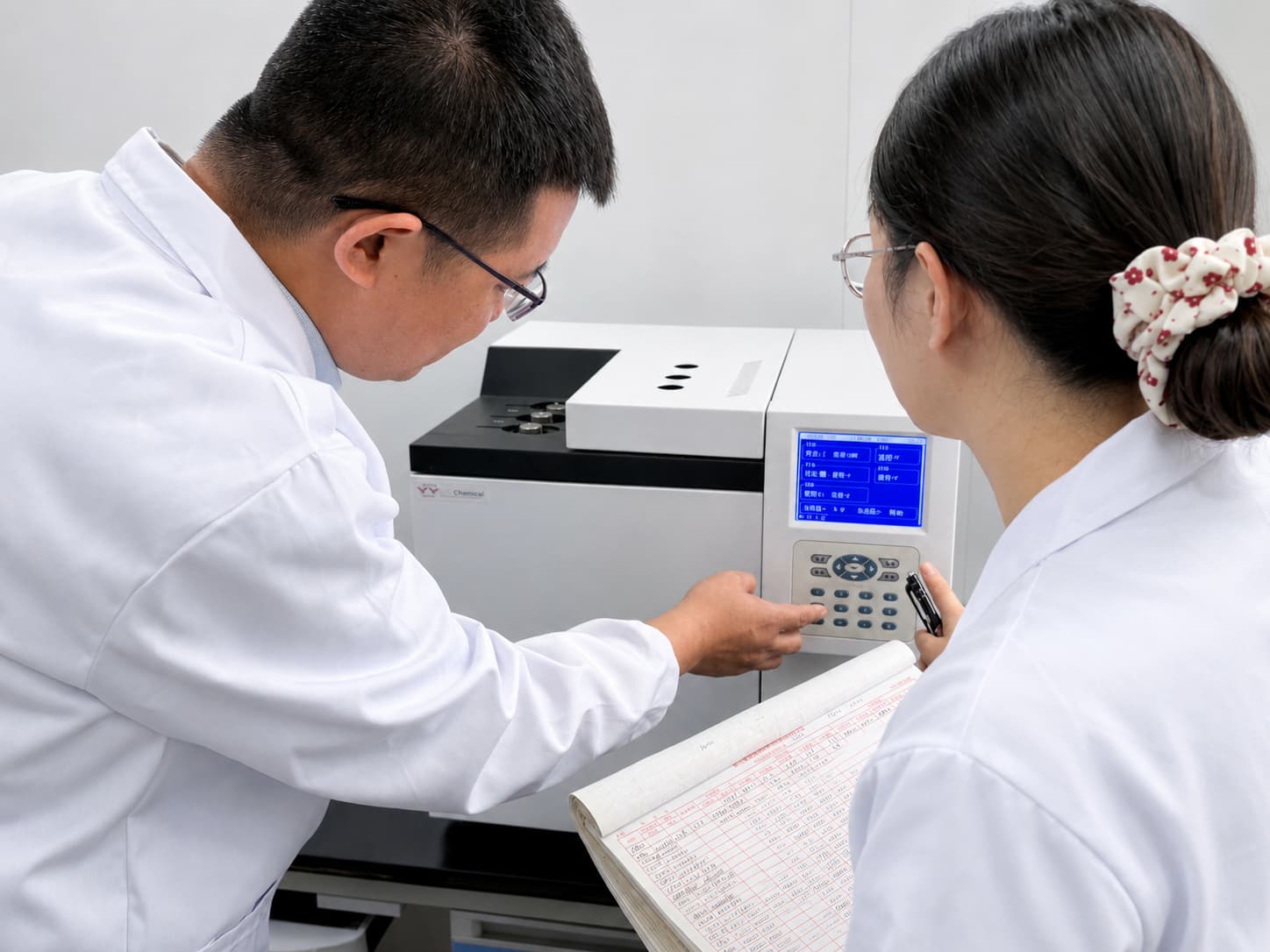
Read a sodium alginate TDS by confirming the exact grade, document revision, test methods and whether each value is typical or a guaranteed limit. Compare viscosity only under matched conditions, then request the applicable batch COA. A TDS describes the offered material; it does not replace identity checks or a printing trial.
مصنوعات کی شناخت کے خانے
مصنوعہ کا نام اور گریڈ کی تعیین
سی اے ایس نمبر
Sodium alginate is identified by CAS 9005-38-3. A CAS entry identifies the declared substance, not the supplied grade, purity, authenticity or printing performance. Match the grade and document identity across the quotation, TDS, applicable specification and batch COA; investigate inconsistent entries rather than treating the number as proof of composition.
مقصد شدہ استعمال
جسمانی اور کیمیائی وضاحتی شعبے
ظاہری شکل
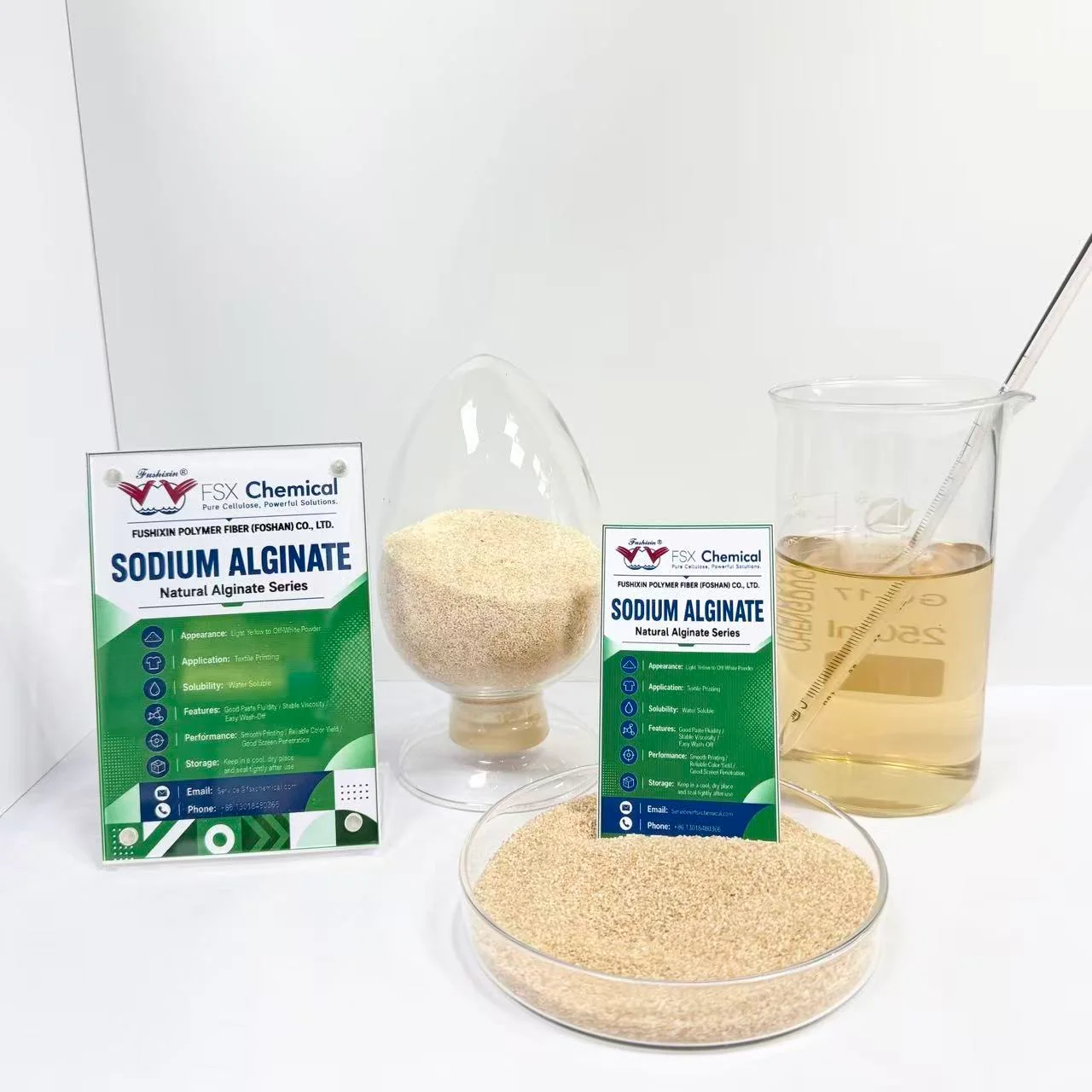
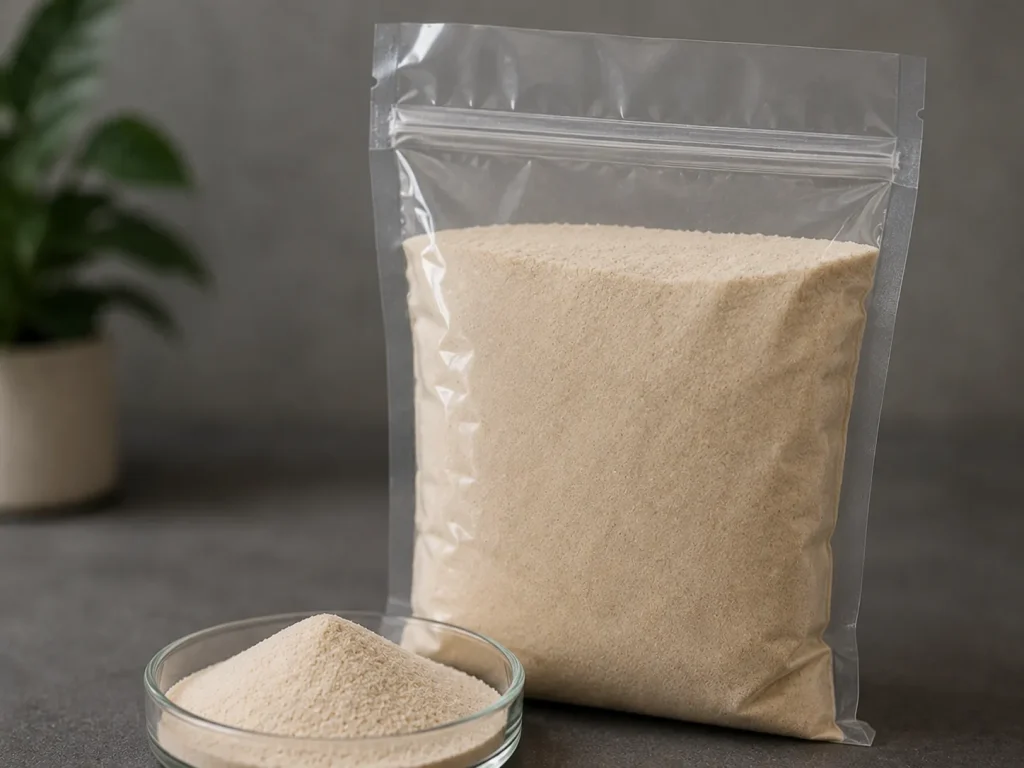
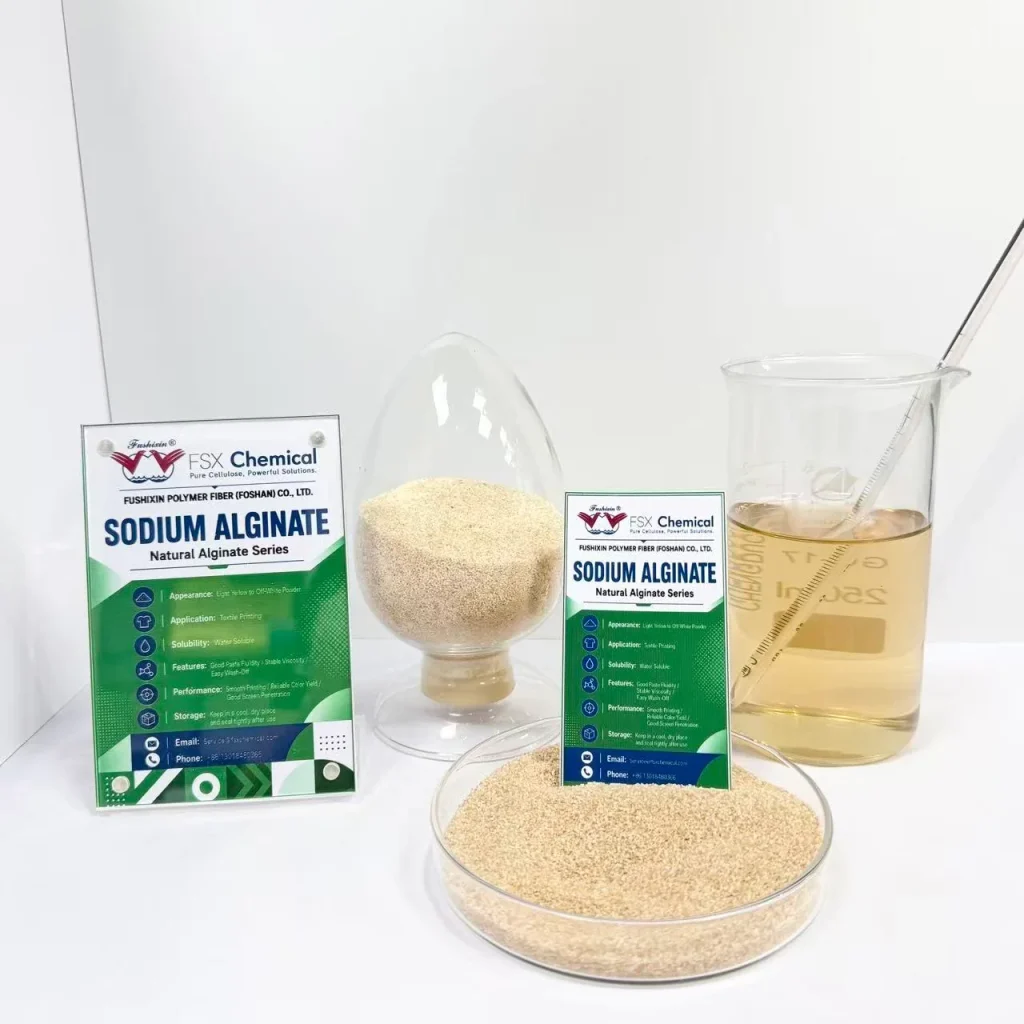
عموماً مصنوعات کو سفید سے ہلکے سفید (کبھی کبھار ہلکے پیلے) پاؤڈر یا دانے کے طور پر بیان کیا جاتا ہے۔ یہ خانہ بنیادی طور پر آنے والی معائنہ کے لیے مفید ہے — مزید تفصیلی جانچ سے پہلے بصری طور پر تصدیق کرنا کہ موصولہ کھیپ متوقع ظاہری شکل سے مطابقت رکھتی ہے۔.
سَانچَر
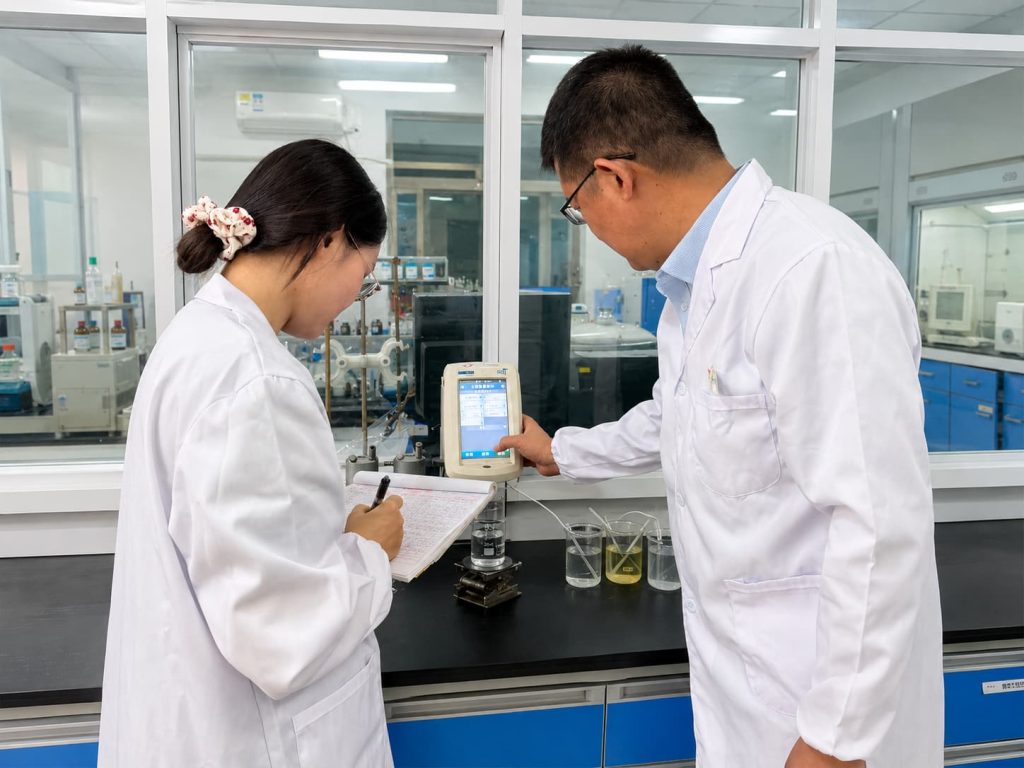
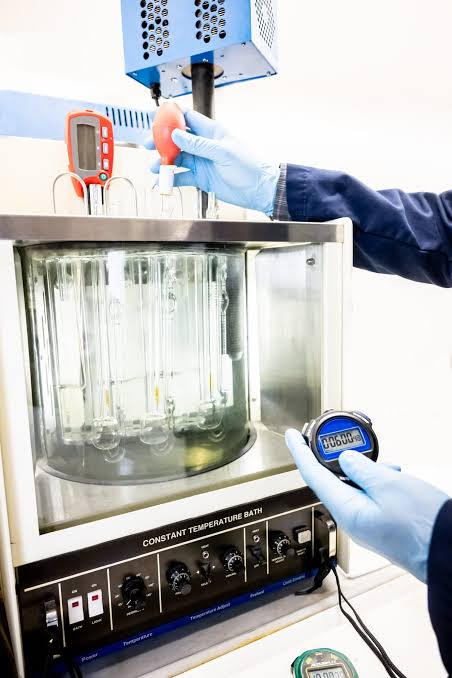
Read a viscosity range together with its full measurement method: concentration and mass basis, water quality, preparation and hydration schedule, instrument and geometry or spindle, speed, temperature, conditioning and reading time. No single concentration or temperature is a universal method for every sodium alginate grade. The range is meaningful for purchasing only when its method and status as a typical value or agreed limit are clear.
M/G Ratio and Molecular Structure (When Relevant)
Degree of substitution (DS) is not a sodium alginate specification; it applies to substituted polymers such as CMC. If a sodium alginate TDS lists DS, ask the supplier to clarify the parameter and test method rather than using it for grade comparison.
Some specialist documents may report the mannuronic-to-guluronic acid ratio (M/G ratio) or other structural information. These values can influence gel behavior, but they are not always routine textile-grade purchasing fields. For printing, a defined viscosity method, purity or active-content basis, moisture, pH, insoluble matter, particle size, filtration and multi-batch consistency are usually more actionable.
فعال مواد / تجزیہ
An assay or active-content field must name the measured quantity, test method and basis. Do not assume it reports pure polymer or is always on a dry basis. Ask whether the number is an assay result, a calculated value or a supplier-defined solids measure. Read it alongside moisture, and do not deduct moisture twice from an already as-received result.
نمی کا تناسب
A moisture or loss-on-drying result is method-defined. Ask whether it is a water-specific determination or mass loss under a stated drying schedule, and record temperature, time, sample condition and reporting basis. Do not automatically treat all measured loss as water or the remaining mass as active alginate; a separate defined assay is needed for active-content calculations. Compare the result with the agreed grade limit and investigate packaging and storage history where relevant. The FAO/JECFA sodium alginate monograph illustrates separate assay, loss-on-drying and insoluble-matter fields; its food-additive limits are not automatic textile-grade purchasing limits.
pH (Declared Solution Method)
ذرات کا سائز / جالی
آلودگی اور پاکی سے متعلق شعبے
سوڈیم کلورائیڈ (NaCl) کا تناسب
Identify exactly what is reported: sodium chloride, chloride expressed as NaCl, or another salt or ash measure. Record the method, dry or as-received basis, and whether the figure is typical, an agreed maximum or a batch result. These quantities are not interchangeable. Assess the actual ionic contribution in the complete recipe rather than using one salt percentage as a complete purity or printing-performance score.
پانی میں ناقابلِ حل مادہ
This field reports residue under a particular method, not every particle that could reach a production screen. Check preparation, treatment, filter or sieve, washing and drying steps, and dry or as-received basis. Compare values only under equivalent methods. Less residue under one method does not by itself prove complete hydration, screen passage or stability of the finished printing paste.
ہیوی میٹل مواد
Identify the analytes, analytical method, units, reporting or quantification limit and agreed acceptance criteria. A collective “heavy metals” result is not automatically interchangeable with separate lead, arsenic, mercury or cadmium determinations. Where a customer requires contaminant evidence, request an applicable finished-product report linked to the relevant grade or lot; a TDS statement is not a batch test result.
مائیکروبائیولوجیکل شعبے (جہاں موجود ہوں)
صنعتی ٹیکسٹائل گریڈ سوڈیم الگنیٹ کے TDS دستاویزات میں ہمیشہ خوردبینی خصوصیات شامل نہیں ہوتیں، کیونکہ یہ عموماً خوراک یا دواسازی کے معیار کی مصنوعات سے منسلک ہوتی ہیں۔ اگر آپ کی درخواست میں مخصوص خوردبینی حد کی ضروریات ہوں (جو ٹیکسٹائل پرنٹنگ کے لیے غیر معمولی ہیں لیکن بعض خصوصی اطلاقات میں ممکن ہیں)، تو یہ فرض کرنے کے بجائے کہ صنعتی درجے کے TDS میں یہ جانچ خود بخود شامل ہے، تصدیق کریں کہ آیا یہ جانچ دستیاب ہے۔.
ضابطہ جاتی اور تعمیل کے بیان کے شعبے
تعمیل کے دعووں کو درست طور پر کیسے پڑھا جائے
TDS documents may mention a regulation, voluntary scheme, customer substance list or test standard. First identify the exact claim, covered product and grade, supplier role, scope and document date. Request the underlying evidence appropriate to that claim: a test method, declaration, registration and certificate answer different questions and are not interchangeable. Ask for a registration or certificate number only where applicable and traceable; a generic “REACH certificate” or “international standards” statement does not define the scope of evidence by itself.
جیسا کہ ہماری کسٹمائزیشن دعوؤں کی رہنمائی میں بیان کیا گیا ہے، ایسی تعمیل کے بیانات جن میں قابل تصدیق تفصیلات نہ ہوں احتیاط کے ساتھ لیں اور کسی بھی ایسی تعمیل کے دعوے کے لیے جو آپ کے سورسنگ کے فیصلے کے لیے اہم ہو، بنیادی دستاویزات (رجسٹریشن نمبرز، ٹیسٹ رپورٹس، سرٹیفیکیٹ کی درستگی کی تاریخیں) طلب کریں۔.
خوراکی درجے اور صنعتی درجے کی مصنوعات پر لاگو ہونے والے معیارات
A reference to a food or pharmaceutical test does not by itself prove a documentation error, nor does it approve an industrial grade for those uses. Ask what exact claim is being made for the supplied grade and what evidence supports it. Textile printing suitability still requires the relevant preparation and application tests.
ذخیرہ اور شیلف لائف کے شعبے
Sodium Alginate TDS Field-by-Field Decision Table
| TDS field | What it tells the buyer | What it does not prove | Recommended check |
|---|---|---|---|
| سَانچَر | Grade range under the stated method | Rheology, color yield or performance under a different method | Confirm concentration, temperature, instrument, spindle, speed, hydration and reading time |
| نمی | Reported water or loss-on-drying result under a declared method | Active alginate assay, complete purity or storage history | Match sample condition, method and basis to the COA; use a separate defined assay for active-content calculations |
| پی ایچ | Solution acidity or alkalinity under stated conditions | Compatibility with the complete printing paste | Test at the stated concentration and in the production formula |
| Insoluble matter | Limit for material that does not dissolve under the method | Actual screen passage or filtration under the buyer’s preparation | Run a defined sieve or filtration test after full hydration |
| Particle size or mesh | Powder-size distribution or sieve limit | Hydration speed under every mixer and water condition | Record wetting, lumping and full-hydration time |
| Purity, active content or salt | The supplier’s compositional control basis | Print quality without an application trial | Clarify method and compare effective dosage and wash-off |
| Storage and shelf life | Recommended unopened storage period and conditions | Fitness after moisture exposure or damaged packaging | Inspect packaging and retest aged or exposed stock |
Resolve Document Gaps Before Comparing or Releasing a Batch
First separate three kinds of information: typical descriptive values, agreed acceptance limits and application guidance. A typical result is not automatically a guaranteed purchasing limit, and a recommended recipe is not a batch test result.
| Document issue | Required clarification | Buyer action |
|---|---|---|
| Two viscosity figures differ | Exact concentration basis, preparation, temperature, instrument and reading conditions | Arrange a matched-method comparison before judging grade equivalence |
| TDS and COA use different limits | Grade code, document revision and the specification agreed for the order | Resolve the controlling specification in writing; do not select whichever limit passes |
| COA reports only “pass” | Which tests were performed and whether measured results are available | Confirm the evidence needed for the buyer’s release procedure |
| Purity basis is missing | Analyte, method, dry or as-received basis and moisture treatment | Avoid calculating active dosage from an undefined percentage |
| Needed field is absent | Availability, method and whether a limit can be agreed | Keep it as an unresolved requirement instead of inventing a value |
Link the documents to the delivered lot
Record supplier, exact grade, lot number, manufacturing date where provided, document issue date and specification revision. Confirm that the COA applies to the shipment, not merely to a representative sample. Preserve the agreed specification used for the order when later TDS revisions are issued.
If a result is borderline or inconsistent, compare the supplier and buyer methods, sampling and retained material. Record all findings and follow the agreed hold-and-investigation process. A revised document alone must not erase an unexplained failing result. Finally, retain the preparation and printing results that establish suitability; compliant incoming numbers do not prove every application outcome.
Sodium Alginate TDS FAQ
Is a TDS the same as a batch COA?
No. A TDS describes the grade, intended use and typical or guaranteed specification framework. A COA reports results or conformity for a specific production batch. Use both documents and confirm that the grade code and methods match.
Can two sodium alginate viscosity values be compared directly?
Only when the concentration, temperature, instrument, spindle, speed, hydration and reading time are equivalent. A viscosity number without the method is not a reliable basis for grade or price comparison.
What should a buyer do if DS appears on a sodium alginate TDS?
Ask the supplier to identify exactly what the field means and which method is used. DS is normally associated with substituted polymers such as CMC, not sodium alginate, so it should not be treated as a standard alginate grade parameter.
What if an important TDS field is missing?
Request the specific method and limit in writing, review a representative COA and test a sample. A missing field is not automatically disqualifying, but the buyer should not assume an unstated value before sample or bulk approval.
FSX کیمیائی طریقے TDS دستاویزات کے لیے
Request the current FSX Chemical TDS and available batch-quality documentation for the exact sodium alginate grade under evaluation. Agree the required fields, methods and acceptance limits before placing a bulk order rather than assuming every possible test appears on every grade document.
اگلے اقدامات:
- TDS کی درخواست کریں — اپنی درخواست سے متعلق گریڈ کی مکمل تفصیل کا جائزہ لیں۔
- CoA کی درخواست کریں — اپنے آرڈر کے موصول ہونے سے پہلے یا وصولی کے وقت بیچ سے متعلق مخصوص اقدار کی تصدیق کریں۔
- نمونہ طلب کریں — اپنی تیاری اور عمل کے حالات میں TDS وضاحت کے مطابق کارکردگی کی تصدیق کریں۔
- ہماری تکنیکی ٹیم سے رابطہ کریں — کسی بھی وضاحتی شق یا آپ کی سورسنگ سے متعلق اضافی تکنیکی معلومات کے حوالے سے وضاحت کے لیے فیصلہ📧 ای میل: Service@fsxchemical.com