Why FSX Chemical’s Digital Printing Paste Is Your Best Choice
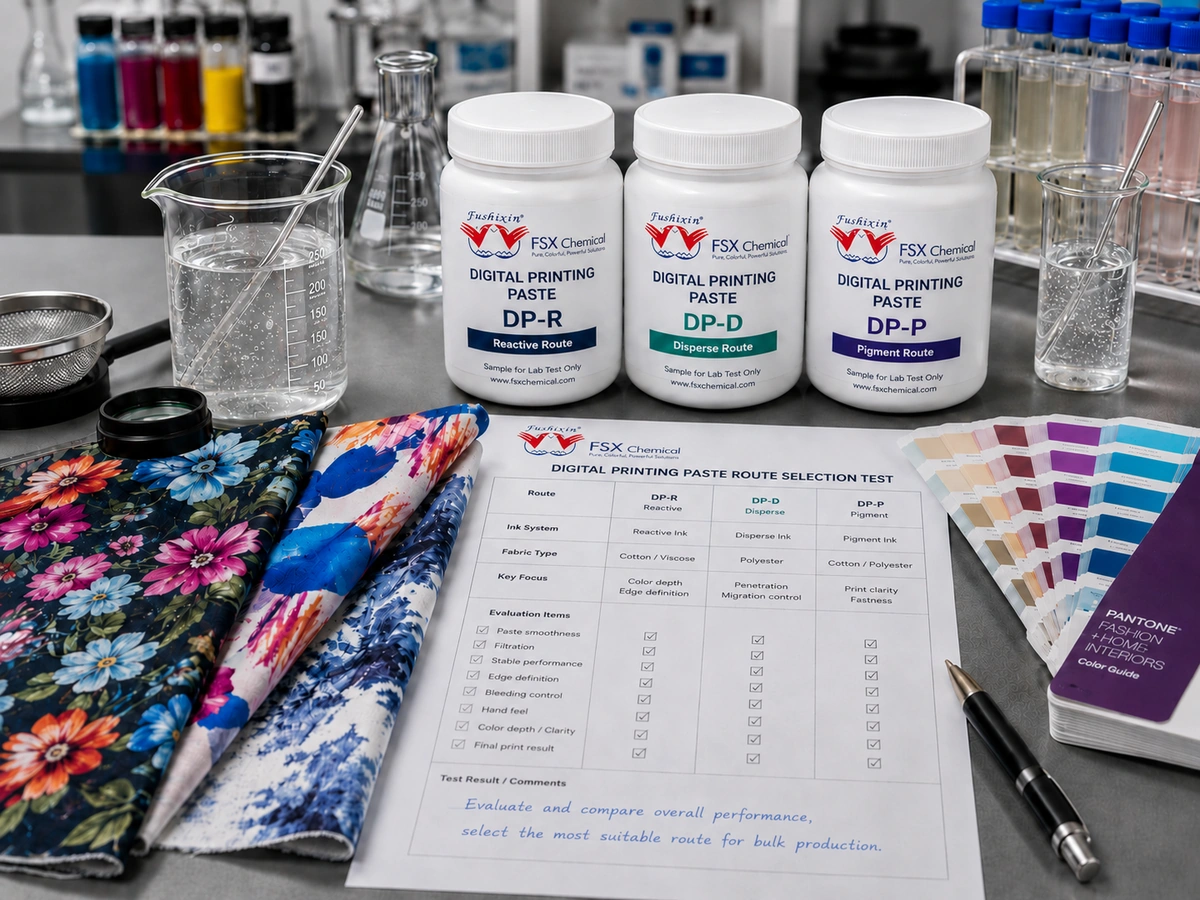
FSX Chemical offers separate digital printing paste routes for reactive, disperse and pigment systems, supported...
Choosing a digital printing paste is not simply a matter of finding the highest viscosity or the lowest price. The product must match the ink system, fabric, pretreatment method, filtration requirement, drying and fixation process, as well as the final print-quality target.
FSX Chemical approaches digital printing paste selection through separate product routes for reactive, disperse and pigment systems. This helps buyers begin with the correct chemical and application direction instead of evaluating one general-purpose paste for unrelated processes.
The phrase “best choice” should not be understood as a universal guarantee. FSX Chemical’s digital printing paste is a strong choice when the product route is correctly selected, the sample is tested under the buyer’s actual conditions and the approved grade is connected to controlled commercial supply.
What Buyers Actually Need from Digital Printing Paste
Digital textile printing places demanding requirements on fabric pretreatment and paste formulation. The applied chemical system must support controlled ink movement without creating an excessive surface film, unstable coating or difficult post-treatment.
The exact requirement depends on whether the process uses reactive, disperse or pigment ink. Fabric composition, absorbency, equipment and application method can also change the preferred paste properties.
Controlled ink movement
A suitable digital printing paste helps control how ink spreads and penetrates after it reaches the textile surface. Insufficient control can reduce edge definition, while excessive surface hold may affect penetration, handle or fixation.
یونیفارم پری ٹریٹمنٹ کی درخواست
The pretreatment should be applied consistently across the fabric width and production length. Uneven pickup can create visible differences in shade, definition or final fabric response.
Suitable filtration and smoothness
Lumps, gels, undissolved material or contamination can interfere with filtration, coating and production consistency. Preparation and filtration requirements should therefore be included in product qualification.
Stable performance during holding and production
A paste may meet the target immediately after preparation but change before it is applied. Buyers should check viscosity, separation, sedimentation and surface condition over the normal production holding period.
Compatibility with downstream processing
Drying, steaming, curing and washing conditions influence the final result. A paste should not be approved solely from its wet appearance or laboratory viscosity.
Why “Best Choice” Must Be Application-Specific
There is no single digital printing paste that is automatically best for every ink and fabric. Reactive, disperse and pigment printing use different fixation mechanisms and therefore require different product evaluation routes.
A product selected for reactive inkjet printing on cotton should not be transferred directly to disperse printing on polyester. Pigment printing also introduces binder, curing and fabric-handle requirements that are not identical to reactive or disperse processes.
The same viscosity can produce different results
Two products may have similar measured viscosity but differ in flow, filtration, structural recovery, surface deposition and compatibility with other formulation components.
Viscosity values are meaningful only when concentration, temperature, preparation, instrument, spindle and rotational speed are known.
Fabric construction matters
Cotton, viscose, modal, silk, wool, polyester and blended fabrics have different surface and absorption characteristics. Fabric weight, construction and pretreatment history can further change the result.
Equipment conditions matter
Padding, coating, spraying and other application methods may require different viscosity and flow behavior. Drying temperature, line speed and pickup control also influence the final performance.
FSX Chemical’s product-selection process therefore begins with the ink route and application conditions rather than with a universal sales claim.
Three Digital Printing Paste Routes from FSX Chemical
FSX Chemical provides separate starting routes for reactive, disperse and pigment digital textile printing. Buyers can select the closest route before conducting sample and production tests.
ایف ایس ایکس راستہ
انک سسٹم
Typical Textile Direction
Main Trial Focus
ڈی پی-آر
Reactive digital printing
Cotton, viscose, Tencel, modal and other suitable fibre systems after process confirmation
Print clarity, paste stability, ink control, fixation and wash-off
ڈی پی-ڈی
Disperse digital printing
Polyester and polyester-related fabrics
Filtration, compatibility, application uniformity and final print response
ڈی پی-پی
Pigment digital printing
Textile systems using pigment ink and a compatible binder route
Definition, hand-feel, binder compatibility, curing and rubbing performance
نمونے کی بنیاد پر مصنوعات کا انتخاب
Current-paste replacement
Buyers with an existing TDS, sample, dosage or current production problem
Like-for-like comparison under the buyer’s actual process
The table provides a starting direction rather than final approval. Current specifications, dosage guidance and preparation instructions should be confirmed through the relevant TDS and sample evaluation.
1. Product Selection Starts with the Ink System
One of the main reasons to evaluate FSX Chemical is that its digital printing paste range is divided according to ink route. This reduces the risk of selecting a product only by appearance, viscosity or general product name.
DP-R for reactive digital printing
DP-R is the starting route for reactive inkjet printing. Evaluation should include the cellulosic or other suitable substrate, reactive ink system, pretreatment pickup, drying, fixation and washing conditions.
The trial should examine edge definition, bleeding control, paste stability, shade response and final wash-off rather than one laboratory value alone.
DP-D for disperse digital printing
DP-D is intended as a starting route for disperse digital printing on polyester and related fabrics. The evaluation should consider filtration, coating or application behavior, compatibility with the disperse system and the selected fixation route.
Polyester fabric construction, pretreatment pickup and temperature conditions can all affect the result.
DP-P for pigment digital printing
DP-P is the starting route for pigment digital textile printing. In this process, the paste must be evaluated with the pigment ink, binder and curing system.
High print definition is important, but it must be balanced with fabric handle, rubbing performance, curing conditions and production stability.
Many buyers begin a product comparison by asking for viscosity. This is a useful specification, but it does not fully describe how a digital printing paste will behave in the complete process.
Paste smoothness
A smooth and uniform preparation can support consistent application. Buyers should record lump formation, undissolved residue, foam and visible separation during laboratory testing.
فلٹریشن کا رویہ
Filtration requirements depend on the application method and equipment. The reference and candidate should be tested using the same filter, preparation and sampling conditions.
Edge definition and bleeding control
Final definition should be evaluated using the actual ink, fabric and printing conditions. A controlled test pattern can include fine lines, small text, gradients, solid areas and closely spaced design elements.
Standing stability
Measure the paste immediately after preparation and after the normal holding period. Check viscosity drift, separation, settling, skin formation and changes after other formulation components are added.
Final fabric result
Printing performance should be reviewed after drying, fixation, curing or washing as required. Final acceptance may include shade, definition, penetration, levelness, handle and relevant durability requirements.
3. Current Paste and TDS Matching Support
Buyers who already use another digital printing paste may not need to begin the selection process from zero. FSX Chemical can review the available TDS, product sample, dosage, viscosity method and current printing issue before recommending a trial direction.
Information that supports accurate matching
موجودہ مصنوعات کا نام یا گریڈ کوڈ
Current Technical Data Sheet
Product label or sample photograph
Representative physical sample where available
Ink system and fabric type
Current dosage and preparation method
Viscosity value with the complete test method
Filtration requirement
Drying, fixing or curing process
Main print-quality or production issue
Why sample matching is valuable
Product names used by different suppliers may not represent the same composition or performance. A sample-based comparison helps connect the new candidate to actual application conditions.
It also helps prevent the buyer from comparing products measured under different concentrations, temperatures or instrument settings.
Standard or custom trial direction
Where a standard FSX grade does not provide a suitable starting point, the technical review may consider whether a custom trial specification is practical.
Any custom trial should still be documented and tested before commercial approval.
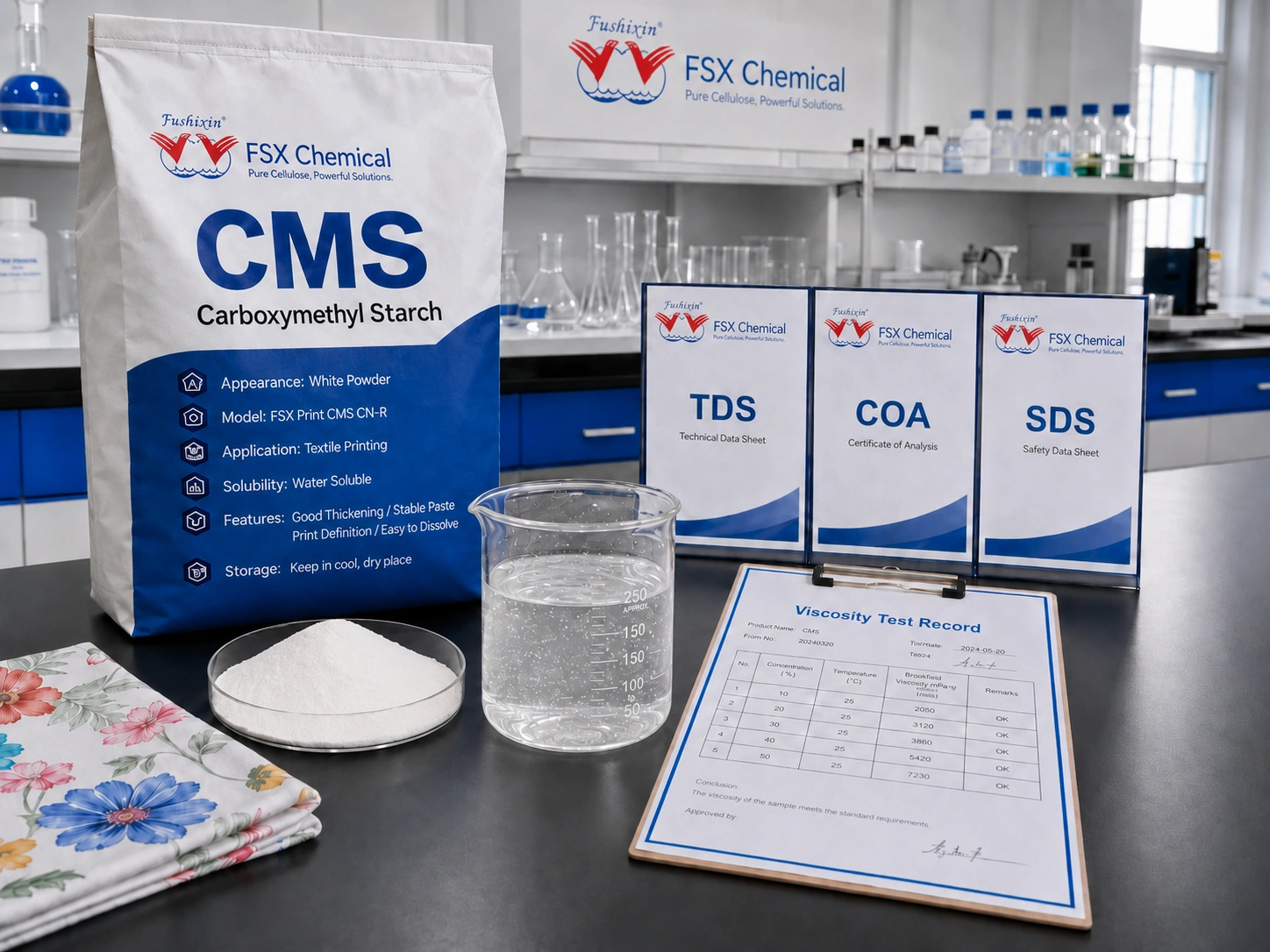
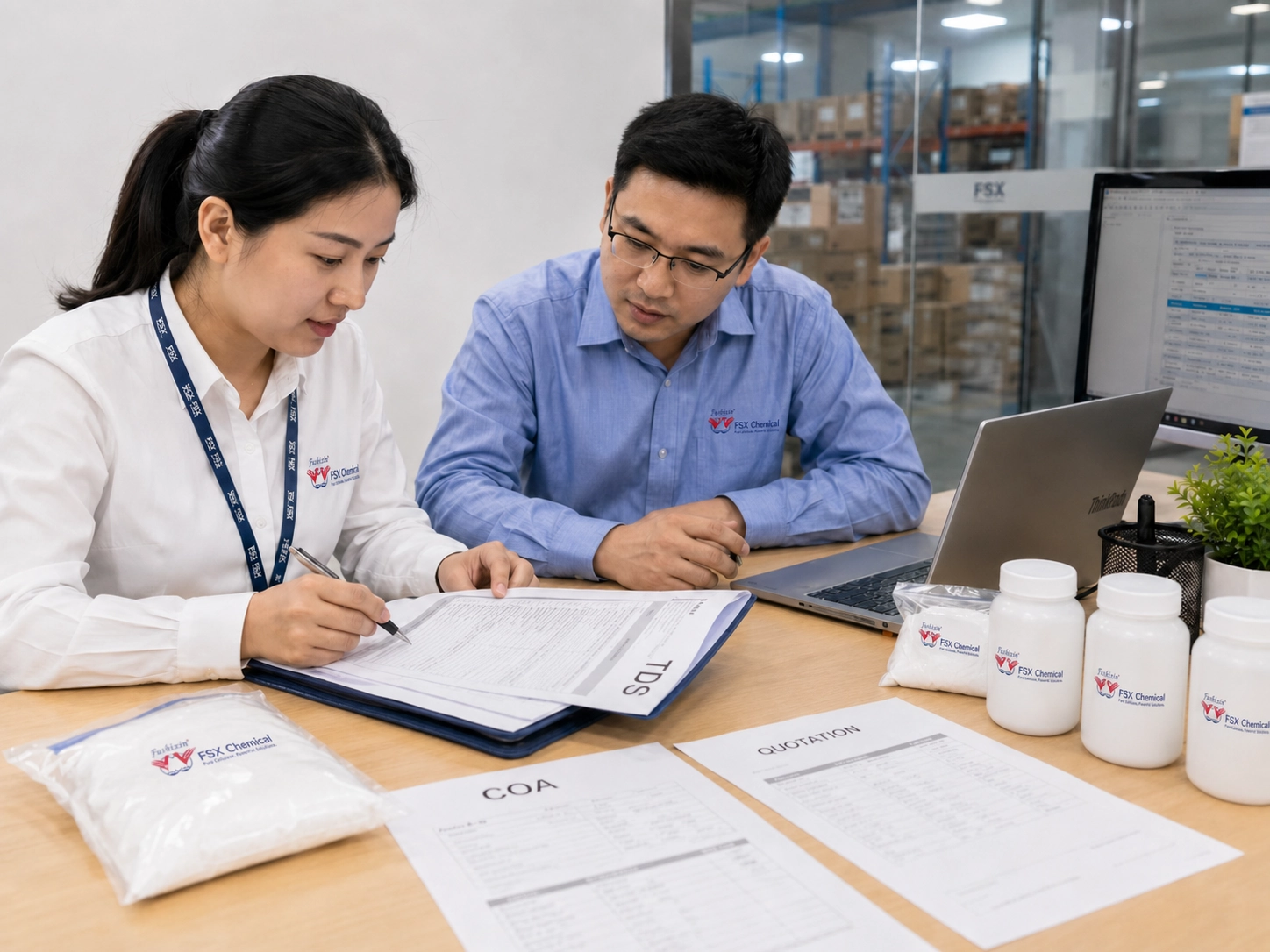
A technically promising sample is not enough for long-term purchasing. Procurement teams also need clear product identity and appropriate supporting documents.
تکنیکی ڈیٹا شیٹ
The TDS provides the starting product specification, recommended application and relevant test information. Buyers should use the current version for the selected grade.
حفاظتی ڈیٹا شیٹ
The SDS supports workplace handling, storage and internal safety review. It should be reviewed according to the buyer’s local requirements and intended use.
Certificate of Analysis
A COA is linked to a confirmed sample or production batch. Buyers should verify that the product name, grade and test methods correspond to the material being supplied.
Commercial and export documents
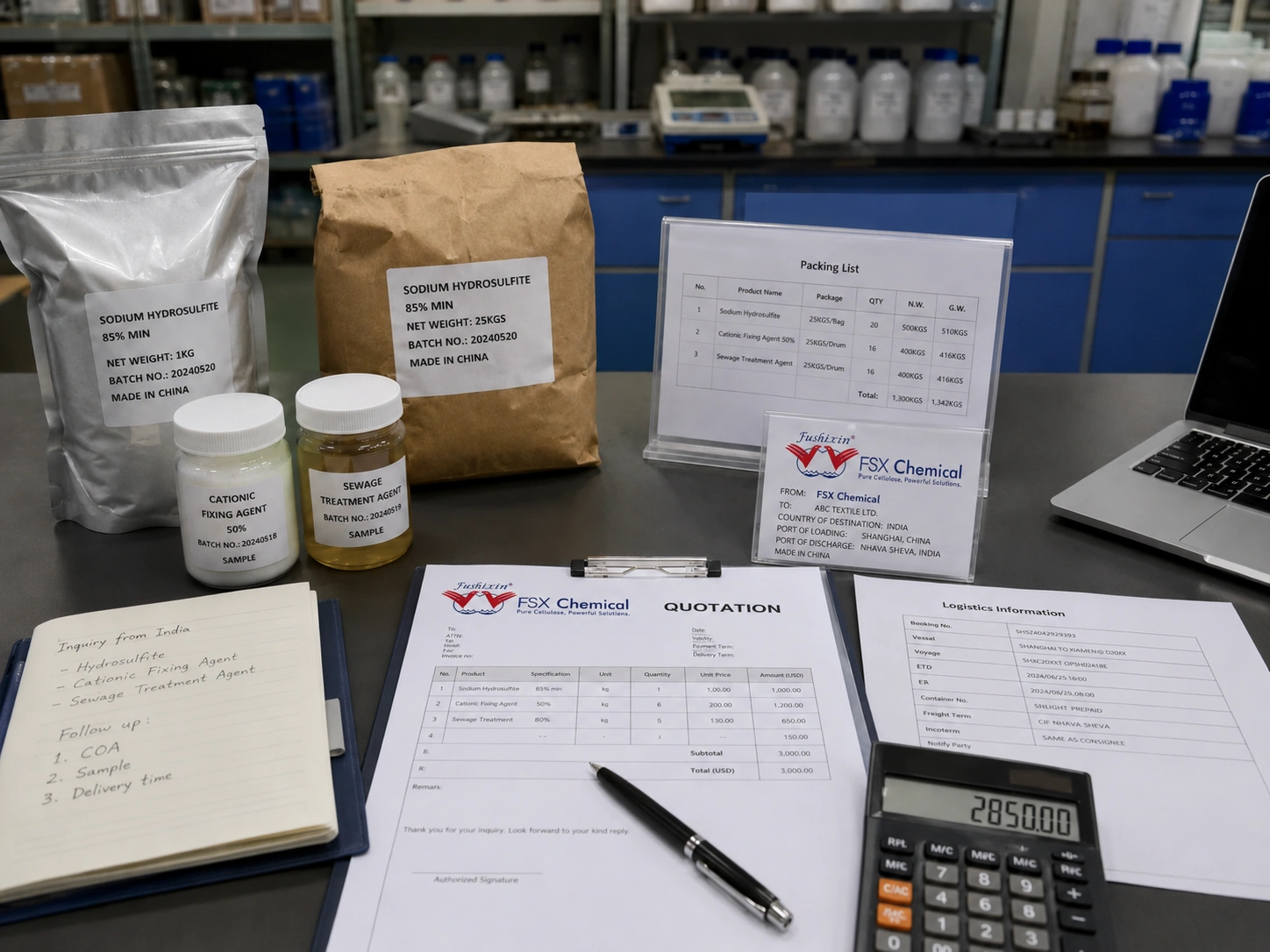
Packing, quantity, destination, trade term and required export documents should be confirmed during the quotation and order stage.
Certification claims require separate verification
Where a buyer requires a particular chemical-management, environmental or regulatory document, the requirement should be stated before ordering. The buyer should verify that any document applies to the exact commercial grade and remains valid.
5. A Controlled Route from Sample to Bulk Supply
A major sourcing risk is approving one laboratory sample and receiving a bulk product that is not clearly connected to it. FSX Chemical’s evaluation route is designed to connect the selected trial grade with quotation, documentation, packing and commercial supply.
Step 1: Application review
The buyer provides the ink system, fabric, process, current product, dosage and target performance.
Step 2: Trial-route selection
DP-R, DP-D, DP-P or a current-sample matching route is selected as the practical starting point.
Step 3: Sample preparation
The selected sample is prepared and checked against the available specification or agreed trial direction.
Step 4: Customer testing
The buyer tests the sample using its own fabric, ink, preparation, equipment and post-treatment conditions.
Step 5: Feedback review
Print definition, stability, filtration, handle and other relevant results are reviewed before the final product direction is confirmed.
Step 6: Commercial quotation
After the trial direction is confirmed, quotation details can be prepared according to the grade, quantity, packing, destination and trade term.
Step 7: First-batch verification
Buyers should still complete incoming inspection and a production-relevant check on the first commercial batch before routine use.
6. Factory-Backed B2B Supply Support
FSX Chemical operates as a factory-backed supplier of textile printing thickeners and digital printing paste for industrial buyers. The product route is connected to sample review, batch documentation, packing and bulk-supply discussion.
Direct technical communication
Buyers can discuss product specifications, application conditions and sample feedback with the supplier before moving to a bulk order.
This wider product range allows the initial technical review to consider whether the requirement belongs to a dedicated digital paste route or another textile thickener family.
Supply details are confirmed by project
Sample availability, courier arrangements, packing, minimum quantity, payment terms and delivery conditions depend on the product, destination and order stage. These details should be confirmed in writing.
How FSX Chemical Compares with a Generic Paste Supplier
Evaluation Point
Generic Product-Only Approach
FSX Chemical Evaluation Approach
Product selection
One general product recommended by name or viscosity
DP-R, DP-D or DP-P starting route selected by ink and process
Existing product comparison
Limited to buyer description
Current TDS, sample, dosage and test method can be reviewed
Performance evaluation
Viscosity or appearance only
Smoothness, filtration, definition, bleeding, stability and final textile result
دستاویزات
Generic brochure or specification
TDS, SDS and relevant batch-level quality information
Approval route
Order requested before a complete trial
Sample testing and feedback review before bulk discussion
Custom requirements
One standard product only
Standard grade first, with custom trial review where practical
Commercial supply
Sample and bulk identity may be unclear
Trial grade connected to product code, quotation and batch supply
This comparison describes the purchasing process rather than guaranteeing that every FSX sample will outperform every competing product. Actual performance must be established through controlled testing.
How to Select DP-R, DP-D or DP-P
Choose DP-R when
The process uses reactive digital textile ink
The fabric is cotton, viscose or another suitable fibre system
Print definition, fixation and wash-off must be evaluated together
The buyer can conduct an actual ink and fabric trial
Choose DP-D when
The process uses disperse digital printing
The substrate is polyester or a polyester-related fabric
Filtration and process compatibility are major concerns
The selected heat or fixation route can be included in testing
Choose DP-P when
The process uses pigment digital ink
A compatible binder and curing system are available
Definition must be balanced with hand-feel
Rubbing performance and curing are part of the approval test
Choose current-paste matching when
The buyer already uses a similar material
A current TDS, label, sample or viscosity method is available
The objective is to qualify a backup or alternative supplier
The buyer wants a more direct like-for-like trial
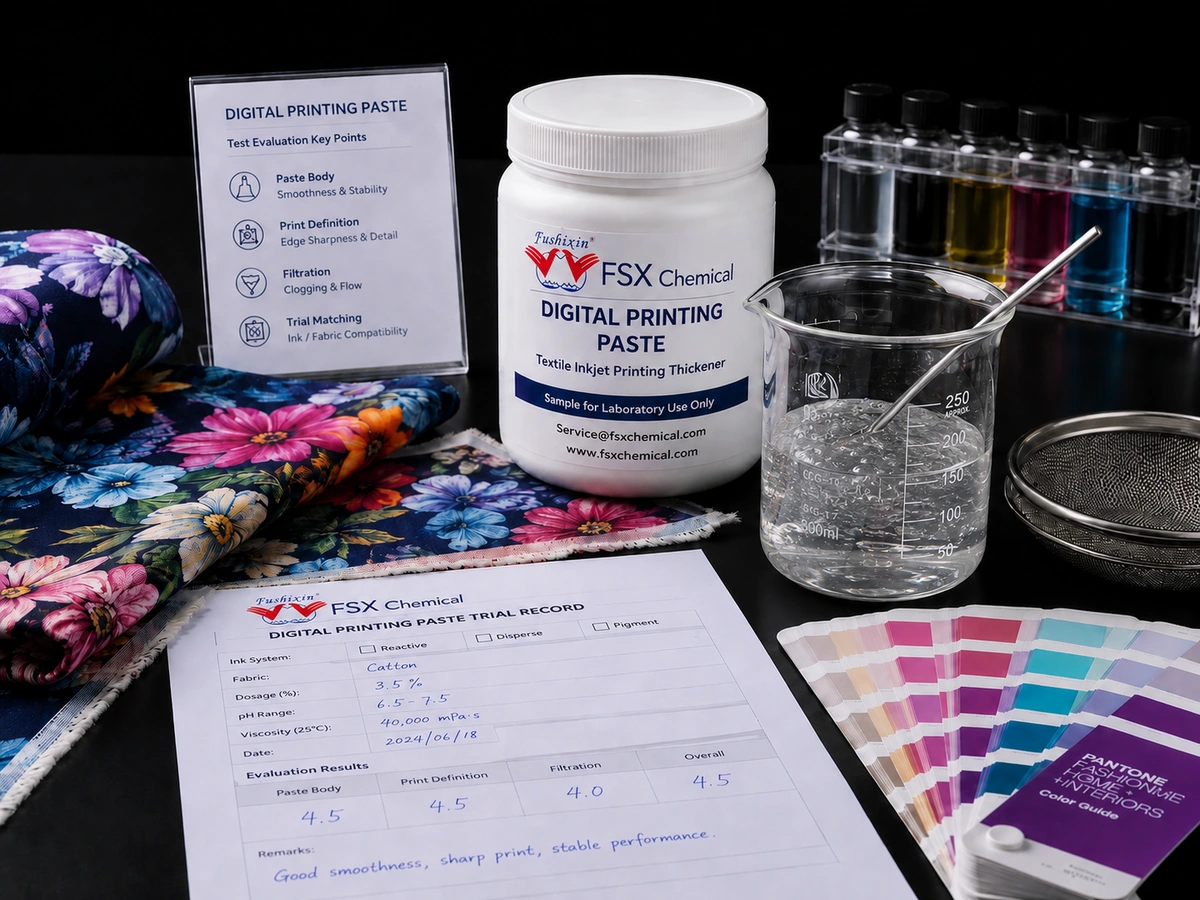
Recommended Sample Evaluation Process
Step 1: Define the reference
Use the current approved product and representative production fabric as the control.
Step 2: Standardize preparation
Use the same water source
Use the same product concentration or dosage basis
Use identical mixing equipment and containers
Control mixing speed and time
Control temperature and resting time
Record the order of addition
Step 3: Complete basic paste checks
Appearance and uniformity
Dispersion and lump formation
Viscosity under the agreed method
Filtration and residue
Foam, separation or settling
Stability after the normal holding time
Step 4: Apply the pretreatment
Use the intended padding, coating, spraying or other application method. Measure pickup or application quantity where practical.
Step 5: Print under controlled conditions
Use the same ink, printer, resolution, fabric condition and drying process for the reference and candidate.
Step 6: Complete fixation or curing
Apply the same steaming, heating or curing conditions. Do not compare samples treated using different post-print processes.
Step 7: Evaluate the textile result
Fine-line and edge definition
Bleeding and spreading
دراندازی اور سطحی احاطہ
Shade and levelness
کپڑے کا ہینڈل
Wash-off or curing behavior
Relevant rubbing or durability performance
Step 8: Repeat under representative conditions
Where practical, confirm the result on more than one shade, fabric or production condition before bulk approval.
What to Include in Your Inquiry
Buyers do not need to prepare a complete technical report before contacting FSX Chemical. However, more application information normally produces a more relevant starting recommendation.
تکنیکی معلومات
Reactive, disperse or pigment ink route
Fabric and fibre composition
Current paste name or supplier grade
Current dosage and pH condition
Preparation and filtration method
Application method and equipment
Drying, fixing, steaming or curing route
Main definition, stability, handle or cost issue
Available reference files
موجودہ ٹی ڈی ایس
Current SDS or COA
Product label photograph
Paste or printed-fabric photographs
Viscosity report with test method
Representative sample where practical
Commercial information
Estimated sample or bulk requirement
Preferred packaging
Destination country and port
Preferred trade term
Required documents
How to Compare Cost in Use
The lowest quotation per kilogram or litre does not automatically provide the lowest printing cost. Buyers should compare the total operating effect of the candidate.
Include these cost factors
Actual dosage per batch or per litre
Mixing and preparation time
Filtration and material loss
Pretreatment application efficiency
Cleaning and production interruptions
Drying, fixation or curing requirements
Reprinting or rejected fabric
Packaging and transport
Technical documentation and support
Compare equivalent final quality
The reference and candidate should meet the same definition, shade, handle, durability and customer requirements. A lower-cost formulation that creates unacceptable fabric is not an actual saving.
Important Product and Performance Boundaries
Responsible product communication should explain what still needs to be confirmed by the buyer.
No universal equipment compatibility
Product suitability depends on the complete application system. Buyers should not assume compatibility with every printer, application machine or production line.
No guaranteed result without testing
Definition, color response, hand-feel and durability depend on ink, fabric, pretreatment quantity, equipment and post-treatment.
Typical specifications can be updated
Current dosage, pH and test parameters should be confirmed using the latest product TDS rather than relying permanently on a blog article.
Samples are for evaluation
A recommended sample or grade is a starting point for the buyer’s trial. Final suitability must be confirmed under actual production conditions.
Sample and courier arrangements vary
Sample availability and courier support depend on product availability, destination and request review. Commercial details should be confirmed before dispatch.
Why FSX Chemical Is a Strong Choice
FSX Chemical’s value is not based on one unsupported claim that its digital printing paste is universally superior. Its strength is the structured process used to help buyers identify and verify a suitable product route.
Clear product segmentation
DP-R, DP-D and DP-P provide separate starting routes for reactive, disperse and pigment systems.
Application-based product review
Ink system, fabric, dosage, pH, filtration, equipment and final print requirements can be reviewed before sample selection.
موجودہ مصنوعات کے مطابق
Buyers can send an existing TDS, sample or test method when qualifying an alternative supply route.
Controlled sample evaluation
Samples can be tested before the buyer commits to bulk purchasing.
Technical and batch documentation
TDS and SDS can support product review, while relevant batch-level quality information can be connected to the confirmed sample or production batch.
Factory-backed commercial route
The selected trial grade can move from evaluation to quotation, packing and bulk-supply discussion through one supplier route.
For buyers who value product matching, documentation and sample-to-bulk control, these capabilities make FSX Chemical’s digital printing paste a strong option to evaluate.
اکثر پوچھے جانے والے سوالات
What is FSX Chemical digital printing paste used for?
It is used as a textile digital printing auxiliary or pretreatment component to support paste body, ink movement, print definition, bleeding control and fabric-surface performance.
What is the difference between DP-R, DP-D and DP-P?
DP-R is the starting route for reactive digital printing, DP-D is intended for disperse digital printing and DP-P is intended for pigment digital printing. Final selection requires sample testing.
Can one FSX digital printing paste be used for every ink system?
No. Reactive, disperse and pigment systems require different evaluation routes. Buyers should begin with the correct ink category.
کیا FSX کیمیکل میری موجودہ ڈیجیٹل پرنٹنگ پیسٹ سے میل کھا سکتا ہے؟
Buyers can provide the current TDS, sample, dosage, viscosity method, ink system, fabric and print issue for comparison and trial-grade review.
Does FSX Chemical provide samples?
Product samples may be available after the application and request are reviewed. Availability, quantity and courier arrangements depend on the product and destination.
Can I request TDS, SDS and COA?
TDS and SDS can be provided for the selected product. Batch-specific COA or relevant quality data is normally connected to a confirmed sample, order or production batch.
Does higher viscosity mean better digital print definition?
Not automatically. Definition also depends on filtration, flow, fabric absorbency, pretreatment pickup, ink, equipment, drying and fixation.
How should I test an FSX sample?
Compare it with the current product using the same preparation, fabric, ink, application quantity, printer settings and post-treatment conditions.
Can FSX Chemical guarantee direct replacement of my current product?
A recommended grade is intended for comparison testing. Direct replacement should only be confirmed after laboratory and production-relevant evaluation.
What information should I send before requesting a quote?
Provide the product route, specification or current reference, estimated quantity, packaging, destination and preferred trade term. Application information and supporting files can improve the review.
Request an FSX Digital Printing Paste Sample
Send FSX Chemical your ink system, fabric type, current paste or TDS, dosage, filtration requirement and main printing issue.
The technical team can review whether DP-R, DP-D, DP-P or a current-paste matching route is the most practical starting point for controlled evaluation.
سیکھیں کہ ردعمل کرنے والی، منتشر، رنگین اور ڈیجیٹل ٹیکسٹائل پرنٹنگ کے لیے کپڑے، رنگ یا سیاہی کی بنیاد پر گاڑھا کرنے والا مادہ اور پری ٹریٹمنٹ کے راستے کیسے منتخب کیے جائیں، تاکہ فکسیشن، دھونے کے قابل ہٹانے اور پرنٹ کے معیار کی ضروریات پوری ہوں۔.
ٹیکسٹائل پرنٹنگ کے لیے CMC، CMS، سوڈیم الگینٹ اور ڈیجیٹل پرنٹنگ پیسٹ کا موازنہ کریں۔ جانیں کہ ہر طریقہ کار ری ایکٹیو، ڈسپرز، پگمنٹ اور ڈیجیٹل عمل کے لیے کیسے موزوں ہے، اور خریداروں کو سیمپل ٹیسٹنگ، گریڈ میچنگ اور بڑے پیمانے پر خریداری سے پہلے کن باتوں کا جائزہ لینا چاہیے۔.
CMC پر مبنی پرنٹنگ پیسٹ کو رنگدار، ردعمل پذیر اور ڈیجیٹل ٹیکسٹائل پرنٹنگ میں استعمال کیا جاتا ہے۔ یہ رہنما بتاتا ہے کہ کون سے پیرامیٹرز اہم ہیں، سپلائرز کا موازنہ کیسے کریں اور بڑے آرڈر دینے سے پہلے کیا درخواست کریں۔.
سوڈیم الگینٹ اور سی ایم سی دونوں ٹیکسٹائل پرنٹنگ میں گاڑھا کرنے کے لیے استعمال ہوتے ہیں، لیکن یہ مختلف رنگ ساز نظاموں اور عمل کے حالات کے لیے موزوں ہیں۔ یہ رہنما اہم فرق اور ہر ایک کے استعمال کے اوقات کی وضاحت کرتی ہے۔.
ٹیکسٹائل پر ڈیجیٹل انک جیٹ پرنٹنگ کے لیے اسکرین پرنٹنگ کے مقابلے میں مختلف پیسٹ اور پیش علاج کی ضروریات ہوتی ہیں۔ یہ رہنما بتاتی ہے کہ ڈیجیٹل ٹیکسٹائل پرنٹنگ میں سوڈیم الگنیٹ کا استعمال کیسے کیا جاتا ہے اور خریداری کی ٹیموں کو کون سے گریڈ کے پیرامیٹرز متعین کرنے چاہئیں۔.
کاربوکسی میتھل اسٹارچ (CMS) کو منتخب ٹیکسٹائل سائزنگ، پرنٹنگ پیسٹ، اور ڈیجیٹل پرنٹنگ فارمولیشن سسٹمز کے لیے جانچا جا سکتا ہے۔ یہ رہنما بتاتا ہے کہ خریداروں کو بڑے پیمانے پر خریداری سے قبل وسکوسٹی گریڈ، تحلیل کے رویے، پی ایچ، نمی، فلم کے رویے، فارمولیشن مطابقت، TDS، COA، SDS، نمونہ کی جانچ، اور بیچ کی یکسانیت کا جائزہ کیسے لینا چاہیے۔.
صحیح ٹیکسٹائل پرنٹنگ تھکنر کا تعین صرف کپڑے کی قسم سے نہیں ہوتا۔ خریداروں کو چاہیے کہ وہ تھکنر کو رنگ یا پگمنٹ کے نظام، پرنٹنگ کے طریقہ کار، مطلوبہ ریولوجی، دھونے کی ضروریات اور حقیقی فیکٹری ٹرائل کے حالات کے مطابق منتخب کریں۔.
سوڈیم الگینٹ عام طور پر ردعمل کرنے والی ٹیکسٹائل پرنٹنگ پیسٹ میں گاڑھا کرنے والا مادہ کے طور پر استعمال ہوتا ہے، لیکن دیگر ٹیکسٹائل استعمالات کے لیے مخصوص اطلاق کی توثیق درکار ہوتی ہے۔ یہ رہنما فنکشن، تکنیکی ضروریات، خطرات، دستاویزات اور نمونہ ٹیسٹوں کی بنیاد پر پرنٹنگ، ڈیجیٹل پری ٹریٹمنٹ، وارپ سائزنگ، رنگائی سے متعلق فارمولیشنز، کوٹنگ اور فنشنگ کا موازنہ پیش کرتا ہے۔.
ٹیکسٹائل پرنٹنگ کی کارکردگی ایک مربوط کیمیائی نظام پر منحصر ہوتی ہے، نہ کہ کسی ایک یونیورسل اضافی مادّے۔ یہ رہنما دس اہم کیمیائی گروپوں، ان کے افعال، ان کی جگہ اور وہ چیزیں جن کی خریداروں کو پیداواری تجربات سے پہلے تصدیق کرنی چاہیے، بیان کرتی ہے۔.
ٹیکسٹائل پرنٹنگ کے گاڑھا کرنے والے مادے کیمسٹری، ریولوجی، رنگ کے مطابقت اور دھونے پر اثر پذیری کے لحاظ سے مختلف ہوتے ہیں۔ یہ رہنما اہم گاڑھا کرنے والے خاندانوں، ان کے عام استعمال کے طریقہ کار اور ان پیرامیٹرز کا موازنہ پیش کرتا ہے جن کی خریداروں کو پیداواری تجربات سے قبل تصدیق کرنی چاہیے۔.
ڈیجیٹل ٹیکسٹائل پرنٹنگ میں چپچپا پن کے کنٹرول میں دو مختلف نظام شامل ہیں: جیٹنگ انک اور کپڑے کی پری ٹریٹمنٹ فارمولیشن۔ یہ رہنما بتاتا ہے کہ درجہ حرارت، فارمولیشن، پیمائش کے طریقے اور عمل کے حالات جیٹنگ کی استحکام اور پرنٹ کے معیار کو کیسے متاثر کرتے ہیں۔.
ڈیجیٹل پرنٹنگ کے پیسٹ کا انتخاب سیاہی کی کیمسٹری، کپڑے، اطلاق کے طریقہ کار اور بعد از علاج کی بنیاد پر کیا جانا چاہیے۔ یہ رہنما ٹیکسٹائل انک جیٹ پرنٹنگ کے لیے سوڈیم الگنیٹ، سی ایم سی، سی ایم ایس، مصنوعی پولیمر اور مرکب پری ٹریٹمنٹ کے راستوں کا موازنہ پیش کرتا ہے۔.
پروڈکٹ کا نام، استعمال، مقدار، منزل اور کوئی بھی TDS، نمونہ کی تصویر یا دستاویز جو آپ کے پاس موجود ہو، فراہم کریں۔ FSX کیمیکل اس معلومات کا جائزہ لے گا اور کوٹیشن، نمونہ کی مطابقت یا پروڈکٹ کے انتخاب کے لیے اگلا قدم تجویز کرے گا۔.
مصنوعات کی معلوماتمصنوعہ کا نام، گریڈ، ماڈل، لیبل کی تصویر یا سپلائر کا حوالہ.
دستیاب دستاویزاتٹی ڈی ایس، ایس ڈی ایس، سی او اے، نمونہ کی تصویر، مصنوعات کی فہرست یا ٹیسٹ کے اعداد و شمار۔.
آرڈر کی تفصیلاتمتوقع مقدار، پیکیجنگ، منزل ملک، بندرگاہ یا تجارتی اصطلاح۔.
درخواست یا مسئلہٹیکسٹائل پرنٹنگ کا عمل، فارمولیشن کی ضرورت، موجودہ مسئلہ یا ہدف کارکردگی۔.

 UR
UR  EN
EN  BN
BN  ES
ES  TR
TR  FR
FR  ID
ID  RU
RU  AR
AR  VI
VI  TL
TL  HI
HI  UK
UK  KK
KK  KA
KA  UZ
UZ