Choosing the Right Digital Printing Paste for Eco-Friendly Textile Printing
Choosing a digital printing paste for eco-friendly textile printing requires more than selecting a product...
Choosing a digital printing paste for eco-friendly textile printing requires more than selecting a product described as “green,” “natural” or “low viscosity.” The most meaningful environmental improvements usually come from process efficiency: lower effective dosage, stable pretreatment, reduced waste, fewer reprints, controlled drying and fixation, and efficient washing or curing. This guide explains how to evaluate digital printing pastes for reactive, disperse and pigment textile printing while balancing print quality, production stability and environmental performance.
What Does Eco-Friendly Mean in Digital Textile Printing?
In textile manufacturing, “eco-friendly” should not be treated as a simple product label.
A digital printing paste or pretreatment can influence several parts of the production process:
Chemical dosage
Mixing and preparation
Pretreatment pick-up
سکھانا
Ink spreading and print accuracy
تثبیت
دھونا یا علاج کرنا
Reprinting
رد شدہ کپڑا
Machine cleaning
Waste paste
A more sustainable choice is therefore usually the product that helps the mill achieve the required printed result with fewer avoidable losses across the full process.
The correct evaluation chain is:
Ink Chemistry → Fabric → Pretreatment → Digital Printing → Fixation → Washing/Curing → Finished Fabric → Waste and Resource Use
This is a better framework than assuming that one polymer name or one “green” marketing claim automatically creates a lower environmental impact.
Why “Natural” or “Low Dosage” Does Not Automatically Mean More Sustainable
Several simplified claims are common in textile chemical marketing:
Natural means more sustainable.
Lower dosage always means lower environmental impact.
Higher viscosity means less chemical use.
A biodegradable polymer is automatically the greener printing option.
A product with a lower purchase price must also reduce total production cost.
These statements can be misleading without process data.
For example, a product used at a lower dosage may still create:
Longer hydration time
Higher drying demand
More difficult washing
Lower print accuracy
Higher reject rates
More reprinting
Likewise, a material described as natural may still require an energy- or water-intensive production route depending on the application.
The better principle is:
Environmental performance should be evaluated from the complete printing process, not from the polymer name alone.
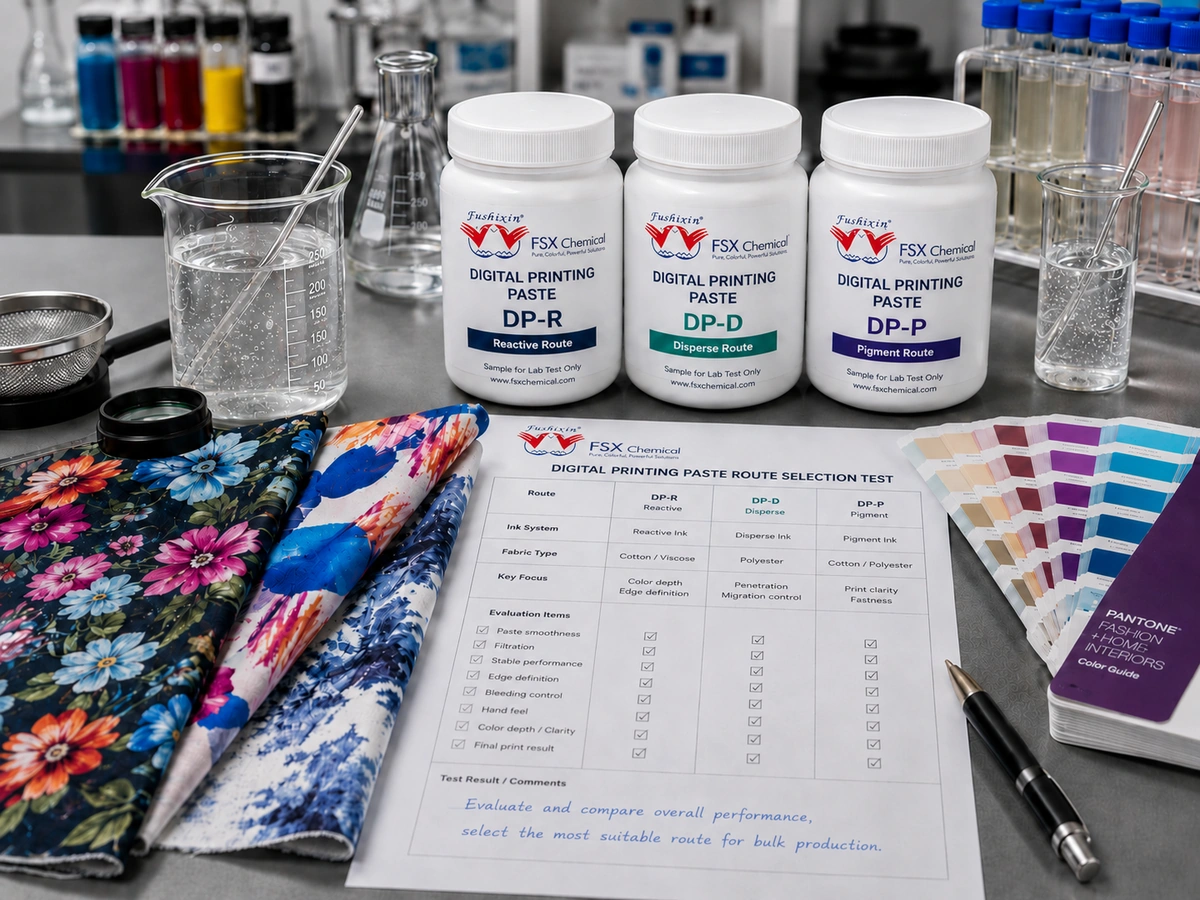
Three Digital Printing Routes Require Different Sustainability Logic
Digital Route
Typical Fabric
Main Chemical Focus
Environmental Efficiency Focus
ردِ عمل کرنے والا
Cotton, viscose and suitable cellulosic fibers
Pretreatment, alkali/salt system, moisture control
Fixation efficiency, wash-off demand, color yield, reprint reduction
Because the chemistry differs, there is no universal digital printing paste that can be called the most eco-friendly for all three routes.
1. Reactive Digital Printing Paste and Pretreatment
Reactive digital printing is commonly used on cotton, viscose and other suitable cellulosic fibers.
The pretreatment typically needs to support:
Controlled ink spreading
باریک لکیر کی تعریف
Color development
Reactive dye fixation
دھل جانے والی کارکردگی
The process may include:
Pretreatment → Drying or Controlled Wet State → Digital Printing → Drying → Steaming → Washing → Finishing
From an eco-efficiency perspective, the key questions include:
Can the pretreatment achieve the required result at an optimized dosage?
Does it improve color yield without creating excessive wash-off demand?
Does it help reduce reprinting caused by bleeding or poor sharpness?
Does it remain stable during the intended production window?
Can the process avoid unnecessary overdosing of alkali, salt or thickener?
For reactive digital printing, good environmental performance is closely connected to printing accuracy and wash-off efficiency.
A pretreatment that gives deeper color but significantly increases washing demand may not be the best overall choice.
2. Disperse Digital Printing Paste for Polyester
Disperse digital printing is mainly associated with polyester and suitable polyester blends.
The pretreatment route should be evaluated separately from reactive printing because the dye chemistry and fixation mechanism are different.
Important technical factors include:
یونیفارم پری ٹریٹمنٹ کی درخواست
Ink spreading control
Surface stability
Drying behavior
Thermal fixation compatibility
جامد رقبائی یکسانیت
Color development
Environmental efficiency can be influenced by:
ابتدائی خوراک
Drying energy
Thermal fixation efficiency
Color consistency
رد شدہ کپڑا
Need for reprinting
A technically stable pretreatment can support more consistent production and reduce waste caused by uneven color or print defects.
The correct product should therefore be selected specifically for the polyester disperse route rather than borrowed from a reactive-printing formulation.
3. Pigment Digital Printing Paste and Pretreatment
Pigment digital printing introduces a different sustainability profile because pigment particles require binder chemistry for fixation.
Important variables include:
Pigment dispersion compatibility
بائنڈر مطابقت
پری ٹریٹمنٹ یکسانیت
ریولوجی
Print sharpness
شفا دینے کے حالات
Dry and wet rubbing fastness
کپڑے کا ہاتھ سے محسوس ہونے والا احساس
One potential advantage of pigment systems is that they may reduce or eliminate some washing stages depending on the complete process.
However, this does not automatically make every pigment process more sustainable.
The curing step, binder dosage, durability and reject rate must also be considered.
An efficient pigment digital system should aim for:
Controlled pretreatment
Optimized binder use
Stable curing
Acceptable fastness
Acceptable hand feel
Low rework
Eight Factors for Selecting a More Efficient Digital Printing Paste
1. Effective Dosage
Compare the amount actually required to reach the approved result.
Do not assume that the lowest recommended dosage is automatically the best option.
2. Preparation Efficiency
Review:
ملاپنے کا وقت
ہائیڈریشن کا وقت
جھاگ
چھانٹائی
Ease of preparation
3. Pretreatment Uniformity
Uneven application can create local differences in color and sharpness, leading to rework or rejected fabric.
4. Ink-Spreading Control
The product should control lateral migration without creating excessive surface film or poor penetration.
5. Color Performance
Better color efficiency may help reduce over-application of ink or chemicals, but it must be evaluated after the full post-treatment process.
6. Post-Treatment Compatibility
Reactive, disperse and pigment systems require different fixation logic.
7. Production Stability
A product that remains stable through a full production shift can reduce waste and operator intervention.
8. Repeatability
Batch-to-batch consistency helps prevent process readjustment and quality variation.
Why Viscosity Alone Is a Poor Sustainability Metric
Viscosity is important for QC, but it does not measure environmental performance.
A viscosity number is meaningful only when the test method is defined, including:
توجہ
پانی کا معیار
ہائیڈریشن
درجہ حرارت
Viscometer
Spindle or rotor
گردشی رفتار
پڑھنے کا وقت
Even when two products show the same viscosity:
Same viscosity does not mean the same printing performance.
The products may differ in:
شیئر ردعمل
ساختی بحالی
Surface retention
Fabric penetration
الیکٹرولائٹ کا ردعمل
Ink compatibility
Drying behavior
For eco-efficient selection, the buyer should focus on whether the candidate reduces unnecessary resource use while maintaining print quality.
Water, Energy and Post-Treatment Considerations
Digital printing is often promoted as a route to more efficient textile production, but actual resource use depends on the full process.
ردِ عمل پر مبنی طباعت
Important resource areas include:
Pretreatment preparation
سکھانا
بھاپ دینا
دھل جانے والا
A more efficient reactive pretreatment may help improve fixation or reduce defects, but washing requirements still need to be considered.
ڈسپرز پرنٹنگ
Energy use is strongly linked to drying and thermal fixation.
Uniform pretreatment can reduce the need for corrective reprocessing.
رنگدانہ پرنٹنگ
Pigment routes may reduce washing in some systems, but curing energy and binder performance become more important.
The most useful sustainability comparison should therefore include both water and energy rather than focusing on one metric only.
How Paste Waste and Reprinting Affect Environmental Performance
One of the largest hidden inefficiencies in textile printing is avoidable rework.
Waste can come from:
Unstable pretreatment
Incorrect viscosity
Uneven application
Ink bleeding
Poor fixation
Color inconsistency
Screening or filtration loss
Excess leftover paste
A product that helps reduce these losses may create more environmental value than a product with a slightly lower nominal dosage but poorer production stability.
This is why reject rate and reprinting should be included in environmental evaluation.
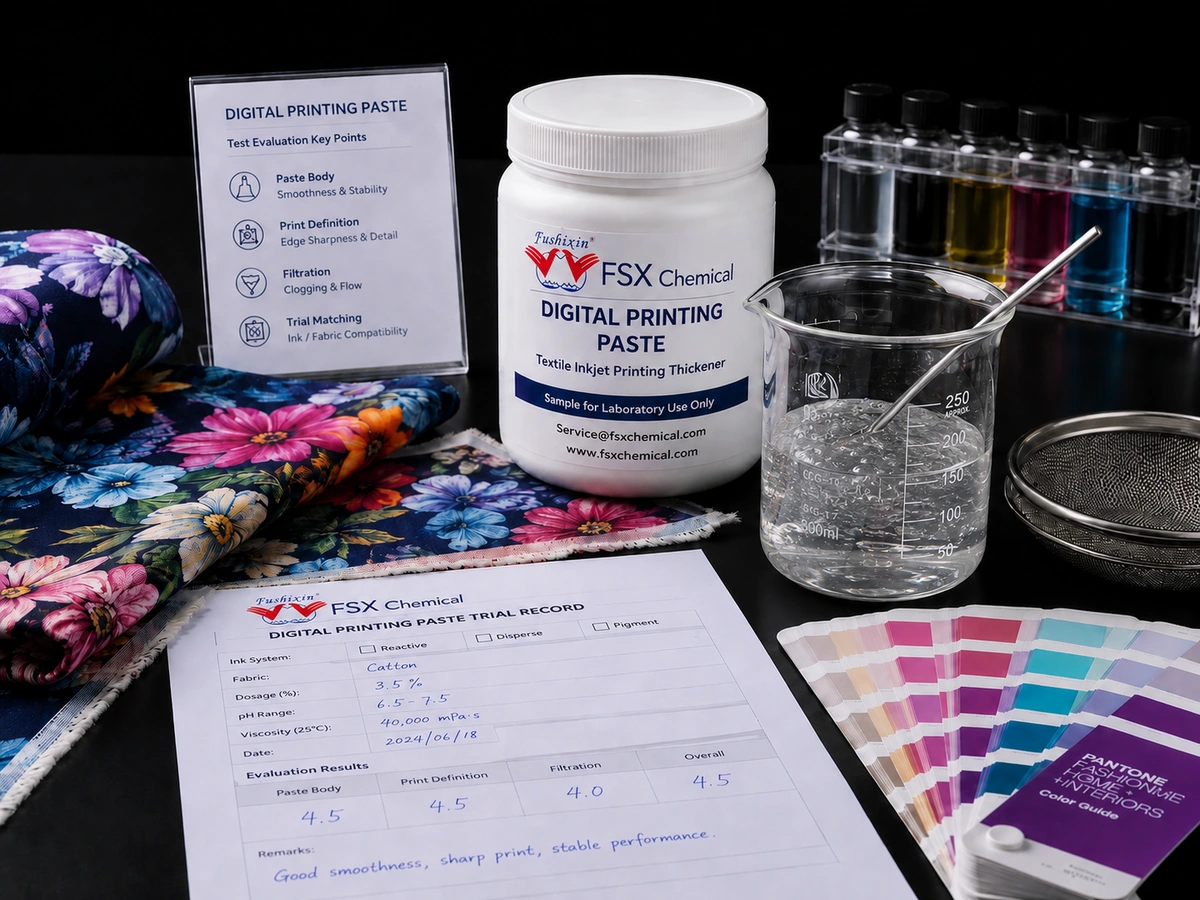
Laboratory Workflow for Eco-Efficiency Evaluation
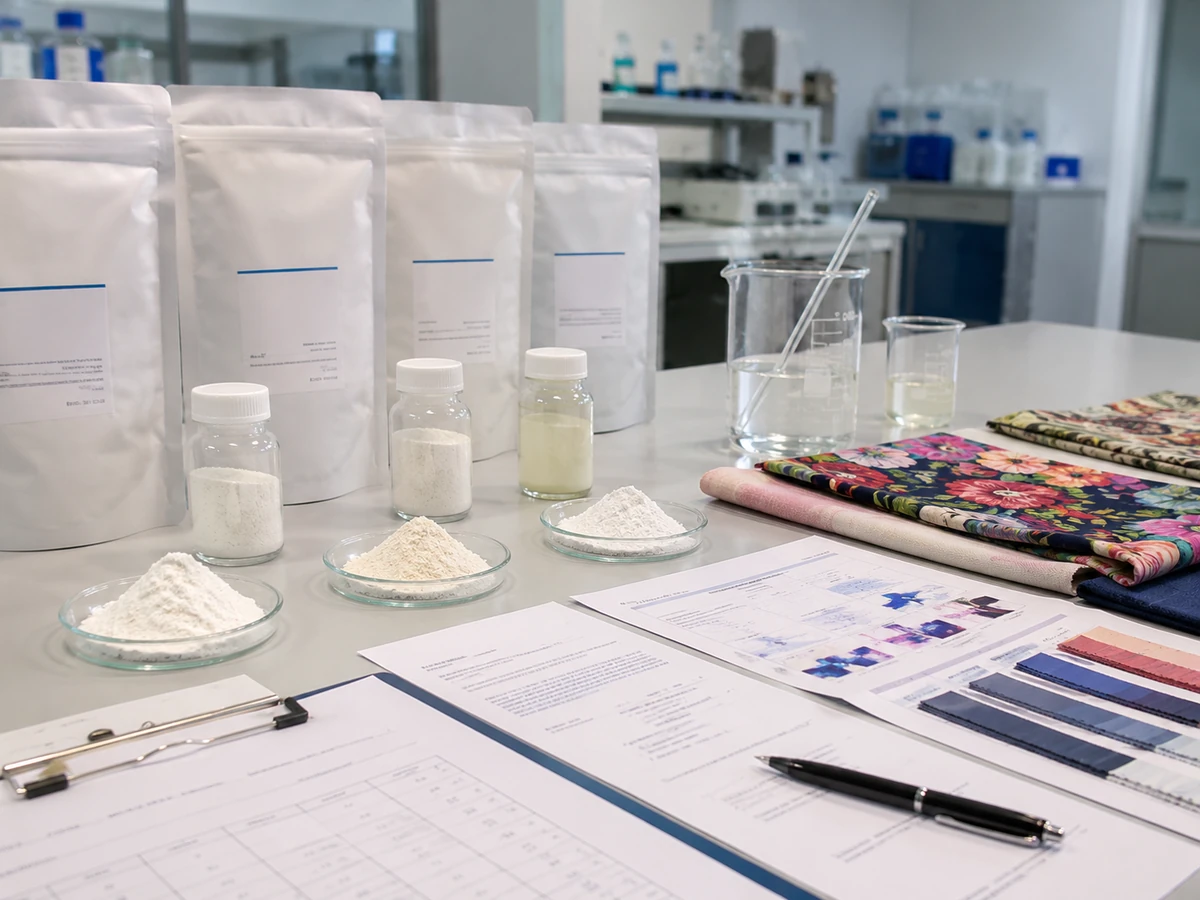
Step 1: Define the Printing Route
Confirm whether the application uses reactive, disperse or pigment ink.
Step 2: Define the Fabric
Record fiber composition, construction and relevant pretreatment history.
Step 3: Record the Current Benchmark
Document:
Current product
موجودہ خوراک
موجودہ ٹی ڈی ایس
Current application method
Current energy- or water-intensive steps
Step 4: Standardize Laboratory Preparation
Use the same water, concentration, mixing, hydration and temperature.
Step 5: Apply the Same Pretreatment Method
Control pick-up or application amount as closely as possible.
Step 6: Print with the Same Ink and Printer Conditions
A fair comparison requires the same ink chemistry and printer settings.
Step 7: Complete the Real Fixation Process
Use steaming, thermal fixation or curing according to the actual route.
Step 8: Complete Washing Where Required
Reactive printing should be evaluated after wash-off rather than before.
Step 9: Evaluate the Finished Textile
موازنہ کریں:
تیزی
Bleeding
رنگ کی پیداوار
Uniformity
روزہ
Fabric hand feel where relevant
Step 10: Record Resource Indicators
Where practical, compare:
Product dosage
تیاری کا وقت
خشک کرنے کے حالات
Steaming or curing conditions
Washing demand
دوبارہ کام
Waste
Step 11: Optimize Dosage
Each suitable candidate should be optimized before final comparison.
How to Compare Cost and Environmental Performance Together
Economic and environmental efficiency often overlap.
For example, reducing waste paste can lower both disposal burden and production cost.
Reducing reprinting can lower:
Chemical use
Ink use
Energy
پانی
Machine time
A useful combined evaluation includes:
Delivered product cost
مؤثر خوراک
Preparation efficiency
خشک کرنے کی طلب
Fixation or curing demand
Washing demand
Waste
رد شدہ کپڑا
Reprinting
This supports a broader version of Total Cost in Use:
Total Production Value = Chemical Cost + Process Efficiency + Quality Yield + Resource Efficiency
This model is more useful than selecting a product because it has the lowest price or the strongest sustainability claim.
A Practical Environmental Performance Framework for Textile Mills
Many mills do not have a full life-cycle assessment for every printing chemical. That does not prevent them from making better process decisions.
A practical internal comparison can use a small set of production indicators measured under the same printing conditions.
Indicator
What to Record
یہ کیوں اہم ہے
Chemical efficiency
Effective dosage per unit of pretreatment or fabric
Shows whether the product can achieve the target result without unnecessary overdosing
Preparation efficiency
Mixing time, hydration time, foam and filtration loss
Highlights hidden labor, energy and material losses
Application efficiency
Pick-up consistency, coating or padding uniformity and leftover paste
Links chemical behavior to real fabric application
Printing yield
First-pass acceptance, reprinting and rejected fabric
Quality losses often create much larger resource waste than small dosage differences
Post-treatment demand
Drying, steaming, curing and washing conditions
Captures process energy and water that are not visible in the product price
Repeatability
Batch-to-batch variation and production adjustments
Stable supply can reduce rework and repeated machine optimization
This type of framework does not replace a formal environmental assessment, but it creates a more evidence-based comparison than selecting a product from marketing language alone.
When a supplier uses terms such as “eco-friendly,” “sustainable” or “low-impact,” buyers can ask whether the claim is supported by a defined metric, test method, certification or process improvement.
Where no supporting data are available, it is safer to treat the statement as a positioning claim rather than a demonstrated production benefit.
What to Ask a Digital Printing Paste Supplier
When sustainability is part of the purchasing objective, ask the supplier for technical information rather than generic “eco-friendly” statements.
Useful questions include:
Which ink system is the product designed for?
Which fibers and fabrics are recommended?
What is the recommended dosage range?
What application method is recommended?
How is viscosity measured?
What preparation and hydration conditions are required?
What fixation or curing process is expected?
What washing steps are required?
Can the supplier support a side-by-side production trial?
Can the supplier provide TDS, SDS and batch-specific quality data where appropriate?
If the supplier makes an environmental claim, the buyer should ask what specific process metric supports it.
مثال کے طور پر:
Lower effective dosage?
Reduced washing?
Lower curing temperature?
Reduced rework?
Less waste?
This creates a more evidence-based sustainability discussion.
How Should You Choose the Right Digital Printing Paste for Eco-Friendly Textile Printing?
The selection process should follow this sequence:
Ink System → Fiber → Pretreatment Route → Candidate Grade → Laboratory Test → Digital Printing → Fixation → Washing/Curing → Finished Fabric → Resource and Cost Evaluation
The most important principles are:
Do not assume that one polymer is automatically more sustainable.
Do not use viscosity as the only performance metric.
Evaluate effective dosage rather than nominal dosage alone.
Include drying, steaming, curing and washing in the comparison.
Include rejected fabric and reprinting in the environmental calculation.
Validate the candidate under the actual production process.
For many mills, the most practical eco-efficiency improvement is not a dramatic change in chemistry.
It is a more stable process that uses the right product at the right dosage and reduces avoidable losses.
اکثر پوچھے جانے والے سوالات
1. What makes a digital printing paste eco-friendly?
No single feature defines an eco-friendly paste. A better evaluation includes effective dosage, preparation efficiency, drying, fixation, washing, waste, reprinting and finished-fabric quality.
2. Is a natural thickener automatically a more sustainable choice?
No. Polymer origin alone does not determine total environmental impact. Process energy, water use, dosage, waste and production efficiency also matter.
3. Does lower dosage always mean lower environmental impact?
Not necessarily. A low-dosage product may still require more drying, washing or rework. The complete process should be compared.
4. Which digital printing paste is best for reactive ink?
The best candidate depends on fabric, pretreatment method, ink chemistry, dosage, steaming and washing. It should be selected through controlled testing.
5. Can the same eco-friendly pretreatment be used for reactive and disperse printing?
It should not be assumed. Reactive and disperse systems use different fibers, dye chemistry and fixation routes.
6. Is pigment digital printing automatically more sustainable because it may require less washing?
No. Reduced washing can be an advantage in some systems, but binder dosage, curing energy, fastness and reject rates must also be considered.
7. Why is viscosity not enough to select a sustainable digital printing paste?
Viscosity does not describe ink compatibility, fabric penetration, drying, fixation, washing or production waste. Similar viscosity can still produce different process results.
8. How can a mill reduce waste in digital textile printing?
Improve pretreatment uniformity, stabilize preparation, optimize dosage, control ink spreading, reduce reprinting and verify batch consistency.
9. How should environmental claims from suppliers be evaluated?
Ask what measurable process factor supports the claim, such as lower dosage, reduced washing, reduced curing energy, less waste or lower reject rates.
10. How does Total Cost in Use relate to sustainability?
Many production inefficiencies increase both cost and environmental burden. Waste, downtime, reprinting and extra washing are examples.
11. Can FSX Chemical match a digital printing paste to my process?
FSX Chemical can identify a technically relevant candidate when the ink system, fabric, current pretreatment, application method and process conditions are known. Production validation is still required.
12. What information should I send for digital paste matching?
Provide your ink type, fabric, current product or TDS, dosage, pretreatment method, drying conditions, fixation or curing process, washing conditions and current technical target.
Evaluate a Digital Printing Paste for Better Process Efficiency
If you are looking for a digital printing paste that supports stable printing and more efficient use of chemicals, water, energy and production time, FSX Chemical can help identify a technically relevant candidate for controlled testing.
For more accurate matching, send us:
Your ink system
کپڑے کی ترکیب
Current pretreatment product or TDS
موجودہ خوراک
Application method
Dry or wet printing route
خشک کرنے کے حالات
Fixation, steaming or curing process
Washing requirements
Current quality, cost or sustainability target
کے ساتھ شروع کریں نمونے اور ملاپ to establish a controlled comparison under your own production conditions.
The right digital printing paste should support print quality and production efficiency at the same time. Eco-friendly selection should be based on measurable process performance—not on a polymer name or an unsupported green claim.
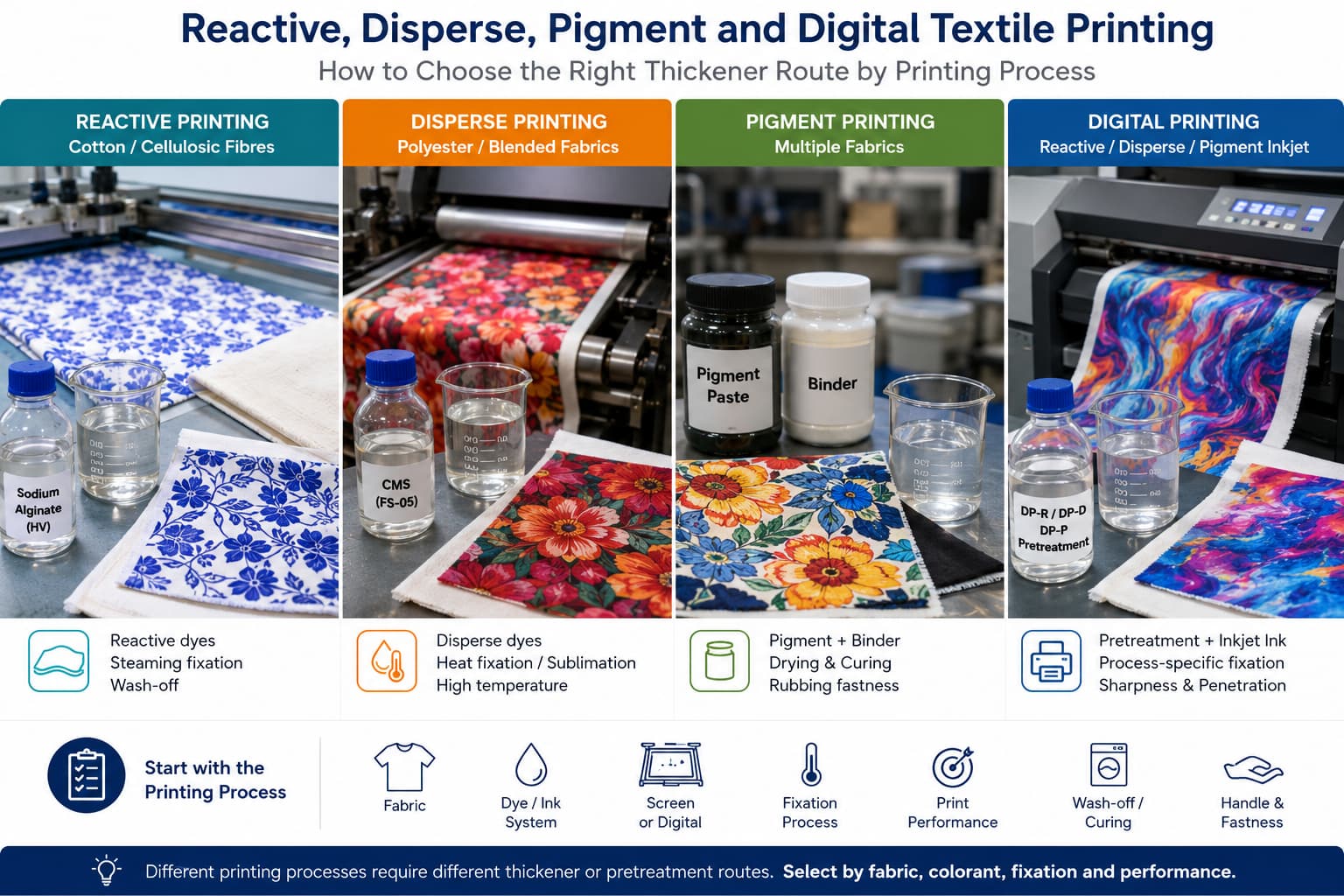
سیکھیں کہ ردعمل کرنے والی، منتشر، رنگین اور ڈیجیٹل ٹیکسٹائل پرنٹنگ کے لیے کپڑے، رنگ یا سیاہی کی بنیاد پر گاڑھا کرنے والا مادہ اور پری ٹریٹمنٹ کے راستے کیسے منتخب کیے جائیں، تاکہ فکسیشن، دھونے کے قابل ہٹانے اور پرنٹ کے معیار کی ضروریات پوری ہوں۔.
ٹیکسٹائل پرنٹنگ کے لیے CMC، CMS، سوڈیم الگینٹ اور ڈیجیٹل پرنٹنگ پیسٹ کا موازنہ کریں۔ جانیں کہ ہر طریقہ کار ری ایکٹیو، ڈسپرز، پگمنٹ اور ڈیجیٹل عمل کے لیے کیسے موزوں ہے، اور خریداروں کو سیمپل ٹیسٹنگ، گریڈ میچنگ اور بڑے پیمانے پر خریداری سے پہلے کن باتوں کا جائزہ لینا چاہیے۔.
CMC پر مبنی پرنٹنگ پیسٹ کو رنگدار، ردعمل پذیر اور ڈیجیٹل ٹیکسٹائل پرنٹنگ میں استعمال کیا جاتا ہے۔ یہ رہنما بتاتا ہے کہ کون سے پیرامیٹرز اہم ہیں، سپلائرز کا موازنہ کیسے کریں اور بڑے آرڈر دینے سے پہلے کیا درخواست کریں۔.
سوڈیم الگینٹ اور سی ایم سی دونوں ٹیکسٹائل پرنٹنگ میں گاڑھا کرنے کے لیے استعمال ہوتے ہیں، لیکن یہ مختلف رنگ ساز نظاموں اور عمل کے حالات کے لیے موزوں ہیں۔ یہ رہنما اہم فرق اور ہر ایک کے استعمال کے اوقات کی وضاحت کرتی ہے۔.
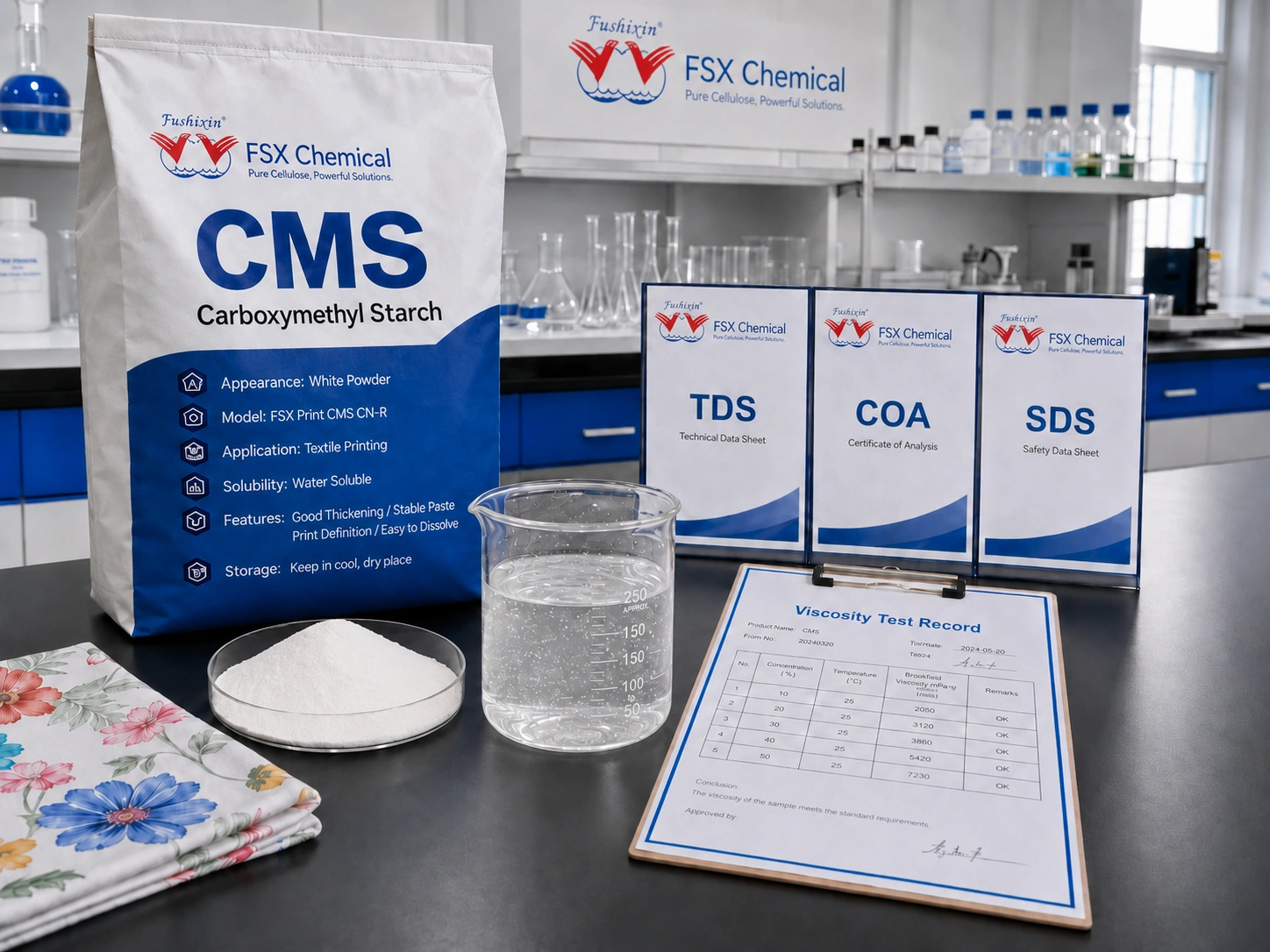
کاربوکسی میتھل اسٹارچ (CMS) کو منتخب ٹیکسٹائل سائزنگ، پرنٹنگ پیسٹ، اور ڈیجیٹل پرنٹنگ فارمولیشن سسٹمز کے لیے جانچا جا سکتا ہے۔ یہ رہنما بتاتا ہے کہ خریداروں کو بڑے پیمانے پر خریداری سے قبل وسکوسٹی گریڈ، تحلیل کے رویے، پی ایچ، نمی، فلم کے رویے، فارمولیشن مطابقت، TDS، COA، SDS، نمونہ کی جانچ، اور بیچ کی یکسانیت کا جائزہ کیسے لینا چاہیے۔.
صحیح ٹیکسٹائل پرنٹنگ تھکنر کا تعین صرف کپڑے کی قسم سے نہیں ہوتا۔ خریداروں کو چاہیے کہ وہ تھکنر کو رنگ یا پگمنٹ کے نظام، پرنٹنگ کے طریقہ کار، مطلوبہ ریولوجی، دھونے کی ضروریات اور حقیقی فیکٹری ٹرائل کے حالات کے مطابق منتخب کریں۔.
ٹیکسٹائل پرنٹنگ کی کارکردگی ایک مربوط کیمیائی نظام پر منحصر ہوتی ہے، نہ کہ کسی ایک یونیورسل اضافی مادّے۔ یہ رہنما دس اہم کیمیائی گروپوں، ان کے افعال، ان کی جگہ اور وہ چیزیں جن کی خریداروں کو پیداواری تجربات سے پہلے تصدیق کرنی چاہیے، بیان کرتی ہے۔.
ٹیکسٹائل پرنٹنگ کے گاڑھا کرنے والے مادے کیمسٹری، ریولوجی، رنگ کے مطابقت اور دھونے پر اثر پذیری کے لحاظ سے مختلف ہوتے ہیں۔ یہ رہنما اہم گاڑھا کرنے والے خاندانوں، ان کے عام استعمال کے طریقہ کار اور ان پیرامیٹرز کا موازنہ پیش کرتا ہے جن کی خریداروں کو پیداواری تجربات سے قبل تصدیق کرنی چاہیے۔.
ڈیجیٹل ٹیکسٹائل پرنٹنگ میں چپچپا پن کے کنٹرول میں دو مختلف نظام شامل ہیں: جیٹنگ انک اور کپڑے کی پری ٹریٹمنٹ فارمولیشن۔ یہ رہنما بتاتا ہے کہ درجہ حرارت، فارمولیشن، پیمائش کے طریقے اور عمل کے حالات جیٹنگ کی استحکام اور پرنٹ کے معیار کو کیسے متاثر کرتے ہیں۔.
ڈیجیٹل پرنٹنگ کے پیسٹ کا انتخاب سیاہی کی کیمسٹری، کپڑے، اطلاق کے طریقہ کار اور بعد از علاج کی بنیاد پر کیا جانا چاہیے۔ یہ رہنما ٹیکسٹائل انک جیٹ پرنٹنگ کے لیے سوڈیم الگنیٹ، سی ایم سی، سی ایم ایس، مصنوعی پولیمر اور مرکب پری ٹریٹمنٹ کے راستوں کا موازنہ پیش کرتا ہے۔.
بہترین ڈیجیٹل پرنٹنگ پیسٹ وہ ہے جو سیاہی کی کیمسٹری، کپڑے اور فکسیشن کے عمل کے مطابق ہو۔ یہ رہنما سیلولوزک کپڑوں پر ری ایکٹیو انک جیٹ اور پالئیےسٹر پر ڈائریکٹ ڈسپرز انک جیٹ کے لیے پری ٹریٹمنٹ کی ضروریات کا موازنہ کرتا ہے، اور پھر بتاتا ہے کہ خریداروں کو بڑے پیمانے پر خریداری سے پہلے نمونوں کا جائزہ کیسے لینا چاہیے۔.
ٹیکسٹائل پرنٹنگ کے معیار کو بہتر بنانے کے لیے صرف ایک کیمیکل تبدیل کرنا کافی نہیں ہوتا۔ یہ رہنما بتاتا ہے کہ FSX کیمیکل کس طرح سوڈیم الگنیٹ، CMC، CMS اور ڈیجیٹل پرنٹنگ پیسٹ کے عمل پر مبنی انتخاب میں معاونت کرتا ہے، جس کے بعد نمونوں کی جانچ، پیداوار کی توثیق اور بیچ دستاویزات کا جائزہ لیا جاتا ہے۔.
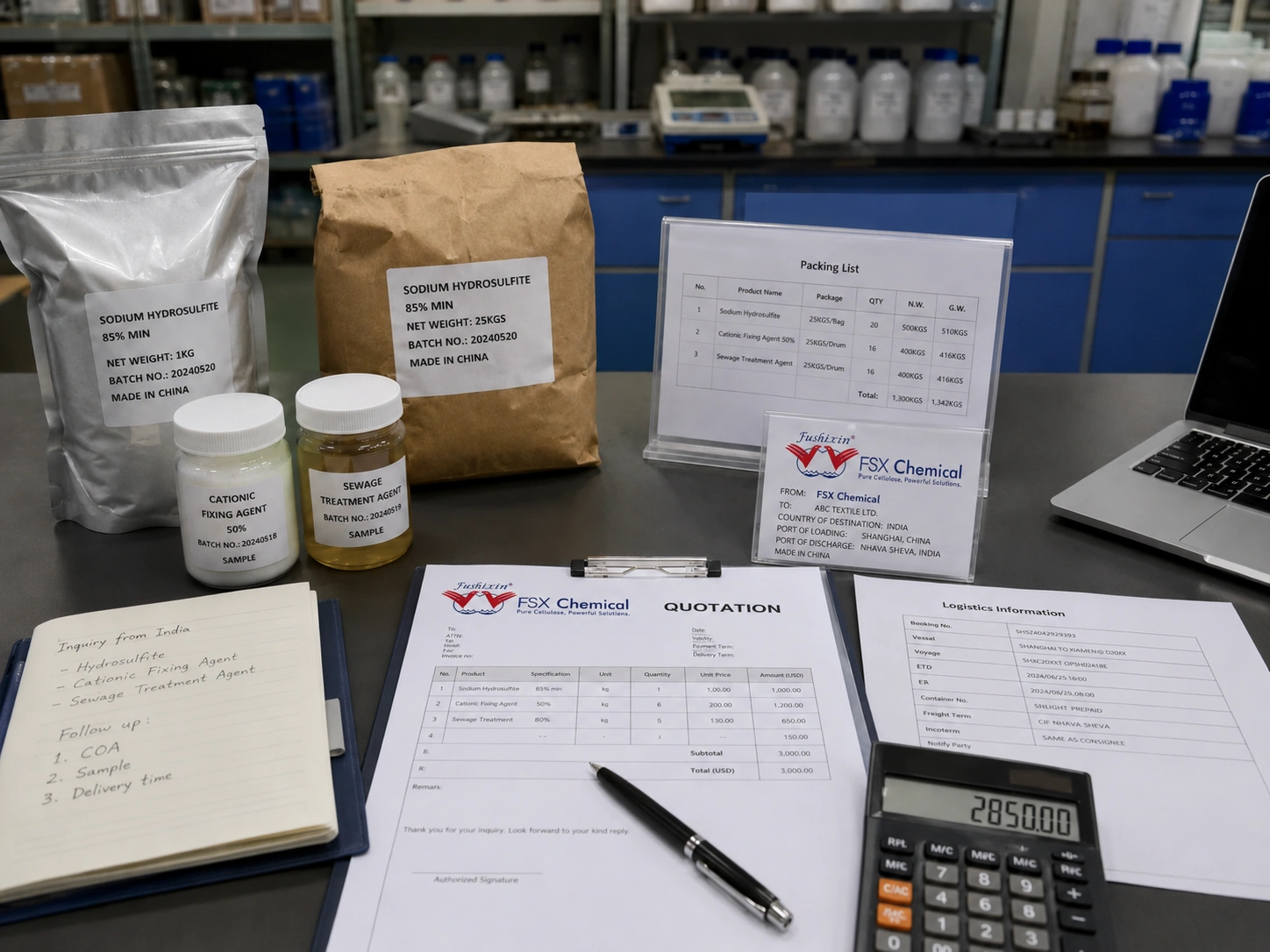
پروڈکٹ کا نام، استعمال، مقدار، منزل اور کوئی بھی TDS، نمونہ کی تصویر یا دستاویز جو آپ کے پاس موجود ہو، فراہم کریں۔ FSX کیمیکل اس معلومات کا جائزہ لے گا اور کوٹیشن، نمونہ کی مطابقت یا پروڈکٹ کے انتخاب کے لیے اگلا قدم تجویز کرے گا۔.
مصنوعات کی معلوماتمصنوعہ کا نام، گریڈ، ماڈل، لیبل کی تصویر یا سپلائر کا حوالہ.
دستیاب دستاویزاتٹی ڈی ایس، ایس ڈی ایس، سی او اے، نمونہ کی تصویر، مصنوعات کی فہرست یا ٹیسٹ کے اعداد و شمار۔.
آرڈر کی تفصیلاتمتوقع مقدار، پیکیجنگ، منزل ملک، بندرگاہ یا تجارتی اصطلاح۔.
درخواست یا مسئلہٹیکسٹائل پرنٹنگ کا عمل، فارمولیشن کی ضرورت، موجودہ مسئلہ یا ہدف کارکردگی۔.