Best-Value Textile Printing Chemicals for Large-Scale Production
The lowest-priced textile chemical is not always the best-value option for large production. This guide...
For large-scale textile printing, the best-value chemical is not simply the lowest-priced product. A chemical that reduces unit price but increases dosage, downtime, filtration loss, batch variation or rejected fabric can raise the total production cost. This guide explains how large textile printing operations can evaluate thickeners, sodium alginate, CMC, CMS and digital printing products through production stability, effective dosage, quality consistency, supply reliability and Total Cost in Use.
What Does “Best Value” Mean in Large-Scale Textile Printing?
In large-scale textile printing, purchasing decisions are often discussed in terms of chemical price per kilogram. This is understandable because annual consumption can be significant and even a small unit-price difference appears important when multiplied across many tonnes.
However, the lowest quotation is not necessarily the lowest-cost production option.
A best-value textile printing chemical should be evaluated through the complete production result:
To achieve the required production quality at the lowest stable cost per unit of acceptable printed fabric.
This definition changes the way buyers compare chemicals.
Instead of asking only:
“Which supplier is cheaper per kilogram?”
large printing factories should ask:
“Which technically suitable product allows us to run stable production with acceptable dosage, predictable quality and controllable supply risk?”
Why Large-Scale Production Changes Chemical Selection Priorities
A laboratory can tolerate a small amount of variation because the test volume is limited and corrective adjustments are relatively easy.
A large printing line is different.
When production volume increases, small differences in chemistry can affect:
Thousands of kilograms of printing paste
Multiple production machines
Large fabric batches
Operator consistency
Preparation time
Screen or application stability
Drying and fixation load
Washing capacity
Daily throughput
Rejected fabric cost
For this reason, large-scale buyers often place more value on repeatability than on achieving the lowest possible purchase price.
A product that saves 5% in unit price but causes unstable viscosity, more frequent cleaning or color variation can create a much larger production loss.
At scale, chemical selection becomes a manufacturing-system decision rather than a simple procurement decision.
Seven Value Drivers That Matter More Than Unit Price
1. Effective Dosage
Always compare the amount of product actually required to achieve the approved production result.
A lower-priced chemical can be more expensive if the dosage is significantly higher.
2. Batch Consistency
Large production systems need predictable behavior from shipment to shipment.
Variation can affect preparation, printing and final color even when the product name remains unchanged.
3. Preparation Efficiency
Evaluate:
Hydration time
Mixing requirements
Dissolution quality
Foam
Filtration loss
Operator handling
4. Process Stability
A chemical should remain suitable throughout the real production window, not only immediately after mixing.
Check holding stability, viscosity change, separation and application behavior.
5. Finished Fabric Quality
Final value depends on acceptable printed fabric.
Important indicators can include:
Color yield
Print definition
Penetration
Solid-area uniformity
Background cleanliness
Fastness where relevant
Fabric hand feel where relevant
6. Downtime and Cleaning
Production interruptions can cost more than the chemical itself.
Frequent screen cleaning, filtration problems, paste instability or inconsistent application should be included in the cost comparison.
7. Supply Reliability
Large-scale production needs predictable supply.
Evaluate:
Commercial batch consistency
Lead time
Production capacity
Packaging consistency
Documentation
Technical communication
Change control
Textile Printing Thickeners: Evaluate Production Cost, Not Polymer Name
Textile printing thickeners are a good example of why product names alone do not determine value.
Each material family includes different commercial grades.
The correct comparison should include:
Viscosity under a defined method
Hydration
Rheology
Filtration
Electrolyte response
Dye or binder compatibility
Effective dosage
Printing behavior
Fixation or curing
Washing
Same viscosity does not mean the same printing performance.
Two products with the same apparent viscosity can produce different screen passage, penetration, sharpness and color results because their rheological and chemical behavior is different.
For large-scale production, this means the buyer should not choose the “cheapest polymer.”
The buyer should identify the most stable commercial grade for the actual printing process and then compare its optimized production cost.
Sodium Alginate for Stable Reactive Printing
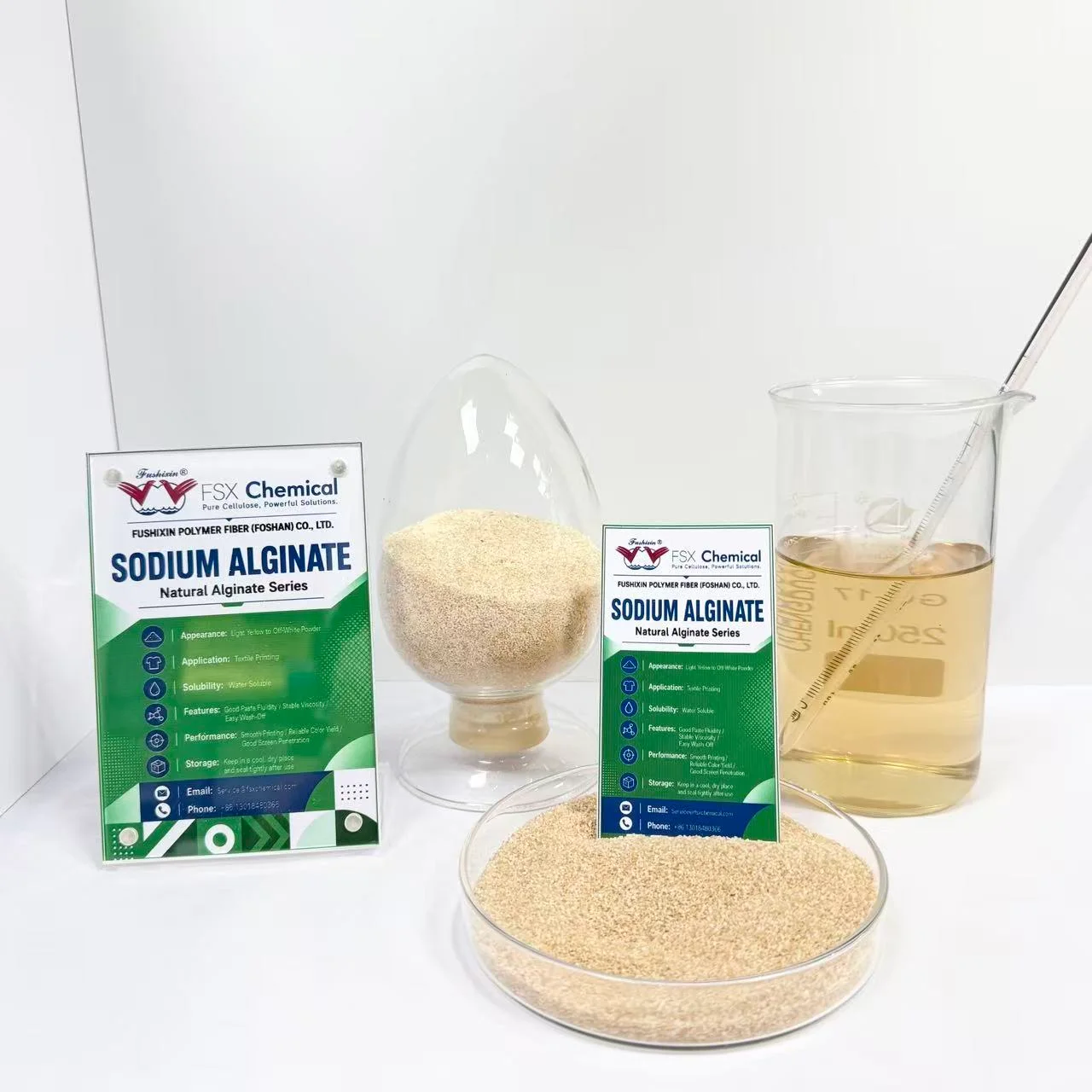
Sodium Alginate remains a common benchmark thickener for conventional reactive printing on suitable cellulosic fabrics.
For large printing mills, its value may come from the fact that the process is already well understood and standardized.
Potential production advantages can include:
Established reactive-printing formulation experience
Predictable printing behavior when the grade is stable
Good process familiarity for operators
Reliable comparison baseline for alternative grades
However, sodium alginate should still be selected by commercial grade and test method.
Buyers should confirm:
Viscosity concentration
Measurement conditions
Hydration
Filtration
Batch consistency
Reactive dye compatibility
Fixation and wash-off performance
A stable alginate that minimizes production adjustment can create strong value even if another material appears cheaper on a price-per-kilogram basis.
CMC for Selected Cost-Performance and Compound Systems
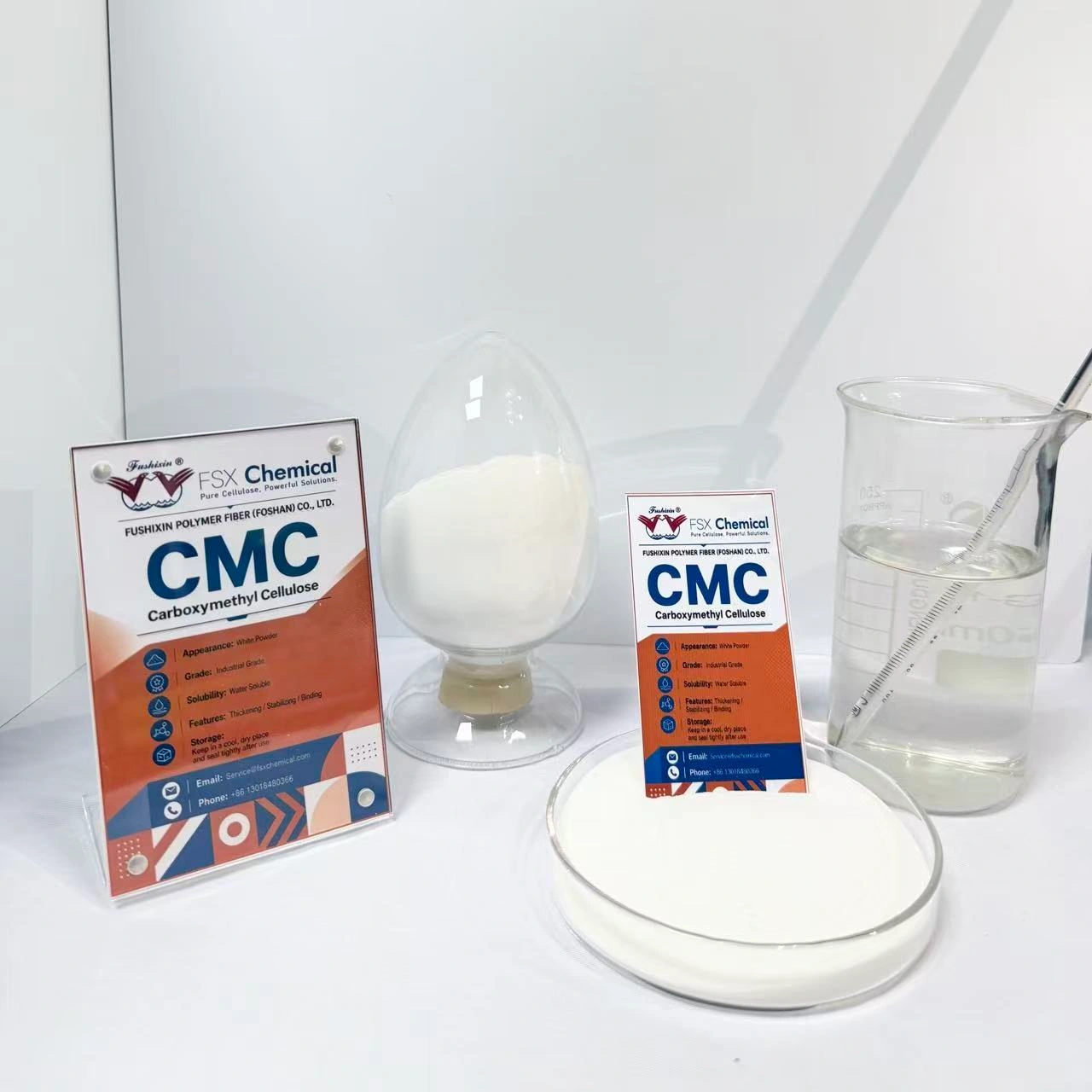
Carboxymethyl Cellulose (CMC) is available in multiple commercial grades with different degree of substitution, viscosity and application behavior.
For large-scale textile production, CMC can be evaluated in selected printing systems and compound-thickener formulations where its technical characteristics fit the application.
Important evaluation points include:
Degree of substitution
Viscosity and test concentration
Hydration rate
Electrolyte response
Filtration
Rheology
Complete-paste stability
Effective dosage
CMC should not be treated as a universal one-to-one substitute for sodium alginate.
The more useful approach is to evaluate a selected commercial grade in the complete formula and optimize its dosage.
For large-volume production, CMC becomes commercially interesting when it provides an acceptable balance of:
Stable production behavior
Reasonable dosage
Consistent batch quality
Suitable printing performance
Competitive Total Cost in Use
CMS for Selected Specialty and Cost-Optimization Routes
Carboxymethyl Starch (CMS) can be evaluated in selected disperse, specialty and compound-thickener systems, with selected reactive applications requiring formulation-specific validation.
For large-scale production, CMS may be considered when the buyer is evaluating:
Viscosity efficiency
Compound-thickener economics
Application-specific rheology
Selected disperse printing systems
Alternative supply routes
Important technical checks include:
Hydration
Filtration
Paste stability
Screen passage
Effective dosage
Dye-system compatibility
Finished textile performance
CMS should not be approved simply because the dry-powder price is attractive.
At industrial scale, any cost advantage needs to survive the complete printing, fixation and quality-control process.
Digital Printing Chemicals for High-Volume Inkjet Production
Digital textile printing introduces another definition of value.
The relevant chemical may be a pretreatment or process-specific functional paste rather than a conventional screen-printing color-paste thickener.
Large-scale digital production should separate at least three routes:
Reactive digital printing
Disperse digital printing
Pigment digital printing
Each route has different chemistry, fabric requirements and fixation conditions.
Reactive Digital Printing
Evaluate:
Pretreatment uniformity
Ink spreading
Bleeding control
Color yield
Sharpness
Fixation
Wash-off
Disperse Digital Printing
For polyester and suitable blends, focus on:
Fabric compatibility
Surface control
Ink migration
Drying
Thermal fixation
Solid-area uniformity
Pigment Digital Printing
Pigment systems should be evaluated together with binder chemistry and curing.
Important performance areas include:
Pigment/binder compatibility
Print sharpness
Rubbing fastness
Curing
Fabric hand feel
For high-volume digital printing, the best-value product is the one that supports stable fabric pretreatment and repeatable printing without creating excessive rework or quality loss.
FSX Chemical can evaluate digital printing candidates through its Samples & Matching process.
Why Batch Consistency Becomes More Valuable at Scale
A small batch difference may be manageable during laboratory testing.
In large production, the same variation can affect several mixing tanks, printing machines or fabric lots.
For this reason, a large-scale buyer should establish a clear incoming control method.
Depending on the product, relevant checks may include:
Appearance
Moisture
pH
Viscosity under a standardized method
Filtration
Hydration
Batch identification
Application test
Consistency should not be interpreted as zero variation.
Industrial chemical production always has an acceptable operating range.
The important question is whether the normal batch range still delivers stable customer production.
This is why buyers should connect:
TDS Specification → Batch COA or Quality Data → Incoming QC → Production Feedback
Long-term supply becomes stronger when these records are retained and reviewed rather than relying only on subjective impressions.
How Downtime Can Erase Chemical Savings
Large-scale production economics are highly sensitive to downtime.
A chemical may represent a relatively small part of the total value of the printed fabric passing through the machine.
If a lower-priced product causes:
Screen blockage
Frequent filtration
Paste instability
Unplanned cleaning
Re-mixing
Color correction
Machine stops
Rejected fabric
the resulting loss can easily exceed the saving on chemical purchase price.
This is why production managers and purchasing teams should review cost together.
A product that is slightly more expensive but allows longer stable runs may provide better value than a low-price product that requires frequent intervention.
For large-volume operations, stability has economic value.
How to Calculate Total Cost in Use
A practical large-scale comparison should move from price per kilogram to cost per production result.
Step 1: Calculate Delivered Chemical Cost
Include:
Product price
Freight
Import cost where relevant
Packaging impact
Storage cost where relevant
Step 2: Calculate Effective Dosage Cost
Use the dosage that actually produces the approved result.
Effective Chemical Cost = Delivered Price × Optimized Dosage
Step 3: Add Preparation Cost
Include:
Mixing time
Hydration time
Energy
Labor
Filtration loss
Waste
Step 4: Add Production Impact
Track:
Machine interruptions
Screen cleaning
Paste replacement
Speed reduction
Rework
Step 5: Add Quality Cost
Include:
Rejected fabric
Color correction
Reprinting
Extra washing
Customer claims where relevant
A useful formula is:
Total Cost in Use = Delivered Chemical Cost + Effective Dosage + Preparation Cost + Process Loss + Downtime + Post-Treatment Impact + Quality Loss
This is more meaningful than comparing quotations alone.
How to Evaluate a Supplier for Large-Scale Production
Large-scale buyers need more than a product sample.
A qualified supplier should be able to support repeat commercial supply.
Evaluate:
Commercial Grade Control
Confirm that the sample, quotation, TDS and future production refer to an identifiable commercial grade.
Test Method Transparency
Important values such as viscosity should include enough method information to be reproduced.
Representative Sampling
The approved sample should represent the product intended for routine supply.
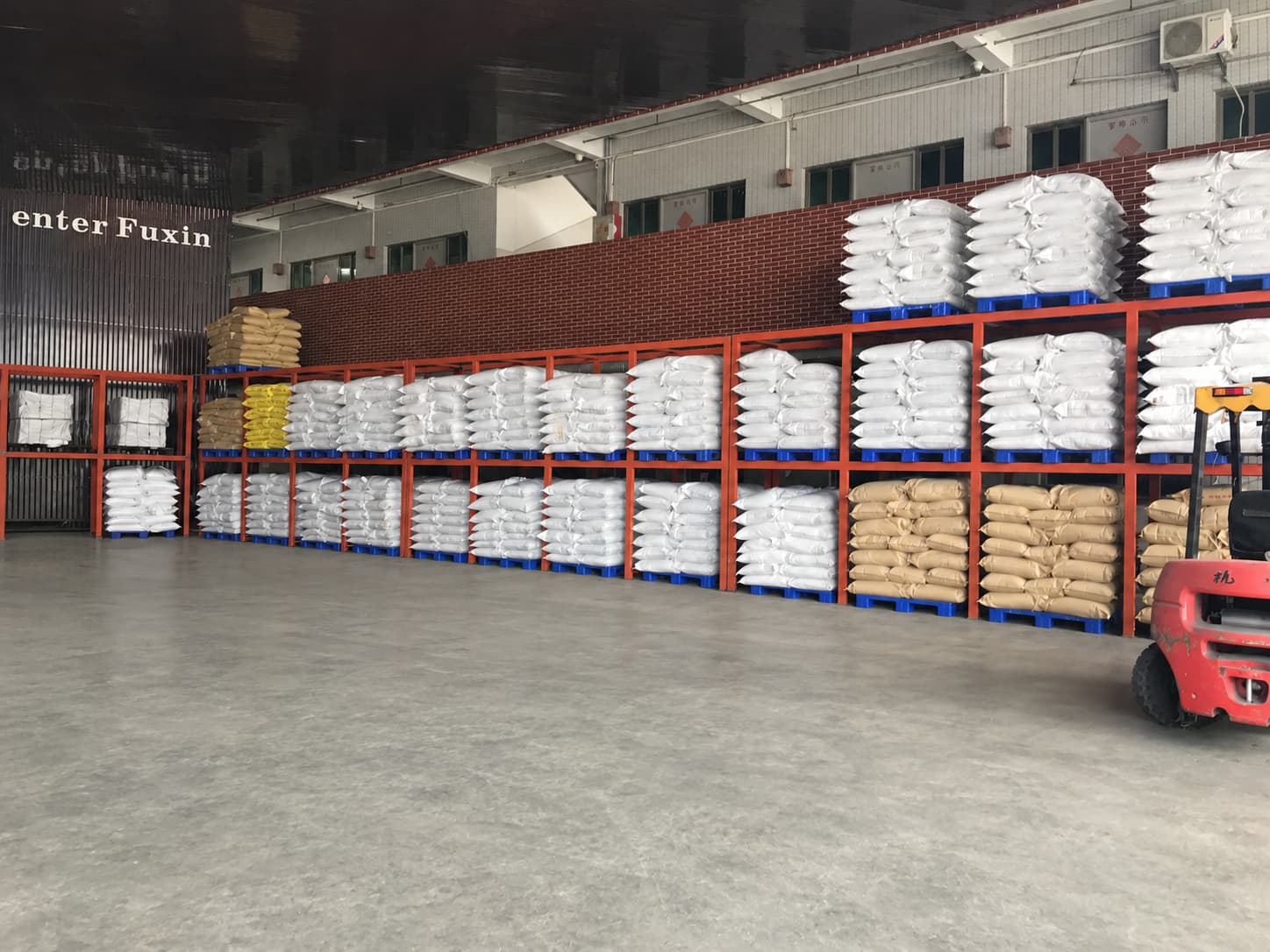
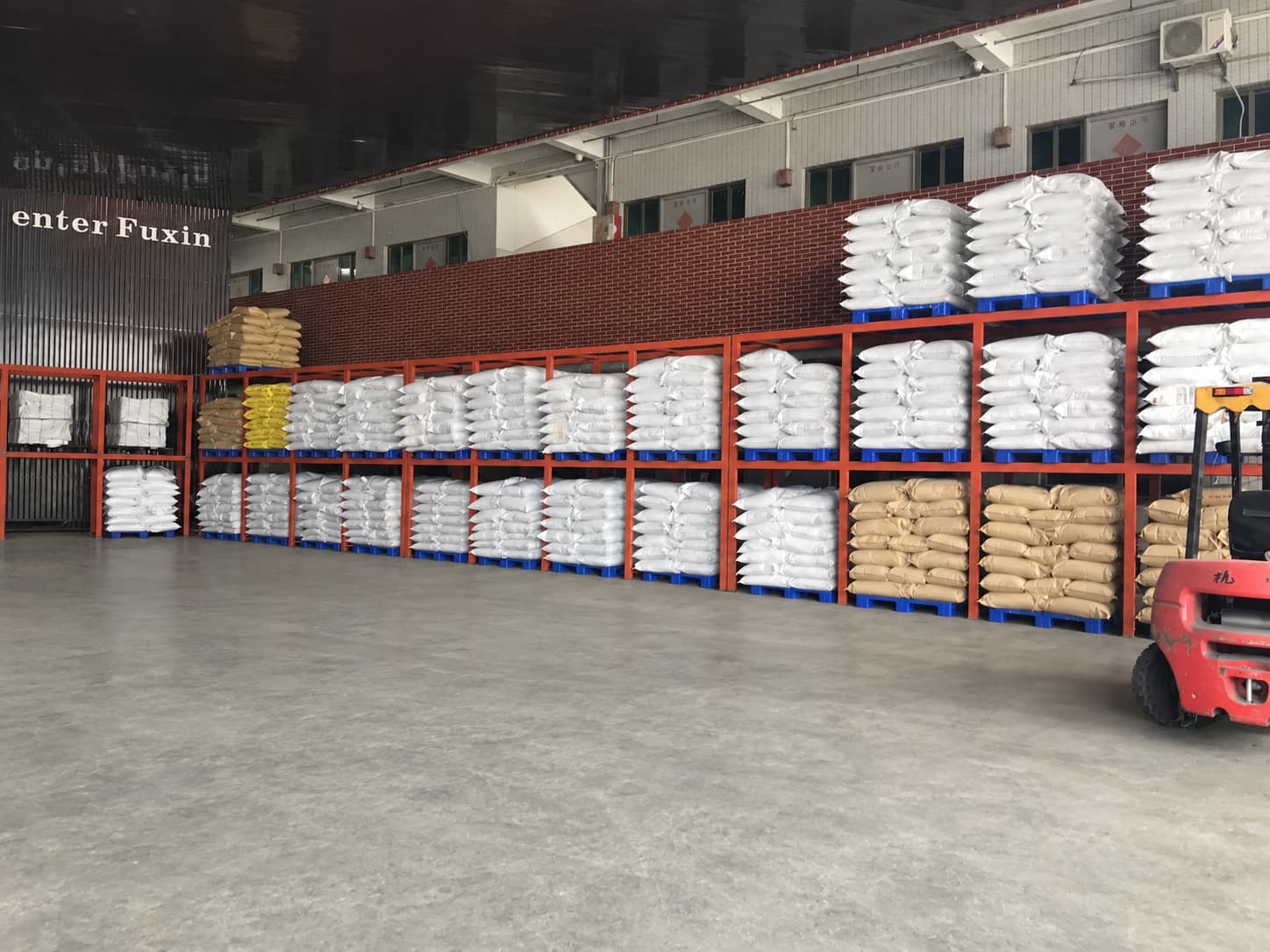
Production Capacity
The supplier should be able to support the buyer’s required volume and normal reorder frequency.
Batch Documentation
Depending on the product and contract, this may include:
TDS
SDS
Batch-specific COA or quality data
Batch identification
Technical Communication
The supplier should be able to discuss:
Preparation method
Viscosity testing
Application conditions
Complete formulation
Production troubleshooting
Change Control
For long-term supply, buyers should understand how meaningful product or specification changes are managed.
Factory-direct sourcing can be useful when it creates a shorter technical path between customer feedback and production control, but factory ownership alone should not be treated as proof of superior quality.
A Practical Qualification Workflow Before Full-Scale Conversion
Large-scale chemical changes should be controlled in stages.
Step 1: Define the Current Benchmark
Record the current grade, dosage, TDS, test method and known production performance.
Step 2: Define the Improvement Target
This may include:
Lower Total Cost in Use
More stable supply
Lower dosage
Better filtration
Better print definition
Improved color performance
Reduced downtime
Step 3: Select a Relevant Candidate
Do not request a generic “equivalent.”
Use the current application and technical data to identify a candidate commercial grade.
Step 4: Standardize Laboratory Testing
Align water, concentration, mixing, hydration, temperature and viscosity method.
Step 5: Test the Complete Formula
Use the actual dyes, pigments, binder, salts, alkalis and auxiliaries.
Step 6: Print the Actual Fabric
Evaluate fine details, solid areas, penetration and uniformity.
Step 7: Complete the Real Post-Treatment
Steam, thermally fix, cure or wash according to the real production process.
Step 8: Optimize Dosage
Do not assume a one-to-one dosage replacement.
Step 9: Run a Controlled Production Trial
Only technically suitable candidates should move to machine-scale evaluation.
Step 10: Verify the First Commercial Shipment
Retain a reference sample and repeat key incoming QC tests.
Step 11: Monitor Repeat Batches
Track technical performance over multiple commercial shipments before treating the conversion as fully established.
Large-Scale Procurement Decision Matrix
Purchasing Priority
What to Measure
Why It Matters at Scale
Low chemical cost
Price plus optimized dosage
Low unit price can disappear after dosage adjustment
High throughput
Machine stability and cleaning frequency
Downtime has high production cost
Consistent quality
Batch-to-batch QC and print results
Variation can affect multiple fabric lots
Low reject rate
Finished fabric quality
Fabric value is normally much higher than chemical value
Stable supply
Capacity, lead time and grade control
Interrupted supply can stop production
Supplier conversion
Sample-to-bulk verification
Approved laboratory performance must continue in commercial supply
Long-term value
Total Cost in Use
Combines chemical, process and quality cost
Which Textile Printing Chemicals Offer the Best Value for Large-Scale Production?
There is no universal product ranking that applies to every printing factory.
Best value depends on:
Printing chemistry
Fabric
Machine
Current formulation
Production speed
Target quality
Effective dosage
Supply requirements
For conventional reactive printing, a stable sodium alginate grade may remain the most practical benchmark.
Selected CMC, CMS and compound-thickener systems may be evaluated when the goal is to improve cost-performance, rheology or supply flexibility.
Digital printing requires separate reactive, disperse and pigment pretreatment logic.
The correct decision process is:
Production Requirement → Candidate Grade → Laboratory Validation → Complete Formula → Production Trial → Dosage Optimization → First-Shipment Verification → Repeat-Batch Monitoring → Total Cost in Use
This approach prevents large-scale buyers from making the most expensive purchasing mistake:
saving on chemical price while increasing production cost.
Frequently Asked Questions
1. What does best value mean for textile printing chemicals?
Best value means achieving the required production result at a stable and competitive Total Cost in Use. It includes price, dosage, preparation, downtime, quality and supply consistency rather than price per kilogram alone.
2. Are cheaper textile chemicals better for large-volume production?
Not necessarily. A cheaper product may require a higher dosage or create more downtime, waste or rejected fabric. Large-scale buyers should compare optimized production cost.
3. Which thickener is best for large-scale reactive printing?
Sodium alginate is a common benchmark for conventional reactive printing on suitable cellulosic fabrics. Selected CMC, CMS or compound systems can also be evaluated, but suitability depends on the complete formulation and production conditions.
4. Can CMC reduce printing costs?
Selected CMC grades may provide competitive cost-performance in appropriate textile printing or compound systems, but the result depends on grade, dosage, formulation and production performance. A universal cost advantage should not be assumed.
5. Can CMS be used for large-scale textile printing?
CMS can be evaluated in selected disperse, specialty and compound-thickener systems, with selected reactive applications requiring controlled validation. Large-scale approval should include complete-paste and production testing.
6. Why is batch consistency so important?
At large scale, a small chemical variation can affect multiple paste tanks, fabric lots and machines. Consistent commercial performance therefore reduces adjustment, rework and quality risk.
7. How should viscosity be compared between suppliers?
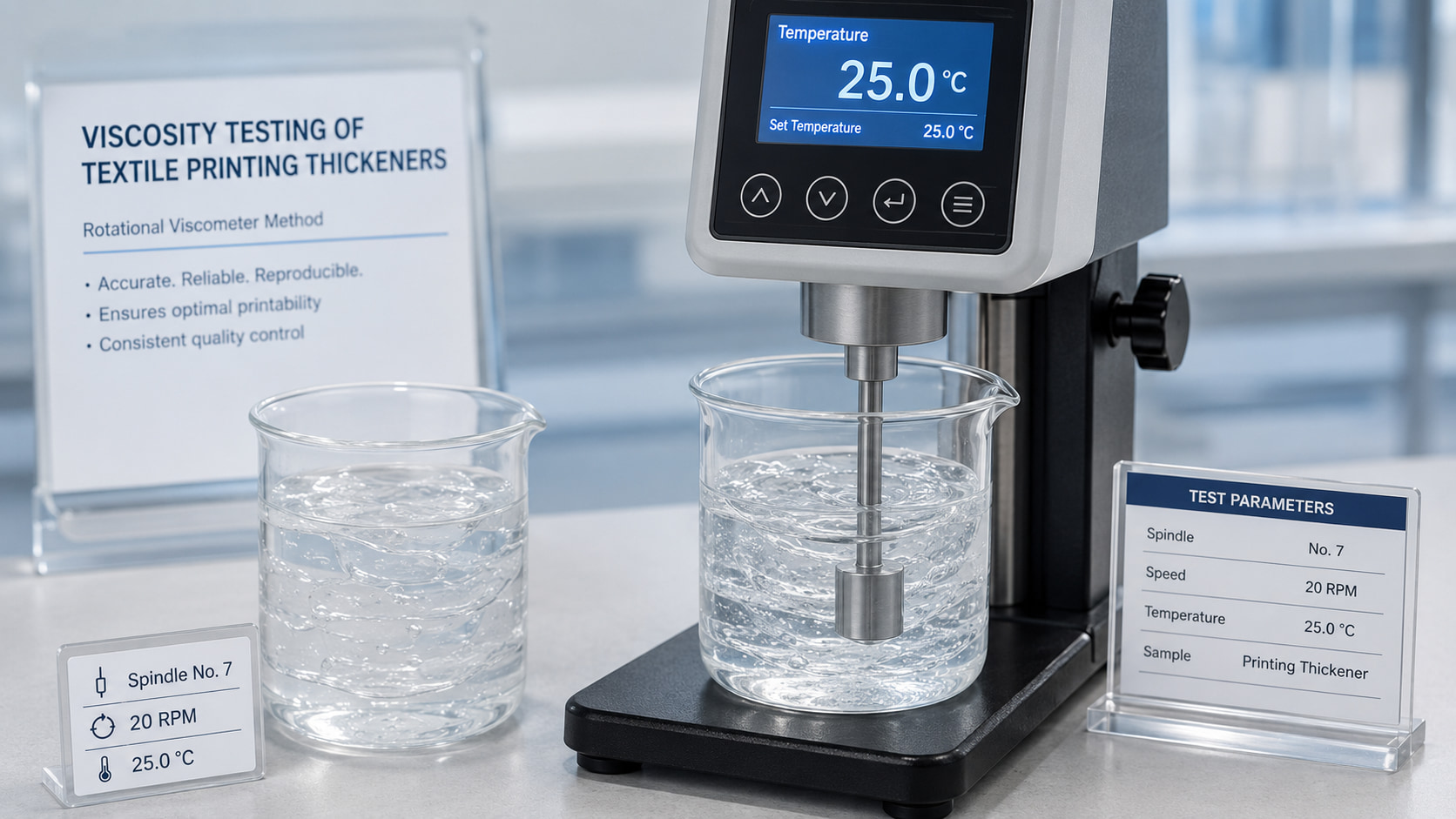
Align concentration, water, hydration, temperature, instrument, spindle or rotor, rotational speed and reading time. A viscosity value without a defined test method is not a reliable comparison.
8. Does the same viscosity mean the same production performance?
No. Products with similar viscosity can have different rheology, filtration, electrolyte response, penetration and formulation compatibility. Complete printing performance must be compared.
9. What is Total Cost in Use for textile printing chemicals?
It is a cost model that includes delivered chemical cost, effective dosage, preparation, process loss, downtime, post-treatment impact and quality loss.
10. How should a large textile mill qualify a new chemical supplier?
Start with the exact commercial grade, TDS, test method and representative sample. Complete laboratory testing, real-formula validation, production trial and first-shipment verification before full conversion.
11. Should I switch suppliers only for a lower price?
Price can be a reason to evaluate alternatives, but technical suitability should be confirmed first. The commercial comparison should be finalized only after the candidate dosage and production performance are optimized.
12. What information should I send to FSX Chemical for product matching?
Provide your current grade or TDS, viscosity method, dosage, printing process, fabric, formulation, machine, fixation conditions, current production problem and commercial target. A physical sample can make candidate selection more relevant.
Compare Best-Value Textile Printing Chemicals for Your Production Line
If you are evaluating a new textile printing chemical for large-scale production, FSX Chemical can help identify a technically relevant candidate for controlled comparison.
For more accurate matching, send us:
Your current product or commercial grade
Current TDS
Physical sample where available
Current viscosity and test method
Current dosage
Printing process
Fabric type
Printing or pretreatment formula
Machine and production conditions
Current quality or cost target
Start with Samples & Matching to establish a controlled comparison under your own process conditions.
You can also review Sodium Alginate, CMC and CMS product routes before selecting a candidate.
The best-value textile printing chemical is not the product with the lowest price. It is the product that supports stable production, acceptable quality and a controllable Total Cost in Use at the required production scale.
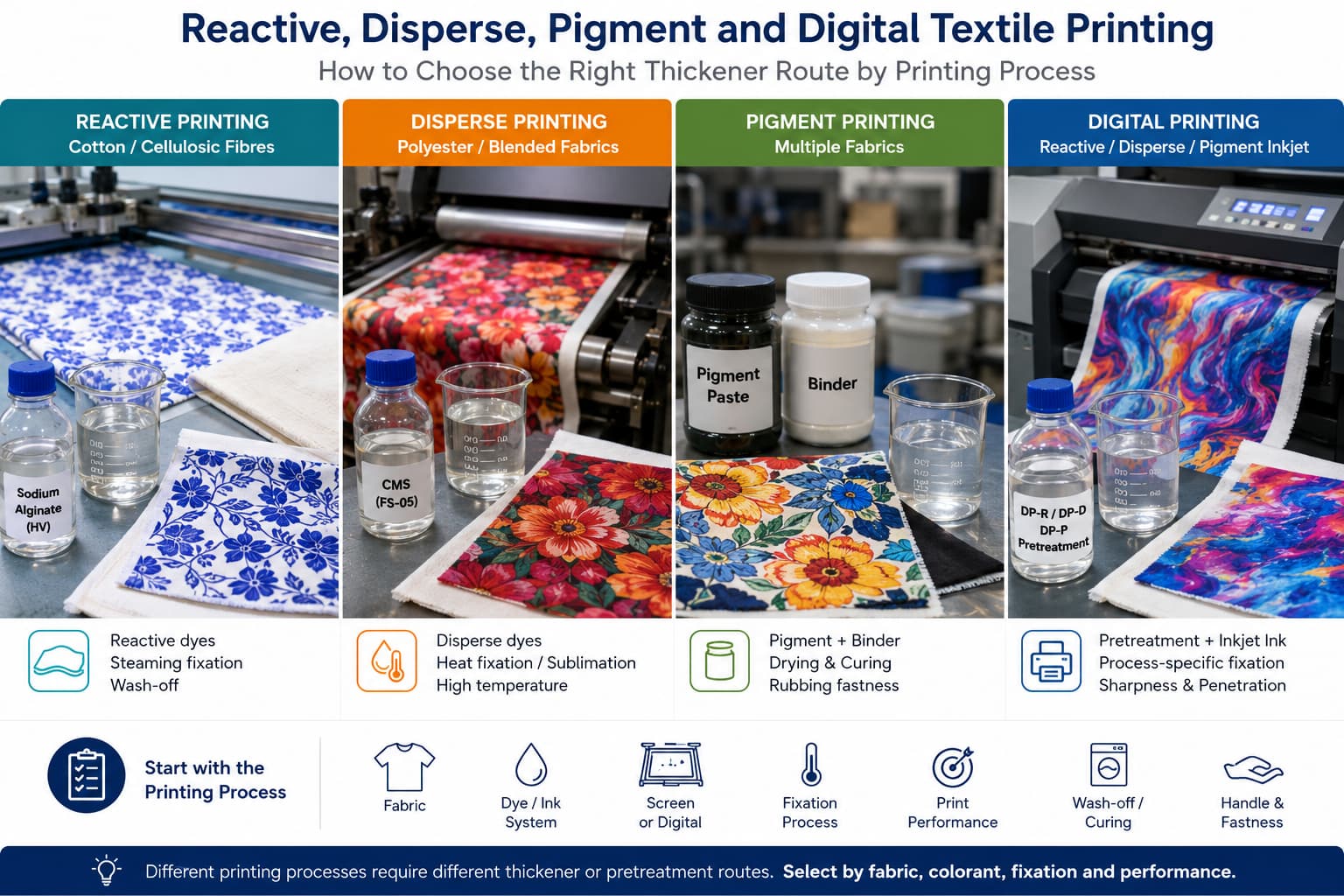
Learn how to choose thickener and pretreatment routes for reactive, disperse, pigment and digital textile printing based on fabric, dye or ink, fixation, wash-off and print-quality requirements.
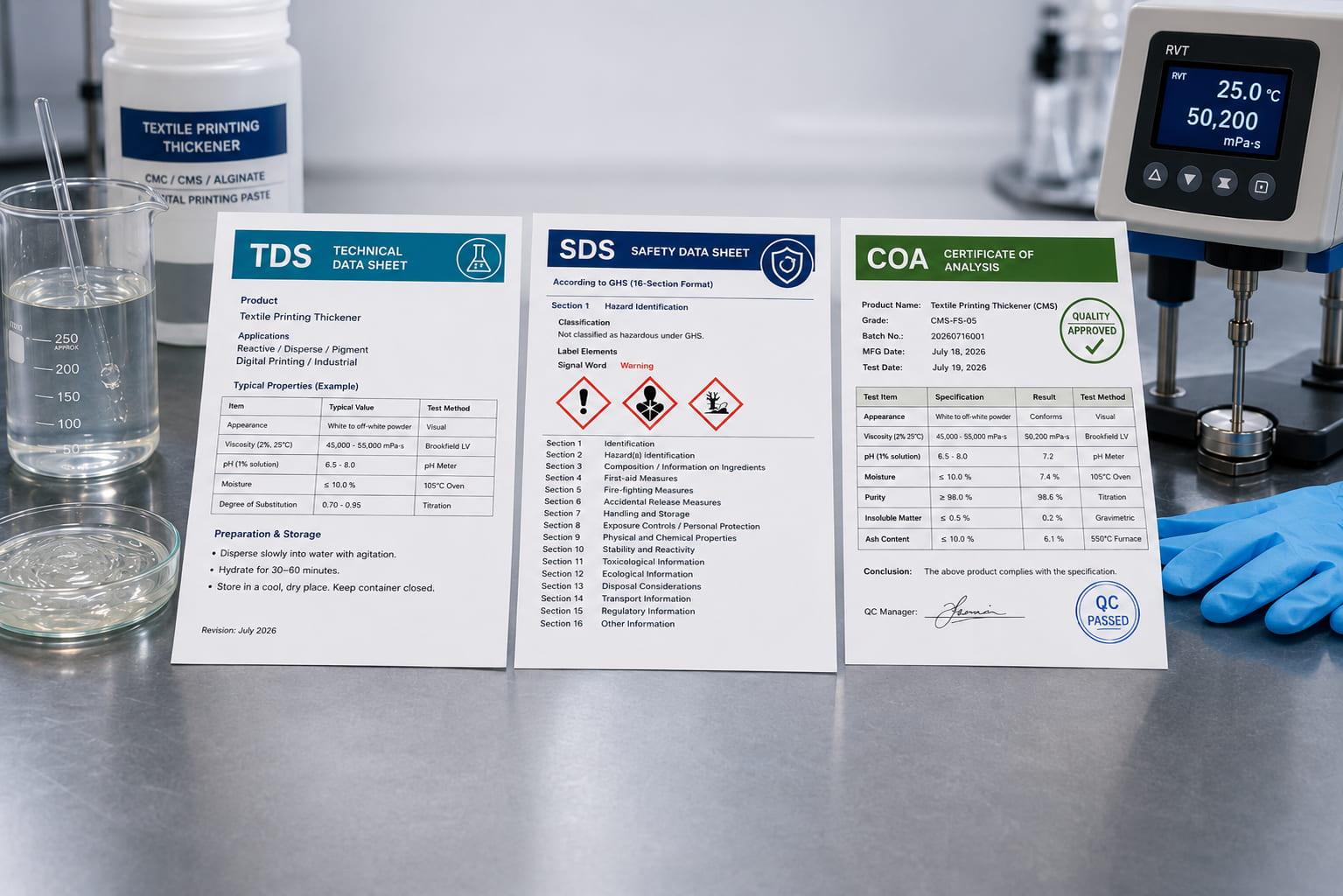
Learn the difference between TDS, SDS and COA documents, what textile printing buyers should verify, and how to check specifications, safety data, test methods, batch results and document issuers.
Compare CMC, CMS, sodium alginate and digital printing paste for textile printing. Learn how each route fits reactive, disperse, pigment and digital processes, and what buyers should review before sample testing, grade matching and bulk purchase.
Sodium alginate is widely used in textile printing as a stable and washable thickener for reactive printing paste. Learn how to evaluate viscosity grade, purity, and application suitability before purchasing, and how FSX Chemical supports global buyers with technical data and samples.
Carboxymethyl cellulose (CMC) is widely used in the printing, sizing, and dyeing processes of textiles. This guide will explain how to evaluate CMC grades, which parameters are most important, and how FSX Chemical can support purchasing decisions.
Carboxymethyl cellulose is used as a thickener and stabilizer in water-based inks, gravure printing, and inkjet pre-treatment. This guide covers the key grade parameters and sourcing considerations for procurement teams.
Both sodium alginate and CMC are used as thickeners in textile printing, but they suit different dye systems and process conditions. This guide explains the key differences and when to use each.
Digital inkjet printing on textiles has different paste and pre-treatment requirements compared to screen printing. This guide explains how sodium alginate is used in digital textile printing and what grade parameters procurement teams should specify.
Food-grade and industrial-grade CMC share the same base chemistry but differ significantly in purity, DS range, and regulatory requirements. This guide explains the key differences and why using the wrong grade creates production problems.
Correct paste preparation is as important as grade selection in reactive dye textile printing. This guide covers sodium alginate dissolution methods, concentration ranges by application, storage conditions, and how to troubleshoot common preparation problems.
Assess sodium alginate in reactive-printing wastewater using measured COD load, product-specific biodegradation evidence and controlled process comparisons. Includes a buyer checklist and illustrative load calculation.
Share the product name, application, quantity, destination and any TDS,
sample photo or document you already have. FSX Chemical will review the
information and recommend the next step for quotation, sample matching
or product selection.
Product InformationProduct name, grade, model, label photo or supplier reference.
Available DocumentsTDS, SDS, COA, sample photo, product list or test data.
Order DetailsEstimated quantity, packaging, destination country, port or trade term.
Application or IssueTextile printing process, formulation need, current issue or target performance.