Sodium alginate is a practical thickener for reactive-dye hand block printing on cellulosic fabrics when the paste requires clean transfer, controlled penetration and reliable wash-off. It should not be treated as a universal thickener for every traditional, natural-dye, mordant or resist process; suitability depends on the actual dye chemistry, alkali, salts, fabric and fixation route.
This guide explains how to qualify textile-grade sodium alginate for hand block printing, including route screening, grade selection, small-batch preparation, workshop flow checks and production troubleshooting.
Is Sodium Alginate Suitable for This Hand-Printing Route?
| Process route | Alginate decision | Minimum trial |
|---|---|---|
| Reactive dye on cotton or viscose | Strong candidate | Paste rheology, outline, fixation, wash-off |
| Pigment plus binder | Not the default choice | Binder compatibility and handle |
| Natural dye or mordant route | Do not assume suitability | Exact recipe and full process sequence |
| Wax/resist plus printed reactive stage | Evaluate only the color-paste stage | Boundary control and post-wash result |
পেস্টের প্রয়োজনীয়তার দিক থেকে ব্লক প্রিন্টিং কীভাবে স্ক্রিন প্রিন্টিং থেকে পৃথক
ম্যানুয়াল প্রয়োগ এবং পেস্ট বডি
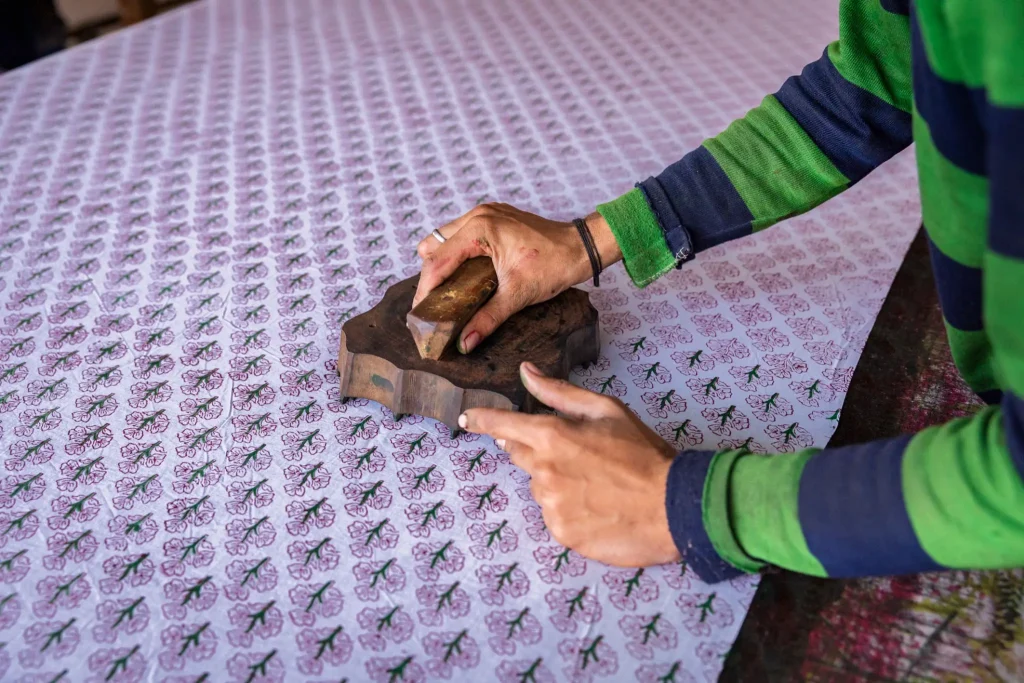
পেস্টটি এতটা ঘন হতে হবে যে তা ব্লকের মুখ সমানভাবে ঢেকে রাখতে পারে এবং ঝরে না পড়ে, পেস্ট ট্রে ও কাপড়ের মধ্যে ব্লকের পৃষ্ঠে তার আকৃতি ধরে রাখতে পারে, এবং ব্লক চাপিয়ে তুলে নেওয়ার সময় কাপড়ে পরিষ্কারভাবে ছেড়ে দিতে পারে। অতি তরল পেষ্ট ব্লক থেকে ঝরে পড়বে, অসমভাবে ছড়িয়ে পড়বে এবং কাপড়ে ছড়িয়ে যাবে। অতি ঘন পেষ্ট ব্লকে সমানভাবে লেপাবে না এবং নকশায় ফাঁক থাকতে পারে।.
Block printing and rotary screen printing impose different transfer forces and dwell times. Set paste body from the actual block depth, tray or pad, fabric construction and required penetration; do not assume block printing always needs a higher viscosity.

নকশার সংজ্ঞা এবং রঞ্জক স্থানচ্যুতি নিয়ন্ত্রণ
After stamping, the color paste must limit unwanted lateral spread while allowing the required penetration. Alginate systems can show shear thinning, but lower apparent viscosity at higher shear rate does not prove immediate recovery or guarantee edge definition when the block lifts. Test actual block loading, dwell, lift, fabric absorbency and the interval before fixation. Measure time-dependent recovery separately if it is part of the grade-selection criterion.
ব্যাচের আকার এবং প্রস্তুতির স্কেল
ব্লক প্রিন্টিং কার্যক্রম—প্রথাগত কারিগর কর্মশালা হোক বা ছোট বাণিজ্যিক উদ্যোগ—সাধারণত শিল্পায়িত স্ক্রিন প্রিন্টিংয়ের তুলনায় ছোট ব্যাচে পেষ্ট প্রস্তুত করে। প্রতি রঙের পেষ্টের পরিমাণ প্রায়ই শত শত লিটারের পরিবর্তে লিটারে পরিমাপ করা হয়, এবং পেষ্ট প্রস্তুতি হাতে বা ছোট আকারের মিক্সিং যন্ত্রপাতি দিয়ে করা হয়।.
Small batches make preparation variables more visible. Add powder gradually to controlled-temperature water under adequate agitation, allow full hydration, then filter and rest the paste according to the approved method. Mesh size can affect wetting and dispersion, but it does not by itself predict hydration speed, viscosity or print quality.
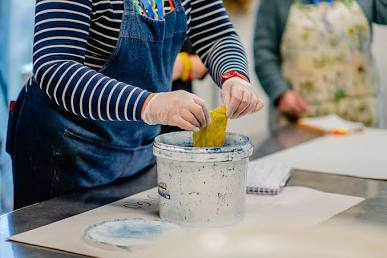
প্রতিক্রিয়াশীল রঞ্জক ব্লক প্রিন্টিং পেস্টে সোডিয়াম অ্যালজিনেট
Typical Components to Validate in a Reactive-Dye Block Paste
Depending on the selected reactive-dye process, a block-printing paste may contain sodium alginate, dye, alkali and specified auxiliaries such as urea or an anti-reducing agent. These are recipe components to confirm, not mandatory ingredients for every reactive system. Follow the dye supplier’s fixation route and test the complete paste; manual application alone does not establish a higher viscosity requirement.
Choose concentration by a controlled working trial rather than a presumed relationship to screen-printing dosage. Compare candidates first on a stated as-supplied powder basis with the same water, preparation, temperature and test method. Then optimize each complete recipe to achieve accepted transfer, penetration, outline, fixation and wash-off. Keep dye and auxiliary levels on the same final-recipe basis when changing thickener dosage.
প্রচলিত কারিগরি পরিবেশে, পেস্টের ফর্মুলেশন প্রায়শই অভিজ্ঞতাভিত্তিকভাবে তৈরি করা হয় — ভিসকোমিটার পরিমাপের পরিবর্তে প্রিন্টার দৃশ্যগত ও স্পর্শগত মূল্যায়নের ভিত্তিতে পেস্টের আচরণ সামঞ্জস্য করে। অভিজ্ঞতাভিত্তিক থেকে পরিমাপভিত্তিক ফর্মুলেশনে রূপান্তরিত হওয়া অপারেশনের জন্য, পরিমাপের মাধ্যমে একটি লক্ষ্যমাত্রা সান্দ্রতা পরিসীমা নির্ধারণ করা এবং তা পরিচিত ভালো পেস্ট আচরণের সাথে সম্পর্কিত করা একটি কার্যকর প্রথম ধাপ।.
ছোট ব্যাচের ব্লক প্রিন্টিং-এ ক্ষার ব্যবস্থাপনা
শিল্পক্ষেত্রে স্ক্রিন প্রিন্টিং-এ ক্ষারযুক্ত পেস্ট বড় পরিমাণে প্রস্তুত করা হয় এবং নির্দিষ্ট সময়সীমার মধ্যে ব্যবহার করা হয়। ছোট ব্যাচের ব্লক প্রিন্টিং-এ একই নীতি প্রযোজ্য, তবে বাস্তবিক কিছু ভিন্ন সীমাবদ্ধতা রয়েছে — ছোট ব্যাচগুলো দিনজুড়ে বিচ্ছিন্নভাবে প্রস্তুত ও ব্যবহার করা যেতে পারে, এবং প্রিন্টিং সেশনের মধ্যে পেস্ট ট্রেতে রেখে দেওয়া যেতে পারে।.
Adding alkali changes the ionic and pH environment of the complete reactive paste and also starts a limited dye-use window. Alginate can degrade under sufficiently alkaline conditions during storage, but an immediate or later viscosity change does not establish that mechanism. Qualify both paste behavior and final color over the intended workshop holding period at the actual temperature. Practical controls include:
- Where the approved dye procedure permits, hydrate the stock first and add the specified alkali close to use. Label the addition time and use the paste within its qualified holding window.
- Use the alkali identity and amount specified for the dye and fixation route. Bicarbonate and carbonate are not universal substitutes; any change requires fresh compatibility, holding and final-color trials.
- Keep the paste covered under the temperature conditions qualified for the recipe. Recondition and test it by the same procedure before comparing later readings.
If paste behavior changes during printing, compare temperature, final concentration, accidental dilution, pH, ionic additions and shear/rest history with the approved reference. Include dye age and sanitation in the investigation. Holding temperature constant does not isolate alkali degradation, and acceptable viscosity does not by itself confirm usable dye fixation.
প্রাকৃতিক রঞ্জক ঐতিহ্য এবং সোডিয়াম অ্যালজিনেট সামঞ্জস্য
Natural-dye, mordant and resist traditions use many process routes. Before introducing sodium alginate, run a small compatibility trial with the exact colorant, mordant, alkali, water quality, fabric and fixation sequence. Evaluate shade, outline, penetration and wash-off rather than assuming transfer from a reactive-dye recipe.
Where a mordant or auxiliary is part of the paste, add it only after confirming compatibility and holding stability. Compare a fresh paste with the intended workshop holding time and check for viscosity drift, separation or loss of print definition.
Control pH using the dye supplier’s process window. Sodium alginate tolerates many reactive-printing conditions, but the complete paste—not the thickener alone—must be tested after alkali and electrolyte addition.
আজরাক এবং সংশ্লিষ্ট দক্ষিণ এশীয় ব্লক প্রিন্টিং ঐতিহ্য
আজরাখ প্রিন্টিং: প্রক্রিয়া এবং আঠার প্রয়োজনীয়তা
Ajrak is a multistage resist, mordant and dyeing tradition with workshop-specific recipes. The process should be documented before recommending any thickener; sodium alginate is relevant only when a compatible printed color or reactive-dye stage is actually used.
If a workshop uses a reactive-dye paste on cotton within an Ajrak-inspired or mixed production route, sodium alginate can be screened for outline control and wash-off. This is an application-specific trial, not a general prescription for traditional Ajrak.
For multistage work, test the alginate paste through the complete sequence—including drying, steaming or curing, washing and any later resist or mordant steps—to detect interactions that a single stamp test will miss.
বাগরু ও সাঙ্গানার ব্লক প্রিন্টিং (ভারত)
Bagru and Sanganer workshops use diverse natural, pigment and reactive color systems. Identify the actual route first. For reactive-dye printing on cellulosic fabric, sodium alginate may be evaluated; other systems need a thickener selected for their own binder, mordant and fixation chemistry.
Do not select a “medium-viscosity” grade by label alone. Compare samples at equal solids and a defined test method, then adjust concentration to the block depth, fabric absorbency and desired penetration. Approve the grade only after print, fixation and wash-off trials.
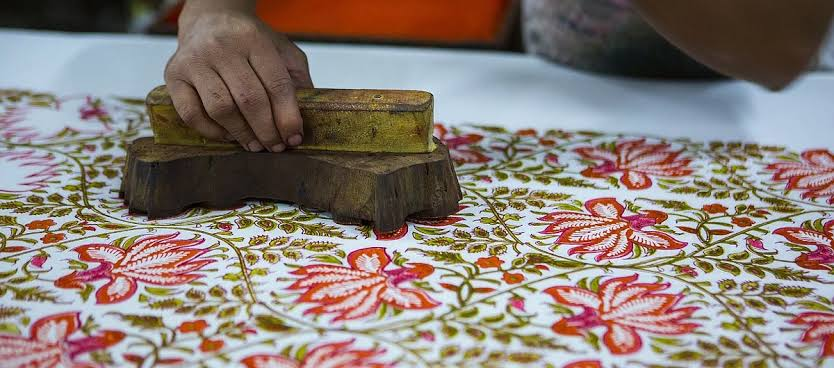
ব্যাটিক এবং মোম প্রতিরোধী ছাপাই
In batik and other resist processes, the wax or resist stage and the color-application stage should be evaluated separately. Sodium alginate may be considered only for a compatible reactive-dye printing stage.
Where an alginate paste is used alongside a resist, choose rheology from trial results: the paste must transfer without flooding fine resist boundaries, while still wetting the exposed fabric. A universal low-, medium- or high-viscosity recommendation is not reliable.
শিল্পী ও ক্ষুদ্র-পরিসরের ব্লক প্রিন্টিংয়ের জন্য গ্রেড নির্বাচন
সান্দ্রতা গ্রেড বিবেচ্য বিষয়সমূহ
Low-, medium- and high-viscosity labels describe supplier grades under specified solution tests, not a universal block-printing ranking. A lower-viscosity grade at one concentration may produce a workable paste, while a higher-viscosity grade may give poor loading or release. Select the grade and concentration together using the actual block, tray or pad, fabric and complete recipe.
Record the viscosity of an accepted reference paste with concentration basis, temperature, instrument, spindle, speed, hydration and rest time. Use it as a comparison checkpoint, not as proof that a new grade will print identically. Approve the new grade only after side-by-side transfer, edge, penetration, fixation and wash-off tests on the production fabric.
ক্ষুদ্র-পরিসরের প্রস্তুতিতে দ্রবণীকরণ পদ্ধতি
Cold-water preparation can be practical when the grade and mixing procedure allow it. Add powder gradually to water with enough agitation to disperse it without persistent dry centers, then allow the defined hydration period. Qualify the mixer or clean paddle for the actual batch size and paste body; small volume alone does not prove that manual stirring is adequate.
Fine particles may hydrate faster once individually wetted, but can also clump more readily; a finer sieve label does not guarantee easier preparation. Compare the actual grade using the workshop’s addition rate, agitation, water and hydration procedure, then inspect filtered residue and stamp performance. The FAO alginate properties reference distinguishes particle hydration from dispersion; it does not set a universal mesh threshold for textile workshops.
পরিচ্ছন্ন প্যাটার্ন সংজ্ঞার জন্য বিশুদ্ধতা ও দ্রাব্যতা
For procurement, specify the supplier’s test method and acceptance range for viscosity, moisture, pH and insoluble matter. Compare certificate results with an incoming-lot hydration and filtration check; do not rely on one generic insoluble-matter limit across all grades.
প্রিন্ট করা ফ্যাব্রিক যদি ক্রেতার বস্ত্র রাসায়নিকগুলিতে ভারী ধাতুর পরিমাণ সংক্রান্ত নির্দিষ্টকরণের আওতায় পড়ে—যা প্রধান খুচরা বাজারের রপ্তানি অর্ডারে ক্রমশ সাধারণ—তাহলে সোডিয়াম অ্যালগিনেটে থাকা ভারী ধাতুর পরিমাণ প্রাসঙ্গিক হতে পারে। যদি আপনার চূড়ান্ত বাজারে এটি প্রয়োজন হয়, তবে আপনার সরবরাহকারীর কাছ থেকে ভারী ধাতুর তথ্য অনুরোধ করুন।.
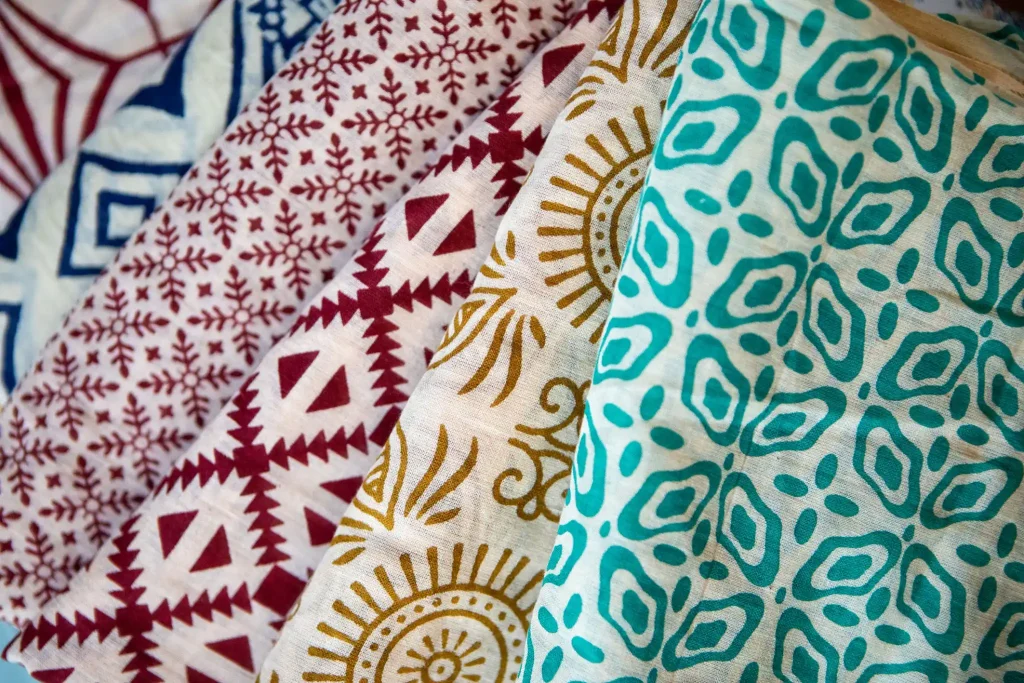
ব্লক প্রিন্টিংয়ের জন্য ব্যবহারিক পেস্ট মূল্যায়ন
Workshop Flow Checks (Not a Substitute for Viscosity Testing)
When a viscometer is unavailable, use drip, block-face and stamp checks to compare a new batch against an approved reference paste. Record water temperature, mixing time, rest time and concentration so the comparison is repeatable.
- Drip comparison — use the same clean paddle, loading, lift height, temperature and elapsed time as the accepted reference. Record the observed behavior alongside the stamp result; there is no universal seconds-to-first-drip acceptance limit.
- ব্লক ফেস টেস্ট — ব্লকটি পেস্ট ট্রে-তে চাপুন এবং তুলে নিন; ব্লকের পৃষ্ঠে পেস্টটি খোদাই করা নকশার সর্বনিম্ন বিন্দু থেকে ফোঁটা ছাড়াই সমানভাবে লেপিত হওয়া উচিত।
- স্ট্যাম্প পরীক্ষা — পেস্ট-ভরা ব্লকটি আপনার উৎপাদন ফ্যাব্রিকের নমুনায় ছাপিয়ে দেখুন এবং মূল্যায়ন করুন প্যাটার্নের প্রান্তগুলো তীক্ষ্ণ আছে নাকি ছড়িয়ে পড়ছে।
These workshop checks show transfer behavior but do not produce a procurement-grade viscosity value. Supplier and incoming QC comparisons should use the same instrument, spindle, speed, temperature, solution concentration and hydration time.
সামঞ্জস্যতার জন্য একটি রেফারেন্স পেস্ট স্থাপন
যে সব প্রক্রিয়ায় অনুমানভিত্তিকভাবে পেষ্ট তৈরি করা হয়, সেক্ষেত্রে পরিমাপকৃত ঘনত্ব, পরিমাপকৃত সান্দ্রতা, নথিভুক্ত সোডিয়াম অ্যালজিনেট গ্রেড ও লট নম্বরসহ নিশ্চিত কার্যকরী পরামিতিতে একটি রেফারেন্স ব্যাচ প্রস্তুত করে তা মানগত রেফারেন্স হিসেবে সংরক্ষণ করলে ভবিষ্যতের ব্যাচগুলোর তুলনার জন্য একটি পুনরাবৃত্তিমূলক মানদণ্ড পাওয়া যায়। সোডিয়াম অ্যালজিনেটের লট বা সরবরাহকারী পরিবর্তন করার সময় এটি বিশেষভাবে কার্যকর, কারণ রেফারেন্স ব্যাচের সঙ্গে সরাসরি পাশাপাশি তুলনা উৎপাদন প্রভাবিত হওয়ার আগেই কর্মক্ষমতার যেকোনো পার্থক্য চিহ্নিত করে।.
প্রায়শই জিজ্ঞাসিত প্রশ্নাবলী
Is sodium alginate suitable for every hand block printing process?
No. It is primarily evaluated for compatible reactive-dye pastes on cellulosic fabric. Natural-dye, pigment, mordant and resist systems require separate compatibility trials.
How should a workshop choose sodium alginate viscosity?
Compare candidate grades at controlled solids, then adjust concentration against block depth, fabric absorbency, outline and penetration. Confirm the value using a documented viscosity method.
Can a drip test replace a viscometer?
No. A drip or stamp test is useful for daily comparison with an approved paste, but supplier qualification and incoming QC require method-controlled viscosity measurement.
When should alkali be added to a reactive block-printing paste?
Follow the dye-system procedure and add alkali as late as practical when limited paste stability is a concern. Validate the intended holding time under actual workshop temperature.
What should be recorded during a sample trial?
Record grade and lot, solids, water temperature, mixing and rest time, additives, fabric, block geometry, fixation, wash-off, outline and final shade. For a supplier comparison, use নমুনা ও মিলान.
FSX কেমিক্যাল কীভাবে শিল্পী ও ক্ষুদ্র-পরিসরের মুদ্রণ কার্যক্রমকে সমর্থন করে
Request the current grade TDS and available batch COA, including the viscosity method, moisture, pH, insoluble matter and particle-size information where specified. Sodium alginate is not selected by the CMC degree-of-substitution (DS) parameter. Share the actual block, fabric, dye route and preparation method with FSX for a relevant sample comparison.
পরবর্তী পদক্ষেপ:
- টিডিএস অনুরোধ করুন — ব্লক প্রিন্টিং প্রয়োগের জন্য সান্দ্রতা, মেশ এবং দ্রবণীয়তা স্পেসিফিকেশন পর্যালোচনা করুন
- নমুনা অনুরোধ করুন বড় পরিমাণে অর্ডার করার আগে আপনার ব্লক ও ফ্যাব্রিকে পেস্টের আচরণ পরীক্ষা করুন।
- গ্রেড মিলানোর জন্য অনুরোধ করুন — একটি নির্দিষ্ট সুপারিশের জন্য আপনার ব্লক প্রিন্টিং ঐতিহ্য, রঞ্জক ব্যবস্থা এবং আঠা প্রস্তুতি পদ্ধতি শেয়ার করুন।
- আমাদের প্রযুক্তিগত দলের সাথে যোগাযোগ করুন — কারুশিল্প মুদ্রণ অ্যাপ্লিকেশনে ফর্মুলেশন সহায়তা বা সমস্যা সমাধানের জন্যcations📧 ইমেইল: Service@fsxchemical.com