Sodium alginate is a practical thickener for reactive-dye hand block printing on cellulosic fabrics when the paste requires clean transfer, controlled penetration and reliable wash-off. It should not be treated as a universal thickener for every traditional, natural-dye, mordant or resist process; suitability depends on the actual dye chemistry, alkali, salts, fabric and fixation route.
This guide explains how to qualify textile-grade sodium alginate for hand block printing, including route screening, grade selection, small-batch preparation, workshop flow checks and production troubleshooting.
Is Sodium Alginate Suitable for This Hand-Printing Route?
| Process route | Alginate decision | Minimum trial |
|---|---|---|
| Reactive dye on cotton or viscose | Strong candidate | Paste rheology, outline, fixation, wash-off |
| Pigment plus binder | Not the default choice | Binder compatibility and handle |
| Natural dye or mordant route | Do not assume suitability | Exact recipe and full process sequence |
| Wax/resist plus printed reactive stage | Evaluate only the color-paste stage | Boundary control and post-wash result |
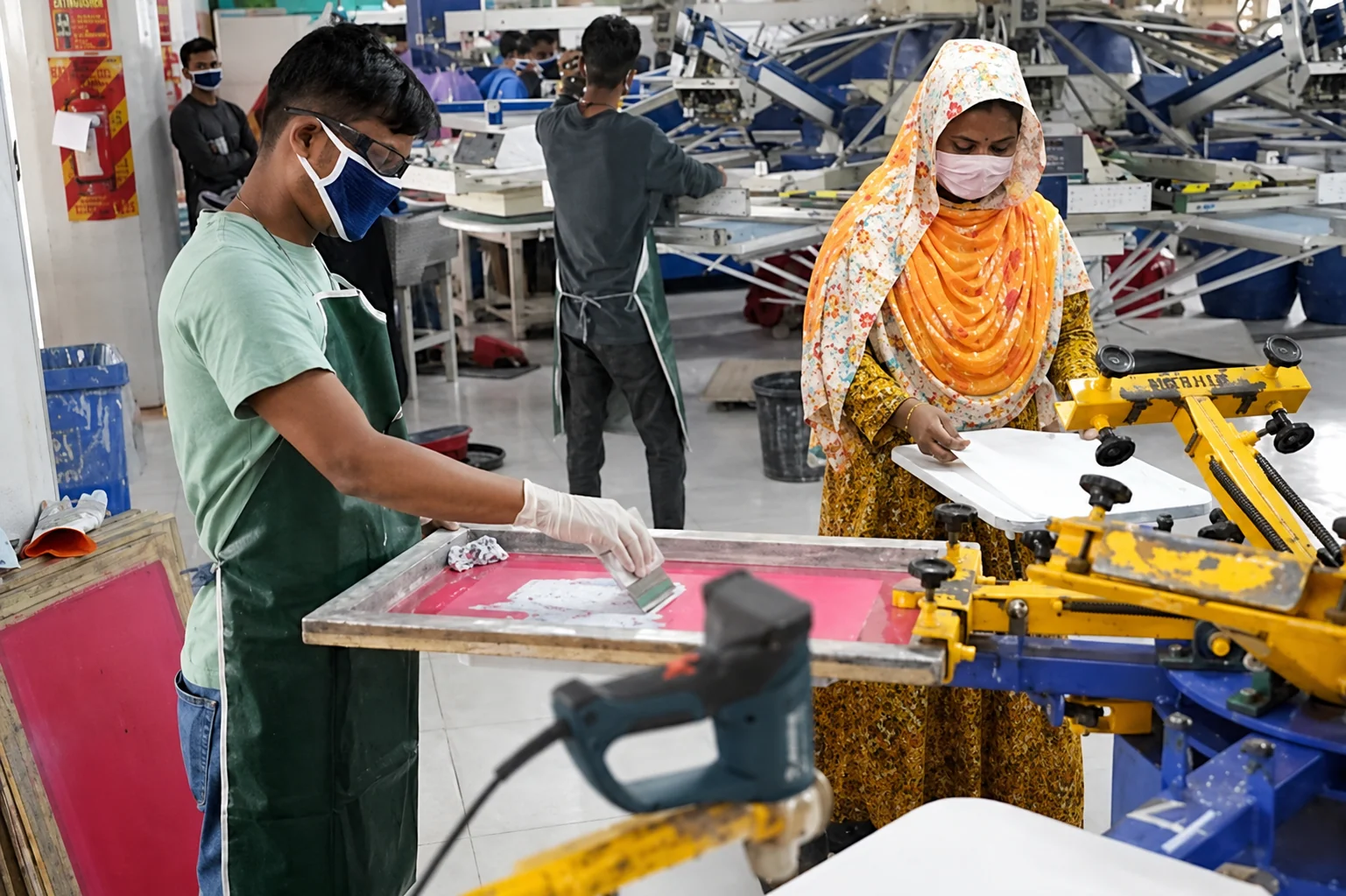
Blok Baskı ile Serigrafi Arasındaki Ayrım: Baskı Macunu Gereksinimleri Açısından
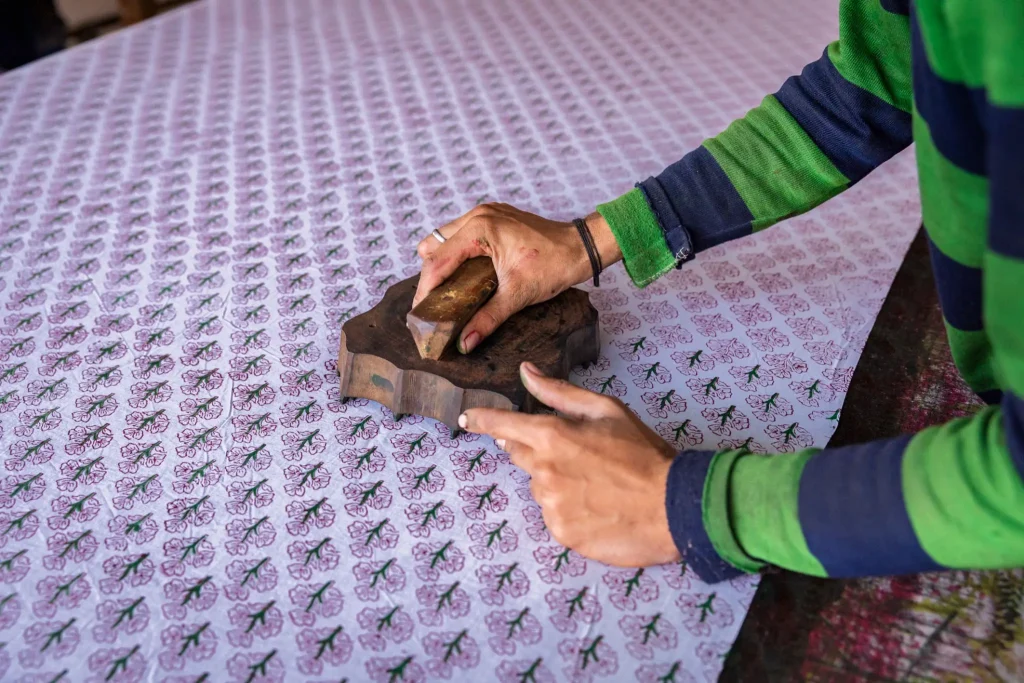
Manuel Uygulama ve Yapıştırma Gövde
Macun, damlamadan blok yüzeyini eşit bir şekilde kaplayacak, macun tepsisi ile kumaş arasındaki blok yüzeyinde şeklini koruyacak ve blok bastırılıp kaldırıldığında kumaş üzerine temiz bir şekilde aktarılacak kadar kalın olmalıdır. Çok akışkan olan macun bloktan damlayacak, düzensiz bir şekilde yayılacak ve kumaşta bulaşacaktır. Çok kalın olan macun ise bloğu eşit bir şekilde kaplayamayacak ve desende boşluklar bırakabilir.
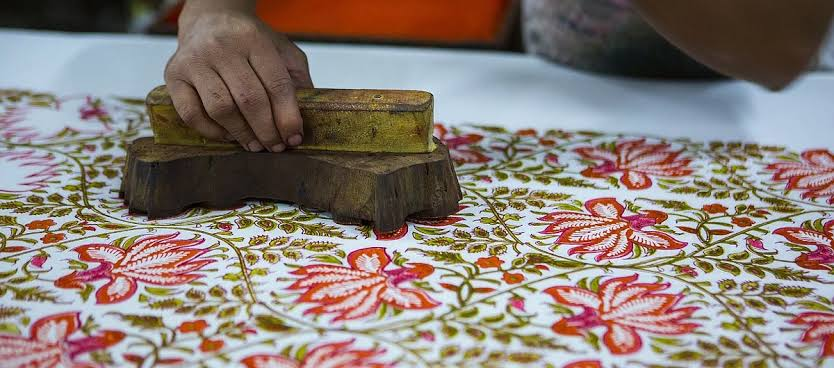
Block printing and rotary screen printing impose different transfer forces and dwell times. Set paste body from the actual block depth, tray or pad, fabric construction and required penetration; do not assume block printing always needs a higher viscosity.
Desen Tanımı ve Boya Göçünün Kontrolü
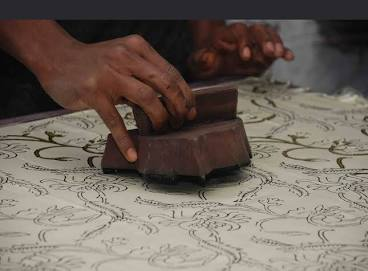
After stamping, the color paste must limit unwanted lateral spread while allowing the required penetration. Alginate systems can show shear thinning, but lower apparent viscosity at higher shear rate does not prove immediate recovery or guarantee edge definition when the block lifts. Test actual block loading, dwell, lift, fabric absorbency and the interval before fixation. Measure time-dependent recovery separately if it is part of the grade-selection criterion.
Parti Büyüklüğü ve Üretim Ölçeği
Blok baskı işlemleri — ister geleneksel zanaat atölyeleri ister küçük ölçekli ticari işletmeler olsun — genellikle endüstriyel serigrafi baskıya kıyasla küçük partiler halinde baskı macunu hazırlar. Renk başına baskı macunu miktarları genellikle yüzlerce litre yerine litre cinsinden ölçülür ve baskı macununun hazırlanması elle ya da küçük ölçekli karıştırma ekipmanlarıyla yapılır.
Small batches make preparation variables more visible. Add powder gradually to controlled-temperature water under adequate agitation, allow full hydration, then filter and rest the paste according to the approved method. Mesh size can affect wetting and dispersion, but it does not by itself predict hydration speed, viscosity or print quality.
Reaktif Boya Blok Baskı Pastasında Sodyum Aljinat
Typical Components to Validate in a Reactive-Dye Block Paste
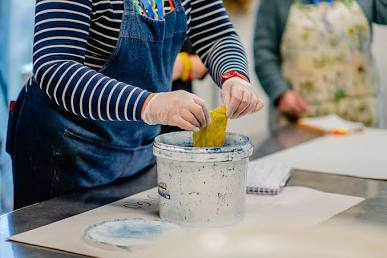
Depending on the selected reactive-dye process, a block-printing paste may contain sodium alginate, dye, alkali and specified auxiliaries such as urea or an anti-reducing agent. These are recipe components to confirm, not mandatory ingredients for every reactive system. Follow the dye supplier’s fixation route and test the complete paste; manual application alone does not establish a higher viscosity requirement.
Choose concentration by a controlled working trial rather than a presumed relationship to screen-printing dosage. Compare candidates first on a stated as-supplied powder basis with the same water, preparation, temperature and test method. Then optimize each complete recipe to achieve accepted transfer, penetration, outline, fixation and wash-off. Keep dye and auxiliary levels on the same final-recipe basis when changing thickener dosage.
Geleneksel zanaatkar ortamlarında, macun formülasyonu genellikle deneysel olarak geliştirilir — baskıcı, viskozimetre ölçümlerinden ziyade macunun davranışına ilişkin görsel ve dokunsal değerlendirmelere dayanarak ayarlamalar yapar. Deneysel formülasyondan ölçüm temelli formülasyona geçiş yapan işletmeler için, ölçüm yoluyla bir hedef viskozite aralığı belirlemek ve bunu bilinen iyi macun davranışıyla ilişkilendirmek, yararlı bir ilk adımdır.
Küçük Seri Blok Baskıda Alkali Yönetimi
Endüstriyel serigrafi baskıda, alkali içeren pasta büyük partiler halinde hazırlanır ve belirli bir zaman aralığı içinde kullanılır. Küçük partili blok baskıda da aynı ilke geçerlidir, ancak farklı pratik kısıtlamalar söz konusudur — küçük partiler bir gün boyunca aralıklı olarak hazırlanıp kullanılabilir ve pasta, baskı seansları arasında tepside bırakılabilir.
Adding alkali changes the ionic and pH environment of the complete reactive paste and also starts a limited dye-use window. Alginate can degrade under sufficiently alkaline conditions during storage, but an immediate or later viscosity change does not establish that mechanism. Qualify both paste behavior and final color over the intended workshop holding period at the actual temperature. Practical controls include:
- Where the approved dye procedure permits, hydrate the stock first and add the specified alkali close to use. Label the addition time and use the paste within its qualified holding window.
- Use the alkali identity and amount specified for the dye and fixation route. Bicarbonate and carbonate are not universal substitutes; any change requires fresh compatibility, holding and final-color trials.
- Keep the paste covered under the temperature conditions qualified for the recipe. Recondition and test it by the same procedure before comparing later readings.
If paste behavior changes during printing, compare temperature, final concentration, accidental dilution, pH, ionic additions and shear/rest history with the approved reference. Include dye age and sanitation in the investigation. Holding temperature constant does not isolate alkali degradation, and acceptable viscosity does not by itself confirm usable dye fixation.
Doğal Boyama Gelenekleri ve Sodyum Aljinat ile Uyumluluk
Natural-dye, mordant and resist traditions use many process routes. Before introducing sodium alginate, run a small compatibility trial with the exact colorant, mordant, alkali, water quality, fabric and fixation sequence. Evaluate shade, outline, penetration and wash-off rather than assuming transfer from a reactive-dye recipe.
Where a mordant or auxiliary is part of the paste, add it only after confirming compatibility and holding stability. Compare a fresh paste with the intended workshop holding time and check for viscosity drift, separation or loss of print definition.
Control pH using the dye supplier’s process window. Sodium alginate tolerates many reactive-printing conditions, but the complete paste—not the thickener alone—must be tested after alkali and electrolyte addition.
Ajrak ve Güney Asya’daki İlgili Blok Baskı Gelenekleri
Ajrak Baskı: İşlem ve Yapıştırma Gereklilikleri
Ajrak is a multistage resist, mordant and dyeing tradition with workshop-specific recipes. The process should be documented before recommending any thickener; sodium alginate is relevant only when a compatible printed color or reactive-dye stage is actually used.
If a workshop uses a reactive-dye paste on cotton within an Ajrak-inspired or mixed production route, sodium alginate can be screened for outline control and wash-off. This is an application-specific trial, not a general prescription for traditional Ajrak.
For multistage work, test the alginate paste through the complete sequence—including drying, steaming or curing, washing and any later resist or mordant steps—to detect interactions that a single stamp test will miss.
Bagru ve Sanganer Blok Baskı Tekniği (Hindistan)
Bagru and Sanganer workshops use diverse natural, pigment and reactive color systems. Identify the actual route first. For reactive-dye printing on cellulosic fabric, sodium alginate may be evaluated; other systems need a thickener selected for their own binder, mordant and fixation chemistry.
Do not select a “medium-viscosity” grade by label alone. Compare samples at equal solids and a defined test method, then adjust concentration to the block depth, fabric absorbency and desired penetration. Approve the grade only after print, fixation and wash-off trials.
Batik ve Balmumu Baskı Tekniği
In batik and other resist processes, the wax or resist stage and the color-application stage should be evaluated separately. Sodium alginate may be considered only for a compatible reactive-dye printing stage.
Where an alginate paste is used alongside a resist, choose rheology from trial results: the paste must transfer without flooding fine resist boundaries, while still wetting the exposed fabric. A universal low-, medium- or high-viscosity recommendation is not reliable.
Zanaatkarlar ve Küçük Ölçekli Blok Baskı için Kalite Seçimi
Viskozite Sınıfına İlişkin Hususlar
Low-, medium- and high-viscosity labels describe supplier grades under specified solution tests, not a universal block-printing ranking. A lower-viscosity grade at one concentration may produce a workable paste, while a higher-viscosity grade may give poor loading or release. Select the grade and concentration together using the actual block, tray or pad, fabric and complete recipe.
Record the viscosity of an accepted reference paste with concentration basis, temperature, instrument, spindle, speed, hydration and rest time. Use it as a comparison checkpoint, not as proof that a new grade will print identically. Approve the new grade only after side-by-side transfer, edge, penetration, fixation and wash-off tests on the production fabric.
Küçük Ölçekli Hazırlama için Çözünme Yöntemi
Cold-water preparation can be practical when the grade and mixing procedure allow it. Add powder gradually to water with enough agitation to disperse it without persistent dry centers, then allow the defined hydration period. Qualify the mixer or clean paddle for the actual batch size and paste body; small volume alone does not prove that manual stirring is adequate.
Fine particles may hydrate faster once individually wetted, but can also clump more readily; a finer sieve label does not guarantee easier preparation. Compare the actual grade using the workshop’s addition rate, agitation, water and hydration procedure, then inspect filtered residue and stamp performance. The FAO alginate properties reference distinguishes particle hydration from dispersion; it does not set a universal mesh threshold for textile workshops.
Temiz Desen Tanımlaması için Saflık ve Çözünürlük
For procurement, specify the supplier’s test method and acceptance range for viscosity, moisture, pH and insoluble matter. Compare certificate results with an incoming-lot hydration and filtration check; do not rely on one generic insoluble-matter limit across all grades.
Baskılı kumaşın, tekstil kimyasallarındaki ağır metal içeriğine ilişkin alıcı şartnamelerine tabi olması durumunda — ki bu durum, büyük perakende pazarlarından gelen ihracat siparişlerinde giderek daha yaygın hale gelmektedir — sodyum aljinattaki ağır metal içeriği önem kazanabilir. Hedef pazarınız için bu bir gereklilikse, tedarikçinizden ağır metal verilerini talep edin.
Blok Baskı için Pratik Macun Değerlendirmesi
Workshop Flow Checks (Not a Substitute for Viscosity Testing)
When a viscometer is unavailable, use drip, block-face and stamp checks to compare a new batch against an approved reference paste. Record water temperature, mixing time, rest time and concentration so the comparison is repeatable.
- Drip comparison — use the same clean paddle, loading, lift height, temperature and elapsed time as the accepted reference. Record the observed behavior alongside the stamp result; there is no universal seconds-to-first-drip acceptance limit.
- Blok yüzeyi testi — bloğu macun tepsisine bastırıp kaldırın; bloğun yüzeyindeki macun, oyulmuş desenin en alçak noktalarından damlamadan eşit bir şekilde kaplamalıdır
- Damga testi — macunla doldurulmuş bloğu üretim kumaşınızdan alınan bir numuneye bastırın ve desen kenarlarının keskin mi yoksa bulanık mı olduğunu değerlendirin
These workshop checks show transfer behavior but do not produce a procurement-grade viscosity value. Supplier and incoming QC comparisons should use the same instrument, spindle, speed, temperature, solution concentration and hydration time.
Tutarlılık İçin Referans Macununun Hazırlanması
Macunu deneysel olarak hazırlayan işletmelerde, doğrulanmış çalışma parametreleri (ölçülmüş konsantrasyon, ölçülmüş viskozite, belgelenmiş sodyum aljinat kalitesi ve parti numarası) kullanılarak bir referans partisi hazırlamak ve bunu kalite referansı olarak saklamak, gelecekteki partilerle karşılaştırma yapabileceğiniz tekrarlanabilir bir standart sağlar. Bu, sodyum aljinat partilerini veya tedarikçilerini değiştirirken özellikle yararlıdır; bu durumda, referans parti ile doğrudan yan yana karşılaştırma yapmak, üretim üzerinde etki yaratmadan önce herhangi bir performans farkını tespit etmenizi sağlar.
Sık Sorulan Sorular
Is sodium alginate suitable for every hand block printing process?
No. It is primarily evaluated for compatible reactive-dye pastes on cellulosic fabric. Natural-dye, pigment, mordant and resist systems require separate compatibility trials.
How should a workshop choose sodium alginate viscosity?
Compare candidate grades at controlled solids, then adjust concentration against block depth, fabric absorbency, outline and penetration. Confirm the value using a documented viscosity method.
Can a drip test replace a viscometer?
No. A drip or stamp test is useful for daily comparison with an approved paste, but supplier qualification and incoming QC require method-controlled viscosity measurement.
When should alkali be added to a reactive block-printing paste?
Follow the dye-system procedure and add alkali as late as practical when limited paste stability is a concern. Validate the intended holding time under actual workshop temperature.
What should be recorded during a sample trial?
Record grade and lot, solids, water temperature, mixing and rest time, additives, fabric, block geometry, fixation, wash-off, outline and final shade. For a supplier comparison, use Numune ve Ürün Eşleştirme.
FSX Chemical, Zanaatkar ve Küçük Ölçekli Baskı İşletmelerini Nasıl Destekliyor?
Request the current grade TDS and available batch COA, including the viscosity method, moisture, pH, insoluble matter and particle-size information where specified. Sodium alginate is not selected by the CMC degree-of-substitution (DS) parameter. Share the actual block, fabric, dye route and preparation method with FSX for a relevant sample comparison.
Sonraki adımlar:
- TDS Talep Et — blok baskı uygulamaları için viskozite, ağ gözü ve çözünme özelliklerini gözden geçirin
- Örnek İsteyin — toplu sipariş vermeden önce bloklarınız ve kumaşınız üzerinde macunun nasıl davrandığını değerlendirin
- Ürün Sınıfı Eşleştirme Talep Edin — belirli bir öneri için blok baskı geleneğinizi, boyama sisteminizi ve şap hazırlama yönteminizi paylaşın
- Teknik Ekibimizle İletişime Geçin — zanaatkar baskı uygulamalarında formülasyon desteği veya sorun giderme içinduyurular📧 E-posta: Service@fsxchemical.com