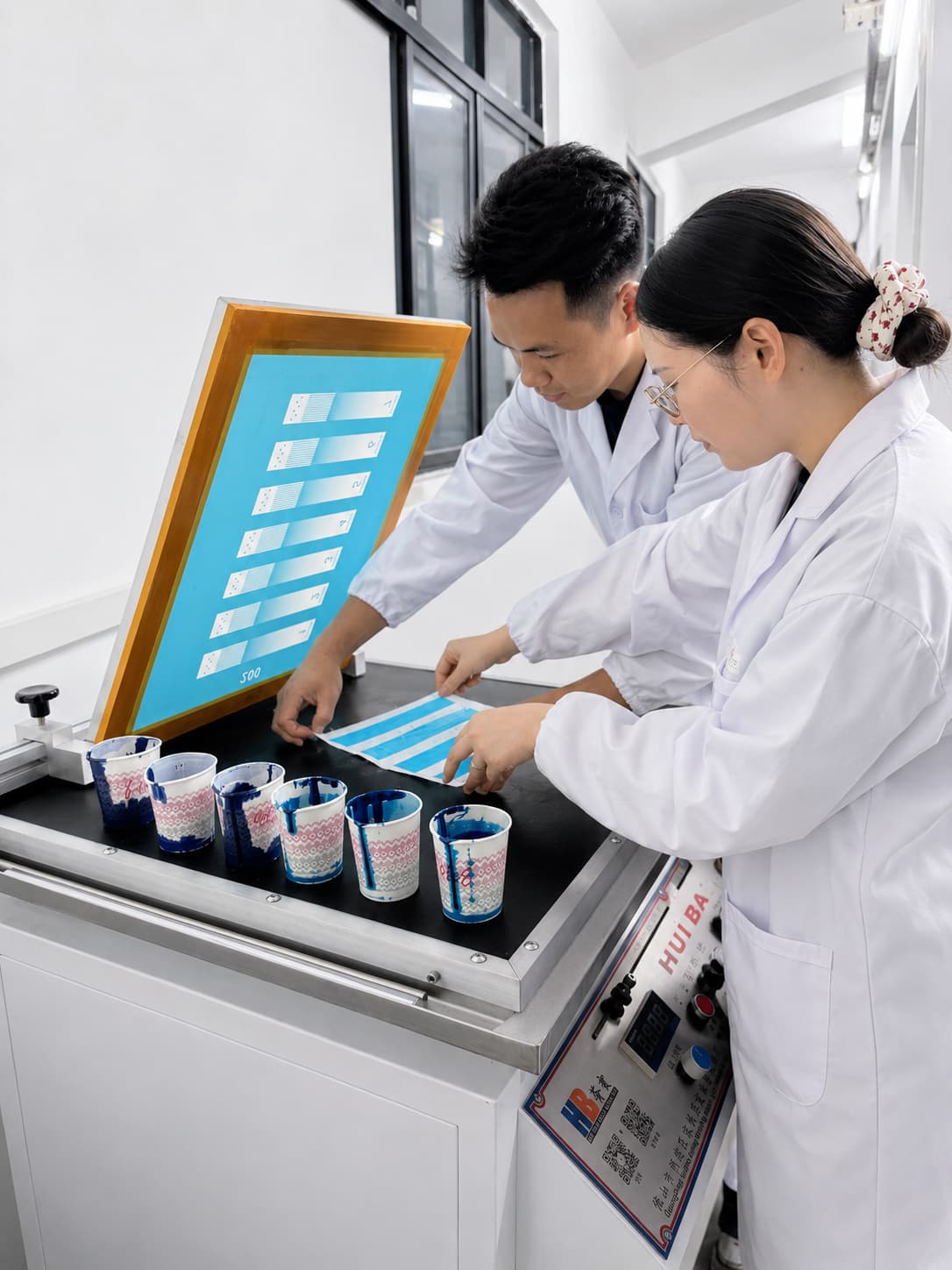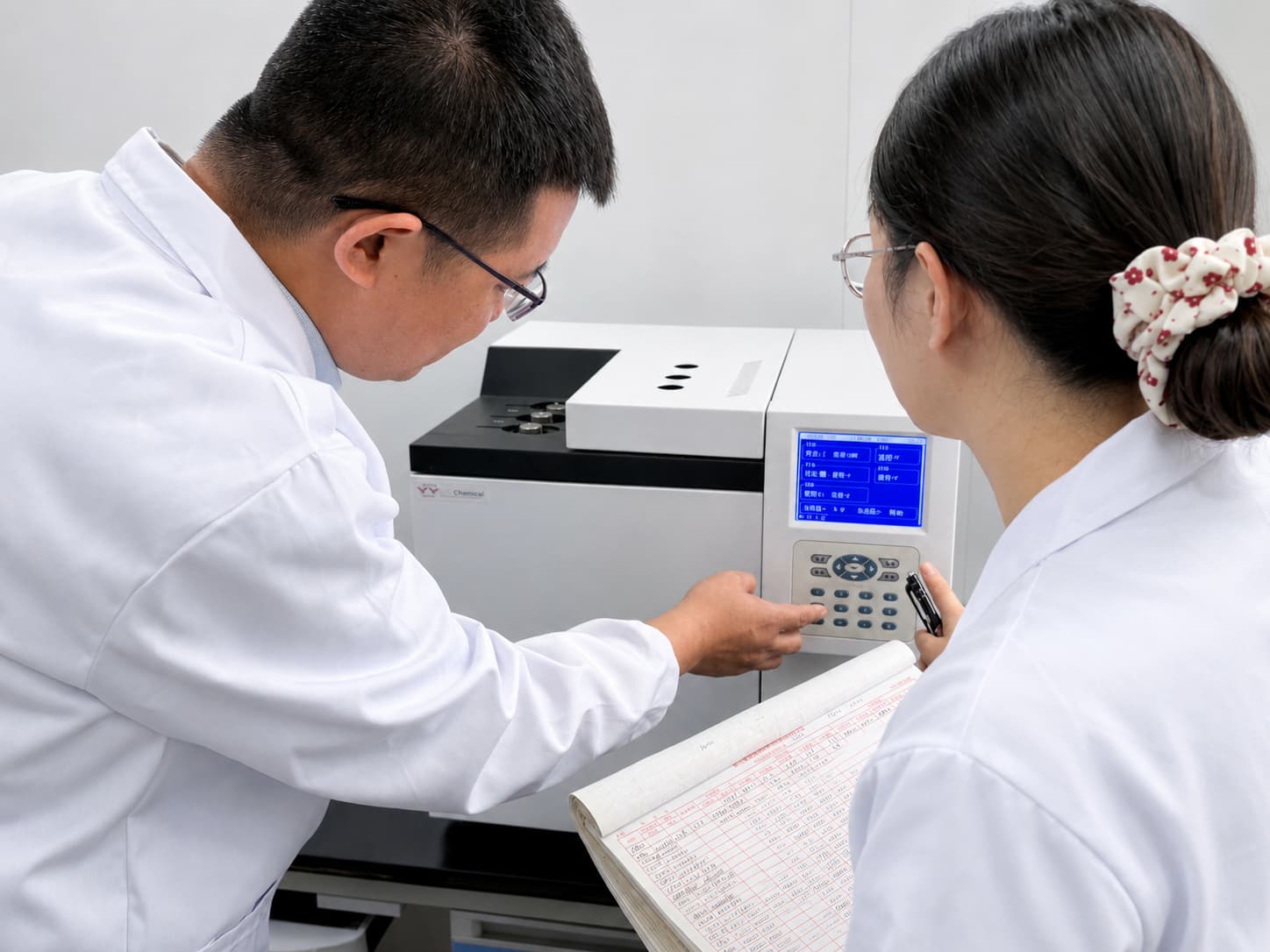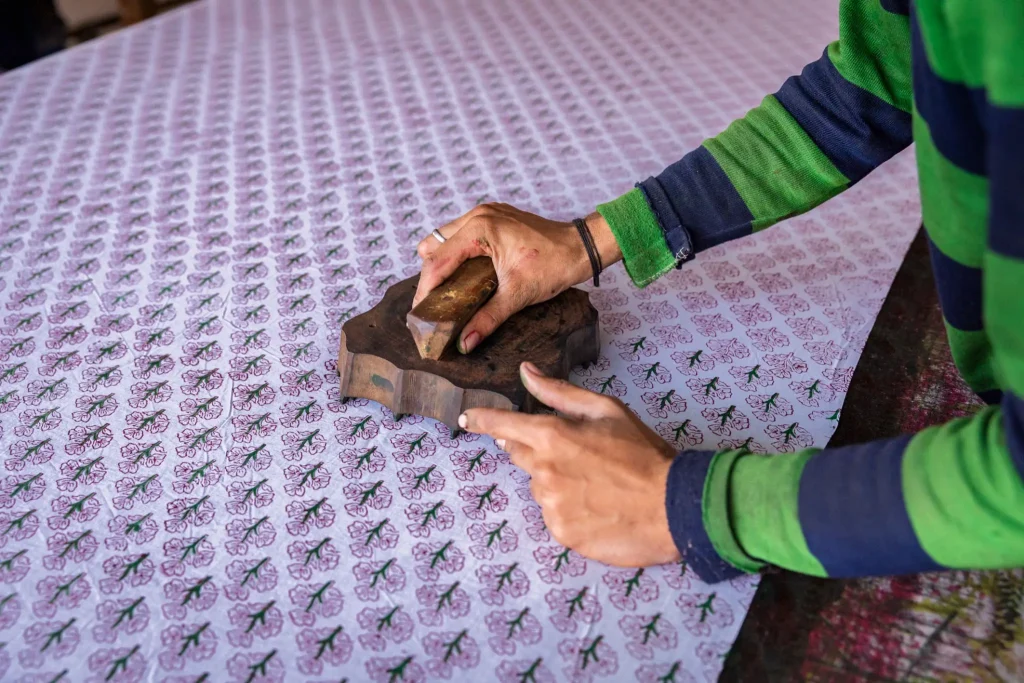
Sodium alginate is a practical thickener for reactive-dye hand block printing on cellulosic fabrics when the paste requires clean transfer, controlled penetration and reliable wash-off. It should not be treated as a universal thickener for every traditional, natural-dye, mordant or resist process; suitability depends on the actual dye chemistry, alkali, salts, fabric and fixation route.
This guide explains how to qualify textile-grade sodium alginate for hand block printing, including route screening, grade selection, small-batch preparation, workshop flow checks and production troubleshooting.
Is Sodium Alginate Suitable for This Hand-Printing Route?
| Process route | Alginate decision | Minimum trial |
|---|---|---|
| Reactive dye on cotton or viscose | Strong candidate | Paste rheology, outline, fixation, wash-off |
| Pigment plus binder | Not the default choice | Binder compatibility and handle |
| Natural dye or mordant route | Do not assume suitability | Exact recipe and full process sequence |
| Wax/resist plus printed reactive stage | Evaluate only the color-paste stage | Boundary control and post-wash result |
Чем печать с использованием блоков отличается от трафаретной печати с точки зрения требований к пасте
Ручное нанесение и корпус для пасты
Клей должен быть достаточно густым, чтобы равномерно покрывать поверхность блока, не стекая, удерживать свою форму на поверхности блока между лотком для клея и тканью, а также аккуратно переноситься на ткань при нажатии и поднятии блока. Слишком жидкая паста будет стекать с блока, распределяться неравномерно и размазываться по ткани. Слишком густая паста не сможет равномерно покрыть блок и может оставить пробелы в узоре.
Block printing and rotary screen printing impose different transfer forces and dwell times. Set paste body from the actual block depth, tray or pad, fabric construction and required penetration; do not assume block printing always needs a higher viscosity.
Определение рисунка и контроль миграции красителей
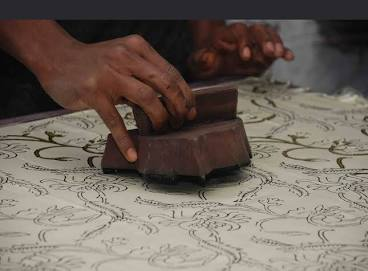
After stamping, the color paste must limit unwanted lateral spread while allowing the required penetration. Alginate systems can show shear thinning, but lower apparent viscosity at higher shear rate does not prove immediate recovery or guarantee edge definition when the block lifts. Test actual block loading, dwell, lift, fabric absorbency and the interval before fixation. Measure time-dependent recovery separately if it is part of the grade-selection criterion.
Размер партии и масштаб производства
При блочной печати — будь то традиционные ремесленные мастерские или небольшие коммерческие предприятия — паста, как правило, готовится небольшими партиями по сравнению с промышленной трафаретной печатью. Объем пасты на один цвет часто измеряется в литрах, а не в сотнях литров, а приготовление пасты осуществляется вручную или с помощью небольшого смесительного оборудования.
Small batches make preparation variables more visible. Add powder gradually to controlled-temperature water under adequate agitation, allow full hydration, then filter and rest the paste according to the approved method. Mesh size can affect wetting and dispersion, but it does not by itself predict hydration speed, viscosity or print quality.
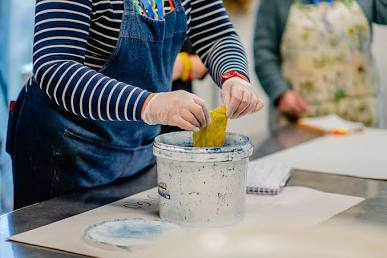
Альгинат натрия в пасте для печати с использованием активных красителей
Typical Components to Validate in a Reactive-Dye Block Paste
Depending on the selected reactive-dye process, a block-printing paste may contain sodium alginate, dye, alkali and specified auxiliaries such as urea or an anti-reducing agent. These are recipe components to confirm, not mandatory ingredients for every reactive system. Follow the dye supplier’s fixation route and test the complete paste; manual application alone does not establish a higher viscosity requirement.
Choose concentration by a controlled working trial rather than a presumed relationship to screen-printing dosage. Compare candidates first on a stated as-supplied powder basis with the same water, preparation, temperature and test method. Then optimize each complete recipe to achieve accepted transfer, penetration, outline, fixation and wash-off. Keep dye and auxiliary levels on the same final-recipe basis when changing thickener dosage.
В условиях традиционного ремесленного производства рецептура пасты зачастую разрабатывается эмпирически — типограф корректирует её, опираясь на визуальную и тактильную оценку поведения пасты, а не на результаты измерений вискозиметром. Для предприятий, переходящих от эмпирического подхода к измеренной рецептуре, полезным первым шагом станет определение целевого диапазона вязкости с помощью измерений и соотнесение его с известными характеристиками пасты, обеспечивающими хорошие результаты.
Управление содержанием щелочи при печати блоками небольшими партиями
В промышленной трафаретной печати щелочесодержащая паста готовится большими партиями и используется в течение определённого промежутка времени. В мелкосерийной блочной печати действует тот же принцип, но с другими практическими ограничениями: небольшие партии могут готовиться и использоваться с перерывами в течение дня, а паста может оставаться в лотке между сеансами печати.
Adding alkali changes the ionic and pH environment of the complete reactive paste and also starts a limited dye-use window. Alginate can degrade under sufficiently alkaline conditions during storage, but an immediate or later viscosity change does not establish that mechanism. Qualify both paste behavior and final color over the intended workshop holding period at the actual temperature. Practical controls include:
- Where the approved dye procedure permits, hydrate the stock first and add the specified alkali close to use. Label the addition time and use the paste within its qualified holding window.
- Use the alkali identity and amount specified for the dye and fixation route. Bicarbonate and carbonate are not universal substitutes; any change requires fresh compatibility, holding and final-color trials.
- Keep the paste covered under the temperature conditions qualified for the recipe. Recondition and test it by the same procedure before comparing later readings.
If paste behavior changes during printing, compare temperature, final concentration, accidental dilution, pH, ionic additions and shear/rest history with the approved reference. Include dye age and sanitation in the investigation. Holding temperature constant does not isolate alkali degradation, and acceptable viscosity does not by itself confirm usable dye fixation.
Традиции использования натуральных красителей и совместимость с альгинатом натрия
Natural-dye, mordant and resist traditions use many process routes. Before introducing sodium alginate, run a small compatibility trial with the exact colorant, mordant, alkali, water quality, fabric and fixation sequence. Evaluate shade, outline, penetration and wash-off rather than assuming transfer from a reactive-dye recipe.
Where a mordant or auxiliary is part of the paste, add it only after confirming compatibility and holding stability. Compare a fresh paste with the intended workshop holding time and check for viscosity drift, separation or loss of print definition.
Control pH using the dye supplier’s process window. Sodium alginate tolerates many reactive-printing conditions, but the complete paste—not the thickener alone—must be tested after alkali and electrolyte addition.
Аджрак и связанные с ним традиции блочной печати в Южной Азии
Печать методом «аджрак»: технологический процесс и требования к пасте
Ajrak is a multistage resist, mordant and dyeing tradition with workshop-specific recipes. The process should be documented before recommending any thickener; sodium alginate is relevant only when a compatible printed color or reactive-dye stage is actually used.
If a workshop uses a reactive-dye paste on cotton within an Ajrak-inspired or mixed production route, sodium alginate can be screened for outline control and wash-off. This is an application-specific trial, not a general prescription for traditional Ajrak.
For multistage work, test the alginate paste through the complete sequence—including drying, steaming or curing, washing and any later resist or mordant steps—to detect interactions that a single stamp test will miss.
Блок-печать Багру и Санганер (Индия)
Bagru and Sanganer workshops use diverse natural, pigment and reactive color systems. Identify the actual route first. For reactive-dye printing on cellulosic fabric, sodium alginate may be evaluated; other systems need a thickener selected for their own binder, mordant and fixation chemistry.
Do not select a “medium-viscosity” grade by label alone. Compare samples at equal solids and a defined test method, then adjust concentration to the block depth, fabric absorbency and desired penetration. Approve the grade only after print, fixation and wash-off trials.
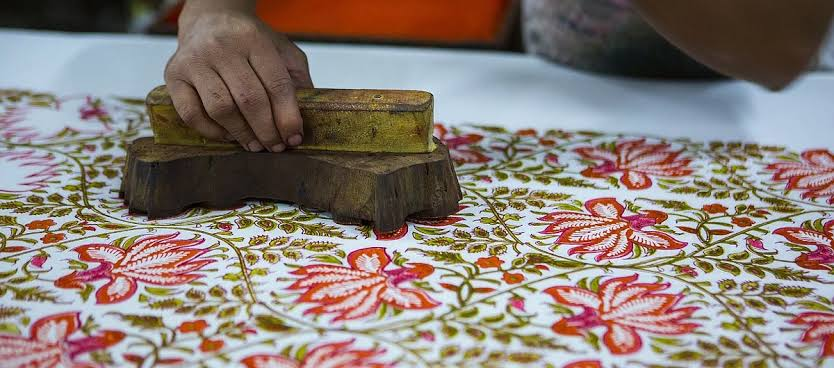
Батик и печать с использованием восковой резервировки
In batik and other resist processes, the wax or resist stage and the color-application stage should be evaluated separately. Sodium alginate may be considered only for a compatible reactive-dye printing stage.
Where an alginate paste is used alongside a resist, choose rheology from trial results: the paste must transfer without flooding fine resist boundaries, while still wetting the exposed fabric. A universal low-, medium- or high-viscosity recommendation is not reliable.
Выбор сорта ткани для ремесленной и мелкой блочной печати
Факторы, влияющие на класс вязкости
Low-, medium- and high-viscosity labels describe supplier grades under specified solution tests, not a universal block-printing ranking. A lower-viscosity grade at one concentration may produce a workable paste, while a higher-viscosity grade may give poor loading or release. Select the grade and concentration together using the actual block, tray or pad, fabric and complete recipe.
Record the viscosity of an accepted reference paste with concentration basis, temperature, instrument, spindle, speed, hydration and rest time. Use it as a comparison checkpoint, not as proof that a new grade will print identically. Approve the new grade only after side-by-side transfer, edge, penetration, fixation and wash-off tests on the production fabric.
Метод растворения для получения небольших партий
Cold-water preparation can be practical when the grade and mixing procedure allow it. Add powder gradually to water with enough agitation to disperse it without persistent dry centers, then allow the defined hydration period. Qualify the mixer or clean paddle for the actual batch size and paste body; small volume alone does not prove that manual stirring is adequate.
Fine particles may hydrate faster once individually wetted, but can also clump more readily; a finer sieve label does not guarantee easier preparation. Compare the actual grade using the workshop’s addition rate, agitation, water and hydration procedure, then inspect filtered residue and stamp performance. The FAO alginate properties reference distinguishes particle hydration from dispersion; it does not set a universal mesh threshold for textile workshops.
Чистота и растворимость для четкого определения структуры
For procurement, specify the supplier’s test method and acceptance range for viscosity, moisture, pH and insoluble matter. Compare certificate results with an incoming-lot hydration and filtration check; do not rely on one generic insoluble-matter limit across all grades.
Содержание тяжелых металлов в альгинате натрия может иметь значение, если к напечатанной ткани будут предъявляться требования покупателя относительно содержания тяжелых металлов в текстильных химикатах — что становится все более распространенной практикой при экспортных заказах с крупных розничных рынков. Запросите у своего поставщика данные о содержании тяжелых металлов, если это является требованием вашего конечного рынка.
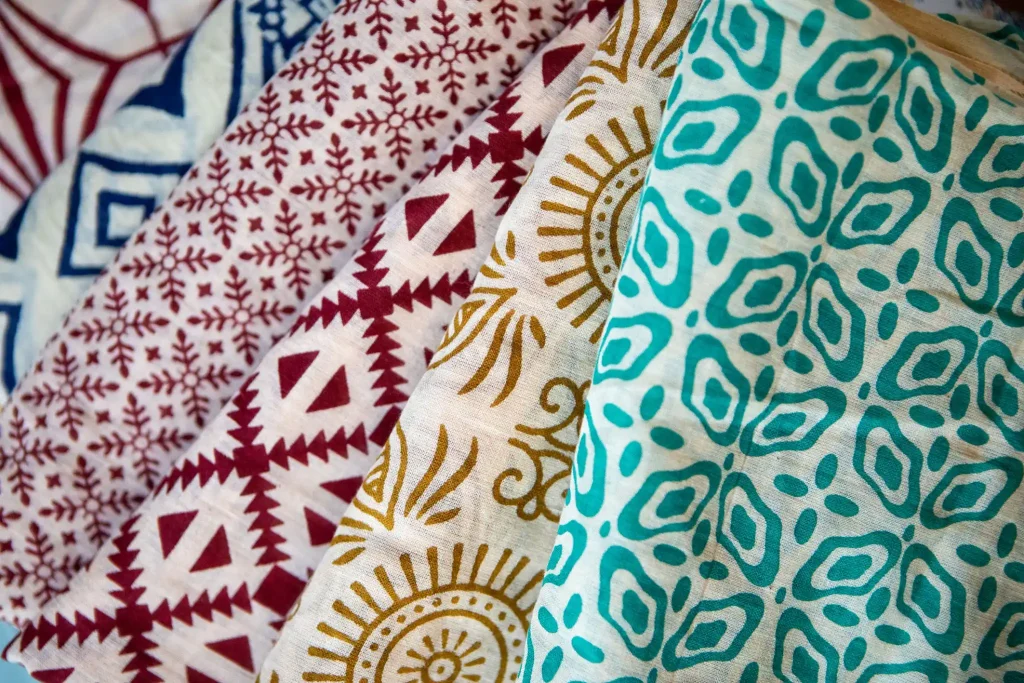
Практическая оценка пасты для блочной печати
Workshop Flow Checks (Not a Substitute for Viscosity Testing)
When a viscometer is unavailable, use drip, block-face and stamp checks to compare a new batch against an approved reference paste. Record water temperature, mixing time, rest time and concentration so the comparison is repeatable.
- Drip comparison — use the same clean paddle, loading, lift height, temperature and elapsed time as the accepted reference. Record the observed behavior alongside the stamp result; there is no universal seconds-to-first-drip acceptance limit.
- Испытание торцевой поверхности блока — прижмите блок к лотку с пастой и поднимите его; паста должна равномерно покрыть поверхность блока, не стекая с самых низких точек вырезанного рисунка
- Испытание с использованием штампа — прижмите блок с нанесенной пастой к образцу вашей производственной ткани и оцените, остаются ли края узора четкими или размываются
These workshop checks show transfer behavior but do not produce a procurement-grade viscosity value. Supplier and incoming QC comparisons should use the same instrument, spindle, speed, temperature, solution concentration and hydration time.
Приготовление эталонной пасты для определения консистенции
Для предприятий, где паста готовится по эмпирическим методам, изготовление эталонной партии с использованием подтвержденных рабочих параметров — измеренной концентрации, измеренной вязкости, задокументированного сорта альгината натрия и номера партии — и хранение её в качестве эталона качества обеспечит вам воспроизводимый стандарт, с которым можно будет сравнивать будущие партии. Это особенно полезно при смене партий или поставщиков альгината натрия, когда прямое сопоставительное сравнение с эталонной партией позволяет выявить любые различия в характеристиках до того, как они повлияют на производство.
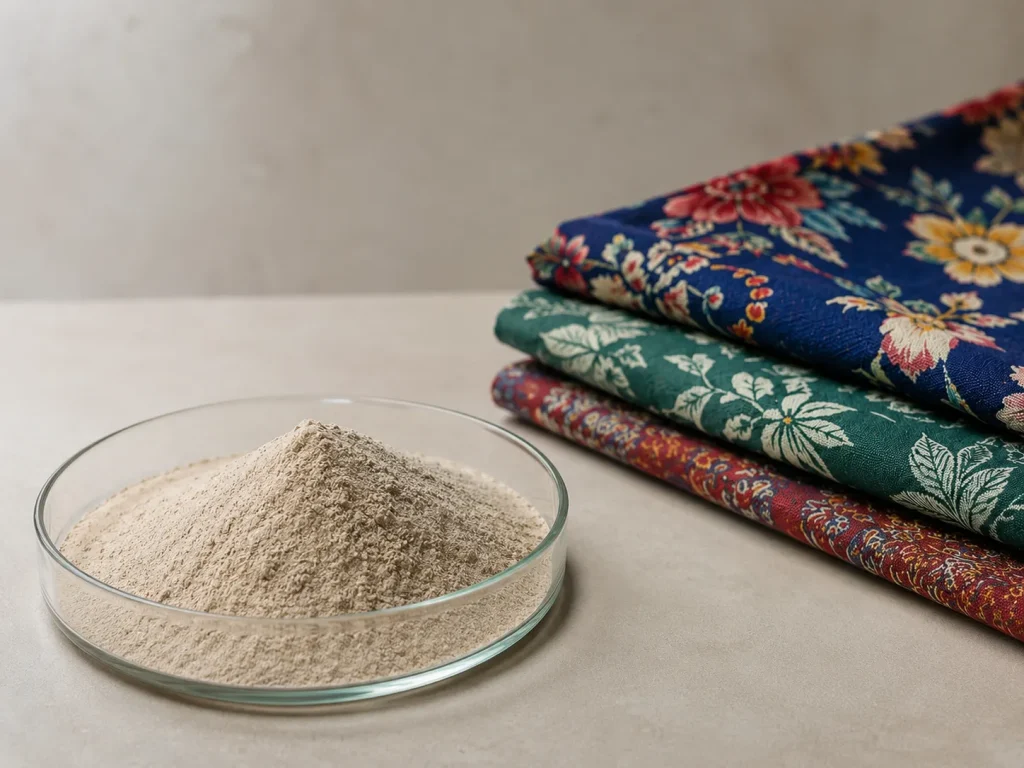
Часто задаваемые вопросы
Is sodium alginate suitable for every hand block printing process?
No. It is primarily evaluated for compatible reactive-dye pastes on cellulosic fabric. Natural-dye, pigment, mordant and resist systems require separate compatibility trials.
How should a workshop choose sodium alginate viscosity?
Compare candidate grades at controlled solids, then adjust concentration against block depth, fabric absorbency, outline and penetration. Confirm the value using a documented viscosity method.
Can a drip test replace a viscometer?
No. A drip or stamp test is useful for daily comparison with an approved paste, but supplier qualification and incoming QC require method-controlled viscosity measurement.
When should alkali be added to a reactive block-printing paste?
Follow the dye-system procedure and add alkali as late as practical when limited paste stability is a concern. Validate the intended holding time under actual workshop temperature.
What should be recorded during a sample trial?
Record grade and lot, solids, water temperature, mixing and rest time, additives, fabric, block geometry, fixation, wash-off, outline and final shade. For a supplier comparison, use Образцы и подбор продукции.
Как FSX Chemical поддерживает ремесленные и мелкосерийные типографии
Request the current grade TDS and available batch COA, including the viscosity method, moisture, pH, insoluble matter and particle-size information where specified. Sodium alginate is not selected by the CMC degree-of-substitution (DS) parameter. Share the actual block, fabric, dye route and preparation method with FSX for a relevant sample comparison.
Следующие шаги:
- Запросить TDS — ознакомьтесь с техническими характеристиками вязкости, размера ячейки и скорости растворения для применения в блочной печати
- Запросить образец — перед размещением оптового заказа оцените, как паста ведет себя на ваших блоках и ткани
- Запросить подбор подходящей марки — расскажите о ваших традициях печати с использованием блоков, системе окрашивания и способе приготовления пасты, чтобы мы могли дать вам конкретную рекомендацию
- Свяжитесь с нашей технической службой — для помощи в настройке параметров или устранении неполадок при использовании приложения для ручной печатисообщения📧 Электронная почта: Service@fsxchemical.com