Quick Application Suitability Matrix
| Textile Application | Typical Role | Suitability Level | Key Parameters | Main Validation Need |
|---|---|---|---|---|
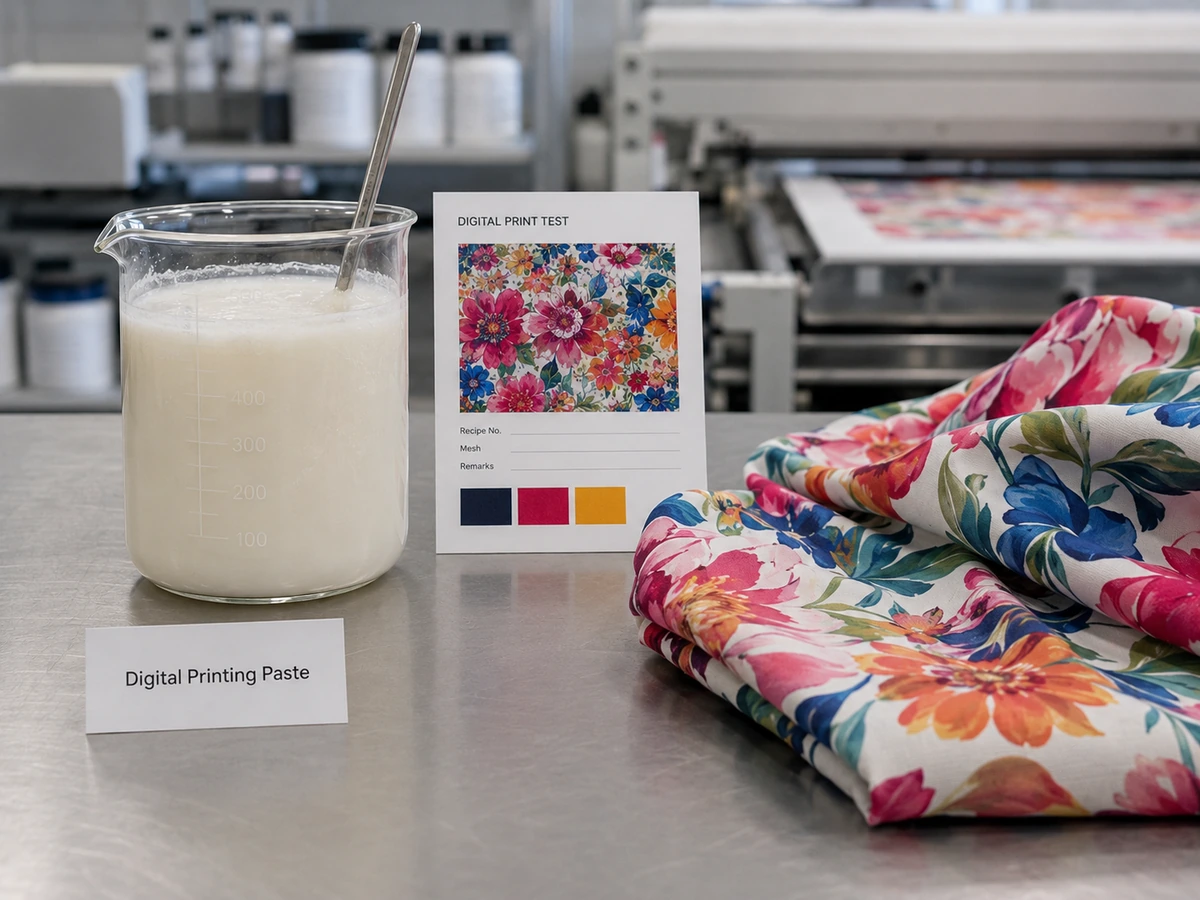
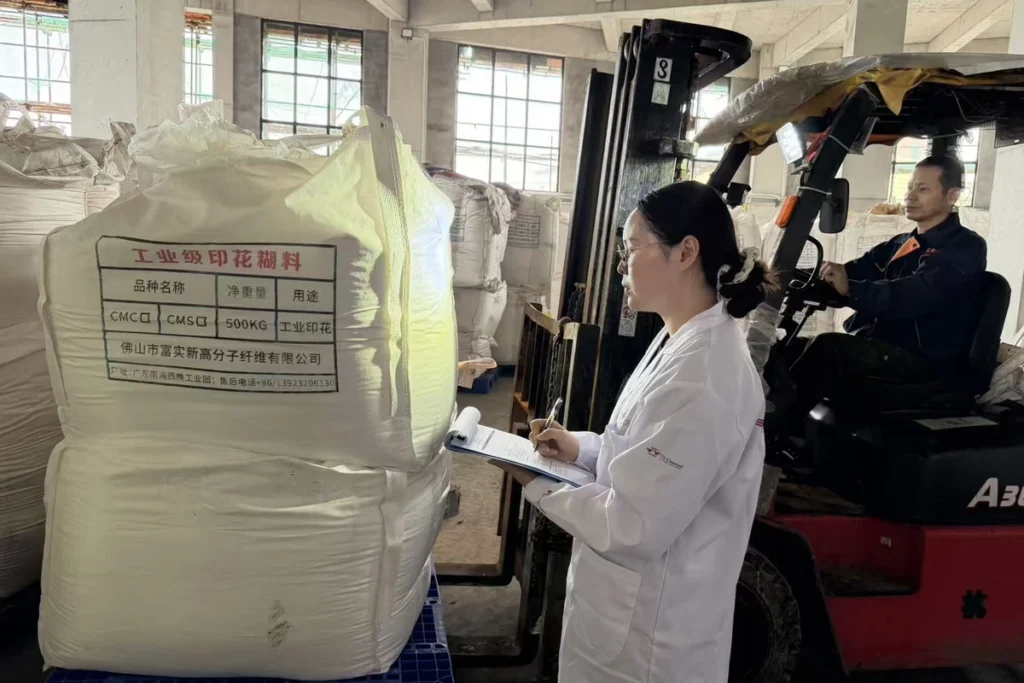
| Reactive textile printing paste | Thickening and rheology control | Commonly used | Viscosity, test method, mesh size, dissolution, filtration, pH, moisture | Printing paste and fabric trial |
| Digital printing pretreatment | Viscosity and formulation support | Application-specific | Low-shear behavior, filtration, compatibility, coating uniformity | Pretreatment and process compatibility |
| Screen and rotary printing | Paste structure and transfer control | Common in suitable reactive systems | Rheology, screen passing, standing stability, pattern edge control | Machine and formula trial |
| Warp sizing | Film and viscosity support | Needs validation | Film strength, flexibility, adhesion, desizing, yarn compatibility | Yarn and weaving trial |
| Dyeing-related formulations | Viscosity or application support | Process-specific | Dye compatibility, salts, pH, temperature, wash-off behavior | Full formula test |
| Textile coating or surface treatment | Rheology and film support | Needs formulation testing | Coating uniformity, film behavior, adhesion, drying, hand feel | Coating and end-use test |
| Anti-wrinkle or fabric finishing | Possible film-forming or formulation support | Not a universal standard use | Crease recovery, hand feel, durability, washing, compatibility | Finishing performance test |
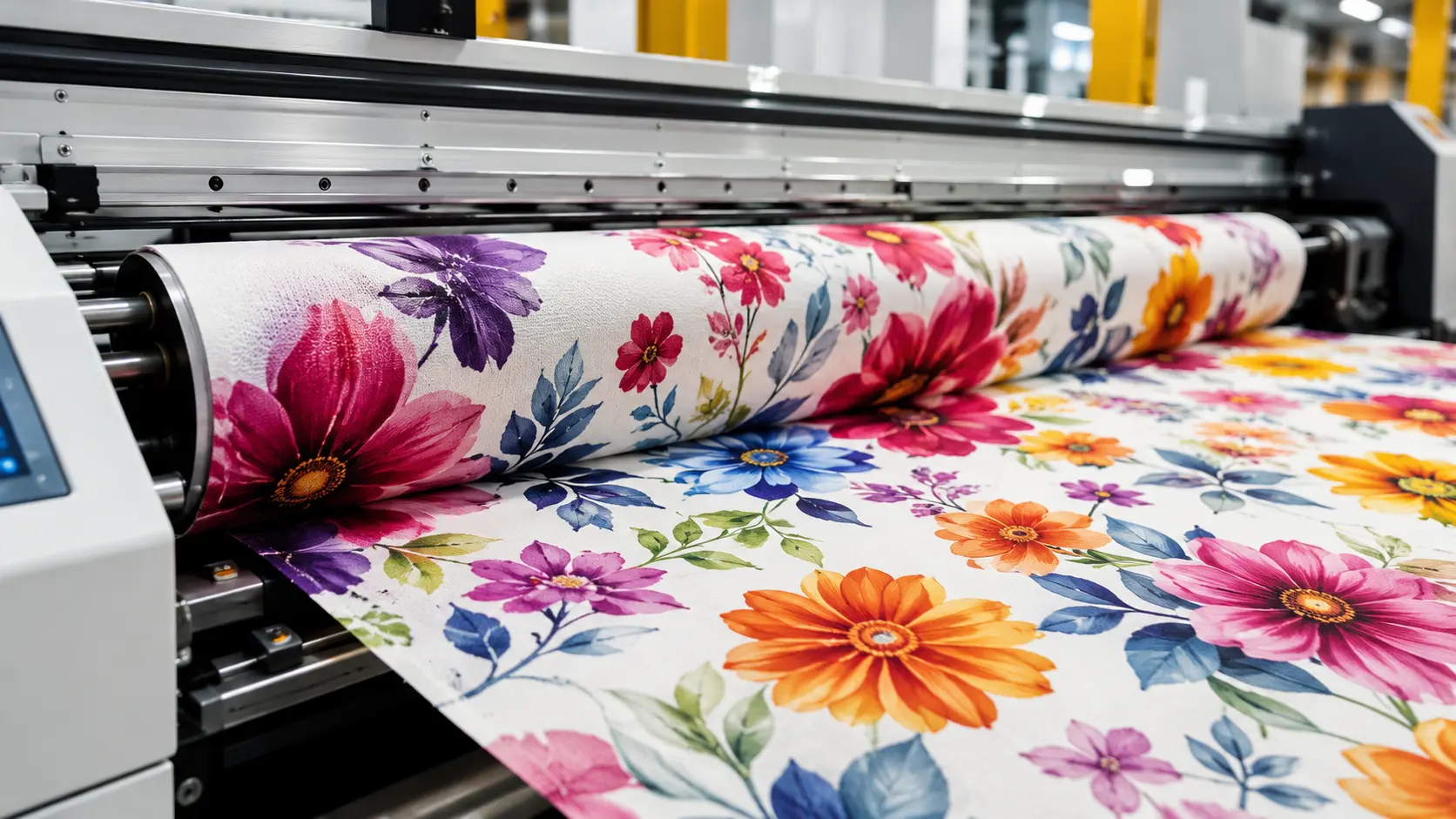
1. Reactive Textile Printing Paste
Why This Is the Most Established Textile Use
The suitability of a grade depends on more than a high or low viscosity label. Buyers should review the complete viscosity test method, dissolution behavior, mesh size, filtration, moisture, pH, and compatibility with the dye and auxiliary system.
What It Does Not Guarantee by Itself
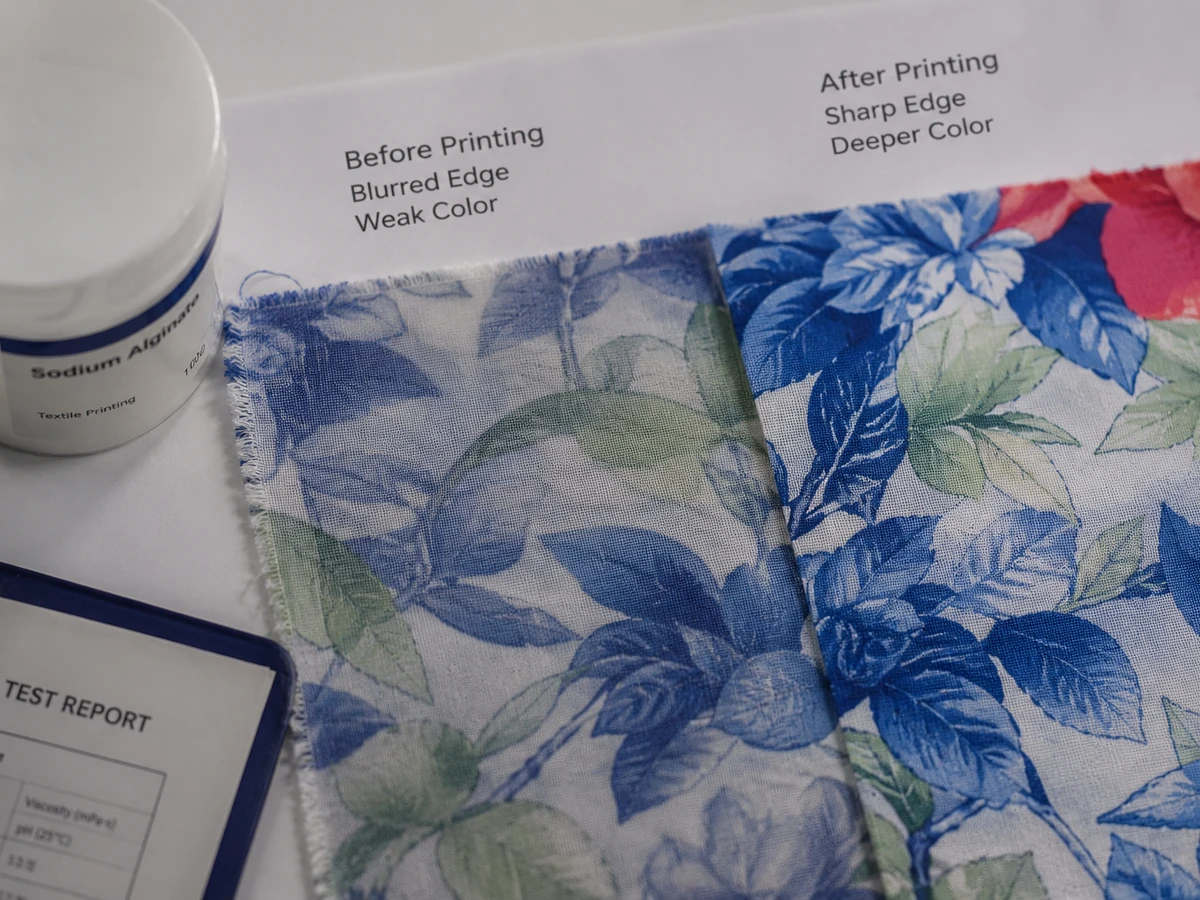
Sodium alginate alone does not guarantee color fastness, color yield, pattern sharpness, or compliance. These results also depend on fabric preparation, dye selection, paste formulation, printing conditions, fixation, washing, and the test method.
Recommended Validation
- Prepare the sample under the same water, mixing, and standing conditions as production.
- Compare viscosity using the same concentration, temperature, instrument method, and unit.
- Check dissolution, paste smoothness, filtration, and screen passing.
- Test the complete reactive printing formula on the actual fabric.
- Compare the new sample with the current product under the same conditions.
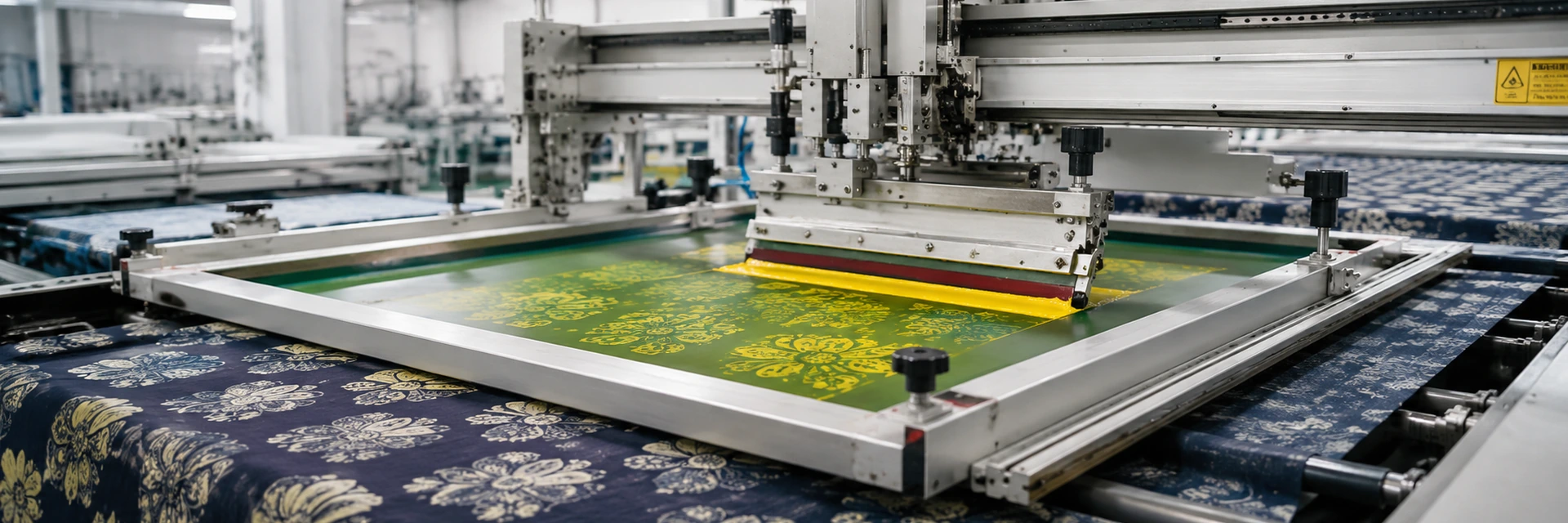
2. Screen and Rotary Textile Printing
Application Role
In suitable reactive printing systems, sodium alginate can support paste structure, transfer behavior, and pattern control during flat screen or rotary printing.
The required rheology may differ by screen, machine speed, fabric absorbency, print design, and paste concentration.
Main Risks
A grade that is difficult to dissolve may increase filtration residue or screen-blocking risk. A viscosity route that does not match the equipment may lead to poor transfer, excessive penetration, or weak edge control.
Recommended Validation
Laboratory viscosity data should be followed by machine testing. Buyers should observe screen passing, paste recovery, standing stability, print edge, penetration, and clean-up behavior.
3. Digital Textile Printing Pretreatment
Different from Direct Printhead Ink Formulation
Sodium alginate may be evaluated in digital textile printing pretreatment or related coating formulations. This is different from assuming that the powder can be directly used in every printhead ink system.
Digital processes can be sensitive to filtration, coating uniformity, low-shear behavior, drying, fabric surface, and compatibility with the complete pretreatment formula.
Key Parameters
- Viscosity under the intended formulation conditions
- Dissolution and filtration behavior
- Compatibility with salts, auxiliaries, and pH adjusters
- Coating uniformity and penetration
- Drying and storage behavior of the prepared pretreatment
- Printing result after the full fixation and washing process
Recommended Validation
Buyers should test the full pretreatment and printing workflow. A grade suitable for screen printing paste should not automatically be assumed to fit a digital pretreatment system.
4. Warp Sizing
Possible Role
In selected warp sizing formulations, sodium alginate may be evaluated for viscosity control, film formation, or blend support. However, it should not be described as a universal starch replacement without yarn and weaving trials.
What Buyers Need to Test
- Adhesion to the actual yarn
- Film strength and flexibility
- Abrasion resistance
- Yarn hairiness and breakage behavior
- Desizing or wash-off behavior
- Compatibility with starch, CMC, PVA, or other sizing components
- Effect on weaving and downstream finishing
Why Grade Matching Is Important
5. Dyeing-Related Formulations
Do Not Treat Sodium Alginate as a Universal Dye-Bath Auxiliary
In selected dyeing-related or localized application systems, it may be evaluated for viscosity, application control, or formulation support. The result depends on the dye chemistry, salt level, pH, temperature, auxiliaries, fabric, and washing process.
Recommended Validation
- Check compatibility with the actual dye and auxiliaries.
- Observe viscosity changes after salts or pH adjustment.
- Review temperature stability under the real process.
- Evaluate wash-off and residue behavior.
- Compare shade and fabric result using the buyer’s test method.
6. Textile Coating and Surface Treatment
Possible Role
Its suitability depends on the binder, fillers, auxiliaries, substrate, coating equipment, drying process, and end-use requirements.
Key Tests
- Coating viscosity and leveling
- Film continuity and flexibility
- Adhesion to the fabric
- Drying behavior
- Surface feel and fabric hand
- Washing or abrasion durability where required
- Compatibility with the full coating formulation
7. Anti-Wrinkle and Fabric Finishing
Why This Claim Requires Caution
Crease recovery, fabric hand, durability, washing resistance, yellowing, breathability, and compatibility with the finishing system all need to be tested.
Not a Universal Replacement for Finishing Chemistry
Recommended Validation
- Prepare the complete finishing formula.
- Apply it to the actual fabric at the intended pick-up.
- Use the real drying and curing process.
- Test crease recovery or the buyer’s required wrinkle method.
- Check hand feel, stiffness, washing durability, and appearance.
- Compare against the current finishing system.
How to Decide Whether Sodium Alginate Fits an Application
Question 1: What Function Is Required?
Define whether the material is expected to provide viscosity, rheology control, film formation, adhesion support, coating stability, or another measurable function.
Question 2: Is the Use Common or Experimental?
Reactive textile printing paste is a common sodium alginate application. Warp sizing, coating, dyeing-related systems, and anti-wrinkle finishing may require more application-specific validation.
Question 3: What Is the Existing Reference Material?
Provide the current product, TDS, COA, dosage, preparation method, and performance problem where available. This helps the supplier understand whether sodium alginate is being added, blended, or used as a possible replacement.
Question 4: Which Result Will Determine Approval?
Approval criteria may include viscosity, dissolution, filtration, printing result, yarn performance, film behavior, adhesion, wash-off, fabric hand, or another test.
Question 5: Can the Result Be Reproduced?
The test should use controlled preparation conditions and a defined evaluation method. A one-time visual result is not enough for bulk purchasing.
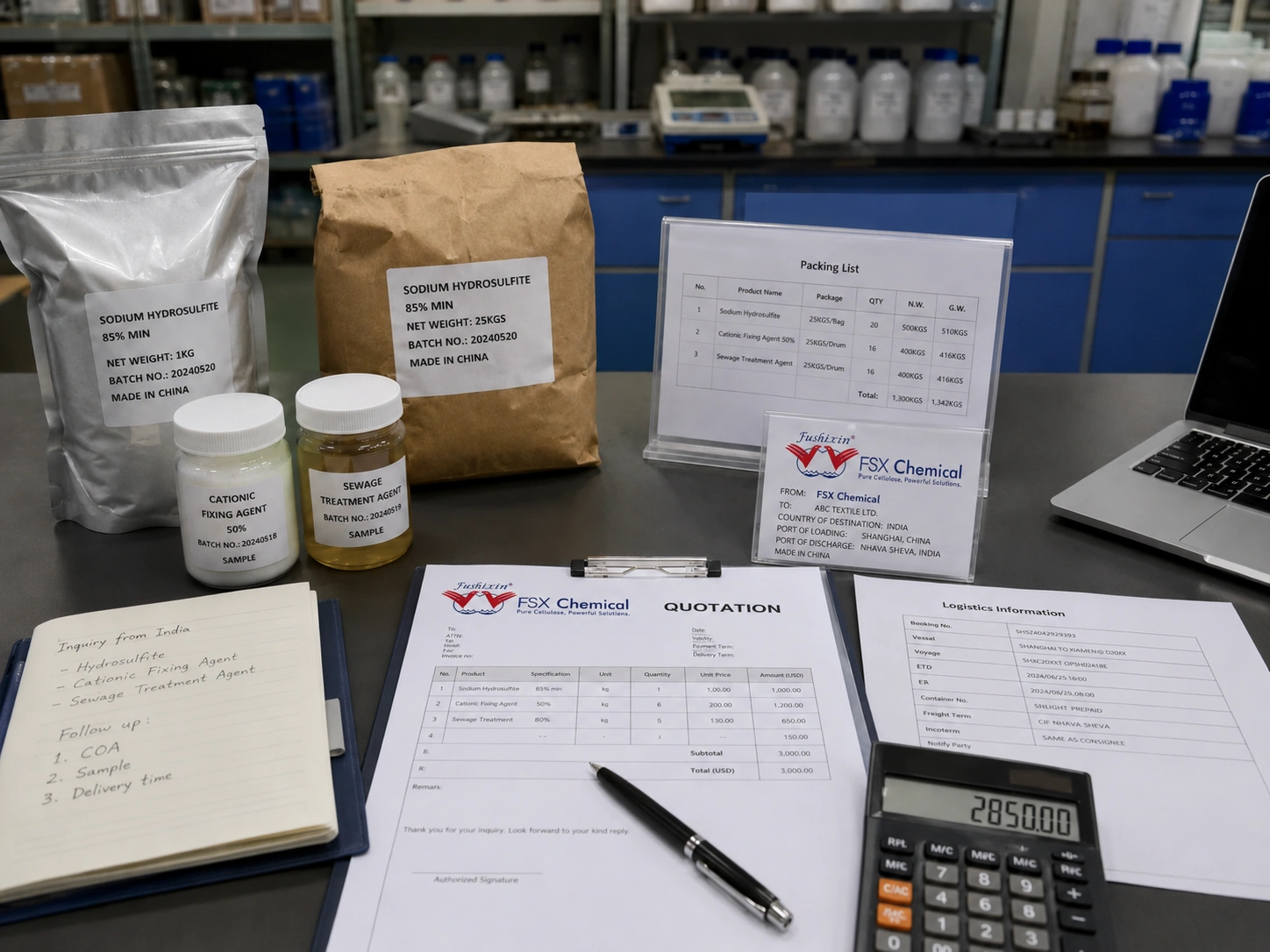
Technical Data Buyers Should Request
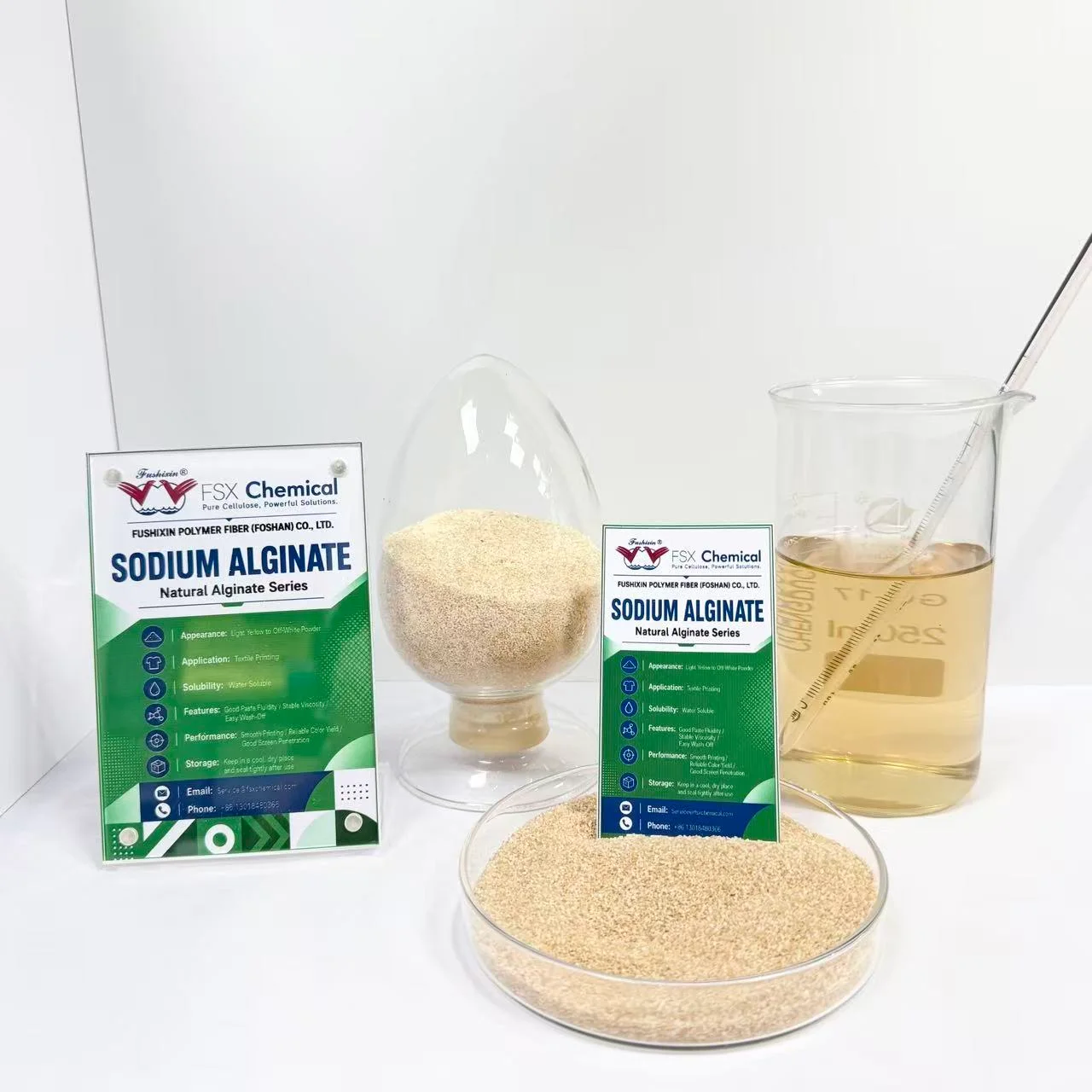
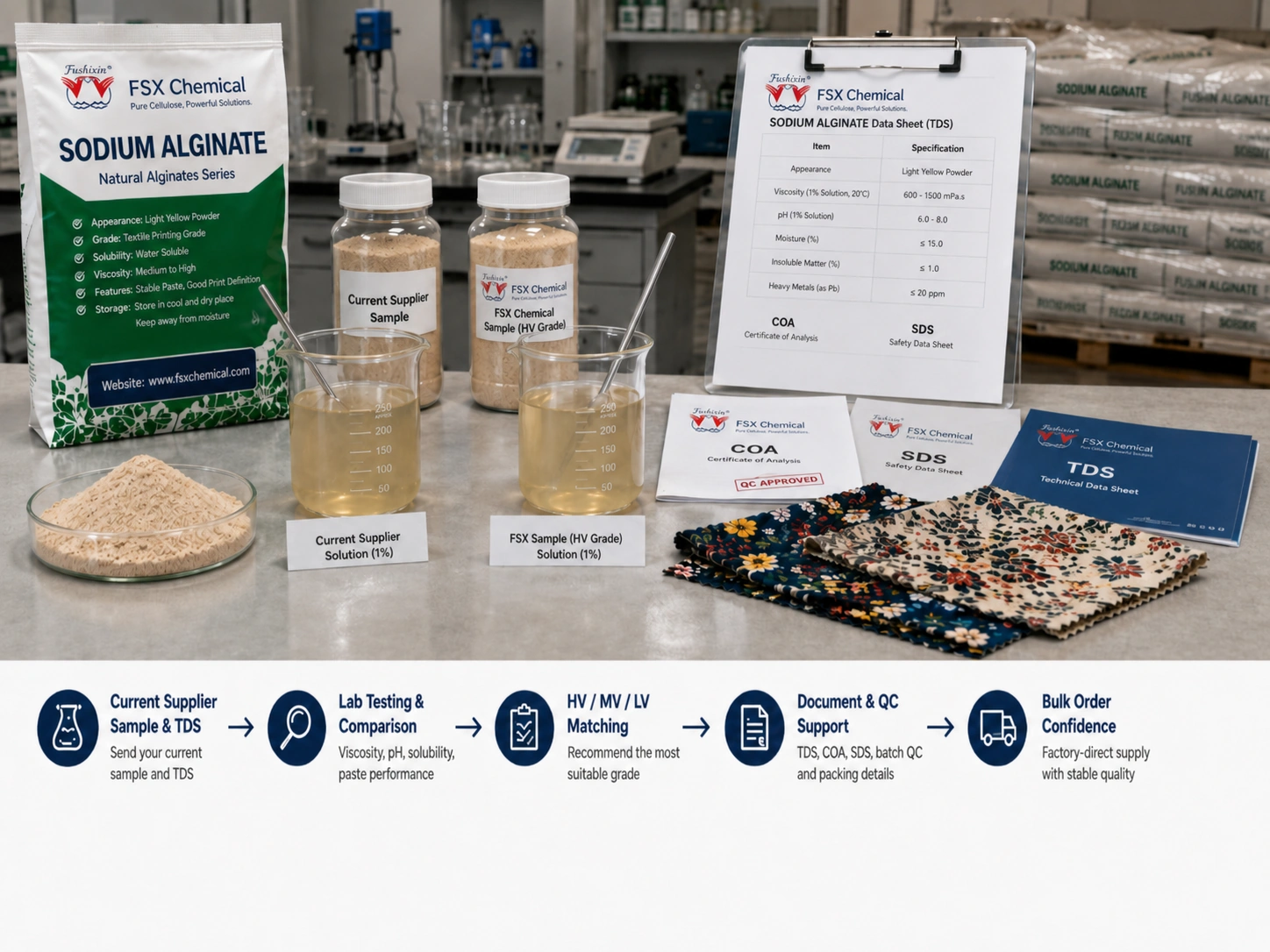
TDS
The Technical Data Sheet should identify the grade and provide relevant parameters such as appearance, viscosity, test method, mesh size, pH, moisture, storage guidance, and application description where applicable.
COA
The Certificate of Analysis should relate to the supplied batch and show actual results for the agreed parameters.
SDS
The Safety Data Sheet supports handling, storage, transport, and internal safety review. The product name and supplier identity should match the order documents.
Application-Specific Test Support
If the application is warp sizing, coating, finishing, or another less standardized use, buyers may need a proposed sample-test method or formulation discussion in addition to basic documents.
Sample Testing Matrix
| Область применения | Basic Laboratory Test | Production Test | Approval Evidence |
|---|---|---|---|
| Reactive printing paste | Viscosity, dissolution, filtration, formula compatibility | Printing, fixation, washing | Recorded comparison with current product |
| Digital pretreatment | Low-shear viscosity, filtration, coating uniformity | Pretreatment, printing, fixation | Process-specific print result |
| Warp sizing | Film, adhesion, viscosity, blend compatibility | Sizing and weaving trial | Yarn and loom performance record |
| Coating or finishing | Rheology, film, adhesion, compatibility | Application, drying, washing or durability | End-use test report |
Common Mistakes When Evaluating Sodium Alginate Uses
Assuming One Grade Fits Every Textile Process
A grade designed for reactive printing paste may not match warp sizing, coating, digital pretreatment, or finishing.
Using High Viscosity as the Only Selection Rule
Higher viscosity is not automatically better. The correct grade depends on the target process, test method, concentration, equipment, and formulation.
Promising Color Fastness or Wrinkle Resistance from One Raw Material
These are system-level results that depend on the complete process and test method.
Skipping Application-Specific Testing
Technical documents help screen a grade, but they do not replace a controlled application trial.
Using Unsupported Sustainability or Compliance Claims
Claims such as biodegradable, eco-friendly, compliant, or suitable for a regulated market should be supported by relevant product-specific documents when required.
How FSX Chemical Supports Application Matching
We do not recommend treating sodium alginate as a universal solution for every textile process. Reactive printing, digital pretreatment, warp sizing, coating, dyeing-related formulations, and fabric finishing should each be evaluated with their own test criteria.
Следующие шаги
- Define the Intended Use — specify reactive printing paste, digital pretreatment, screen printing, warp sizing, coating, finishing, or another process.
- State the Required Function — explain whether you need viscosity, rheology, film support, adhesion, coating stability, or another result.
- Share the Current Material — provide the current grade, TDS, COA, dosage, and observed problem where available.
- Confirm the Test Method — include concentration, temperature, instrument method, unit, and application test conditions.
- Request TDS, COA and SDS — verify that the documents match the proposed grade.
- Запросить образец — test the proposed grade in the actual process rather than only in water.
- Record the Approval Criteria — define the viscosity, printing, yarn, coating, film, or finishing result required for approval.
- Подтвердить соответствие образца партии — link the approved sample to the specification, COA, packaging, and batch traceability.
- Свяжитесь с нашей технической службой — send your application details to Service@fsxchemical.com