High-performance sodium alginate is a grade that meets a defined printing requirement at a controlled working dose. It is not simply the powder with the highest viscosity. For reactive screen printing, assess preparation, usable paste flow, print definition, color and wash-off against the current approved product. Separate an unchanged-recipe comparison from a later optimized formulation, and reject candidates that miss required fabric-quality criteria even when one headline result improves.
This guide explains how textile printing buyers can evaluate sodium alginate performance through technical documents, sample testing, batch consistency, packaging, and export document review.
What “High Performance” Means for Textile Printing Sodium Alginate
Performance Should Be Verified, Not Only Claimed
In B2B chemical sourcing, terms such as “high performance,” “premium,” or “eco-friendly” should be supported by technical data and sample testing. A supplier description can help buyers start the evaluation, but it should not replace actual formulation testing.
For textile printing, performance should be checked through paste preparation, viscosity stability, filtration behavior, printing handling, and comparison with the buyer’s current product.
Application Fit Is More Important Than a General Grade Name
A broad product name such as “industrial grade sodium alginate” does not confirm whether the product is suitable for a specific textile printing process.
The suitable grade depends on the printing method, dye system, fabric type, target viscosity, water quality, stirring method, and storage time of the prepared paste.
Sample-to-Bulk Consistency Matters
A good sample result is only useful when the bulk shipment can follow the same agreed specification range. Buyers should confirm COA data, batch traceability, packaging format, and shipment documents before placing bulk orders.
This helps reduce the risk of sample approval but unstable bulk performance.
Key Uses in Textile Printing Applications
Реактивная паста для печати на текстиле
The recommended grade should be tested in the buyer’s own formulation before bulk purchase.
Плоская и ротационная трафаретная печать
For screen printing and rotary printing, viscosity consistency and filtration behavior can affect production handling. A suitable sodium alginate grade should disperse and hydrate properly under the buyer’s preparation conditions.
Buyers should test the product using their actual water quality, stirring speed, addition method, preparation time, and paste concentration.
Digital Printing or Related Formulation Testing
Some buyers may evaluate sodium alginate for digital printing pretreatment or related formulation applications. In these cases, the grade should be tested carefully for formulation compatibility, viscosity target, dispersion behavior, pH, and stability.
A textile printing grade requires separate validation for digital fabric pretreatment. Pretreatment is applied to the fabric; ordinary alginate thickener is not thereby approved for use inside printhead ink. Any jettable formulation requires explicit ink-system and equipment compatibility approval.
Specifications Buyers Should Check
Класс вязкости и метод испытаний
A comparable viscosity result needs the concentration and its mass basis, water quality, preparation and hydration history, sample age, temperature, instrument model, spindle, speed, container and reading time. Record the value and unit together with a suitable instrument operating range. Use the same method for the reference and candidate; the supplier’s powder-grade test and the mill’s complete working-paste test are separate records.
В отсутствие четко определённого метода испытаний значения вязкости, полученные у разных поставщиков, могут оказаться несопоставимыми напрямую.
Размер ячейки и особенности растворения
Размер ячейки сетки может влиять на диспергирование и гидратацию при приготовлении пасты. Однако фактические характеристики растворения также зависят от качества воды, скорости перемешивания, способа добавления, времени приготовления и условий рецептуры.
Buyers should test dissolution speed, lump formation, paste smoothness, and filtration behavior under their own conditions.
Влажность, pH и внешний вид
Влажность, уровень pH и внешний вид — это основные, но важные показатели качества. Они влияют на условия хранения, обращение с продукцией, контроль качества и повторные покупки.
Эти параметры следует проверять в техническом описании продукта (TDS) и подтверждать данными сертификата анализа (COA) для каждой производственной партии.
Compatibility with the Printing Formula
Compatibility depends on the full formulation, including dyes, auxiliaries, pH, salts, water quality, fabric type, and paste preparation process.
Buyers should share their current formula conditions and production target when asking for grade matching support.
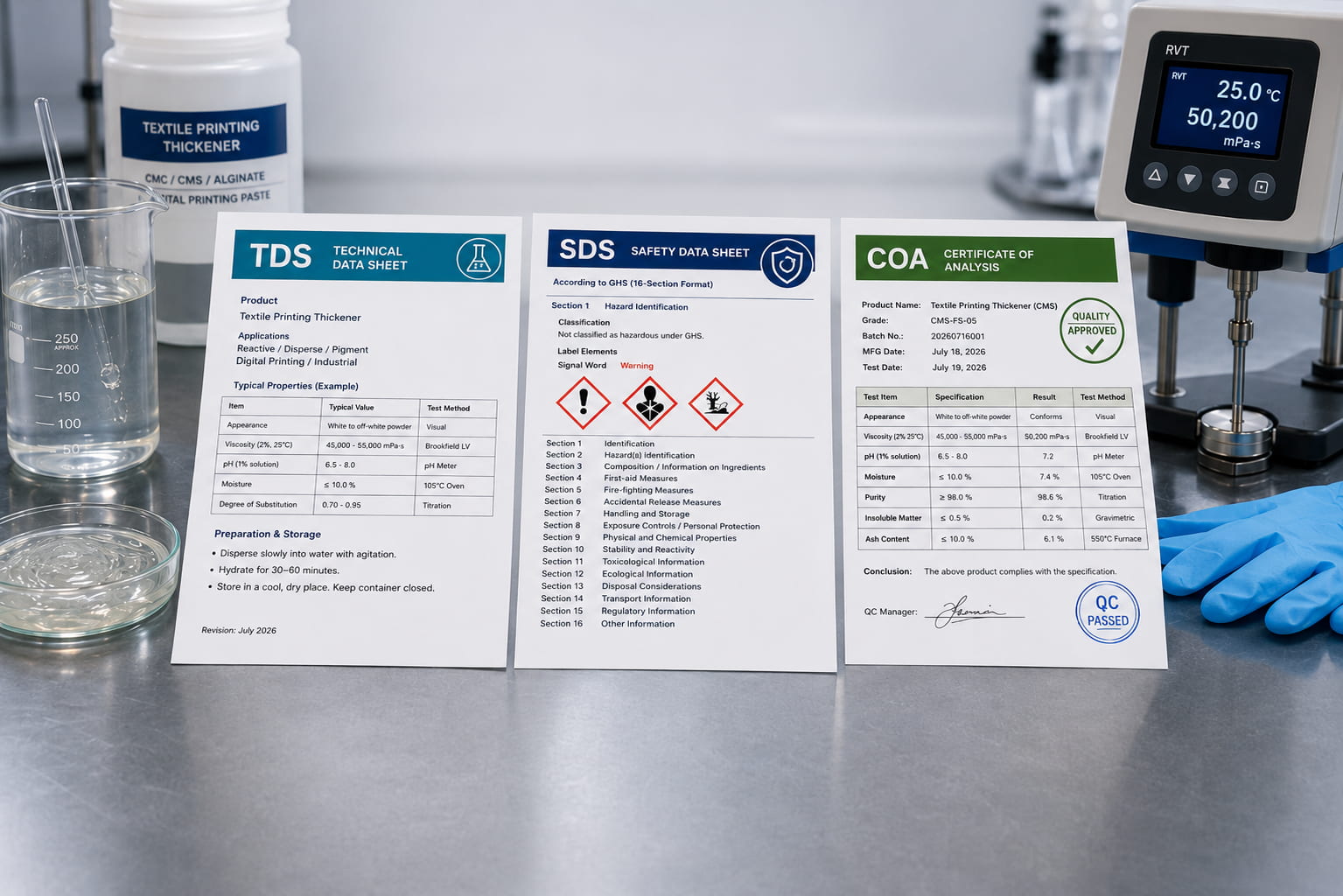
Documents Buyers Should Request Before Purchase
TDS для проверки технического задания
Технический паспорт помогает покупателям ознакомиться со стандартными техническими характеристиками продукции. В него должны быть включены такие параметры, как внешний вид, вязкость, размер ячейки сетки, влажность, pH, условия хранения и метод испытаний.
The TDS is useful for technical comparison, but it should not replace sample testing in the buyer’s own formulation.
COA для подтверждения партии
Сертификат анализа подтверждает фактические данные по конкретной производственной партии. Он играет важную роль при размещении оптовых заказов, повторных закупках, поставках дистрибьюторам и внутреннем контроле качества.
Покупатели могут сравнивать данные сертификатов соответствия (COA) по разным партиям, чтобы проверить, находятся ли ключевые параметры в пределах согласованного диапазона.
Обзор паспортов безопасности (SDS) по обращению и транспортировке
Паспорт безопасности служит руководством по обращению, хранению, транспортировке и проведению внутренней проверки безопасности. При международных закупках паспорт безопасности может также потребоваться для оформления отгрузки и ведения переписки с таможенными органами.
Покупатели должны убедиться, что название продукта в паспорте безопасности (SDS) и данные о поставщике соответствуют документам заказа.
Дополнительные документы, касающиеся соблюдения нормативных требований или клиентов
Если покупателю требуются заявления об отсутствии запрещенных веществ, экологическая документация, анкеты для аудита клиентов или содействие в получении сертификации от третьей стороны, эти требования следует обсудить до подтверждения заказа.
Надежный поставщик должен четко объяснить, какие документы могут быть предоставлены, а какие заявления требуют проведения официальных испытаний или сертификации третьей стороной.
Use Performance Gates Before Ranking Candidate Grades
A proposed benchmark should define the print requirement before samples arrive. Choose representative fine lines, solid coverage and a challenging approved shade on the actual fabric. Set acceptance criteria with production and quality staff; do not invent a universal viscosity, sharpness or fastness limit.
| Gate | Fair comparison | Decision |
|---|---|---|
| Приготовление | Document powder-as-supplied dose, water, mixing, hydration and filtration conditions. | Can the grade be prepared reliably with the mill’s equipment? |
| Unchanged recipe | Replace only the thickener at the declared mass basis; retain the reference alongside it. | Identify differences without presenting this as an optimized replacement. |
| Separate optimized recipe | Record each dose or water adjustment as a new recipe; keep dye loading, fabric and printing conditions controlled. | Find a workable candidate condition without hiding formulation changes. |
| Finished-fabric acceptance | Compare shade, line definition, background cleanliness, wash-off, handle and required fastness after the specified process. | Pass every mandatory requirement before considering efficiency gains. |
| Repeatability | Repeat preparations and confirm an independently identified commercial lot using the agreed method. | Distinguish a promising laboratory sample from a repeat-supply decision. |
Keep trade-offs visible: a stronger-looking solid can accompany excessive penetration or wider lines. Equal apparent viscosity at one instrument setting does not establish equivalent flow in the screen. Research on alginate-containing reactive-printing pastes reports pattern-dependent performance, supporting the need for application-specific trials rather than a single universal ranking.
How to Test Sodium Alginate Before Bulk Orders
Test in the Actual Printing Paste
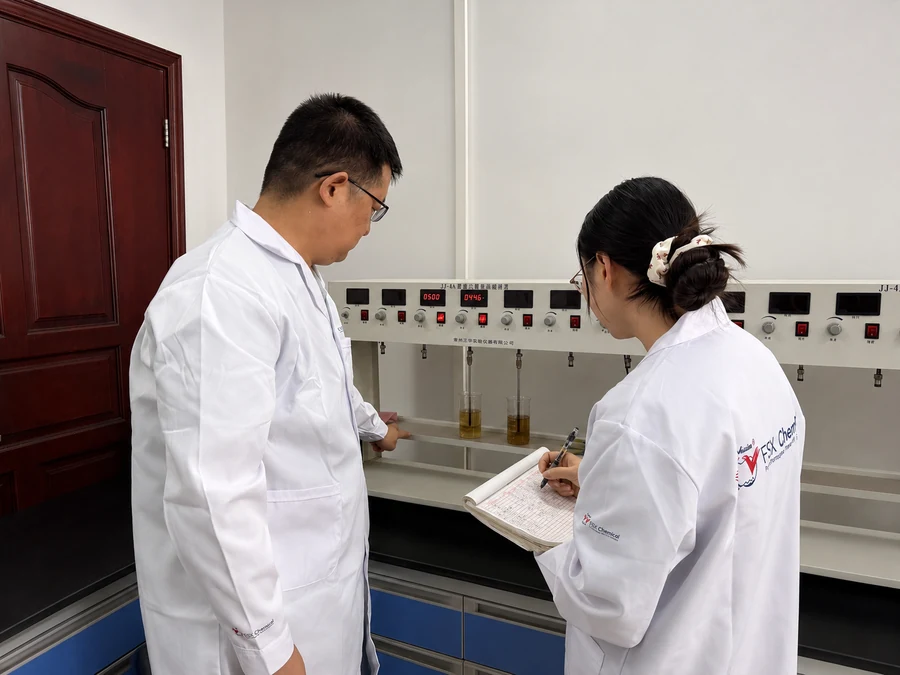
Sample testing should be done in the buyer’s own paste formulation whenever possible. Dyes, auxiliaries, water quality, pH, stirring method, paste concentration, and standing time can all affect final paste behavior.
Проведение испытаний исключительно в чистой воде может оказаться недостаточным для подтверждения пригодности данного сорта альгината натрия для производства.
Observe Practical Production Behavior
В ходе испытаний покупатели должны обратить внимание на скорость растворения, однородность пасты, образование комков, характеристики фильтрации, стабильность вязкости, прохождение через сито и удобство нанесения.
Эти практические наблюдения зачастую не менее важны, чем технические характеристики, приведенные в техническом паспорте (TDS).
Сравните с текущей версией продукта
If the buyer is replacing an existing sodium alginate or another thickener, the new sample should be tested against the current product under the same conditions.
This helps the buyer evaluate whether the new grade is technically suitable before discussing bulk supply.
Common Mistakes When Choosing Sodium Alginate
Choosing Only by Price
Price is important, but a low price does not help if the product creates unstable viscosity, poor dissolution, filtration difficulty, or extra formulation adjustment.
Buyers should compare price together with specification, sample performance, COA data, and supply consistency.
Ignoring the Viscosity Test Method
Значения вязкости, измеренные при разных концентрациях, температурах или на разных приборах, могут различаться.
Before comparing suppliers, buyers should check whether the test method is clearly stated.
Принятие общих заявлений без предоставления документов
Claims such as “high-performance,” “eco-friendly,” “compliant,” or “global supply” should be supported by documents, agreed terms, or test data when they are important to the purchasing decision.
For practical sourcing, buyers should focus on TDS, COA, SDS where applicable, sample testing, packaging, and export document support.
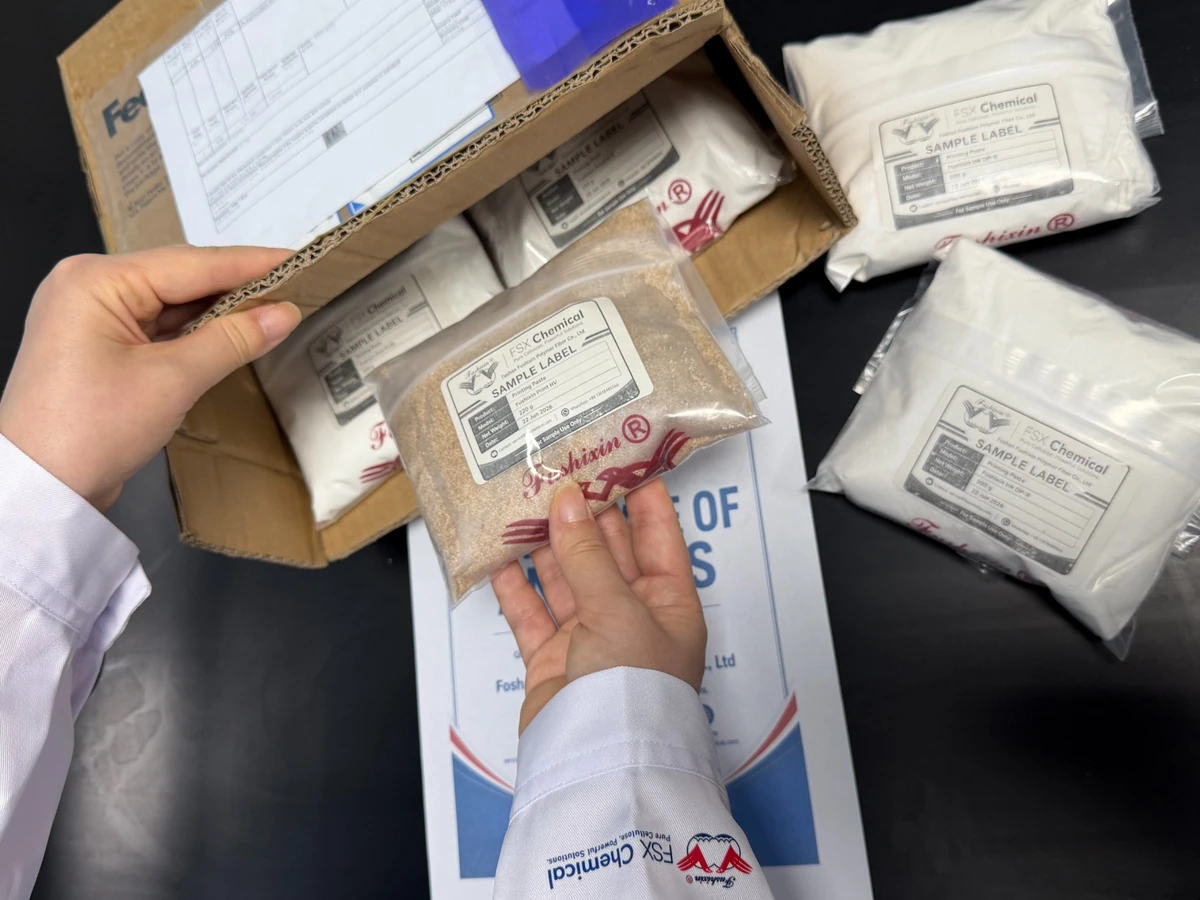
Как компания FSX Chemical оказывает поддержку покупателям альгината натрия
We do not suggest confirming high performance sodium alginate only by product name, broad performance claims, or price. The recommended grade should be reviewed through technical documents and tested in the buyer’s own formulation before bulk purchase.
Следующие шаги
- Расскажите о своём процессе печати — tell us whether you use reactive printing, screen printing, rotary printing, digital pretreatment, or another formulation process.
- Определите целевую вязкость — provide your target viscosity range, test concentration, temperature, instrument method, and current product grade if available.
- Запросить TDS — проанализировать вязкость, размер ячейки сетки, pH, влажность, внешний вид, условия хранения и метод испытаний.
- Запросить сертификат подлинности (COA) — перед отгрузкой убедиться, что данные по партии соответствуют согласованному диапазону технических характеристик.
- Запросить образец — Перед оформлением оптовых заказов протестируйте рекомендуемый сорт альгината натрия в условиях, характерных для вашего процесса приготовления пасты и печати.
- Подтвердить упаковку и экспортные документы — перед отправкой проверьте размеры упаковки, этикетки, возможность отслеживания партии, паспорт безопасности (SDS), счет-фактуру, упаковочный лист и другие необходимые документы.
- Request sample and grade matching — send the current grade, fabric, reactive-printing route, complete recipe basis and the specific trial result you need to improve. Связаться с компанией FSX Chemical to discuss the next evaluation step.