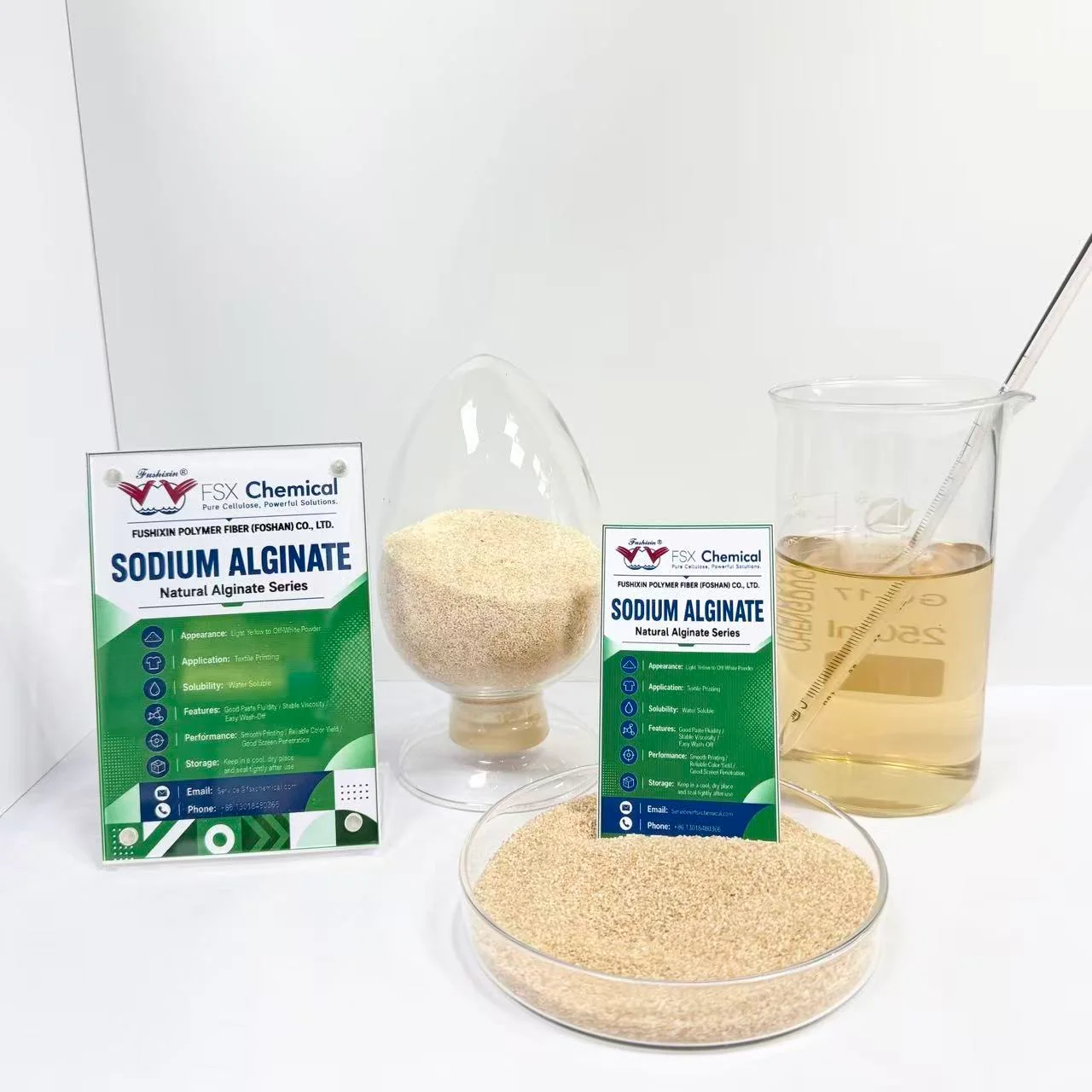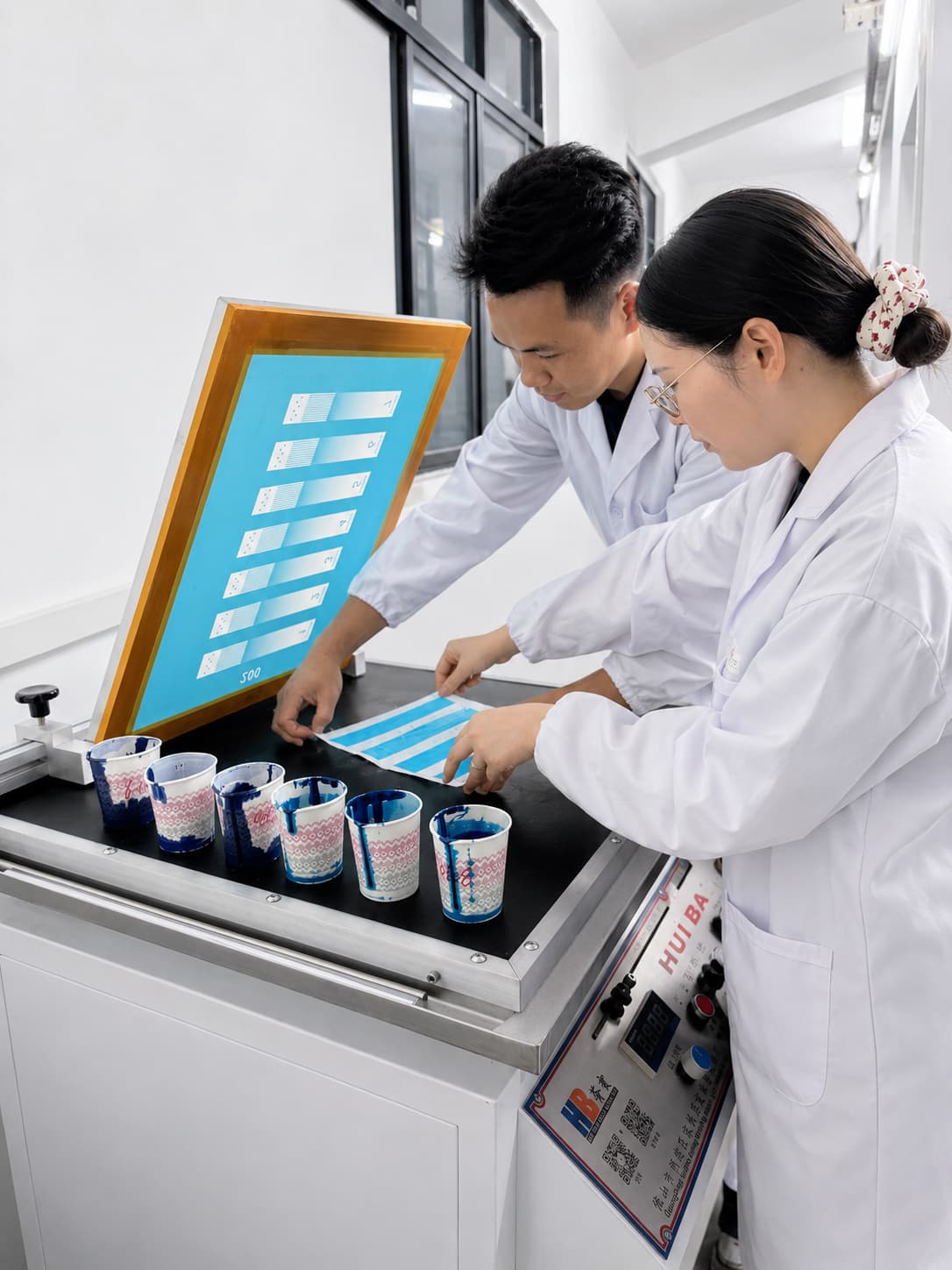
High-performance sodium alginate is a grade that meets a defined printing requirement at a controlled working dose. It is not simply the powder with the highest viscosity. For reactive screen printing, assess preparation, usable paste flow, print definition, color and wash-off against the current approved product. Separate an unchanged-recipe comparison from a later optimized formulation, and reject candidates that miss required fabric-quality criteria even when one headline result improves.
This guide explains how textile printing buyers can evaluate sodium alginate performance through technical documents, sample testing, batch consistency, packaging, and export document review.
What “High Performance” Means for Textile Printing Sodium Alginate
Performance Should Be Verified, Not Only Claimed
In B2B chemical sourcing, terms such as “high performance,” “premium,” or “eco-friendly” should be supported by technical data and sample testing. A supplier description can help buyers start the evaluation, but it should not replace actual formulation testing.
For textile printing, performance should be checked through paste preparation, viscosity stability, filtration behavior, printing handling, and comparison with the buyer’s current product.
Application Fit Is More Important Than a General Grade Name
A broad product name such as “industrial grade sodium alginate” does not confirm whether the product is suitable for a specific textile printing process.
The suitable grade depends on the printing method, dye system, fabric type, target viscosity, water quality, stirring method, and storage time of the prepared paste.
Sample-to-Bulk Consistency Matters
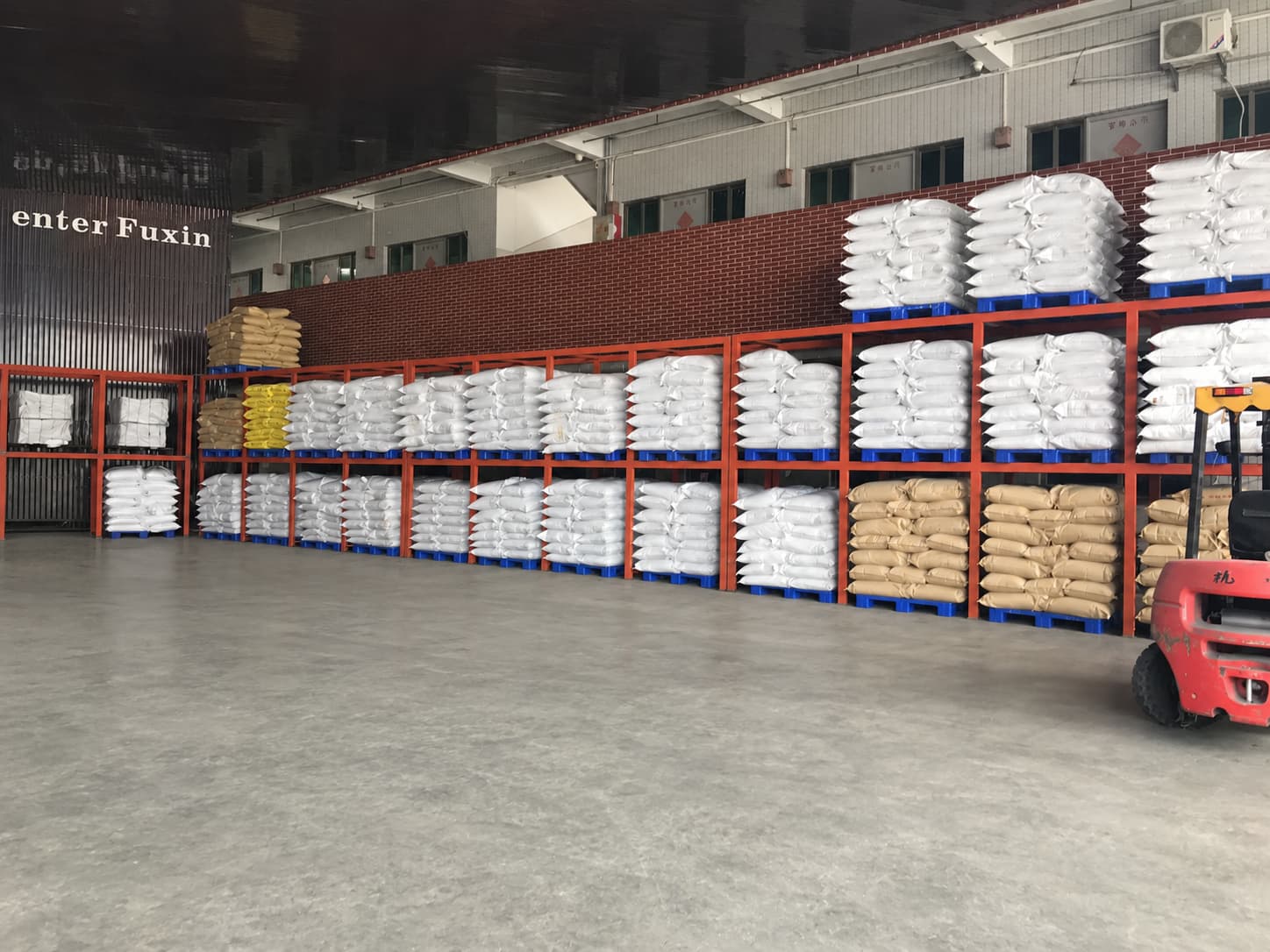
A good sample result is only useful when the bulk shipment can follow the same agreed specification range. Buyers should confirm COA data, batch traceability, packaging format, and shipment documents before placing bulk orders.
This helps reduce the risk of sample approval but unstable bulk performance.
Key Uses in Textile Printing Applications
Reactive Textile Printing Paste
The recommended grade should be tested in the buyer’s own formulation before bulk purchase.
Pagpi-print sa patag na screen at paikot na screen
For screen printing and rotary printing, viscosity consistency and filtration behavior can affect production handling. A suitable sodium alginate grade should disperse and hydrate properly under the buyer’s preparation conditions.
Buyers should test the product using their actual water quality, stirring speed, addition method, preparation time, and paste concentration.
Digital Printing or Related Formulation Testing
Some buyers may evaluate sodium alginate for digital printing pretreatment or related formulation applications. In these cases, the grade should be tested carefully for formulation compatibility, viscosity target, dispersion behavior, pH, and stability.
A textile printing grade requires separate validation for digital fabric pretreatment. Pretreatment is applied to the fabric; ordinary alginate thickener is not thereby approved for use inside printhead ink. Any jettable formulation requires explicit ink-system and equipment compatibility approval.
Specifications Buyers Should Check
Viscosity Grade and Testing Method
A comparable viscosity result needs the concentration and its mass basis, water quality, preparation and hydration history, sample age, temperature, instrument model, spindle, speed, container and reading time. Record the value and unit together with a suitable instrument operating range. Use the same method for the reference and candidate; the supplier’s powder-grade test and the mill’s complete working-paste test are separate records.
Without a clear test method, viscosity values from different suppliers may not be directly comparable.
Mesh Size and Dissolution Behavior
Mesh size can influence dispersion and hydration during paste preparation. However, actual dissolution behavior also depends on water quality, stirring speed, addition method, preparation time, and formulation conditions.
Buyers should test dissolution speed, lump formation, paste smoothness, and filtration behavior under their own conditions.
Moisture, pH and Appearance
Moisture, pH, and appearance are basic but important quality indicators. They affect storage, handling, quality control, and repeat purchasing.
These parameters should be reviewed in the TDS and confirmed through COA data for each production batch.
Compatibility with the Printing Formula
Compatibility depends on the full formulation, including dyes, auxiliaries, pH, salts, water quality, fabric type, and paste preparation process.
Buyers should share their current formula conditions and production target when asking for grade matching support.
Documents Buyers Should Request Before Purchase
TDS for Specification Review
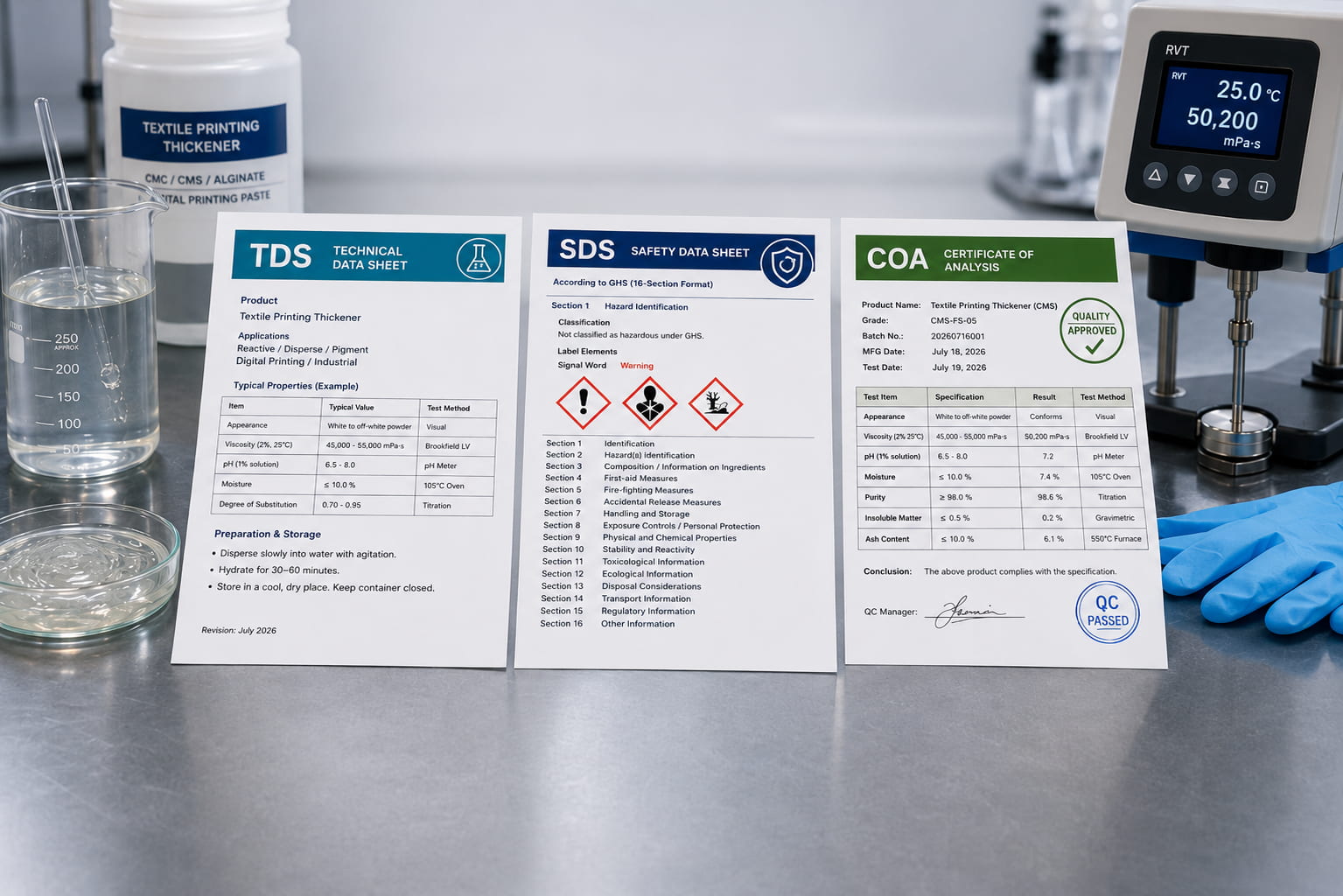
The Technical Data Sheet helps buyers review the standard product specification. It should include appearance, viscosity, mesh size, moisture, pH, storage conditions, and testing method.
The TDS is useful for technical comparison, but it should not replace sample testing in the buyer’s own formulation.
COA for Batch Confirmation
The Certificate of Analysis confirms the actual data of a specific production batch. It is important for bulk orders, repeat purchasing, distributor supply, and internal quality control.
Buyers can compare COA records across shipments to check whether key parameters remain within the agreed range.
SDS for Handling and Transport Review
The Safety Data Sheet supports handling, storage, transport, and internal safety review. For international purchasing, SDS may also be needed for shipment and customs-related communication.
Buyers should make sure the SDS product name and supplier information match the order documents.
Additional Compliance or Customer Documents
If the buyer needs restricted-substance statements, environmental documents, customer audit questionnaires, or third-party certification support, those requirements should be discussed before order confirmation.
A practical supplier should clearly explain which documents can be provided and which claims require formal third-party testing or certification.
Use Performance Gates Before Ranking Candidate Grades
A proposed benchmark should define the print requirement before samples arrive. Choose representative fine lines, solid coverage and a challenging approved shade on the actual fabric. Set acceptance criteria with production and quality staff; do not invent a universal viscosity, sharpness or fastness limit.
| Gate | Fair comparison | Desisyon |
|---|---|---|
| Paghahanda | Document powder-as-supplied dose, water, mixing, hydration and filtration conditions. | Can the grade be prepared reliably with the mill’s equipment? |
| Unchanged recipe | Replace only the thickener at the declared mass basis; retain the reference alongside it. | Identify differences without presenting this as an optimized replacement. |
| Separate optimized recipe | Record each dose or water adjustment as a new recipe; keep dye loading, fabric and printing conditions controlled. | Find a workable candidate condition without hiding formulation changes. |
| Finished-fabric acceptance | Compare shade, line definition, background cleanliness, wash-off, handle and required fastness after the specified process. | Pass every mandatory requirement before considering efficiency gains. |
| Repeatability | Repeat preparations and confirm an independently identified commercial lot using the agreed method. | Distinguish a promising laboratory sample from a repeat-supply decision. |
Keep trade-offs visible: a stronger-looking solid can accompany excessive penetration or wider lines. Equal apparent viscosity at one instrument setting does not establish equivalent flow in the screen. Research on alginate-containing reactive-printing pastes reports pattern-dependent performance, supporting the need for application-specific trials rather than a single universal ranking.
How to Test Sodium Alginate Before Bulk Orders
Test in the Actual Printing Paste
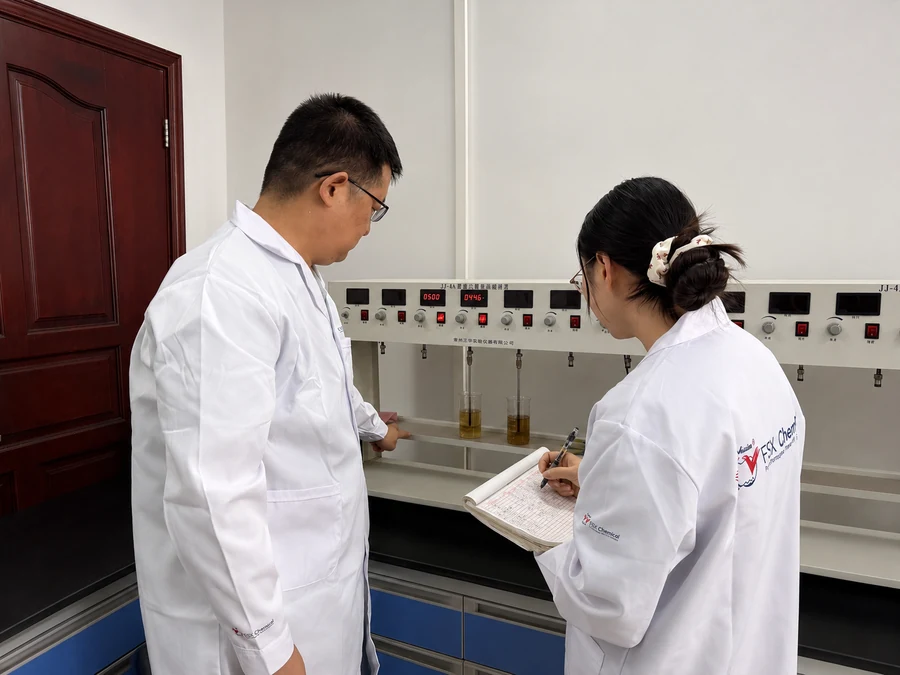
Sample testing should be done in the buyer’s own paste formulation whenever possible. Dyes, auxiliaries, water quality, pH, stirring method, paste concentration, and standing time can all affect final paste behavior.
Testing only in clean water may not be enough to confirm whether the sodium alginate grade is suitable for production.
Observe Practical Production Behavior
During testing, buyers should observe dissolution speed, paste smoothness, lump formation, filtration behavior, viscosity stability, screen passing, and application handling.
These practical observations are often as important as the specification data shown in the TDS.
Compare Against the Current Product
If the buyer is replacing an existing sodium alginate or another thickener, the new sample should be tested against the current product under the same conditions.
This helps the buyer evaluate whether the new grade is technically suitable before discussing bulk supply.
Common Mistakes When Choosing Sodium Alginate
Choosing Only by Price
Price is important, but a low price does not help if the product creates unstable viscosity, poor dissolution, filtration difficulty, or extra formulation adjustment.
Buyers should compare price together with specification, sample performance, COA data, and supply consistency.
Ignoring the Viscosity Test Method
Viscosity values measured under different concentrations, temperatures, or instruments may show different results.
Before comparing suppliers, buyers should check whether the test method is clearly stated.
Accepting Broad Claims Without Documents
Claims such as “high-performance,” “eco-friendly,” “compliant,” or “global supply” should be supported by documents, agreed terms, or test data when they are important to the purchasing decision.
For practical sourcing, buyers should focus on TDS, COA, SDS where applicable, sample testing, packaging, and export document support.
How FSX Chemical Supports Sodium Alginate Buyers
We do not suggest confirming high performance sodium alginate only by product name, broad performance claims, or price. The recommended grade should be reviewed through technical documents and tested in the buyer’s own formulation before bulk purchase.
Mga Susunod na Hakbang
- Share Your Printing Process — tell us whether you use reactive printing, screen printing, rotary printing, digital pretreatment, or another formulation process.
- Define Your Target Viscosity — provide your target viscosity range, test concentration, temperature, instrument method, and current product grade if available.
- Request a TDS — review viscosity, mesh size, pH, moisture, appearance, storage conditions, and testing method.
- Request a COA — confirm whether batch data matches the agreed specification range before shipment.
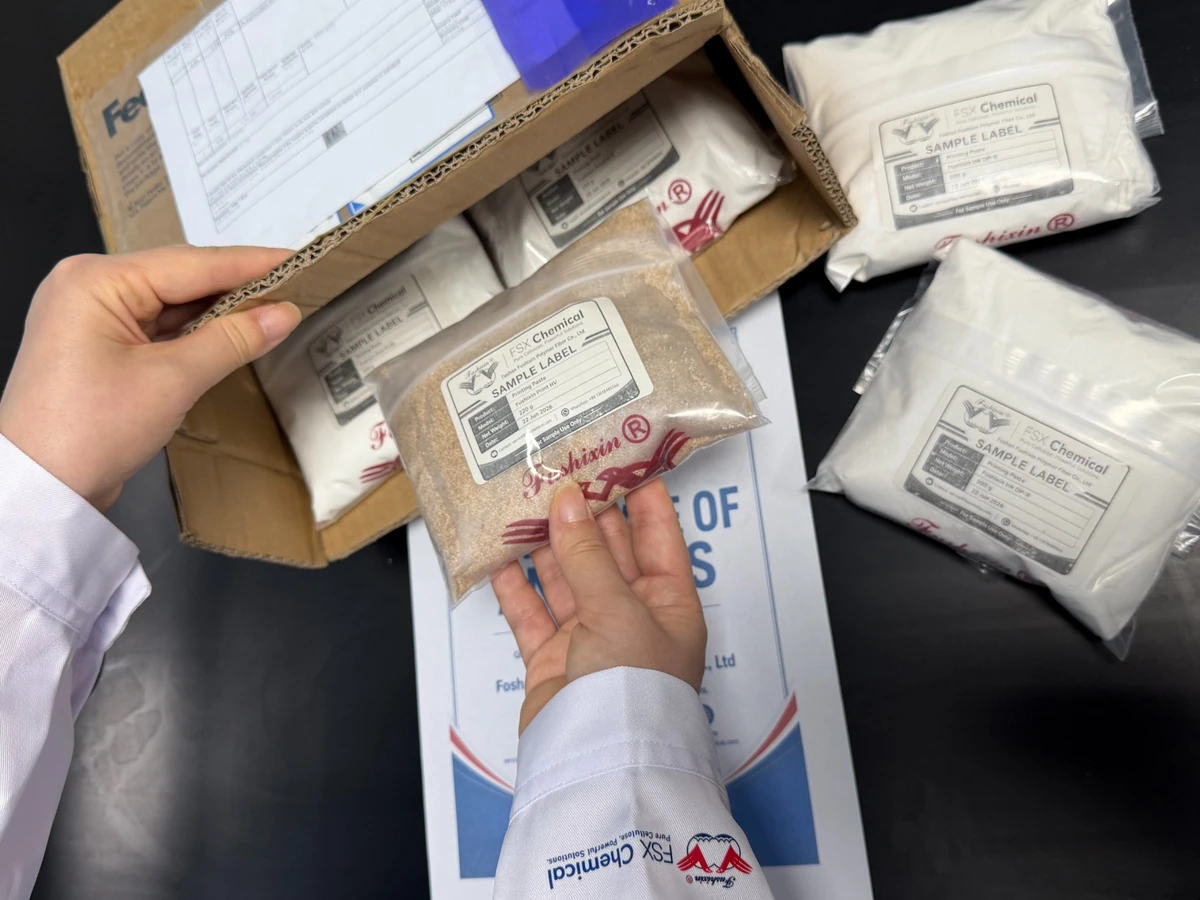
- Humiling ng halimbawa — test the recommended sodium alginate grade in your own paste preparation and printing conditions before confirming bulk orders.
- Confirm Packaging and Export Documents — check bag size, labels, batch traceability, SDS, invoice, packing list, and other required documents before shipment.
- Request sample and grade matching — send the current grade, fabric, reactive-printing route, complete recipe basis and the specific trial result you need to improve. Makipag-ugnayan sa FSX Chemical to discuss the next evaluation step.