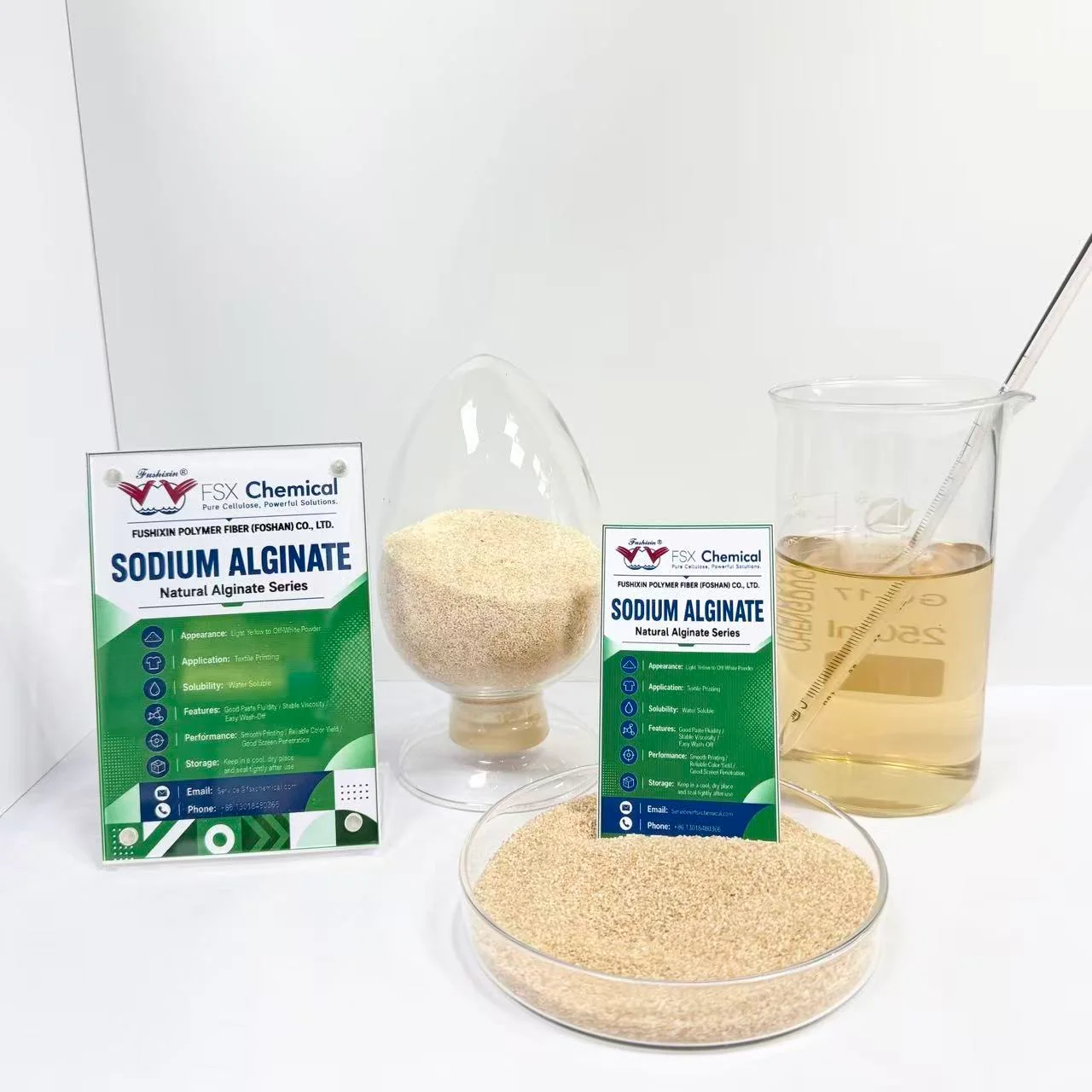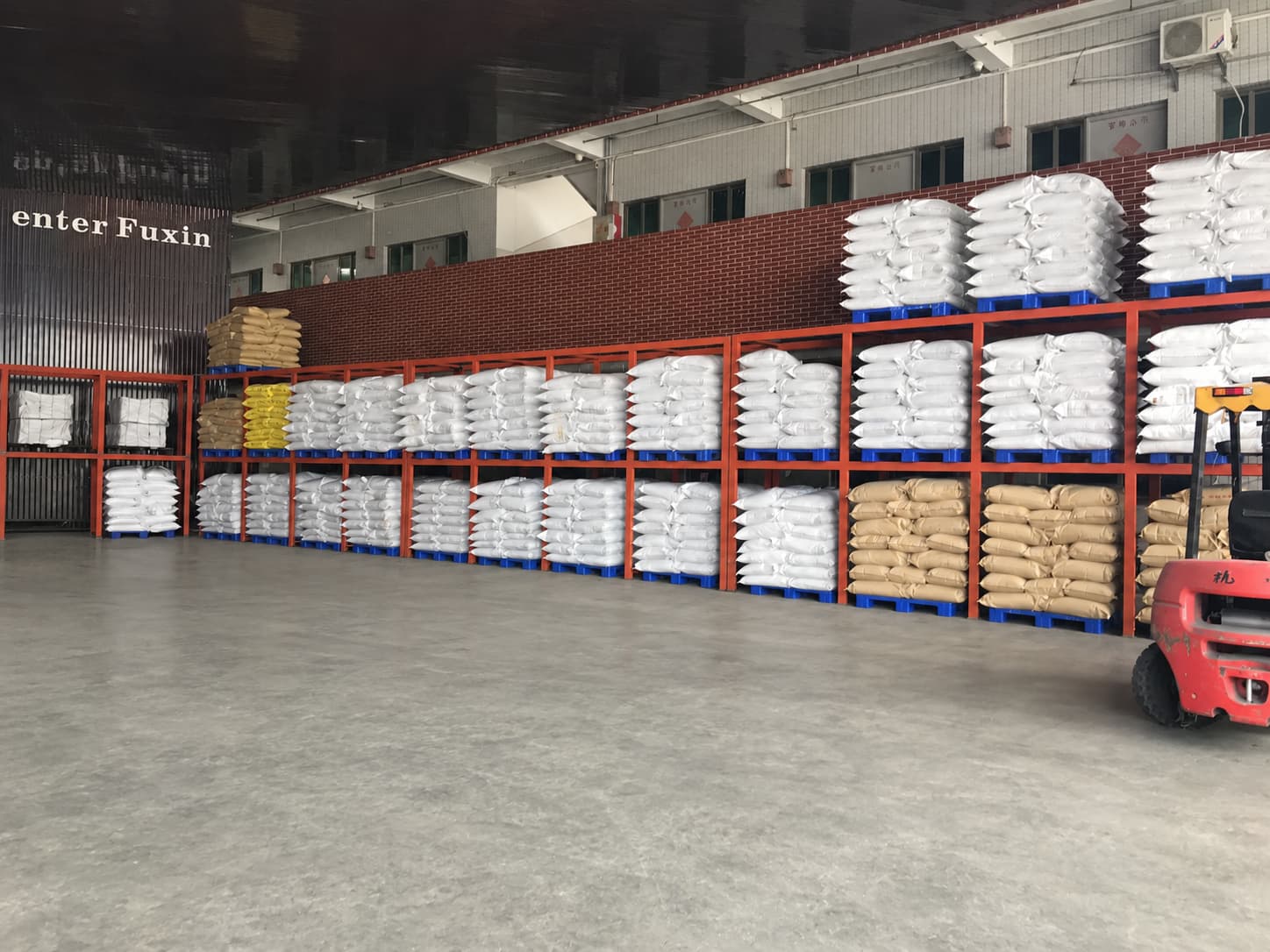
Sodium alginate is a reactive screen-printing thickener, not a dye-fixing agent. A suitable grade must give workable flow in the complete dye-and-auxiliary paste through the actual printing queue and be removable during the specified wash-off. Qualify it on the target cotton or viscose fabric using the intended screen, fixation and washing process. A clean-water viscosity result is a reference measurement; it does not establish complete-paste compatibility or finished-print quality.
This guide explains what buyers should review when sourcing sodium alginate for reactive dye printing applications.
Why Sodium Alginate Is Used as a Reactive Dye Thickener
It Helps Build Printing Paste Viscosity
In reactive dye printing, the thickener helps build the paste structure needed for preparation and application. Sodium alginate is often selected where viscosity control, paste formation, and printing paste handling are important.
The suitable grade depends on the target paste viscosity, printing method, fabric type, dye system, and production conditions. A higher viscosity grade is not always the best choice for every process.
Dissolution Behavior Affects Paste Preparation
Dissolution behavior is important during paste preparation. If sodium alginate hydrates unevenly, it may create lumps, poor paste smoothness, or filtration difficulty.
Buyers should test how the product dissolves under their own water quality, stirring method, addition method, preparation time, and formulation conditions.
Final Performance Depends on the Whole Formulation
Sodium alginate performance cannot be judged only by powder appearance or a single viscosity number. Dyes, auxiliaries, pH, water quality, fabric type, paste concentration, and storage time can all affect the final result.
This is why sample testing in the buyer’s own formulation is necessary before confirming a bulk order.
Key Specifications Buyers Should Review
Viscosity Grade and Test Method
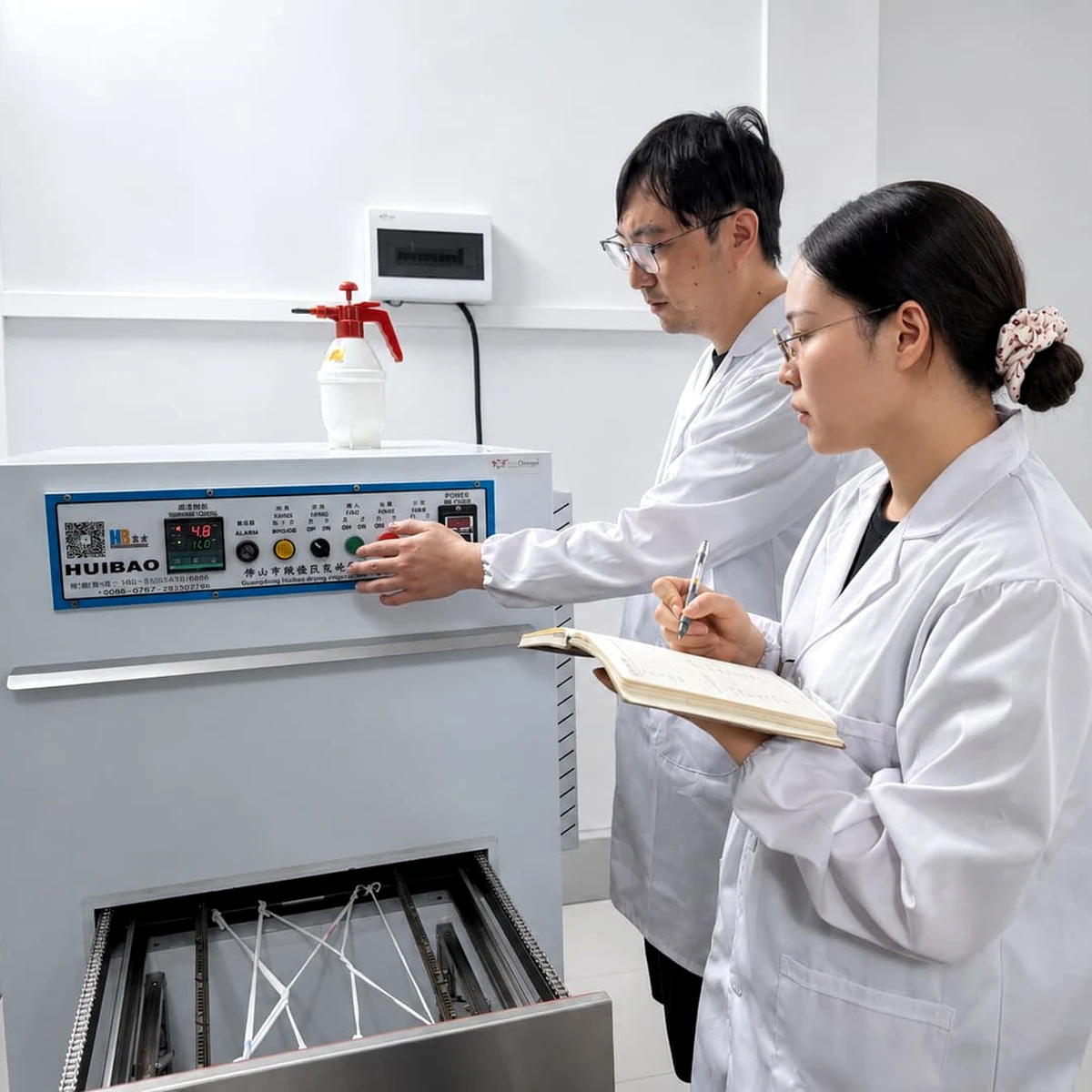
A comparable viscosity result needs the concentration and its mass basis, water quality, preparation and hydration history, sample age, temperature, instrument model, spindle, speed, container and reading time. Record the value and unit together with a suitable instrument operating range. Use the same method for the reference and candidate; the supplier’s powder-grade test and the mill’s complete working-paste test are separate records.
Without a clear test method, viscosity values from different suppliers may not be directly comparable.
Mesh Size and Dissolution Behavior
Mesh size can influence dispersion and hydration during paste preparation. However, the actual dissolution result also depends on stirring speed, water quality, addition method, and preparation time.
Buyers should not select a grade only by mesh size. The product should be tested in the real paste preparation process.
Moisture, pH and Appearance
Moisture, pH, and appearance are basic but important quality indicators. They affect storage, handling, quality control, and repeat purchasing.
These parameters should be reviewed in the TDS and confirmed through COA data for each batch.
Batch Consistency and COA Data
For repeat orders, batch consistency matters. If viscosity, moisture, or dissolution behavior changes significantly between batches, the printing factory may need to adjust the formulation again.
The COA helps buyers confirm actual batch data and compare whether the shipment remains within the agreed specification range.
Check Compatibility Through the Actual Paste Holding Period
Use this comparison record to plan a trial under your mill’s conditions; it does not specify a universal recipe. Prepare the approved reference and candidate with the same water, fabric lot and final recipe mass. Record every product code and dose; keep mixing and temperature history comparable.
| Entablado | Record and compare | What the result can establish |
|---|---|---|
| Hydrated stock | Powder-as-supplied concentration, hydration time, water quality, smoothness and retained filter residue. | Whether preparation is repeatable before dye and auxiliary effects are introduced. |
| Complete paste at preparation | Dye and auxiliary additions, addition order, pH, temperature and apparent viscosity using the same method. | The starting condition of the actual working formulation. |
| Complete paste after holding | Elapsed time under production-representative covered storage, mixing before measurement, flow and screen transfer. | Whether the paste remains usable over the required printing queue. |
| Finished fabric | Registered fine lines and solid areas after specified drying, fixation and wash-off; shade, background, handle and agreed fastness. | Application acceptance, rather than approval from paste viscosity alone. |
If a fault appears after an addition, investigate a paired trial using only addition sequences permitted by the ingredient suppliers. Keep the final composition and balancing water identical. Changing order, dosage and hold time together prevents a clear diagnosis. A stable viscosity value does not demonstrate stable dye reactivity or acceptable final color.
Published reactive-printing rheology research assesses flow and finished-print quality separately. Its specific blend results are not a recipe or performance guarantee for another commercial grade.
How to Test Sodium Alginate Before Bulk Purchase
Test in the Actual Reactive Printing Paste Formulation
Sample testing should be done in the buyer’s own reactive printing paste formulation whenever possible. Dyes, auxiliaries, water quality, pH, stirring method, paste concentration, and storage time can all affect final paste behavior.
Testing only in clean water may not be enough to confirm whether the sodium alginate grade is suitable for production.
Observe Paste Smoothness and Filtration
During sample testing, buyers should observe dissolution speed, paste smoothness, lumps, filtration behavior, viscosity stability, and application handling.
For textile printing paste, these practical observations are often as important as the basic specification data shown in the TDS.
Check Printing Trial Results Carefully
If a printing trial is arranged, buyers can review paste handling, screen passing, pattern edge condition, bleeding tendency, and washing behavior under their own production conditions.
The evaluation should be based on the buyer’s process and internal quality standard rather than broad supplier claims.
Compare Approved Sample with Bulk Shipment
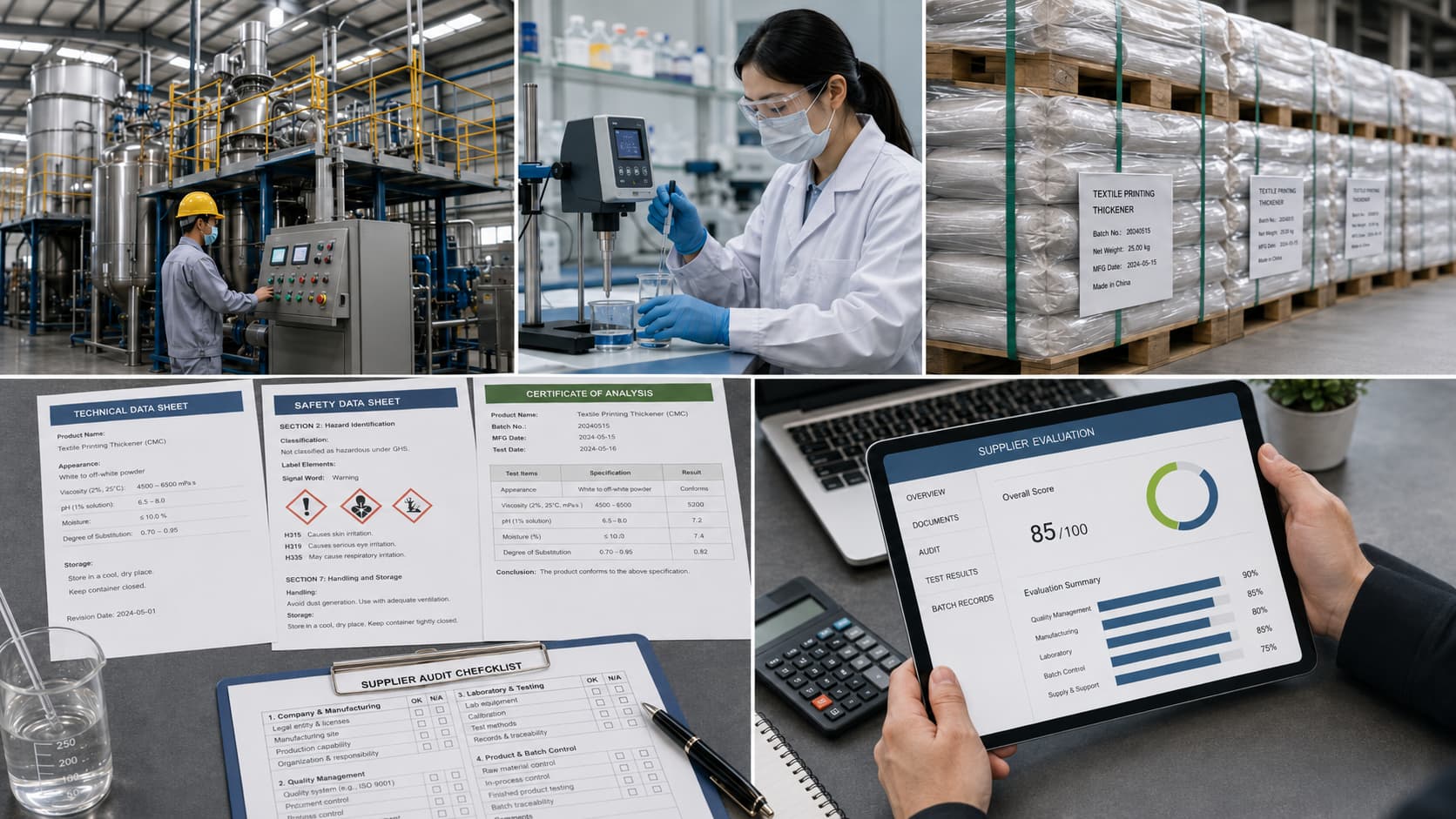
Before confirming a bulk order, buyers should ask whether the approved sample and the bulk shipment will follow the same viscosity range, mesh size, packaging format, batch traceability, and COA requirements.
This helps reduce the risk of sample-to-bulk mismatch.
Common Mistakes When Choosing Reactive Dye Thickener Sodium Alginate
Selecting Only by High Viscosity
A high viscosity grade may not automatically match every reactive printing paste system. If the viscosity is too high for the formulation, preparation and application handling may become difficult.
Buyers should select the grade according to the target paste viscosity, process requirement, and testing result.
Comparing Supplier Data Without Test Method
Viscosity values measured under different concentrations, temperatures, or instruments may show different results.
Before comparing suppliers, buyers should ask how the viscosity was tested and whether the method matches their own evaluation process.
Relying on Broad Performance or Compliance Claims
Claims such as “eco-friendly,” “compliant,” “high-performance,” or “preferred solution” should be supported by actual documents or test data when they are important to the buyer’s purchasing process.
For practical product selection, buyers should focus first on TDS, COA, sample testing, batch consistency, and application suitability.
Documents Buyers Should Request
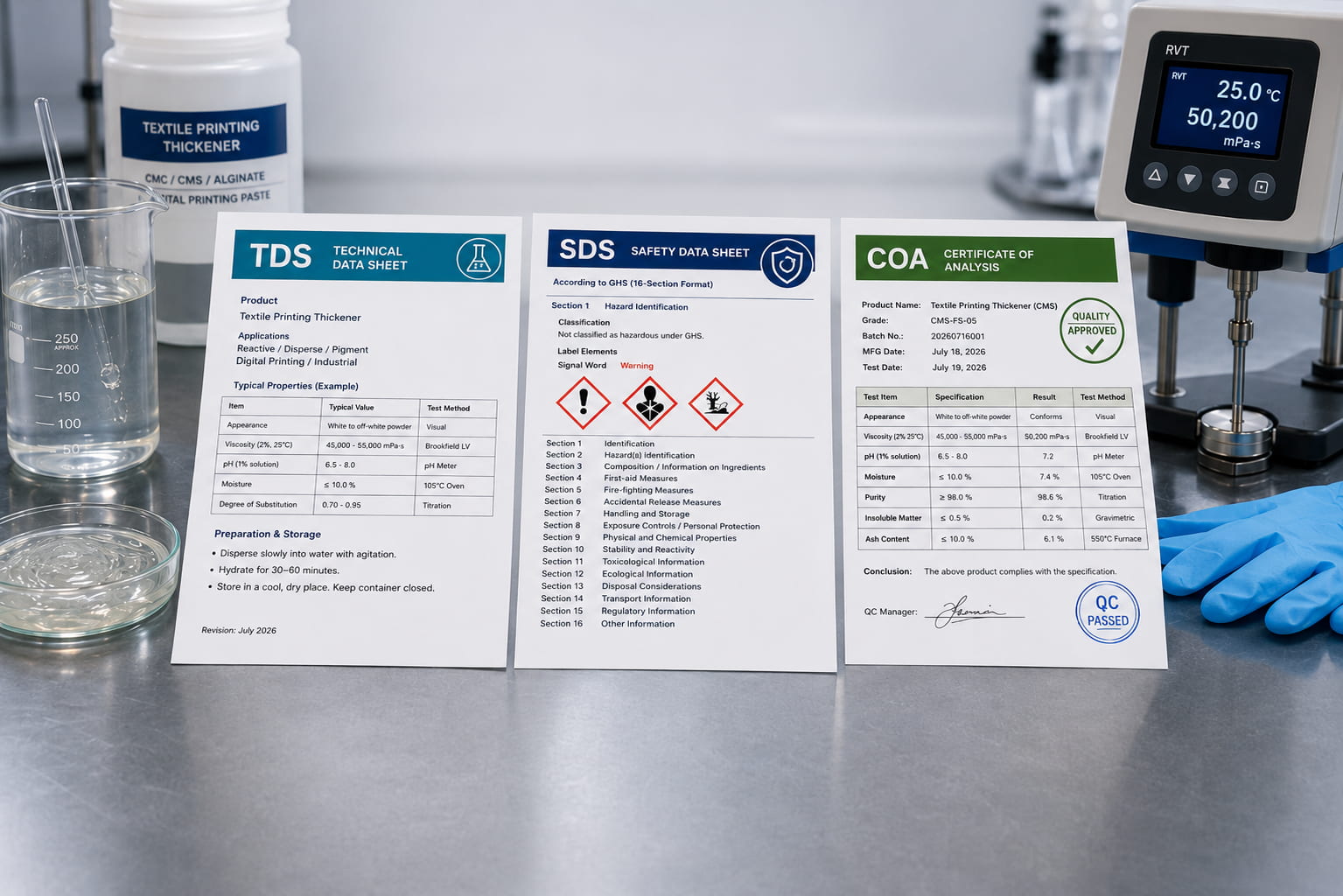
TDS for Specification Review
The Technical Data Sheet should include key parameters such as appearance, viscosity, mesh size, moisture, pH, storage conditions, and testing method.
For reactive dye thickener sodium alginate, the viscosity test method should be clearly stated.
COA for Batch Confirmation
The Certificate of Analysis confirms the actual data of a specific production batch. It is important for bulk orders, repeat purchasing, distributor supply, and internal quality control.
Buyers can compare COA records across shipments to check whether key parameters remain within the agreed range.
SDS and Export Documents When Required
For international purchasing, buyers may also need SDS, invoice, packing list, labels, and other export-related documents. The required document list may vary by destination country, product type, and internal purchasing process.
Document requirements should be confirmed before shipment to avoid delays in internal review or customs communication.

How FSX Chemical Supports Sodium Alginate Buyers
FSX Chemical supplies sodium alginate and related textile printing chemicals for textile printing factories, dyeing and printing mills, and chemical distributors.
We do not suggest confirming reactive dye thickener sodium alginate only by price, product name, or broad supplier claims. The recommended grade should be reviewed through technical documents and tested in the buyer’s own formulation before bulk purchase.
Mga Susunod na Hakbang
- Request a TDS — review viscosity range, mesh size, pH, moisture, appearance, storage conditions, and testing method.
- Request a COA — confirm whether batch data matches the agreed specification range before shipment.
- Ask for Grade Matching — share your reactive printing process, fabric type, target viscosity, current formulation, and existing product grade if available.
- Humiling ng halimbawa — test the recommended sodium alginate grade in your own paste preparation and printing conditions before confirming bulk orders.
- Confirm Packaging and Export Documents — check bag size, labels, batch traceability, SDS, invoice, packing list, and other required documents before shipment.
- Request sample and grade matching — send the current grade, fabric, reactive-printing route, complete recipe basis and the specific trial result you need to improve. Makipag-ugnayan sa FSX Chemical to discuss the next evaluation step.