Compound Synthetic Thickener Systems: When to Blend Acrylic Thickener with CMC or CMS for Pigment Printing
Acrylic thickener can be blended with selected CMC or CMS grades when a formula needs...
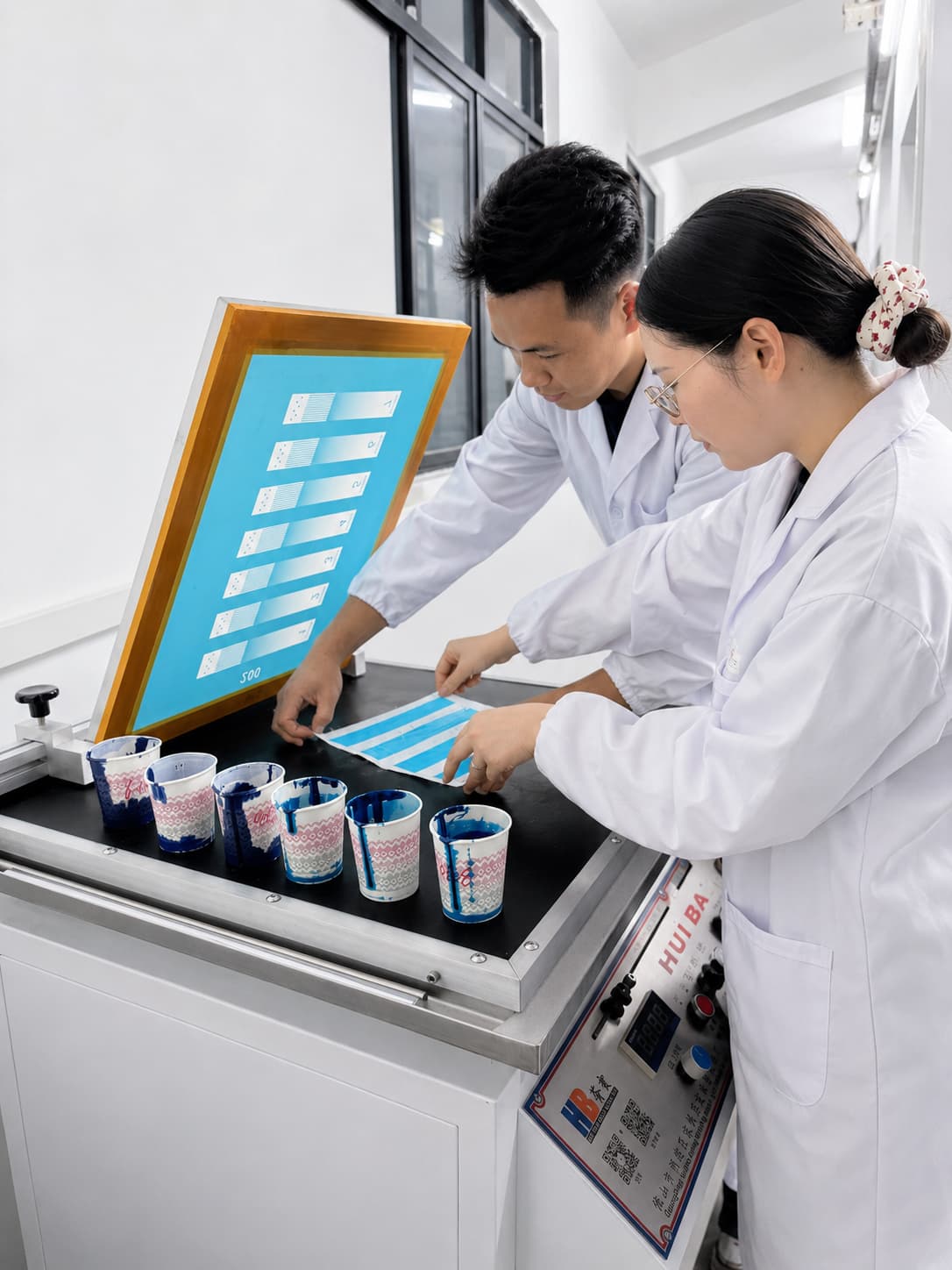
Compound synthetic thickener systems can be useful when one acrylic thickener does not provide the best balance of low-shear body, shear thinning, recovery, water retention, screenability, fabric hand and total formulation cost. In selected pigment-printing formulas, a small proportion of Carboxymethyl Cellulose (CMC) or Carboxymethyl Starch (CMS) can be evaluated as a supporting rheology component while acrylic thickener remains the main low-solids synthetic route. The purpose is not to replace acrylic thickener by weight or to blend polymers because one raw material is cheaper. A successful compound system gives each polymer a defined function, controls total polymer solids, remains compatible with pigment and binder, and is validated through complete-paste rheology, holding stability, screen printing, rubbing fastness and finished fabric hand.
When Should Acrylic Thickener Be Blended with CMC or CMS?
A compound system is worth testing when the acrylic-only reference paste is commercially acceptable but still has one clearly defined weakness.
Typical reasons to investigate a blend include:
Insufficient low-shear body at the desired acrylic dosage
A need to modify penetration or water retention
A need to change high-shear / low-shear balance
A cost target that cannot be reached by acrylic dosage adjustment alone
A desire to reduce stringing or alter recovery in a specific formula
A need for a different paste-body profile on a particular fabric or screen
The decision logic should be:
Define the Acrylic-Only Weakness → Select CMC or CMS for a Specific Function → Build a Controlled Blend Ladder → Test the Complete Pigment Paste → Print → Evaluate Fastness and Hand → Compare Total Cost in Use
Do not begin with:
“Replace 30% of the acrylic with the cheaper polymer.”
A compound thickener should be designed around performance first and cost second.
What Is a Compound Synthetic Thickener System?
A compound thickener combines two or more rheology-control polymers in one printing formulation.
In the context of this article, the system contains:
Acrylic Synthetic Thickener
plus selected:
سی ایم سی
سی ایم ایس
or, in some development programs, both CMC and CMS
The components are not expected to perform identical jobs.
A well-designed blend uses:
Different Polymer Functions → One Application-Specific Rheology Profile
FSX Chemical’s current textile-thickener guidance also positions CMC and CMS as possible components in selected compound systems rather than universal direct replacements.
Why Blend Instead of Using One Thickener?
No polymer automatically gives the ideal combination of:
کم خوراک
کم برش جسم
High-shear flow
بحالی
پانی کا جمع ہونا
الیکٹرولائٹ برداشت
بائنڈر مطابقت
Soft hand
Low cost
Mixed-thickener studies in textile printing show that changing the thickener combination can change paste add-on, penetration and rheology.
Those published results are often from dye-printing systems rather than pigment printing, so they should not be copied directly into a pigment formula.
They support a more general principle:
Changing Polymer Ratio Changes the Flow System.
For pigment printing, the blend must therefore earn its place through the actual pigment / binder trial.
When Should You Not Use a Compound System?
Do not add CMC or CMS simply because:
The powder price is lower.
The acrylic thickener looks expensive per kilogram.
The acrylic-only paste already performs well.
A competitor uses a mixed thickener.
A blend can add:
More preparation steps
Powder hydration risk
More polymer solids
More filtration risk
More batch-to-batch variables
If the acrylic-only system already gives:
Stable rheology
Clean screen running
Low working dosage
Soft hand
درکار مضبوطی
then a compound route should only be adopted if it proves a measurable commercial advantage.
What Role Should Acrylic Thickener Play?
Acrylic thickener is usually the main low-solids rheology-control component in conventional pigment printing.
Depending on grade, it can provide:
Efficient viscosity development
تیز شیئر پتلا پن
Controlled structural recovery
Low working dosage
Good pigment / binder compatibility in matched systems
In a compound system, acrylic thickener often remains responsible for the core:
Screen-Printing Rheology
while CMC or CMS is added to shift one or more secondary properties.
This is generally a safer development logic than asking CMC or CMS to replace the acrylic route completely without reformulation.
What Role Can CMC Play?
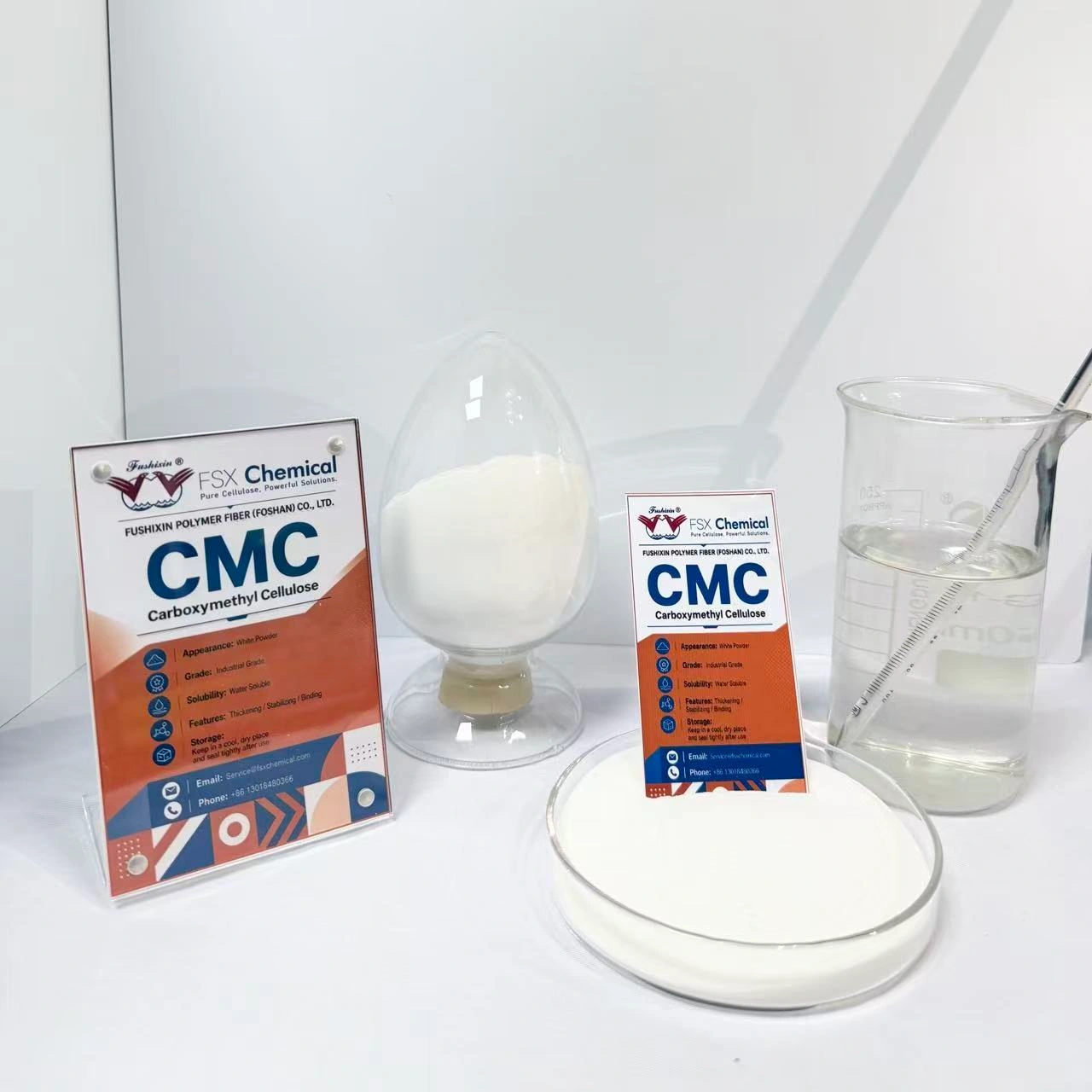
CMC is a water-soluble cellulose derivative available in a wide range of viscosity, degree-of-substitution and purity grades.
In selected pigment-printing compound systems, CMC may be evaluated for:
Paste-body adjustment
پانی کا جمع ہونا
Low-shear viscosity support
Penetration control
Cost-performance adjustment
But CMC is an anionic polymer and its behavior can change with:
الیکٹرولائٹس
Calcium / magnesium
Binder ionicity
Cationic fixers
پی ایچ
FSX Chemical’s current CMC pigment-printing guidance therefore recommends complete-paste testing rather than selection from pure-water viscosity alone.
CMC should be treated as a supporting rheology polymer—not as the pigment binder.
What Role Can CMS Play?
CMS is a modified starch derivative and is itself a product family rather than one universal material.
Selected CMS grades may be evaluated in compound pigment-printing systems for:
Viscosity support
Paste-body modification
پانی کا جمع ہونا
Suspension support
Cost-performance adjustment
FSX Chemical’s current CMS guidance also identifies blended-thickener systems as a relevant development route.
However, CMS behavior depends on:
Starch source
متبادل کی ڈگری
Molecular structure
Viscosity grade
ہائیڈریشن
چھانٹائی
لہٰذا:
CMS Grade A ≠ CMS Grade B.
Use an application-specific grade and verify it with the actual pigment / binder formula.
CMC vs. CMS as a Secondary Blend Component
انتخابی علاقہ
سی ایم سی
سی ایم ایس
Base polymer
Cellulose derivative
Starch derivative
Possible blend role
Body, water retention, penetration / viscosity adjustment
Verify the blend at near-final viscosity, where tank circulation may be most difficult.
Batch QC for a Compound Thickener System
After commercial approval, QC should monitor both the individual components and the blend performance.
Useful controls include:
Acrylic solids / pH / batch identity
CMC or CMS identity / moisture / viscosity where specified
Standard hydration result
Compound-paste viscosity
استحکام برقرار رکھنا
فلٹریشن کا باقی ماندہ مادہ
A standardized reference blend is often more predictive than individual raw-material COAs alone.
Periodically confirm the blend through the actual pigment-printing application.
Common Compound-Thickener Mistakes
1. Blending Only to Reduce Raw-Material Price
Lower raw-material cost can be lost through higher dosage, preparation or printing defects.
2. Treating CMC or CMS as a Weight-for-Weight Acrylic Replacement
The polymers have different solids, rheology and preparation behavior.
3. Comparing Water Viscosity Only
Pigment, binder, electrolyte and shear can change the blend strongly.
4. Ignoring Total Polymer Solids
More powder polymer can worsen fabric hand even if acrylic dosage falls.
5. Skipping Full Hydration
Incomplete CMC/CMS hydration creates false viscosity and filter residue.
6. Changing Polymer Ratio and Binder at the Same Time
The source of performance change becomes impossible to identify.
7. Assuming Mixed Polymers Always Create Synergy
Blend rheology can be synergistic, additive or antagonistic.
8. Approving from a Beaker Without Screen Printing
Machine shear, release and deposit must be verified.
حل مسائل کی جدول
مشاہدہ شدہ مسئلہ
چیک کرنے کے لیے اولین متغیرات
فرض نہ کریں
Blend viscosity is higher than expected
Total polymer solids, hydration, synergy, pH
Higher viscosity means better compound system
Blend viscosity is lower than either reference
pH, electrolytes, polymer interaction, dilution
The CMC/CMS grade is defective
Screen release becomes worse
Elasticity, recovery, polysaccharide dosage
Same Brookfield viscosity means same rheology
Fabric hand becomes harder
Total polymer solids, paste add-on, binder
Lower acrylic percentage always improves hand
Gel / lumps appear
Hydration, local pH, addition order, fixer
The polymers are universally incompatible
Lab blend works but production filters block
Hydration, mixing, filtration, scale-up
Formula percentage alone defines performance
Rubbing falls after blending
بائنڈر کی تقسیم، شفا یابی، پیسٹ کا جمع
More CMC/CMS will fix fastness
Cost/kg falls but cost/meter rises
Dosage, preparation, speed, rejects
Cheaper blend is automatically more economical
آپ کو سپلائر کو کون سی معلومات بھیجنی چاہئیں؟
For useful acrylic + CMC/CMS compound-thickener development, provide:
موجودہ ایکریلک گاڑھا کرنے والا / ٹی ڈی ایس
Current acrylic dosage
Target CMC or CMS grade if already selected
CMC DS / viscosity or CMS specification where available
Pigment product and dosage
بائنڈر گریڈ / خوراک
فکسر / معاون
حتمی پیسٹ کا پی ایچ
سانچاقی اور مکمل آزمائشی طریقہ
Water hardness / conductivity
Fabric composition / construction
فلیٹ یا گھومنے والی اسکرین
وقت پکڑنا
Current weakness: cost, body, penetration, screenability, hand or stability
FSX کیمیکل اس معلومات کو کے ذریعے استعمال کر سکتا ہے۔ نمونے اور ملاپ to decide whether the next trial should use acrylic-only optimization, an acrylic + CMC route or an acrylic + CMS route.
How Should a Mill Develop a Compound Thickener for Pigment Printing?
A practical development chain is:
Define the Acrylic-Only Reference → Identify One Specific Weakness → Choose CMC or CMS for a Defined Role → Standardize Hydration / Activation → Build a Blend-Ratio Ladder → Normalize Polymer Solids → Test Complete Paste → Hold / Filter → Print → Cure → Compare Fastness / Hand → Scale → Lock QC
اہم اصول یہ ہیں:
Compound thickener development should solve a defined rheology or cost problem, not simply replace acrylic with a cheaper polymer.
Acrylic thickener usually remains the main low-solids screen-rheology component, while CMC or CMS acts as a supporting modifier in selected formulas.
CMC and CMS are product families; grade, hydration, substitution, purity and electrolyte response matter.
Blended polymers can show synergistic, additive or antagonistic rheology, so blend performance must be measured rather than assumed.
Total polymer solids, binder compatibility, filtration, holding stability and fabric hand are as important as initial viscosity.
The best compound system is the blend that improves the required production property and Total Cost in Use without sacrificing screenability, fastness or finished-fabric quality.
اکثر پوچھے جانے والے سوالات
1. Can acrylic thickener be blended with CMC for pigment printing?
Yes, in selected formulations. CMC can be evaluated as a supporting rheology component for body, water retention or penetration control, but the complete pigment/binder system must be tested.
2. Can acrylic thickener be blended with CMS?
Yes, selected CMS grades can be evaluated in compound systems for viscosity, body, water retention, suspension or cost-performance adjustment. Grade selection and hydration are important.
3. Is CMC better than CMS for a compound pigment thickener?
Neither is universally better. CMC and CMS have different polymer structures, hydration, film and electrolyte behavior. Select according to the weakness that needs correction.
4. Can CMC or CMS directly replace acrylic thickener by weight?
Not as a general rule. Their product solids, required dosage, rheology and preparation are different. Use a controlled partial-substitution matrix.
5. Why can a blend have lower viscosity than either thickener alone?
Polymer interactions, pH, electrolytes, dilution and associative effects can create antagonistic rheology. Mixed-polymer viscosity is not always additive.
6. Does adding CMC or CMS always reduce cost?
No. Include dosage, hydration, mixing, filtration, machine efficiency, rejects and hand in Total Cost in Use.
7. Can a compound thickener improve fabric hand?
Potentially, if it allows a lower total polymer deposit or better paste add-on. But excessive CMC/CMS solids can also make the print heavier or stiffer.
8. Why does a compound paste form lumps?
Common causes include incomplete CMC/CMS hydration, local acrylic over-neutralization, poor addition order, electrolyte shock or cationic fixer interaction.
9. Should I compare blend ratios by product weight or active solids?
Record both. Product-weight comparison is practical for production, while active-polymer solids help explain rheology efficiency and hand.
10. Does CMC or CMS improve rubbing fastness?
They are not the main pigment binder. Any fastness change should be evaluated through binder distribution, curing and complete-paste compatibility.
11. What is the best first blend ratio?
There is no universal ratio. Start from the acrylic-only reference and introduce the secondary polymer in controlled partial-substitution steps appropriate to the actual commercial grades.
12. What should I send FSX Chemical for compound-thickener matching?
Send the current acrylic thickener, CMC/CMS data, pigment, binder, fixer, full or simplified formula, viscosity method, water quality, fabric, screen route, holding time and the specific performance or cost target.
Develop a Compound Thickener Only When Each Polymer Has a Clear Job
If your acrylic pigment-printing thickener gives acceptable results but you want to adjust paste body, penetration, water retention, working dosage or Total Cost in Use, FSX Chemical can help structure a controlled acrylic + CMC or acrylic + CMS trial.
مفید تکنیکی جائزے کے لیے بھیجیں:
آپ کے موجودہ ایکریلک تھکنر کے نمونے کا TDS یا COA
Current acrylic dosage
CMC or CMS grade / TDS if already selected
Pigment product and dosage
بائنڈر گریڈ اور خوراک
Fixer / auxiliary package
حتمی پیسٹ کا پی ایچ
Complete viscosity test method
Water hardness / conductivity
Fabric and screen route
وقت پکڑنا
Your current technical or cost target
کے ساتھ شروع کریں نمونے اور ملاپ for a controlled compound-thickener comparison.
A successful compound thickener is not the formula with the highest CMC or CMS replacement percentage. It is the system in which acrylic, CMC or CMS each contributes a defined rheological function, and the complete paste delivers stable screen printing, acceptable fastness and hand, and a lower practical Total Cost in Use.
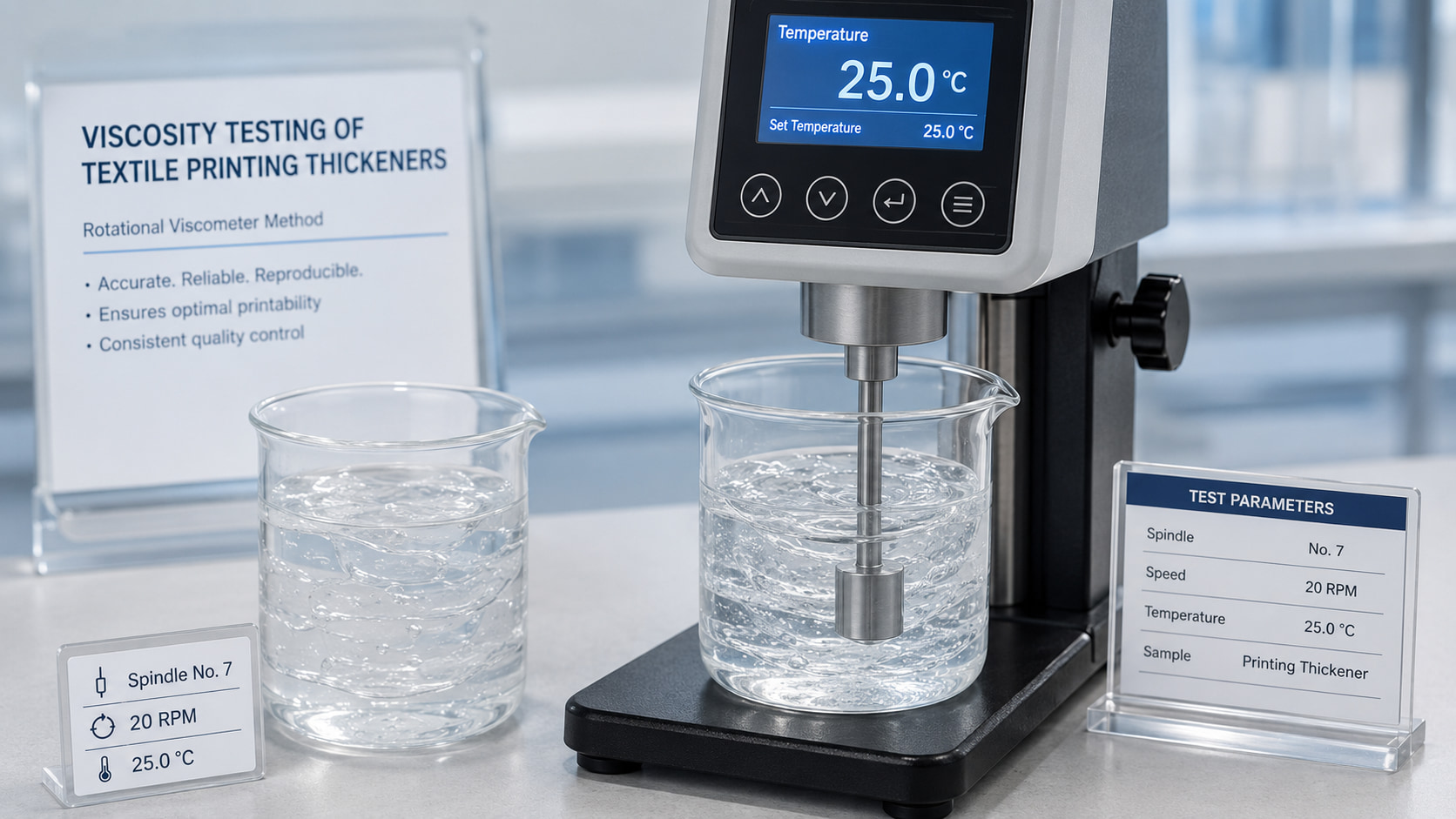
جانیں کہ ٹیکسٹائل پرنٹنگ کے گاڑھا کرنے والے کے وسکوسیٹی اقدار کا موازنہ کیوں نہیں کیا جا سکتا جب تک کہ ارتکاز، درجہ حرارت، آلہ، اسپنڈل، رفتار، تیاری کا طریقہ اور ٹیسٹ کا وقت یکساں نہ ہوں۔.
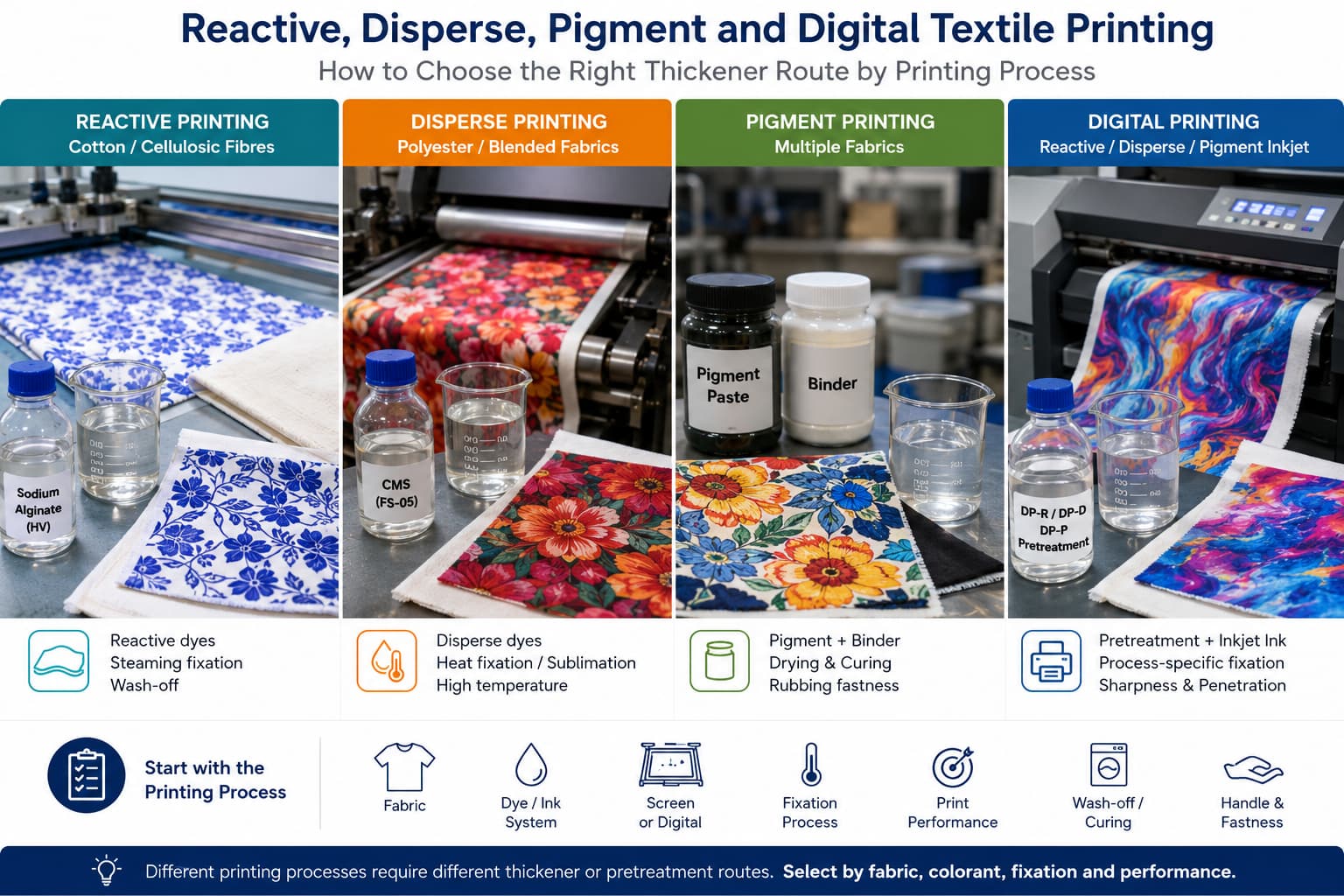
سیکھیں کہ ردعمل کرنے والی، منتشر، رنگین اور ڈیجیٹل ٹیکسٹائل پرنٹنگ کے لیے کپڑے، رنگ یا سیاہی کی بنیاد پر گاڑھا کرنے والا مادہ اور پری ٹریٹمنٹ کے راستے کیسے منتخب کیے جائیں، تاکہ فکسیشن، دھونے کے قابل ہٹانے اور پرنٹ کے معیار کی ضروریات پوری ہوں۔.
ٹیکسٹائل پرنٹنگ کے لیے CMC، CMS، سوڈیم الگینٹ اور ڈیجیٹل پرنٹنگ پیسٹ کا موازنہ کریں۔ جانیں کہ ہر طریقہ کار ری ایکٹیو، ڈسپرز، پگمنٹ اور ڈیجیٹل عمل کے لیے کیسے موزوں ہے، اور خریداروں کو سیمپل ٹیسٹنگ، گریڈ میچنگ اور بڑے پیمانے پر خریداری سے پہلے کن باتوں کا جائزہ لینا چاہیے۔.
سوڈیم الگینٹ ردعمل پذیر پرنٹنگ پیسٹ کے لیے ایک مستحکم اور دھونے کے قابل گاڑھا کرنے والا مادہ ہے، جو ٹیکسٹائل پرنٹنگ میں وسیع پیمانے پر استعمال ہوتا ہے۔ خریداری سے پہلے چپچپا پن کے گریڈ، خالصت، اور استعمال کے لیے موزونیت کا جائزہ لینے کا طریقہ سیکھیں، اور جانیں کہ FSX کیمیکل عالمی خریداروں کو تکنیکی ڈیٹا اور نمونوں کے ساتھ کیسے معاونت فراہم کرتا ہے۔.
کاربوکسی میتھل سیلولوز (CMC) ٹیکسٹائل کی پرنٹنگ، سائزنگ اور رنگائی کے عمل میں وسیع پیمانے پر استعمال ہوتا ہے۔ یہ رہنما بتائے گا کہ CMC گریڈز کا جائزہ کیسے لیا جائے، کون سے پیرامیٹرز سب سے زیادہ اہم ہیں، اور FSX کیمیکل خریداری کے فیصلوں میں کس طرح معاونت کر سکتا ہے۔.
کاربوکسی میتھل سیلولوز کو پانی پر مبنی سیاہیوں، گراور پرنٹنگ اور انک جیٹ پری ٹریٹمنٹ میں گاڑھا کرنے اور استحکام بخشنے کے لیے استعمال کیا جاتا ہے۔ یہ رہنما خریداری کی ٹیموں کے لیے اہم گریڈ پیرامیٹرز اور حصول کے دوران غور طلب امور کا احاطہ کرتی ہے۔.
CMC پر مبنی پرنٹنگ پیسٹ کو رنگدار، ردعمل پذیر اور ڈیجیٹل ٹیکسٹائل پرنٹنگ میں استعمال کیا جاتا ہے۔ یہ رہنما بتاتا ہے کہ کون سے پیرامیٹرز اہم ہیں، سپلائرز کا موازنہ کیسے کریں اور بڑے آرڈر دینے سے پہلے کیا درخواست کریں۔.
سوڈیم الگینٹ اور سی ایم سی دونوں ٹیکسٹائل پرنٹنگ میں گاڑھا کرنے کے لیے استعمال ہوتے ہیں، لیکن یہ مختلف رنگ ساز نظاموں اور عمل کے حالات کے لیے موزوں ہیں۔ یہ رہنما اہم فرق اور ہر ایک کے استعمال کے اوقات کی وضاحت کرتی ہے۔.
خوراکی اور صنعتی گریڈ کے CMC کی بنیادی کیمسٹری ایک جیسی ہوتی ہے، لیکن خالصت، DS کی حد اور ضابطہ جاتی تقاضوں میں ان میں نمایاں فرق ہوتا ہے۔ یہ رہنما اہم فرق بیان کرتی ہے اور بتاتی ہے کہ غلط گریڈ کے استعمال سے پیداوار میں مسائل کیوں پیدا ہوتے ہیں۔.
ری ایکٹیو ڈائی ٹیکسٹائل پرنٹنگ میں گریڈ کے انتخاب کی طرح پیسٹ کی تیاری بھی اتنی ہی اہم ہے۔ یہ رہنما سوڈیم الگنیٹ کے تحلیل کے طریقے، استعمال کے لحاظ سے ارتکاز کی حدود، ذخیرہ کرنے کے حالات، اور تیاری کے عام مسائل کے حل کا طریقہ بیان کرتی ہے۔.
رنگیت کے ٹھہراؤ کی شرح براہِ راست رنگ کی پیداوار، دھونے کی مضبوطی، اور ردعمل دار رنگ چھپائی میں گندے پانی کے بوجھ کو متاثر کرتی ہے۔ یہ رہنما بتاتا ہے کہ سوڈیم الگنیٹ رنگیت کے ٹھہراؤ میں کس طرح مدد کرتا ہے، کون سے پیسٹ کے پیرامیٹرز ٹھہراؤ کی شرح کو متاثر کرتے ہیں، اور پیداوار میں کم ٹھہراؤ کے مسائل کو کیسے حل کیا جائے۔.
سوڈیم الگینیٹ کے ذرات کے سائز (میش) سے یہ اثر پڑتا ہے کہ پاؤڈر کتنی تیزی سے حل ہوتا ہے، کتنی یکساں طور پر ہائیڈریٹ ہوتا ہے، اور اس سے بننے والی پیسٹ سکرین پرنٹنگ میں کیسی کارکردگی دکھاتی ہے۔ یہ رہنما ٹیکسٹائل پرنٹنگ پیسٹ کے اطلاقات کے لیے میش کی وضاحت کے عملی مضمرات کی وضاحت کرتی ہے۔.
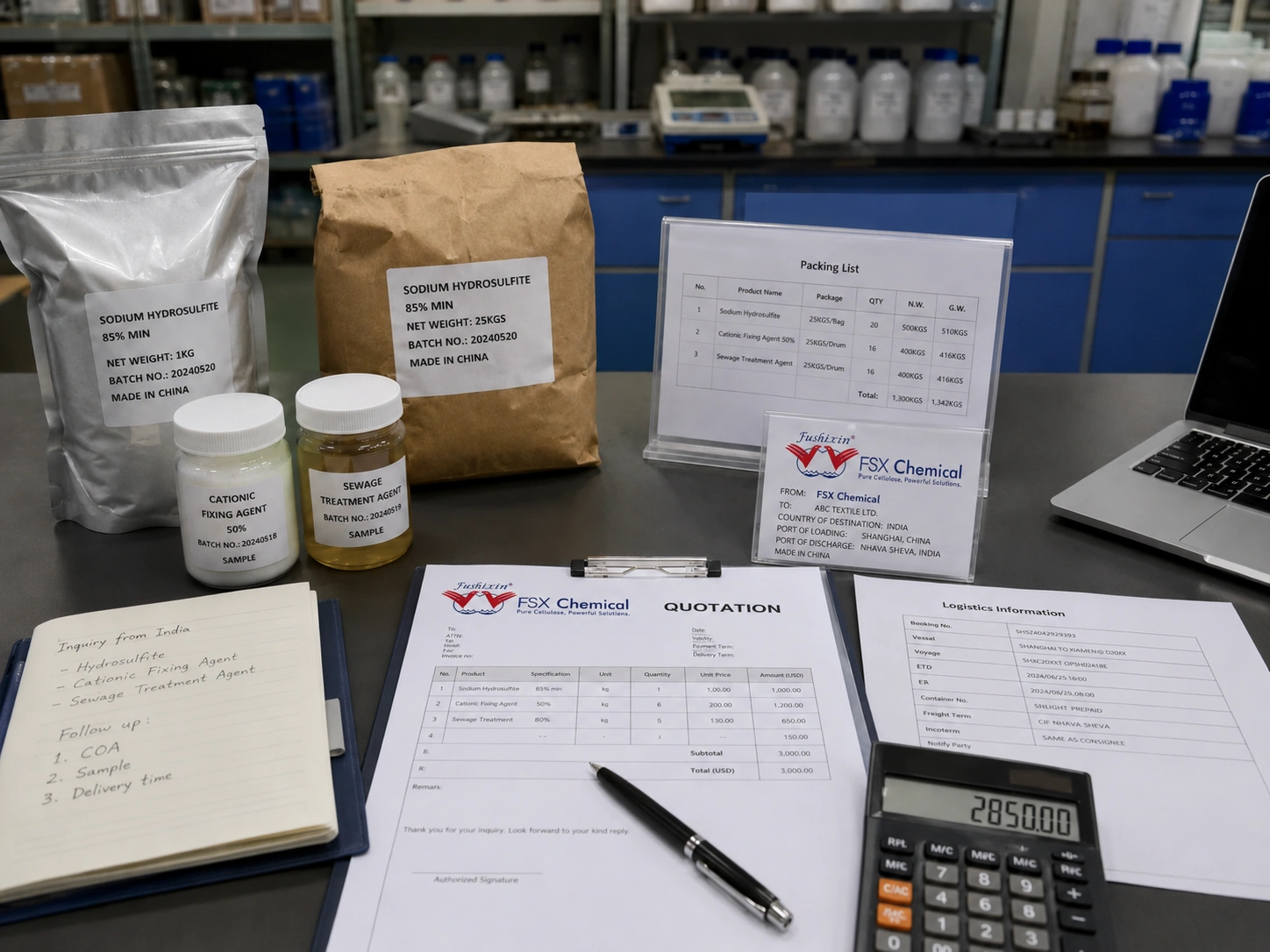
پروڈکٹ کا نام، استعمال، مقدار، منزل اور کوئی بھی TDS، نمونہ کی تصویر یا دستاویز جو آپ کے پاس موجود ہو، فراہم کریں۔ FSX کیمیکل اس معلومات کا جائزہ لے گا اور کوٹیشن، نمونہ کی مطابقت یا پروڈکٹ کے انتخاب کے لیے اگلا قدم تجویز کرے گا۔.
مصنوعات کی معلوماتمصنوعہ کا نام، گریڈ، ماڈل، لیبل کی تصویر یا سپلائر کا حوالہ.
دستیاب دستاویزاتٹی ڈی ایس، ایس ڈی ایس، سی او اے، نمونہ کی تصویر، مصنوعات کی فہرست یا ٹیسٹ کے اعداد و شمار۔.
آرڈر کی تفصیلاتمتوقع مقدار، پیکیجنگ، منزل ملک، بندرگاہ یا تجارتی اصطلاح۔.
درخواست یا مسئلہٹیکسٹائل پرنٹنگ کا عمل، فارمولیشن کی ضرورت، موجودہ مسئلہ یا ہدف کارکردگی۔.