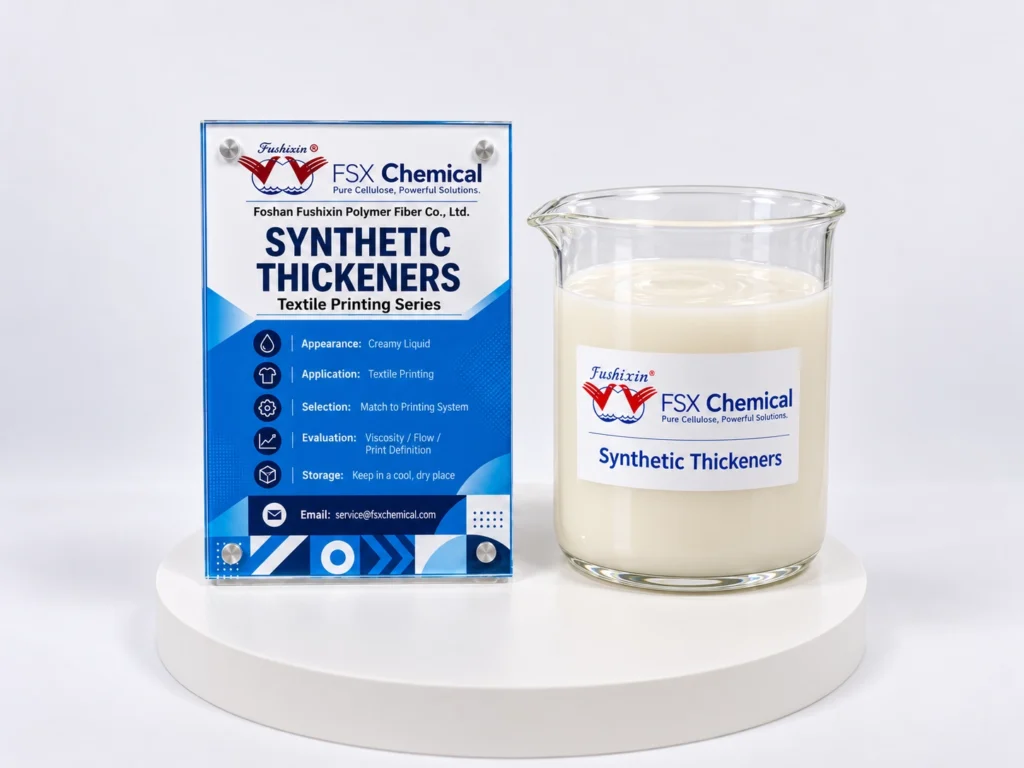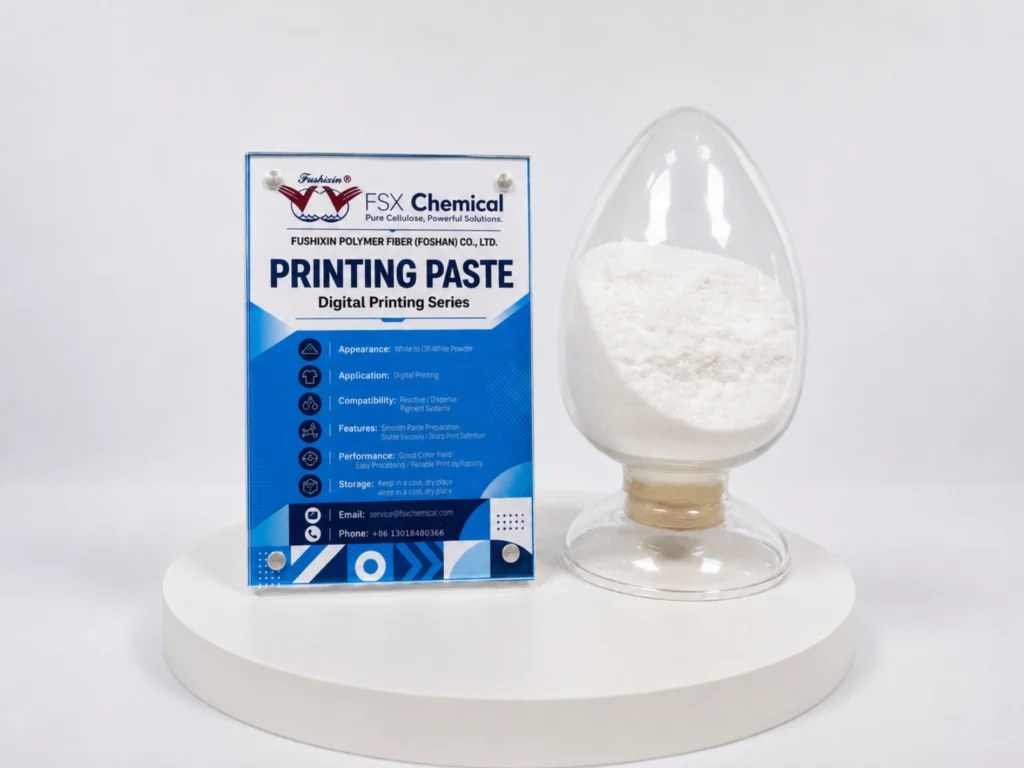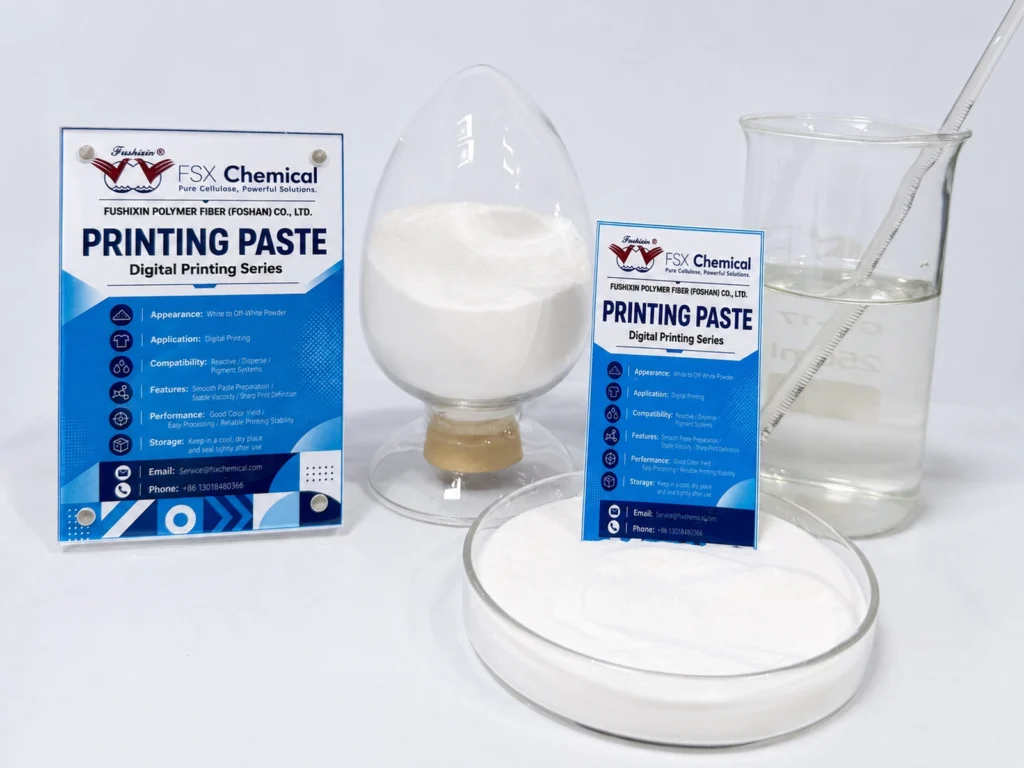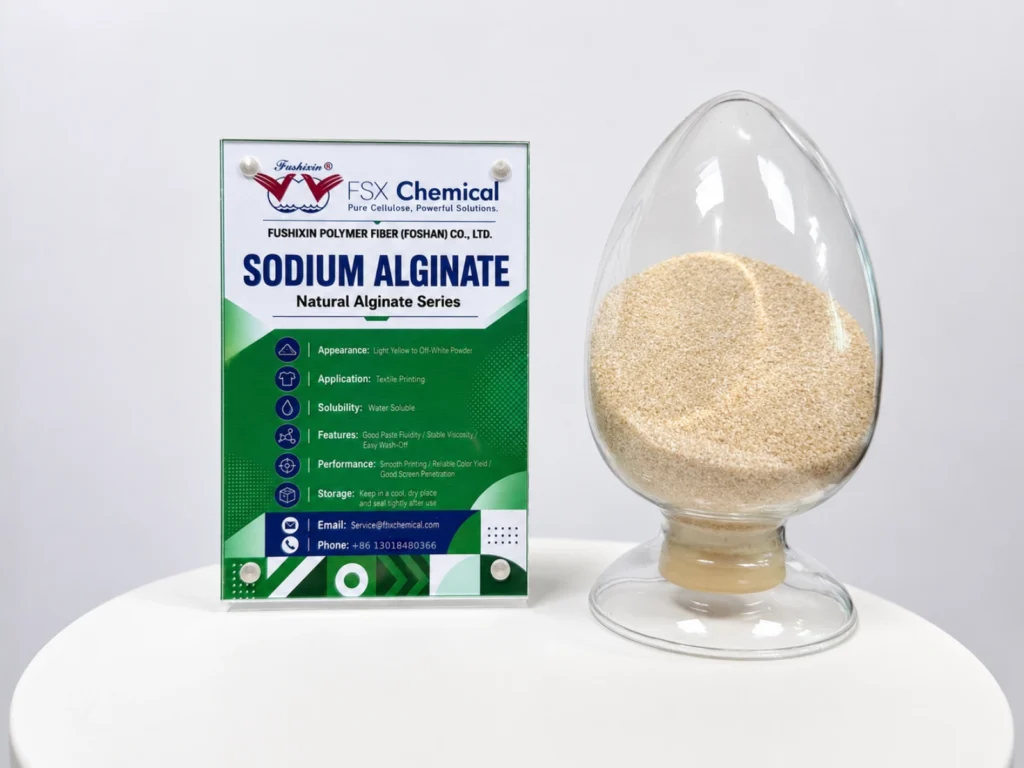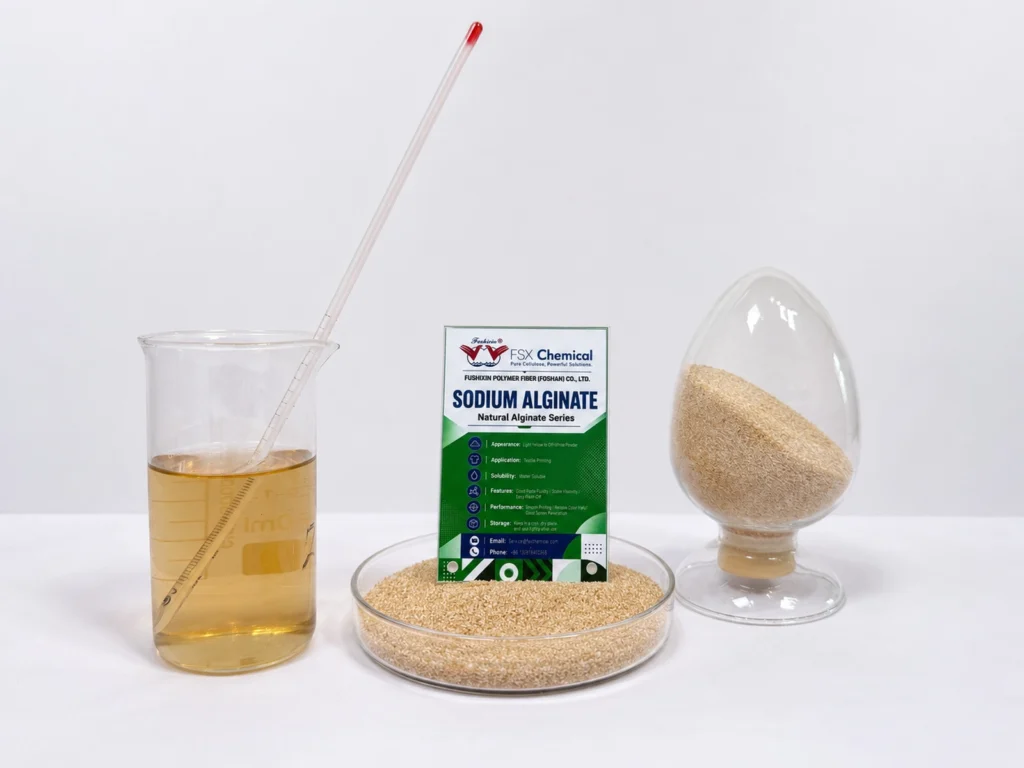















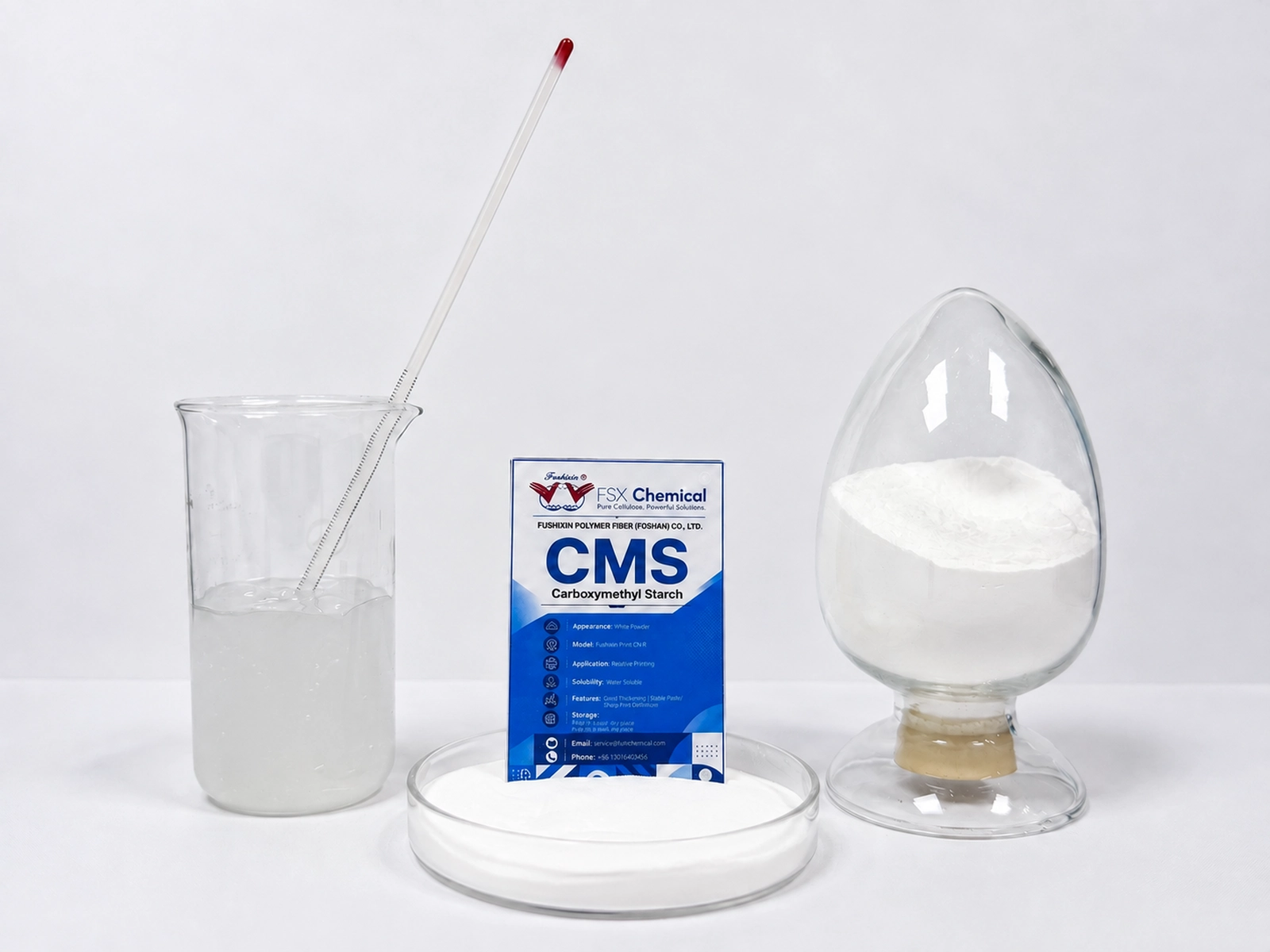
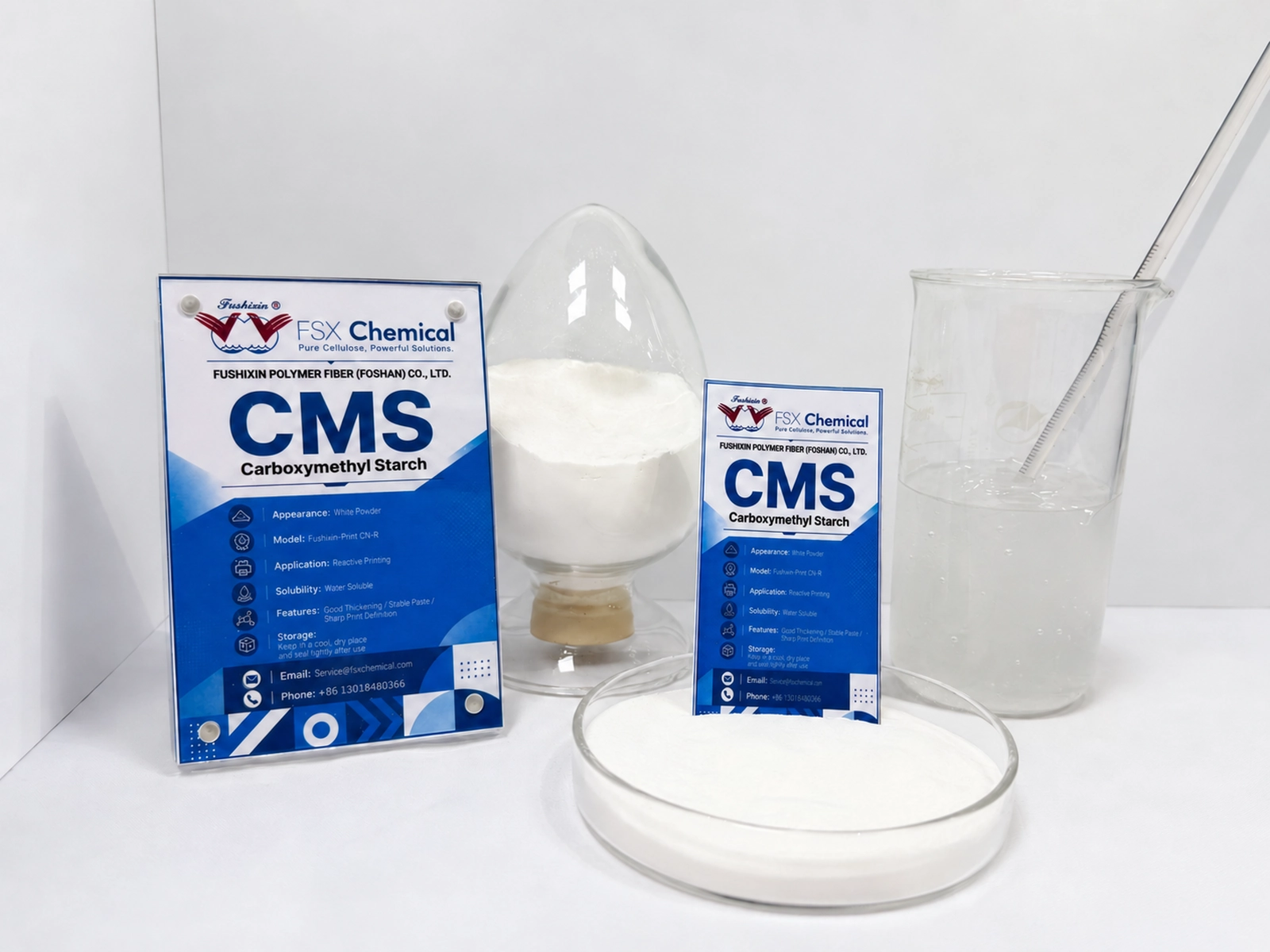
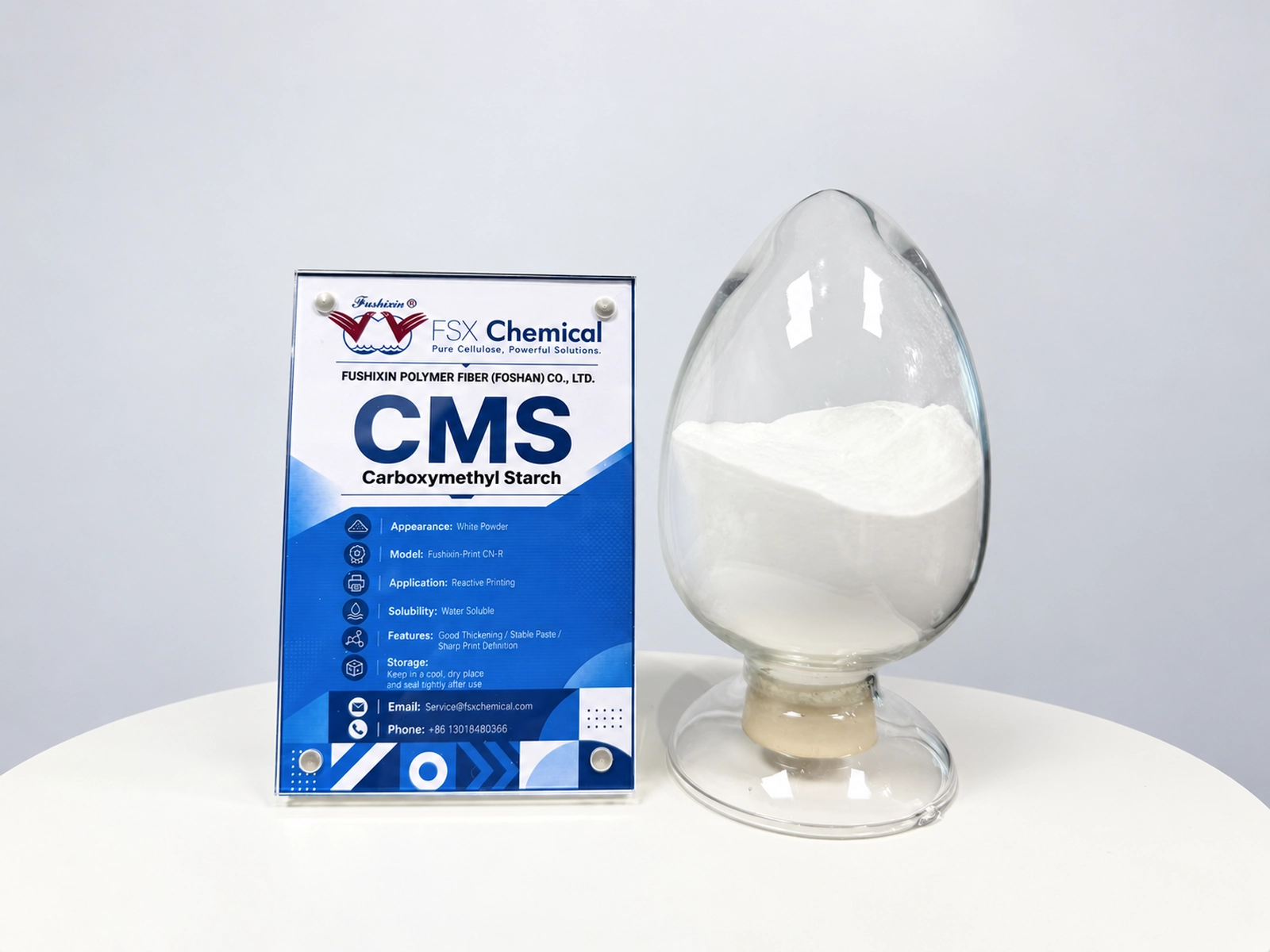
ری ایکٹیو پرنٹنگ گاڑھا کرنے والا · سوڈیم الگینیٹ کا متبادل
ایک ردعمل پذیر پرنٹنگ گاڑھا کرنے والے مادے کا سوڈیم الگینیٹ کے متبادل کے طور پر جائزہ
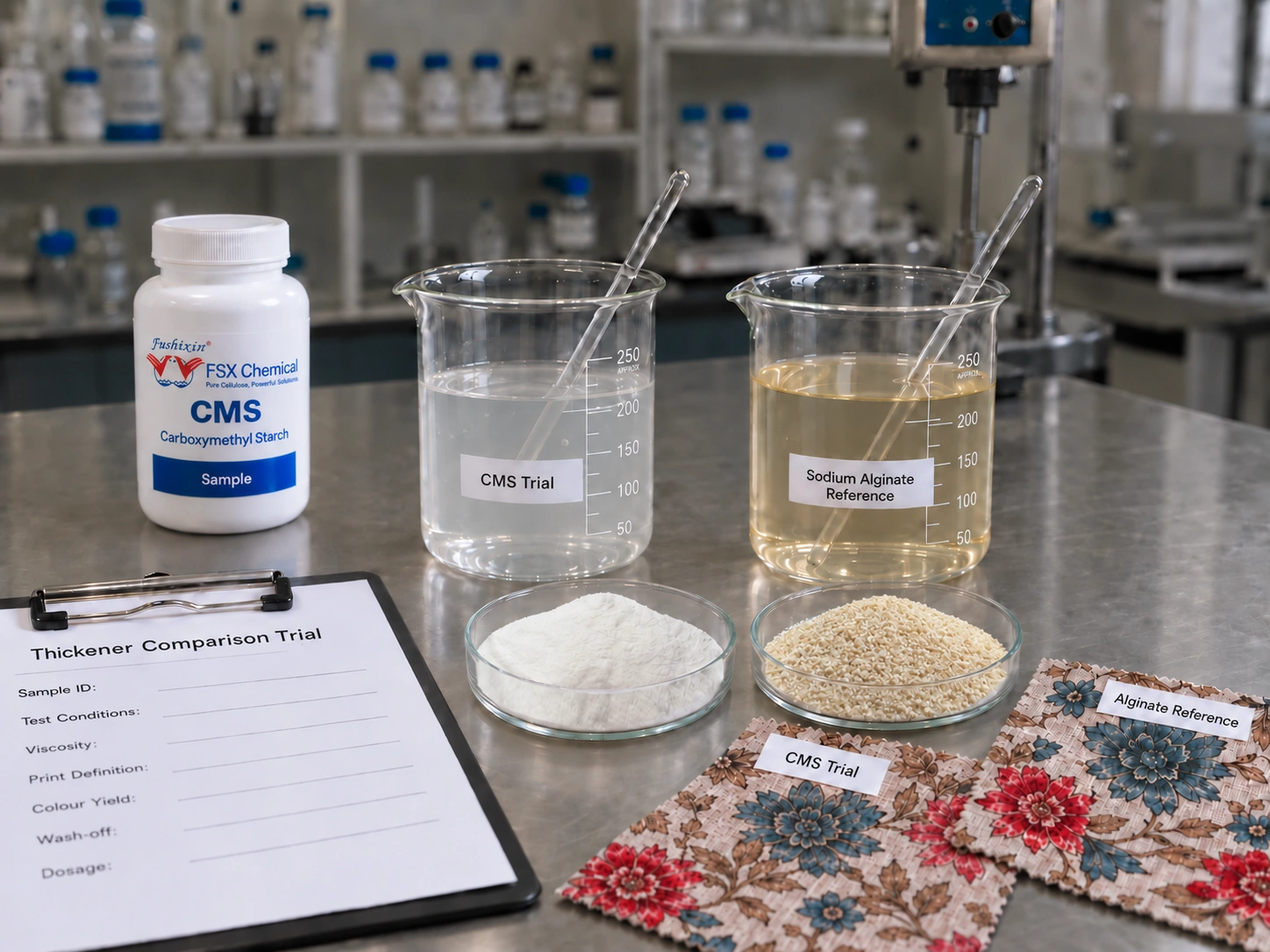
کپاس اور وِسکوَس پر ری ایکٹیو ڈائی پرنٹنگ کے لیے، ایک متبادل پرنٹنگ تھکنر کا موازنہ سوڈیم الگنیٹ سے اسی پیداواری حالات میں پیسٹ کی وسکوسیٹی، سکرین کی کارکردگی، رنگ کی پیداوار، واش آف اور اصل خوراک کا موازنہ کر کے کیا جا سکتا ہے۔ حتمی متبادل کی موزونیت کی تصدیق لیبارٹری اور پیداواری تجربات کے ذریعے کرنی چاہیے۔.
رد عمل کرنے والی رنگ کی پرنٹنگ کی کارکردگی
حقیقی کپڑے، رنگ ساز نظام اور ردعمل پرنٹنگ کے حالات میں پیسٹ کی چپچپاہٹ، سکرین کے چلنے، پرنٹ کی وضاحت، رنگ کی پیداوار اور دھونے کے بعد کے نتائج کا موازنہ کریں۔.
سوڈیم الگینیٹ متبادل آزمائش
متبادل ری ایکٹیو پرنٹنگ گاڑھا کرنے والے مادے کا موازنہ اپنی موجودہ سوڈیم الگینٹ سے ایک ہی فارمولیشن، مطلوبہ ویسکوسٹی اور پرنٹنگ کے حالات کے تحت کریں۔ مناسب متبادل کی سطح کو کنٹرول شدہ لیبارٹری اور پیداواری تجربات کے ذریعے تصدیق کرنا چاہیے۔.
خوراک اور استعمال میں لاگت
صرف فی کلوگرام قیمت کے مقابلے کے بجائے، ایک ہی مطلوبہ پیسٹ کی چپچپا پن اور پرنٹنگ کارکردگی حاصل کرنے کے لیے درکار موٹا کرنے والے مادے کی اصل خوراک کا موازنہ کریں۔ استعمال میں حتمی لاگت کا تعین اصل آزمائشی استعمال کی بنیاد پر ہونا چاہیے۔.
خصوصی پرنٹنگ · ٹیکسٹائل گاڑھا کرنے والا
ویٹ، ڈسچارج اور برن آؤٹ پرنٹنگ کے لیے خصوصی پرنٹنگ گاڑھا کرنے والا
ایف ایس ایکس کیمیکل، وٹ ڈائی، ڈسچارج اور منتخب برن آؤٹ یا ڈیوورے ٹیکسٹائل پرنٹنگ کے لیے خصوصی پرنٹنگ گاڑھا کرنے والے حل فراہم کرتا ہے۔ موزوں گریڈ کا انتخاب کپڑے، کیمیائی نظام، پیسٹ کی تیاری اور مطلوبہ پرنٹنگ کے اثر کے مطابق کیا جانا چاہیے۔ ایچ5 ایک اندرونی ایف ایس ایکس گریڈ ہے جو اس خصوصی پرنٹنگ کے راستے کے اندر تشخیص کے لیے دستیاب ہے۔.
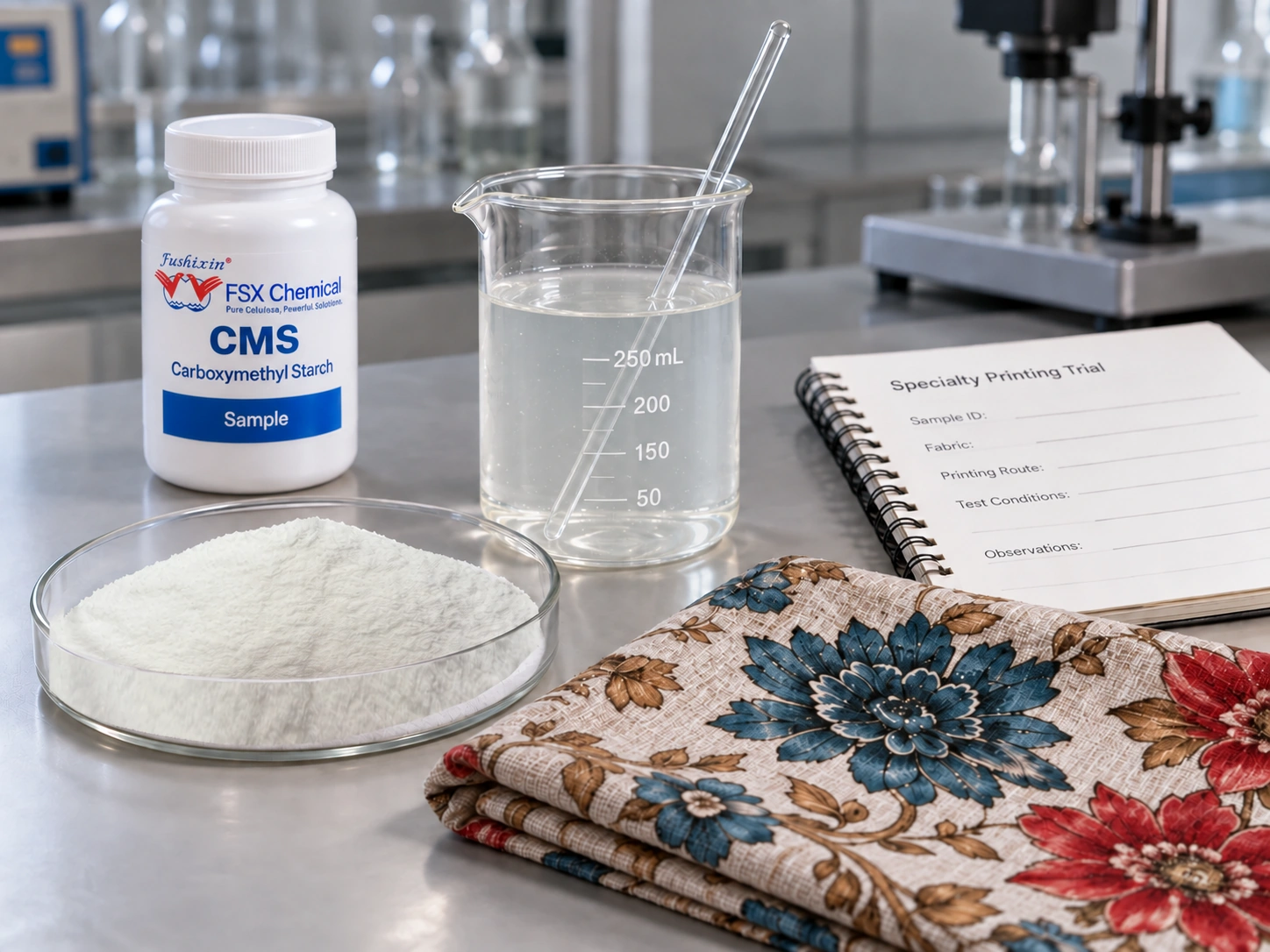
خصوصی پرنٹنگ کا راستہ
خصوصی ٹیکسٹائل پرنٹنگ کے لیے گاڑھا کرنے کا طریقہ جہاں پیسٹ کی تیاری، عمل کے ساتھ مطابقت اور حتمی پرنٹنگ کے اثرات کے لیے کنٹرول شدہ تشخیص درکار ہوتی ہے۔.
واٹ اور ڈسچارج پرنٹنگ
رنگ کے نظام، خارج کرنے کی کیمسٹری اور کپڑے کے مطابق چپچپا پن، پیسٹ کے رویے اور پرنٹنگ کی کارکردگی کا جائزہ لیں۔.
برن آؤٹ / ڈیووورے پرنٹنگ
استعمال سے پہلے فائبر کی ترکیب، پیسٹ کی تیاری، کیمیائی حالات اور مطلوبہ حتمی نمونہ کے اثر کی تصدیق کریں۔.
درجے کا ملاپ اور آزمائش
بulk استعمال کی تصدیق سے پہلے نمونہ، TDS اور کنٹرول شدہ پرنٹنگ ٹرائلز کے ذریعے مناسب FSX گریڈ کا انتخاب کریں۔.
- پیسٹ کی تیاری
- سَانچَر
- اسکرین چل رہی ہے
- پیٹرن کا اثر
- علاج کے بعد
سپیشلٹی پرنٹنگ تھکنر گریڈز کا جائزہ خریدار کے موجودہ پرنٹنگ عمل کے مطابق لیا جانا چاہیے۔ لیبارٹری کے ڈیٹا ابتدائی جانچ میں مددگار ثابت ہو سکتے ہیں، لیکن حتمی انتخاب پرنٹنگ کے رویے اور تیار شدہ ٹیکسٹائل کے نتیجے کی بنیاد پر ہونا چاہیے۔.
کپڑے کی ترکیب، پرنٹنگ کا راستہ، موجودہ گاڑھا کرنے والا یا TDS، پیسٹ سسٹم اور اہم پیداوار کی ضروریات شیئر کریں۔.
مطابقت پذیر حالات میں چپچپا پن، سکرین رننگ، پیٹرن کی ترقی اور بعد از علاج کے نتائج کا موازنہ کریں۔.
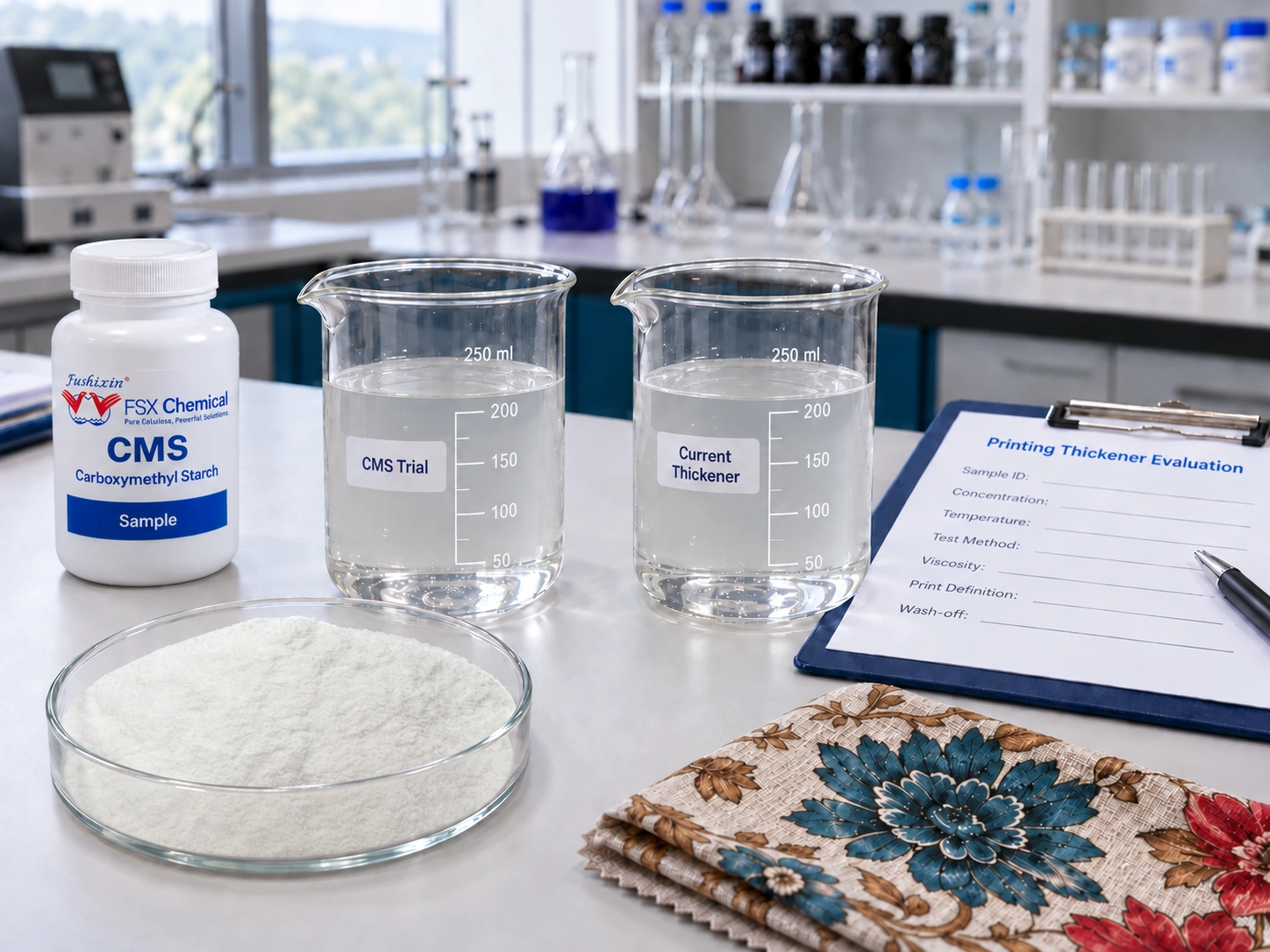
پرنٹنگ گاڑھا کرنے والا انتخاب · پیداواری آزمائش
بulk استعمال سے پہلے پرنٹنگ تھکنر کا جائزہ کیسے لیں
ایک ٹیکسٹائل پرنٹنگ تھکنر کا انتخاب صرف گریڈ کے نام کی بنیاد پر نہیں بلکہ عمل کی مطابقت اور حقیقی آزمائشی کارکردگی کی بنیاد پر ہونا چاہیے۔ بulk سپلائی کی تصدیق سے پہلے مطابقت پذیر حالات میں پرنٹنگ کے راستے، وسکوسیٹی ٹیسٹ کے معیار، پیسٹ کے رویے اور تیار شدہ ٹیکسٹائل کے نتائج کا جائزہ لیں۔.
چھپائی کے عمل کی تصدیق کریں
ری ایکٹیو، ڈسپرز یا اسپیشلٹی پرنٹنگ کا طریقہ، کپڑے کی ساخت، رنگ کے نظام اور پیسٹ کی موجودہ ترکیب متعین کریں۔ جب موجودہ گاڑھا کرنے والے کو تبدیل کر رہے ہوں تو موازنہ کے لیے موجودہ نمونہ یا ٹی ڈی ایس فراہم کریں۔.
ویسکاسٹی ٹیسٹ کی شرائط کا میل کریں
ایک ہی محلول کی ارتکاز، درجہ حرارت، آلہ، اسپنڈل اور ٹیسٹ کی رفتار استعمال کرتے ہوئے چپچپا پن کا موازنہ کریں۔ مختلف حالات میں ناپے گئے اعداد و شمار کا براہِ راست موازنہ نہیں کرنا چاہیے۔.
کنٹرول شدہ پرنٹنگ ٹرائل چلائیں
پیسٹ کی تیاری، سکرین رننگ، پرنٹ کی وضاحت، رنگ کی مقدار، نفوذ اور واش آف کا جائزہ لیں۔ خصوصی عملوں میں پیٹرن کی ترقی اور بعد از علاج کے نتائج کی بھی تصدیق کرنی چاہیے۔.
سپلائی اور تکنیکی دستاویزات کی تصدیق کریں
ٹرائل کی منظوری کے بعد منتخب گریڈ، آرڈر کی مقدار، پیداوار کا دورانیہ، پیکنگ کی ضروریات، ٹی ڈی ایس اور ایس ڈی ایس کی تصدیق کریں۔ بیچ سی او اے تصدیق شدہ پروڈکشن بیچ کے مطابق تیار کیا جاتا ہے۔.
پرنٹنگ گاڑھا کرنے والا سپلائر کا جائزہ
چھپائی کے گاڑھا کرنے والے سپلائر کا جائزہ لیتے وقت کیا موازنہ کرنا چاہیے
جب کسی نئے یا بیک اپ ٹیکسٹائل پرنٹنگ تھکنر سپلائر کا جائزہ لیں، تو یہ فیصلہ کرنے سے پہلے کہ نمونے یا پیداواری ٹرائل کے ساتھ آگے بڑھا جائے یا نہیں، مصنوعات کی کارکردگی، ٹیسٹ کے حالات، بیچ کی یکسانیت، تکنیکی معاونت اور فراہمی کی شرائط کا موازنہ کریں۔.
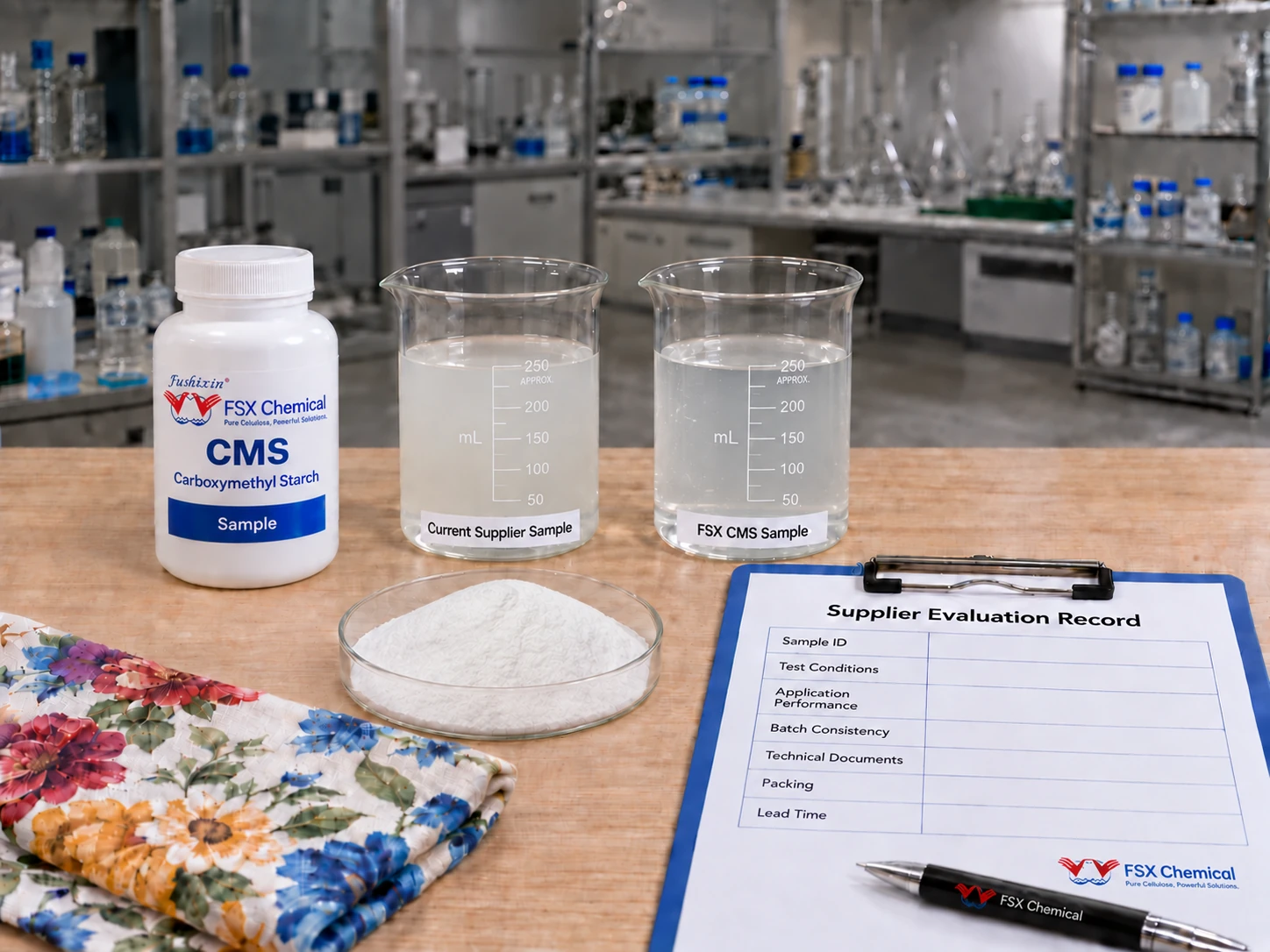
صرف قیمت یا ایک واحد چپچپا پن کی قدر کے بجائے مزید موازنہ کریں۔
ممکنہ پرنٹنگ گاڑھا کرنے والا سپلائر موجودہ مصنوعات، مماثل ٹیسٹ حالات، حقیقی پرنٹنگ عمل اور تجارتی فراہمی کی ضروریات کو یکجا کرکے جانچا جانا چاہیے۔.
موجودہ سپلائر گریڈ، پروڈکٹ کے نمونے، وضاحت اور موجودہ پیسٹ کی ضروریات کا موازنہ کریں۔.
چپکاوٹ کے نتائج کا موازنہ کرنے سے پہلے ارتکاز، درجہ حرارت، آلہ، اسپنڈل اور تجرباتی طریقہ کو ہم آہنگ کریں۔.
حقیقی کپڑے، رنگ نظام اور پیسٹ کی شرائط کے ساتھ ردعمل، منتشر یا خصوصی پرنٹنگ کا جائزہ لیں۔.
بیچ کی یکسانیت، آرڈر کی مقدار، پیکنگ، لیڈ ٹائم، تکنیکی دستاویزات اور سپلائی کے تال میل کا جائزہ لیں۔.
پرنٹنگ تھکنر کے عمومی سوالات · تکنیکی اور خریداری
ٹیکسٹائل پرنٹنگ تھکنر کے بارے میں اکثر پوچھے جانے والے سوالات
خریداروں کے لیے عملی رہنمائی جو تجارتی خریداری سے قبل ری ایکٹیو پرنٹنگ تھکنرز، سوڈیم الگینٹ کے متبادل، وسکوسٹی ٹیسٹ کی شرائط، نمونہ آزمائشیں اور تکنیکی دستاویزات کا جائزہ لے رہے ہیں۔.
01
مجھے ردعمل پذیر پرنٹنگ گاڑھا کرنے والے مادے میں کیا دیکھنا چاہیے؟
ری ایکٹیو ڈائی پرنٹنگ کے لیے، اصلی کپاس، وِسکو س یا دیگر سیلولوزک کپڑے کے حالات میں پیسٹ کی گاڑھ پن، سکرین رننگ، پرنٹ کی وضاحت، رنگ کی پیداوار، واش آف اور خوراک کا موازنہ کریں۔ تشخیص کے لیے صرف وضاحتی اقدار کے بجائے خریدار کے حقیقی رنگ کے نظام، فارمولیشن اور پرنٹنگ کے عمل کا استعمال کرنا چاہیے۔.
02
کیا ردعمل پذیر پرنٹنگ گاڑھا کرنے والے مادے کو سوڈیم الگنیٹ کے متبادل کے طور پر استعمال کیا جا سکتا ہے؟
ایک متبادل ردعمل کرنے والا پرنٹنگ گاڑھا کرنے والا مادہ، مماثل فارمولیشن، ویسکوسٹی اور پرنٹنگ کے حالات کے تحت موجودہ سوڈیم الگنیٹ کے مقابلے میں جانچا جا سکتا ہے۔ مناسب متبادل کی سطح کا تعین ایک مقررہ ایک-بہ-ایک تناسب کے طور پر فرض کرنے کے بجائے لیبارٹری اور پیداواری تجربات کے ذریعے کیا جانا چاہیے۔.
03
سوڈیم الگینٹ کے متبادل کا تجربہ کرتے وقت مجھے کن چیزوں کا موازنہ کرنا چاہیے؟
موجودہ سوڈیم الگینٹ اور متبادل گاڑھا کرنے والے مادے کا موازنہ ایک ہی مطلوبہ پیسٹ کی چپچپا پن اور پیداوار کے حالات کے تحت کریں۔ اہم جانچ میں خوراک، رنگ کی پیداوار، دھونے کی صلاحیت، سکرین کی کارکردگی، پرنٹ کی وضاحت، پیسٹ کی استحکام اور استعمال میں حتمی لاگت شامل ہیں۔ صرف فی کلوگرام قیمت زیادہ اقتصادی آپشن کا تعین کرنے کے لیے کافی نہیں ہے۔.
04
گاڑھا کرنے والے کی چپچپا پن کی قدروں کا موازنہ کیسے کیا جانا چاہیے؟
وسکوسٹی کی اقدار کا موازنہ صرف یکساں ٹیسٹ حالات میں کیا جانا چاہیے۔ ایک ہی محلول کی مقدار، درجہ حرارت، آلہ، اسپنڈل، رفتار اور پیمائش کے طریقہ کار کا استعمال کریں۔ FSX CN-R اور FS-05 کے حوالہ جاتی اقدار 5% محلول پر ناپے جاتے ہیں، جبکہ H5 کو 8% پر ناپا جاتا ہے، لہٰذا ان اقدار کا براہِ راست موازنہ ٹیسٹ کی بنیاد کو مدِ نظر رکھے بغیر نہیں کیا جانا چاہیے۔.
05
میں مختلف پرنٹنگ عملوں کے لیے ٹیکسٹائل پرنٹنگ تھکنر کیسے منتخب کروں؟
داخلی پروڈکٹ کوڈ کے بجائے پرنٹنگ کے عمل سے آغاز کریں۔ ری ایکٹیو، ڈسپرز، ویٹ، ڈسچارج اور برن آؤٹ پرنٹنگ کے لیے پیسٹ اور کارکردگی کی مختلف ضروریات ہوتی ہیں۔ FSX تشخیص کے لیے مناسب گریڈ کی سفارش کرنے سے پہلے کپڑے، رنگ یا کیمیائی نظام، موجودہ گاڑھا کرنے والا مادہ اور تجرباتی مقاصد کا جائزہ لے سکتا ہے۔.
06
نمونہ ٹرائل یا کوٹیشن کے لیے کون سی معلومات درکار ہیں؟
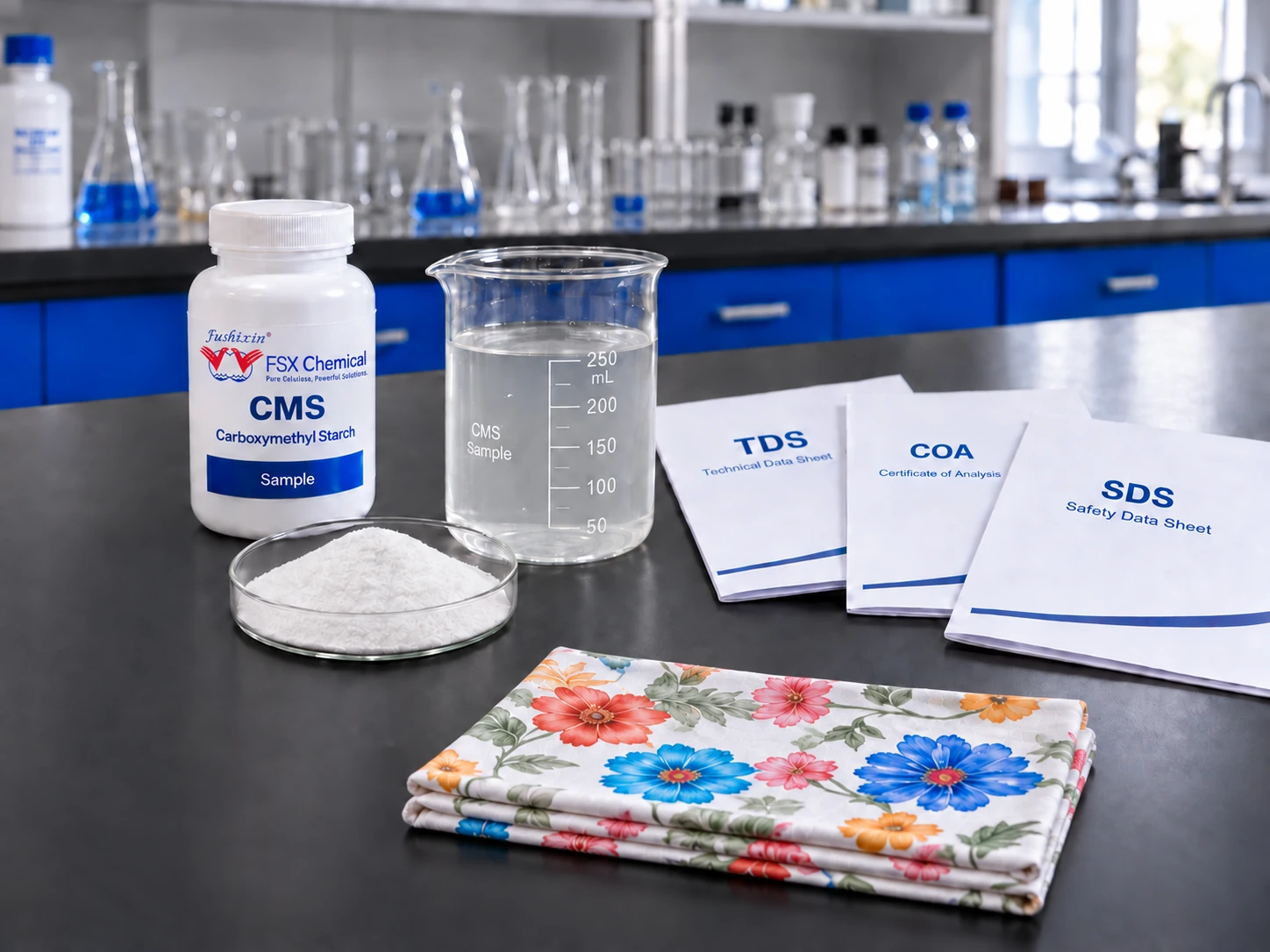
چھپائی کا عمل، کپڑے کی قسم، موجودہ مصنوعات کا نمونہ یا اگر دستیاب ہو تو ٹی ڈی ایس، چپکاوٹ کی ضرورت اور آزمائش کا طریقہ، پیسٹ کی شرائط، متوقع چھپائی کا نتیجہ، اندازاً مقدار اور منزل فراہم کریں۔ ٹی ڈی ایس اور ایس ڈی ایس مصنوعات کے جائزے میں معاونت کر سکتے ہیں، جبکہ بیچ کا COA تصدیق شدہ پیداواری بیچ کے مطابق تیار کیا جاتا ہے۔.