Exploring New Textile Chemical Solutions for Digital Inkjet Printing
Digital textile printing requires more than advanced ink and printheads. Explore process-specific chemical solutions for...
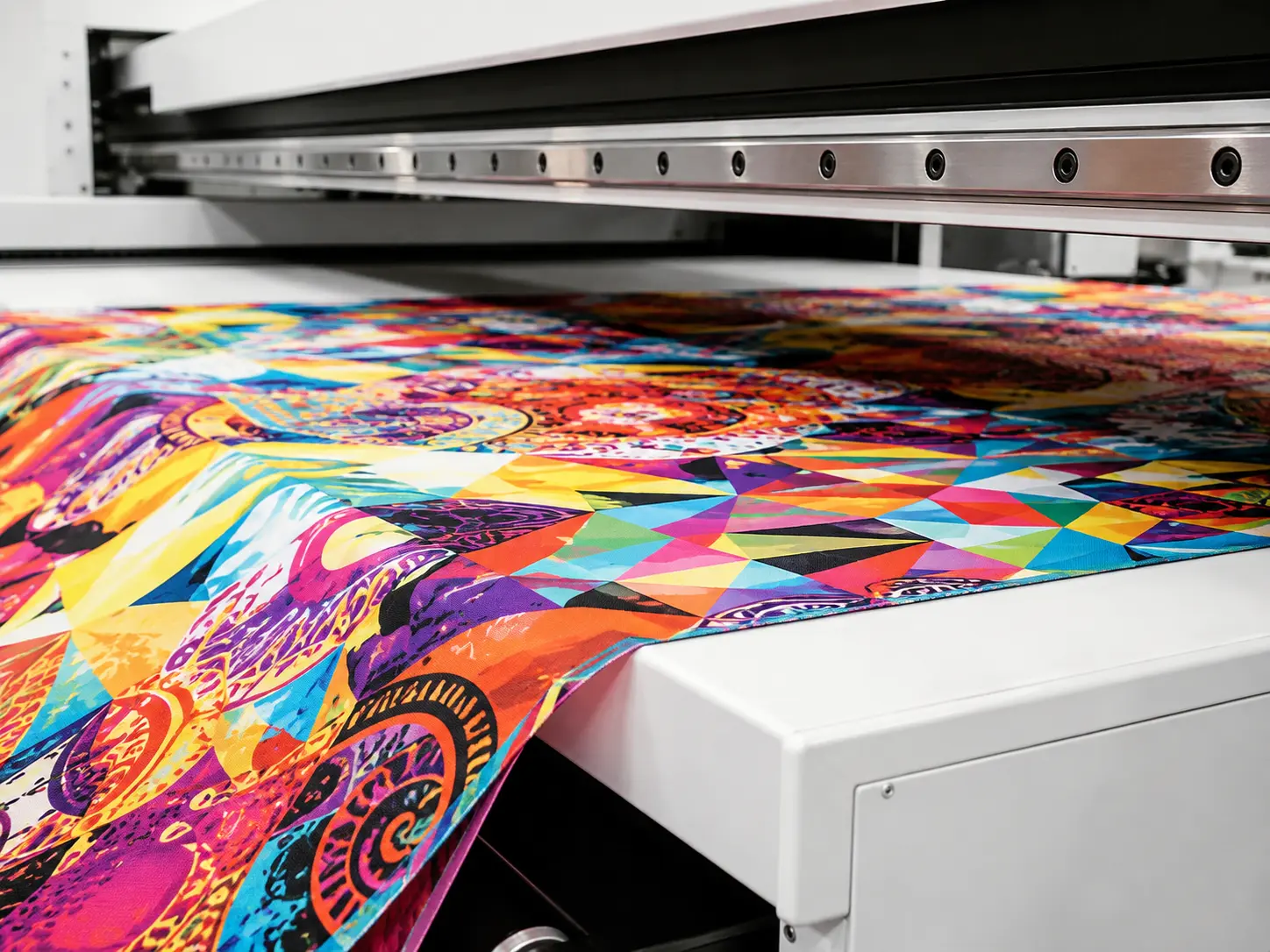
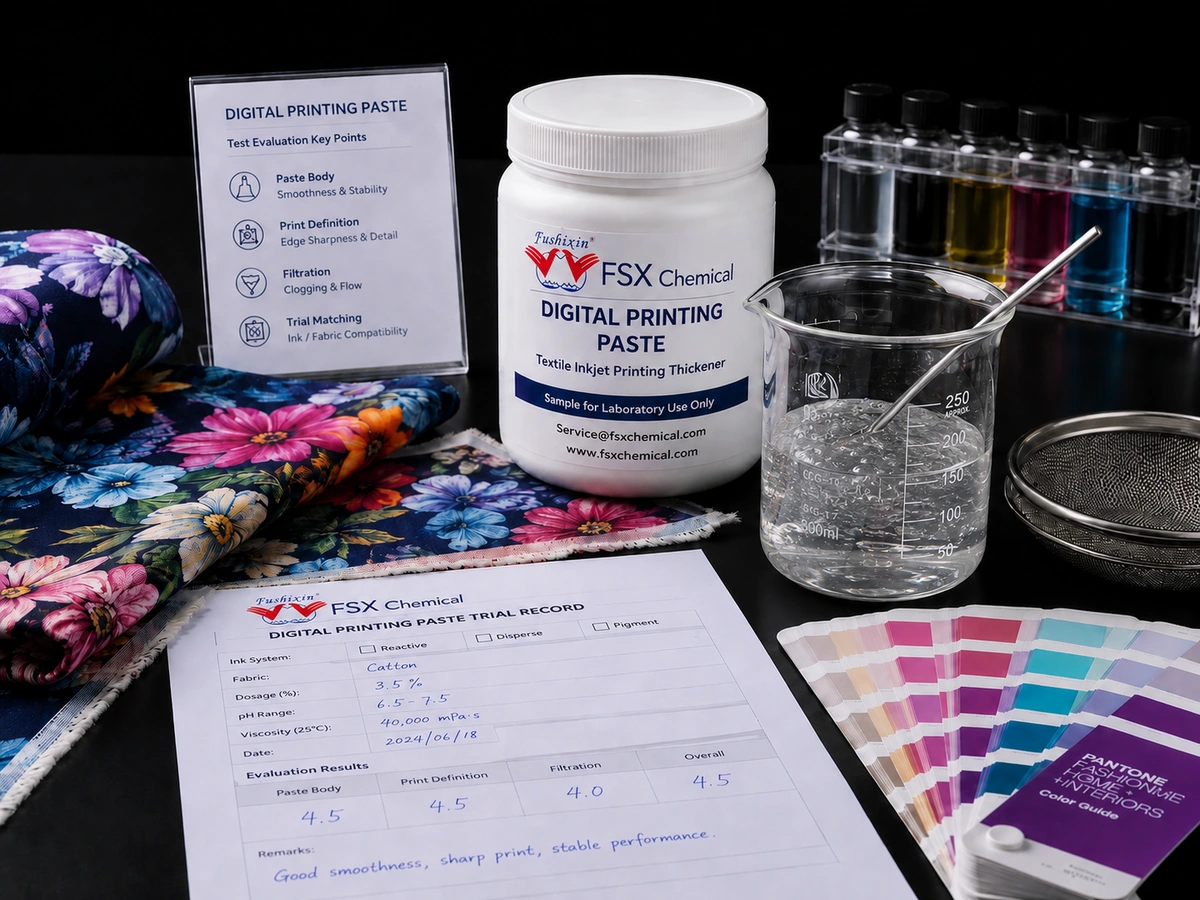
Digital textile printing requires more than advanced inks and printheads. Process-specific pretreatment chemistry, rheology, filtration, moisture control and fixation all influence whether an inkjet design becomes a sharp, stable and commercially acceptable printed textile. This guide explores emerging chemical solution directions for reactive, disperse and pigment digital inkjet printing.
Digital inkjet printing has changed the way textile manufacturers approach short runs, complex designs, color variation and production flexibility. However, advances in printers and inks do not remove the importance of textile chemistry.
An inkjet printer can place extremely small droplets with high precision, but the final result still depends on what happens when those droplets meet the fabric. If the textile surface absorbs liquid too quickly, allows excessive lateral migration or interacts poorly with the ink chemistry, the apparent precision of the printer can be lost.
This is where textile pretreatment chemistry becomes important. Digital printing paste, surface-control auxiliaries and application-specific thickener systems can help prepare the fabric before printing and create a more controlled environment for the ink.
The most useful new chemical solutions are not necessarily completely new polymer families. Innovation can also come from better matching of existing chemistries to reactive, disperse and pigment inkjet systems, improved filtration, more controlled rheology, better fabric-surface management and more systematic grade matching.
This article explores these solution directions and explains how textile printers can evaluate them without confusing fabric pretreatment chemistry with the tightly controlled formulation of digital ink itself.
Why Digital Inkjet Printing Needs Different Chemistry
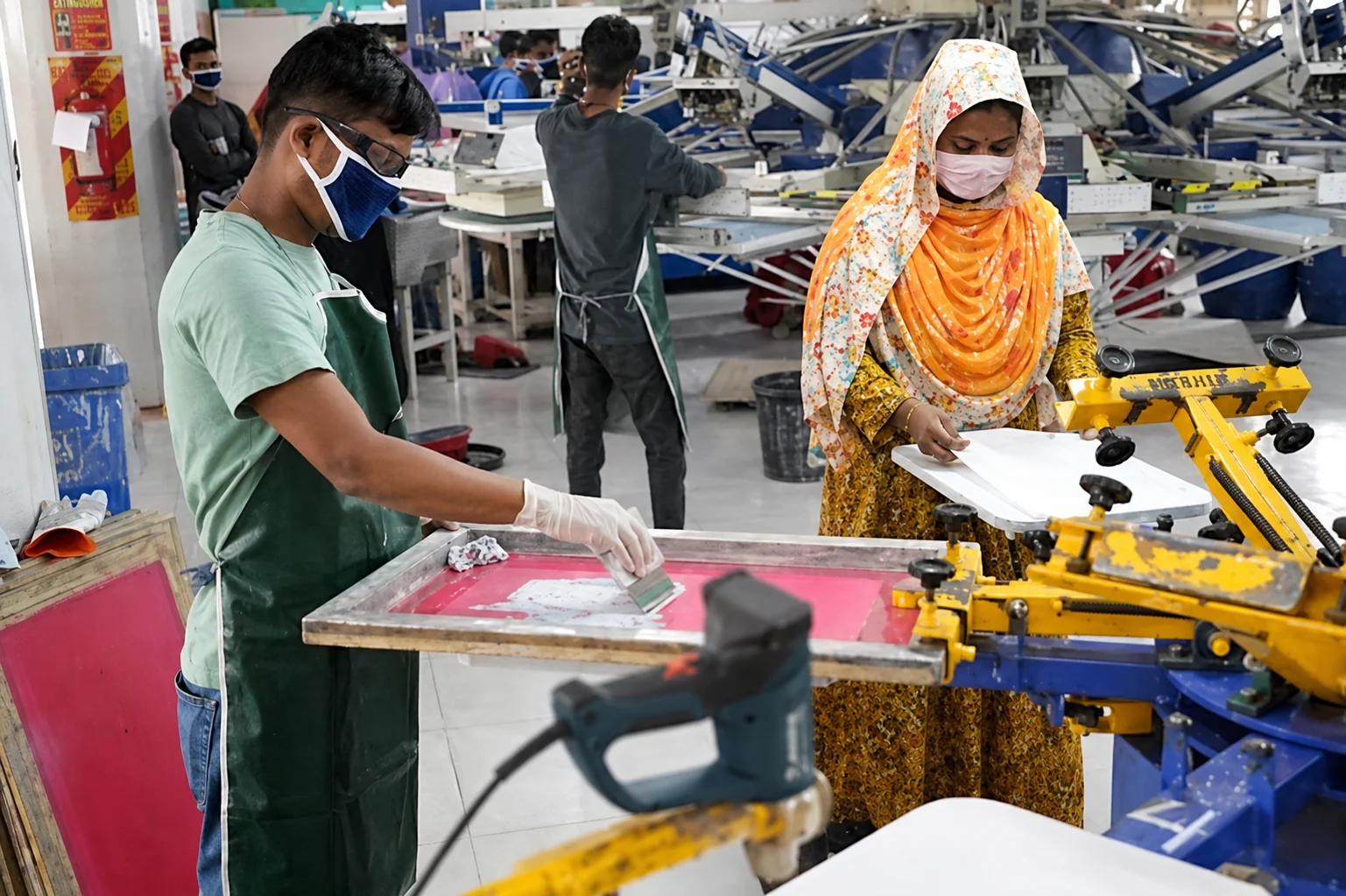
Conventional screen printing and digital inkjet printing both place color on textile, but the physical delivery systems are fundamentally different.
In conventional printing, the color paste itself contains a substantial rheology-control system and is mechanically transferred through a screen.
In digital inkjet printing, the ink must remain within a tightly controlled fluid window suitable for the ink-delivery system and printhead. The fabric-side chemistry therefore performs an important part of the surface-control function.
The digital process separates two functions
The ink provides the colorant system and must remain suitable for jetting. The pretreatment prepares the textile surface and helps control how the jetted liquid behaves after impact.
This separation is one reason digital textile printing requires application-specific chemical development rather than simply adapting a traditional screen-printing paste.
Digital Ink Is Only One Part of the System
When a digital print appears weak, blurred or uneven, it is easy to assume that the ink is the only variable that needs to change.
In reality, final print performance can be influenced by several connected factors:
Ink chemistry
Fabric fibre composition
Fabric preparation
Pretreatment chemistry
Pretreatment pickup
Drying conditions
Printer settings
Ink laydown
Fixation or curing
Washing where required
A new chemical solution should therefore be evaluated as part of the total printing system rather than expected to solve every defect independently.
Where Pretreatment Chemistry Works
Digital printing paste and related textile pretreatment chemicals generally act on the fabric before inkjet printing.
A simplified process can be represented as:
Fabric → Pretreatment → Drying → Digital Printing → Fixation or Curing → Washing or Finishing → Finished Textile
Pretreatment
The chemical system is applied to the textile using the appropriate coating, padding, spraying or other controlled process.
Drying
The treated fabric is dried to a condition suitable for printing. Residual moisture should remain sufficiently controlled for a fair process comparison.
Digital printing
The ink is jetted onto the prepared textile surface.
Fixation or curing
The required treatment depends on reactive, disperse or pigment chemistry.
Post-treatment
Washing, finishing or other steps are completed according to the printing route before final fabric evaluation.
Solution 1: Process-Specific Pretreatment
One of the most important developments in digital textile chemistry is the move away from one universal printing paste toward process-specific pretreatment.
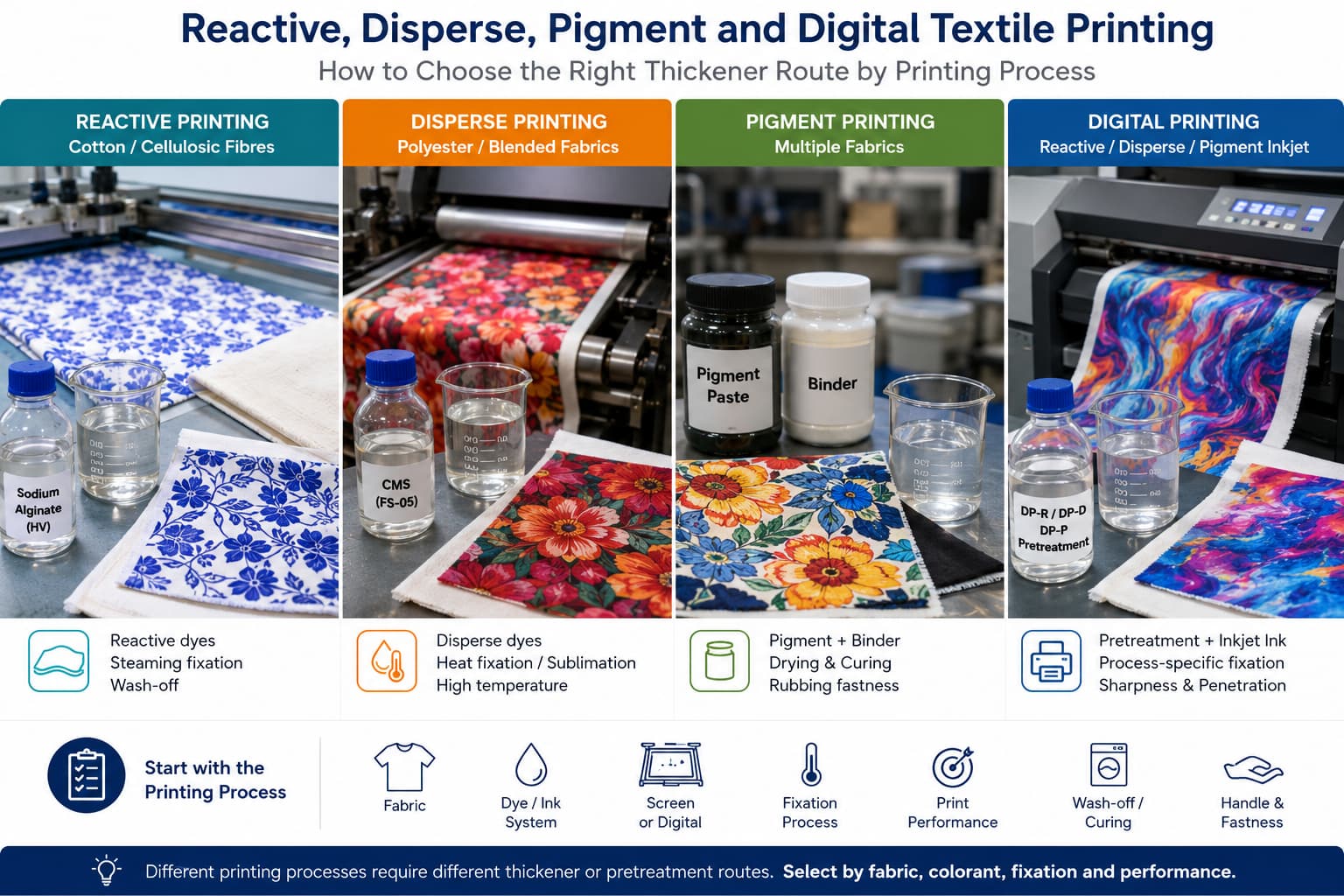
Reactive, disperse and pigment inks use different colorant chemistry and fixation mechanisms. Their pretreatment systems should therefore be evaluated independently.
Ink Route
Typical Fabric Direction
Pretreatment Focus
Final Evaluation
Reactive
Cotton, viscose and suitable cellulosic or natural-fibre systems
Migration control, moisture, definition and fixation compatibility
After steaming and washing
Disperse
Polyester and suitable blends
Surface uniformity, filtration and thermal-process compatibility
After thermal fixation and required cleaning
Pigment
Various fabrics depending on the ink and binder system
Migration control, binder interaction and surface behavior
After curing and fastness evaluation
Selecting by ink chemistry first is more reliable than selecting a digital printing paste only by viscosity.
Reactive Inkjet Chemistry
Reactive digital textile printing is commonly evaluated on suitable cellulosic fabrics such as cotton and viscose.
The pretreatment needs to work together with the reactive ink and the subsequent fixation and washing process.
Important technical targets include
Uniform pretreatment application
Controlled ink migration
Fine-line definition
Stable shade development
Compatibility with fixation chemistry
Practical wash-off
Acceptable final fabric handle
FSX Chemical uses DP-R as the starting route for reactive inkjet printing trials.
A candidate pretreatment should be judged after the complete printing, fixation and washing sequence rather than from the wet print alone.
Disperse Inkjet Chemistry
Disperse digital printing is primarily associated with polyester and suitable polyester-blend fabrics.
The chemical requirements differ from reactive printing because the fiber, ink system and thermal fixation route are different.
Important evaluation areas include
Pretreatment uniformity
Dispersion stability
Filtration
Surface cleanliness
Fine-detail definition
Solid-area uniformity
Compatibility with thermal fixation
FSX Chemical uses DP-D as the starting route for disperse digital printing evaluation.
A product used successfully for reactive printing should not automatically be transferred to a polyester disperse process.
Pigment Inkjet Chemistry
Pigment digital printing presents another chemical challenge because pigment colorants generally depend on binder-film formation and curing rather than dye-fibre reaction alone.
The chemistry must balance
Ink migration
Binder compatibility
Color appearance
Print definition
Curing
Rubbing performance
Fabric hand feel
FSX Chemical uses DP-P as the starting route for pigment digital printing trials.
More pretreatment or binder is not automatically better. A system that produces strong surface color but unacceptable stiffness may require further formulation optimization.
Solution 2: Rheology-Controlled Pretreatment
Digital pretreatment chemistry needs more than a target viscosity. The way the formulation flows during preparation and application can influence how uniformly it reaches the fabric.
Standing viscosity
A routine viscosity measurement can help monitor batch preparation, but the test method must be clearly defined.
Application rheology
Different pretreatment machines generate different shear conditions. Two products with similar standing viscosity may therefore produce different pickup and surface distribution.
Structural stability
The formulation should remain practical during storage and application without excessive separation, gel formation or uncontrolled viscosity drift.
New-generation pretreatment development increasingly benefits from viewing viscosity and rheology as connected but different properties.
Solution 3: Filtration and Low-Residue Performance
Digital printing paste is normally used on the fabric side rather than being jetted through the printhead, but filtration and residue still matter.
Pretreatment systems can pass through mixers, filters, pumps, coating equipment, padding systems or spraying equipment before they reach the fabric.
Potential sources of residue include
Incomplete polymer hydration
Gel particles
Chemical incompatibility
Foreign contamination
Precipitated material
Use controlled filtration testing
Compare products using the same preparation method, sample quantity, filter material, opening size and holding time.
Inspect the retained material
The quantity of residue matters, but identifying its origin can be even more useful for process improvement.
Solution 4: Moisture and Fabric-Surface Control
Digital printing occurs at the interface between a precisely delivered liquid droplet and an irregular textile surface.
Fabric absorbency, capillary movement and residual moisture can strongly influence the visible print boundary.
Pretreatment can be evaluated for its ability to support
More uniform fabric surface response
Controlled liquid penetration
Reduced unwanted lateral migration
Consistent ink absorption
Better definition of small printed elements
The objective is not to prevent all penetration. The correct amount depends on the fabric construction, visual requirement and printing system.
Solution 5: Binder-Compatible Pigment Systems
Pigment digital printing creates a particularly demanding balance between visual quality and finished-fabric properties.
Pretreatment chemistry should be evaluated together with the actual pigment ink and binder rather than as an isolated thickener system.
Check interaction with
Pigment ink
Binder chemistry
Crosslinking system where applicable
Fabric finish
Curing temperature and time
Evaluate the final textile for
Print definition
Color uniformity
Dry rubbing performance
Wet rubbing performance where required
Fabric hand feel
Optimizing only color depth can produce an unbalanced pigment system.
One polymer does not always provide the preferred combination of viscosity, rheology, surface control, stability and commercial cost.
Application-specific compound systems can combine different materials to create a more balanced pretreatment profile.
A compound system may be developed around
Base viscosity
Shear response
Surface sizing
Moisture management
Filtration
Holding stability
Compatibility with other auxiliaries
More components also create more formulation variables, so compound systems should be developed through controlled experiments rather than uncontrolled blending.
Solution 7: Data-Based Grade Matching
One of the most practical advances in textile chemical sourcing is moving away from product-name matching toward data-based grade matching.
A buyer already using a successful digital printing paste can use that product as the technical benchmark for a new supplier evaluation.
Useful reference information includes
Current manufacturer and commercial grade
TDS
Recent COA where available
Physical sample
Viscosity and test method
Current dosage
pH
Ink system
Fabric
Pretreatment equipment
Drying and fixation process
Current printing problem
This allows a supplier to select a technically relevant candidate instead of recommending a generic digital printing thickener.
Controlling Ink Migration and Bleeding
Ink migration is one of the most visible problems in digital textile printing.
After the droplet reaches the fabric, liquid can travel vertically into the textile structure and laterally along yarn and fibre pathways.
Excessive lateral movement can appear as
Blurred edges
Color bleeding
Loss of fine lines
Reduced small-text clarity
Poor separation between adjacent colors
Pretreatment can help control this movement, but the final result also depends on fabric absorbency, ink laydown, drying and fixation.
Increasing pretreatment concentration without controlled testing is therefore not a universal solution.
Improving Fine-Line Definition
High-resolution digital equipment should be evaluated using a test image capable of revealing chemical differences.
Include
Fine horizontal lines
Fine vertical lines
Small text
Sharp corners
Fine dots
Multi-color boundaries
Gradients
Dark solid areas
Fine structures are useful for detecting uncontrolled spreading, while large solid areas reveal transfer, uniformity and surface differences.
Evaluation should be repeated after the complete fixation and post-treatment process.
Understanding Color Yield
Pretreatment chemistry can influence how color develops on the fabric, but the phrase “better color yield” should be used carefully.
Final color depends on the complete printing system.
Important variables include
Ink formulation
Ink laydown
Fabric preparation
Pretreatment pickup
Surface absorption
Drying
Fixation
Washing or curing
A fair comparison should use the same fabric, printer, ink and post-treatment for the current and candidate pretreatment systems.
Pretreatment Pickup and Drying
Even a well-designed chemical system can produce inconsistent results if pretreatment pickup varies across the fabric.
Monitor application quantity
Too little pretreatment may provide insufficient surface control, while excessive application may increase solids, drying demand or fabric stiffness.
Control application uniformity
Edge-to-center and lengthwise variation can create visible shade and definition differences.
Control drying
Fabric entering the printer at different moisture conditions may respond differently even when the chemical recipe is unchanged.
Pretreatment chemistry and pretreatment application therefore need to be optimized together.
Holding Stability
A digital pretreatment system may remain in a preparation tank or application system for hours before it is fully consumed.
Useful stability checkpoints can include
Immediately after preparation
After full hydration or equilibration
After normal production holding
After circulation where applicable
Monitor
Viscosity
pH
Appearance
Separation
Foam
Filtration
Stable pretreatment can reduce the need for repeated correction during production and make digital output more predictable.
Fabric-Specific Selection
Digital chemical selection should begin with the fibre and fabric construction rather than only with the printer model.
Cotton and viscose
Cellulosic textiles can absorb aqueous ink rapidly, making controlled reactive pretreatment particularly important.
Polyester
Polyester requires a different ink and fixation route and should be evaluated through the disperse printing system.
Blended fabrics
Blends can respond more complexly because the component fibres may differ in liquid absorption, colorant affinity and surface behavior.
Fabric construction matters too
Knitted and woven fabrics, different weights, yarn structures, densities and finishing histories can all influence pretreatment pickup and ink movement.
Why Digital Printing Paste Should Not Be Added to Ink
One of the most important distinctions in digital textile chemistry is the difference between pretreatment paste and digital ink.
Digital ink is formulated for a tightly controlled jetting system. Changing its rheology or introducing an unsuitable high-molecular- weight polymer can affect the fluid properties required by the printer.
Textile digital printing paste is therefore normally evaluated on the fabric side rather than used as an uncontrolled additive to the ink.
The preferred route is
Select pretreatment → Apply to fabric → Dry → Print with approved ink → Fix or cure → Evaluate final textile
Ink formulation changes should be handled according to the requirements of the ink and printing-equipment system rather than by adding textile thickener independently.
Resource-Efficient Digital Textile Printing
Digital printing is often discussed in sustainability conversations, but no printing route should automatically be described as environmentally superior without examining the complete process.
Pretreatment chemistry can contribute to resource efficiency when it helps the process achieve acceptable quality with fewer avoidable failures and corrections.
Useful metrics include
Pretreatment dosage
Unused preparation
Filtration residue
Failed or reprinted fabric
Drying demand
Fixation or curing conditions
Wash-off requirements
Batch consistency
Sustainability should therefore be evaluated through measurable process performance rather than a broad “eco-friendly” label.
How to Compare New and Existing Chemical Systems
A new pretreatment system should be compared against the product already approved in production whenever a reference is available.
Evaluation Area
Current System
New Candidate
Commercial Grade
Record exact product
Record permanent candidate grade
Preparation
Current method
Controlled comparison method
Viscosity
Record complete method
Use comparable conditions
pH
Record normal range
Compare under intended formulation
Filtration
Reference residue
Use identical filter method
Pretreatment Pickup
Current operating level
Baseline first, then optimize
Ink
Same ink system
Same ink system
Fabric
Same fabric lot
Same fabric lot
Print Test
Current reference result
Same image and settings
Post-Treatment
Current process
Same process initially
Recommended Laboratory Trial Workflow
Step 1: Identify the ink system
Confirm whether the process is reactive, disperse or pigment inkjet printing.
Step 2: Define the fabric
Record fibre composition, construction, weight and relevant previous treatment.
Step 3: Establish the current benchmark
Record the current pretreatment product, formula, dosage and known performance.
Step 4: Prepare the candidate
Follow a clearly defined preparation method and record all major variables.
Step 5: Evaluate basic properties
Appearance
Viscosity
pH
Filtration
Physical stability
Step 6: Apply to the same fabric
Control application method and pickup as closely as possible.
Step 7: Dry under controlled conditions
Avoid allowing different residual moisture to distort the comparison.
Step 8: Print using the same ink and settings
Use a diagnostic test image containing fine details, color boundaries and solid areas.
Step 9: Complete normal fixation or curing
Use the standard process appropriate to the ink system.
Step 10: Complete washing where required
Final acceptance should be based on the finished textile.
Step 11: Optimize the candidate
Once technical suitability is established, adjust dosage or pretreatment pickup gradually to determine the practical operating window.
Production Scale-Up
A successful laboratory test is an important milestone, but it does not automatically prove production performance.
Scale changes several variables
Batch size
Mixer geometry
Circulation
Holding time
Application speed
Drying uniformity
Fabric tension
Production-environment conditions
Conduct a limited production trial
Keep the existing product available as the benchmark and change as few variables as practical during the first production evaluation.
Evaluate the whole run
Compare fabric from the beginning, middle and end rather than approving the candidate from the first printed section.
Verify the first commercial batch
The product supplied in bulk should be connected to the commercial grade used during the successful qualification.
Troubleshooting Common Digital Printing Problems
Observed Problem
Possible Chemical or Process Cause
What to Check
Color bleeding
Insufficient surface control or excessive liquid movement
Pretreatment pickup, rheology, fabric absorbency, drying and ink laydown
Weak fine-line definition
Ink migration or uneven pretreatment
Application uniformity, drying, fabric and ink amount
Weak color result
Multiple possible causes
Ink, pickup, fixation, washing and pretreatment together
Uneven shade
Nonuniform pretreatment or drying
Edge-to-center pickup and moisture distribution
High filter residue
Hydration, gel or incompatibility
Preparation method and staged chemical addition
Pretreatment viscosity drifts
Hydration, temperature, evaporation or instability
Holding time, tank condition and measurement method
Pigment print feels stiff
Excess solids or binder/paste balance
Pretreatment dosage, binder and curing
Lab result passes but production fails
Scale-up difference
Batch size, application equipment, pickup and drying
Digital printing defects should be investigated as system problems. Not every weak print result is caused by the pretreatment, and not every problem can be corrected by increasing thickener concentration.
Total Cost in Use
New textile chemical solutions should eventually be evaluated commercially, but purchase price alone is not enough.
Compare chemical consumption
Calculate cost using the practical pretreatment dosage or pickup required for acceptable production.
Compare preparation cost
Include mixing, filtration, labor and any repeated formula correction.
Compare production efficiency
Consider pretreatment stability, machine interruption, rejected fabric and reprinting.
Compare post-treatment
Drying, steaming, curing and washing requirements form part of the complete process economics.
Compare supply consistency
A lower-priced product can become expensive if batch variation creates repeated laboratory and production adjustments.
The preferred chemical solution is therefore the system that produces the required finished textile at an acceptable total cost and process risk.
How FSX Chemical Supports Digital Printing Development
DP-R is the starting FSX route for reactive digital printing trials where paste stability, print definition and final color result need to be evaluated.
DP-D
DP-D is the starting route for disperse digital printing trials where dispersion, filtration and process compatibility are important.
DP-P
DP-P is the starting route for pigment digital printing where binder compatibility, curing, fastness and fabric hand feel need to be balanced.
Current-product matching
Buyers already using another digital printing paste can submit their existing product information through Samples & Matching .
Useful information includes
Current product and commercial grade
TDS or available COA
Physical reference sample
Reactive, disperse or pigment ink
Fabric composition
Current dosage
pH
Viscosity and test method
Pretreatment application method
Drying conditions
Fixation or curing process
Current problems such as bleeding, weak color or unclear edges
The objective is to identify an appropriate starting route and verify it through controlled laboratory and production testing rather than assume that one digital printing paste is suitable for every textile inkjet system.
Frequently Asked Questions
What chemicals are used in digital textile printing?
The complete chemical system depends on the ink route and may include fabric pretreatment chemicals, rheology-control materials, moisture- management components, binders or fixation-related auxiliaries. The exact system should be selected for reactive, disperse or pigment printing.
What is digital printing paste?
Digital printing paste is a fabric-side pretreatment or thickening system used to help control textile surface behavior before or around inkjet printing.
Is digital printing paste added to digital ink?
It should not be treated as a general ink additive. Textile pretreatment thickeners are primarily evaluated on the fabric side, while digital ink must remain within the fluid requirements of its printhead and ink-delivery system.
What is the best pretreatment for reactive digital printing?
There is no universal best formulation. The correct pretreatment depends on the reactive ink, fabric, application method, drying, fixation and required finished-textile quality.
Can the same pretreatment be used for reactive and disperse ink?
A direct transfer should not be assumed. Reactive and disperse systems involve different fibres, colorants and fixation processes and should be evaluated separately.
What is important in pigment digital printing pretreatment?
Pretreatment should be evaluated together with the pigment ink, binder, curing conditions, print definition, rubbing performance and fabric hand feel.
Does higher pretreatment viscosity improve print sharpness?
Not automatically. Definition also depends on rheology, fabric absorbency, pickup, ink laydown, drying and fixation. Excessive viscosity or solids can create other problems.
Why is filtration important if the pretreatment does not pass through the printhead?
Gels and residue can still interfere with preparation, pumping, coating, padding, spraying and other pretreatment equipment.
How should I test a new digital printing chemical?
Compare it against the current approved system using the same fabric, ink, application method, drying, printer settings and post-treatment, then complete a controlled production trial.
Can FSX Chemical match my current digital printing paste?
Buyers can provide their current TDS or physical sample together with the ink route, fabric, dosage, pH and printing conditions so that a relevant DP-R, DP-D or DP-P starting route can be evaluated.
Exploring a New Chemical Route for Digital Textile Printing?
Send FSX Chemical the TDS or physical sample of the digital printing paste you currently use together with your ink system, fabric, pretreatment method, dosage, pH and production conditions.
If your current challenge is bleeding, unclear fine lines, weak dark shades, high filtration residue, unstable pretreatment or inconsistent output between batches, include these details with your inquiry.
FSX Chemical can review whether DP-R, DP-D or DP-P is the most appropriate starting route and provide a candidate for controlled side-by-side testing.
Final suitability should be confirmed using your actual ink, fabric, printing equipment and fixation or curing process before commercial conversion.
Learn how to choose thickener and pretreatment routes for reactive, disperse, pigment and digital textile printing based on fabric, dye or ink, fixation, wash-off and print-quality requirements.
Compare CMC, CMS, sodium alginate and digital printing paste for textile printing. Learn how each route fits reactive, disperse, pigment and digital processes, and what buyers should review before sample testing, grade matching and bulk purchase.
Carboxymethyl cellulose is used as a thickener and stabilizer in water-based inks, gravure printing, and inkjet pre-treatment. This guide covers the key grade parameters and sourcing considerations for procurement teams.
CMC-based printing paste is used across pigment, reactive, and digital textile printing. This guide explains what parameters matter, how to compare suppliers, and what to request before placing a bulk order.
Both sodium alginate and CMC are used as thickeners in textile printing, but they suit different dye systems and process conditions. This guide explains the key differences and when to use each.
Digital inkjet printing on textiles has different paste and pre-treatment requirements compared to screen printing. This guide explains how sodium alginate is used in digital textile printing and what grade parameters procurement teams should specify.
Carboxymethyl Starch CMS can be evaluated for selected textile sizing, printing paste, and digital printing formulation systems. This guide explains how buyers should review viscosity grade, dissolution behavior, pH, moisture, film behavior, formulation compatibility, TDS, COA, SDS, sample testing, and batch consistency before bulk purchase.
The right textile printing thickener is determined by more than fabric type. Buyers should match the thickener to the dye or pigment system, printing method, target rheology, wash-off requirements and actual factory trial conditions.
Sodium alginate is commonly used as a thickener in reactive textile printing paste, but other textile uses require application-specific validation. This guide compares printing, digital pretreatment, warp sizing, dyeing-related formulations, coating, and finishing by function, technical requirements, risks, documents, and sample tests.
Textile printing performance depends on a coordinated chemical system, not one universal additive. This guide explains ten important chemical groups, their functions, where they fit and what buyers should verify before production trials.
Textile printing thickeners differ in chemistry, rheology, dye compatibility and wash-off behavior. This guide compares the main thickener families, their common application directions and the parameters buyers should verify before production trials.
Viscosity control in digital textile printing involves two different systems: the jetting ink and the fabric pretreatment formulation. This guide explains how temperature, formulation, measurement methods and process conditions affect jetting stability and print quality.
Share the product name, application, quantity, destination and any TDS,
sample photo or document you already have. FSX Chemical will review the
information and recommend the next step for quotation, sample matching
or product selection.
Product InformationProduct name, grade, model, label photo or supplier reference.
Available DocumentsTDS, SDS, COA, sample photo, product list or test data.
Order DetailsEstimated quantity, packaging, destination country, port or trade term.
Application or IssueTextile printing process, formulation need, current issue or target performance.