How to Test a Synthetic Textile Printing Thickener Before Production Approval
A synthetic textile printing thickener should not be approved from one viscosity result. Production approval...
A synthetic textile printing thickener should not be approved for production because one laboratory sample reaches a target viscosity. Production approval should connect product identity, solids and pH, activation behavior, electrolyte tolerance, binder and pigment compatibility, rheology, filtration, holding stability, screen performance, curing, rubbing fastness, fabric hand and first-commercial-batch consistency. The most reliable qualification method is a staged current-reference comparison with clear go / conditional / fail decision gates. This guide shows printing mills, formulators and buyers how to move a synthetic thickener from candidate sample to controlled production approval without confusing one good laboratory result with a repeatable commercial grade.
How Should a Synthetic Textile Printing Thickener Be Tested Before Production Approval?
Does it meet production and finished-textile requirements?
Screen running, definition, color, curing, rubbing, hand
Production approval is achieved only when all relevant levels pass.
Start with a Current Production Reference
The current approved thickener is the most useful control.
Run:
Current Approved Product vs. Candidate Synthetic Thickener
under the same:
জল
রঞ্জক
বাইন্ডার
Fixer / auxiliaries
কাপড়
Screen
স্কুইজি শর্তাবলী
শুকানো
শুকানো
Do not force equal dosage if the products have different thickening efficiency.
Instead, find the useful rheology window for each grade and compare the complete printing result.
A current reference prevents the laboratory from approving a candidate that looks technically acceptable in isolation but performs worse than the existing production standard.
1. Confirm Product Identity and Batch Traceability
Before technical testing, confirm exactly what has been received.
রেকর্ড:
Supplier
Commercial grade
Batch / lot
Manufacturing or retest date where supplied
Package identification
TDS version
SDS version
মূল্য নির্ধারণ কর্তৃপক্ষ
A development sample without a permanent commercial grade code can be useful for early screening, but it should not move directly into purchasing approval.
The approved sample must be connected to a repeatable production grade.
2. Inspect Appearance and Physical Condition
For liquid synthetic thickeners, check:
Color and uniformity
বিচ্ছেদ
Settling
Surface skin
জেল কণা
Graininess
Unusual odor
Damaged or swollen packaging
Appearance does not prove application performance, but abnormal physical condition should be investigated before the product enters the formulation.
If the product has experienced suspected freeze or heat exposure, use a separate storage-excursion review instead of normal approval testing.
3. Check Solids or Active Content
Liquid acrylic thickeners can have different supplied solids.
Solids affect:
Effective polymer addition
Dosage comparison
Cost
Final polymer deposit
তুলনা করুন:
As-Supplied Dosage
and:
Active Polymer Solids Introduced
A lower dosage does not automatically mean a more efficient or lower-solids product.
If the supplier specification uses total solids rather than active polymer, keep the terminology exactly defined in the test record.
4. Check pH and Activation Behavior
Many acrylic and polyacrylate thickeners are pH-responsive.
Before comparing viscosity, determine:
Is the product supplied ready to use?
Is it partially neutralized?
Does it require controlled alkali activation?
What activation window does the TDS recommend?
Then standardize:
Neutralizer identity
Neutralizer concentration
Addition order
Mixing speed
Equilibration time
চূড়ান্ত pH
Do not reject an alkali-swellable grade as “low viscosity” before confirming it has been activated correctly.
5. Build a Dosage–Viscosity Working Curve
Do not test only one dosage.
Prepare several controlled points around the supplier-recommended or current working region.
Measure:
মাত্রা
পিএইচ
নতুন সান্দ্রতা
ধৃত সান্দ্রতা
দৃষ্টি
কাহিনী:
Dosage → Complete-Paste Viscosity
The objective is to find:
A stable useful region
A steep region where small dosage changes create large viscosity changes
The lowest practical dosage that remains inside the production window
Do not assume dosage and viscosity are linear.
6. Compare Rheology, Not One Viscosity Number
A synthetic thickener can pass one Brookfield viscosity target and still print poorly.
Screen printing requires a flow sequence:
Low-Shear Body → Shear Thinning → Screen Transfer → Structural Recovery
মূল্যায়ন করুন:
নিম্ন-কাটানো সান্দ্রতা
Multi-speed viscosity where available
Shear thinning
Recovery after controlled shear
Elasticity / stringiness
Thixotropy
Published polyacrylate-thickener research shows that shear sensitivity and viscosity recovery can be important application properties.
অতএব:
Same Brookfield Viscosity ≠ Same Printing Performance.
7. Run an Electrolyte-Tolerance Test
Many conventional polyacrylate thickeners are sensitive to ionic load.
ইলেক্ট্রোলাইটগুলি প্রবেশ করতে পারে:
রঞ্জক ছড়িয়ে পড়া
বাইন্ডার
ফিক্সার
Process water
অন্যান্য সহায়ক
Run the candidate under a representative production electrolyte environment.
One viscosity number does not qualify a synthetic thickener.
Use the current production product as the reference.
Test the complete pigment-binder formula before printing.
Evaluate rheology, holding stability and screen performance separately.
Final approval requires cured-fabric color, rubbing and hand results.
Commercial approval requires grade traceability and first-batch verification.
প্রায়শই জিজ্ঞাসিত প্রশ্নাবলী
1. What is the first test for a synthetic textile printing thickener?
Start by confirming the commercial grade, batch, TDS/COA and physical condition, then standardize solids, pH and activation before comparing viscosity.
2. Is water viscosity enough to approve a synthetic thickener?
No. The product must also be tested with the real pigment, binder, fixer and auxiliaries, followed by printing and curing.
3. Should two synthetic thickeners be compared at the same dosage?
Not as the only comparison. Find the useful rheology window for each grade, then compare printing, finished fabric and cost.
4. Why is electrolyte testing important?
Pigment, binder, fixer and process water can introduce ions that reduce thickening efficiency in some acrylic/polyacrylate systems.
5. How should binder compatibility be tested?
Add the binder under controlled conditions, record pH and viscosity, compare with a water-dilution control and check holding stability and final printing behavior.
6. Why should dark pigment shades be included?
High pigment loading can add more water, surfactant, dispersant and electrolyte, creating a stronger compatibility challenge.
7. How long should holding stability be tested?
Use the real production holding period. A four-hour production process requires evidence that the paste remains acceptable over that period.
8. What should be checked on the printed fabric?
Evaluate agreed color or K/S, print definition, penetration, dry/wet rubbing, relevant wash fastness, surface residue and fabric hand.
9. Is a successful laboratory trial enough for purchase approval?
No. Run a controlled production trial and verify the first commercial batch against the approved sample and specification.
10. Why keep retained samples?
They allow complaint batches to be compared with the approved reference using the same method and help separate batch issues from process issues.
11. What incoming QC is useful after approval?
Typical controls include identity, appearance, pH, solids or active-content parameter, applicable viscosity and batch documentation, with periodic application verification.
12. What should I send FSX Chemical before requesting a candidate synthetic thickener?
Send the current thickener/TDS, dosage, viscosity method, pigment, binder, pH, fabric, machine route, curing conditions, finished-fabric targets and estimated usage.
Qualify a Synthetic Thickener Before Bulk Production
If your mill is evaluating a new synthetic textile printing thickener, FSX Chemical can help structure a controlled current-vs-candidate comparison from laboratory screening through first commercial batch verification.
একটি কার্যকর প্রযুক্তিগত পর্যালোচনার জন্য পাঠান:
Your current thickener sample, TDS or COA
Current dosage and viscosity method
রঞ্জক ছড়িয়ে পড়া
Binder / fixer system
চূড়ান্ত পেস্টের pH
Fabric and screen-printing route
Holding time
Curing condition
Current color, rubbing, hand or cost target
দিয়ে শুরু করুন নমুনা ও মিলान for a controlled evaluation.
A synthetic thickener should be approved as a repeatable commercial system, not as one successful laboratory sample. Production approval begins with grade identity and ends with first-batch consistency, cured-fabric performance and a defined incoming-QC specification.
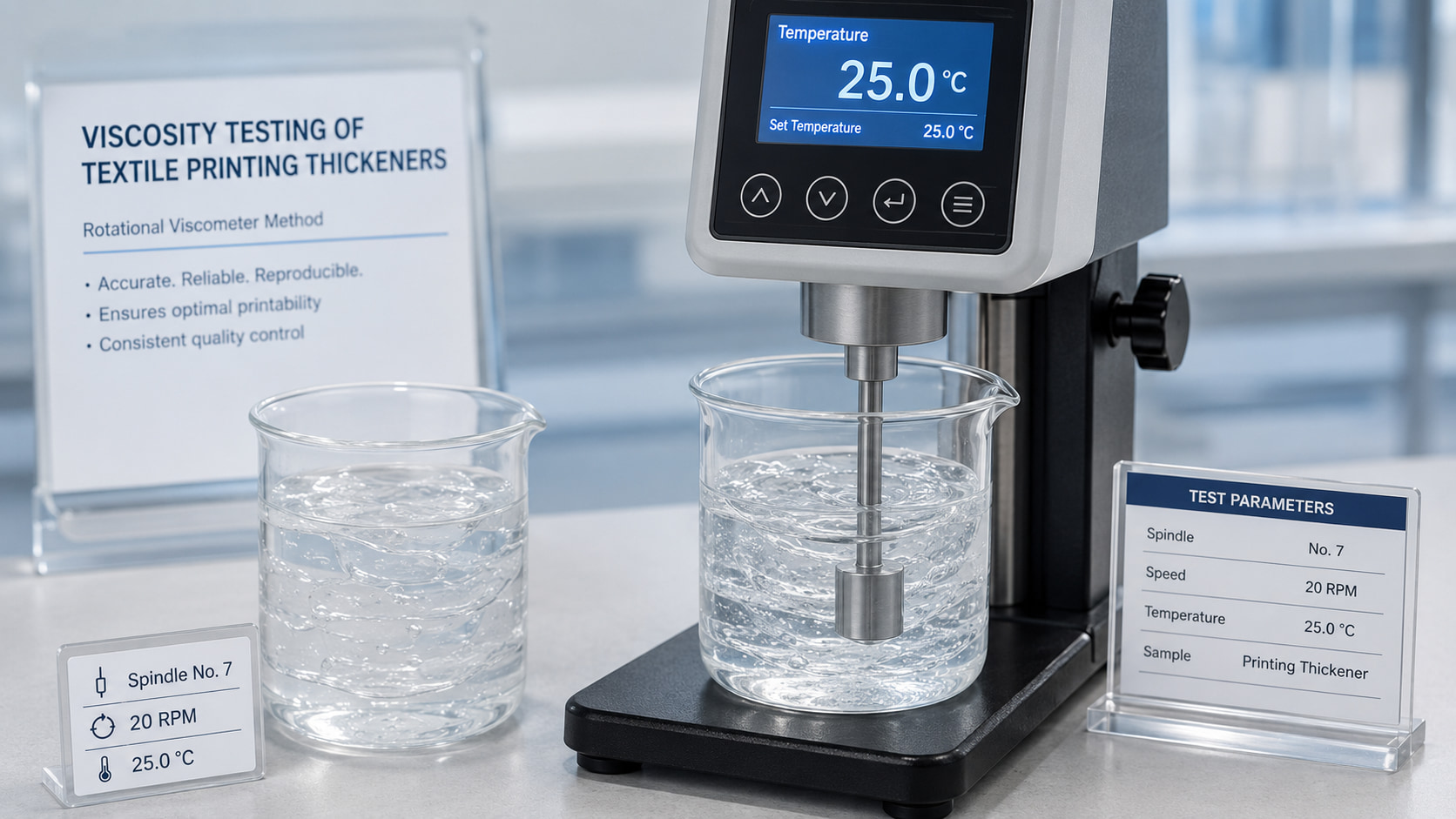
জানুন কেন টেক্সটাইল প্রিন্টিং থিকেনার সান্দ্রতা (ভিসকোসিটি) মানগুলো তুলনা করা যায় না যদি না সেগুলোর ঘনত্ব, তাপমাত্রা, যন্ত্র, স্পিন্ডল, গতি, প্রস্তুতি পদ্ধতি এবং পরীক্ষার সময় মিল থাকে।.
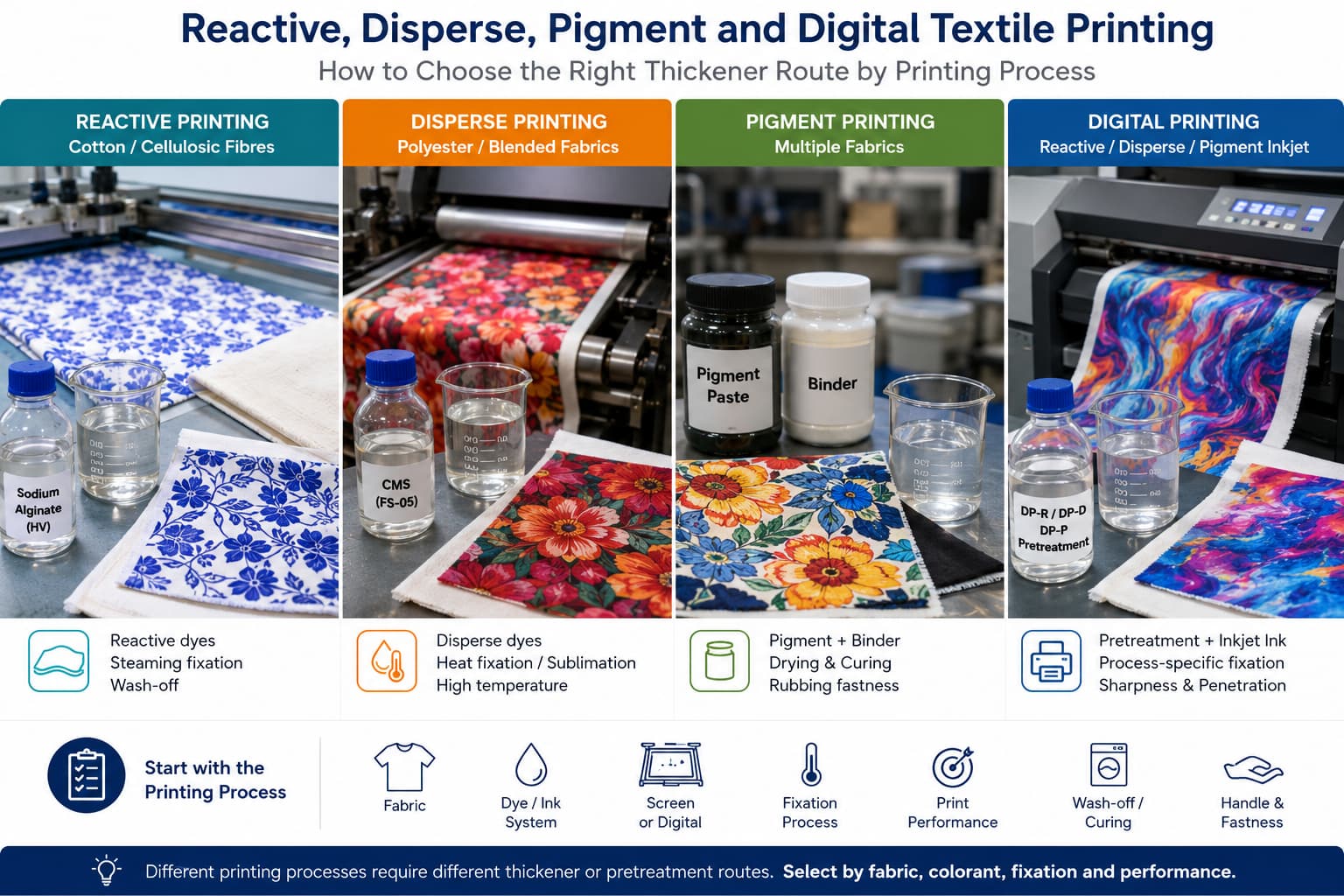
কাপড়, রঞ্জক বা কালি, স্থিরীকরণ, ধুয়ে ফেলার এবং মুদ্রণ-মানের প্রয়োজনীয়তার ভিত্তিতে প্রতিক্রিয়াশীল, বিচ্ছুরিত, পিগমেন্ট এবং ডিজিটাল টেক্সটাইল প্রিন্টিংয়ের জন্য ঘনকারী ও প্রিট্রিটমেন্ট পদ্ধতি কীভাবে নির্বাচন করবেন তা শিখুন।.
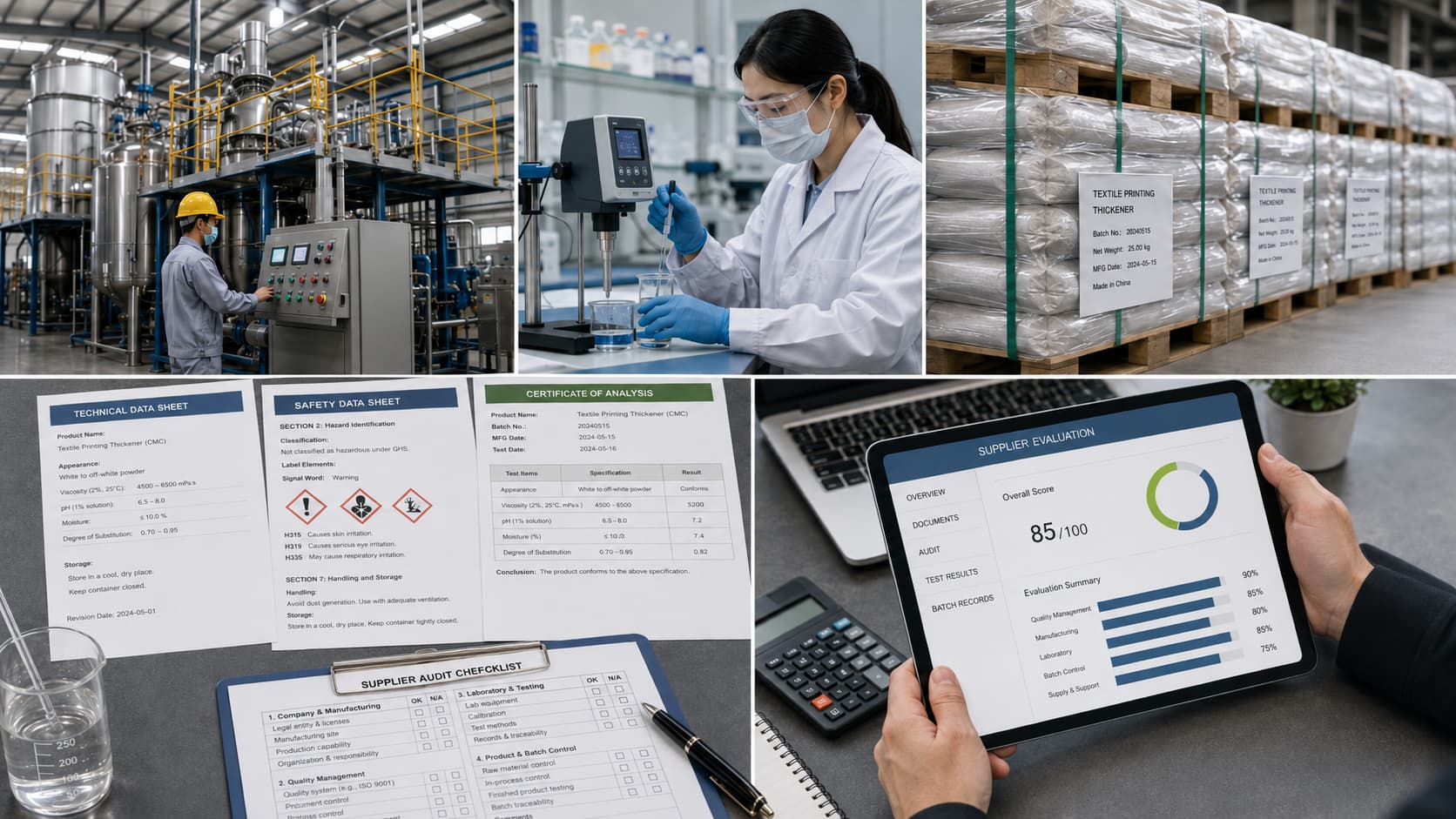
কোম্পানির পরিচয়, উৎপাদন সক্ষমতা, পরীক্ষা পদ্ধতি, ব্যাচের ট্রেসেবিলিটি, প্রযুক্তিগত নথি, নমুনা সহায়তা এবং রপ্তানি সরবরাহ যাচাই করে একটি টেক্সটাইল প্রিন্টিং থিকেনার প্রস্তুতকারককে মূল্যায়ন করার পদ্ধতি শিখুন।.
CMC-ভিত্তিক প্রিন্টিং পেষ্ট পিগমেন্ট, রিঅ্যাক্টিভ এবং ডিজিটাল টেক্সটাইল প্রিন্টিংয়ে ব্যবহৃত হয়। এই গাইডে কোন প্যারামিটারগুলো গুরুত্বপূর্ণ, সরবরাহকারীদের কীভাবে তুলনা করবেন এবং বড় অর্ডার দেওয়ার আগে কী জানতে হবে তা ব্যাখ্যা করা হয়েছে।.
টেক্সটাইল প্রিন্টিং-এ ঘনকারী হিসেবে সোডিয়াম অ্যালজিনেট এবং CMC উভয়ই ব্যবহৃত হয়, তবে এগুলো ভিন্ন রঞ্জক ব্যবস্থা ও প্রক্রিয়া শর্তের জন্য উপযুক্ত। এই গাইডে মূল পার্থক্যগুলো এবং কখন কোনটি ব্যবহার করতে হবে তা ব্যাখ্যা করা হয়েছে।.
Understanding sodium alginate raw material source and manufacturing process helps procurement teams ask better questions and evaluate suppliers more effectively. This guide covers seaweed species, extraction steps, impurity origins, and what consistent manufacturing looks like in supplier documentation.
Incorrect storage is one of the most common causes of sodium alginate performance problems in textile printing. This guide covers powder and paste storage conditions, shelf life expectations, degradation indicators, and what to check when receiving a new shipment.
প্রযুক্তিগত ডেটাশীটগুলো সরবরাহকারীর মধ্যে ফরম্যাট ও পরিপূর্ণতার দিক থেকে ভিন্ন হয়, এবং প্রতিটি ক্ষেত্র সব অ্যাপ্লিকেশনের জন্য সমানভাবে গুরুত্বপূর্ণ নয়। এই গাইডটি একটি সাধারণ সোডিয়াম অ্যালজিনেট TDS-কে বিভাগ অনুযায়ী ধাপে ধাপে ব্যাখ্যা করে, প্রতিটি প্যারামিটারের অর্থ কী এবং ফাঁক বা লাল পতাকা কীভাবে চিহ্নিত করবেন তা বুঝিয়ে দেয়।.
Many suppliers market "customized sodium alginate," but the term covers very different things in practice. This guide explains which parameters are genuinely adjustable, which are fixed by fundamental chemistry, and how to evaluate a supplier's customization claims.
When a print defect appears on the floor, the challenge is narrowing down the cause quickly. This reference guide organizes common sodium alginate paste-related defects by symptom, with likely causes ranked by probability and practical first checks for each.
সোডিয়াম অ্যালজিনেটের দাম সরবরাহকারী ও গ্রেড অনুযায়ী ব্যাপকভাবে পরিবর্তিত হয়, তবে সব মূল্য পার্থক্যই প্রকৃত গুণগত পার্থক্যকে প্রতিফলিত করে না। এই গাইডে ব্যাখ্যা করা হয়েছে খরচ নির্ধারণকারী উপাদানগুলো কী, কীভাবে সমতুল্য কোটেশন তুলনা গঠন করতে হয়, এবং সরবরাহকারীর প্রস্তাবনা মূল্যায়ন করার সময় কোন লাল পতাকাগুলো লক্ষ্য রাখতে হবে।.
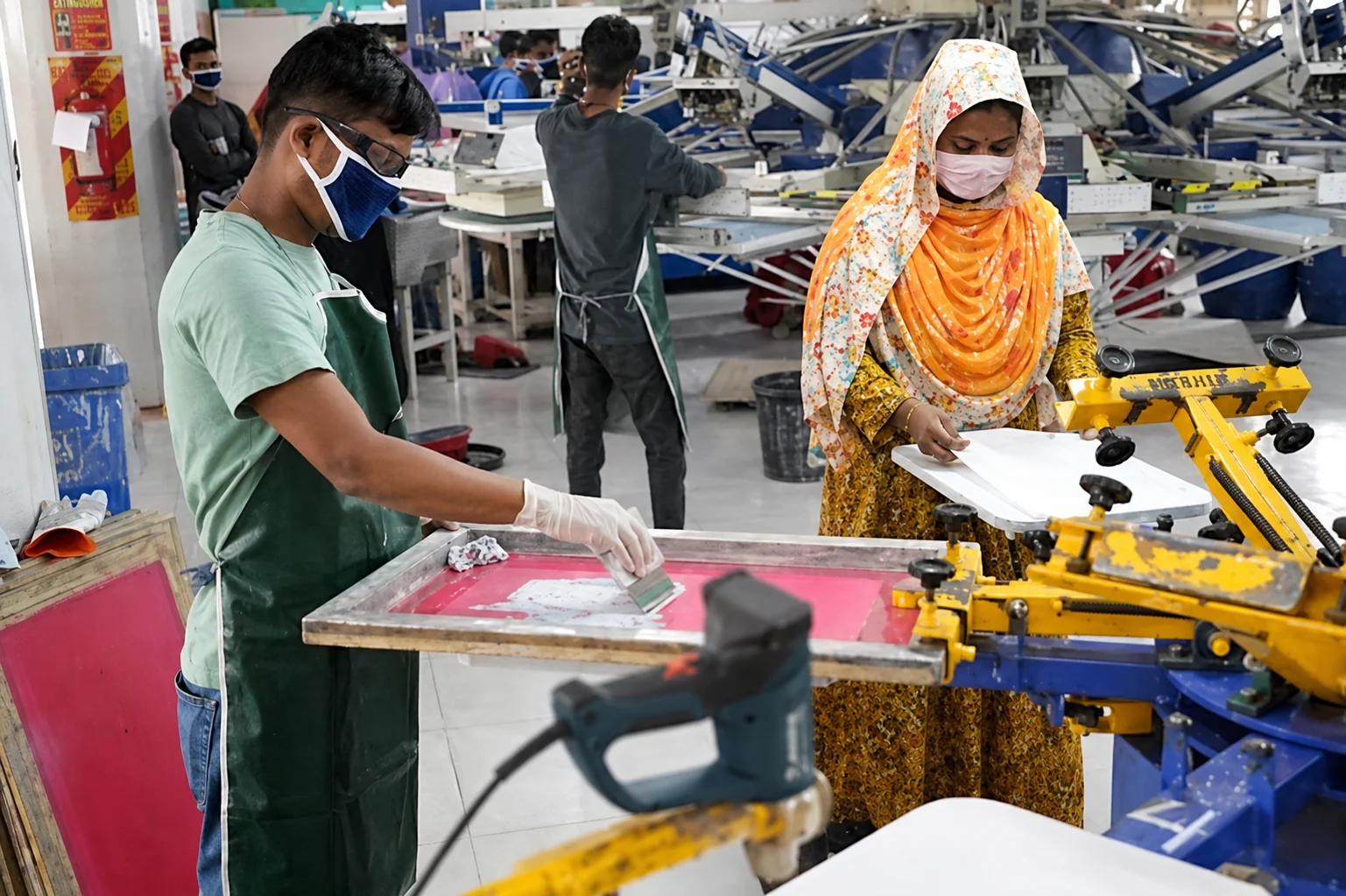
সঠিক টেক্সটাইল প্রিন্টিং থিকেনার শুধুমাত্র কাপড়ের ধরণের উপর নির্ভর করে না। ক্রেতাদের উচিত থিকেনারকে রঞ্জক বা পিগমেন্ট সিস্টেম, প্রিন্টিং পদ্ধতি, লক্ষ্যকৃত রিয়োলজি, ধুয়ে ফেলার প্রয়োজনীয়তা এবং প্রকৃত কারখানার পরীক্ষামূলক অবস্থার সাথে মিলিয়ে নেওয়া।.
পণ্যের নাম, ব্যবহার, পরিমাণ, গন্তব্য এবং আপনার কাছে থাকা যেকোনো TDS, নমুনা ছবি বা ডকুমেন্ট শেয়ার করুন। FSX Chemical এই তথ্য পর্যালোচনা করবে এবং কোটেশন, নমুনা মিলানো বা পণ্য নির্বাচনের পরবর্তী ধাপের জন্য পরামর্শ দেবে।.
পণ্যের তথ্যপণ্যের নাম, গ্রেড, মডেল, লেবেলের ছবি বা সরবরাহকারীর রেফারেন্স।.