How to Test a Synthetic Textile Printing Thickener Before Production Approval
A synthetic textile printing thickener should not be approved from one viscosity result. Production approval...
A synthetic textile printing thickener should not be approved for production because one laboratory sample reaches a target viscosity. Production approval should connect product identity, solids and pH, activation behavior, electrolyte tolerance, binder and pigment compatibility, rheology, filtration, holding stability, screen performance, curing, rubbing fastness, fabric hand and first-commercial-batch consistency. The most reliable qualification method is a staged current-reference comparison with clear go / conditional / fail decision gates. This guide shows printing mills, formulators and buyers how to move a synthetic thickener from candidate sample to controlled production approval without confusing one good laboratory result with a repeatable commercial grade.
How Should a Synthetic Textile Printing Thickener Be Tested Before Production Approval?
Use a staged qualification process.
Практическая последовательность действий выглядит следующим образом:
Does it meet production and finished-textile requirements?
Screen running, definition, color, curing, rubbing, hand
Production approval is achieved only when all relevant levels pass.
Start with a Current Production Reference
The current approved thickener is the most useful control.
Run:
Current Approved Product vs. Candidate Synthetic Thickener
under the same:
Вода
Пигмент
Связующее вещество
Фиксаторы / вспомогательные элементы
Ткань
Экран
Squeegee conditions
Сушка
Отверждение
Do not force equal dosage if the products have different thickening efficiency.
Instead, find the useful rheology window for each grade and compare the complete printing result.
A current reference prevents the laboratory from approving a candidate that looks technically acceptable in isolation but performs worse than the existing production standard.
1. Confirm Product Identity and Batch Traceability
Before technical testing, confirm exactly what has been received.
Запись:
Supplier
Commercial grade
Batch / lot
Manufacturing or retest date where supplied
Package identification
TDS version
SDS version
COA
A development sample without a permanent commercial grade code can be useful for early screening, but it should not move directly into purchasing approval.
The approved sample must be connected to a repeatable production grade.
2. Inspect Appearance and Physical Condition
For liquid synthetic thickeners, check:
Color and uniformity
Разделение
Settling
Surface skin
Частицы геля
Graininess
Unusual odor
Damaged or swollen packaging
Appearance does not prove application performance, but abnormal physical condition should be investigated before the product enters the formulation.
If the product has experienced suspected freeze or heat exposure, use a separate storage-excursion review instead of normal approval testing.
3. Check Solids or Active Content
Liquid acrylic thickeners can have different supplied solids.
Solids affect:
Effective polymer addition
Dosage comparison
Стоимость
Final polymer deposit
Сравните:
Дозировка в том виде, в котором поставляется
and:
Active Polymer Solids Introduced
A lower dosage does not automatically mean a more efficient or lower-solids product.
If the supplier specification uses total solids rather than active polymer, keep the terminology exactly defined in the test record.
4. Check pH and Activation Behavior
Many acrylic and polyacrylate thickeners are pH-responsive.
Before comparing viscosity, determine:
Is the product supplied ready to use?
Is it partially neutralized?
Does it require controlled alkali activation?
What activation window does the TDS recommend?
Then standardize:
Neutralizer identity
Концентрация нейтрализатора
Порядок сложения
Скорость перемешивания
Время уравновешивания
Конечный pH
Do not reject an alkali-swellable grade as “low viscosity” before confirming it has been activated correctly.
5. Build a Dosage–Viscosity Working Curve
Do not test only one dosage.
Prepare several controlled points around the supplier-recommended or current working region.
Measure:
Дозировка
pH
Свежая вязкость
Held viscosity
Внешний вид
Plot:
Dosage → Complete-Paste Viscosity
The objective is to find:
A stable useful region
A steep region where small dosage changes create large viscosity changes
The lowest practical dosage that remains inside the production window
Do not assume dosage and viscosity are linear.
6. Compare Rheology, Not One Viscosity Number
A synthetic thickener can pass one Brookfield viscosity target and still print poorly.
Screen printing requires a flow sequence:
Low-Shear Body → Shear Thinning → Screen Transfer → Structural Recovery
Оцените:
Low-shear viscosity
Multi-speed viscosity where available
Сдвиговое разжижение
Recovery after controlled shear
Elasticity / stringiness
Thixotropy
Published polyacrylate-thickener research shows that shear sensitivity and viscosity recovery can be important application properties.
Следовательно:
Same Brookfield Viscosity ≠ Same Printing Performance.
7. Run an Electrolyte-Tolerance Test
Many conventional polyacrylate thickeners are sensitive to ionic load.
Электролиты могут поступать из:
Пигментная дисперсия
Связующее вещество
Ремонтник
Process water
Другие вспомогательные средства
Run the candidate under a representative production electrolyte environment.
One viscosity number does not qualify a synthetic thickener.
Use the current production product as the reference.
Test the complete pigment-binder formula before printing.
Evaluate rheology, holding stability and screen performance separately.
Final approval requires cured-fabric color, rubbing and hand results.
Commercial approval requires grade traceability and first-batch verification.
Часто задаваемые вопросы
1. What is the first test for a synthetic textile printing thickener?
Start by confirming the commercial grade, batch, TDS/COA and physical condition, then standardize solids, pH and activation before comparing viscosity.
2. Is water viscosity enough to approve a synthetic thickener?
No. The product must also be tested with the real pigment, binder, fixer and auxiliaries, followed by printing and curing.
3. Should two synthetic thickeners be compared at the same dosage?
Not as the only comparison. Find the useful rheology window for each grade, then compare printing, finished fabric and cost.
4. Why is electrolyte testing important?
Pigment, binder, fixer and process water can introduce ions that reduce thickening efficiency in some acrylic/polyacrylate systems.
5. How should binder compatibility be tested?
Add the binder under controlled conditions, record pH and viscosity, compare with a water-dilution control and check holding stability and final printing behavior.
6. Why should dark pigment shades be included?
High pigment loading can add more water, surfactant, dispersant and electrolyte, creating a stronger compatibility challenge.
7. How long should holding stability be tested?
Use the real production holding period. A four-hour production process requires evidence that the paste remains acceptable over that period.
8. What should be checked on the printed fabric?
Evaluate agreed color or K/S, print definition, penetration, dry/wet rubbing, relevant wash fastness, surface residue and fabric hand.
9. Is a successful laboratory trial enough for purchase approval?
No. Run a controlled production trial and verify the first commercial batch against the approved sample and specification.
10. Why keep retained samples?
They allow complaint batches to be compared with the approved reference using the same method and help separate batch issues from process issues.
11. What incoming QC is useful after approval?
Typical controls include identity, appearance, pH, solids or active-content parameter, applicable viscosity and batch documentation, with periodic application verification.
12. What should I send FSX Chemical before requesting a candidate synthetic thickener?
Send the current thickener/TDS, dosage, viscosity method, pigment, binder, pH, fabric, machine route, curing conditions, finished-fabric targets and estimated usage.
Qualify a Synthetic Thickener Before Bulk Production
If your mill is evaluating a new synthetic textile printing thickener, FSX Chemical can help structure a controlled current-vs-candidate comparison from laboratory screening through first commercial batch verification.
Чтобы получить полезный технический обзор, отправьте:
Your current thickener sample, TDS or COA
Current dosage and viscosity method
Пигментная дисперсия
Система связующего вещества и фиксатора
Конечный уровень pH пасты
Технология нанесения рисунка на ткань и трафаретной печати
A synthetic thickener should be approved as a repeatable commercial system, not as one successful laboratory sample. Production approval begins with grade identity and ends with first-batch consistency, cured-fabric performance and a defined incoming-QC specification.
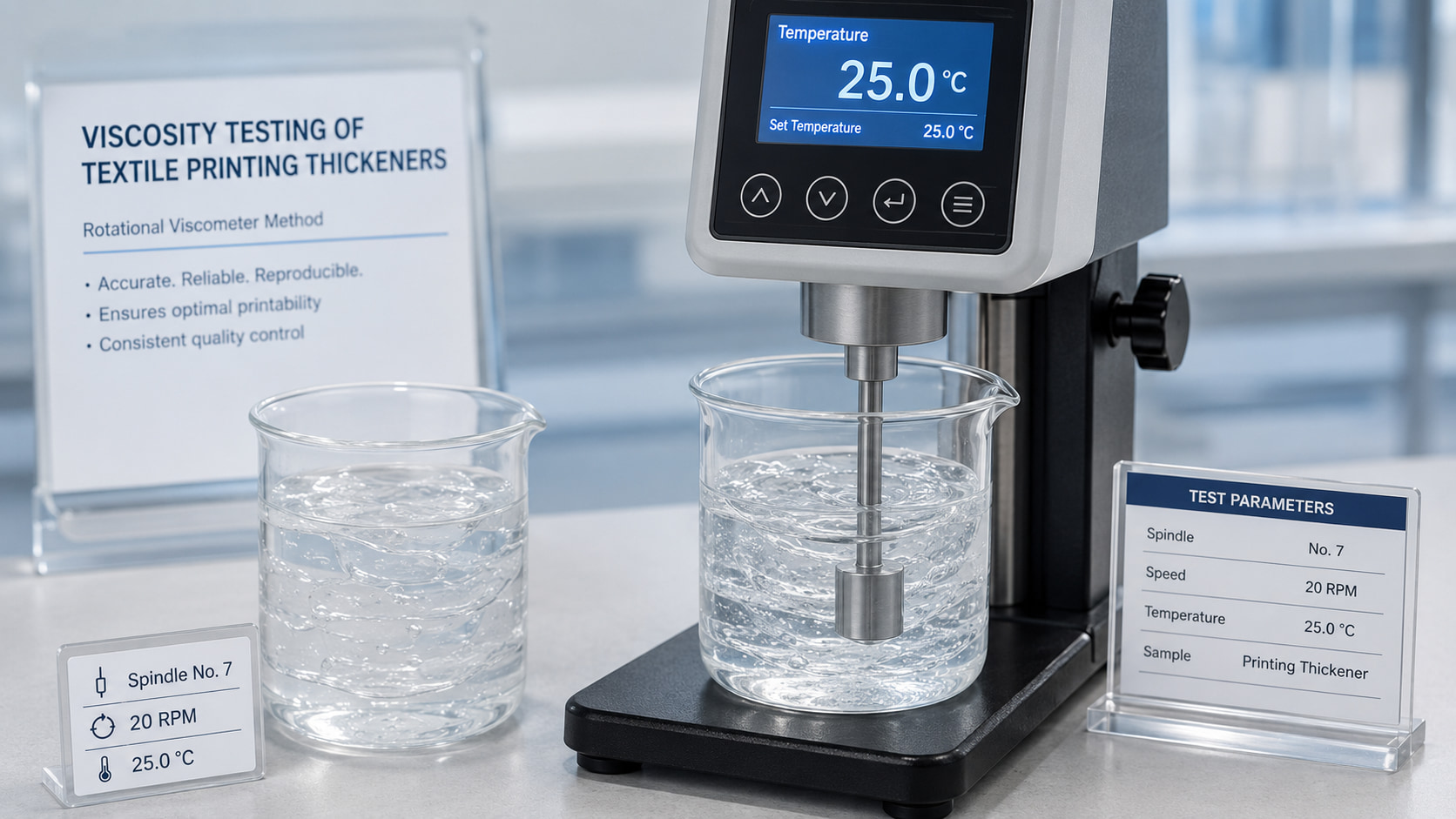
Узнайте, почему значения вязкости загустителей для текстильной печати нельзя сравнивать без учета таких факторов, как концентрация, температура, прибор, шпиндель, скорость, метод подготовки проб и время испытания.
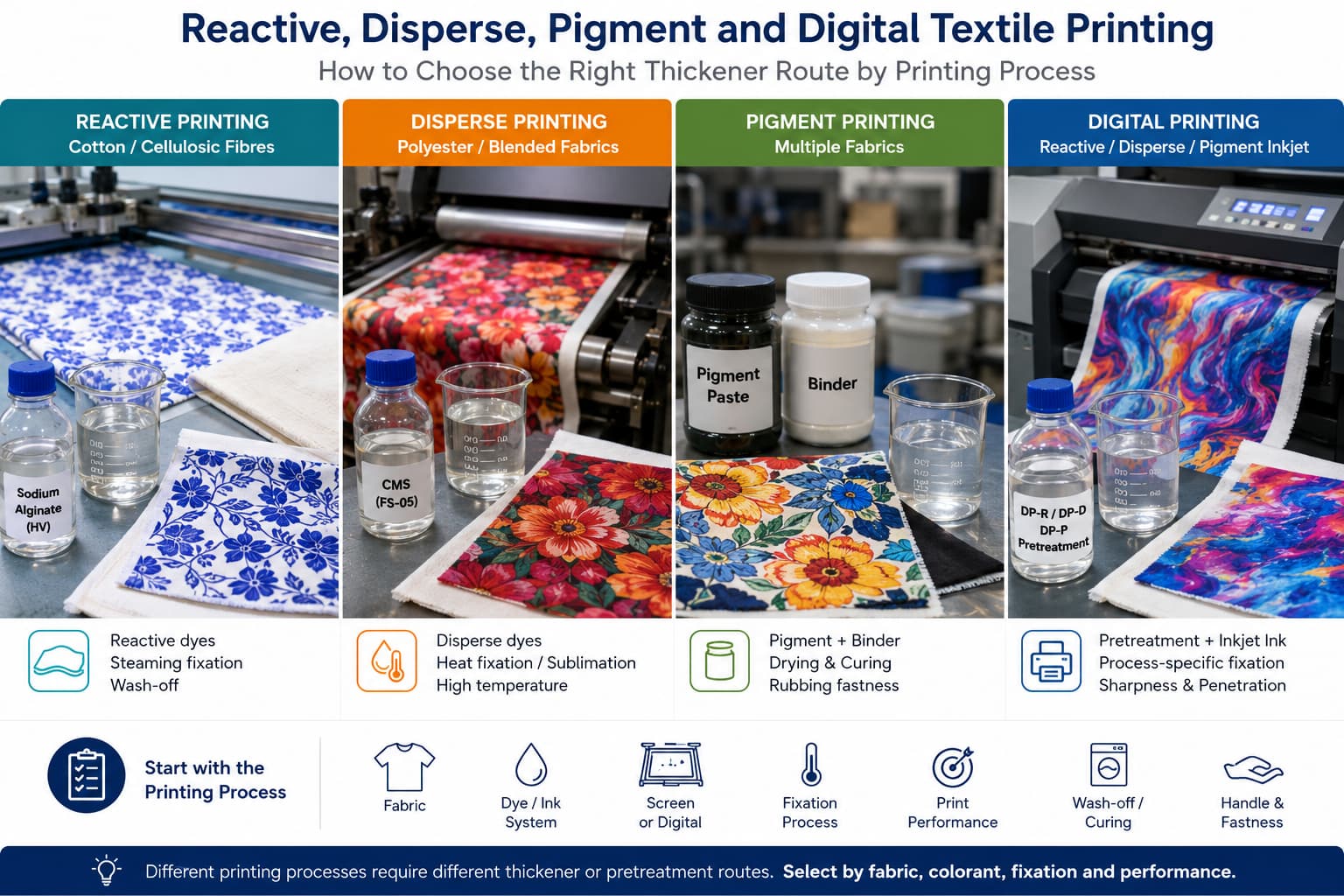
Узнайте, как выбирать загустители и способы предварительной обработки для реактивной, дисперсной, пигментной и цифровой печати на текстиле с учетом требований к ткани, красителю или чернилам, фиксации, вымываемости и качеству печати.
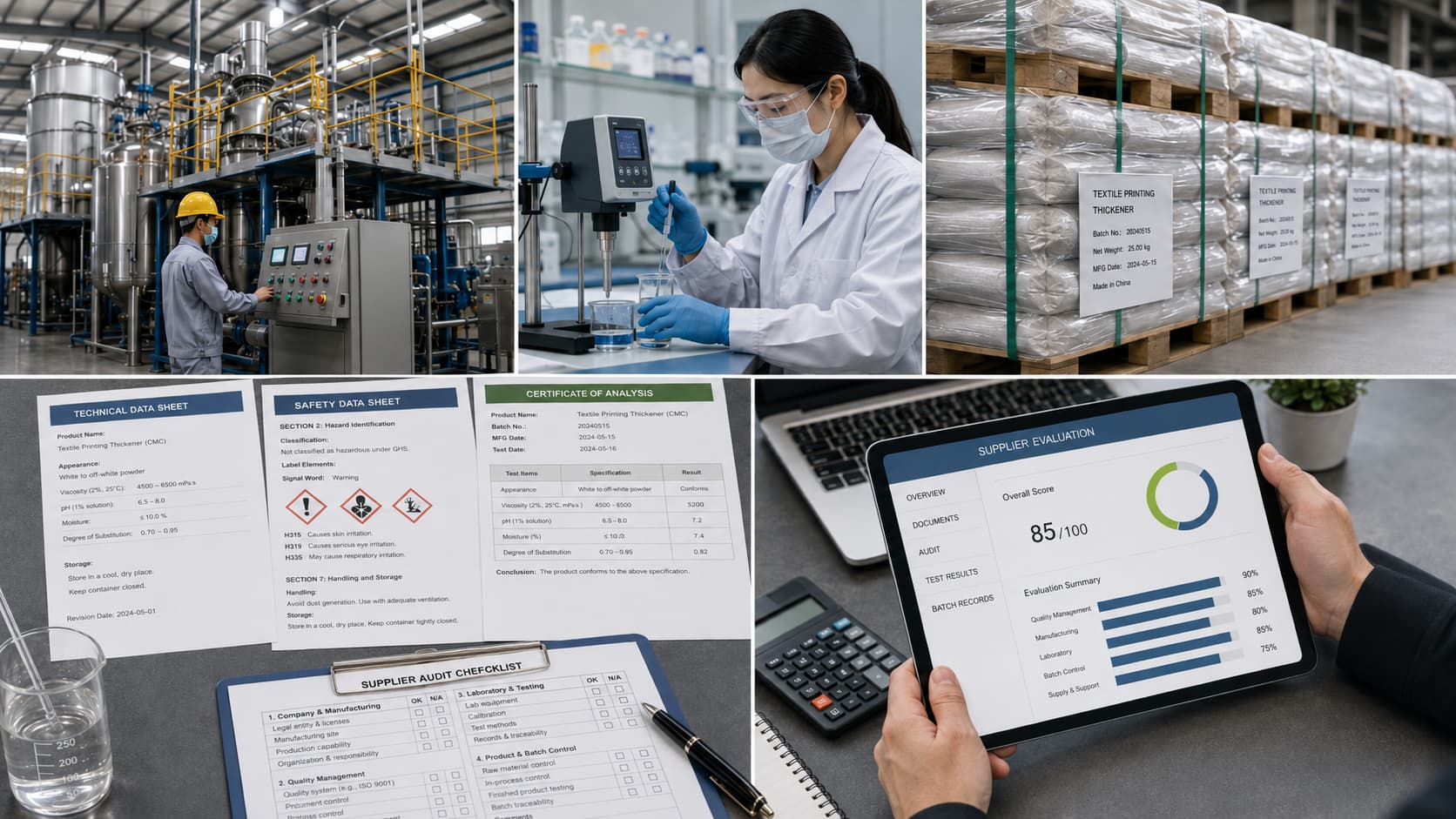
Узнайте, как оценить производителя загустителей для текстильной печати, проверив данные о компании, производственные возможности, методы испытаний, отслеживаемость партий, техническую документацию, предоставление образцов и возможности экспортных поставок.
Печатная паста на основе CMC используется в пигментной, реактивной и цифровой текстильной печати. В данном руководстве объясняется, какие параметры имеют значение, как сравнивать поставщиков и что следует уточнить перед размещением оптового заказа.
И альгинат натрия, и CMC используются в качестве загустителей при печати на текстиле, однако они подходят для разных систем окрашивания и условий производства. В данном руководстве объясняются основные различия между ними и приводятся рекомендации по их применению.
Понимание источников сырья для производства альгината натрия и технологического процесса его изготовления помогает специалистам по закупкам задавать более целенаправленные вопросы и более эффективно оценивать поставщиков. В данном руководстве рассматриваются виды морских водорослей, этапы экстракции, источники примесей, а также то, как должен выглядеть стабильный производственный процесс в документации поставщика.
Неправильное хранение является одной из наиболее распространённых причин проблем с эффективностью альгината натрия при печати на текстиле. В данном руководстве рассматриваются условия хранения порошка и пасты, предполагаемый срок годности, признаки ухудшения качества, а также то, на что следует обратить внимание при получении новой партии товара.
Технические паспорта у разных поставщиков различаются по формату и полноте информации, и не все поля одинаково важны для всех сфер применения. В данном руководстве пошагово рассматривается типичный технический паспорт альгината натрия, раздел за разделом, с объяснением значения каждого параметра и того, как выявить пробелы или «красные флажки».
Многие поставщики предлагают "алгинат натрия, изготовленный по индивидуальному заказу", однако на практике этот термин охватывает совершенно разные вещи. В данном руководстве объясняется, какие параметры действительно можно настраивать, а какие определяются фундаментальными законами химии, а также как оценивать заявления поставщиков о возможности индивидуальной настройки.
Когда на полу появляется дефект печати, задача состоит в том, чтобы быстро выявить его причину. В данном справочнике распространенные дефекты, связанные с использованием пасты альгината натрия, сгруппированы по симптомам; вероятные причины ранжированы по степени вероятности, а для каждой из них приведены практические рекомендации по первоочередной проверке.
Цены на альгинат натрия значительно варьируются в зависимости от поставщика и марки продукта, однако не все различия в ценах отражают реальные различия в качестве. В данном руководстве объясняется, что определяет стоимость, как правильно сравнивать предложения на сопоставимых условиях и на какие «красные флажки» следует обращать внимание при оценке предложений поставщиков.
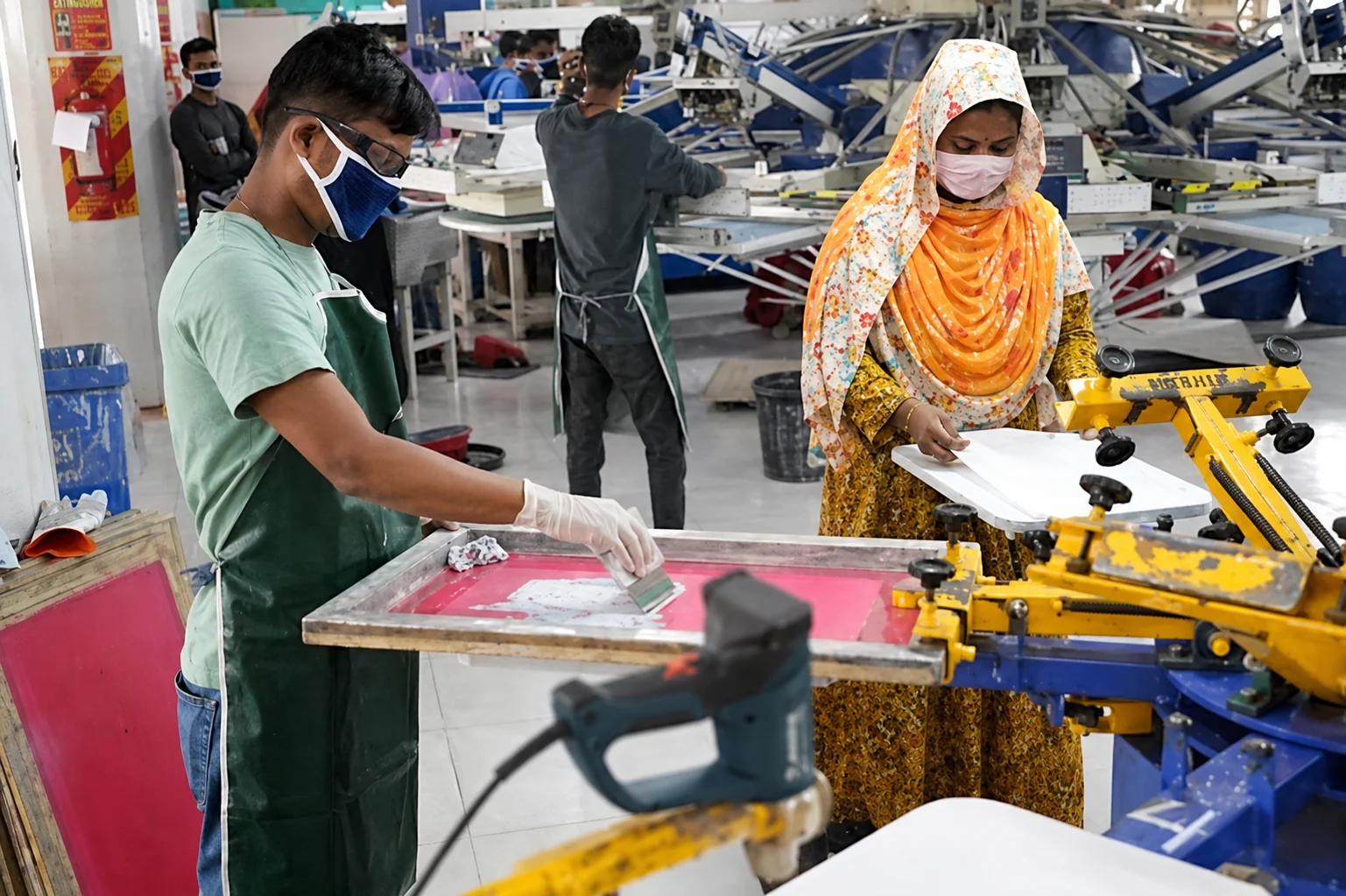
Выбор подходящего загустителя для текстильной печати зависит не только от типа ткани. Покупателям следует подбирать загуститель с учетом системы красителей или пигментов, метода печати, требуемых реологических характеристик, требований к стойкости к стирке, а также фактических условий производственных испытаний.
Сообщите название продукта, область применения, количество, пункт назначения, а также предоставьте техническое описание продукта (TDS),
фотографию образца или имеющиеся у вас документы. Компания FSX Chemical рассмотрит
эту информацию и порекомендует дальнейшие действия для подготовки коммерческого предложения, подбора образца
или выбора продукта.
Информация о продуктеНазвание товара, класс, модель, фотография этикетки или артикул поставщика.
Доступные документыTDS, SDS, COA, фотография образца, перечень продукции или данные испытаний.
Детали заказаПредполагаемый объем, упаковка, страна назначения, порт или условия торговли.
Область применения или проблемаПроцесс печати на текстиле, требования к составу, текущие проблемы или целевые показатели.