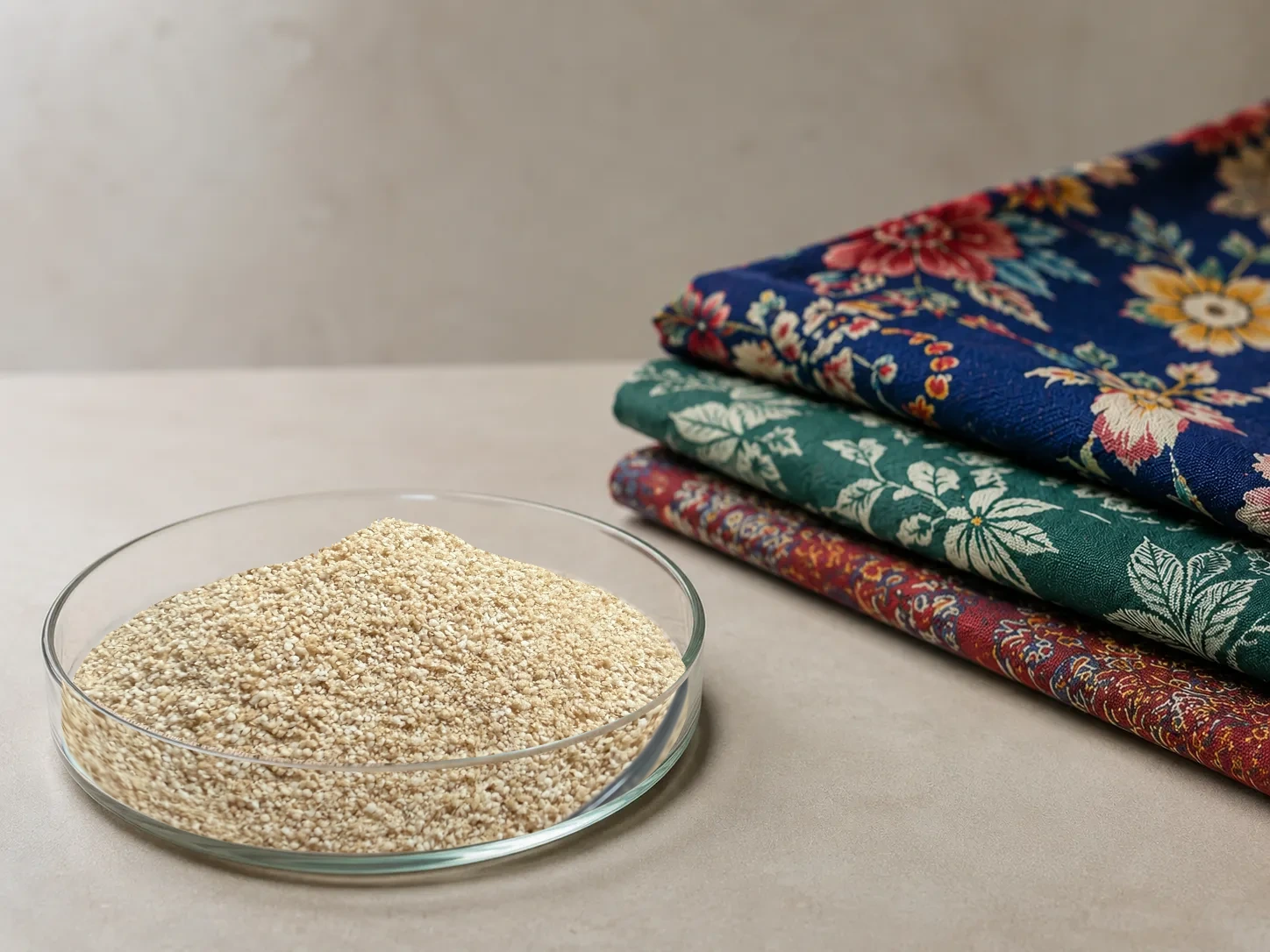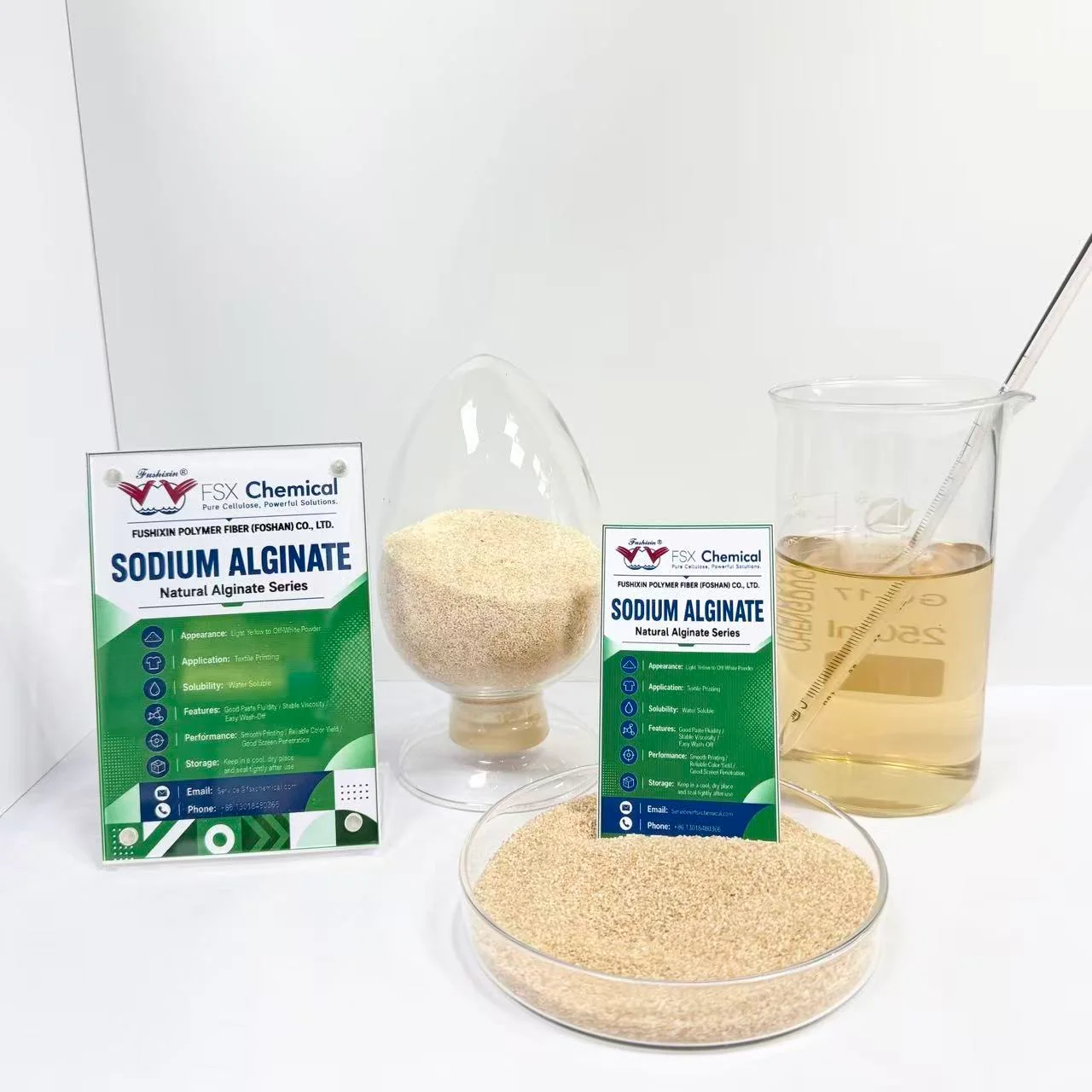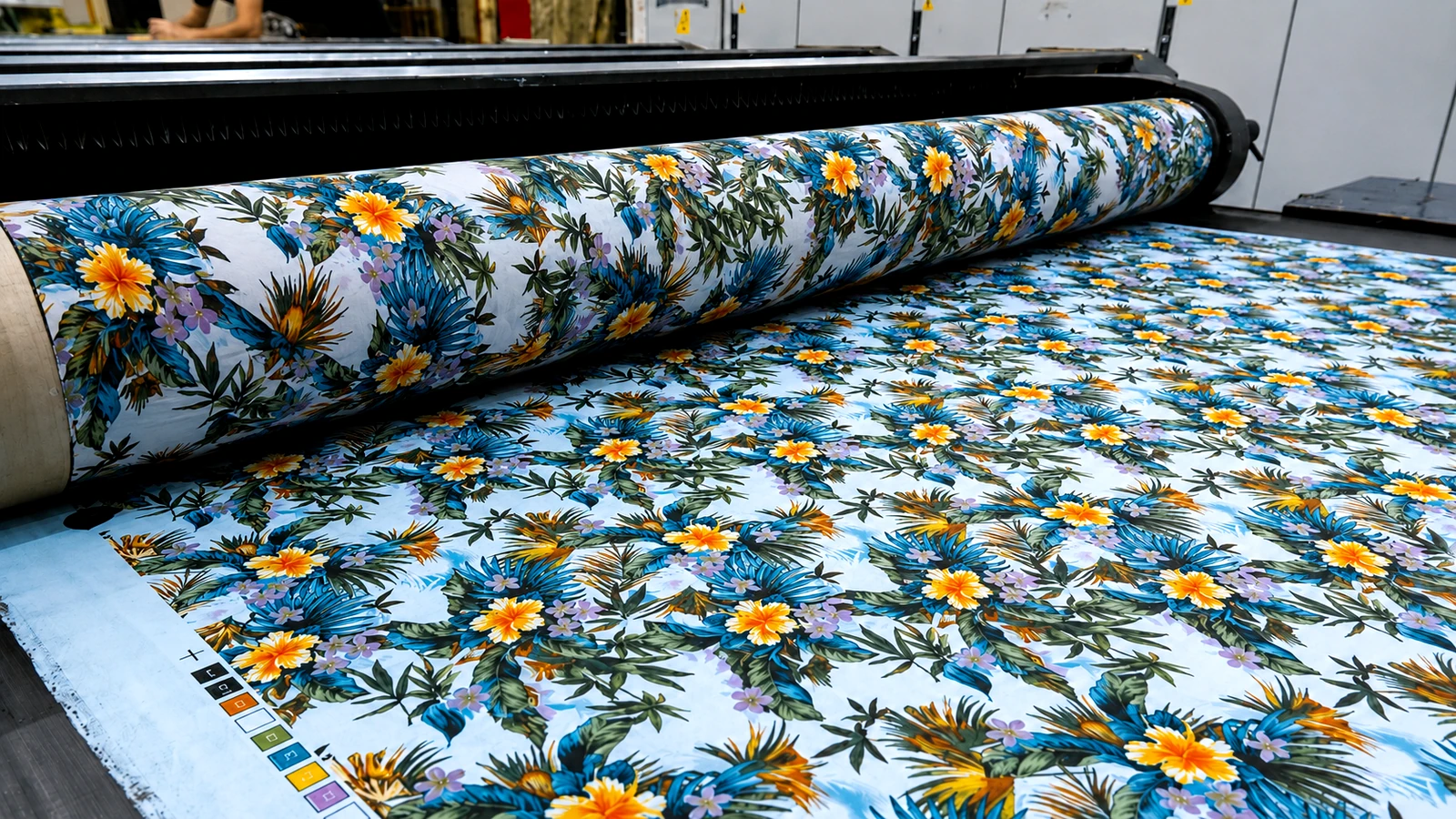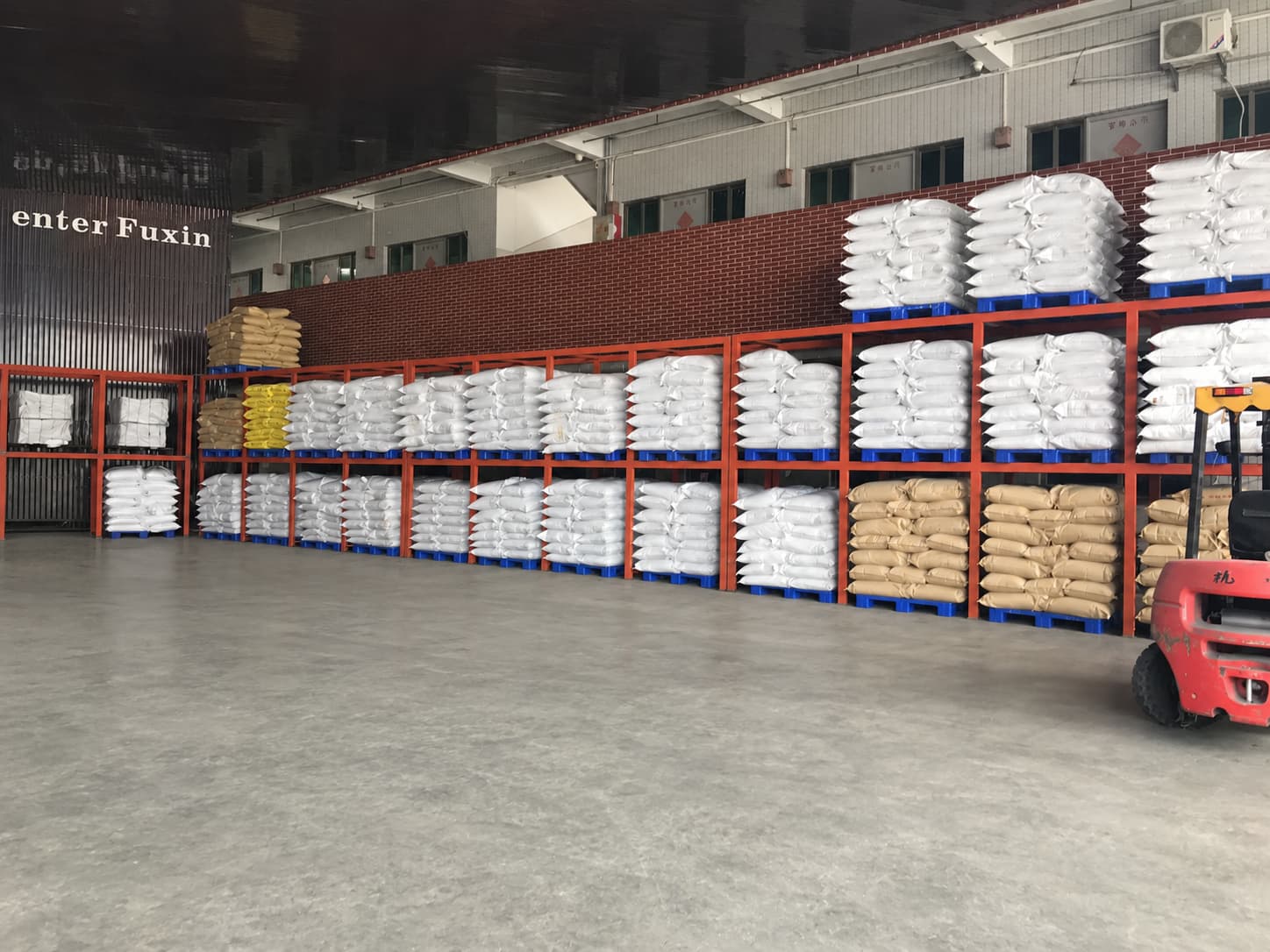
















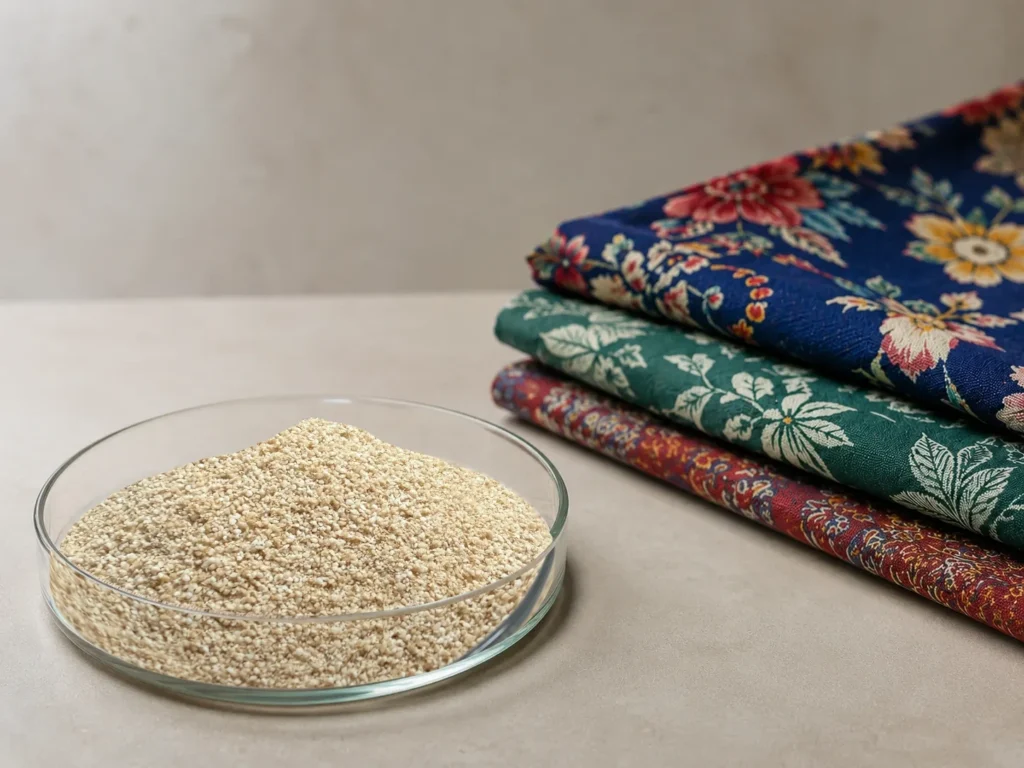
Sodium alginate printing paste can mean a hydrated stock thickener or the complete working color paste. Neither should be confused with the dry alginate grade being purchased. Record powder dose, stock concentration and stock addition separately: dilution with dye solutions and auxiliaries changes the final alginate concentration. Approve preparation and filtration first, then test the complete reactive-printing paste through the intended screen, fixation and wash-off process.
This guide explains how buyers can evaluate sodium alginate printing paste through technical specifications, application testing, document review, batch consistency, packaging, and export requirements.
What Is Sodium Alginate Printing Paste Used For?
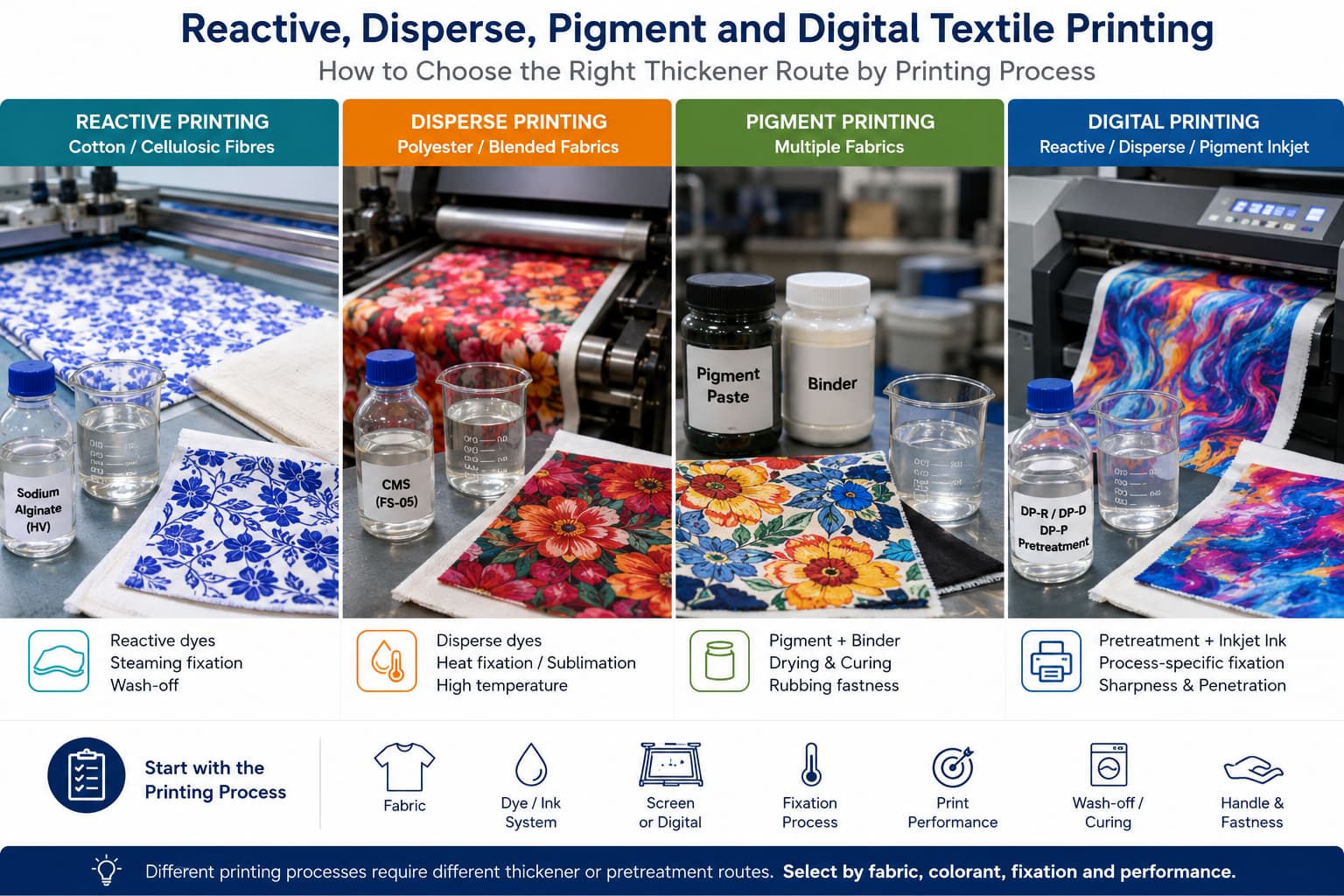
Reactive Textile Printing Paste
The suitable grade depends on the buyer’s dye system, fabric type, printing method, target paste viscosity, preparation conditions, and production requirements.
Impression sérigraphique à plat et rotative
For screen printing and rotary printing, buyers often focus on paste smoothness, screen passing, filtration, viscosity stability, and handling during production.
The sodium alginate grade should be tested under the buyer’s real preparation conditions, including water quality, stirring speed, addition method, preparation time, and paste concentration.
Digital Printing Pretreatment or Related Formulations
Some buyers may evaluate sodium alginate in digital printing pretreatment or related water-based textile formulations. In these cases, compatibility and stability testing are especially important.
A reactive screen-printing grade should not be assumed suitable for every pigment system or digital fabric-pretreatment process. Fabric pretreatment is applied to the textile; this discussion does not approve an ordinary alginate stock for addition to printhead ink.
Why Product Claims Need Practical Verification
“High Performance” Depends on the Buyer’s Formula
Performance in textile printing depends on the full system, including fabric type, dyes or pigments, auxiliaries, pH, water quality, preparation process, printing equipment, drying conditions, and washing process.
For this reason, buyers should test sodium alginate printing paste in their own formulation before confirming bulk purchase.
“Low Clogging” Should Be Checked by Filtration and Screen Passing
Low clogging performance cannot be confirmed by supplier wording alone. Buyers should check dissolution, paste smoothness, lump formation, filtration behavior, and screen passing under their own process conditions.
These observations are important for both laboratory testing and production-scale evaluation.
Compliance or Environmental Claims Need Documents
If a buyer needs restricted-substance statements, environmental documents, customer audit questionnaires, or third-party certification support, those requirements should be discussed before order confirmation.
Un fournisseur sérieux doit expliquer clairement quels documents peuvent être fournis et quelles allégations nécessitent des essais ou une certification formels effectués par un organisme tiers.

Key Specifications Buyers Should Review
Classe de viscosité et méthode d'essai
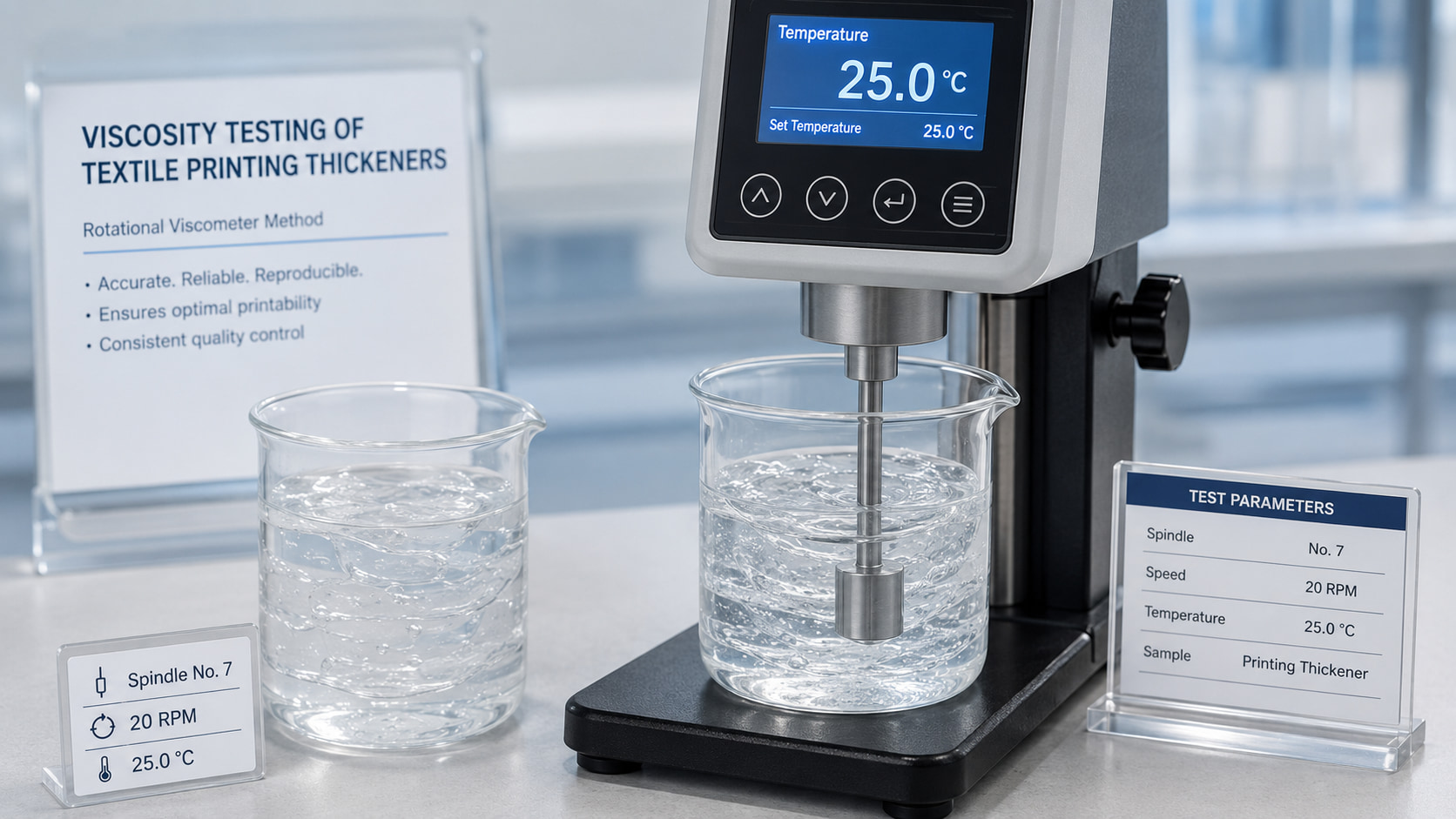
A comparable viscosity result needs the concentration and its mass basis, water quality, preparation and hydration history, sample age, temperature, instrument model, spindle, speed, container and reading time. Record the value and unit together with a suitable instrument operating range. Use the same method for the reference and candidate; the supplier’s powder-grade test and the mill’s complete working-paste test are separate records.
En l'absence d'une méthode claire de mesure de la viscosité, les valeurs fournies par différents fournisseurs peuvent ne pas être directement comparables.
Taille des mailles et comportement de dissolution
La taille des mailles peut influencer la dispersion et l'hydratation lors de la préparation de la pâte. Cependant, le comportement réel à la dissolution dépend également de la qualité de l'eau, de la vitesse d'agitation, du mode d'ajout, du temps de préparation et des conditions de formulation.
Les acheteurs sont invités à tester la vitesse de dissolution, la formation de grumeaux, l'onctuosité de la pâte et le comportement à la filtration dans leurs propres conditions de production.
Humidité, pH et aspect
L'humidité, le pH et l'aspect sont des indicateurs de qualité fondamentaux mais essentiels. Ils ont une incidence sur le stockage, la manutention, le contrôle qualité interne et la fidélisation des clients.
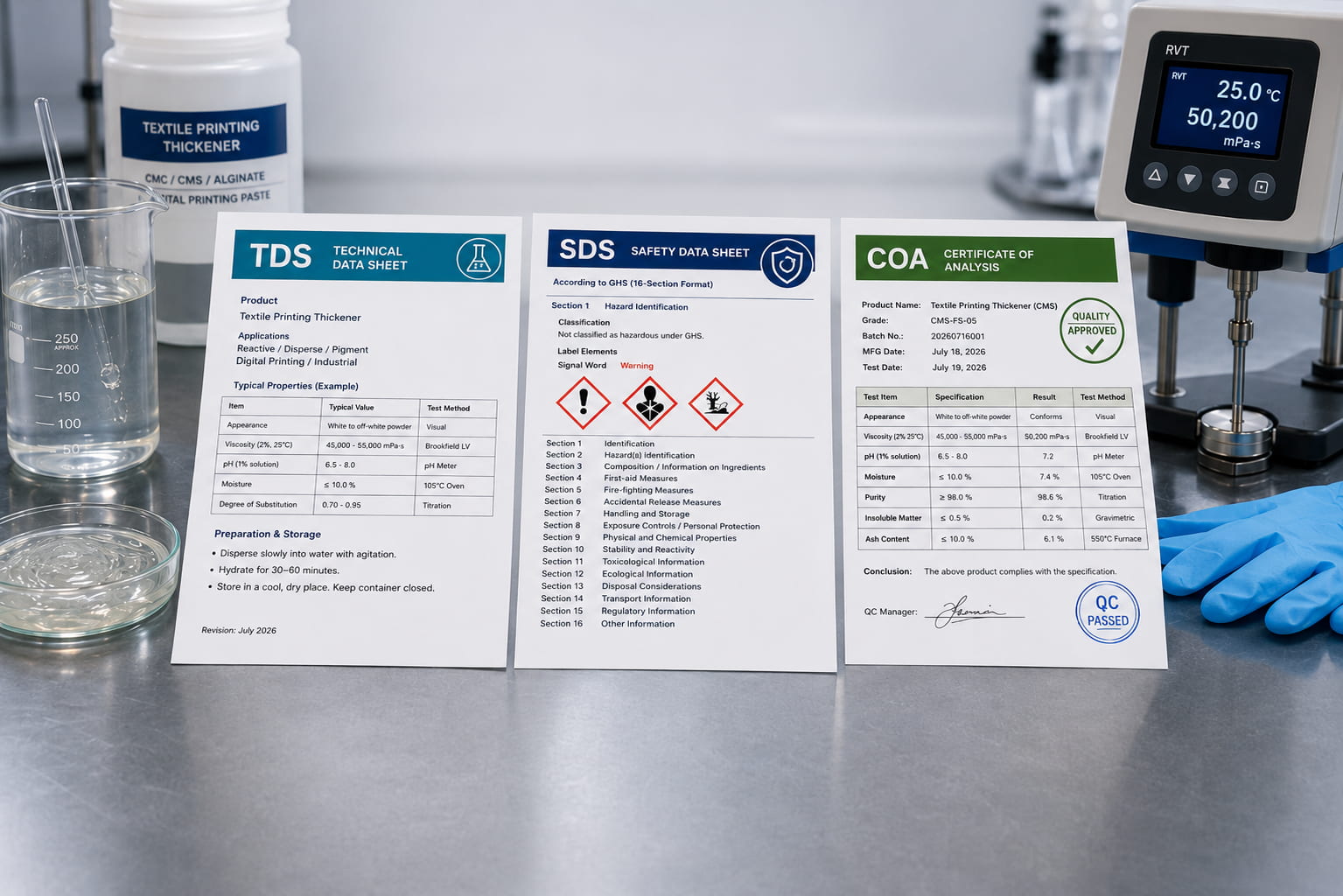
Ces paramètres doivent être vérifiés dans la fiche technique (TDS) et confirmés par les données du certificat d'analyse (COA) pour chaque lot de production.
Compatibility with Dyes, Pigments and Auxiliaries
Sodium alginate printing paste should be tested with the buyer’s actual dye or pigment system, auxiliaries, pH adjusters, water quality, and fabric type.
Compatibility issues may appear as viscosity drift, separation, poor leveling, filtration difficulty, uneven printing, or unstable color performance.
Keep a Powder, Stock and Working-Paste Concentration Ledger
Use a mass basis and state whether the powder is measured as supplied. For a simple stock made only from powder and water, stock concentration is powder mass divided by final stock mass. Final powder-equivalent concentration is stock mass added multiplied by its powder mass fraction, divided by final working-paste mass. This is not automatically active-polymer content.
Illustrative arithmetic only: 400 g of a 4% w/w powder-as-supplied stock contains 16 g powder equivalent. If the completed paste weighs 1,000 g, its powder-equivalent concentration is 1.6% w/w, not 4%. These values illustrate concentration arithmetic, not a recommended dose. Account separately for any additional thickener, dilution or material loss.
| Observation | Check before changing grade | Verification |
|---|---|---|
| Lumps or high filter residue | Powder feeding rate, wetting, mixing geometry, water quality and hydration history. | Repeat preparation with one controlled change; identify retained material rather than calling all residue insoluble alginate. |
| Stock is repeatable but working paste changes | Final concentration ledger, dye solutions, auxiliary additions, pH and paste age. | Compare the stock and complete paste separately at matched test conditions. |
| Viscosity readings disagree | Temperature, instrument, spindle, speed, container, immersion and measurement timing. | Repeat using an agreed method and suitable instrument operating range. |
The Brookfield DVE operating instructions identify measurement settings and sample history as relevant controls. A reproducible viscosity reading still requires a printing trial; it does not by itself prove screen release, pattern definition or wash-off.
How to Test Sodium Alginate Printing Paste
Test in the Actual Printing Formula
Sample testing should be done in the buyer’s own printing paste formulation whenever possible. Dyes, pigments, auxiliaries, water quality, pH, stirring method, paste concentration, and standing time can all affect final paste behavior.
Des essais réalisés uniquement dans de l'eau pure pourraient ne pas suffire pour confirmer si la qualité de l'alginate de sodium est adaptée à la production.
Observe Preparation and Printing Behavior
During testing, buyers should observe dissolution speed, paste smoothness, lump formation, filtration behavior, viscosity stability, screen passing, leveling, penetration, and pattern edge control.
Ces observations pratiques sont souvent tout aussi importantes que les données techniques figurant dans la fiche technique.
Comparer avec le produit actuel
If the buyer is replacing an existing sodium alginate, printing paste, CMC, CMS, or blended thickener, the new sample should be tested against the current product under the same conditions.
This helps the buyer judge whether the recommended grade is technically suitable before discussing bulk supply.
Vérifier la cohérence entre l'échantillon et le lot
Before confirming a bulk order, buyers should check whether the approved sample and bulk shipment will follow the same viscosity range, mesh size, specification range, packaging format, batch traceability, and COA requirements.
This helps reduce the risk of sample approval but unstable bulk performance later.
Documents que les acheteurs devraient demander
TDS pour la révision du cahier des charges
La fiche technique permet aux acheteurs de prendre connaissance des caractéristiques standard du produit. Elle doit mentionner l'aspect, la viscosité, la taille des mailles, la teneur en humidité, le pH, les conditions de stockage et la méthode d'essai.
Le TDS permet d'effectuer un premier contrôle de la qualité, mais il ne doit pas se substituer aux essais sur échantillons réalisés avec la formulation d'impression propre à l'acheteur.
Certificat d'origine pour la confirmation de lot
Le certificat d'analyse confirme les données réelles d'un lot de production spécifique. Il revêt une importance particulière pour les commandes en gros, les achats récurrents, l'approvisionnement des distributeurs et le contrôle qualité interne.
Les acheteurs peuvent comparer les données des certificats d'analyse (COA) d'un envoi à l'autre afin de vérifier si les paramètres clés restent dans les limites convenues.
Examen des fiches de données de sécurité (FDS) relatives à la manipulation et à l'expédition
La fiche de données de sécurité (FDS) sert de référence pour la manipulation, le stockage, le transport et l'évaluation interne de la sécurité. Dans le cadre des achats internationaux, la FDS peut également être requise pour l'expédition et les formalités douanières.
Les acheteurs doivent s'assurer que le nom du produit figurant sur la FDS et les informations relatives au fournisseur correspondent bien aux documents de commande.
Documents supplémentaires relatifs au client ou à la conformité
If the buyer needs restricted-substance statements, environmental documents, customer audit questionnaires, certificate copies, or third-party testing support, those requirements should be discussed before order confirmation.
The supplier should explain which documents can be provided, which product or site they apply to, and which claims require formal third-party testing.
How to Compare Sodium Alginate Printing Paste Suppliers
Compare Equivalent Grades and Applications
Before comparing suppliers, buyers should confirm whether each quotation is based on the same application, viscosity range, testing method, packaging, order quantity, and trade terms.
A lower price may not be useful if it is based on a different grade or an unsuitable specification.
Review Batch Traceability
Batch traceability helps buyers manage quality control, repeat orders, and customer feedback. Buyers should confirm batch number, label information, COA availability, and packaging format before shipment.
Vérifier les documents d'emballage et d'exportation
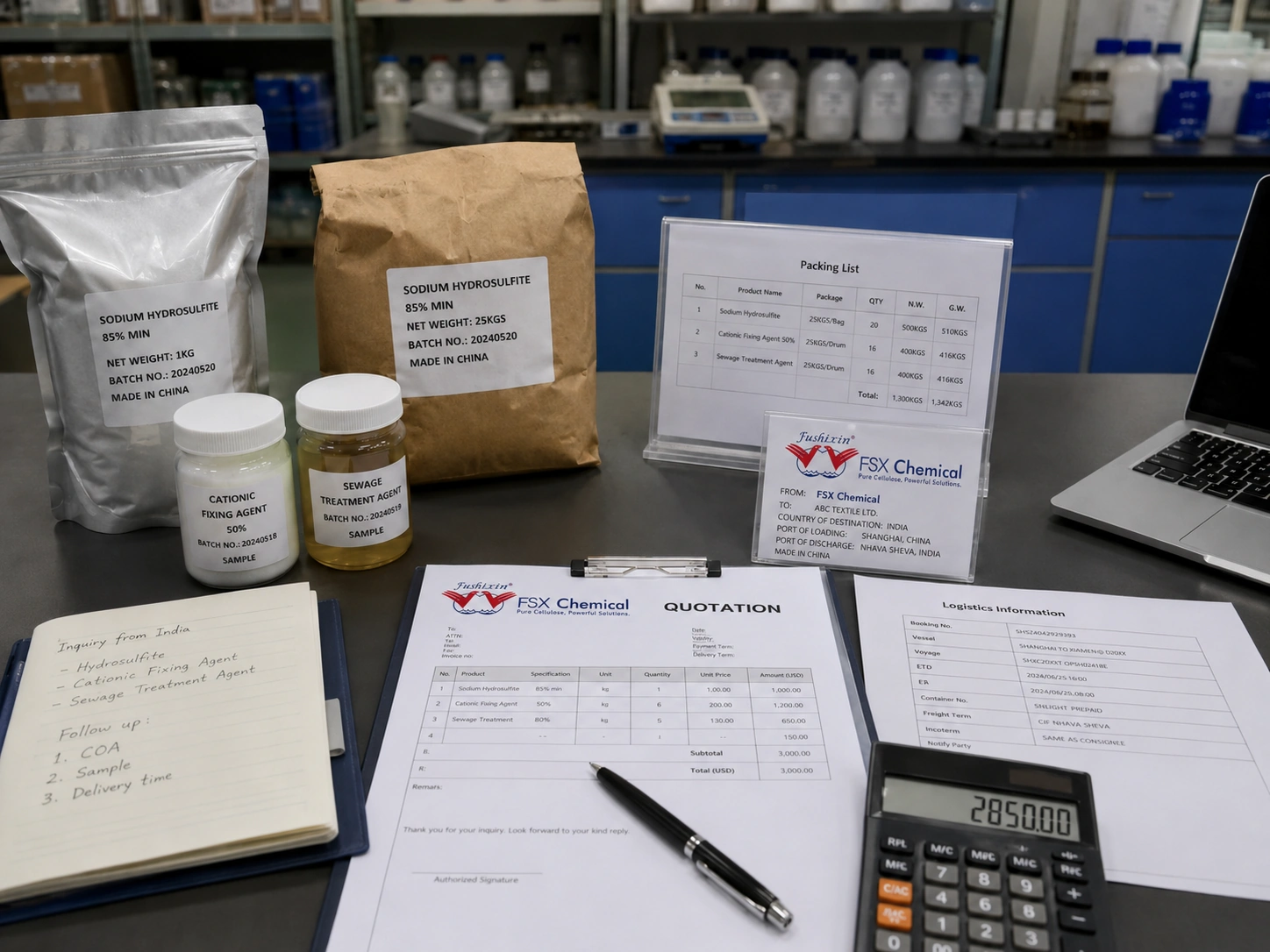
Packaging size, bag type, net weight, pallet requirements, labels, invoice, packing list, COA, SDS, and other export-related documents should be confirmed before shipment.
Document requirements may vary by destination country, product type, and the buyer’s internal purchasing process.
Avoid Broad Claims Without Test Results
Claims such as “high-performance,” “eco-friendly,” “low clogging,” “high color fastness,” or “stable for long-term storage” should be supported by documents, agreed test methods, or the buyer’s own evaluation results when they are important to purchasing decisions.
Problèmes courants et conseils de dépannage
Grumeaux ou mauvaise dissolution
Lumps may be related to fast addition, insufficient dispersion, unsuitable stirring, water quality, or preparation method. Buyers should record preparation conditions during sample testing.
Blocage de l'écran ou filtrage insuffisant
Screen blocking or filtration difficulty may come from poor dissolution, formulation incompatibility, particle contamination, unsuitable viscosity, or insufficient filtration before printing.
Viscosité instable
Viscosity drift may be caused by water quality, temperature, pH, standing time, formulation compatibility, or grade mismatch.
Buyers should compare production conditions with the supplier’s viscosity testing method.
Uneven Printing or Poor Pattern Control
Il convient de passer en revue l'ensemble du système d'impression avant de modifier une seule matière première.
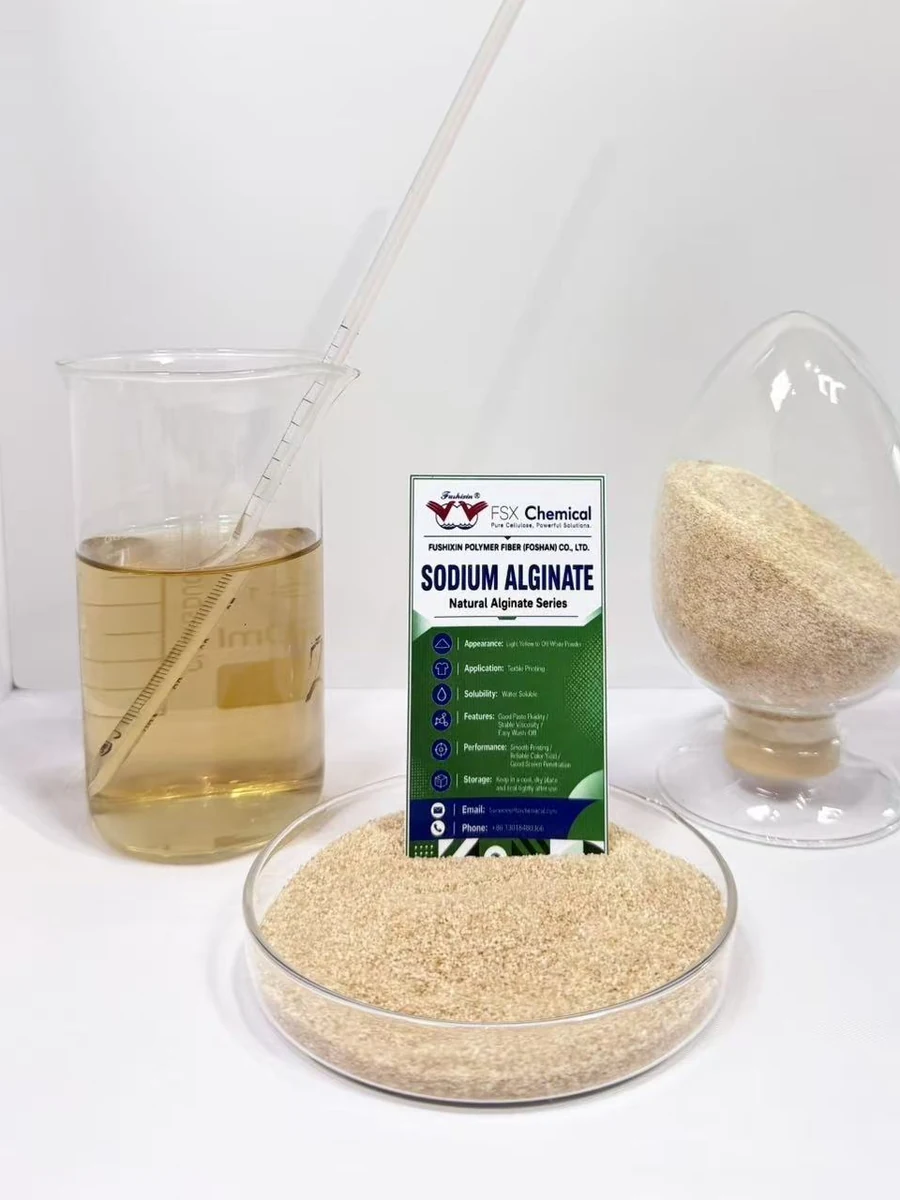
How FSX Chemical Supports Sodium Alginate Printing Paste Buyers
We do not suggest choosing sodium alginate printing paste only by product name, broad performance claims, compliance claims, or price. The recommended sodium alginate grade should be reviewed through technical documents and tested in the buyer’s own printing system before bulk purchase.
Prochaines étapes
- Partagez votre processus d'impression — Indiquez-nous si vous utilisez l'impression réactive, la sérigraphie, l'impression rotative, le prétraitement numérique, l'impression pigmentaire ou un autre procédé.
- Clarify Fabric and Formula Conditions — provide fabric type, dye or pigment system, auxiliaries, water quality, pH, and preparation method.
- Définissez la viscosité souhaitée — Indiquez la plage de viscosité, la concentration d'essai, la température, la méthode d'analyse et la catégorie actuelle du produit, si ces informations sont disponibles.
- Demande d'équivalence de notes — ask for a suitable sodium alginate printing paste grade based on your actual production conditions.
- Demander un TDS — vérifier la viscosité, la taille des mailles, le pH, le taux d'humidité, l'aspect, les conditions de stockage et la méthode d'essai.
- Demander un certificat d'authenticité — vérifier, avant l'expédition, que les données du lot correspondent à la plage spécifiée convenue.
- Demander une fiche de données de sécurité (FDS) — vérifier les modalités de manutention, de stockage, de transport et les informations relatives au produit.
- Demander un échantillon — Testez la qualité recommandée dans votre propre formulation d'impression avant de valider les commandes en gros.
- Vérifier les documents d'emballage et d'exportation — Vérifier les dimensions des sacs, les étiquettes, la traçabilité des lots, la facture, le bordereau d'expédition, le certificat d'analyse (COA), la fiche de données de sécurité (FDS) et les autres documents requis avant l'expédition.
- Request sample and grade matching — send the current grade, fabric, reactive-printing route, complete recipe basis and the specific trial result you need to improve. Contacter FSX Chemical to discuss the next evaluation step.