















For international sodium alginate purchasing, verify who supplies the material, which commercial grade and lot you will receive, and how the quotation, technical records, package labels and shipment documents connect. Global supply language does not demonstrate grade suitability. Approve reactive-printing performance separately through a controlled sample and first-lot trial.
This guide explains how international buyers can evaluate a sodium alginate manufacturer for textile printing applications by reviewing specifications, documents, sample testing results, batch consistency, packaging, and export communication.
Why Global Sodium Alginate Manufacturer Selection Matters
Product Name Alone Does Not Define Suitability
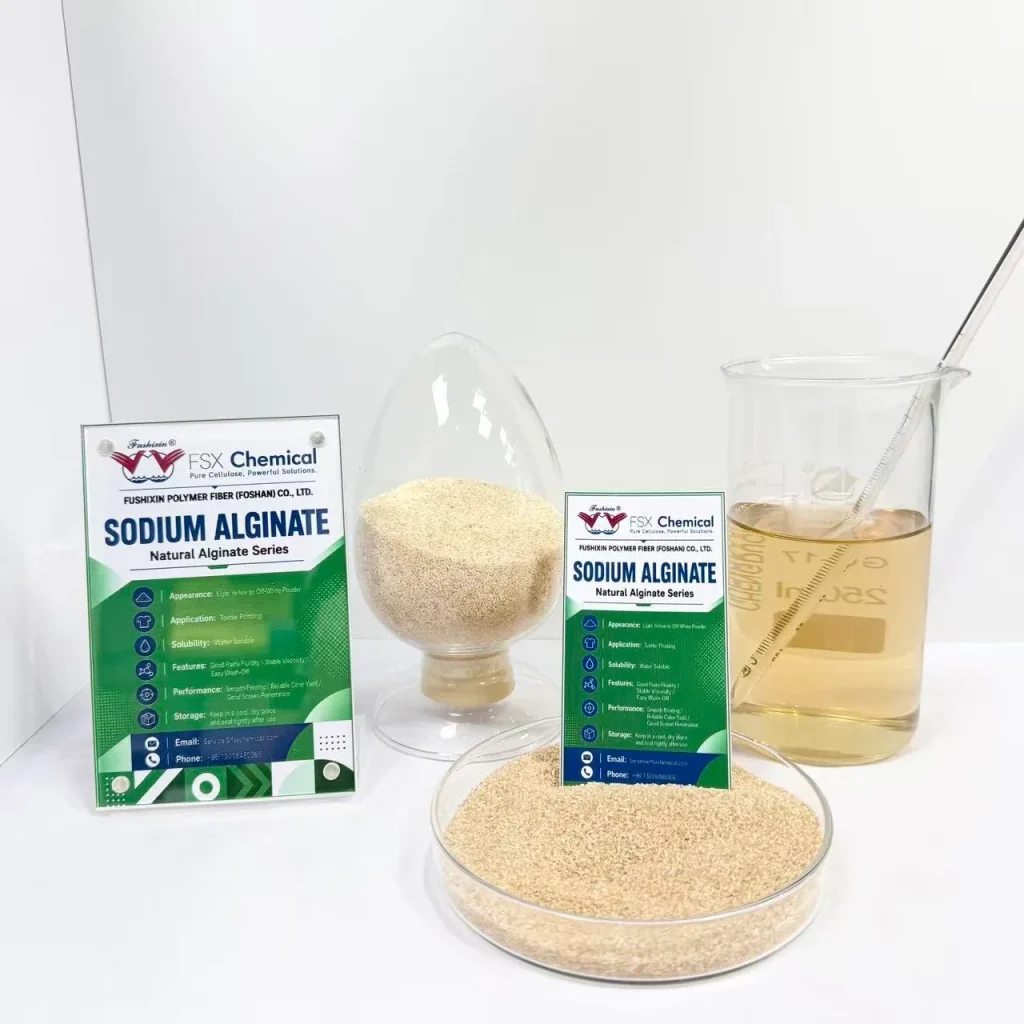
The same product name may cover different sodium alginate grades. Two products may look similar as powder, but they may perform differently during paste preparation and printing application.
Buyers should not confirm a supplier only by product name, price, or general claims. The actual specification range, test method, and application testing result are more important.
Textile Printing Requires Stable Paste Performance
In textile printing paste, viscosity affects preparation, screen passing, pattern edge control, and handling during production. If viscosity or dissolution behavior changes between batches, the factory may need to adjust the formulation again.
A practical manufacturer should provide clear viscosity data, testing method, and COA support for batch confirmation.
Export Purchasing Requires Clear Communication
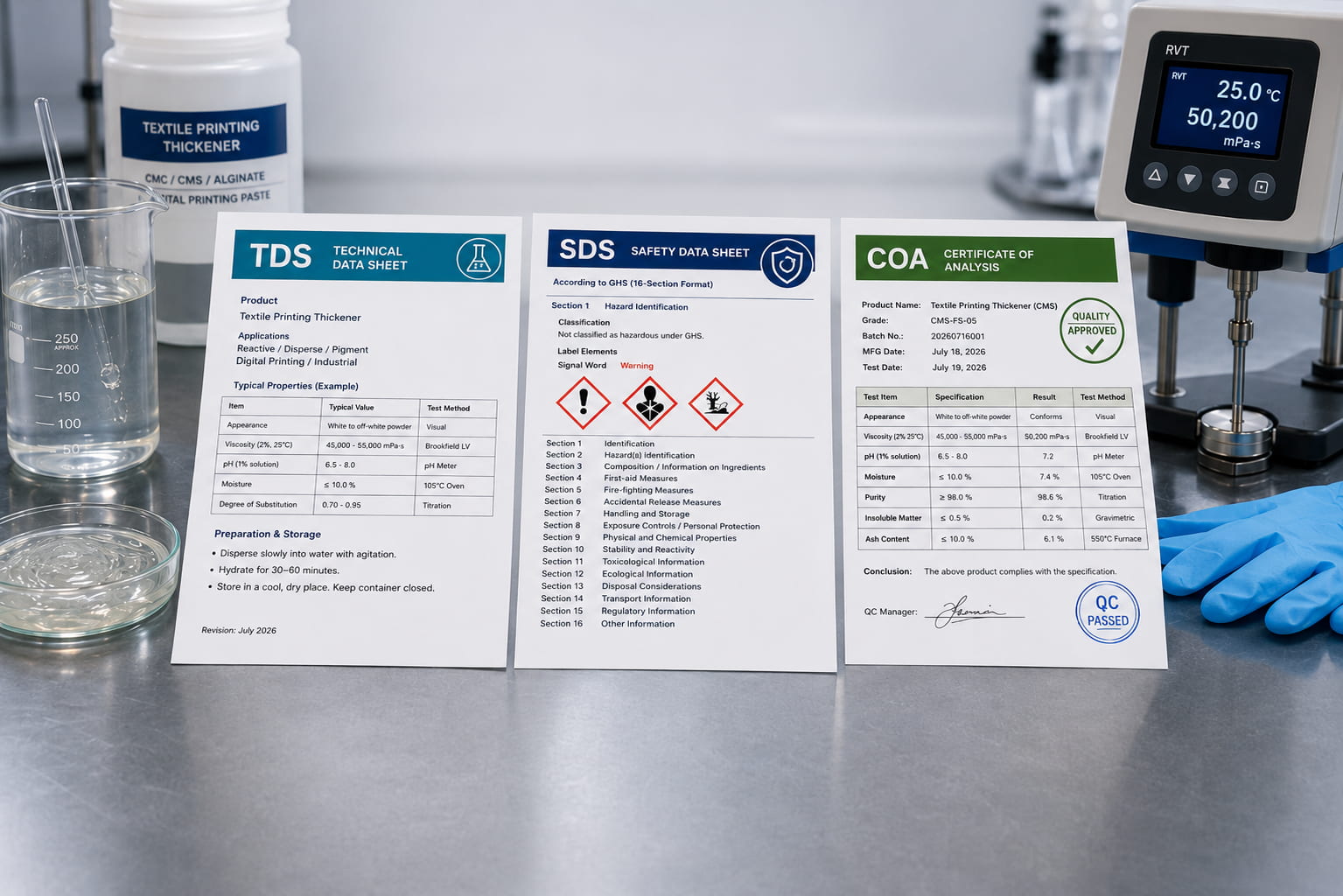
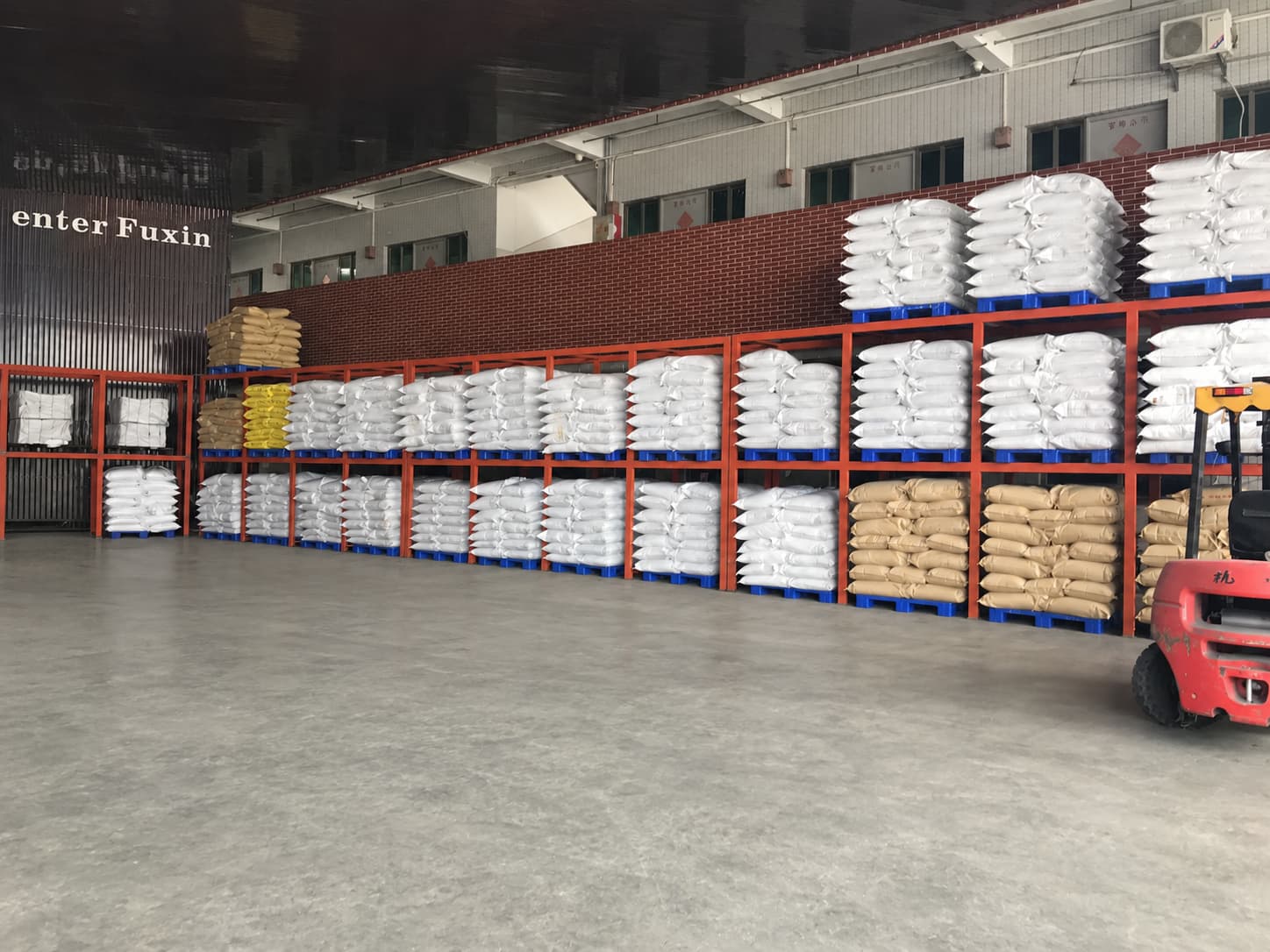
International buyers often need more than product supply. They may also need TDS, COA, SDS, packaging information, label details, batch traceability, invoice, packing list, and other export-related documents.
These requirements should be discussed before shipment, especially for distributors and repeat-order customers.
Key Specifications Buyers Should Confirm
Classe de viscosité et méthode d'essai
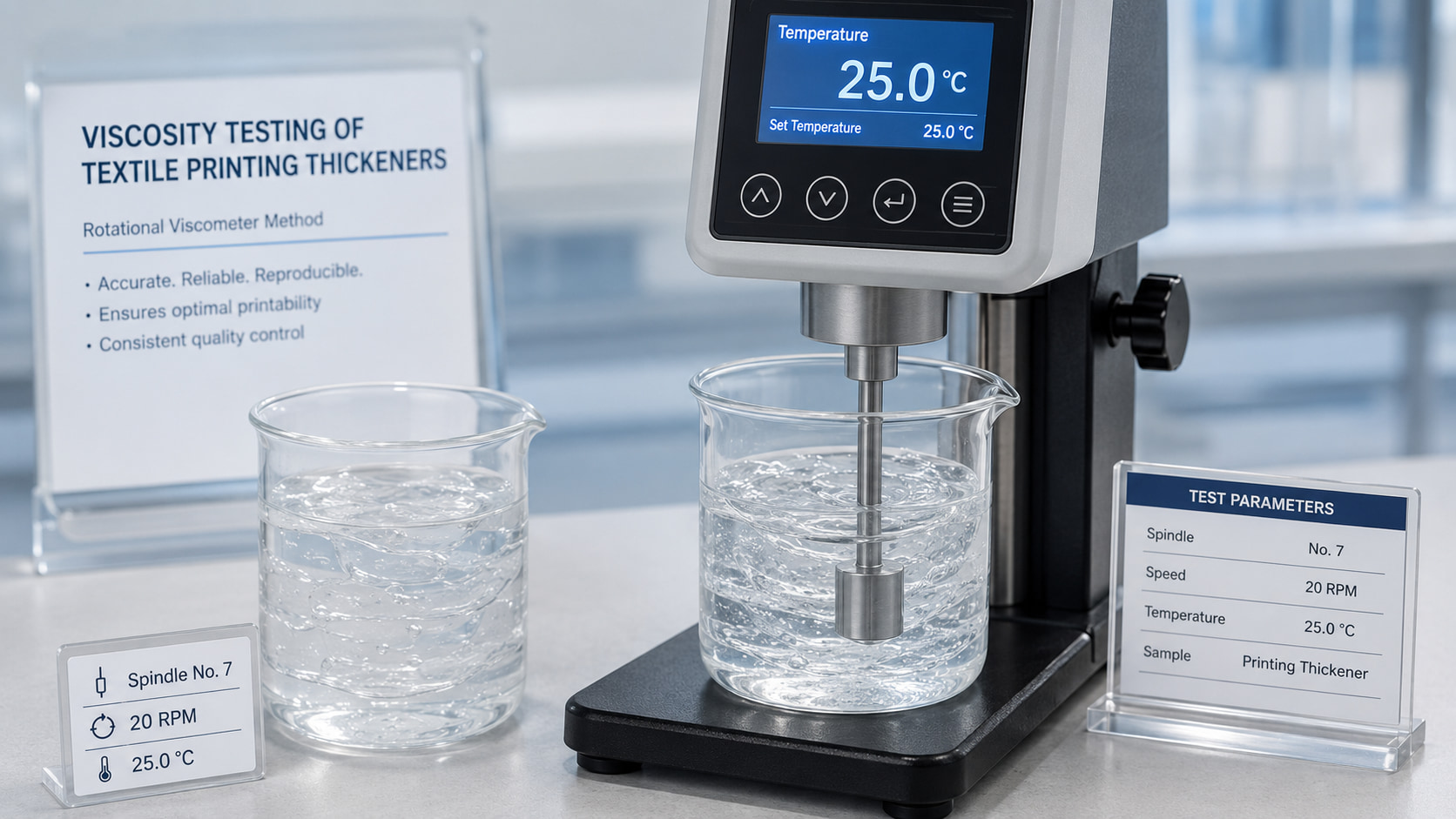
Viscosity is one of the most important parameters when sourcing sodium alginate for textile printing. Buyers should check the viscosity range together with the test concentration, temperature, instrument method, and unit.
Without a clear testing method, viscosity values from different suppliers may not be directly comparable.
Taille des mailles et comportement de dissolution
La taille des mailles peut influencer la dispersion et l'hydratation lors de la préparation de la pâte. Cependant, le comportement réel à la dissolution dépend également de la qualité de l'eau, de la vitesse d'agitation, du mode d'ajout, du temps de préparation et des conditions de formulation.
Buyers should test the sodium alginate grade in their own paste preparation process instead of relying only on mesh size data.
Humidité, pH et aspect
L'humidité, le pH et l'aspect sont des indicateurs de qualité fondamentaux mais essentiels. Ils ont une incidence sur le stockage, la manutention, le contrôle qualité et la fidélisation des clients.
Review the agreed limits and methods in the current specification. Identify which results are reported on the batch COA and which need a separate incoming check; absence from a COA is not evidence of a passing result.
Application Suitability for Reactive Printing Paste
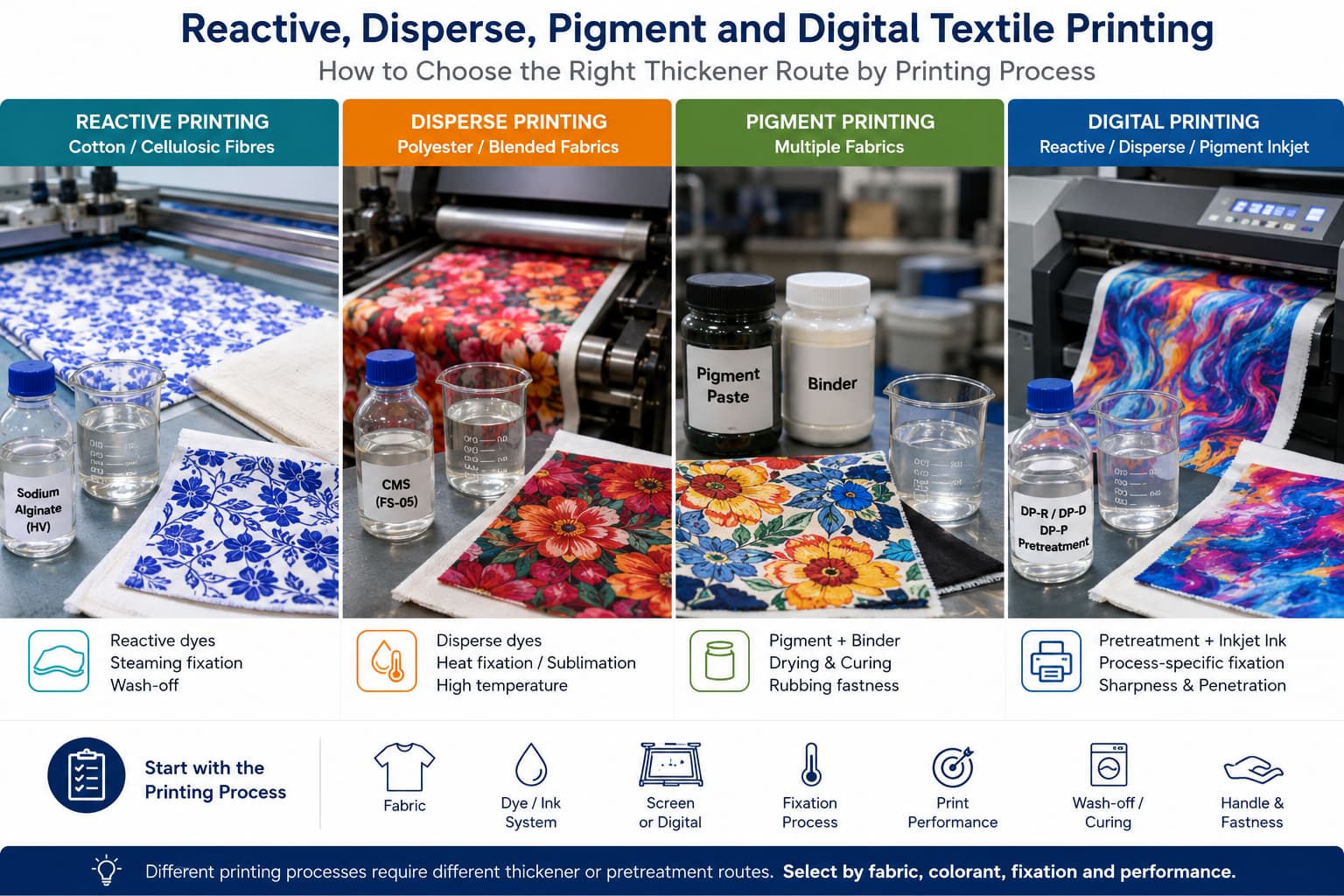
Buyers should share their printing method, fabric type, target viscosity, paste preparation method, and current production issue before requesting a recommendation.
Documents to Request from a Sodium Alginate Manufacturer
TDS pour la révision du cahier des charges
For sodium alginate used in textile printing paste, the viscosity test method should be clearly stated.
Certificat d'origine pour la confirmation de lot
A Certificate of Analysis reports the results listed for an identified batch. Check the commercial grade, lot number, units, limits and test methods against the order; it does not establish unlisted properties or finished-print performance.
Les acheteurs peuvent comparer les données des certificats d'analyse (COA) d'un envoi à l'autre afin de vérifier si les paramètres clés restent dans les limites convenues.
SDS for Handling and Transport Review
La fiche de données de sécurité (FDS) sert de référence pour la manipulation, le stockage, le transport et l'évaluation interne de la sécurité. Dans le cadre des achats internationaux, la FDS peut également être requise pour l'expédition et les formalités douanières.
Check that the SDS product identifier corresponds to the offered material. If a family-level SDS or a different seller and manufacturer name is used, request a clear written mapping; the names need not be identical, but the relationship and product coverage must be understandable.
Additional Claims or Compliance Documents
If a buyer needs confirmation related to restricted substances, certification, environmental claims, or customer audit requirements, those requirements should be clearly requested before order confirmation.
A reliable supplier should explain which documents can be provided and which claims require formal third-party testing or certification.
Use a Grade-to-Shipment Handover Record
A practical international review connects documents rather than treating each PDF as independent proof. Use this proposed handover checklist with your supplier and receiving team.
| Checkpoint | Information to reconcile | Hold the review when |
|---|---|---|
| Supplier identity | Quoted seller, stated manufacturer or production site, document issuer and technical contact; explain any trading or distribution role. | The parties cannot explain who makes, supplies or investigates the material. |
| Technical identity | Commercial grade, specification revision, approved sample lot and viscosity method across the quotation and technical approval. | A different grade or an unexplained method is substituted. |
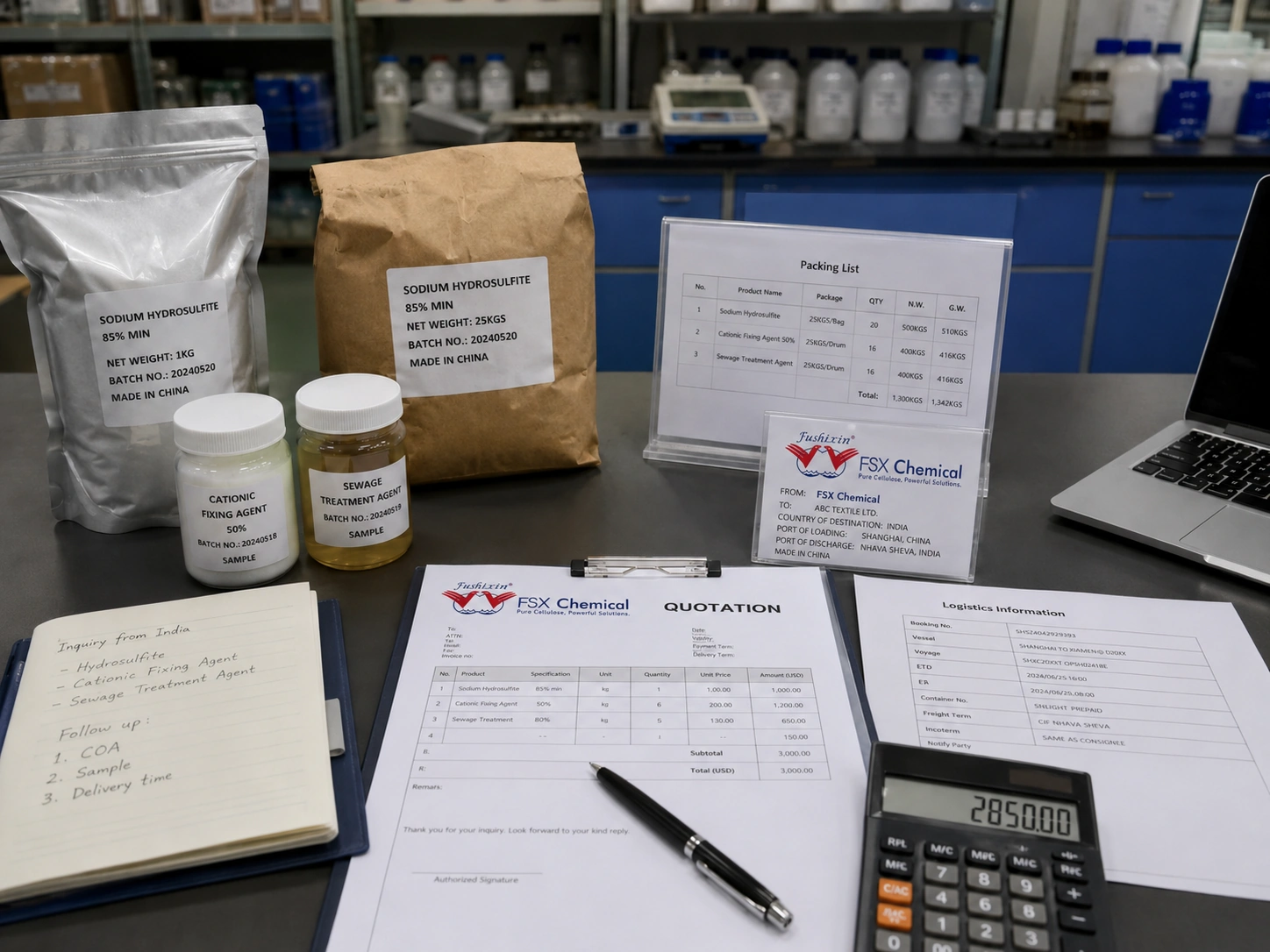
| Lot and shipment identity | Delivered lot numbers on labels and batch COAs; reconcile package count and net quantity with the packing information. | A lot has no corresponding record or a discrepancy remains unresolved. |
| Receiving handover | Retained sample, incoming test plan, storage instructions and named contacts for discrepancies. | Receiving staff cannot link the goods to the approved reference and acceptance decision. |
Confirm destination-specific paperwork with the responsible logistics team before dispatch. This is a procurement traceability checklist, not a universal customs-document list. Keep shipment scheduling separate from technical release: available stock is not evidence that the material has passed your printing trial.
How to Test Sodium Alginate Before Bulk Purchase
Test in the Actual Printing Paste Formulation
Sample testing should be done in the buyer’s own formulation whenever possible. Dyes, auxiliaries, water quality, pH, stirring method, paste concentration, and storage time can all affect final paste behavior.
Des essais réalisés uniquement dans de l'eau pure pourraient ne pas suffire pour confirmer si la qualité de l'alginate de sodium est adaptée à la production.
Observe Paste Smoothness and Filtration
During sample testing, buyers should observe dissolution speed, paste smoothness, lumps, filtration behavior, viscosity stability, and application handling.
For textile printing paste, these practical observations are often as important as the basic specification data shown in the TDS.
Compare Approved Sample with Bulk Shipment
Avant de valider une commande en gros, les acheteurs doivent vérifier si l'échantillon approuvé et la livraison en gros respectent les mêmes exigences en matière de plage de viscosité, de taille de mailles, de format d'emballage, de traçabilité des lots et de certificat d'analyse (COA).
This helps reduce the risk of sample-to-bulk mismatch.
What Makes a Global Sodium Alginate Manufacturer More Reliable?
Clear Grade Matching Communication
A reliable manufacturer should ask about the buyer’s application before recommending a grade. Useful information includes printing process, fabric type, target viscosity, current formulation, water quality, preparation method, and existing product grade if available.
This makes the recommendation more practical and reduces unnecessary sample trials.
Batch Traceability and Packaging Control
For bulk orders, buyers should confirm product label information, batch number, net weight, production date where applicable, bag type, and packaging format before shipment.
Clear batch and packaging information helps with warehouse management, COA comparison, and customer feedback handling.
Realistic Discussion Instead of Broad Claims
Buyers should be cautious with broad claims such as “high-performance,” “global best choice,” “fully compliant,” or “eco-friendly” unless supporting documents or test data are available.
A professional sodium alginate manufacturer should explain what can be confirmed by documents, what needs sample testing, and what depends on the buyer’s own formulation.
Comment FSX Chemical accompagne les acheteurs d'alginate de sodium
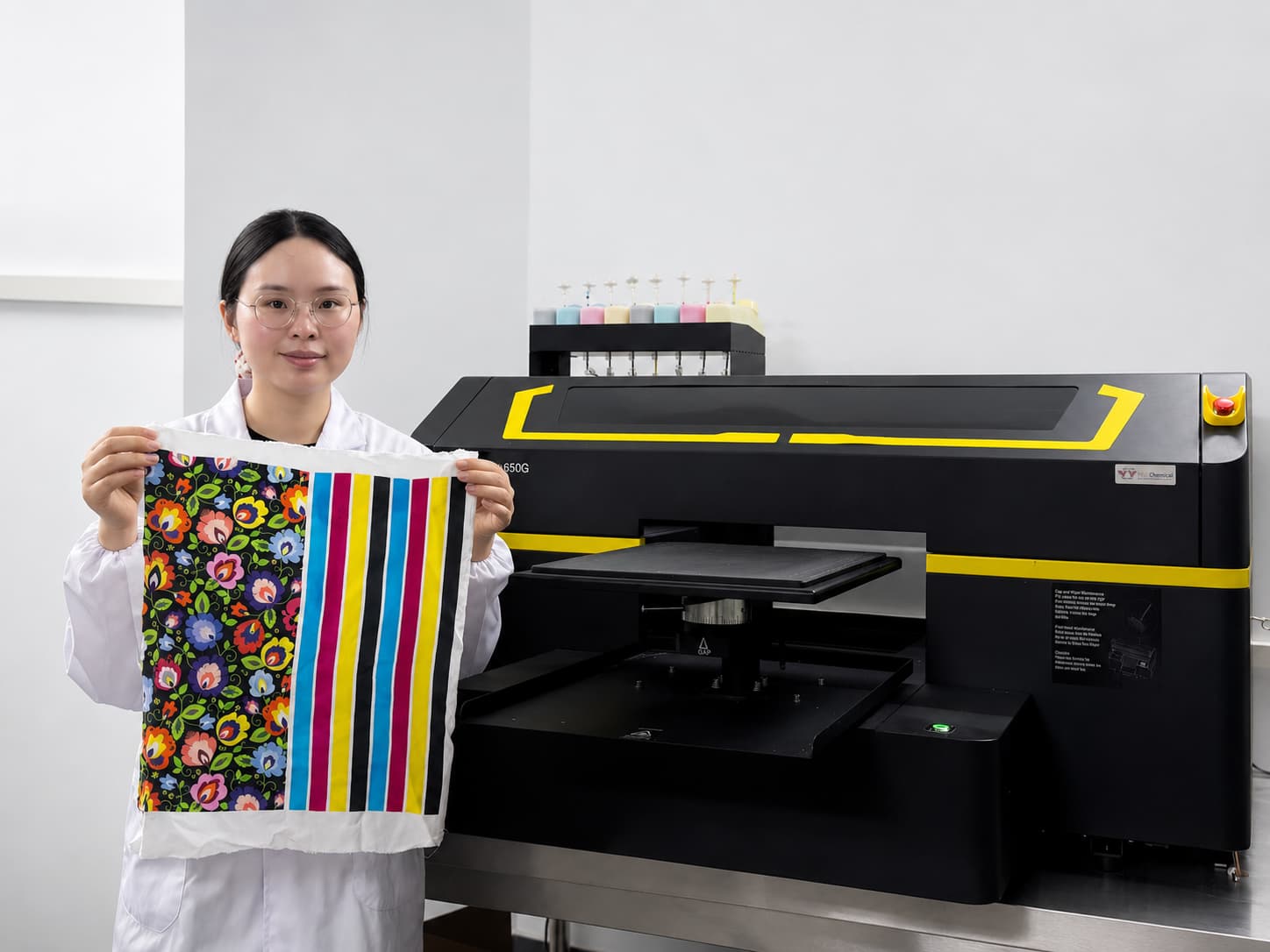
Our support is focused on practical grade matching and export procurement. We can provide TDS, COA, SDS where applicable, sample support, and grade matching suggestions based on the customer’s printing process, target viscosity, fabric type, paste formulation, packaging needs, and document requirements.
We do not suggest confirming a sodium alginate manufacturer only by price, broad performance claims, or general global supply statements. The recommended grade should be reviewed through technical documents and tested in the buyer’s own formulation before bulk purchase.
Prochaines étapes
- Demander un TDS — Vérifier la plage de viscosité, la granulométrie, le pH, le taux d'humidité, l'aspect, les conditions de stockage et la méthode d'essai.
- Demander un certificat d'authenticité — vérifier, avant l'expédition, que les données du lot correspondent à la plage spécifiée convenue.
- Demander l'alignement des notes — share your printing process, fabric type, target viscosity, current formulation, and existing product grade if available.
- Demander un échantillon — Testez la qualité d'alginate de sodium recommandée dans votre propre préparation de pâte et selon vos propres conditions d'impression avant de valider des commandes en gros.
- Vérifier les documents d'emballage et d'exportation — Vérifiez les dimensions des sacs, les étiquettes, la traçabilité des lots, les fiches de données de sécurité (FDS), la facture, le bordereau d'expédition et les autres documents requis avant l'expédition.
- Discuss an international sodium alginate enquiry — send the printing route, grade reference, quantity, destination and document requirements. Keep technical approval and shipment-document review identifiable in the enquiry.