Понимание роли альгината натрия в печати на текстиле с использованием активных красителей
Альгинат натрия — это не просто средство для повышения вязкости при печати на реактивных текстильных материалах. Узнайте, как его...
Альгинат натрия играет ключевую роль в традиционной печати на текстиле с использованием активных красителей, поскольку он обеспечивает контролируемые реологические свойства пасты, оставаясь при этом относительно нереактивным по отношению к реактивным красителям. Однако его реальные рабочие характеристики зависят не только от выбора марки HV, MV или LV. Необходимо комплексно оценивать такие факторы, как метод определения вязкости, гидратация, фильтрация, ткань, система красителей, фиксация и вымывание.
При печати активными красителями загуститель должен одновременно выполнять несколько задач. Паста должна сохранять стабильность перед печатью, свободно проходить через систему нанесения, аккуратно переноситься на текстиль, ограничивать неконтролируемое растекание, а затем позволять напечатанной ткани пройти этапы фиксации и стирки без возникновения ненужных проблем при обработке.
Альгинат натрия стал одним из наиболее распространенных загустителей для этих целей, особенно при традиционной печати активными красителями на хлопке, вискозе и других подходящих целлюлозных тканях.
Его ценность заключается не только в том, что он повышает вязкость воды. Альгинат натрия ценен тем, что его полимерная химия, реологические свойства и относительно низкая склонность к взаимодействию с активными красителями позволяют обеспечить необходимый баланс между стабильностью пасты, четкостью печати, доступностью красителя и его смываемостью.
Однако альгинат натрия не следует рассматривать как универсальный продукт. Коммерческие марки различаются по вязкости, молекулярным характеристикам, поведению при приготовлении, фильтрации, реологическим свойствам и эффективной дозировке. Поэтому два продукта, обозначенные как «высоковязкие», могут вести себя по-разному в одной и той же печатной формуле.
В данном руководстве объясняется роль альгината натрия в печати активными красителями на текстиле, принцип его действия в составе печатной пасты, а также приводятся рекомендации по выбору и тестированию подходящего сорта и по переходу от лабораторных испытаний к стабильному промышленному производству.
Что такое альгинат натрия?
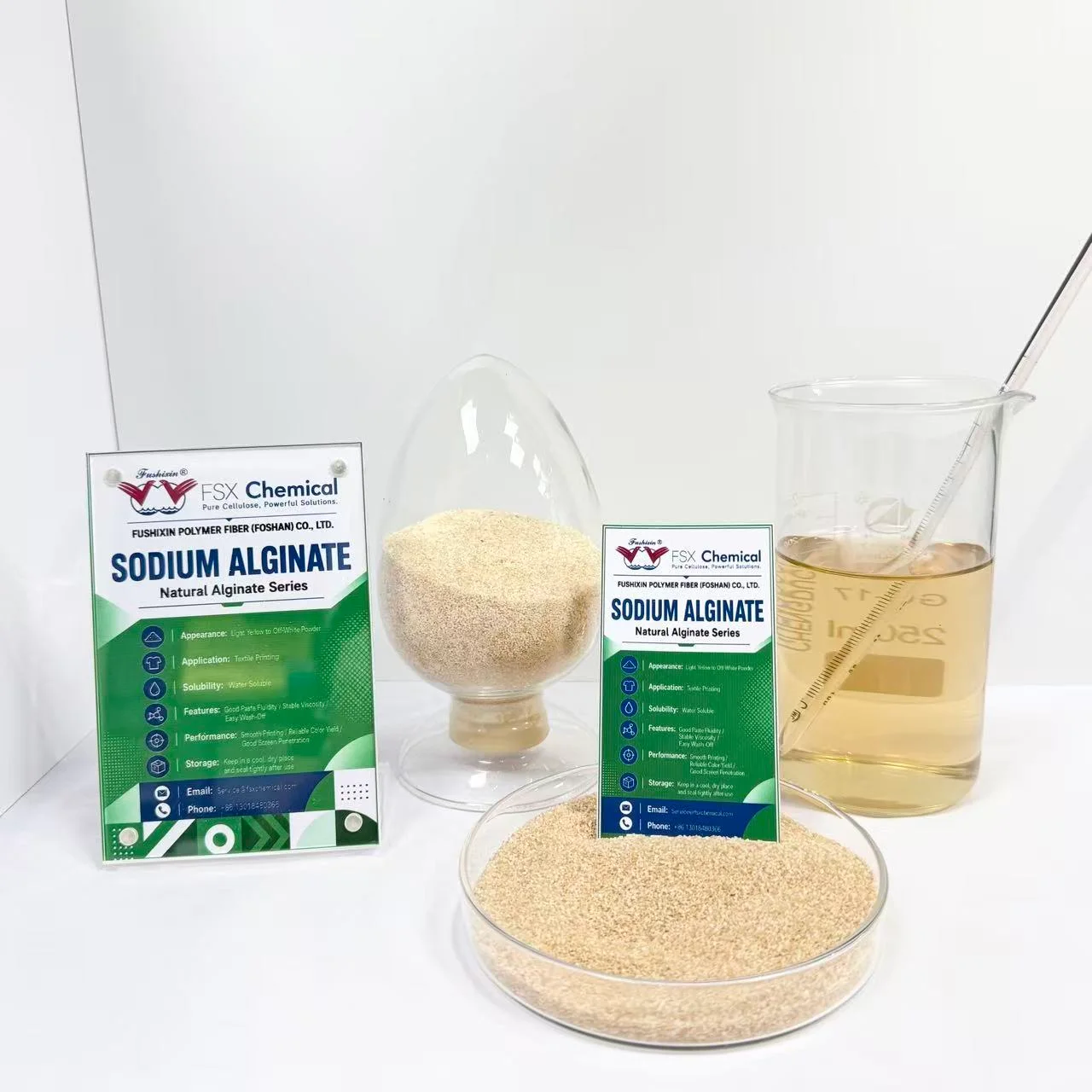
Альгинат натрия — это натриевая соль альгиновой кислоты, природного полисахарида, получаемого из бурых водорослей.
Полимерная цепь содержит звенья маннуроновой и гулуроновой кислот в различных последовательностях и соотношениях. Эти структурные различия, наряду с распределением по молекулярной массе и условиями переработки, могут влиять на свойства коммерческих марок альгината.
В воде альгинат натрия соответствующего сорта может образовывать вязкий полимерный раствор. Благодаря этому он находит применение в качестве материала для регулирования реологических свойств при печати на текстиле.
Альгинат натрия не следует рассматривать как вещество с одной фиксированной спецификацией
Коммерческие сорта текстиля могут различаться по следующим параметрам:
Вязкость
Эффективность вязкости
Характеристики частиц
Характеристики гидратации
Фильтрация
Реология
Влажность
Производительность приложения
По этой причине при выборе продукции следует руководствоваться полной технической спецификацией и результатами пробной печати, а не только названием продукта.
Почему альгинат натрия широко используется в печати активными красителями
Реактивные красители предназначены для образования химических связей с соответствующими группами волокон в процессе фиксации. Это предъявляет особые требования к загустителю для печати: он должен обеспечивать необходимую консистенцию пасты, не вступая при этом в ненужную конкуренцию с текстилем за реактивный краситель.
Альгинат натрия широко используется, поскольку он сочетает в себе полезные реологические свойства с относительно низкой химической реактивностью по отношению ко многим системам активных красителей.
Полезный загуститель для печати активными красителями должен способствовать обеспечению
Стабилизация пасты перед печатью
Эффективное прохождение через сито
Контролируемое нанесение на текстиль
Ограниченное боковое распространение
Хорошая передача мелких деталей
Доступность красителя во время фиксации
Практическое удаление во время стирки
Альгинат натрия стал важным эталоном, поскольку он способен обеспечить такое сочетание свойств при условии правильного подбора его марки и состава с учетом технологического процесса.
Основные функции альгината натрия в реактивной печатной пасте
Альгинат натрия выполняет несколько взаимосвязанных функций, а не одну отдельную функцию загустителя.
1. Вязкость основы строительного материала
Полимер придаёт консистенцию, необходимую для превращения низковязкой водной красящей системы в пасту, пригодную для печати.
2. Регулирование потока при сдвиге
Полезная паста должна обладать достаточной структурой в состоянии покоя, но при этом сохранять текучесть при прокачке, при прохождении через ракель и через сито.
3. Предотвращение неконтролируемого распространения
После попадания пасты на ткань её реологическая восстановительная способность влияет на то, на какое расстояние жидкость смещается в поперечном направлении.
4. Контроль глубины проникновения
Паста должна проникнуть в ткань настолько, чтобы обеспечить желаемый внешний вид, но при этом не проникать слишком глубоко, чтобы не привести к потере яркости или четкости поверхностного рисунка.
5. Обеспечение возможности повторного применения
Стабильность приготовления и повторяемость результатов от партии к партии помогают типографии обеспечить более стабильные настройки оборудования и рецептуру цветовых паст.
Почему важна низкая реактивность по отношению к реактивным красителям
В химическом процессе печати активными красителями взаимодействие загустителя и красителя приобретает особое значение.
Некоторые полисахаридные загустители содержат функциональные группы, которые в условиях печати могут конкурировать с целлюлозой за реактивный краситель. Это может привести к уменьшению количества красителя, доступного для реакции с волокном, и затруднить удаление остаточной системы «полимер-краситель».
Альгинат натрия ценится за то, что по сравнению со многими углеводными загустителями с высоким содержанием гидроксильных групп он демонстрирует относительно низкую химическую реактивность в отношении активных красителей.
Это может способствовать
Более эффективное использование реактивного красителя во время фиксации
Более тщательное удаление остатков загустителя во время промывки
Более предсказуемое изменение цвета
Это не означает, что только альгинат натрия определяет интенсивность окраски или степень вымывания краски. Важную роль по-прежнему играют тип красителя, щелочь, влажность, обработка паром, подготовка ткани и условия стирки.
Реология: важнее, чем просто показатель вязкости
Вязкость — один из первых показателей, на которые обращают внимание покупатели при приобретении альгината натрия, однако один показатель вязкости не может полностью охарактеризовать поведение материала при печати.
При печати на текстиле паста подвергается воздействию меняющихся условий сдвига. Паста может находиться практически в неподвижном состоянии в ёмкости для хранения, подвергаться усиленному сдвигу во время перекачки, испытывать ещё иные силы под ракелем или на ротационном сито, а затем восстанавливать свою структуру на ткани.
Два сорта альгината натрия могут иметь одинаковую вязкость, но различаться по своим печатным свойствам
Различия могут проявляться в:
Реакция на сдвиговое разжижение
Восстановление конструкции
Отрывок с экрана
Перенос с помощью наклейки
Четкость тонких линий
Проникновение
Именно поэтому при подборе сортов следует сравнивать не только характеристики вязкости, но и реологические свойства, а также эксплуатационные показатели.
Снижение вязкости при сдвиге и восстановление структуры
Полезная реактивная печатная паста, как правило, становится более текучей по мере увеличения сдвига.
Перед нанесением
Наличие структуры с достаточно низким коэффициентом сдвига способствует сохранению физической стабильности пасты.
Во время печати
Более низкое кажущееся сопротивление при более сильном сдвиге может способствовать прохождению пасты через сито и ее переносу на ткань.
После печати
Когда усилие, действующее на конструкцию, снимается, восстановление формы конструкции может помочь ограничить дальнейшее растяжение.
Таким образом, наиболее подходящий альгинат натрия — это не обязательно тот сорт, который обладает самой высокой вязкостью. Это тот сорт, который обеспечивает необходимый баланс текучести и упругости в готовой пасте.
Как альгинат натрия влияет на четкость печати
На качество печати в значительной степени влияет то, что происходит непосредственно до и после прохождения пасты через сито.
Для правильного определения необходимо соблюдать баланс
Паста должна ровно проходить через открытые участки сита, не смещаясь при этом в стороны по ткани.
Нечеткость может проявляться в виде
Размытые мелкие морщинки
Закругленные углы
Нечитаемость мелкого шрифта
Смешивание цветов между соседними участками
Слишком широкие напечатанные строки
Повышение концентрации альгината натрия иногда может повлиять на растекаемость, однако само по себе увеличение вязкости не является универсальным решением. Необходимо также проверить сетку, ракель, впитывающую способность ткани, состав пасты и реологическое восстановление.
Контроль проникновения и распространения
Степень проникновения пасты зависит от структуры ткани и желаемого эффекта при печати.
Если степень проникновения слишком высока
Изображение может выглядеть менее чётким, а мелкие детали — менее отчётливыми.
Если уровень проникновения слишком низкий
Для некоторых типов ткани или в случае определенных требований к плотности нанесения рисунок может оказаться слишком плотным на поверхности.
Ткань имеет значение
Легкий хлопок, плотно тканный хлопок, вискозный трикотаж и другие целлюлозные ткани могут по-разному впитывать и отводить жидкость.
Поэтому марку альгината натрия следует подбирать с учетом конкретных условий производства, а не только на основе лабораторных данных о вязкости.
Альгинат натрия и выход красящего вещества
Об альгинате натрия часто говорят в контексте интенсивности цвета, однако этот загуститель не следует рассматривать как единственный фактор, определяющий конечный оттенок.
На конечный цвет могут влиять
Химия активных красителей
Концентрация красителя
Щелочная система
Влажность
Подготовка ткани
Перенос с помощью наклейки
Обработка паром или фиксация
Промывка
Альгинат натрия может косвенно влиять на цвет, регулируя, в каких местах остается цветная паста и насколько эффективно красящее вещество участвует в процессе фиксации.
Поэтому для объективного сравнения поставщиков необходимо использовать один и тот же краситель, ткань, рецептуру, условия печати и последующую обработку.
Почему смывание является частью эффективности загустителя
Процесс печати активными красителями не заканчивается, когда ткань покидает печатный стол или станок.
После фиксации ткань, как правило, подвергается стирке для удаления нефиксированного красителя, остатков вспомогательных веществ и загустителя.
Проверить после стирки
Чистота фона
Окончательный оттенок
Определение шаблона
Остатки материала на поверхности
Тканевая ручка
Сорт альгината натрия, который до промывки выглядит приемлемо, может продемонстрировать существенные различия после завершения всего процесса.
Именно поэтому этап смывания должен быть включен в любую серьезную программу согласования оттенков при печати активными красителями.
Обзор альгинатного натрия высокого, среднего и низкого напряжения
Альгинат натрия обычно продается в виде сортов с высокой, средней и низкой вязкостью.
Эти обозначения полезны в рамках собственной системы классификации продукции поставщика, однако не следует считать, что они отражают универсальные отраслевые диапазоны.
Высокое напряжение не всегда означает высокое качество
Высокая вязкость характеризует одно из реологических свойств в определённых условиях испытаний. Это не означает лучшей фильтрации, чёткости печати или смыва.
MV может быть подходящим сортом для некоторых рецептур
Использование состава со средней вязкостью может обеспечить оптимальный баланс между дозировкой, переносом и поведением на сите в конкретных условиях применения.
LV может иметь конкретные области применения
Марки с более низкой вязкостью могут оказаться полезными в случаях, когда требуется более высокая концентрация полимера, специальные смеси или необходимо соблюдение других технологических требований.
Поэтому покупателям следует сравнивать фактические технические характеристики и методы испытаний, а не только маркировку «HV», «MV» или «LV».
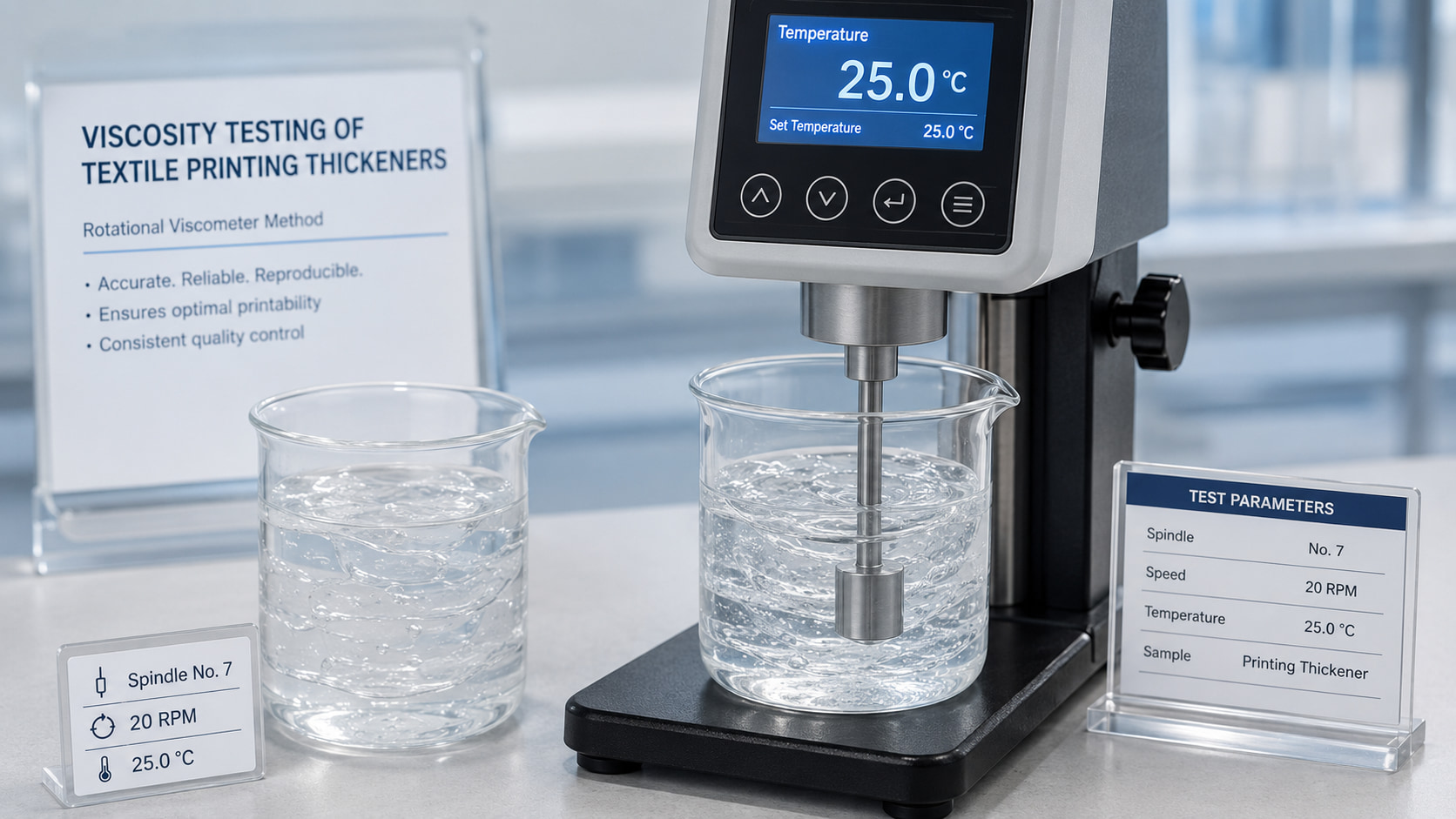
Как правильно сравнивать вязкость альгината натрия
Значение вязкости без указания условий измерения является неполным.
Всегда подтверждайте
Концентрация альгината натрия
Основа расчета концентрации
Источник воды
Метод добавления порошка
Время и скорость смешивания
Время для питья или отдыха
Температура
Вискозиметр
Шпиндель или ротор
Скорость вращения
Время чтения
Два поставщика могут указывать одно и то же число, используя при этом разные концентрации или условия испытаний. Эти результаты не следует считать эквивалентными до тех пор, пока методы не будут приведены в соответствие.
Для квалификации поставщика подготовьте эталон и образец по одной и той же методике и проведите их параллельное измерение.
Увлажнение и приготовление пасты
Способ приготовления альгината натрия существенно влияет на достоверность результатов измерения вязкости и фильтрации.
Добавляйте порошок постепенно
При быстром сбросе внешняя поверхность частиц может увлажниться, в то время как внутри останется сухой полимер, что приводит к образованию стойких комков.
Обеспечьте достаточное перемешивание
Система перемешивания должна обеспечивать равномерное распределение порошка без попадания лишнего воздуха и без избыточного нагрева.
Предусмотреть установленный период гидратации
Если провести измерение слишком рано, может быть получено значение, которое будет продолжать изменяться даже после того, как оператор уже скорректировал партию.
Не корректируйте, не проверив уровень гидратации
Добавление дополнительного количества альгината в частично гидратированную пасту может привести к чрезмерной конечной вязкости после полного развертывания полимера.
Качество воды и ионное загрязнение
Альгинат натрия является ионным полимером, поэтому как при проведении лабораторных испытаний, так и в процессе производства следует уделять особое внимание качеству воды.
На поведение пасты могут влиять жесткость воды, содержание растворенных солей и загрязнения. Ионы кальция играют особенно важную роль, поскольку альгинат может вступать во взаимодействие с многовалентными катионами и образовывать более прочные структуры или гели.
Для контролируемых сравнений
Для эталонного и исследуемого продуктов следует использовать один и тот же источник воды.
Когда возникают необъяснимые гели или проблемы с фильтрацией
Проверьте качество воды, емкости для хранения и возможность загрязнения кальцийсодержащими химическими веществами или их остатками.
Проблема, связанная с качеством воды, может быть ошибочно принята за проблему качества альгината натрия, если не провести систематическое расследование.
Фильтрация и прохождение через сито
Фильтрация является одним из наиболее полезных практических испытаний альгината натрия текстильного назначения.
Унифицировать метод фильтрации
Концентрация альгината
Способ приготовления
Время гидратации
Количество образцов
Материал фильтра
Расстояние между отверстиями или размер ячейки
Условия давления или свободного падения
Исследовать остаток
Остатки могут образовываться из-за неполной гидратации альгината, частиц геля, загрязнений или химических реакций в готовой пасте.
Эффективная фильтрация не гарантирует полного отсутствия проблем с экраном
К забиванию могут также приводить состояние сита, состав смеси, качество красителя, ворс ткани и производственные параметры.
Обеспечение стабильности перед печатью
Реактивная красящая паста может оставаться в производстве в течение значительного периода времени, прежде чем она будет полностью израсходована.
Поэтому пригодную к применению систему на основе альгината натрия следует оценивать не только сразу после приготовления, но и после реального периода хранения.
Монитор
Вязкость
pH, если это имеет значение
Внешний вид
Пена
Разделение
Фильтрация
Температура, испарение, микробное загрязнение и химические взаимодействия — все эти факторы могут влиять на кажущуюся стабильность.
Тестирование полной формулы печати активными красителями
Образец альгината натрия не следует утверждать на основании результатов анализа только его водного раствора.
Готовая реактивная паста может содержать краситель, щелочь, увлажнитель и другие вспомогательные вещества, которые влияют на конечные реологические свойства и стабильность продукта.
В контролируемом сравнении следует использовать
Тот же реактивный краситель
Такая же концентрация красителя
Та же самая щелочная система
Те же самые вспомогательные глаголы
Та же самая вода
Та же последовательность действий
Та же самая ткань
Если кандидат соответствует вязкости исходной пасты, но ведет себя иначе после приготовления полной формулы, перед корректировкой дозировки следует изучить характер взаимодействия.
Хлопок, вискоза и другие целлюлозные ткани
Альгинат натрия широко применяется для печати активными красителями на хлопке, вискозе и других подходящих целлюлозных тканях.
Химические свойства волокон могут быть схожими, но свойства тканей не совпадают.
Хлопок
Структура, плотность и обработка хлопчатобумажной ткани могут существенно влиять на проникновение пасты и четкость контуров.
Вискоза
Вискоза обладает высокой впитываемостью жидкости, поэтому в некоторых конструкциях особенно важно контролировать миграцию и проникновение жидкости.
Другие ткани на основе целлюлозы
Для льна, лиоцелла, модала и смесовых тканей может потребоваться проведение отдельных испытаний, поскольку их впитывающая способность, структура нити и обработка могут различаться.
Поэтому при окончательном выборе класса качества следует использовать фактически используемую в производстве ткань.
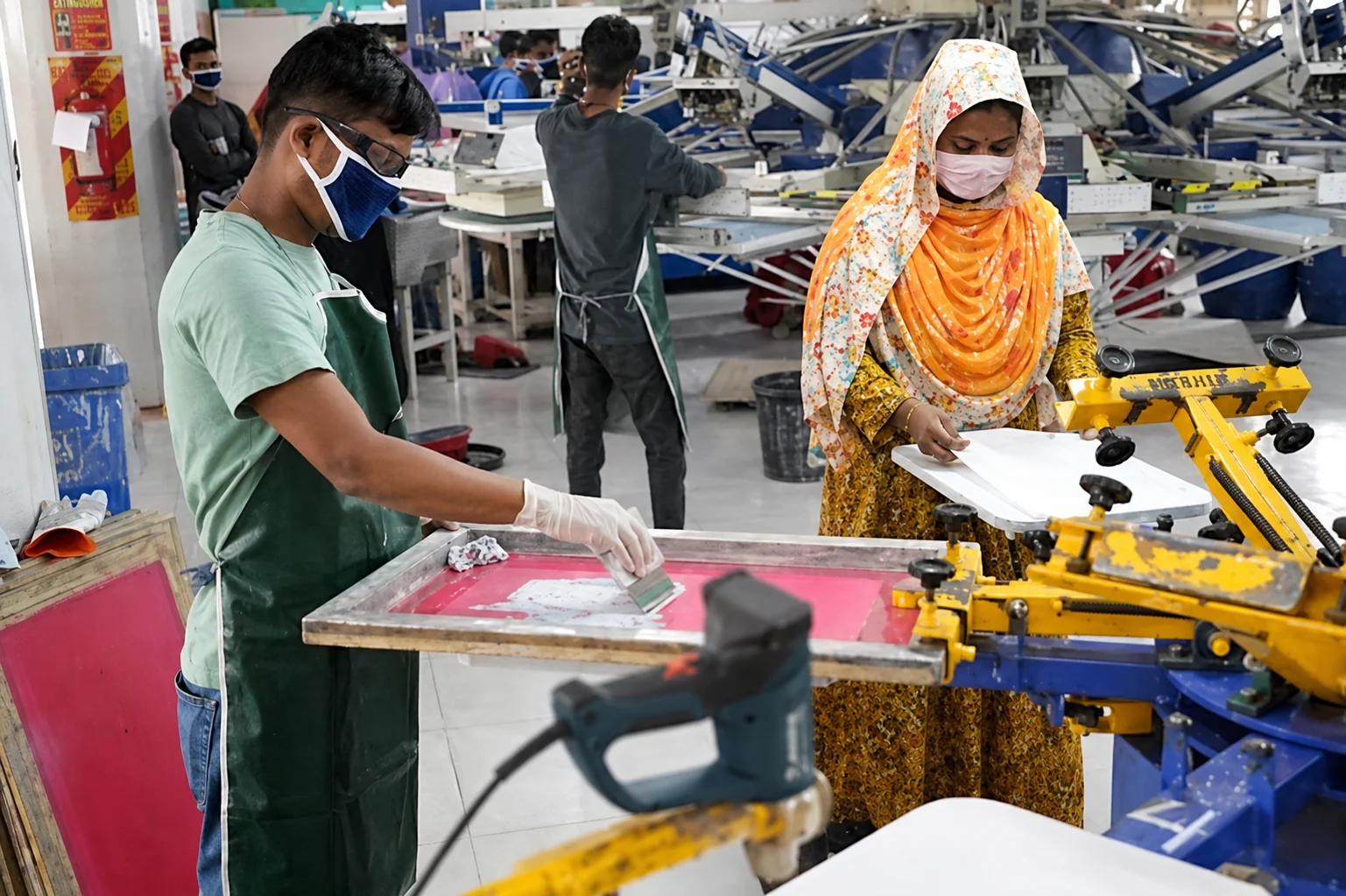
Альгинат натрия в печати на плоских экранах
При трафаретной печати реактивная паста наносится под механическим воздействием ракеля и трафарета.
К важным факторам оценки относятся
Перенос с помощью ракеля
Отрывок с экрана
Выравнивание пасты
Целостность тонких линий
Проникновение
Постоянство повторения
При сравнении двух марок альгината натрия давление ракеля, скорость, трафарет, ткань и состав пасты должны оставаться максимально неизменными.
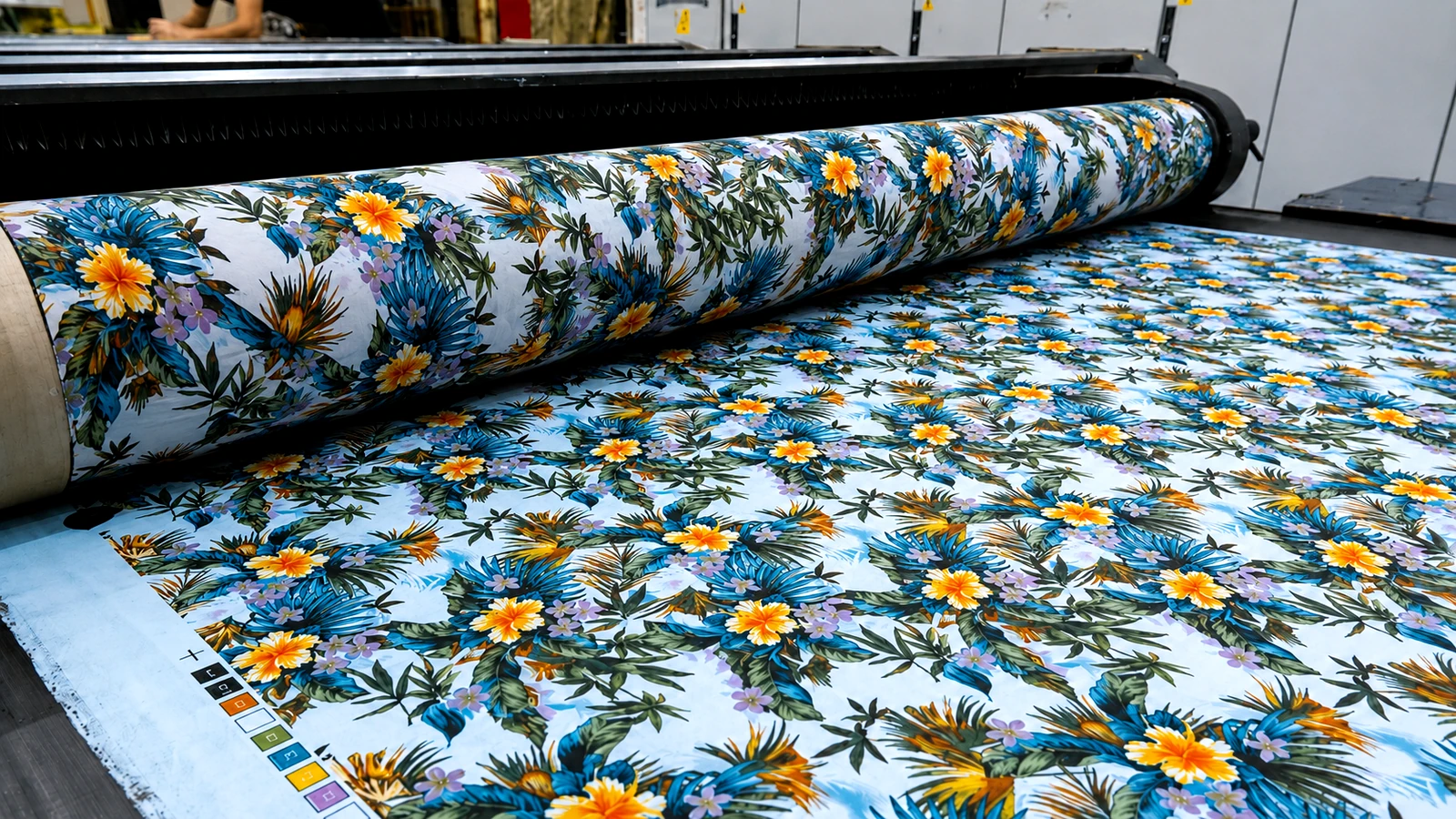
Альгинат натрия в ротационной трафаретной печати
Ротационная трафаретная печать накладывает дополнительные требования к реологическим свойствам пасты, связанные с непрерывной перекачкой и циркуляцией.
К важным характеристикам относятся
Систематическая подготовка
Практическая фильтрация
Стабильное кровообращение
Реакция на сдвиг
Отрывок с экрана
Стабильность владения в долгосрочной перспективе
Сорт, показавший хорошие результаты в небольшом испытании на плоском экране, все равно должен пройти валидацию в условиях ротационной печати, соответствующих производственным, перед полным переходом на его использование.
Тонкие линии, мелкий шрифт и большие сплошные области
В ходе качественного испытания альгината натрия следует использовать схему, позволяющую выявить несколько различных аспектов характеристик пасты.
Тест на отображение тонких линий и мелкого текста
Контроль за распространением
Восстановление конструкции
Отрывок с экрана
Точность перевода
Тест на наличие больших сплошных областей
Доставка пасты
Однородность
Прокачка
Проникновение
Марку альгината натрия не следует утверждать на основании лишь одного простого лабораторного образца.
«Темные оттенки» как полезный стресс-тест
Черный и другие насыщенные оттенки позволяют легче заметить различия в переносе пасты, ее распределении и равномерности заполнения сплошных участков.
Испытания с использованием темных оттенков могут выявить
Неравномерное покрытие
Неудовлетворительный внешний вид поверхности
Распространение по краю
Чрезмерное проникновение
Несогласованный перевод
Однако не следует приписывать альгинату натрия заслугу или вину за все различия в цвете. Качество красителя, его концентрация, тип ткани, способ закрепления цвета и стирка по-прежнему остаются основными факторами, влияющими на результат.
Как оптимизировать дозировку альгината натрия
Дозировку следует оптимизировать после того, как кандидатный сорт продемонстрирует базовую техническую совместимость.
Начните с контролируемого исходного уровня
Сравните исходный продукт и исследуемое вещество при одинаковой или иной четко определённой концентрации, чтобы можно было понять их относительное поведение.
Затем оптимизируйте каждый вариант по отдельности
Постепенно вносите корректировки, ориентируясь на успешный исходный вариант, чтобы определить практическую концентрацию, обеспечивающую требуемые свойства пасты.
После каждого существенного изменения дозировки следует повторно проверять характеристики печати
Снижение дозировки может уменьшить вязкость, но также может повлиять на распределение, проникновение, четкость контуров и стойкость укладки.
Рассчитать коммерческую стоимость при утвержденной дозировке
Сравнение цен поставщиков при одинаковом весе в килограммах вводит в заблуждение, если для двух марок требуются разные эффективные концентрации.
Могут ли CMC или CMS заменить альгинат натрия?
CMC, CMS и сложные загустители можно тестировать в отдельных рецептурах для текстильной печати, однако не следует предполагать, что они могут универсально заменить альгинат натрия в соотношении «один к одному».
Смена семейства полимеров влечет за собой изменение химического состава и может повлиять на реакцию электролита, реологические свойства, взаимодействие с красителями, степень вымывания и эффективную дозировку.
Межсемейную замену следует рассматривать как разработку лекарственной формы
Кандидат должен пройти проверку следующим образом:
Приготовление пасты из крахмала
Вязкость и реология
Фильтрация
Полная реакционная формула
Печать на ткани
Закрепление красителя
Смываемость
Оптимизация дозировки
Настоящей целью является сопоставимость производственных показателей, а не химический состав.
Рекомендуемый порядок проведения лабораторных исследований
Шаг 1: Определите текущую точку отсчёта
Укажите текущего производителя альгината натрия, коммерческий сорт, TDS, последний сертификат анализа (COA), если он имеется, и стандартную дозировку.
Шаг 2: Выбор метода определения вязкости
Унифицировать концентрацию, воду, подготовку, гидратацию, температуру, прибор, шпиндель и скорость.
Шаг 3: Совместная подготовка рекомендательного письма и кандидата
Используйте то же оборудование и те же временные рамки.
Шаг 4: Сравнение свойств стандартной пасты
Внешний вид
Гидратация
Вязкость
pH, если это имеет значение
Фильтрация
Шаг 5: По возможности сравните реологические характеристики
При наличии необходимого оборудования следует использовать более одного режима контролируемого сдвига.
Шаг 6: Приготовьте готовую реактивную пасту
Используйте тот же краситель, щелочь и вспомогательные вещества.
Шаг 7: Проверьте устойчивость захвата
Повторите критические измерения после периода ожидания, характерного для реальных производственных условий.
Шаг 8: Распечатайте ту же ткань
Используйте диагностический рисунок, содержащий мелкие детали и сплошные области.
Шаг 9: Завершение фиксации и промывки
Оценивайте готовое текстильное изделие, а не только отпечаток на влажной ткани.
Шаг 10: Оптимизация дозировки
Определять степень практической специализации кандидата следует только после подтверждения его технической пригодности.
Пилотное производство и наращивание объемов производства
Одобрение лаборатории необходимо, однако при крупномасштабном производстве возникают дополнительные факторы неопределённости.
Расширение масштабов может изменить ситуацию
Смешивание энергии
Размер партии
Равномерность увлажнения
Сдвиговое усилие насоса
Время циркуляции
Время удержания
Температура
Скорость подачи
Контролировать весь производственный цикл
Сравните ткань, взятую в начале, середине и конце партии, чтобы определить, сохраняет ли паста свои свойства.
Запись данных об эксплуатации
Время приготовления
Фильтрация
Насосная подача
Очистка экрана
Перебои в производстве
Расход пасты
Качество готовой ткани
Марка должна быть одобрена для повседневного использования только после того, как она продемонстрирует соответствующие характеристики в реальных производственных условиях заказчика.
Устранение типичных неполадок, связанных с альгинатом натрия
Выявленная проблема
Возможная причина
Что нужно проверить
Вязкость ниже заданного значения
Низкая концентрация, неполная гидратация, разница в температуре или сорте
Вес, время гидратации, метод испытания и идентификация продукта
Вязкость превышает заданное значение
Передозировка, испарение, продолжающаяся гидратация или температура
Формула, потеря воды, время выдержки и температура испытания
Устойчивые узелки
Плохое смачивание порошка или слишком быстрое добавление
Скорость добавления, перемешивание и последовательность приготовления
Большой объем остатка на фильтре
Неполная гидратация, гели или загрязнение
Вода, смешивание, метод фильтрации и условия хранения
Неожиданное образование геля
Многовалентные ионы или загрязнения
Жесткость воды, источники кальция и последовательность химических реакций
Плохое прохождение экрана
Несоответствующие реологические свойства, чрезмерная вязкость или остатки
Реология, фильтрация, концентрация и состояние сетки
Тонкие линии растекаются
Недостаточная степень впитывания, впитывающая способность ткани или чрезмерное перемещение жидкости
Реология, структура, дозировка и настройки ракеля
Тонкие линии являются неполными
Плохая передача или чрезмерное сопротивление
Вязкость, прохождение через сито, давление и перекачка пасты
Вставить изменения во время удержания
Испарение, температура, загрязнение или нестабильность
Состояние резервуара, время выдержки, температура и pH
Тестирование в лабораторных условиях прошло успешно, но в производственных условиях произошел сбой
Масштабирование или различия в применении
Миксер, размер партии, циркуляция, сито и ткань
При поиске и устранении неисправностей следует проанализировать весь процесс в целом. Не каждый дефект печати вызван непосредственно альгинатом натрия.
Общая стоимость эксплуатации
При покупке альгината натрия не следует ориентироваться исключительно на цену за килограмм.
Сравните эффективную дозировку
Более высокая эффективность вязкости может позволить использовать иную практическую концентрацию, однако конечный результат печати должен оставаться приемлемым.
Сравнение способов приготовления
На себестоимость продукции могут влиять время гидратации, образование комков, фильтрация и корректировка, осуществляемая оператором.
Сравнение поведения машин
Очистка сита, простои и нестабильная циркуляция могут обойтись дороже, чем небольшая разница в цене на сырье.
Сравнение качества готовой ткани
Повторная печать, бракованная ткань или сложность стирки могут свести на нет кажущуюся экономию на покупной цене.
Таким образом, предпочтительным сортом альгината натрия является тот продукт, который обеспечивает требуемые эксплуатационные характеристики при печати активными красителями при приемлемой общей стоимости эксплуатации.
Как сравнить поставщиков альгината натрия
При сравнении поставщиков следует опираться на технические и коммерческие данные, а не только на названия марок или цены.
Сравните товары коммерческого класса
Запишите точный код товара и его постоянную спецификацию.
Сравнение вязкости по одному и тому же методу
Не сравнивайте показатели TDS, полученные с использованием разных концентраций или приборов, без соответствующей корректировки.
Сравнение систем гидратации и фильтрации
Характеристики процесса приготовления могут быть не менее важны, чем конечная вязкость.
Сравните полный состав реактивной пасты
Используйте систему окрашивания и ткань, которые использует заказчик.
Сравнить документацию по партиям
Изучите имеющиеся TDS, SDS, сертификаты анализа конкретной партии (COA) или соответствующие данные о качестве в соответствии с этапом закупки.
Сравните общую стоимость эксплуатации
Рассчитать себестоимость с учетом утвержденной дозировки и производственных показателей.
Проверка соответствия образца партии
Успешное лабораторное сопоставление должно оставаться отслеживаемым при размещении покупателем первого коммерческого заказа.
Цепочка квалификаций должна связывать
Пример кандидата
Альгинат натрия промышленного назначения
TDS и согласованный метод испытаний
Лабораторное сравнение
Пробная печать активными чернилами
Рекомендуемая доза
Коммерческое предложение
Заказ на поставку
Производственная партия
Документация по конкретной партии, если это применимо
Проверка первой партии товара
Первая коммерческая партия должна пройти более тщательную входную проверку перед тем, как её начнут использовать в производстве без каких-либо ограничений.
Как FSX Chemical обеспечивает соответствие сортов альгината натрия
FSX Chemical — поставщик химических веществ альгинат натрия для печати на текстиле с использованием нескольких вариантов вязкости для оценки печати активными красителями.
Клиенты, которые уже используют другой альгинат натрия, могут взять за ориентир имеющийся в продаже продукт, а не выбирать новый сорт, руководствуясь исключительно терминологией HV, MV или LV.
Через Образцы и подбор продукции , покупатели могут предоставить действующий образец, спецификацию TDS, сертификат соответствия (COA) (при наличии), метод определения вязкости и условия печати для технической экспертизы.
К полезной информации о сопоставлении относятся:
Текущий производитель и марка
Актуальный TDS или имеющийся сертификат анализа (COA)
Физический эталонный образец
Вязкость и концентрация в испытании
Прибор, шпиндель и скорость
Текущая дозировка альгината натрия
Система активных красителей
Состав и структура ткани
Оборудование с плоским или ротационным ситом
Процесс фиксации и промывки
Текущая проблема или цель по улучшению
Рекомендуемый сорт следует рассматривать как кандидат для пробного применения. Окончательная пригодность должна быть подтверждена в реальных условиях печати активными красителями у заказчика перед запуском в серийное производство.
Часто задаваемые вопросы
Почему альгинат натрия используется в печати активными красителями на текстиле?
Альгинат натрия обеспечивает необходимую вязкость и реологические свойства пасты, при этом демонстрируя сравнительно низкую реактивность по отношению ко многим системам активных красителей. Благодаря этому он является широко используемым эталонным загустителем для печати активными красителями на подходящих целлюлозных тканях.
Вступает ли альгинат натрия в реакцию с активными красителями?
Альгинат натрия ценится за то, что, по сравнению со многими углеводными загустителями с высоким содержанием гидроксильных групп, он относительно малореактивен в отношении активных красителей. Однако необходимо ещё тщательно проработать полный состав состава и условия фиксации.
На какие ткани обычно наносят рисунок с использованием альгината натрия и активных красителей?
Хлопок, вискоза и другие подходящие целлюлозные ткани являются типичными материалами для применения. Каждая ткань по-прежнему должна проходить испытания на проникновение, четкость изображения и смываемость.
Всегда ли альгинат натрия высокой молекулярной массы (HV) лучше, чем альгинат натрия средней молекулярной массы (MV)?
Нет. HV и MV — это категории вязкости, определяемые поставщиком, а не классификация по качеству. Выбор оптимального сорта зависит от требуемой вязкости, реологических характеристик, условий фильтрации, материала ткани и технологии печати.
Какую вязкость должен иметь альгинат натрия для печати активными красителями?
Универсального значения не существует. Необходимый диапазон зависит от концентрации, метода измерения, формулы печати, трафарета, ткани и производственных требований.
Почему два сорта альгината натрия с одинаковой вязкостью могут давать разные результаты при печати?
Их гидратация, молекулярные характеристики, сдвиговое разжижение, восстановление структуры и фильтрационные свойства могут различаться даже при одинаковых показателях вязкости.
Почему альгинат натрия образует комки при приготовлении?
Быстрое добавление порошка или недостаточное смачивание могут привести к тому, что внешняя поверхность гидратируется раньше, чем внутренняя часть, в результате чего образуются стойкие агломераты. Важное значение имеет метод контролируемого добавления и перемешивания.
Почему кальций представляет проблему для альгината натрия?
Многовалентные ионы, такие как ионы кальция, могут вступать во взаимодействие с альгинатом и образовывать более прочные структуры или гели. При появлении необъяснимого образования геля следует проверить качество воды и наличие загрязнений.
Всегда ли более высокая вязкость альгината натрия способствует повышению четкости печати?
Нет. Чёткость печати зависит от реологических свойств, восстановления структуры, переноса трафарета, впитывающей способности ткани, дозировки и рабочих параметров оборудования, а также от вязкости.
Может ли CMC заменить альгинат натрия в печати активными красителями?
Не следует исходить из предположения о полной заменяемости «один к одному». CMC отличается химическим составом полимеров, поэтому его необходимо оценивать посредством проведения полного цикла испытаний, включающего разработку рецептуры, печать, фиксацию и промывку.
Может ли CMS заменить альгинат натрия?
Отдельные CMS или сложные системы можно оценивать в некоторых составах, однако их пригодность зависит от химического состава красителя, реологических свойств, дозировки, фиксации и смыва.
Что следует проверить при смене поставщика альгината натрия?
Сравните вязкость при использовании одного и того же метода, гидратацию, фильтрацию, реологические свойства, поведение готовой реактивной пасты, фактическую печать на ткани, фиксацию, вымывание и эффективную дозировку.
Достаточно ли сертификата соответствия (COA) для утверждения нового альгината натрия?
Нет. Сертификат соответствия (COA) содержит отдельные данные, относящиеся к конкретной партии, однако типография также должна подтвердить пригодность продукции с учетом собственной рецептуры, материала и условий производства.
Насколько FSX Chemical соответствует моему нынешнему альгинату натрия?
Покупатели могут предоставить имеющийся образец или техническое описание материала (TDS) с указанием вязкости, концентрации, метода испытаний, дозировки, ткани и технологии печати активными красителями, чтобы можно было подобрать подходящий вариант материала для контролируемой оценки📧 Электронная почта: Service@fsxchemical.com
Нужно подобрать сорт альгината натрия для печати активными красителями?
Отправьте компании FSX Chemical технический паспорт (TDS) или физический образец альгината натрия, который вы используете в настоящее время, а также данные о вязкости и концентрации, методе испытаний, текущей дозировке и рецептуре печати активными красителями.
Для более точной оценки укажите тип ткани, тип печати (плоскопечатная или ротационная), условия закрепления и стирки, а также основную проблему, которую вы хотите устранить.
Если текущая проблема заключается в некачественной фильтрации, нестабильной вязкости, нечетких краях, чрезмерной проникающей способности, низкой однородности твердой фазы или высокой эффективной дозировке, эти сведения могут помочь определить наиболее подходящий исходный сорт.
Окончательная пригодность должна быть подтверждена в ходе контролируемых лабораторных испытаний, реальной пробной печати и проверки первой коммерческой партии.
Узнайте, почему значения вязкости загустителей для текстильной печати нельзя сравнивать без учета таких факторов, как концентрация, температура, прибор, шпиндель, скорость, метод подготовки проб и время испытания.
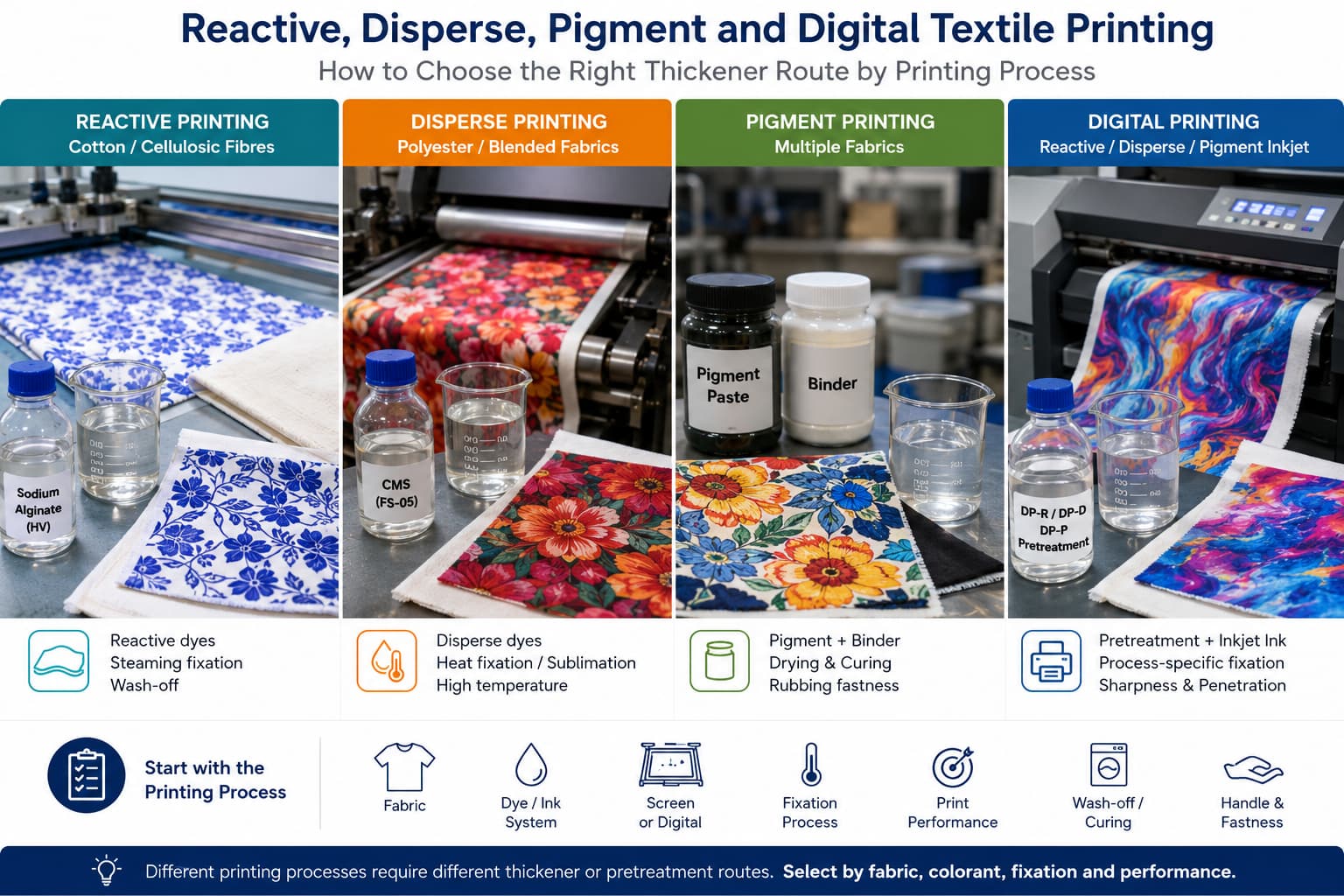
Узнайте, как выбирать загустители и способы предварительной обработки для реактивной, дисперсной, пигментной и цифровой печати на текстиле с учетом требований к ткани, красителю или чернилам, фиксации, вымываемости и качеству печати.
Сравните CMC, CMS, альгинат натрия и пасту для цифровой печати на текстиле. Узнайте, насколько каждый из этих материалов подходит для реактивной, дисперсной, пигментной и цифровой печати, а также на что покупателям следует обратить внимание перед тестированием образцов, подбором марки и оптовой закупкой.
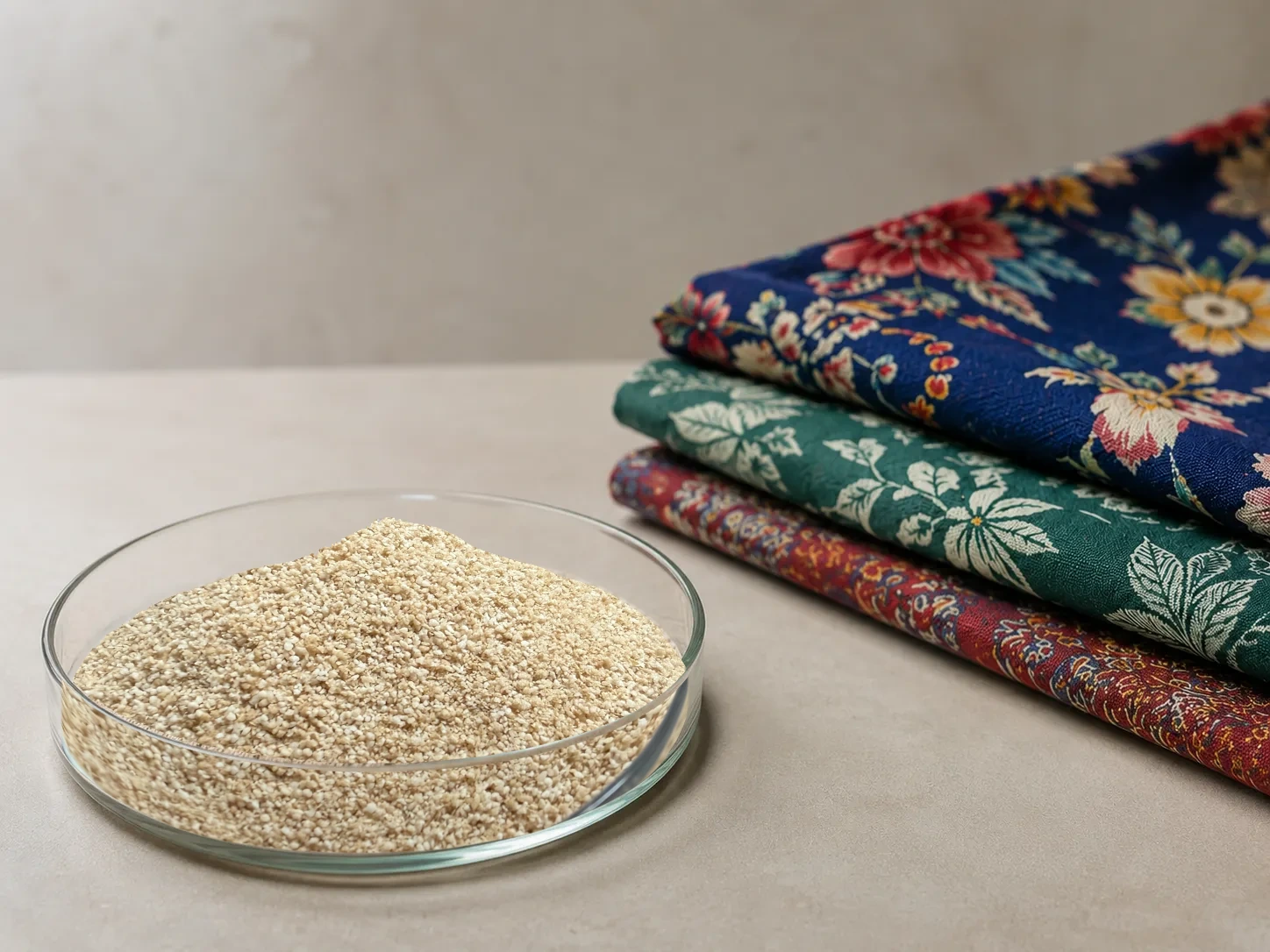
Альгинат натрия широко используется в текстильной печати в качестве стабильного и стойкого к стирке загустителя для реактивных печатных паст. Узнайте, как перед покупкой оценить класс вязкости, степень чистоты и пригодность продукта для конкретного применения, а также о том, как компания FSX Chemical оказывает поддержку покупателям по всему миру, предоставляя технические данные и образцы.
Печатная паста на основе CMC используется в пигментной, реактивной и цифровой текстильной печати. В данном руководстве объясняется, какие параметры имеют значение, как сравнивать поставщиков и что следует уточнить перед размещением оптового заказа.
И альгинат натрия, и CMC используются в качестве загустителей при печати на текстиле, однако они подходят для разных систем окрашивания и условий производства. В данном руководстве объясняются основные различия между ними и приводятся рекомендации по их применению.
Цифровая струйная печать на текстиле предъявляет иные требования к пасте и предварительной обработке материала, чем трафаретная печать. В данном руководстве объясняется, как альгинат натрия используется в цифровой печати на текстиле и какие параметры качества должны указывать специалисты по закупкам.
При печати на текстиле активными красителями правильная подготовка пасты не менее важна, чем выбор сорта краски. В данном руководстве рассматриваются методы растворения альгината натрия, диапазоны концентраций в зависимости от области применения, условия хранения, а также способы устранения типичных проблем при подготовке пасты.
Assess sodium alginate in reactive-printing wastewater using measured COD load, product-specific biodegradation evidence and controlled process comparisons. Includes a buyer checklist and illustrative load calculation.
Скорость фиксации красителя напрямую влияет на цветоотдачу, стойкость к стирке и загрязнённость сточных вод при печати активными красителями. В данном руководстве объясняется, как альгинат натрия способствует фиксации красителя, какие параметры пасты влияют на скорость фиксации и как устранять проблемы, связанные с низкой фиксацией, в производственных условиях.
Размер частиц альгината натрия (меш) влияет на скорость растворения порошка, равномерность его гидратации, а также на рабочие характеристики получаемой пасты при трафаретной печати. В данном руководстве объясняются практические последствия выбора размера меш при использовании паст для печати на текстиле.
Evaluate sodium alginate for warp sizing through grade-specific bath, yarn and desizing trials. Compare dry size add-on, yarn protection and removal using appropriate residue methods and downstream fabric checks.
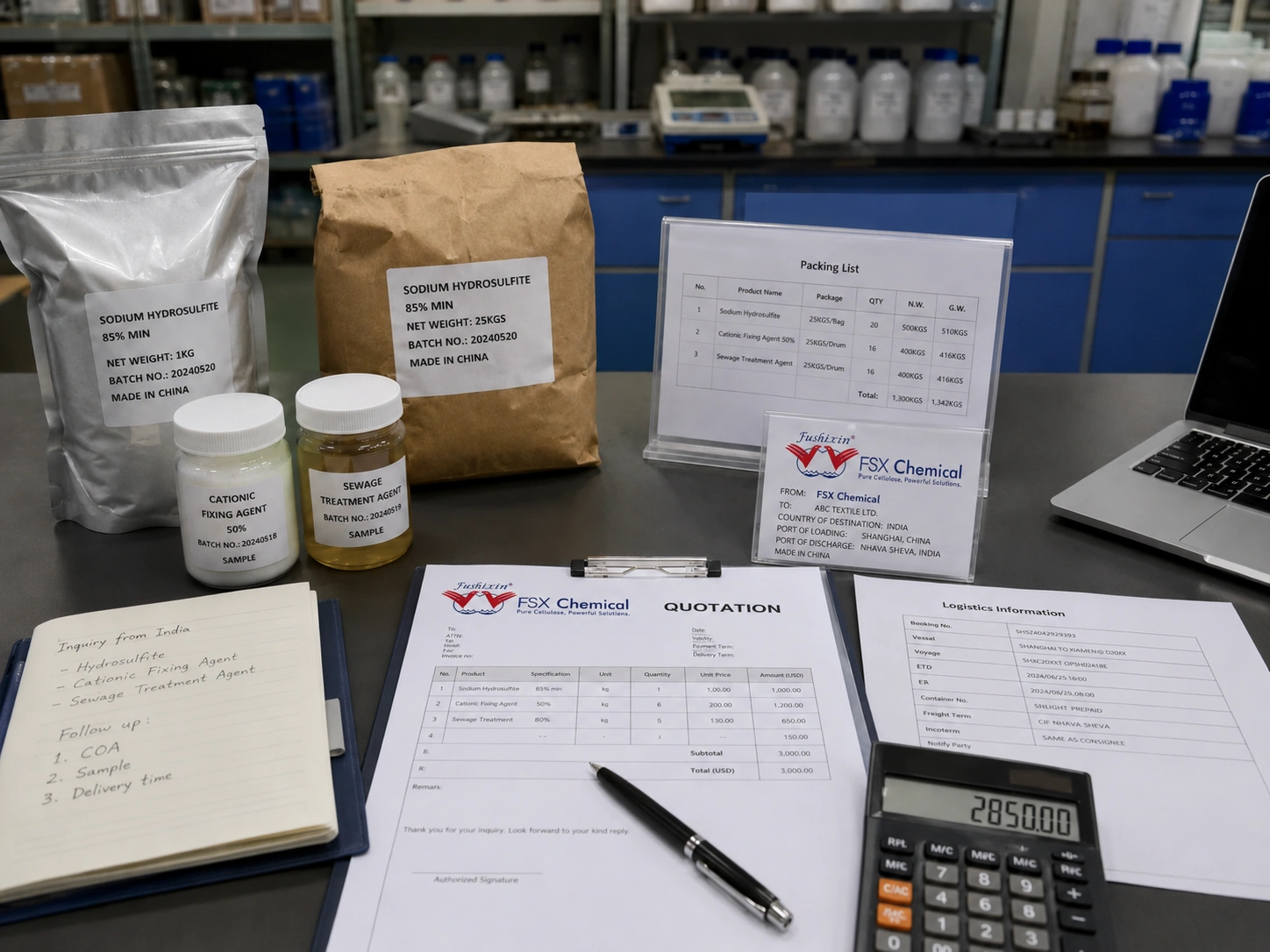
Сообщите название продукта, область применения, количество, пункт назначения, а также предоставьте техническое описание продукта (TDS),
фотографию образца или имеющиеся у вас документы. Компания FSX Chemical рассмотрит
эту информацию и порекомендует дальнейшие действия для подготовки коммерческого предложения, подбора образца
или выбора продукта.
Информация о продуктеНазвание продукта, марка, модель, фото этикетки или данные о продукте текущего поставщика.
Доступные документыTDS, SDS, COA, фотография образца, перечень продукции или данные испытаний.
Детали заказаПредполагаемый объем, упаковка, страна назначения, порт или условия торговли.
Область применения или проблемаПроцесс печати на текстиле, требования к составу, текущие проблемы или целевые показатели.