












Direct answer: Sodium alginate can be evaluated as a water-soluble film former in selected warp-sizing formulations, but it is not a universal replacement for starch, modified starch, PVA or CMC. Suitability depends on fibre and yarn construction, loom demand, solids, adhesion, abrasion resistance, humidity response, cost and the mill’s desizing route. A printing-grade alginate should not be approved for sizing from viscosity alone.
The Role of Sizing in Textile Production
Why Warp Sizing Is Necessary
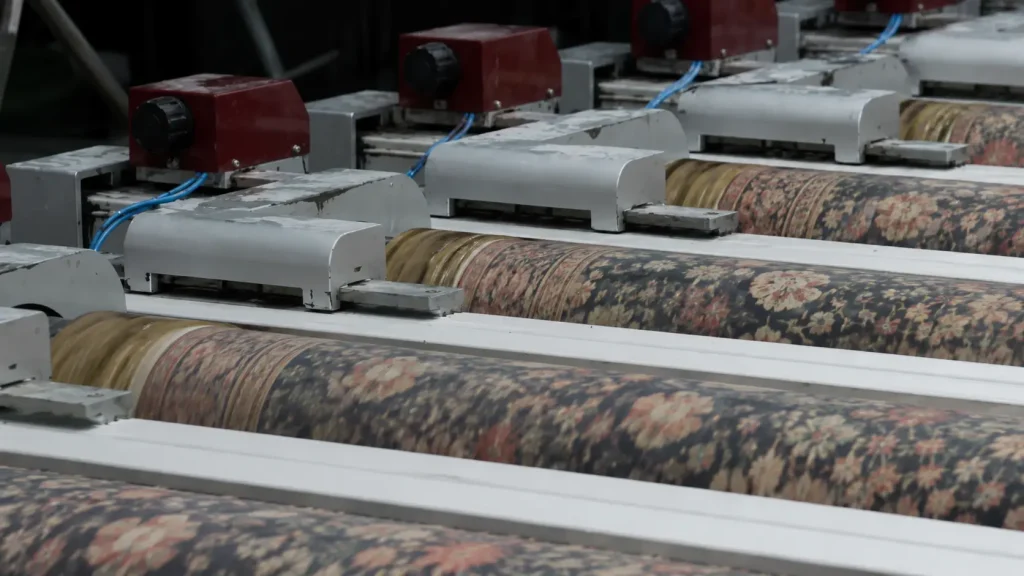
Sizing applies a thin protective coating to the warp yarn before it enters the loom. This coating temporarily increases yarn tensile strength, reduces hairiness (loose fiber ends that cause abrasion), and provides a smooth surface that improves yarn running behavior at high loom speeds. The sizing agent is removed after weaving in the desizing stage, before the fabric proceeds to dyeing or finishing.
How Sizing Agent Choice Affects Downstream Processing
The ease of desizing — how completely and efficiently the sizing agent can be removed — is therefore a critical selection criterion, particularly for fabrics that will receive reactive or vat dyeing after weaving. Sizing agents that require enzymatic or chemical desizing add process steps and cost. Sizing agents that wash out readily with hot water simplify the desizing stage and reduce the risk of incomplete removal.
Sodium Alginate as a Sizing Agent
Film-Forming Properties on Yarn
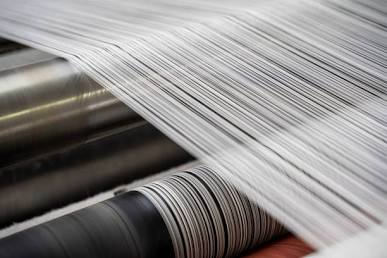
Sodium alginate can form a flexible water-soluble film, but its performance relative to starch-based sizes depends on starch modification, blend ratio, solids, plasticization, yarn and humidity. Compare film strength, elongation, adhesion, abrasion resistance and shedding on the actual yarn rather than assuming one polymer is always more flexible.
Comparison with Starch and PVA Sizing Agents
Starch and modified starch are widely used for cotton-rich yarns because of cost and film performance. Desizing requirements depend on the starch type, degree of modification and blend; enzyme, oxidative or combined routes may be used. The mill should verify removal efficiency and downstream absorbency under its own process conditions.
PVA is used in selected synthetic, blended and demanding warp-sizing systems because of its film strength and abrasion resistance. Desizing behavior depends on molecular weight, degree of hydrolysis, blend composition and wash conditions; compare removal, recovery and wastewater implications using the mill’s actual route.
Sodium alginate dissolves readily in hot water without enzymatic or chemical treatment, which simplifies the desizing process and reduces the number of process steps between weaving and dyeing. For fabrics where the desizing stage is a production bottleneck, or where enzyme cost or control is a concern, sodium alginate offers a practical alternative.
Suitable Fiber Types and Applications
Sodium alginate sizing is most commonly used on cotton and other cellulosic yarns — linen, viscose, and cellulosic blends. It is also used in blended sizing baths alongside starch or PVA for mixed-fiber applications.
It is less commonly used as the primary sizing agent for synthetic yarns (polyester, nylon), where PVA or acrylic sizes are typically preferred for their compatibility with synthetic fiber surfaces.
Sizing Polymer Comparison and Desizing Considerations
| Sizing route | Potential strength | Desizing consideration | Buyer or mill verification |
|---|---|---|---|
| Альгинат натрия | Water-soluble film in selected formulations | Removal depends on add-on, drying, water hardness, temperature and blended ingredients | Adhesion, abrasion, shedding, humidity response, residual size and cost |
| Starch or modified starch | Established cost and film route for many cotton-rich yarns | Enzyme, oxidative or combined process may be needed depending on type and blend | Cook stability, film behavior, loom efficiency, desizing and absorbency |
| PVA | Strong, abrasion-resistant film for selected demanding yarns | Removal varies with molecular weight, hydrolysis and wash conditions | Film strength, shedding, wash demand, recovery and wastewater handling |
| CMC | Water-soluble film and viscosity control, grade dependent | Removal depends on DS, viscosity, add-on and formulation | Hydration, adhesion, salt response, film properties and residual size |
| Blended sizing system | Can balance adhesion, film, cost and preparation | Desizing must be designed for every component | Lock the full recipe and evaluate both weaving and downstream removal |
Application Parameters for Sodium Alginate Sizing
Concentration and Viscosity in the Sizing Bath
Sodium alginate in a sizing bath is typically used at lower concentrations than in printing paste. Concentrations in the range of 0.5% to 2% (w/w) are common, depending on yarn count, fiber type, and the coverage requirement. Fine-count yarns generally require lower size add-on and lower concentration; coarser yarns may need higher concentration for adequate coverage.
Viscosity of the sizing bath affects how evenly the size is applied and how much size is picked up by the yarn during immersion. Low to medium viscosity sodium alginate grades are typically used in sizing baths — high viscosity grades at these concentrations would produce a bath that is too thick for even application and would result in excessive size add-on.
Bath Temperature and Pickup Rate
Sodium alginate sizing baths are typically operated at elevated temperature — commonly 60 to 80°C — to reduce bath viscosity and improve yarn penetration during sizing. At higher temperatures, the size solution is less viscous, which allows better penetration into the yarn structure rather than coating only the surface.
Size pickup rate — the amount of size applied relative to dry yarn weight — is controlled by the concentration of the sizing bath and the squeeze roller pressure after immersion. Target pickup rates for sodium alginate sizing vary with application; confirm the target for your specific yarn and loom type through trial.
Drying Conditions After Sizing
After the size bath, sized yarn passes through a drying section to remove water and form the size film. For sodium alginate, drying temperatures and times need to be sufficient to form a coherent film but not so high as to degrade the alginate or create a brittle film.
Excessive drying temperature can reduce sodium alginate molecular weight and weaken the film, reducing the protective function of the size during weaving. Under-drying leaves the film soft and tacky, causing yarn-to-yarn adhesion on the beam. Confirm recommended drying conditions for your grade with your supplier.
Desizing: Removing Sodium Alginate After Weaving
Why Desizing Quality Matters for Downstream Dyeing
Incomplete desizing is one of the most common causes of dye defects in woven fabric. Residual size on the fabric surface acts as a physical barrier and chemical interference in the dyeing process — it prevents dye molecules from reaching the fiber surface, creates local resist areas, and can affect the pH uniformity of the dye bath.
For reactive dye dyeing or printing after weaving, complete desizing is particularly important because reactive dyes require intimate contact with fiber hydroxyl groups for covalent fixation. Any residual size film between the dye and the fiber reduces fixation rate and creates shade variation.
Hot Water Desizing Method
Sodium alginate desize readily in hot water, which is one of its key advantages as a sizing agent for downstream dyeing processes. The desizing procedure typically involves:
- Wetting the woven fabric in warm water to rehydrate the size film
- Washing in hot water (typically 80–95°C) with agitation to dissolve and remove the size
- Rinsing in clean water to remove dissolved size and any residual sodium alginate from the fabric
No enzymes or chemical desizing agents are required for sodium alginate removal under these conditions. The sizing agent goes into solution and is removed with the wash liquor.
Confirming Complete Removal Before Dyeing
Complete desizing should be confirmed before the fabric proceeds to dyeing. A standard test for residual size involves applying an iodine solution to the desized fabric — starch residue gives a blue-black color reaction, while sodium alginate residue can be detected by alternative methods including conductivity measurement or total organic carbon (TOC) testing of the wash effluent.

How Sodium Alginate Grade Affects Sizing and Desizing Performance
Viscosity Grade Selection
For sizing bath applications, low to medium viscosity sodium alginate grades are most appropriate. These grades produce a bath of workable viscosity at sizing concentrations and allow adequate yarn penetration without excessive size add-on.
High viscosity grades at the same concentration would produce a thicker bath that applies more size per unit of yarn surface area — potentially useful for very coarse yarns requiring higher coverage, but unsuitable for fine-count yarns where size add-on needs to be controlled carefully.
Degree of Substitution and Film Quality
DS affects the flexibility and coherence of the size film. Higher DS grades generally produce more uniform and flexible films due to better solubility and more even distribution on the yarn surface. For fine-count yarn sizing where film uniformity is critical, a higher DS grade may be worth specifying.
Confirm DS specification with your supplier when ordering sodium alginate for sizing applications — the same viscosity grade may be available with different DS ranges, and the film properties can differ meaningfully between them.
Purity and Its Effect on Desizing Efficiency
Impurities in sodium alginate — primarily residual sodium chloride from the manufacturing process — do not typically prevent desizing but can affect bath performance and wash liquor management. Higher salt content in the sizing bath can affect the ionic environment and may interact with sizing bath additives.
For desizing, purity affects how cleanly the size dissolves and whether any residue from impurities remains on the fabric after washing. For fastness-sensitive applications where fabric cleanliness before dyeing is critical, specifying a lower-impurity grade is worth considering.
Common Sizing and Desizing Problems
Uneven Size Film on Yarn
Uneven size film — where some yarn sections have higher size add-on than others — typically results from uneven squeeze roller pressure, bath concentration variation, or incomplete dissolution of the sodium alginate in the sizing bath. Undissolved particles in the sizing bath create local high-concentration spots that deposit unevenly on yarn surfaces.
Ensure complete sodium alginate dissolution before filling the sizing bath. Check for undissolved particles by visual inspection of the bath solution and by filtering a sample through a fine mesh. Adjust bath concentration if size add-on measurement shows variation across the warp width.
Incomplete Desizing Before Dyeing
If iodine or other residue tests show size remaining after the standard desizing wash, extend hot water washing time or increase wash temperature before attempting dyeing. Check whether the sodium alginate concentration in the sizing bath was higher than intended — heavier size application requires more thorough washing for complete removal.
Also verify that the desizing wash water temperature was maintained throughout the washing stage. Temperature drops during washing reduce sodium alginate solubility and can leave partially dissolved size in the fabric.
Size Bath Viscosity Instability
If sizing bath viscosity changes significantly during a production run — becoming thicker or thinner over time — check bath temperature stability, water evaporation rate, and whether the sodium alginate grade is maintaining stability at the operating temperature.
Sodium Alginate Sizing and Desizing FAQ
Can textile-printing sodium alginate be used directly for warp sizing?
Do not approve it from the product name or viscosity alone. A candidate grade must be tested for solids, hydration, adhesion, film strength, elongation, abrasion resistance, shedding, humidity response and removal from the woven fabric.
Does sodium alginate always desize with hot water only?
Not always. Removal depends on add-on, drying history, water hardness, temperature, mechanical washing and any blended sizing ingredients. Verify residual size, absorbency and downstream dyeing rather than assuming complete removal.
Is sodium alginate better than starch or PVA for sizing?
No universal ranking applies. Starch, modified starch, PVA, CMC, alginate and blends offer different cost, film, abrasion and desizing trade-offs. Select the route against yarn, loom, quality target and wastewater conditions.
What should be checked after desizing?
Check residual size, fabric absorbency, wetting uniformity and the downstream dyeing or finishing result. A visually clean fabric can still retain enough size to disturb penetration or shade uniformity.
How FSX Chemical Supports Your Sizing Process
Следующие шаги:
- Запросить TDS — review viscosity, DS, and purity specifications for sizing applications
- Запросить образец — run sizing bath trials and desizing washout tests before bulk ordering
- Попросите о приравнивании оценок — share your yarn count, fiber type, and loom speed for a specific recommendation
- Свяжитесь с нашей технической службой — for sizing formulation questions or desizing troubleshooting support: Service@fsxchemical.com