أهم 5 ابتكارات في مجال المواد الكيميائية المستخدمة في طباعة المنسوجات لعام 2026
تتطور كيمياء طباعة المنسوجات لتتجاوز مجرد مقارنات اللزوجة والسعر. اكتشف خمسة اتجاهات للابتكار...
إن كيمياء طباعة المنسوجات في عام 2026 تتجاوز مجرد المقارنات البسيطة بين اللزوجة وسعر المنتج ونوع البوليمر. وتتمثل أهم اتجاهات الابتكار في الجمع بين المواد الكيميائية الأكثر أمانًا، وعلم الريولوجيا المتقدم، وأنظمة البوليمرات ذات الأساس الحيوي، ومواد ربط الأصباغ الأكثر كفاءة، والعمليات الرقمية الأقصر، والتركيبات المخصصة للاستخدامات المحددة.
تدخل صناعة طباعة المنسوجات مرحلة أصبح فيها تقييم الابتكارات الكيميائية يعتمد بشكل متزايد على ما يحدث على مدار عملية الإنتاج بأكملها، بدلاً من الاعتماد على مواصفة تقنية واحدة.
لا يُعتبر المُكثِّف الجديد ذا قيمة لمجرد أنه ينتج لزوجة أعلى. ولا يُعتبر المُثبِّت الجديد أفضل تلقائيًّا لمجرد أنه يستخدم بوليمرًا مختلفًا. ولا ينبغي اعتبار المعالجة المسبقة الرقمية ابتكارًا لمجرد أنها تحتوي على مكون تم طرحه في السوق مؤخرًا.
والسؤال الأكثر أهمية هو ما إذا كانت الكيمياء تساعد في جعل عملية الطباعة أكثر قابلية للتحكم، وأكثر كفاءة في استخدام الموارد، وأكثر موثوقية من الناحية التقنية، مع الحفاظ في الوقت نفسه على الجودة المطلوبة للنسيج النهائي.
تستعرض هذه المقالة خمسة اتجاهات ابتكارية تستحق اهتمامًا خاصًّا في عام 2026. وهي عبارة عن قائمة مختصرة أعدتها هيئة التحرير، وليست تصنيفًا رسميًّا للقطاع، ولا تزال الحلول الفردية بحاجة إلى اختبار في المختبر والتحقق من صلاحيتها في مرحلة الإنتاج.
ما الذي يُعتبر ابتكارًا في كيمياء طباعة المنسوجات؟
لا يعني الابتكار في مجال الكيماويات النسيجية دائمًا اكتشاف جزيء جديد تمامًا.
ويمكن أن تنشأ الابتكارات المهمة أيضًا عن الجمع بين التركيبات الكيميائية الحالية بطريقة أكثر ذكاءً، أو تغيير بنية البوليمر، أو تقليل خطوات العملية غير الضرورية، أو تحسين الشفافية الكيميائية، أو تصميم تركيبة واحدة تستند إلى مسار طباعة محدد بوضوح.
بالنسبة لمصنع الطباعة، ينبغي أن يؤدي الابتكار المفيد إلى تحسين مجال واحد على الأقل من هذه المجالات
التحكم في المدخلات الكيميائية
كفاءة استخدام المواد
علم الريولوجيا
ثبات المعجون
الترشيح
تعريف الطباعة
كفاءة التثبيت أو المعالجة
بساطة العملية
جودة القماش الجاهز
اتساق الدُفعات
من الناحية المثالية، لا ينبغي أن يؤدي هذا التحسين إلى حدوث تنازلات غير مقبولة في أي مرحلة أخرى من العملية.
نظرة سريعة: أهم 5 ابتكارات لعام 2026
الابتكار
التوجيه الفني الرئيسي
القيمة الصناعية المحتملة
الكيمياء القائمة على المدخلات الأكثر أمانًا
تركيبة تراعي المواد المقيدة وقدرة أكبر على تتبع المنشأ
تقليل مخاطر إدارة المواد الكيميائية ووضع معايير أوضح لتأهيل الموردين
مواد تكثيف هجينة ذات أصل حيوي
الجمع بين البوليمرات ذات الأصل المتجدد لأداء وظائف متكاملة
خيارات جديدة في مجال علم الريولوجيا والوظائف وكفاءة استخدام المواد
مواد رابطة متطورة ذات أساس مائي
بنية بوليمرية أكثر كفاءة لتثبيت الصبغة
تحقيق توازن أفضل بين كمية المادة المثبتة، وثبات الألوان، وملمس النسيج
عمليات رقمية أقصر
تبسيط المعالجة المسبقة والتجفيف ومراحل الإنتاج ذات الصلة
التخفيضات المحتملة في الوقت والطاقة وتعقيد العمليات
الأنظمة متعددة الوظائف
الجمع بين وظائف علم الريولوجيا والتحكم في السطح والتوافق
تصميم كيميائي أكثر تخصصًا للتطبيقات
تتداخل هذه التوجهات. فقد يشكل البوليمر ذو الأساس الحيوي جزءًا من نظام متعدد الوظائف، في حين أن المعالجة المسبقة الرقمية المتطورة قد تجمع بين عدة آليات للتحكم في السطح.
1. تركيبات كيميائية أكثر أمانًا من حيث المواد الأولية ومراعية لمخاطر مركبات PFAS
أحد أهم الابتكارات في كيمياء المنسوجات لا يمكن رؤيته على الإطلاق على القماش المطبوع.
وهو التحول نحو تصميم واختيار المواد الكيميائية مع إيلاء اهتمام أكبر لما يدخل في عملية التصنيع منذ البداية.
لماذا تُعد كيمياء المدخلات أمرًا مهمًا
إن محاولة التحكم في المواد غير المرغوب فيها بعد الطباعة أو التشطيب فقط تعتبر طريقة غير فعالة. أما النهج الأكثر عملية فهو فهم المواد الكيميائية المستخدمة قبل دخولها إلى نظام الإنتاج.
ماذا يعني ذلك بالنسبة لمُصممي التركيبات
يتزايد الحاجة إلى أن يأخذ صانعو التركيبات الكيميائية في الاعتبار ليس فقط أداء الطباعة، بل أيضًا هوية المواد الخام، ومخاطر المواد المحظورة، وبيانات الموردين، والأدلة التي تدعم الادعاءات المتعلقة بالمنتج.
ماذا يعني ذلك للمشترين
ينبغي على فرق المشتريات أن تطلب معلومات محددة عن المنتج بدلاً من الاعتماد على عبارات عامة مثل «صديق للبيئة» أو «أخضر» أو «متوافق مع المعايير».
قد تتضمن مجموعة المؤهلات الأكثر شمولاً ما يلي:
تحديد هوية المنتج التجاري بوضوح
TDS الحالي
SDS
الوثائق ذات الصلة بالدفعة
الاختبار المطبق أو دليل المطابقة، عند الاقتضاء
معلومات قابلة للتتبع عن الشركة المصنعة
يتمحور هذا الابتكار في نهاية المطاف حول الانتقال من الكيمياء القائمة على التسويق إلى الكيمياء القائمة على الأدلة.
2. أنظمة المكثفات ذات الأساس الحيوي والهجينة
تُستخدم البوليمرات الطبيعية في طباعة المنسوجات منذ فترة طويلة. ومن الأمثلة المعروفة على ذلك: ألجينات الصوديوم، ومشتقات السليلوز، ومشتقات النشا.
لا يقتصر الاتجاه المبتكر الأحدث على مجرد العودة إلى المُكثِّفات الطبيعية فحسب، بل يتمثل في الجمع بين أنظمة بوليمرية مختلفة مشتقة من مصادر حيوية أو معدلة، بهدف الحصول على خصائص ريولوجية ووظيفية متكاملة.
لماذا تُعد الأنظمة الهجينة مثيرة للاهتمام
قد يوفر أحد البوليمرات اللزوجة، بينما يساهم بوليمر آخر في تكوين الغشاء، أو استعادة الشكل الهيكلي، أو الالتصاق، أو أي خاصية وظيفية أخرى.
تشمل الأهداف المحتملة لتصميم الأنظمة الهجينة ما يلي:
تحسين سلوك التخفيف بالقص
انتعاش هيكلي أفضل
تقليل الاعتماد على بوليمر واحد
تحسين ثبات المعجون
وظائف إضافية للمنسوجات
الجرعة الإجمالية المُحسَّنة للبوليمر
الأصل الطبيعي ليس كافياً
لا ينبغي اعتبار المادة ذات الأصل الحيوي الخيار الأكثر استدامة تلقائيًّا.
ولا يزال يتعين تقييم مسار تصنيعها، والجرعة المطلوبة، وطريقة معالجتها، والنفايات الناتجة عنها، وأداء المنتج النهائي من المنسوجات.
وبالتالي، فإن الابتكار المهم هو هندسة البوليمرات الوظيفية، وليس مجرد استبدال كلمة «اصطناعي» بكلمة «طبيعي».
3. مواد رابطة للأصباغ مائية عالية الكفاءة
لا تزال الطباعة بالصبغات تعتمد بشكل كبير على التركيب الكيميائي للمواد الرابطة، لأن الصبغات لا تعتمد على نفس آلية التفاعل مع الألياف التي تعتمد عليها الأصباغ التفاعلية.
يجب أن يُكوّن المُثبِّت طبقة رقيقة قادرة على تثبيت الصبغة على النسيج مع الحفاظ على توازن مقبول بين المتانة والمرونة وملمس النسيج.
يتجه تطوير المواد الرابطة المتطورة بشكل متزايد نحو التركيز على
أنظمة البوليمرات المائية
تشكيل طبقة رقيقة أكثر كفاءة
بنية جسيمات البوليمر
تقليل الحمولة الفعالة للمادة الرابطة حيثما كان ذلك ممكنًا من الناحية الفنية
تحسين الالتصاق
أداء فرك أفضل
مقبض من قماش أكثر نعومة
فترات معالجة أكثر كفاءة
لماذا تعتبر هندسة البوليمرات مهمة؟
لا يعتمد أداء المادة الرابطة على محتوى المواد الصلبة فحسب. فحجم الجسيمات، والمجموعات التفاعلية، وتكوين الطبقة الرقيقة، وسلوك الترابط يمكن أن تؤثر جميعها على العلاقة بين الجرعة وأداء الطباعة.
انخفاض جرعة المادة الرابطة لا يعني بالضرورة أنها أفضل
لا يكون التخفيض ذا قيمة إلا إذا ظلت ثبات الألوان، ومقاومة الاحتكاك، ومقاومة الغسيل، وملمس القماش في مستويات مقبولة.
وبالتالي، فإن الهدف الحقيقي للابتكار هو تحقيق كفاءة وظيفية أعلى، وليس مجرد تقليل كمية المادة الرابطة.
4. المعالجة المسبقة للطباعة الرقمية ذات الدورة الأقصر
لا تزال الطباعة الرقمية على المنسوجات تولد طلبًا قويًّا على عمليات معالجة مسبقة للأقمشة أكثر كفاءة.
يمكن أن تتضمن سير العمل الرقمي التقليدي عدة مراحل بين النسيج الخام والطباعة النهائية:
القماش → المعالجة المسبقة → التجفيف → الطباعة بنفث الحبر → التثبيت أو المعالجة الكيميائية → الغسل أو التشطيب
قد تؤدي كل مرحلة إلى زيادة في الوقت، والطاقة، واستهلاك المياه، وعمليات المناولة، والتباين في العمليات.
الاتجاه الابتكاري هو تكثيف العمليات
يتم تقييم الأساليب الجديدة للمعالجة المسبقة بشكل متزايد بناءً على مدى قدرتها على تبسيط عملية التحضير، أو تقليل عبء التجفيف، أو الجمع بين الوظائف دون الإضرار بجودة الطباعة.
ومن بين الأهداف الإنمائية المهمة ما يلي:
تكلفة إضافية أقل للمعالجة المسبقة
امتصاص أكثر اتساقًا للنسيج
تجفيف أسرع أو أبسط
تحكم أفضل في انتقال الحبر
دقة عالية في الخطوط الدقيقة
تثبيت متوافق
تقليل عمليات المعالجة اللاحقة غير الضرورية
Shorter does not automatically mean better
Removing one processing stage is useful only if definition, color result, fastness and fabric handle remain acceptable.
Production trials are therefore essential before converting a laboratory short-process concept into normal manufacturing.
5. Multifunctional and Application-Specific Chemical Systems
A major direction in textile printing chemistry is movement away from the idea that one polymer should solve every formulation problem.
Modern compound and application-specific systems can combine several functions inside one controlled formulation.
Possible functions include
اللزوجة الأساسية
Shear-thinning control
التعافي الهيكلي
Surface sizing
Moisture management
الترشيح
تحمل الإلكتروليتات
توافق المجلدات
ثبات المعجون
This is particularly important in digital printing
Reactive, disperse and pigment inkjet systems require different fabric, ink and fixation conditions.
A universal digital printing paste is therefore less useful than a clearly defined product route designed around a specific ink and fabric system.
Compound does not automatically mean more complicated
A well-designed compound product can simplify the customer’s formulation if several functions have already been balanced during product development.
The critical requirement is repeatable manufacturing and clear application validation.
Why Rheology Connects Several of These Innovations
Rheology is one of the central themes connecting thickener, binder, pretreatment and compound-system development.
A single viscosity number describes only one measurement condition. Printing exposes the chemical system to different levels of shear.
At low shear
Sufficient structure may support storage and holding stability.
Under higher shear
Easier flow can help pumping, coating and screen passage.
After application
Structural recovery may help limit uncontrolled spreading and maintain print definition.
This is why innovative thickener systems should be compared through rheological behavior and printing trials rather than viscosity alone.
What These Innovations Mean for Reactive Printing
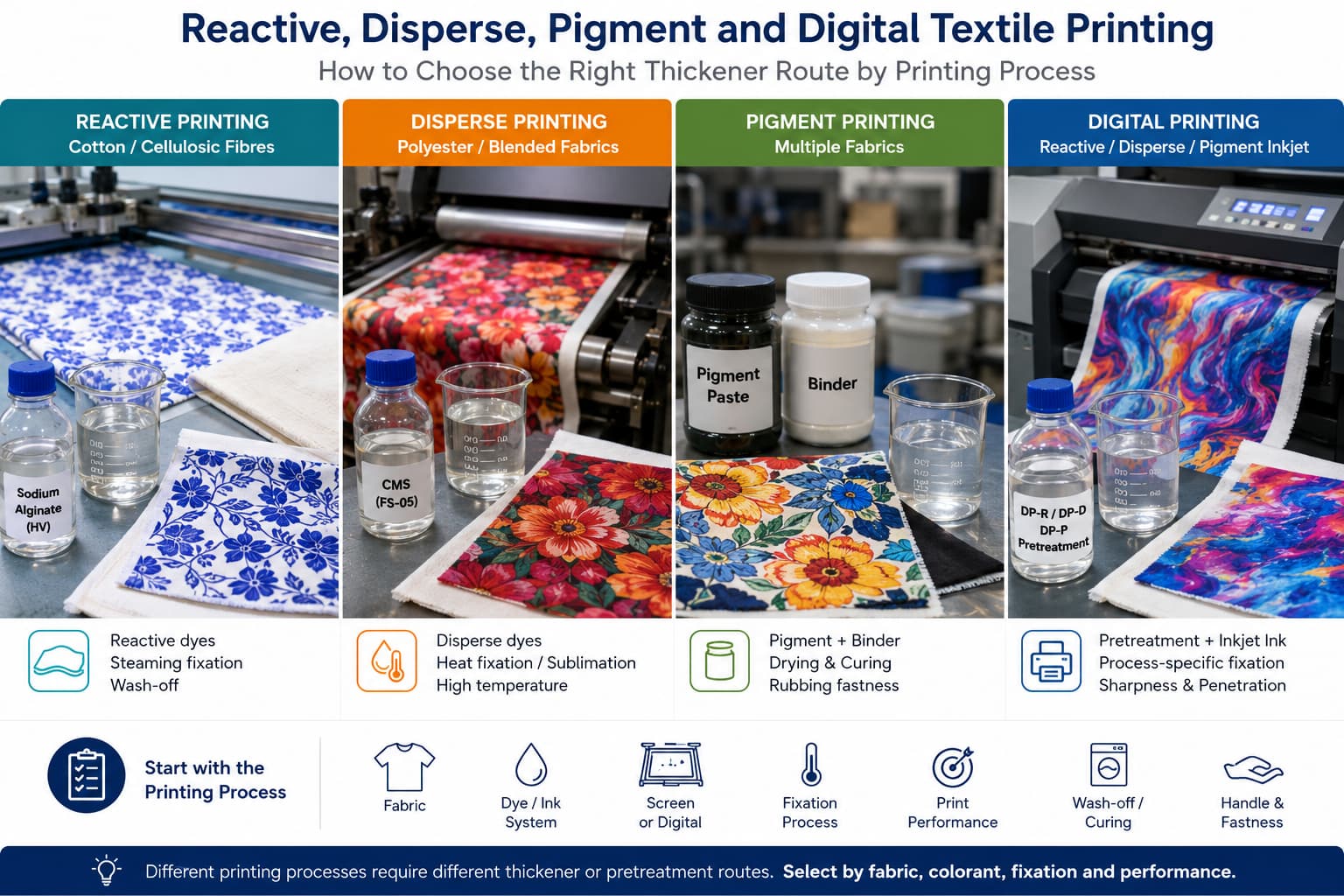
Conventional reactive screen printing still commonly begins with ألجينات الصوديوم as an important thickener route.
Innovation does not necessarily mean abandoning this established chemistry.
Instead, development can focus on:
More efficient viscosity grades
Better filtration
Improved rheological control
Compound systems for selected formulations
Reduced formulation correction
Better sample-to-bulk consistency
Any change to the thickener route should still be validated for reactive-dye compatibility, definition, fixation and wash-off.
What These Innovations Mean for Disperse Printing
Polyester disperse printing creates opportunities for modified starch, compound thickener and process-specific systems.
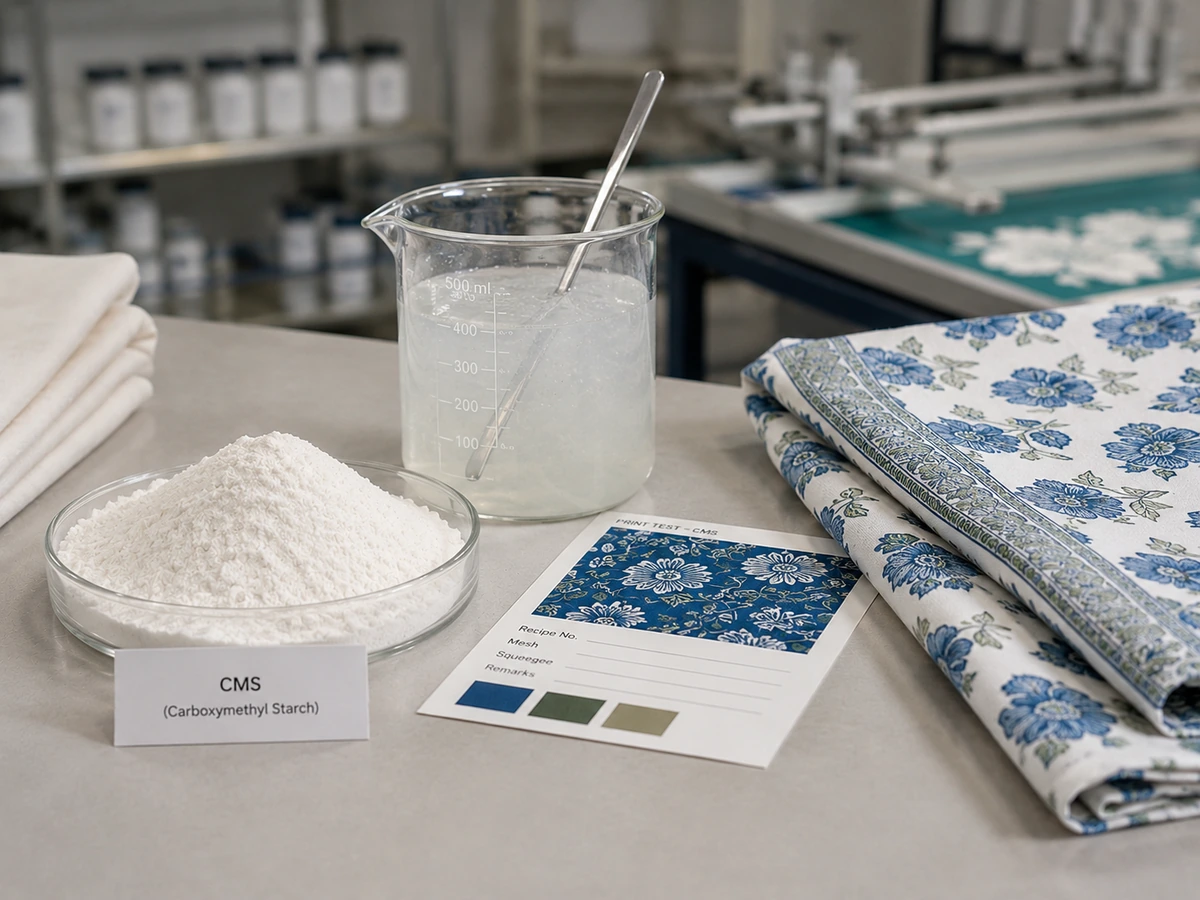
CMS and related routes can be evaluated where viscosity, screen passage, paste stability and commercial efficiency need to be balanced.
Innovation targets can include
Better effective thickening efficiency
Cleaner screen passage
Improved long-run paste stability
More consistent solid areas
Compatibility with thermal fixation
Final suitability depends on the actual disperse colorant, polyester fabric and fixation process.
What These Innovations Mean for Pigment Printing
Pigment printing is one of the areas where thickener and binder innovation are closely connected.
A high-performance pigment formulation needs the rheology system and binder to work together.
Important optimization targets include
Binder efficiency
Thickener-binder compatibility
تحمل الإلكتروليتات
تعريف الطباعة
Film formation
Rubbing performance
المعالجة
مقبض من القماش
Improving one property at the expense of several others does not represent successful innovation.
What These Innovations Mean for Digital Textile Printing
Digital printing is likely to remain one of the most important areas for process-specific textile chemical development.
The chemistry should first be separated according to ink system.
طابعة نفث الحبر التفاعلية
Evaluate fabric pretreatment for suitable cellulosic textiles, migration control, definition, fixation and wash-off.
طريقة الطباعة النافثة للحبر المتفرقة
Evaluate polyester pretreatment for uniformity, filtration, drying and thermal-process compatibility.
الطباعة النافثة للحبر الصبغية
Evaluate pretreatment together with pigment ink, binder, curing, rubbing performance and fabric hand feel.
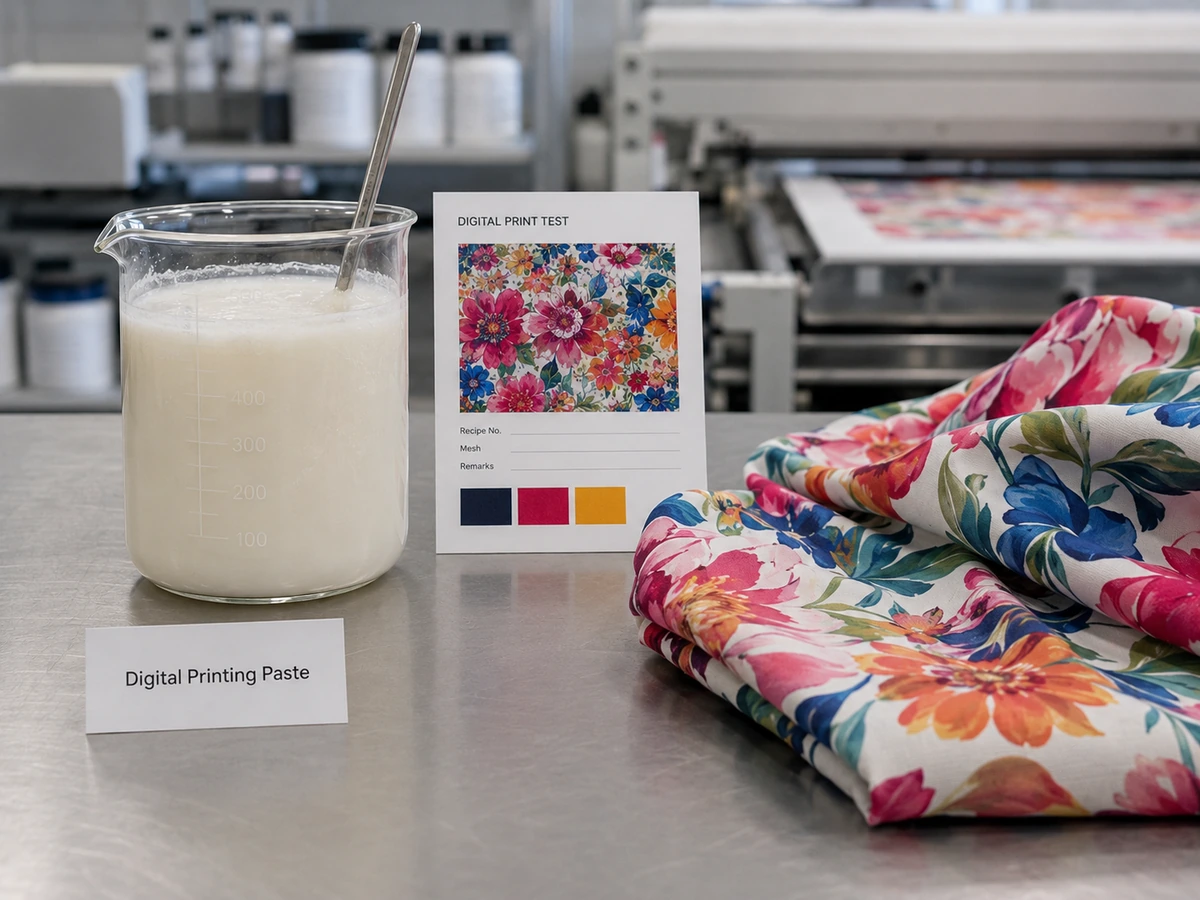
FSX Chemical separates these systems through معجون الطباعة الرقمية routes designed for reactive, disperse and pigment printing trials.
Digital pretreatment paste should not simply be added directly to digital ink. Ink and fabric-side pretreatment are different formulation systems.
Innovation and Sustainable Printing
Sustainability claims need particular care when discussing new textile chemicals.
A bio-based ingredient, lower dosage or shorter process does not by itself prove a lower overall environmental impact.
A more practical evaluation includes
Actual chemical dosage
نفايات المعجون
فقدان الترشيح
Energy used in preparation and curing
Water used in washing
Rejected or reprinted fabric
Product durability
اتساق الدُفعات
Sustainable innovation should therefore be connected with measurable process performance rather than broad environmental terminology.
How to Evaluate an Innovative Textile Chemical
New chemistry should face a stronger test procedure than an established material because the buyer has less production history on which to rely.
Step 1: Define the current benchmark
Record the existing commercial product, formula, dosage and known production performance.
Step 2: Define the innovation objective
Decide whether the candidate is intended to improve filtration, rheology, dosage, curing, process length, sustainability or another measurable target.
Step 3: Compare basic laboratory properties
المظهر
اللزوجة
الرقم الهيدروجيني
الترطيب
الترشيح
Physical stability
Step 4: Evaluate the complete formulation
Add the actual dyes, pigments, salts, alkalis, binders and auxiliaries used in production.
Step 5: Print the actual fabric
Use the same design, substrate and equipment conditions whenever possible.
Step 6: Complete post-treatment
Final evaluation should occur after fixation, curing and washing as required.
Step 7: Compare the original objective
Confirm whether the innovation actually improved the targeted parameter without creating new production problems.
Why Laboratory Innovation Must Survive Production Scale-Up
An innovative formulation can perform very well in a small laboratory batch and still behave differently in industrial production.
Scale-up changes
Mixer geometry
حجم الدفعة
Pump shear
مدة الانتظار
درجة الحرارة
Application speed
Fabric variation
Production validation should therefore be part of product development, not an afterthought.
Monitor the complete production run
Fabric from the beginning, middle and end should be compared when evaluating paste stability and printing consistency.
Verify the first bulk batch
The commercial material should remain connected to the approved sample through product identity and relevant batch documentation.
Innovation and Total Cost in Use
New textile chemistry is commercially useful only when its complete economic effect is understood.
Do not compare only price per kilogram
A more expensive product can still reduce total cost if it operates at a more efficient dosage or reduces expensive production losses.
قارن
سعر المنتج المُسلَّم
الجرعة الفعالة
Preparation time
الترشيح
فترة توقف الماكينة
Printing speed
نفايات المعجون
Fixation or curing
Reprinting and rejected fabric
Innovation should therefore be measured against an established technical and commercial benchmark.
How Buyers Should Evaluate Innovative Suppliers
مجال التقييم
Question to Ask
Innovation Claim
What exactly is new about the product?
Technical Evidence
Which measurements support the claimed benefit?
التطبيق
Which fabric and printing system was it designed for?
Benchmark
What should the product be compared against?
نموذج
Can I test the actual commercial grade?
Scale-Up
Has the chemistry been evaluated beyond a small laboratory batch?
مراقبة الجودة للدُفعات
Which properties are controlled in commercial production?
Documentation
Which product-specific technical and compliance documents are available?
Supply
Can the approved formulation be produced consistently for repeat orders?
A technically credible supplier should be willing to explain both the expected benefit and the limitations of a new chemistry.
How FSX Chemical Approaches New Printing Solutions
Innovation within textile printing does not require replacing every proven chemistry. In many cases, a better result can come from selecting the correct grade, optimizing rheology or developing a more appropriate compound system.
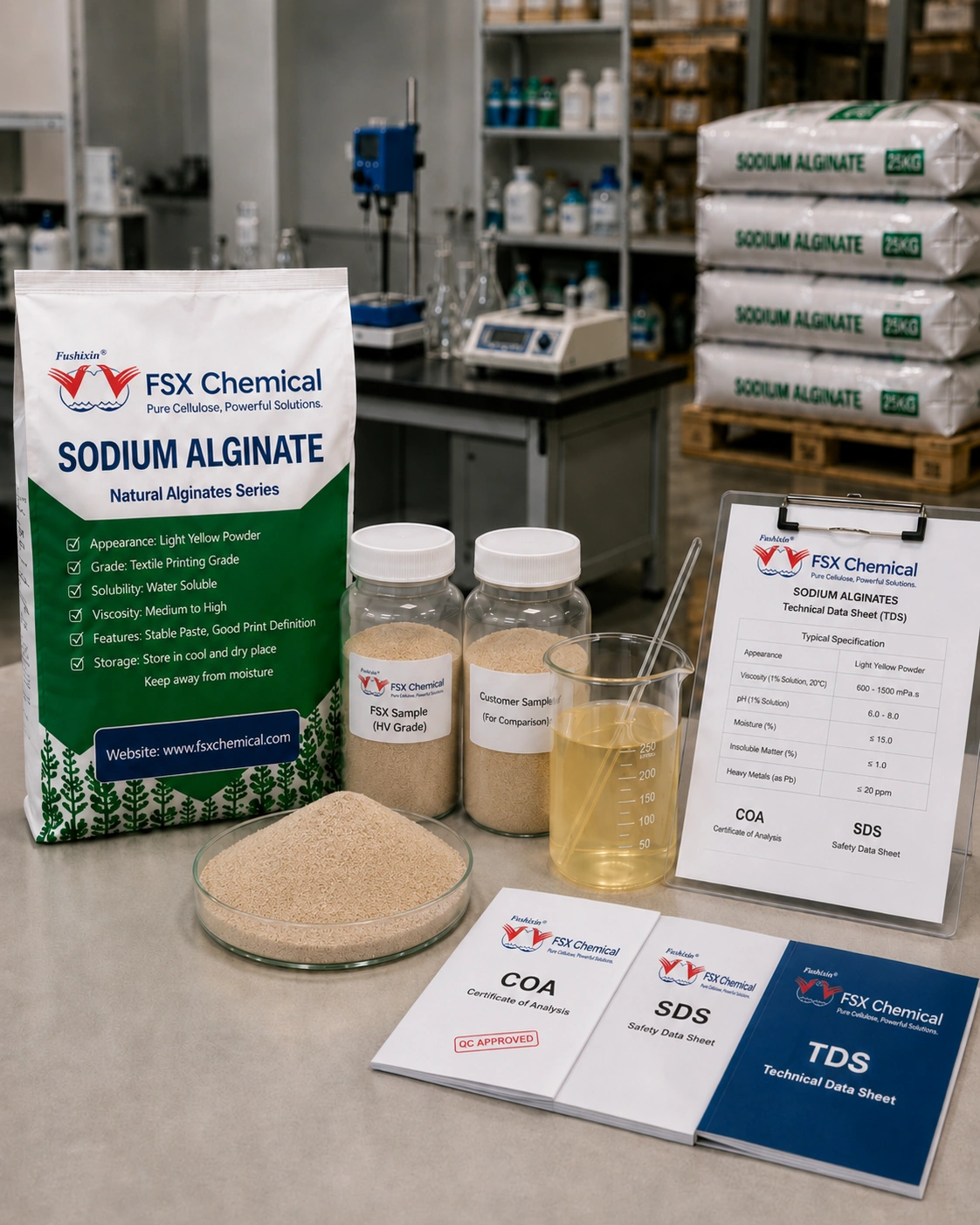
من خلال العينات والمطابقة , customers can use their current commercial product as the technical reference for evaluating a different grade or formulation direction.
Useful project information includes
Current commercial product and TDS
عينة مرجعية مادية
اللزوجة وطريقة الاختبار الكاملة
الجرعة الحالية
Printing formulation
القماش
Reactive, disperse, pigment or digital process
Printing equipment
Current technical problem
Target improvement
The objective is to identify a technically relevant candidate and validate it through controlled comparison rather than assume that a product is superior simply because it is described as new📧 البريد الإلكتروني: Service@fsxchemical.com
تعرف على كيفية اختيار المُكثِّف وطرق المعالجة المسبقة للطباعة النسيجية التفاعلية، والطباعة بالتشتت، والطباعة بالصبغات، والطباعة الرقمية، بناءً على متطلبات النسيج، والصبغة أو الحبر، والتثبيت، وقابلية الغسل، وجودة الطباعة.
يُستخدم معجون الطباعة الذي يعتمد على مادة CMC في طباعة المنسوجات بالأصباغ، والطباعة التفاعلية، والطباعة الرقمية. يشرح هذا الدليل المعلمات المهمة، وكيفية مقارنة الموردين، وما يجب طلبه قبل تقديم طلب شراء بالجملة.
يُستخدم كل من ألجينات الصوديوم وCMC كمكثفات في طباعة المنسوجات، لكنهما يناسبان أنظمة صبغ وظروف معالجة مختلفة. يشرح هذا الدليل الاختلافات الرئيسية بينهما ومتى يتم استخدام كل منهما.
تُستخدم المواد الخام المستخلصة من السليلوز في طباعة المنسوجات، وتحضير معجون الطباعة، وتكثيف المزيج، ودعم عمليات التركيب. يشرح هذا الدليل كيف يمكن للمشترين تقييم منتجات CMC وCMS وألجينات الصوديوم ومكثفات طباعة المنسوجات ومنتجات معجون الطباعة من خلال المواصفات والوثائق واختبار العينات ودعم الموردين.
لا يقتصر شراء ألجينات الصوديوم بالجملة على مجرد مقارنة السعر للوحدة. يشرح هذا الدليل كيف يمكن لمشتري منتجات طباعة المنسوجات التحقق من اللزوجة، وحجم الشبكة، ودرجة النقاء، والتعبئة، وشهادة التحليل (COA)، واختبار العينات، واتساق الدُفعات قبل تقديم الطلبات بالجملة.
تُستخدم مشتقات السليلوز على نطاق واسع في طباعة المنسوجات، وتحضير معاجين الطباعة، وتكثيف القوام، ودعم صياغة التركيبات. يشرح هذا الدليل كيف يمكن للمشترين من الخارج الحصول على مادة CMC، وCMS، وألجينات الصوديوم، ومكثفات طباعة المنسوجات، ومنتجات معاجين الطباعة من شركة FSX Chemical، مع توفير وثائق TDS وCOA واختبار العينات ومطابقة الدرجات ودعم مستندات التصدير.
لا يقتصر اختيار مورد للمواد الكيميائية المستخدمة في طباعة المنسوجات على مجرد مقارنة أسماء المنتجات وأسعارها. يشرح هذا الدليل كيف يمكن للمشترين تقييم مجموعة المنتجات، والوثائق الفنية، واختبار العينات، واتساق الدُفعات، والتواصل، والدعم المقدم من المورد قبل الدخول في تعاون معه.
لا يقتصر اختيار المواد الكيميائية المستخدمة في صناعة النسيج على مجرد مقارنة أسماء المنتجات. يشرح هذا الدليل كيف يمكن لمشتري منتجات طباعة المنسوجات مطابقة منتجات CMC وCMS وألجينات الصوديوم ومكثفات طباعة المنسوجات ومعجون الطباعة وفقًا للتطبيق والمواصفات وورقة بيانات المواد (TDS) وشهادة تحليل المنتج (COA) واختبار العينات واتساق الدُفعات.
يتطلب اختيار مورد للمواد الكيميائية الصناعية المستخدمة في طباعة المنسوجات أكثر من مجرد التحقق من أسماء المنتجات وأسعارها. يشرح هذا الدليل كيف يمكن للمشترين مراجعة نطاق شهادة ISO، وورقة بيانات المنتج (TDS)، وشهادة التحليل (COA)، وورقة بيانات السلامة (SDS)، واختبار العينات، واتساق الدُفعات، ووثائق التصدير قبل تقديم الطلبات بالجملة.
ينبغي أن يبدأ الدعم المتعلق بالتركيبات الكيميائية لطباعة المنسوجات بتوفير معلومات واضحة حول الاستخدام. يشرح هذا الدليل ما يجب على المشترين تقديمه عند طلب مطابقة المنتجات، وتعديل التركيبات، واختبار العينات، ووثائق بيانات المواد (TDS)، وشهادات التحليل (COA)، وورقات بيانات السلامة (SDS)، والدعم الفني فيما يتعلق بـ CMC و CMS وألجينات الصوديوم ومكثفات طباعة المنسوجات ومنتجات معجون الطباعة.
Sodium alginate for textile coating is a vital bio-based option for global textile/printing firms. It solves key issues like poor adhesion (ideal for cotton) and low durability (boosts polyester coating resilience by 30%), while meeting regional rules—EU REACH (biodegradable) and US OEKO-TEX (non-toxic for babywear). This guide covers application tips (digital printing), alternatives comparison (vs acrylic binders), and how to pick global suppliers like fsxchemical.
لا يقتصر اختيار المكثف المناسب لطباعة المنسوجات على نوع القماش فحسب. بل يجب على المشترين مطابقة المكثف مع نظام الصبغة أو الصبغات، وطريقة الطباعة، والخصائص الريولوجية المستهدفة، ومتطلبات مقاومة الغسل، وظروف التجارب الفعلية في المصنع.
يرجى إرسال اسم المنتج، والتطبيق، والكمية، والوجهة، وأي بيانات تقنية (TDS)،
أو صورة عينة أو مستند متوفر لديكم بالفعل. وستقوم شركة FSX Chemical بمراجعة
هذه المعلومات وتقديم توصية بشأن الخطوة التالية سواء كانت تقديم عرض أسعار، أو مطابقة العينة،
أو اختيار المنتج.
معلومات عن المنتجاسم المنتج، الدرجة، الطراز، صورة الملصق أو مرجع المورد.
الوثائق المتاحةTDS، SDS، COA، صورة العينة، قائمة المنتجات أو بيانات الاختبار.
تفاصيل الطلبالكمية التقديرية، والتعبئة، وبلد المقصد، والميناء، أو الشروط التجارية.
الطلب أو المشكلةعملية طباعة المنسوجات، متطلبات التركيبة، المشكلات الحالية أو الأداء المستهدف.