How to Choose the Right Textile Printing Thickener for Your Fabric
Choosing a textile printing thickener starts with more than viscosity. Learn how fiber type, fabric...
Choosing the right textile printing thickener starts with understanding the fabric, but fiber type is only the first variable. Fabric construction, absorbency, dye or ink chemistry, printing equipment, rheology and post-treatment all influence which thickener route is most suitable for production.
Textile printing mills often begin thickener selection with a simple question: what is the best thickener for cotton, polyester, viscose or a blended fabric?
The question is useful, but the answer cannot be based on fiber name alone.
Cotton printed with reactive dyes requires a different chemical approach from cotton printed with pigment. Polyester printed with disperse colorants has different requirements from a cotton-polyester blend. A reactive digital inkjet process also requires a different pretreatment strategy from conventional flat-screen printing on the same cotton fabric.
Fabric should therefore be the starting point rather than the final selection rule.
A practical thickener-selection process connects fiber composition, fabric construction, absorbency, printing chemistry, equipment and final quality requirements before a candidate grade is approved.
Why Fabric Should Be the Starting Point
The textile substrate determines how the printing paste meets the surface, penetrates the structure and interacts with the colorant.
Different fibers have different chemical structures, moisture behavior, surface energy and affinity for dyes or pigments.
Fabric construction then adds another layer of variation. Two 100-percent cotton fabrics can behave differently if one is a light knitted fabric and the other is a dense woven fabric.
Fabric influences
Liquid absorption
Capillary movement
Paste penetration
Surface spreading
Required fixation chemistry
Print definition
Finished-fabric handle
These factors make fabric identification one of the first steps in professional textile thickener selection.
Why Fabric Alone Is Not Enough
Although the fabric should be identified first, it cannot determine the thickener by itself.
The same textile can be printed through several different chemical systems.
Consider cotton
Cotton can be printed with reactive dyes, pigments and selected other color systems.
Conventional reactive screen printing commonly begins with sodium alginate as the benchmark thickener route.
Pigment printing on cotton requires a system that works with the pigment dispersion, binder and curing chemistry.
Reactive digital printing on cotton usually requires a fabric-side pretreatment system matched to digital inkjet printing.
Therefore, the more accurate selection sequence is:
Before requesting a textile printing thickener, determine the actual fiber composition of the fabric.
Do not rely only on a broad description such as natural fabric, synthetic fabric or blended fabric.
Useful information includes
Cotton percentage
Viscose or rayon percentage
Polyester percentage
Nylon or polyamide content
Wool or silk content
Elastane or other blend components
A 100-percent cotton fabric and a cotton-polyester blend may require different colorant and fixation strategies even when they look similar before printing.
Accurate fiber information therefore prevents incorrect thickener selection at the beginning of the project.
Choosing a Thickener for Cotton
Cotton is one of the most important substrates in textile printing and is commonly printed with reactive dyes and pigments.
Cotton with reactive dyes
For conventional reactive printing, sodium alginate is a common benchmark starting route.
The selected grade should be evaluated for viscosity, rheology, hydration, filtration, screen passage, definition, fixation and wash-off.
Cotton with pigment systems
Pigment printing depends on binder chemistry rather than reactive dye-fiber fixation.
A binder-compatible synthetic or compound rheology route may therefore be more appropriate than selecting a reactive-printing alginate simply because the substrate is cotton.
Cotton for reactive digital printing
Digital inkjet printing uses a separate ink and fabric-pretreatment approach. A reactive digital printing paste route can be evaluated according to fabric absorbency, ink system, pretreatment pickup and fixation.
Cotton construction matters
Lightweight cotton knit, heavy woven cotton and dense shirting fabric can absorb and distribute printing liquid differently.
This means the same cotton chemistry may still require different viscosity, pickup or application adjustments.
Choosing a Thickener for Viscose and Rayon
Viscose and rayon are regenerated cellulosic fibers and are often printed using reactive systems.
However, their absorbency can differ from that of many cotton fabrics, which makes penetration and lateral spreading important evaluation areas.
For reactive printing, evaluate
Paste rheology
Fabric absorbency
Penetration
Fine-line definition
Reactive dye compatibility
Fixation
Wash-off
Sodium alginate can be used as a common starting benchmark, but the same grade and dosage used on one cotton fabric should not automatically be transferred to viscose.
More absorbent substrates may require greater attention to rheological recovery and fabric pickup rather than simply increasing viscosity.
Linen and Other Cellulosic Fabrics
Linen and other cellulose-rich fabrics can also be printed with reactive chemistry, but their surface structure may differ considerably from smooth cotton.
Yarn irregularity, fabric openness and absorbency can influence how the paste transfers and penetrates.
Important questions include
Is the surface smooth or irregular?
How rapidly does the fabric absorb water?
Does the design require fine detail?
Is deep penetration required?
What fixation and washing route is used?
The thickener should be selected from the complete printing process rather than from the fact that the substrate is cellulosic alone.
Choosing a Thickener for Polyester
Polyester is fundamentally different from cotton because disperse colorants and thermal processing are commonly involved.
This changes both the printing chemistry and the role of the thickener.
Conventional disperse printing
CMS and other application-specific thickener systems can be evaluated depending on the disperse formulation, machine and thermal fixation process.
Important polyester evaluation areas include
Paste stability
Screen passage
Transfer
Solid-area uniformity
Colorant compatibility
Thermal fixation behavior
Final surface cleanliness
Polyester digital printing
Digital disperse printing should be evaluated through a disperse-specific pretreatment route rather than by applying a reactive cotton pretreatment directly.
Fabric construction and the exact digital process should still be considered before selecting the candidate.
Nylon, Wool and Silk
Nylon, wool and silk are commonly associated with printing chemistries that differ from standard cotton reactive or polyester disperse systems.
In these applications, thickener selection should begin with the specific dye class, fiber sensitivity, pH environment and fixation process.
A sodium alginate, CMC, CMS or compound thickener should not be selected simply because it works on another fiber.
Before selecting a product, define
Exact fiber composition
Dye class
Required pH
Fixation route
Fabric sensitivity to heat or chemical conditions
Final hand-feel requirement
These processes are good examples of why fabric-based selection must always remain connected with printing chemistry.
Choosing a Thickener for Blended Fabrics
Blended fabrics are more complex because more than one fiber type may influence liquid absorption, dye affinity and fixation.
Cotton-polyester blends
Cotton and polyester respond to different dye classes, so the final color system must be defined before choosing the thickener.
Viscose-polyester blends
The cellulosic component may absorb aqueous systems differently from the polyester component, affecting penetration and surface distribution.
Elastic blends
Fabrics containing elastane may also have different construction, stretch and finishing behavior that should be considered during application and fixation.
Do not choose from the majority fiber alone
A fabric that is 65-percent polyester and 35-percent cotton is not simply a polyester fabric from a printing-chemistry perspective.
The complete colorant and fixation system should determine the candidate thickener route.
Step 2: Check Fabric Construction
Fiber chemistry defines the broad application direction, while fabric construction strongly influences physical paste behavior.
Record
Knitted or woven
Fabric weight
Density
Yarn structure
Surface texture
Stretch
Thickness
A light open fabric can allow greater penetration than a dense surface at the same paste viscosity.
Heavy fabric does not automatically require a higher-viscosity thickener. The desired penetration, printing method and design also matter.
Knitted vs Woven Fabrics
Knitted and woven fabrics can respond differently during printing even when they contain the same fiber.
Knitted fabrics
Knits may have a more open and flexible structure. Fabric movement, absorbency and penetration can therefore become important during printing.
Woven fabrics
Woven fabrics can provide a more dimensionally controlled surface, but density, yarn count and finishing still influence paste transfer.
Why this affects thickener selection
The same polymer grade can create different visible print boundaries because liquid movement occurs through different fabric structures.
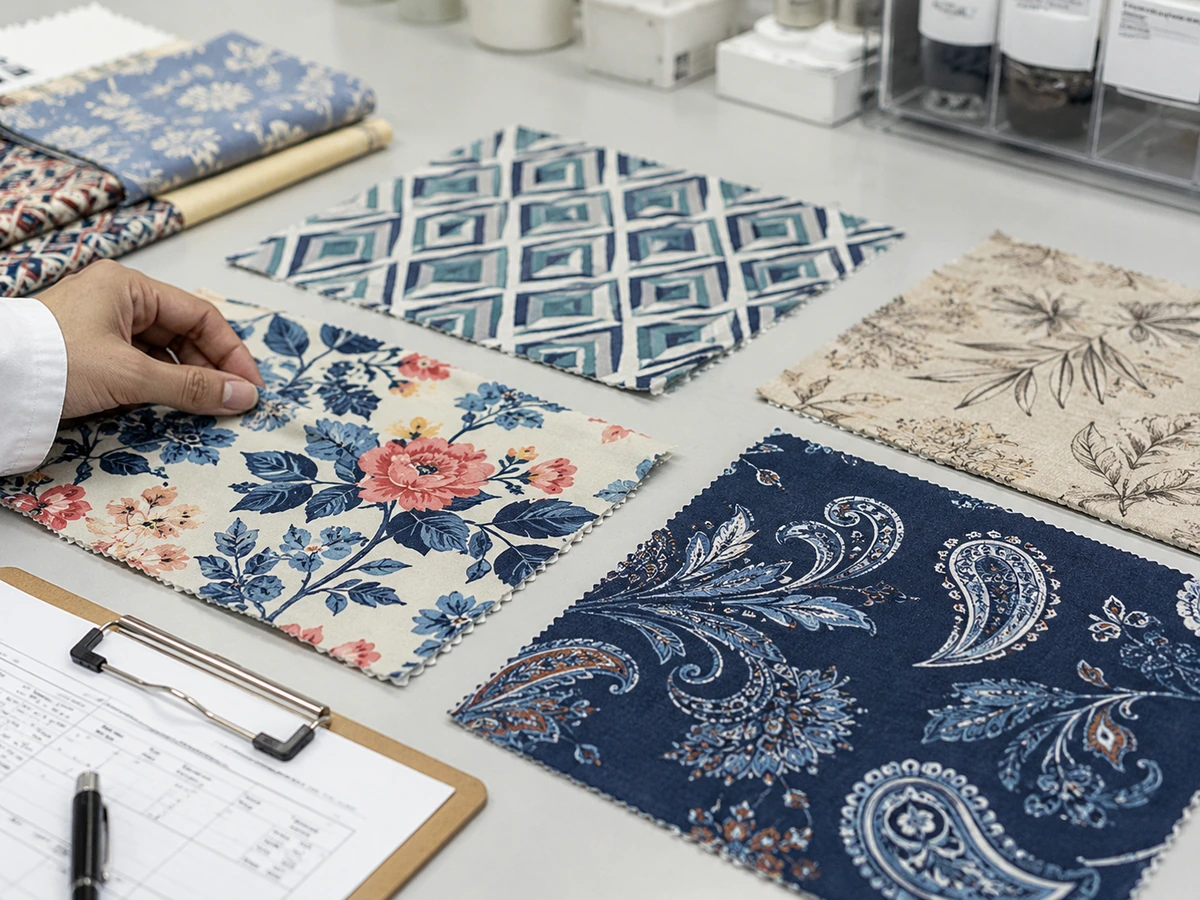
Fabric trials should therefore use the actual production substrate rather than only a standard laboratory cloth.
Step 3: Understand Fabric Absorbency
Absorbency is one of the strongest links between fabric and print definition.
When a textile absorbs liquid rapidly, the printing paste or ink can move deeper into the fabric and potentially spread laterally along yarn structures.
High absorbency can contribute to
Excessive penetration
Loss of surface color intensity
Blurred fine lines
Reduced small-text definition
Low absorbency can create different issues
Too much surface retention may affect leveling, transfer or drying.
The solution is not automatically to increase or decrease viscosity. Rheology, dosage, fabric pickup, machine settings and drying all need to be considered.
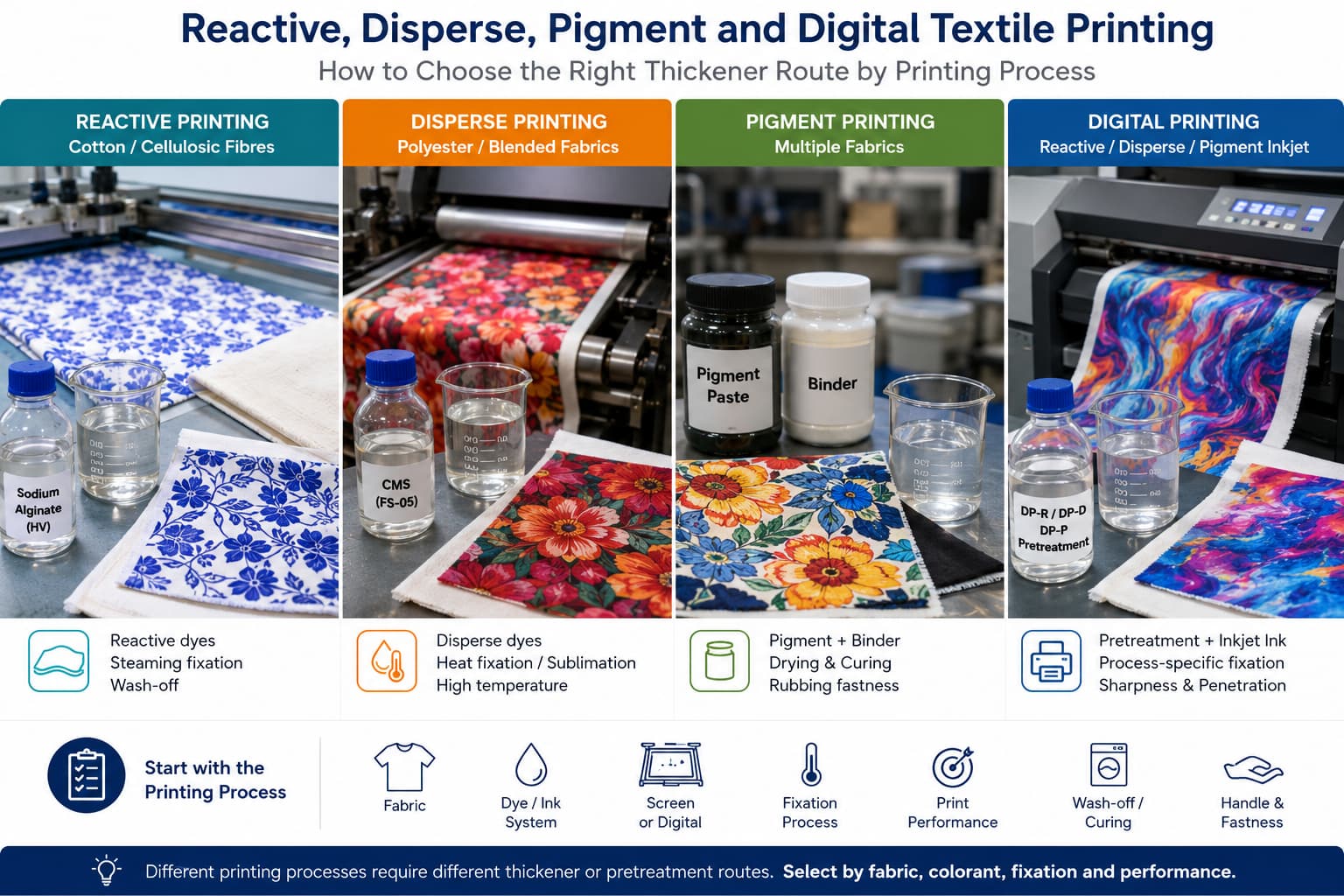
Step 4: Identify the Dye or Ink System
Once the fabric is defined, identify how color will be fixed to it.
Printing Chemistry
Common Fabric Direction
Typical Thickener Starting Route
Reactive Screen Printing
Cotton, viscose and suitable cellulosics
Sodium alginate or validated compound system
Disperse Printing
Polyester
CMS or application-specific thickener
Pigment Printing
Multiple fiber types
Binder-compatible synthetic or compound rheology system
Reactive Digital
Suitable cellulosic textiles
Reactive digital pretreatment
Disperse Digital
Polyester
Disperse digital pretreatment
Pigment Digital
Multiple fabrics depending on system
Pigment and binder-compatible pretreatment
These are practical starting directions, not universal substitution rules.
Step 5: Match the Thickener Chemistry
After identifying the fabric and printing chemistry, compare the polymer routes that are technically relevant.
Do not start from a price list and then try to force the lowest-cost polymer into the formulation.
The first objective is technical compatibility. Cost optimization should follow after the candidate has demonstrated acceptable performance.
Sodium Alginate
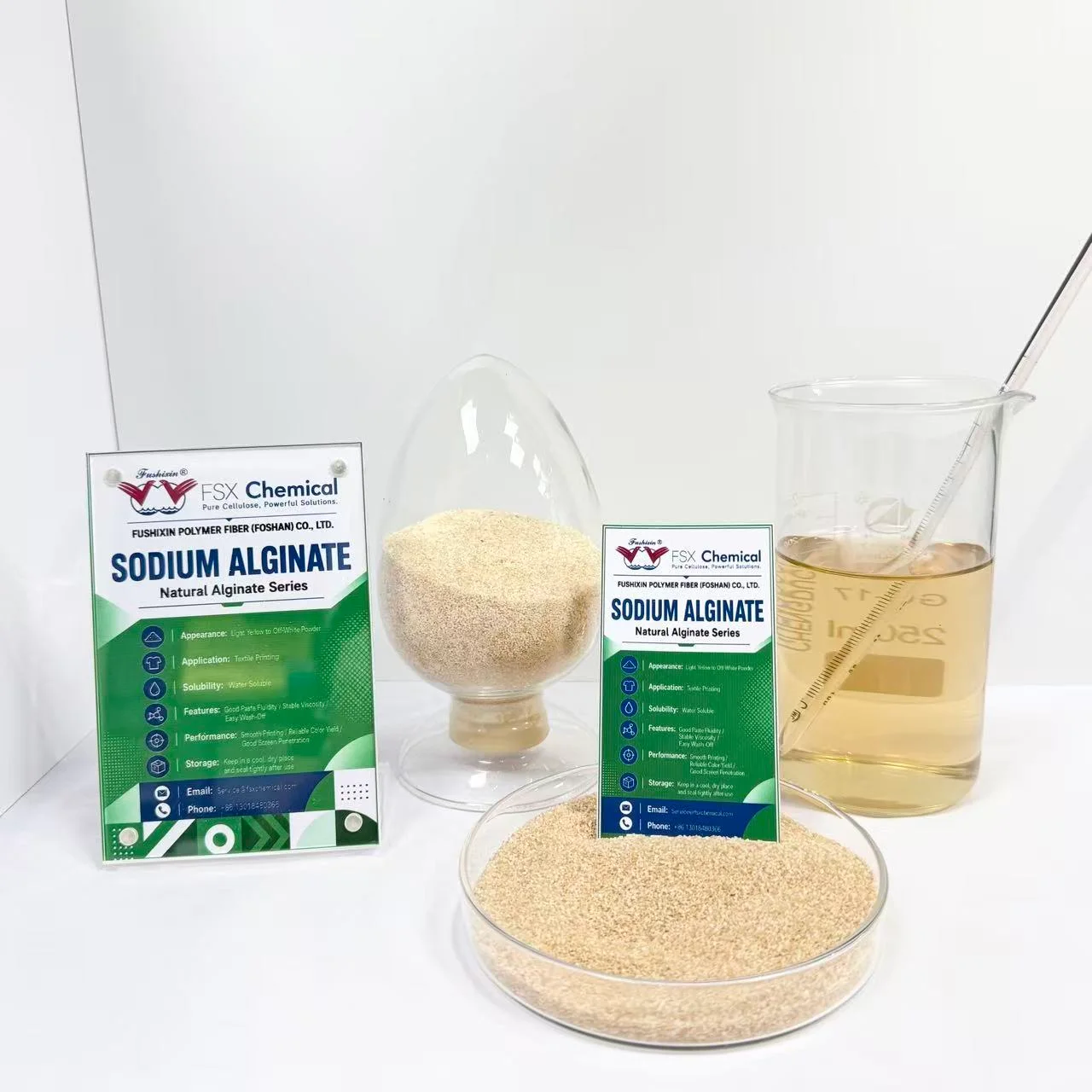
Sodium alginate is an established starting route for conventional reactive printing on suitable cellulose-rich fabrics.
Evaluate
Actual viscosity and test method
Hydration
Filtration
Rheology
Screen passage
Reactive-paste compatibility
Definition
Fixation
Wash-off
HV, MV and LV labels should not be treated as universal quality rankings.
The correct grade depends on the fabric, formulation and equipment.
CMC
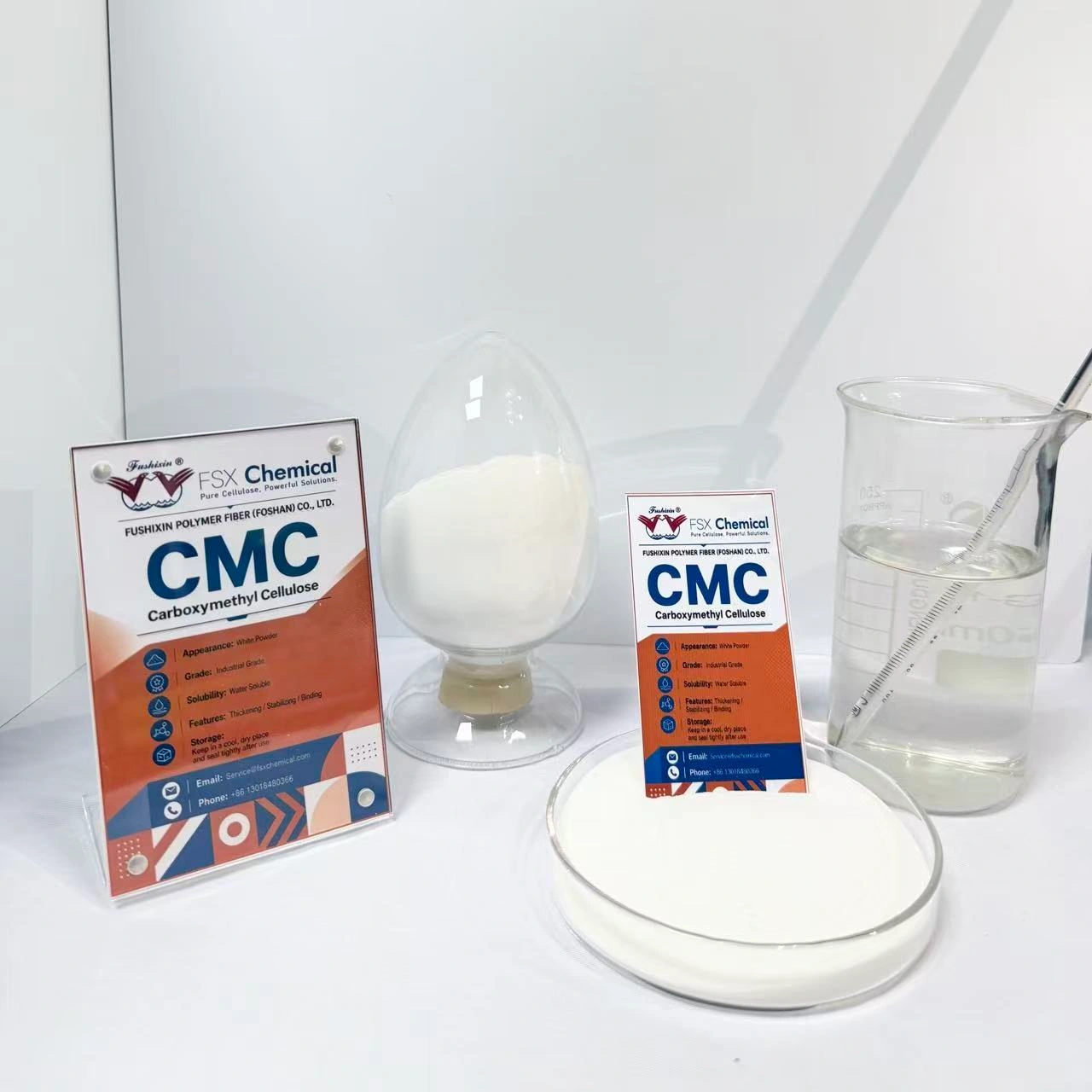
Carboxymethyl Cellulose can be evaluated for selected textile printing, viscosity-control and compound-thickener systems.
Important CMC parameters include
Degree of substitution
Viscosity
Test concentration
Dissolution
Hydration
Filtration
Electrolyte response
Rheology
CMC should not be assumed to replace sodium alginate weight for weight simply because both materials can increase viscosity.
CMS
Carboxymethyl Starch can be evaluated in selected disperse, compound and specialty printing systems.
Important CMS evaluation areas include
Viscosity efficiency
Hydration
Filtration
Screen passage
Paste stability
Color-system compatibility
Effective dosage
Finished-fabric quality
CMS may also be incorporated into compound systems where several polymer functions need to be balanced.
Compound Thickeners
Compound thickeners combine two or more rheology-control components to create an application-specific performance profile.
They can be designed to balance
Base viscosity
Shear-thinning behavior
Structural recovery
Filtration
Electrolyte tolerance
Printing definition
Effective dosage
Total cost in use
A compound system may be useful when one polymer alone cannot provide the required combination of properties.
More components also create more variables, so controlled testing is necessary.
Digital Printing Paste
Digital printing requires a different selection logic because the digital ink and fabric pretreatment perform separate functions.
Digital printing paste should be selected according to the ink route and textile substrate.
Reactive digital
Evaluate pretreatment on cotton, viscose or other suitable cellulosic fabrics for pickup, migration control, definition, fixation and wash-off.
Disperse digital
Evaluate polyester systems for pretreatment uniformity, filtration, surface behavior and thermal processing.
Pigment digital
Evaluate binder compatibility, definition, curing, rubbing performance and final fabric handle.
Textile pretreatment paste should not simply be added directly into digital ink.
Step 6: Match Viscosity and Rheology
Once the correct chemistry has been selected, determine the appropriate flow behavior for the fabric and machine.
Viscosity controls only part of the behavior
A single viscosity number represents one test condition. It does not fully describe how the paste behaves during pumping, screen passage or recovery on the fabric.
Rheology influences
Pumping
Screen passage
Paste transfer
Spreading
Penetration
Fine-line definition
Always align the viscosity method
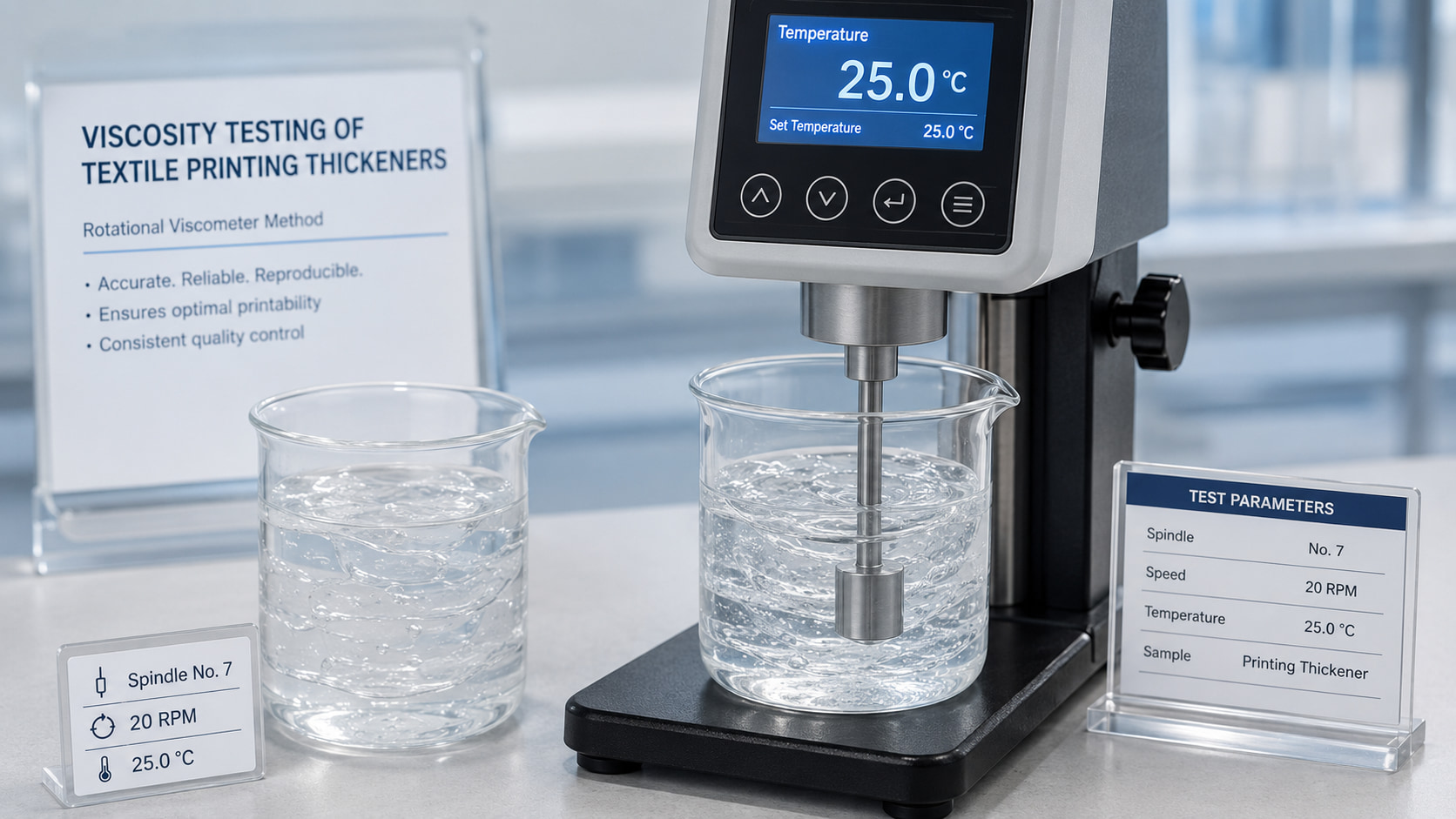
Compare concentration, preparation, hydration time, temperature, instrument, spindle and rotational speed before comparing supplier values.
The correct target is not maximum viscosity. It is the rheological operating window that fits the fabric and printing equipment.
Step 7: Conduct a Fabric Trial
No fabric-based thickener selection is complete without testing the actual textile.
Step 1: Prepare the current reference
Use the product already approved in production whenever possible.
Step 2: Prepare the candidate
Align concentration, water, mixing, hydration and test temperature.
Step 3: Compare laboratory properties
Appearance
Viscosity
Rheology where available
pH
Filtration
Holding stability
Step 4: Prepare the complete paste
Include the actual dyes, pigments, salts, alkalis, binders and auxiliaries.
Step 5: Print the actual production fabric
Avoid relying only on a different laboratory fabric because absorbency and structure may alter the result.
Step 6: Complete fixation and post-treatment
Judge the fully processed textile rather than only the wet print.
Cotton Selection Examples
Cotton Application
Starting Direction
Main Evaluation
Reactive Flat-Screen Printing
Sodium alginate
Screen passage, definition, fixation and wash-off
Reactive Rotary-Screen Printing
Sodium alginate / validated compound route
Circulation, rheology, filtration and long-run stability
Pigment Printing
Binder-compatible rheology system
Definition, curing, rubbing and hand feel
Reactive Digital Printing
Reactive digital pretreatment
Pickup, ink migration, definition, fixation and wash-off
Polyester Selection Examples
Polyester Application
Starting Direction
Main Evaluation
Conventional Disperse Printing
CMS or application-specific thickener
Stability, screen passage, transfer and fixation
Disperse Digital Pretreatment
Digital disperse pretreatment route
Uniformity, filtration and thermal processing
Pigment Printing on Polyester
Binder-compatible system
Adhesion, curing, definition and handle
Blend Selection Examples
Blended fabrics require additional care because the printing system may need to manage two different fiber chemistries.
First define which fibers need to be colored
Some printing systems target one fiber component, while others use a more complex colorant strategy.
Then define the fixation route
Different dye classes can require different pH, temperature and post-treatment conditions.
Finally select the thickener
The thickener should support the complete selected chemistry rather than simply match the largest fiber percentage.
Blended fabrics are therefore particularly suitable for controlled laboratory trials before production conversion.
Flat-Screen vs Rotary-Screen Printing
Fabric and chemistry are important, but the machine also changes what the paste experiences.
Flat-screen printing
Evaluate squeegee transfer, screen passage, repeat consistency, definition and penetration.
Rotary-screen printing
Continuous operation makes pumping, circulation, filtration and long-run stability especially important.
The same fabric and dye system may therefore require adjustment when moved between flat-screen and rotary-screen equipment.
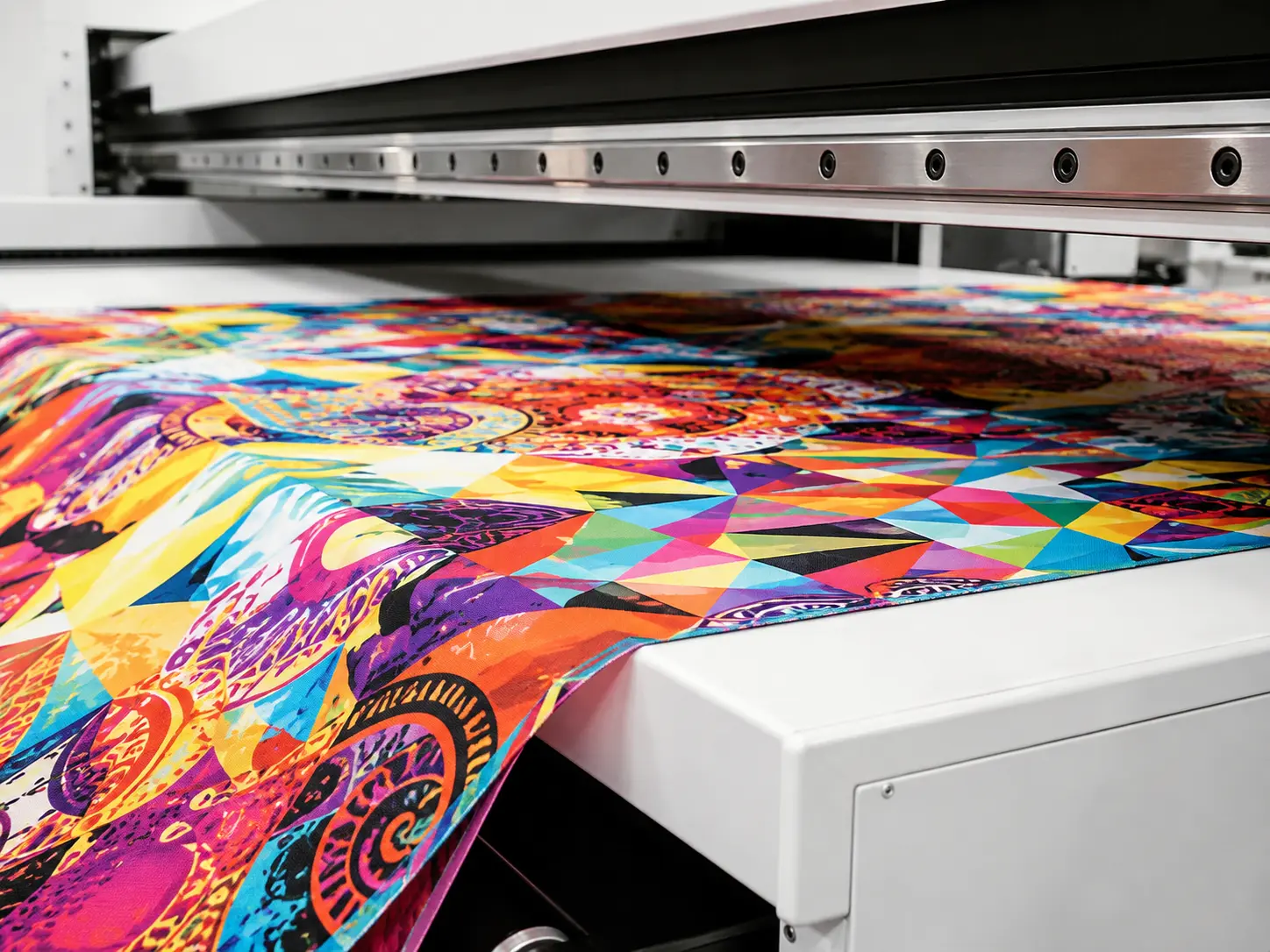
Digital Textile Printing
Digital printing increases the importance of fabric-surface behavior because very small droplets must remain sufficiently controlled after reaching the textile.
Fabric variables include
Fiber chemistry
Absorbency
Surface roughness
Fabric weight
Previous finishing
Pretreatment pickup
The selection sequence should be
Fabric → Ink System → Pretreatment Route → Application Level → Drying → Printing → Fixation → Final Fabric
Higher pretreatment viscosity should not automatically be interpreted as better ink control.
Troubleshooting by Fabric Behavior
Observed Problem
Fabric-Related Possibility
What to Check
Excessive bleeding
High absorbency or capillary spreading
Rheology, pickup, fabric preparation and dosage
Poor penetration
Dense fabric or excessive surface structure
Viscosity, pressure, transfer and fabric density
Too much penetration
Open or highly absorbent fabric
Rheology, dosage, machine settings and fabric pickup
Fine lines disappear
Surface spreading or excessive penetration
Structural recovery, absorbency and screen conditions
Uneven solid color
Fabric variation or uneven absorption
Fabric lot, preparation, paste transfer and application
Digital shade varies across width
Uneven pretreatment pickup or drying
Application uniformity and residual moisture
Same formula works on one fabric but not another
Different construction, absorbency or finish
Fabric specification and pretreatment history
Thickener adjustment should be made only after checking whether the observed problem actually originates from the fabric, printing paste, machine or post-treatment.
Total Cost in Use
Once several thickener candidates provide acceptable performance, commercial cost can be compared.
Compare delivered product price
Use comparable trade terms and freight assumptions.
Compare effective dosage
Different grades may require different concentrations on the same fabric.
Compare preparation and filtration
Hydration time, filter residue and operator correction all influence real manufacturing cost.
Compare machine efficiency
Screen cleaning, downtime, printing speed and paste waste should be considered.
Compare finished-fabric quality
Reprinting or rejected fabric can eliminate an apparent saving in thickener price.
The correct thickener for a fabric is therefore the product that produces the required quality at an acceptable total cost in use, not necessarily the lowest price per kilogram.
Supplier Grade Matching
Buyers who already have a successful thickener can use the current commercial product as the technical benchmark when evaluating a new supplier.
Through Samples & Matching , customers can provide the existing product and fabric information for candidate-grade review.
Useful information includes
Fabric composition
Knitted or woven construction
Fabric weight where available
Current thickener and grade
TDS or recent COA
Physical sample
Viscosity and complete test method
Current dosage
Dye or ink system
Printing machine
Fixation or curing process
Current printing problem
The objective is not to identify a product with the same viscosity only. It is to select a technically relevant candidate that can be tested on the customer’s actual fabric.
Frequently Asked Questions
What is the best thickener for cotton printing?
It depends on the printing chemistry. Sodium alginate is a common benchmark for conventional reactive printing on suitable cotton fabrics, while pigment and digital printing require different rheology or pretreatment routes.
What thickener is commonly used for reactive printing on cotton?
Sodium alginate is a common starting route. The actual grade should be selected according to viscosity method, rheology, filtration, fabric construction and printing conditions.
What thickener can be used for viscose printing?
Reactive viscose printing can use sodium alginate as a common starting route, but its higher or different absorbency compared with some cotton fabrics means penetration and definition should be tested carefully.
What thickener is suitable for polyester printing?
For conventional disperse printing, CMS and application-specific thickener systems can be evaluated. Digital disperse printing requires a process-specific pretreatment approach.
Can CMC be used for textile printing?
Selected CMC grades can be evaluated in suitable printing, viscosity-control and compound systems, but suitability depends on the formulation and printing chemistry.
Can the same thickener be used for cotton and polyester?
A universal rule should not be assumed. Cotton reactive and polyester disperse printing use different colorant and fixation chemistry, so the thickener should be selected for the complete process.
Do knitted and woven fabrics require different thickeners?
Not necessarily different polymer families, but their construction, absorbency and paste-transfer behavior can require different grade, dosage or rheological optimization.
Does a heavier fabric need a higher-viscosity thickener?
Not automatically. Fabric density, desired penetration, design, machine pressure and printing chemistry also influence the required viscosity and rheology.
What thickener should be used for blended fabrics?
First define the fiber percentages, colorant system and fixation route. The thickener should then be selected for the complete formulation rather than only the majority fiber.
How should I choose a thickener for digital textile printing?
Begin with the fabric and ink chemistry, then select the appropriate reactive, disperse or pigment pretreatment route. Evaluate pickup, filtration, definition, drying and final fixation or curing.
Is higher viscosity better for absorbent fabrics?
Not necessarily. Higher viscosity may reduce some spreading, but unsuitable rheology can reduce transfer or create other problems. Fabric trials are necessary.
How can I compare a new thickener with my current product?
Use the same fabric, formulation, preparation method, viscosity test, machine conditions and post-treatment, then compare the finished textile and effective dosage.
Need Help Matching a Thickener to Your Fabric?
Send FSX Chemical your fabric composition together with the TDS or physical sample of the thickener you currently use.
For the most accurate recommendation, include whether the fabric is knitted or woven, the dye or ink system, printing equipment, current dosage, viscosity method and the main problem you want to improve.
Depending on the application, a sodium alginate, CMC, CMS, compound thickener or digital printing paste route can be selected as the starting point for side-by-side testing.
Final suitability should then be confirmed on the actual production fabric after the normal fixation, washing or curing process📧 Email: Service@fsxchemical.com
Learn how to choose thickener and pretreatment routes for reactive, disperse, pigment and digital textile printing based on fabric, dye or ink, fixation, wash-off and print-quality requirements.
Compare CMC, CMS, sodium alginate and digital printing paste for textile printing. Learn how each route fits reactive, disperse, pigment and digital processes, and what buyers should review before sample testing, grade matching and bulk purchase.
Sodium alginate is widely used in textile printing as a stable and washable thickener for reactive printing paste. Learn how to evaluate viscosity grade, purity, and application suitability before purchasing, and how FSX Chemical supports global buyers with technical data and samples.
Carboxymethyl cellulose (CMC) is widely used in the printing, sizing, and dyeing processes of textiles. This guide will explain how to evaluate CMC grades, which parameters are most important, and how FSX Chemical can support purchasing decisions.
Carboxymethyl cellulose is used as a thickener and stabilizer in water-based inks, gravure printing, and inkjet pre-treatment. This guide covers the key grade parameters and sourcing considerations for procurement teams.
Both sodium alginate and CMC are used as thickeners in textile printing, but they suit different dye systems and process conditions. This guide explains the key differences and when to use each.
Digital inkjet printing on textiles has different paste and pre-treatment requirements compared to screen printing. This guide explains how sodium alginate is used in digital textile printing and what grade parameters procurement teams should specify.
Food-grade and industrial-grade CMC share the same base chemistry but differ significantly in purity, DS range, and regulatory requirements. This guide explains the key differences and why using the wrong grade creates production problems.
Correct paste preparation is as important as grade selection in reactive dye textile printing. This guide covers sodium alginate dissolution methods, concentration ranges by application, storage conditions, and how to troubleshoot common preparation problems.
Sodium alginate is a natural, biodegradable polymer, but its use in textile printing generates wastewater that requires management. This guide covers the environmental profile of sodium alginate, washout effluent characteristics, and what procurement teams should understand about thickener choice and environmental impact.
Dye fixation rate directly affects color yield, wash fastness, and wastewater load in reactive dye printing. This guide explains how sodium alginate supports dye fixation, what paste parameters influence fixation rate, and how to troubleshoot low fixation in production.
Share the product name, application, quantity, destination and any TDS,
sample photo or document you already have. FSX Chemical will review the
information and recommend the next step for quotation, sample matching
or product selection.
Product InformationProduct name, grade, model, label photo or supplier reference.
Available DocumentsTDS, SDS, COA, sample photo, product list or test data.
Order DetailsEstimated quantity, packaging, destination country, port or trade term.
Application or IssueTextile printing process, formulation need, current issue or target performance.