RU
RU  EN
EN  BN
BN  ES
ES  TR
TR  FR
FR  ID
ID  AR
AR  UR
UR 
This guide focuses on a practical question: how should textile printers evaluate sodium alginate when color quality and process control are the main concerns?
What Sodium Alginate Can and Cannot Do in Textile Printing
It Can Support Viscosity and Paste Handling
In reactive textile printing paste, sodium alginate is commonly used to build and control viscosity. A suitable grade can help the paste remain workable during preparation, filtration, screen passing, and application.
Buyers should confirm the viscosity grade, testing method, mesh size, dissolution behavior, and paste smoothness before bulk purchase.
It Does Not Alone Guarantee Color Fastness
Color fastness depends on the dye system, fabric pretreatment, fixation conditions, washing process, auxiliaries, and testing standard. Sodium alginate may influence paste behavior, but it should not be described as a single solution for color fastness problems.
If color fastness is a concern, buyers should test the complete printing process and compare results with their current product under the same conditions.
It Does Not Replace Compliance Documents
If a buyer needs restricted-substance statements, customer questionnaires, environmental documents, or third-party testing support, those requirements should be discussed before order confirmation.
Broad claims such as “compliant,” “eco-friendly,” or “safe” should be supported by appropriate documents when they are important to the buyer’s approval process.
Color Quality Factors Buyers Should Evaluate
Shade Consistency
Shade consistency can be affected by paste viscosity, dye dispersion, fabric absorbency, printing pressure, drying conditions, fixation, and washing. Buyers should test sodium alginate in the same formulation and process used in production.
For repeat orders, COA data and batch consistency are important because changes in viscosity or dissolution behavior may affect formulation adjustment.
Pattern Edge Control
Pattern edge control depends on paste rheology, fabric surface, screen or printing method, paste penetration, and drying behavior. A sodium alginate grade that is too low or too high in viscosity may not match the target application.
Buyers should evaluate edge control during sample testing, not only by checking the TDS.
Paste Smoothness and Filtration
Poor dissolution or unstable paste may create lumps, filtration difficulty, screen blocking, or uneven printing. Buyers should observe dissolution speed, paste smoothness, lump formation, filtration behavior, and standing stability.
These practical observations are often as important as numerical viscosity data.
Compatibility with Dye and Auxiliaries
Testing only in clean water may not be enough to confirm whether the grade is suitable for production.
Key Specifications to Review Before Buying
Класс вязкости и метод испытаний

Without a clear viscosity testing method, values from different suppliers may not be directly comparable.
Размер ячейки и особенности растворения
Mesh size can influence dispersion and hydration during paste preparation. However, actual dissolution behavior also depends on water quality, stirring speed, addition method, temperature, preparation time, and formulation conditions.
Покупателям следует проверить скорость растворения, образование комков, однородность пасты и характеристики фильтрации в своих собственных производственных условиях.
Влажность, pH и внешний вид
Влажность, уровень pH и внешний вид — это основные, но важные показатели качества. Они влияют на условия хранения, обращение с продукцией, внутренний контроль качества и повторные закупки.
Эти параметры следует проверять в техническом описании продукта (TDS) и подтверждать данными сертификата анализа (COA) для каждой производственной партии.
Storage and Handling Conditions
Storage conditions can affect powder handling and repeat use. Buyers should check whether the supplier provides clear storage suggestions, packaging details, and shelf-life information where applicable.
For distributors and import buyers, packaging and label information should be confirmed before shipment.
How to Build a Practical Sample Testing Plan
Step 1: Define the Current Printing System
Before requesting a sodium alginate sample, buyers should define their fabric type, dye system, printing method, target viscosity, paste preparation method, fixation process, washing process, and current product grade if available.
This helps the supplier recommend a more suitable starting grade.
Step 2: Prepare the Paste Under Real Conditions
The sample should be prepared using the buyer’s actual water quality, mixing equipment, addition method, preparation temperature, stirring time, and standing time.
During preparation, buyers should record dissolution behavior, viscosity development, paste smoothness, lumps, and filtration behavior.
Step 3: Test Printing and Color Quality
The test should be performed on the buyer’s actual fabric or a representative fabric. Buyers may evaluate shade consistency, pattern edge control, penetration, leveling, fabric hand feel, and color fastness according to their internal test method or customer requirements.
The new sample should be compared against the current product under the same conditions.
Step 4: Confirm Repeatability Before Bulk Purchase
If the sample result is acceptable, buyers should confirm whether the bulk shipment will follow the same viscosity range, specification range, packaging format, batch traceability, and COA requirements.
This reduces the risk of sample approval but unstable bulk production performance.
Documents Buyers Should Request
TDS для проверки технического задания
Технический паспорт помогает покупателям ознакомиться со стандартными техническими характеристиками продукции. В него должны быть включены такие параметры, как внешний вид, вязкость, размер ячейки сетки, влажность, pH, условия хранения и метод испытаний.
The TDS supports initial grade screening, but it should not replace sample testing in the buyer’s own printing formulation.
COA для подтверждения партии
Сертификат анализа подтверждает фактические данные по конкретной производственной партии. Он играет важную роль при размещении оптовых заказов, повторных закупках, поставках дистрибьюторам и внутреннем контроле качества.
Покупатели могут сравнивать данные сертификатов соответствия (COA) по разным партиям, чтобы проверить, находятся ли ключевые параметры в пределах согласованного диапазона.
Проверка паспортов безопасности (SDS) при обращении и транспортировке
Паспорт безопасности служит руководством по обращению, хранению, транспортировке и проведению внутренней проверки безопасности. При международных закупках паспорт безопасности может также потребоваться для оформления отгрузки и ведения переписки с таможенными органами.
Покупатели должны убедиться, что название продукта в паспорте безопасности (SDS) и данные о поставщике соответствуют документам заказа.
Customer or Compliance Documents When Required
If a buyer needs restricted-substance statements, environmental documents, customer audit questionnaires, certificate copies, or third-party testing support, those requirements should be discussed before order confirmation.
A practical supplier should explain which documents can be provided, which product or site they apply to, and which claims require formal third-party testing.
How to Avoid Overlapping Product Claims
Do Not Treat All Textile Printing Systems the Same

Reactive printing, pigment printing, digital printing pretreatment, screen printing, and rotary printing may require different paste behavior. A sodium alginate grade that works in one process may not match another process.
Do Not Choose Only by “High Viscosity” or “Low Viscosity”
The right viscosity depends on target paste behavior, equipment, fabric type, and formulation. Higher viscosity does not always mean better printing performance, and lower viscosity does not always mean easier production.
Do Not Compare Suppliers Without Matching Test Methods
Two suppliers may show similar viscosity data, but if the concentration, temperature, instrument, or unit is different, the data may not be comparable.
Do Not Confirm Bulk Orders Before Sample Approval
For textile printing applications, sample testing is necessary before bulk purchase, especially when changing supplier, changing grade, or replacing an existing thickener.
Common Color and Process Issues to Check
Uneven Shade
Uneven shade may be related to paste viscosity, dye dispersion, fabric pretreatment, printing pressure, fixation, washing, or formulation compatibility.
The full printing system should be reviewed before changing only one raw material.
Pattern Bleeding
Pattern bleeding may be related to low paste structure, fabric absorbency, drying speed, penetration, or unsuitable viscosity. Buyers should test different grades under the same printing conditions.
Screen Blocking or Poor Filtration
Screen blocking or filtration difficulty may come from poor dissolution, formulation incompatibility, particle contamination, unsuitable viscosity, or insufficient filtration before application.
Color Fastness Not Meeting Target
Color fastness issues may involve dye selection, fixation conditions, washing process, fabric pretreatment, auxiliaries, or the full paste formulation.
How FSX Chemical Supports Textile Printing Buyers
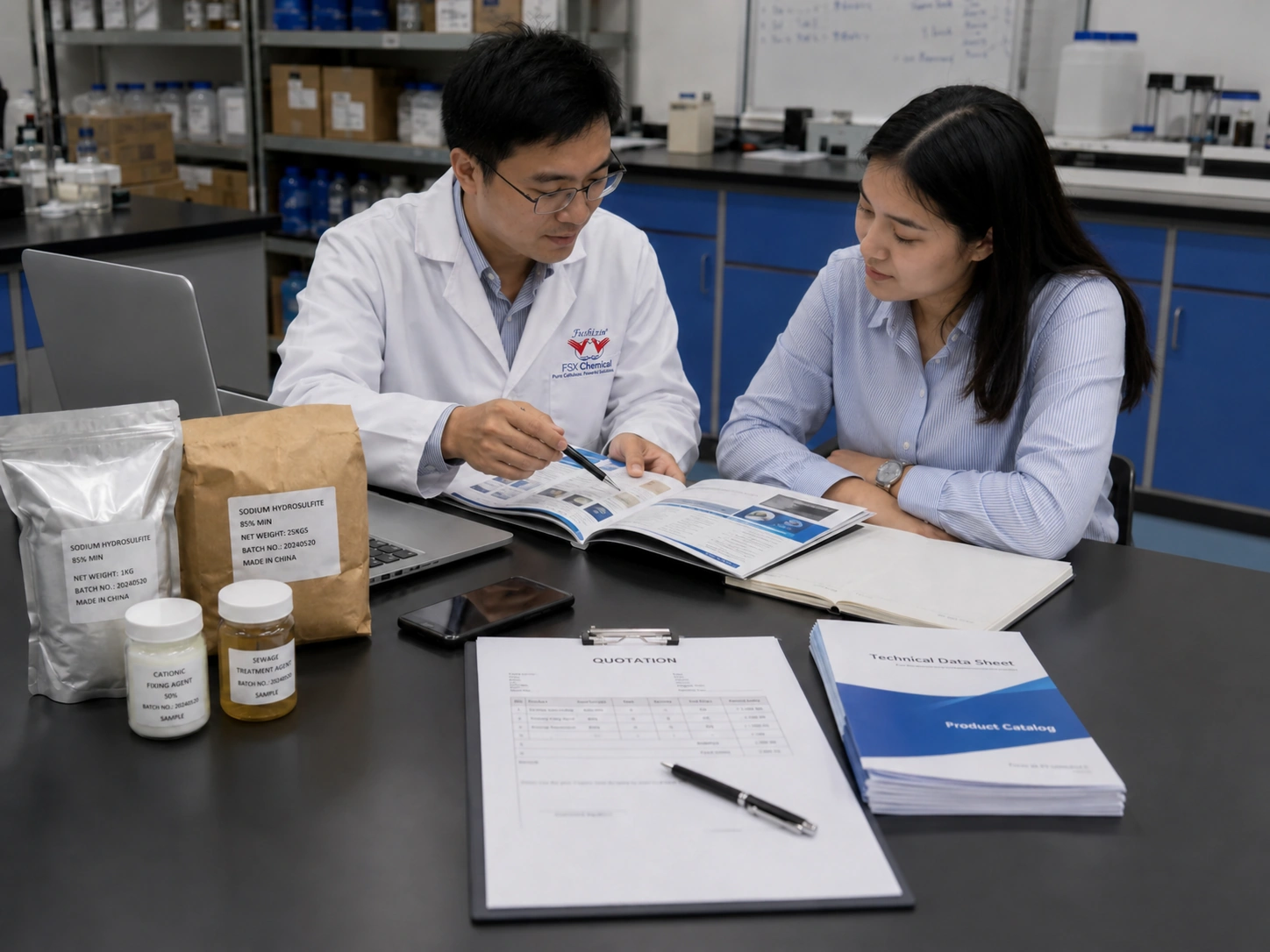
Our support is focused on practical grade matching and export procurement. We can provide TDS, COA, SDS where applicable, sample support, and formulation discussion based on the customer’s fabric type, dye system, printing process, target viscosity, current formulation, packaging needs, order quantity, and document requirements.
We do not suggest choosing sodium alginate only by broad claims about color fastness, compliance, sustainability, or global performance. The recommended grade should be reviewed through technical documents and tested in the buyer’s own textile printing system before bulk purchase.
Следующие шаги
- Share Your Printing Process — tell us whether you use reactive printing, screen printing, rotary printing, digital pretreatment, pigment printing, or another process.
- Clarify Fabric and Dye System — provide fabric type, dye system, auxiliaries, water quality, pH, and preparation method.
- Define Your Target Viscosity — provide viscosity range, test concentration, temperature, instrument method, and current product grade if available.
- Clarify Color Quality Targets — explain whether you are testing shade consistency, pattern edge control, filtration, hand feel, washing, or customer-specific quality requirements.
- Запрос на сопоставление оценок — ask for a suitable sodium alginate grade based on your actual production conditions.
- Запросить TDS — проанализировать вязкость, размер ячейки сетки, pH, влажность, внешний вид, условия хранения и метод испытаний.
- Запросить сертификат подлинности (COA) — перед отгрузкой убедиться, что данные по партии соответствуют согласованному диапазону технических характеристик.
- Запросить паспорт безопасности (SDS) — ознакомьтесь с правилами обращения, хранения, транспортировки и информацией о продукте.
- Запросить образец — test the recommended grade in your own printing formulation before confirming bulk orders.
- Подтвердить упаковку и экспортные документы — перед отправкой проверьте размеры мешков, этикетки, возможность отслеживания партии, счет-фактуру, упаковочный лист, сертификат соответствия (COA), паспорт безопасности (SDS) и другие необходимые документы.
- Свяжитесь с нашей технической службой — discuss which sodium alginate grade is suitable for your textile printing process📧 Электронная почта: Service@fsxchemical.com