Why Choose Factory-Direct Textile Chemicals for Consistency and Support
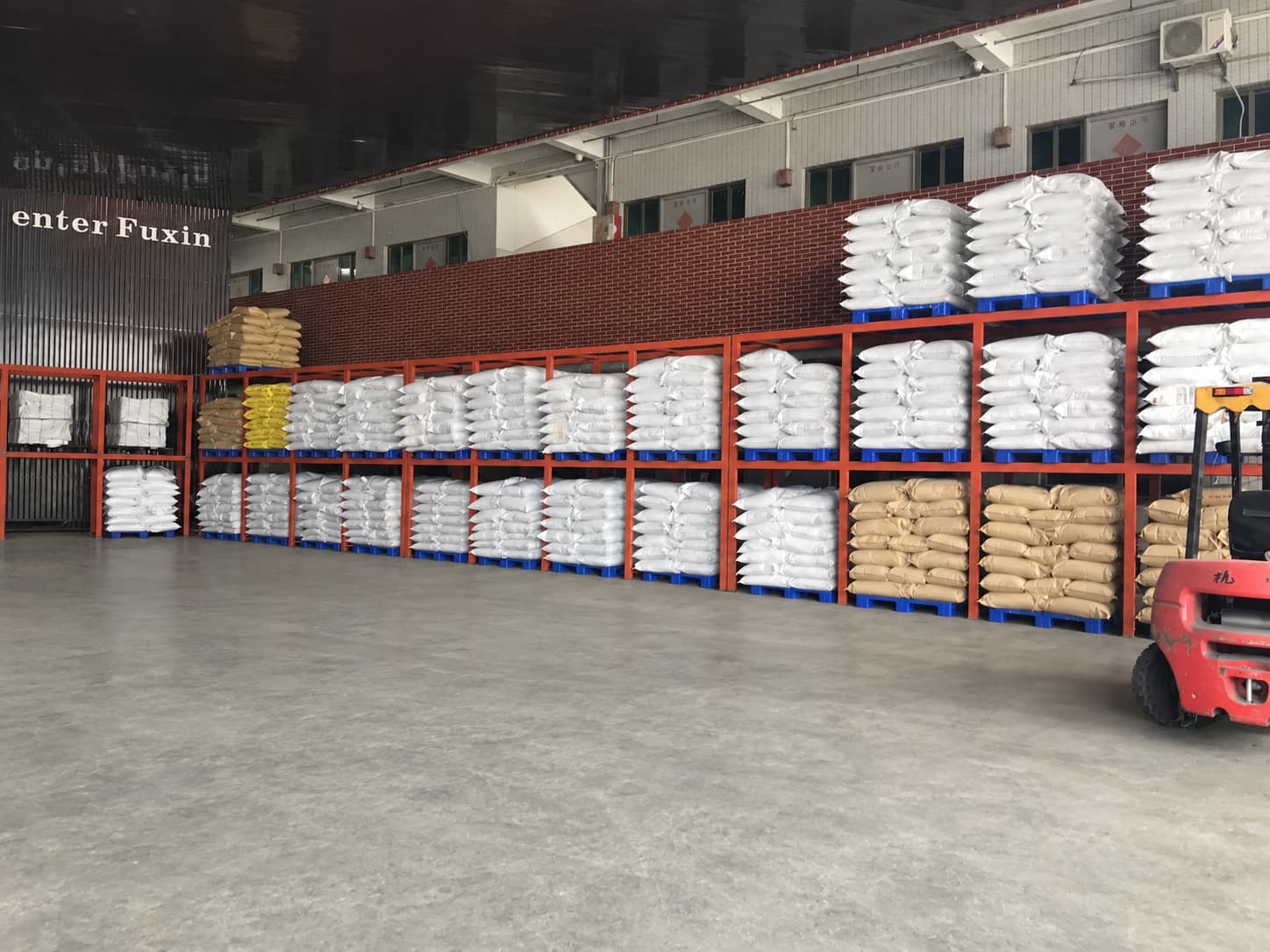
Factory-direct sourcing is not only about reducing purchasing layers. For textile printing chemicals, direct manufacturer...
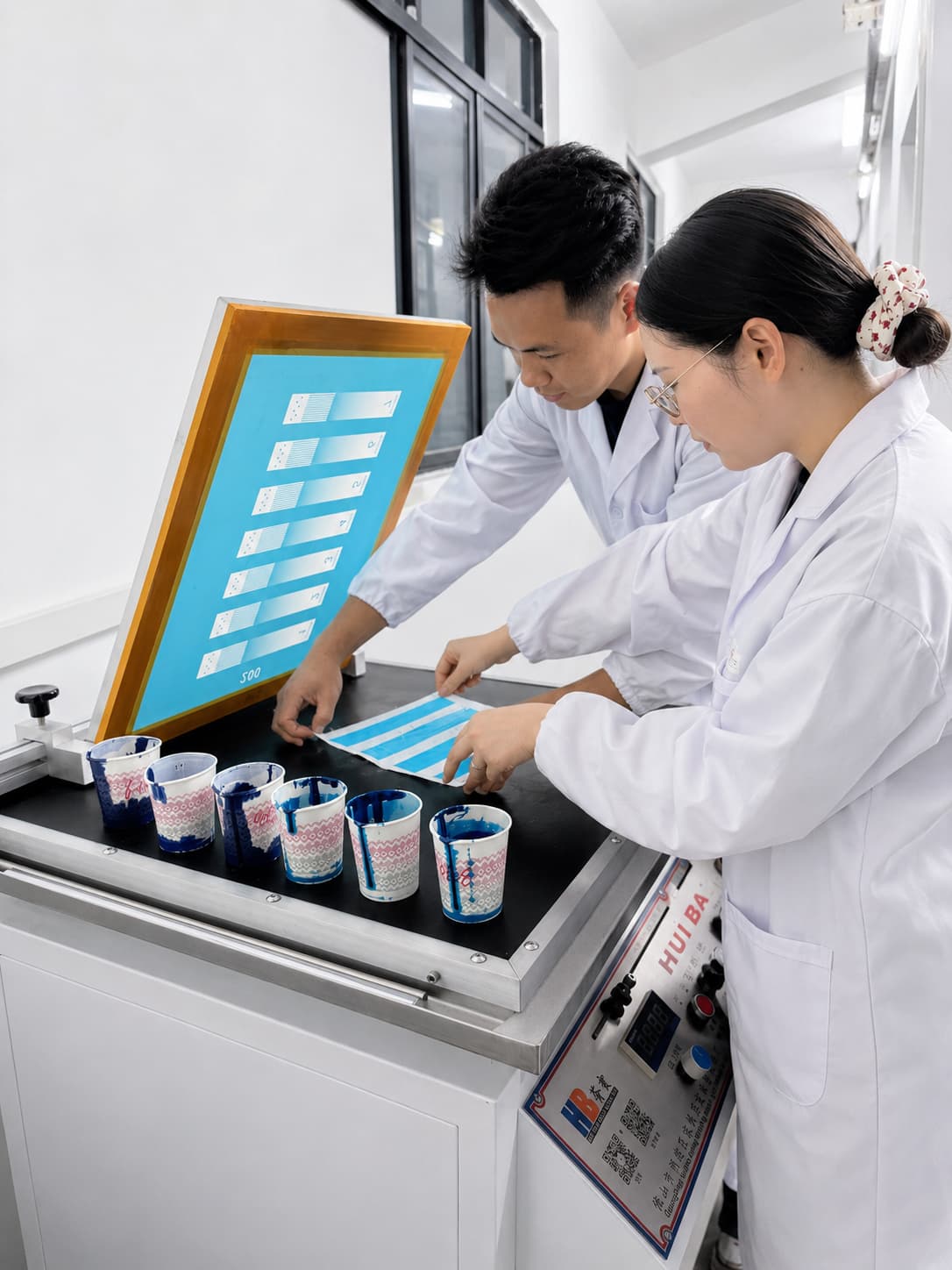
Factory-direct sourcing of textile chemicals is often discussed mainly in terms of price. For textile printing mills and formulation companies, however, the more important advantages can be technical: clearer product specifications, faster communication with production, better batch traceability, stronger sample-to-bulk continuity and more efficient troubleshooting. This guide explains how to evaluate a factory-direct textile chemical supplier and where direct manufacturer support can reduce technical and procurement uncertainty.
What Does Factory-Direct Textile Chemical Supply Actually Mean?
In industrial textile chemicals, “factory-direct” should mean more than receiving a quotation from a company that describes itself as a manufacturer.
For a textile printing buyer, the practical value of direct manufacturer sourcing comes from shortening the technical communication chain between:
Buyer Requirement → Technical Evaluation → Product Grade → Production Specification → Quality Control → Commercial Shipment
This can be particularly important for products such as:
Digital textile printing pastes and pretreatment products
These are application-sensitive products. The same general chemical name may represent multiple commercial grades with different viscosity, rheology, substitution level, purity, filtration behavior, hydration characteristics or formulation compatibility.
For this reason, industrial buyers normally need more than a product name and quotation.
They need confidence that the grade evaluated in the laboratory is technically connected to the material delivered during routine purchasing.
A factory-direct relationship can make this process easier, but only when the manufacturer has appropriate specification control, quality documentation and technical communication.
1. Direct Communication Can Improve Product Consistency Control
Consistency is one of the most important purchasing concerns for textile printing chemicals.
A thickener may represent only one part of the printing formulation, but changes in its behavior can affect:
Stock-paste viscosity
Гидратация
Фильтрация
Стабильность пасты
Отрывок с экрана
Printing rheology
Проникновение
Определение термина «печать»
Цветоотдача
Fixation and washing performance
If a factory receives a different technical result from a repeat shipment, the important question is not simply:
“Is the viscosity within specification?”
A more useful investigation may include:
Was the same commercial grade supplied?
Was the same viscosity test method used?
Was there a meaningful change in raw materials?
Did moisture, purity or substitution characteristics change?
Was production processing adjusted?
Was the customer’s water source or formulation changed?
Was the problem caused by the thickener or another formulation component?
Direct communication with the manufacturer can shorten the path between a production complaint and the people responsible for product specifications and manufacturing records.
This does not guarantee that a factory-direct supplier will never have variation. No industrial chemical production is completely free from process variation.
The real advantage is that deviations can potentially be investigated through defined product specifications, batch records and technical discussion rather than through several disconnected commercial intermediaries.
2. Better Sample-to-Bulk Continuity
One of the most overlooked risks in industrial chemical purchasing is the gap between the approved sample and the material eventually delivered in commercial quantities.
A laboratory sample can perform very well, but the buying decision should not stop there.
The buyer should confirm:
What exact commercial grade was sampled?
Was the sample drawn from routine production or specially prepared?
What specification defines that grade?
What test method was used?
Will commercial production follow the same specification?
What batch documentation can be supplied?
The core principle is:
The approved sample should remain connected to the commercial product delivered later.
A practical sample-to-bulk workflow can look like this:
This process is particularly important when evaluating alternative textile printing thickeners.
For example, a customer comparing sodium alginate with a selected CMC, CMS or compound thickener should not approve a material only because the laboratory viscosity appears similar.
The candidate should be tested through the complete printing process, including the relevant fixation and washing stages.
3. Faster Alignment of Specifications and Test Methods
Technical specifications are useful only when the test method is understood.
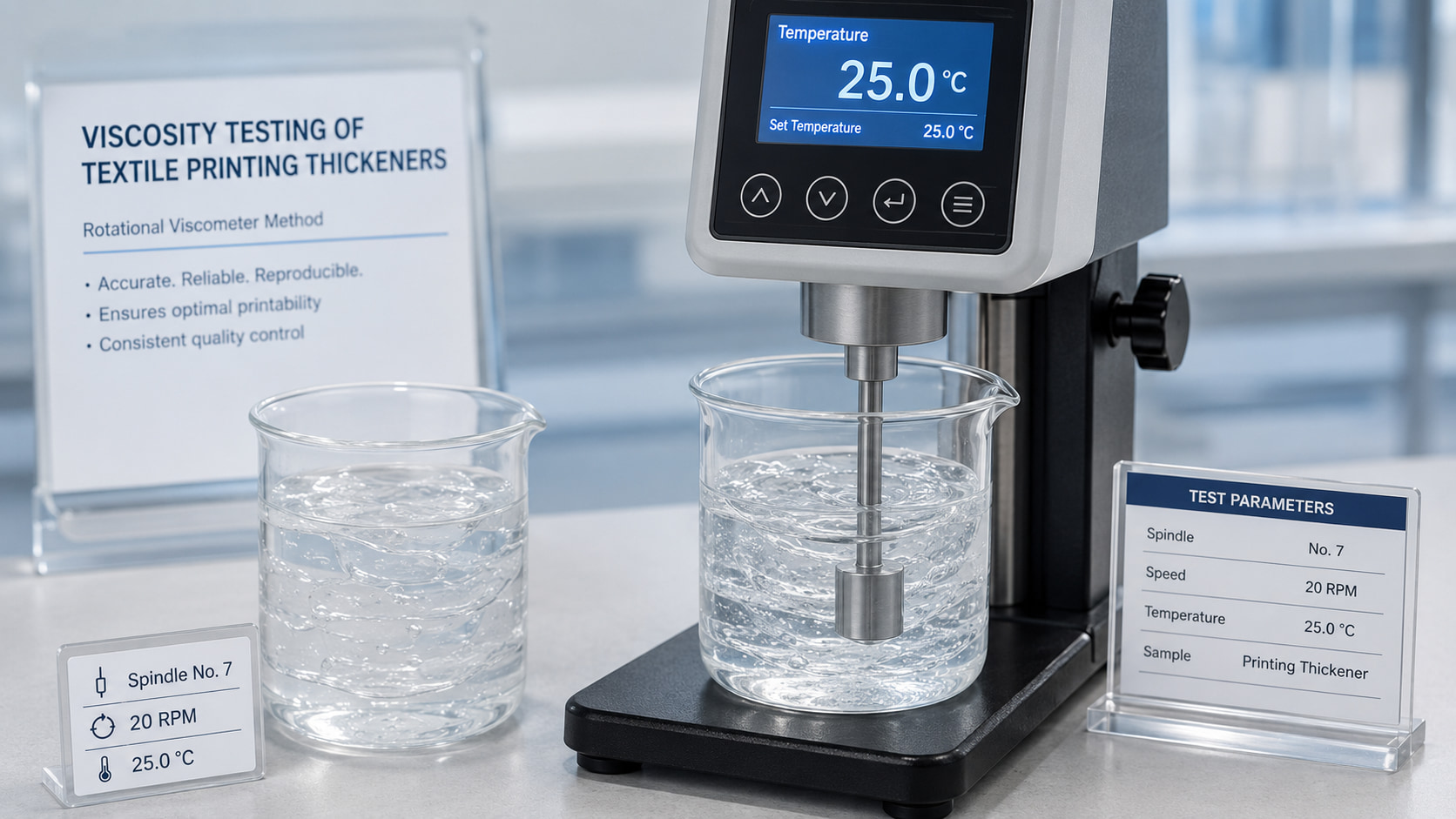
This is particularly important for textile thickeners because viscosity values are highly dependent on measurement conditions.
A viscosity value should normally be read together with:
Концентрация полимера
Основа расчёта
Water source or water quality
Mixing procedure
Время гидратации
Температура измерения
Viscometer model or principle
Spindle, rotor or measuring geometry
Rotational speed or shear condition
Время чтения
A product described as “1,500 mPa·s” cannot be compared reliably with another 1,500 mPa·s product until the test methods are aligned.
Even when the numerical viscosity is the same, printing behavior may differ because:
Polymer chemistry is different
Molecular characteristics are different
Shear-thinning behavior is different
Structural recovery is different
Electrolyte response is different
Dye or binder compatibility is different
This is why:
Same viscosity does not mean the same printing performance.
A direct manufacturer relationship can make it easier for the buyer and supplier to discuss the actual QC method rather than comparing isolated numbers from different TDS sheets.
4. Technical Problems Can Be Discussed Closer to the Production Source
Industrial textile chemical support should not consist only of sending a TDS after the customer reports a problem.
When printing performance changes, a meaningful technical investigation may require information about the entire system.
For a printing thickener, useful troubleshooting information can include:
Current thickener grade
Дозировка
Stock-paste concentration
Качество воды
Mixing procedure
Время гидратации
Dye or pigment system
Salt and alkali concentration
Binder where relevant
Другие вспомогательные средства
Состав ткани
Печатная машина
Скорость работы станка
Fixation or curing conditions
Washing conditions
Actual defect observed
Example: A Customer Reports Lower Viscosity
The immediate assumption may be that the new chemical batch is defective.
However, the root cause could also include:
Different test temperature
Shorter hydration time
Changed water hardness
Different preparation concentration
Higher electrolyte loading
Different spindle or rotational speed
Formula changes
A useful supplier response should therefore separate:
Product QC Question
из:
Application/Formulation Question
Direct manufacturer access can be valuable when the commercial, laboratory and production teams can share information without repeatedly passing simplified messages through multiple layers.
Example: Printing Becomes Less Sharp
A loss of print definition should not automatically be corrected by increasing viscosity.
The technical team may need to evaluate:
Rheology under actual printing shear
Проникновение пасты
Screen parameters
Впитывающая способность ткани
Paste solids
Дозировка загустителя
Structural recovery after shear
This is another reason why textile printing chemical support should be application-specific rather than based on one specification number.
5. Better Change Control for Long-Term Purchasing
Long-term textile chemical purchasing creates a different requirement from one-time spot buying.
Once a printing factory approves a formulation, unnecessary changes can become expensive.
Depending on the product and application, a meaningful supplier-side change could involve:
Raw-material source
Polymer specification
Технологический процесс
Purification level
Moisture target
Viscosity range
Substitution characteristics
Additive system
Production location
Упаковка
Not every production adjustment materially changes customer performance. However, buyers should understand how important product changes are controlled.
Useful supplier-qualification questions include:
How is the commercial grade specification defined?
How are production batches released?
Which properties are routinely tested?
Can batch-specific quality information be supplied?
How are customer complaints traced to production batches?
How are meaningful specification changes communicated?
This becomes increasingly important after a buyer has invested time in laboratory validation and production trials.
The purpose of supplier approval is not only to find a product that works once. It is to establish a repeatable supply relationship.
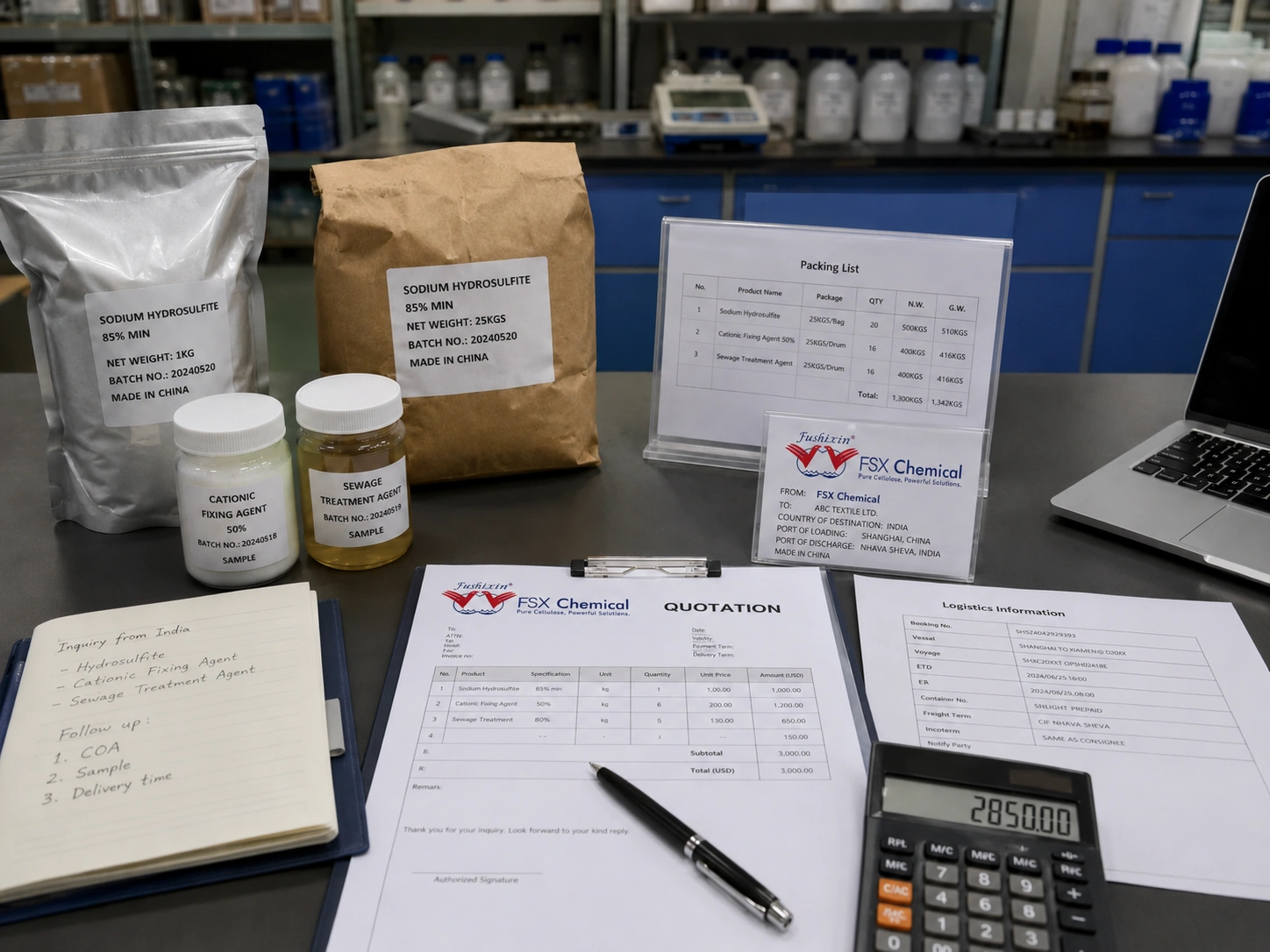
6. Direct Access to TDS, SDS, COA and Batch Information
Documentation is an important part of industrial chemical purchasing, but each document serves a different purpose.
Документ
Основная цель
What Buyers Should Check
TDS
Technical description and recommended product parameters
Grade identity, test conditions, application guidance and specification logic
SDS
Safety, handling, storage and regulatory information
Correct product identity, handling precautions and transport considerations
COA
Batch-related quality information
Batch number, tested parameters, methods where relevant and relationship to specification
Application guidance
Practical product-use information
Preparation method, recommended dosage range and application limitations
A common purchasing mistake is to treat a generic TDS as proof of a specific batch’s quality.
A TDS usually defines the commercial product or typical specification, while a COA is normally associated with an individual batch or shipment.
For critical applications, buyers should understand which values are:
Specifications
Typical values
Recommended application conditions
Результаты пакетного тестирования
Factory-direct communication can simplify these questions because the documentation can be discussed closer to the actual product specification and QC process.
7. More Practical Grade Matching and Formulation Development
Textile printing buyers do not always need a completely customized product.
In many cases, the better approach is to select the most relevant existing commercial grade and then optimize the customer’s formulation around it.
A factory-direct supplier may be useful when the manufacturer can evaluate information such as:
Current supplier
Current grade
Текущие данные TDS
Current physical sample
Viscosity test method
Текущая дозировка
Printing chemistry
Fabric type
Оборудование
Current performance issue
Commercial target
From this information, a technically relevant candidate can be selected for controlled comparison.
This is safer than promising an identical replacement based only on a generic chemical description.
None of these materials should be selected by viscosity alone.
8. Factory-Direct Does Not Simply Mean Lowest Price
Factory-direct supply is frequently marketed as a way to eliminate trading margins.
That can be commercially relevant, but it should not be the main reason to approve an industrial chemical supplier.
A factory quotation with a lower price per kilogram may still create a higher operating cost if the material results in:
Higher effective dosage
Longer preparation time
More filtration loss
Частая очистка экрана
Unstable printing
More paste waste
Lower color yield
Higher reject rates
More production interruptions
The commercial comparison should therefore use Общая стоимость эксплуатации.
A practical purchasing model is:
Delivered Chemical Cost + Effective Dosage + Preparation Cost + Process Loss + Downtime + Quality Risk = Total Cost in Use
For example, a thickener that costs 10% less per kilogram does not automatically create a 10% saving.
If it requires a higher dosage, the chemical cost per tonne of printing paste may be similar or even higher.
The correct comparison should be made only after the candidate formulation has been technically optimized.
When Is a Distributor Still the Better Choice?
Factory-direct sourcing is not automatically the best purchasing model for every customer.
A qualified local distributor can provide important advantages, including:
Local warehouse inventory
Small minimum order quantities
Shorter domestic delivery times
Local-language communication
Local currency settlement
Credit terms
Combined shipments of multiple chemical products
On-site technical service in some markets
For a small printing factory consuming limited quantities, the logistics cost of direct import may outweigh the advantages of buying directly from an overseas manufacturer.
Similarly, a distributor with strong local technical support can sometimes provide faster physical service than a distant factory.
The decision should therefore not be:
Manufacturer good, distributor bad.
The better question is:
Which supply model provides the required technical control, service level, logistics efficiency and commercial structure for this specific operation?
Factory-direct relationships tend to become particularly valuable when purchase volume increases, the application becomes technically sensitive, or the buyer requires tighter grade control and direct production communication.
How to Qualify a Factory-Direct Textile Chemical Supplier
A buyer should verify manufacturing capability rather than relying only on website claims.
The following supplier-qualification framework can be used before moving to a commercial order.
1. Confirm the Exact Commercial Grade
Avoid purchasing only by generic descriptions such as:
High-viscosity CMC
Textile-grade CMS
High-viscosity sodium alginate
Printing thickener
The quotation, sample, TDS and commercial order should be linked to an identifiable grade whenever possible.
2. Review the TDS Carefully
Check whether important test conditions are defined.
A viscosity range without concentration or test method has limited value.
3. Request a Representative Sample
The sample should represent the commercial product intended for future supply.
4. Run Your Own Laboratory Test
Стандартизировать:
Вода
Концентрация
Смешивание
Гидратация
Температура
Viscosity measurement
5. Test the Complete Printing Paste
Do not approve a thickener using water viscosity alone.
Add the actual dyes, pigments, binder, salt, alkali and auxiliaries used in production.
6. Print the Actual Fabric
Evaluate areas such as:
Fine lines
Sharp edges
Solid coverage
Проникновение
Levelness
7. Complete Fixation and Washing
Final approval should be based on finished-fabric performance.
8. Review Quality Documentation
Confirm how the manufacturer identifies and releases commercial production batches.
9. Discuss Complaint Handling
Before a problem occurs, understand what information will be required if a batch needs investigation.
10. Compare Total Cost in Use
Only finalize the commercial comparison after the dosage and production performance are optimized.
How to Control the First Commercial Order
The first full commercial shipment is an important stage of supplier approval.
A useful first-order control process is:
Confirm the approved commercial grade.
Confirm the latest agreed TDS.
Record the laboratory sample used for approval.
Record the approved dosage and printing formula.
Confirm commercial packaging and labeling.
Request relevant batch-specific documentation.
Retain a reference sample from the received shipment.
Repeat key incoming QC tests.
Run a controlled production trial before full conversion where practical.
Document any difference from the approved benchmark.
This creates a clear chain between technical approval and commercial purchasing.
If a problem appears later, both buyer and supplier have a better reference point for investigation.
How to Evaluate Repeat-Order Consistency
True supplier reliability is not demonstrated by one successful sample.
It is demonstrated through repeat shipments.
For important textile printing chemicals, buyers can establish an incoming control record covering parameters such as:
Номер партии
Production or shipment date
Внешний вид
Влажность, где это уместно
pH, если это имеет значение
Вязкость, определенная по стандартизированному методу
Filtration or dissolution behavior where relevant
Laboratory printing result
Production feedback
The objective is not to reject every normal manufacturing variation.
The objective is to determine whether batch-to-batch variation remains within a range that delivers stable customer performance.
Over time, this data also helps distinguish between:
Supplier variation
Customer preparation variation
Water-quality changes
Dye or auxiliary changes
Printing-machine conditions
Fabric variation
This is one of the strongest benefits of a long-term manufacturer relationship: technical decisions can gradually become based on accumulated production data rather than isolated impressions.
What Factory-Direct Textile Chemical Supply Should Ultimately Provide
The strongest reason to purchase textile chemicals directly from a manufacturer is not simply to remove one commercial layer.
The more meaningful value is the potential to create a shorter and clearer technical chain:
Customer Process → Product Selection → Factory Specification → Quality Control → Shipment → Production Feedback
For industrial textile buyers, this can support:
Clearer grade identification
Better sample-to-bulk control
Faster test-method alignment
More efficient technical troubleshooting
Better batch traceability
More structured change control
More relevant grade matching
Long-term formulation stability
However, none of these advantages should be assumed simply because a supplier owns a factory.
A factory-direct supplier still needs to demonstrate:
Appropriate commercial grades
Defined test methods
Representative samples
Reliable production control
Useful technical documentation
Responsive communication
Repeat-order consistency
The buyer’s objective should therefore be to select a supplier whose manufacturing and technical systems reduce uncertainty in real production.
Часто задаваемые вопросы
1. What are the main benefits of buying textile chemicals directly from a manufacturer?
The main benefits can include direct technical communication, clearer product specifications, better batch traceability, improved sample-to-bulk continuity and more efficient troubleshooting. Price can also be relevant, but it should not be the only selection factor.
2. Are factory-direct textile chemicals always cheaper?
No. Purchase price depends on product grade, volume, logistics, payment terms, packaging and other commercial factors. Buyers should compare Total Cost in Use rather than assuming factory-direct supply automatically provides the lowest cost.
3. Does buying directly from a textile chemical factory guarantee better quality?
No. Factory ownership alone does not guarantee quality. Buyers should verify specifications, test methods, representative samples, batch documentation, production consistency and technical response before approving a supplier.
4. Why is batch consistency important for textile printing thickeners?
Thickener variation can affect viscosity, rheology, filtration, screen passage, print definition, penetration and other production characteristics. Stable commercial performance therefore depends on more than achieving one viscosity value.
5. How can I verify sample-to-bulk consistency?
Record the exact grade and specification of the approved sample, conduct a controlled laboratory and printing trial, retain the approved reference, review the first commercial batch documentation and compare incoming material against the approved benchmark.
6. What information should a textile chemical manufacturer provide?
Depending on the product and purchasing stage, useful information can include the exact commercial grade, TDS, SDS, viscosity method, recommended preparation conditions, application guidance and batch-specific COA or other quality data where appropriate.
7. Can a manufacturer match my current textile printing thickener?
A technically relevant candidate can often be selected if sufficient information is available. Useful inputs include the current grade, TDS, sample, test method, dosage, formulation, fabric, printing process and current performance target. A universal identical replacement should not be assumed without testing.
8. Why can’t two textile thickeners be compared by viscosity alone?
Different polymers can show the same measured viscosity but different shear response, structural recovery, hydration, electrolyte behavior, filtration and formulation compatibility. Complete printing performance should therefore be compared.
9. Should I buy from a manufacturer or a local distributor?
It depends on your requirements. Factory-direct sourcing can be valuable for technical control, larger volumes and direct production communication. A distributor may be preferable when local inventory, small quantities, local credit, rapid delivery or on-site service are more important.
10. How should I test a new textile chemical supplier?
Start with supplier documentation and a representative sample. Standardize the laboratory method, prepare the complete formulation, print the real fabric, complete fixation or washing, optimize dosage and then verify the first commercial batch before full conversion.
11. What should I do if a repeat batch performs differently?
Record the batch number and compare it with your retained reference under the same test method. Also check water, preparation, formulation, dye, auxiliaries, fabric and machine conditions. Share the controlled comparison with the supplier so product-related and process-related causes can be separated.
12. What is the most important factor when choosing a factory-direct textile chemical supplier?
The most important factor is whether the supplier can repeatedly deliver a technically suitable commercial grade under a clear specification while providing enough documentation and technical communication to support your actual production process.
Evaluate a Factory-Direct Textile Chemical Grade with FSX Chemical
If you are evaluating a new textile printing thickener or comparing your current supplier with a factory-direct source, FSX Chemical can help identify a technically relevant candidate for controlled testing.
For more accurate matching, send us:
Your current product name or commercial grade
Текущие данные TDS
Current viscosity and test method
Текущая дозировка
Printing application
Fabric type
Printing formula where available
Current technical problem or commercial target
A physical reference sample where practical
You can start with Образцы и подбор продукции to compare a relevant candidate under your own laboratory and production conditions.
A reliable factory-direct relationship should connect the approved sample, commercial specification, production batch and technical support into one controllable supply process.
Узнайте, почему значения вязкости загустителей для текстильной печати нельзя сравнивать без учета таких факторов, как концентрация, температура, прибор, шпиндель, скорость, метод подготовки проб и время испытания.
Узнайте, как выбирать загустители и способы предварительной обработки для реактивной, дисперсной, пигментной и цифровой печати на текстиле с учетом требований к ткани, красителю или чернилам, фиксации, вымываемости и качеству печати.
Сравните CMC, CMS, альгинат натрия и пасту для цифровой печати на текстиле. Узнайте, насколько каждый из этих материалов подходит для реактивной, дисперсной, пигментной и цифровой печати, а также на что покупателям следует обратить внимание перед тестированием образцов, подбором марки и оптовой закупкой.
Альгинат натрия широко используется в текстильной печати в качестве стабильного и стойкого к стирке загустителя для реактивных печатных паст. Узнайте, как перед покупкой оценить класс вязкости, степень чистоты и пригодность продукта для конкретного применения, а также о том, как компания FSX Chemical оказывает поддержку покупателям по всему миру, предоставляя технические данные и образцы.
Карбоксиметилцеллюлоза (КМЦ) широко используется в процессах печати, проклеивания и окрашивания текстиля. В данном руководстве рассказывается, как оценивать марки КМЦ, какие параметры являются наиболее важными и как компания FSX Chemical может помочь в принятии решений о закупках.
Карбоксиметилцеллюлоза используется в качестве загустителя и стабилизатора в чернилах на водной основе, в глубокой печати и при предварительной обработке для струйной печати. В данном руководстве рассмотрены основные параметры марок этого материала и рекомендации по его закупке для специалистов по снабжению.
И альгинат натрия, и CMC используются в качестве загустителей при печати на текстиле, однако они подходят для разных систем окрашивания и условий производства. В данном руководстве объясняются основные различия между ними и приводятся рекомендации по их применению.
Цифровая струйная печать на текстиле предъявляет иные требования к пасте и предварительной обработке материала, чем трафаретная печать. В данном руководстве объясняется, как альгинат натрия используется в цифровой печати на текстиле и какие параметры качества должны указывать специалисты по закупкам.
Пищевой и промышленный CMC имеют одинаковый химический состав, но значительно различаются по степени очистки, диапазону степени дефибринации (DS) и нормативным требованиям. В данном руководстве объясняются основные различия и причины, по которым использование несоответствующего класса продукта приводит к проблемам в производстве.
При печати на текстиле активными красителями правильная подготовка пасты не менее важна, чем выбор сорта краски. В данном руководстве рассматриваются методы растворения альгината натрия, диапазоны концентраций в зависимости от области применения, условия хранения, а также способы устранения типичных проблем при подготовке пасты.
Assess sodium alginate in reactive-printing wastewater using measured COD load, product-specific biodegradation evidence and controlled process comparisons. Includes a buyer checklist and illustrative load calculation.
Скорость фиксации красителя напрямую влияет на цветоотдачу, стойкость к стирке и загрязнённость сточных вод при печати активными красителями. В данном руководстве объясняется, как альгинат натрия способствует фиксации красителя, какие параметры пасты влияют на скорость фиксации и как устранять проблемы, связанные с низкой фиксацией, в производственных условиях.
Сообщите название продукта, область применения, количество, пункт назначения, а также предоставьте техническое описание продукта (TDS),
фотографию образца или имеющиеся у вас документы. Компания FSX Chemical рассмотрит
эту информацию и порекомендует дальнейшие действия для подготовки коммерческого предложения, подбора образца
или выбора продукта.
Информация о продуктеНазвание продукта, марка, модель, фото этикетки или данные о продукте текущего поставщика.
Доступные документыTDS, SDS, COA, фотография образца, перечень продукции или данные испытаний.
Детали заказаПредполагаемый объем, упаковка, страна назначения, порт или условия торговли.
Область применения или проблемаПроцесс печати на текстиле, требования к составу, текущие проблемы или целевые показатели.