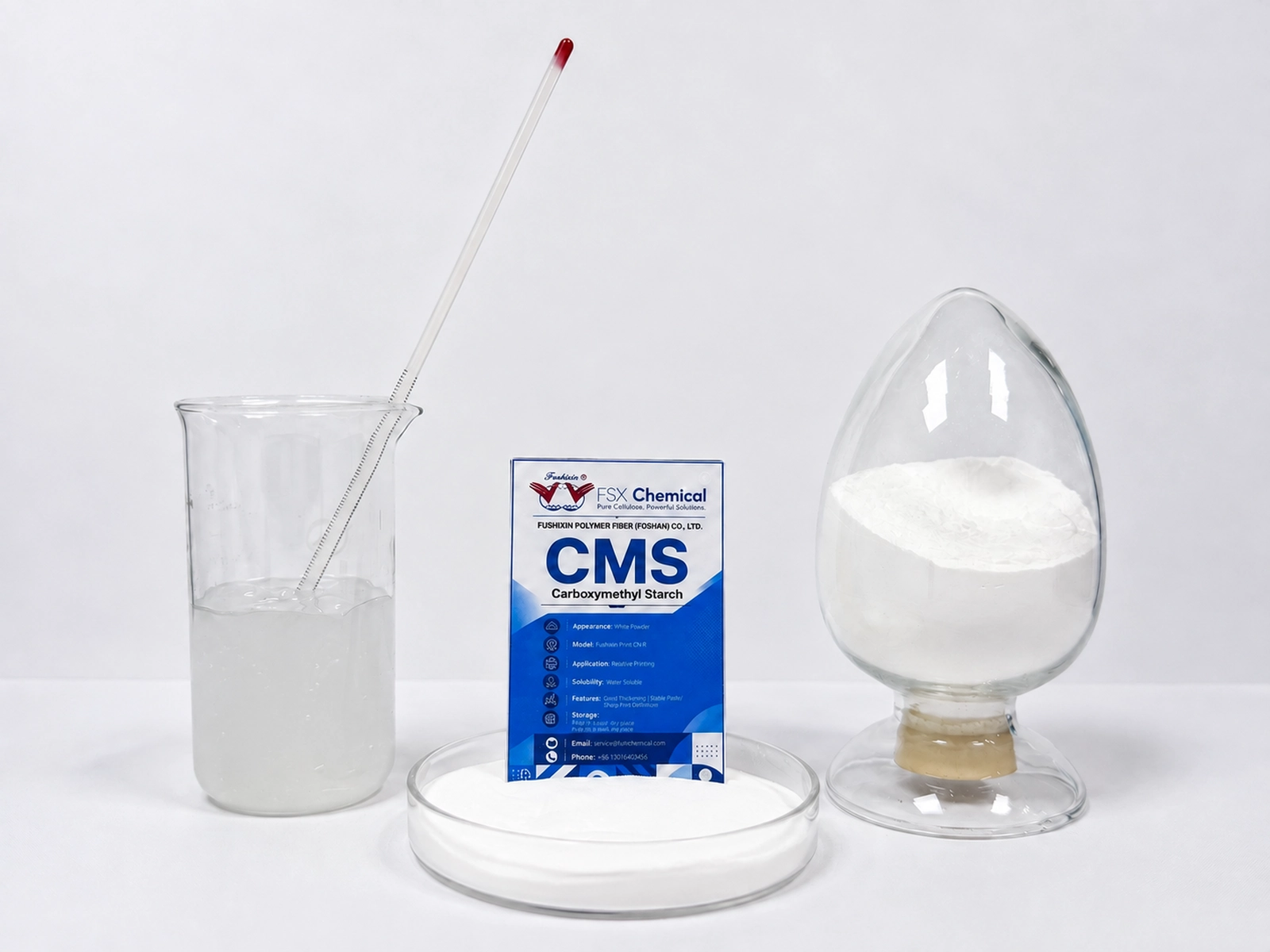
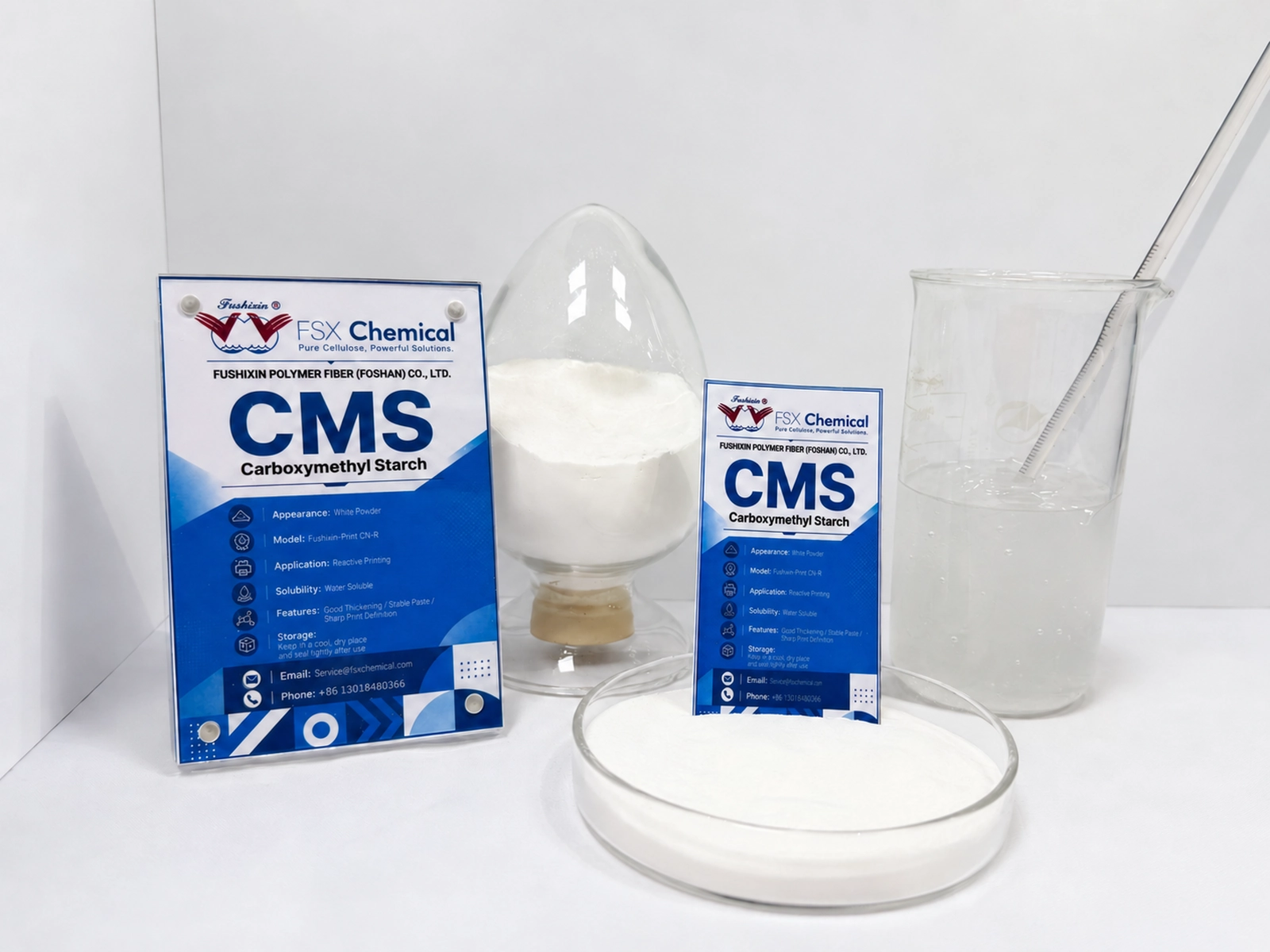
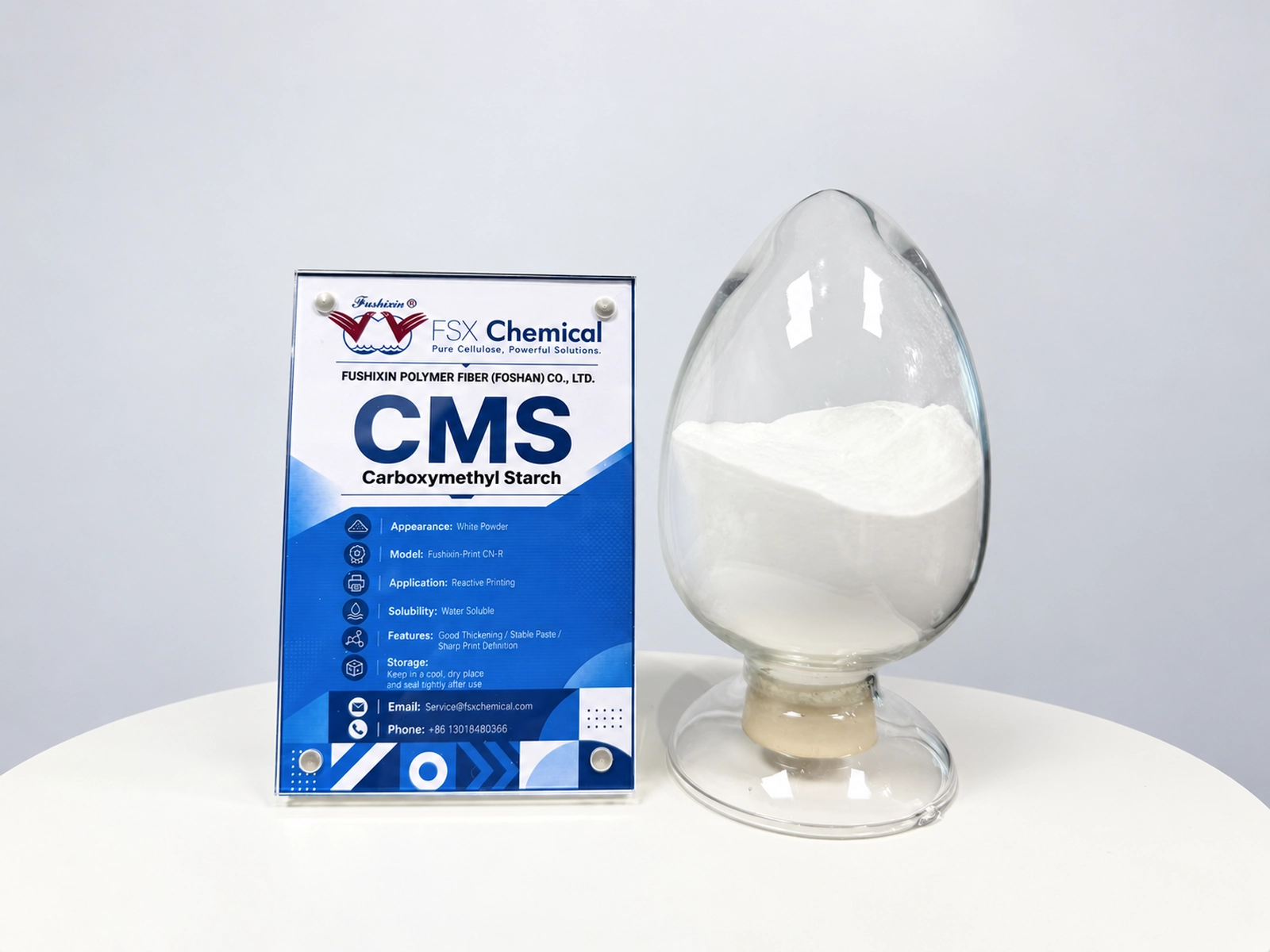

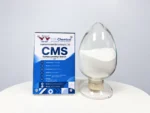
Carboxymethyl Starch (CMS) Thickener Manufacturer

FSX Chemical manufactures carboxymethyl starch (CMS) thickeners for reactive, disperse and specialty textile printing. We support grade matching, laboratory evaluation, technical documents and factory-direct bulk export supply for textile mills and chemical distributors.

CMS Grade Selection · Textile Printing Applications

CMS Grades for Reactive, Disperse and Specialty Textile Printing

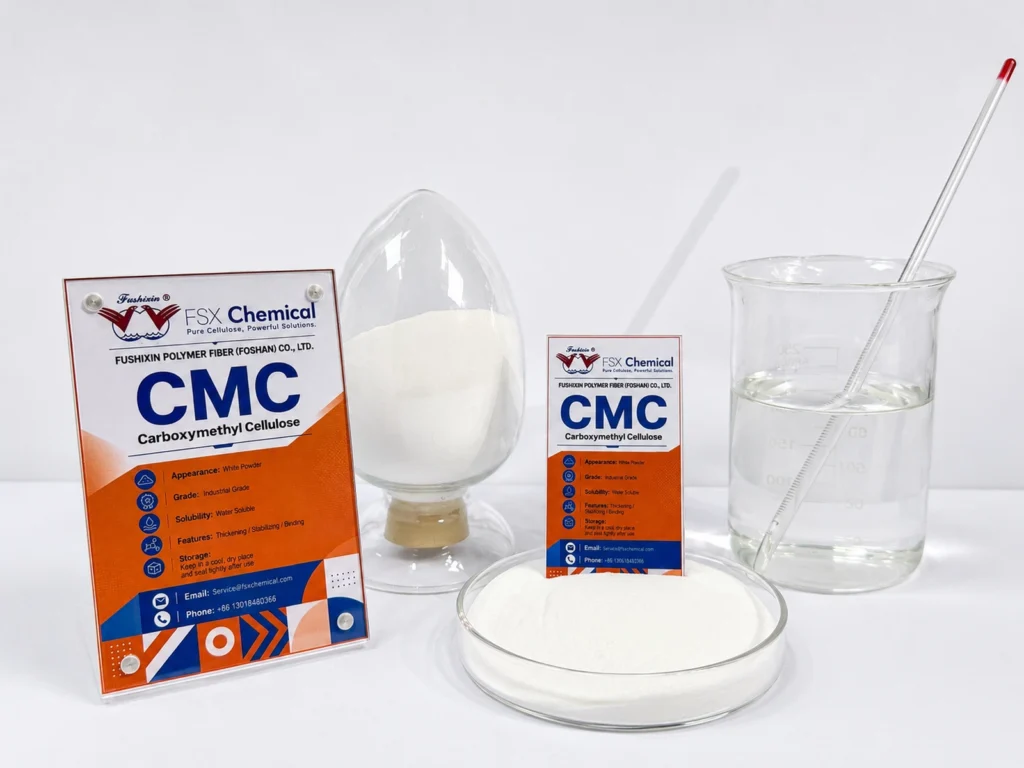
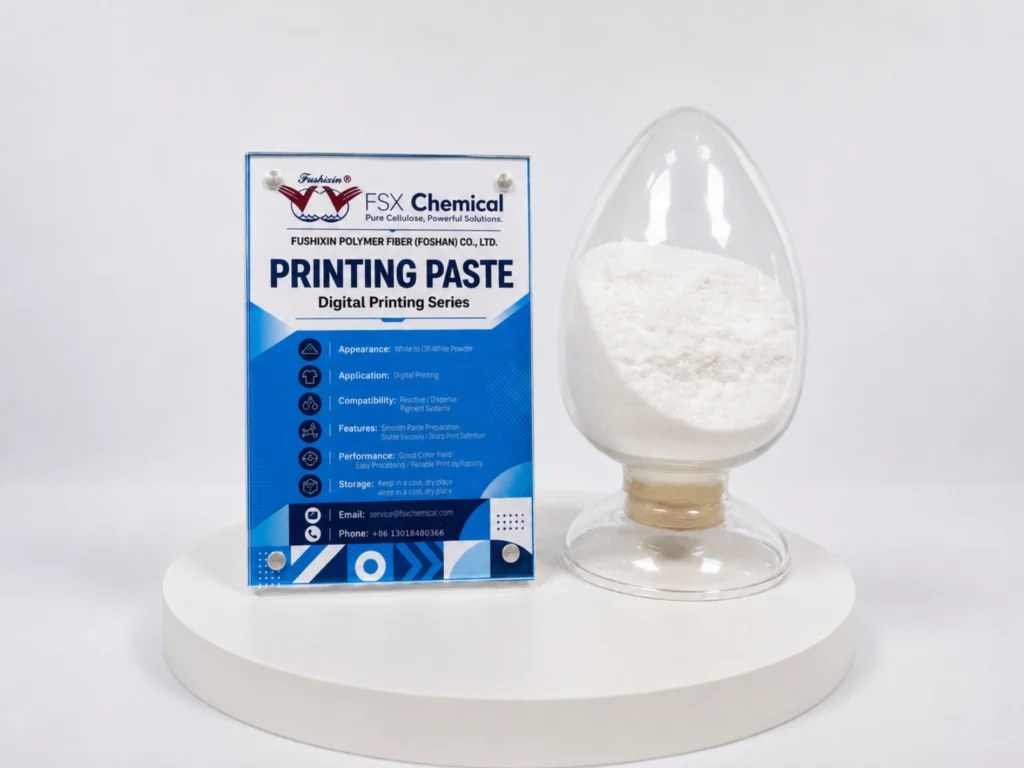
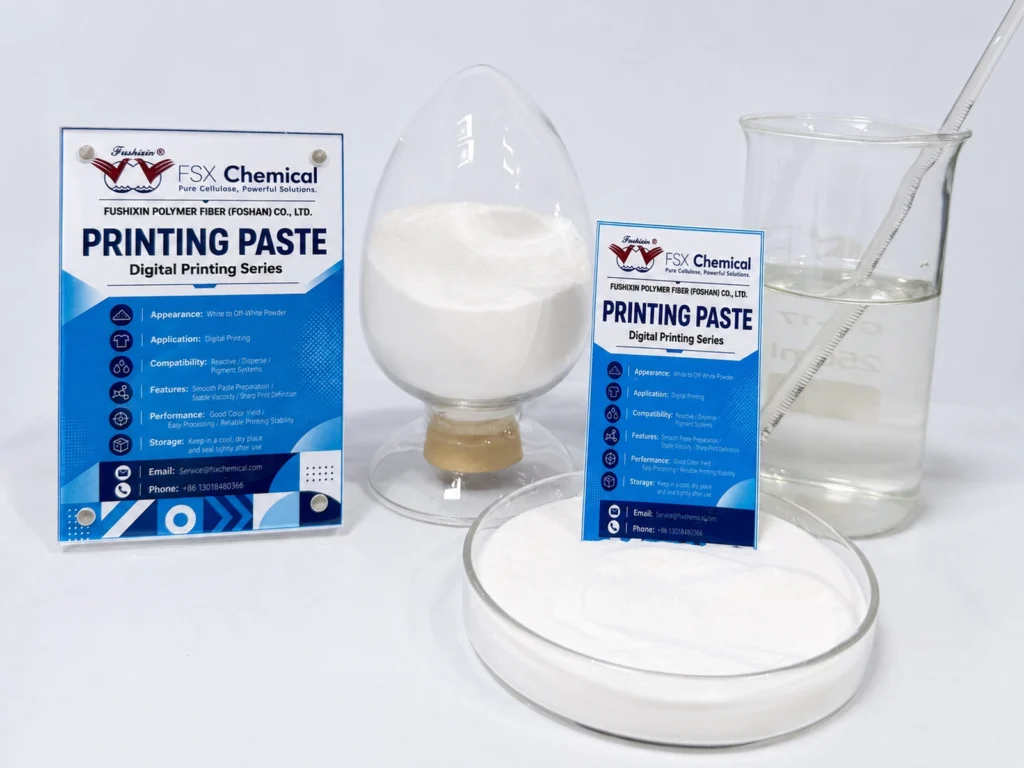
FSX Chemical supplies carboxymethyl starch thickener grades for different textile printing routes. CN-R is developed for reactive printing, FS-05 for disperse printing, while H5 is a flake-form CMS grade available for evaluation in vat dye, discharge and selected burn-out or devoré processes. Buyers can submit a current sample or TDS for laboratory grade matching before production trials.

FSX CN-R CMS grade for reactive textile printing paste
FSX FS-05 CMS grade for disperse textile printing
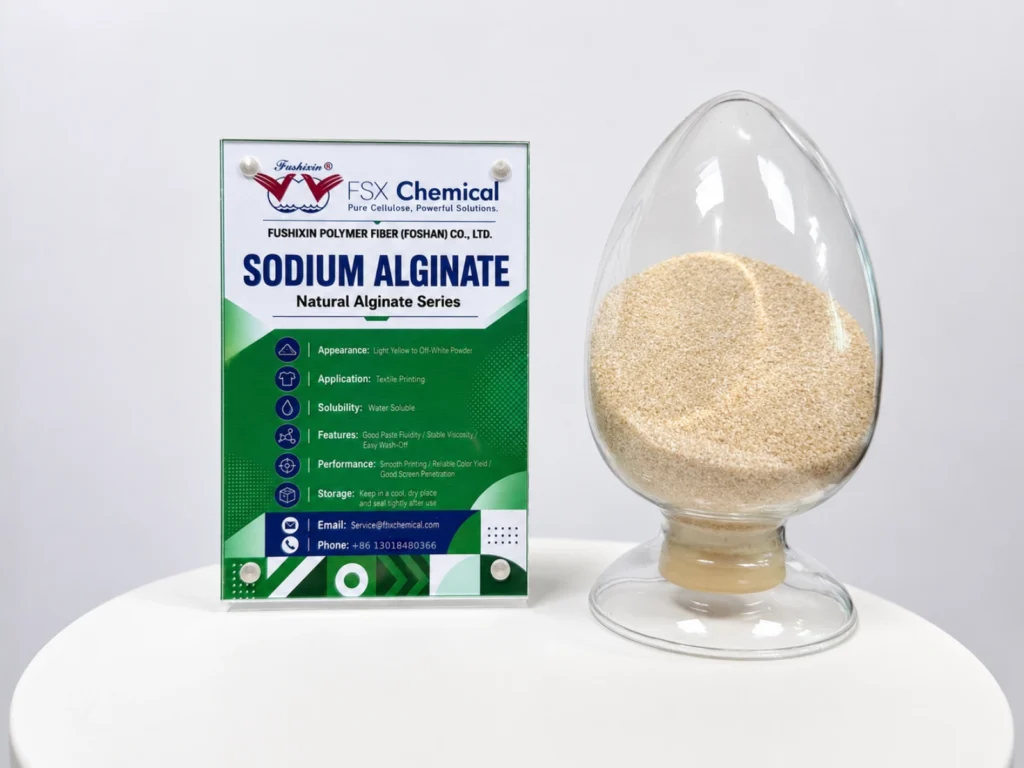
FSX H5 Flake Starch Vat, discharge and selected burn-out printing route
CMS Grade Matching Compare your sample or TDS before trial testing

CMS Definition · Printing Paste Application

What Is Carboxymethyl Starch (CMS) for Textile Printing?

What Is Carboxymethyl Starch (CMS)?

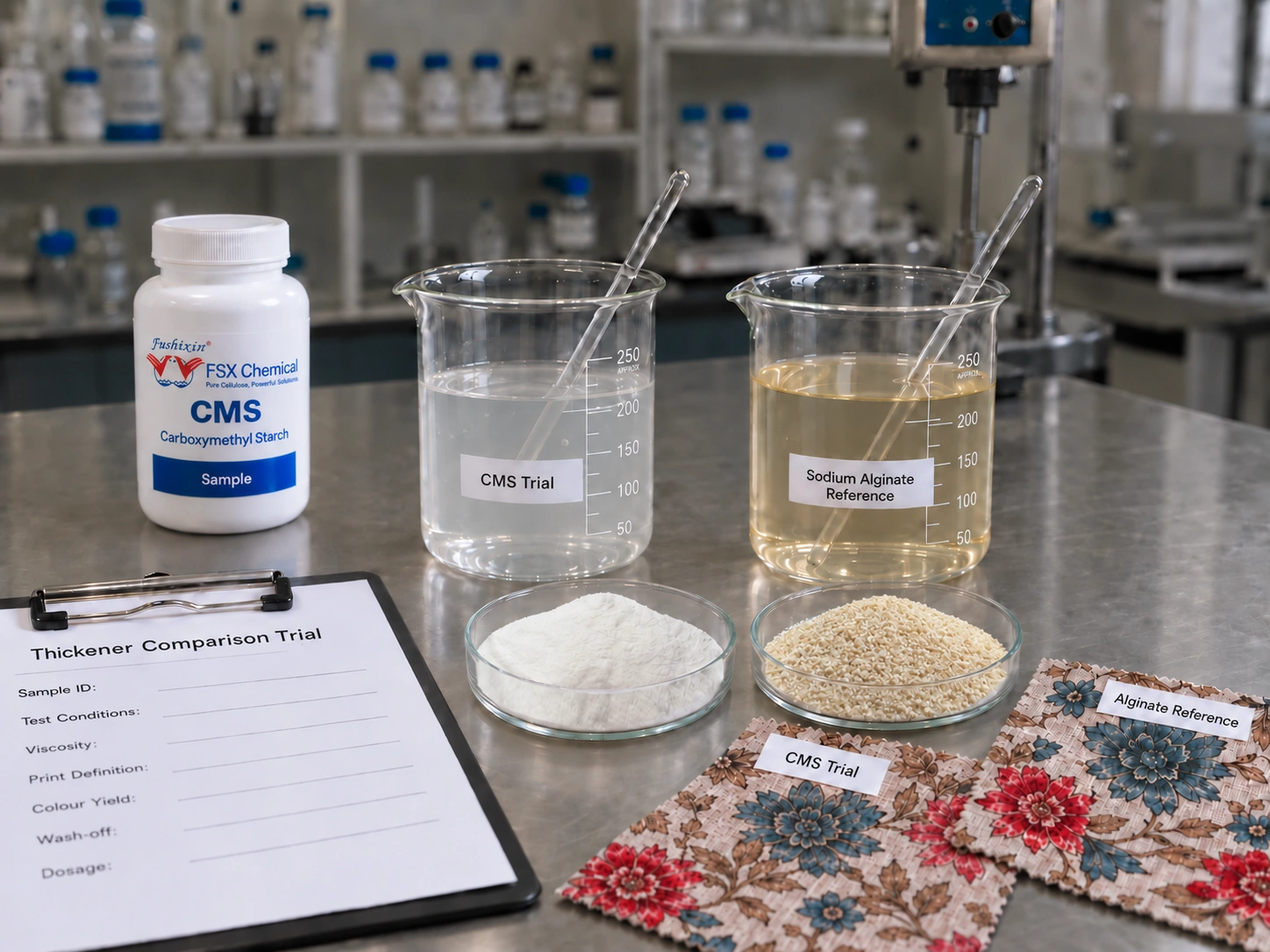
Carboxymethyl starch, commonly called CMS, is a modified starch thickener used in textile printing paste and other industrial formulations. In fabric printing, CMS helps build viscosity, paste body and controlled flow so the printing paste can be prepared and applied according to the required process.

Why CMS Is Used in Textile Printing Paste

CMS thickener can be selected for reactive, disperse and specialty textile printing routes. Buyers normally evaluate paste preparation, rheology, screen performance, print definition, wash-off and cost-performance under their own fabric, dye system, machine and production conditions.

How Buyers Compare CMS Grades Before Bulk Purchase

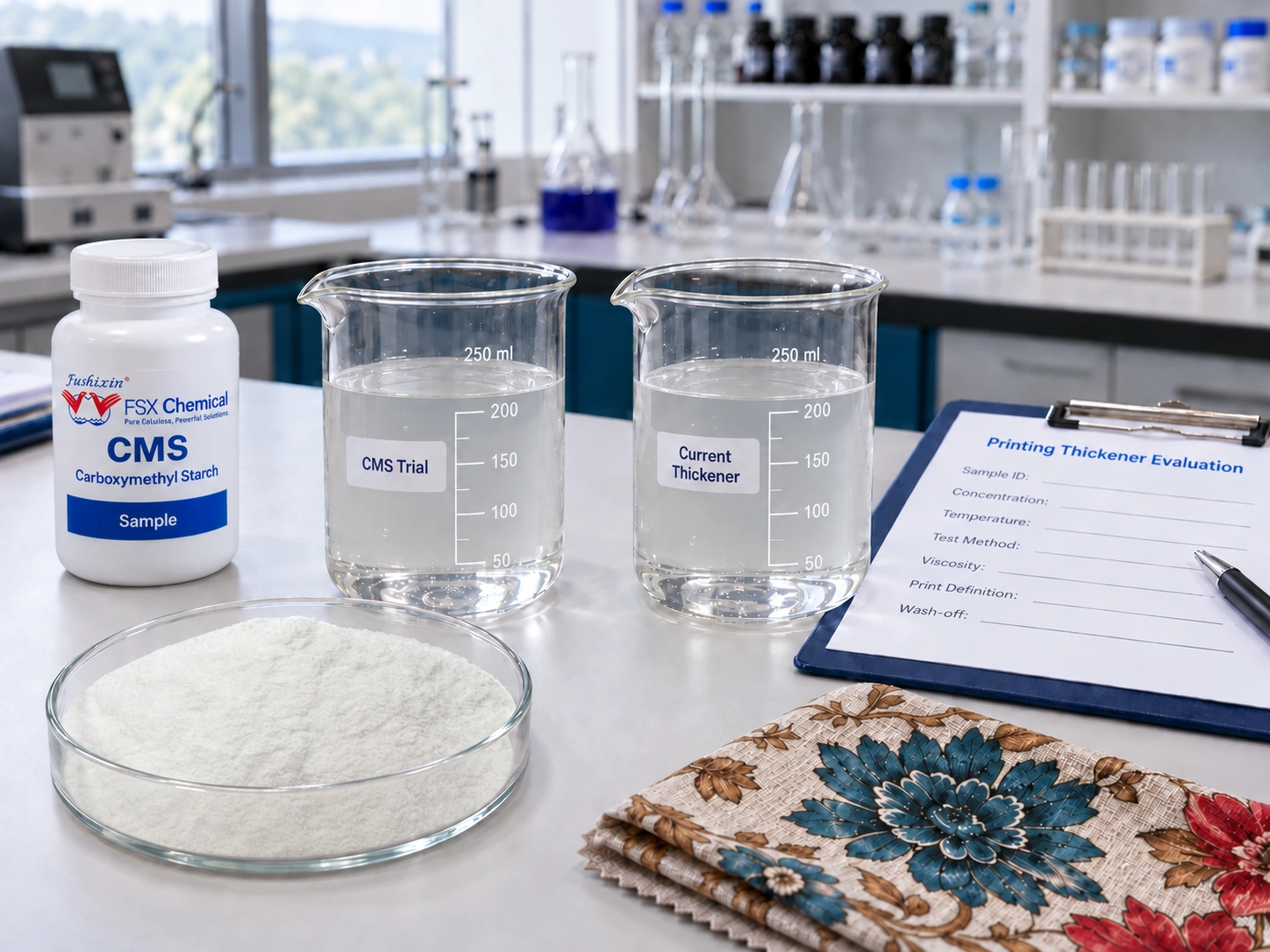
CMS grades should be compared under the same test concentration, temperature, instrument and viscosity method. FSX Chemical supplies CN-R for reactive printing, FS-05 for disperse printing and H5 flake-form CMS for vat, discharge and selected burn-out applications. Buyers can submit a current sample or TDS for grade matching before trial and bulk purchasing.

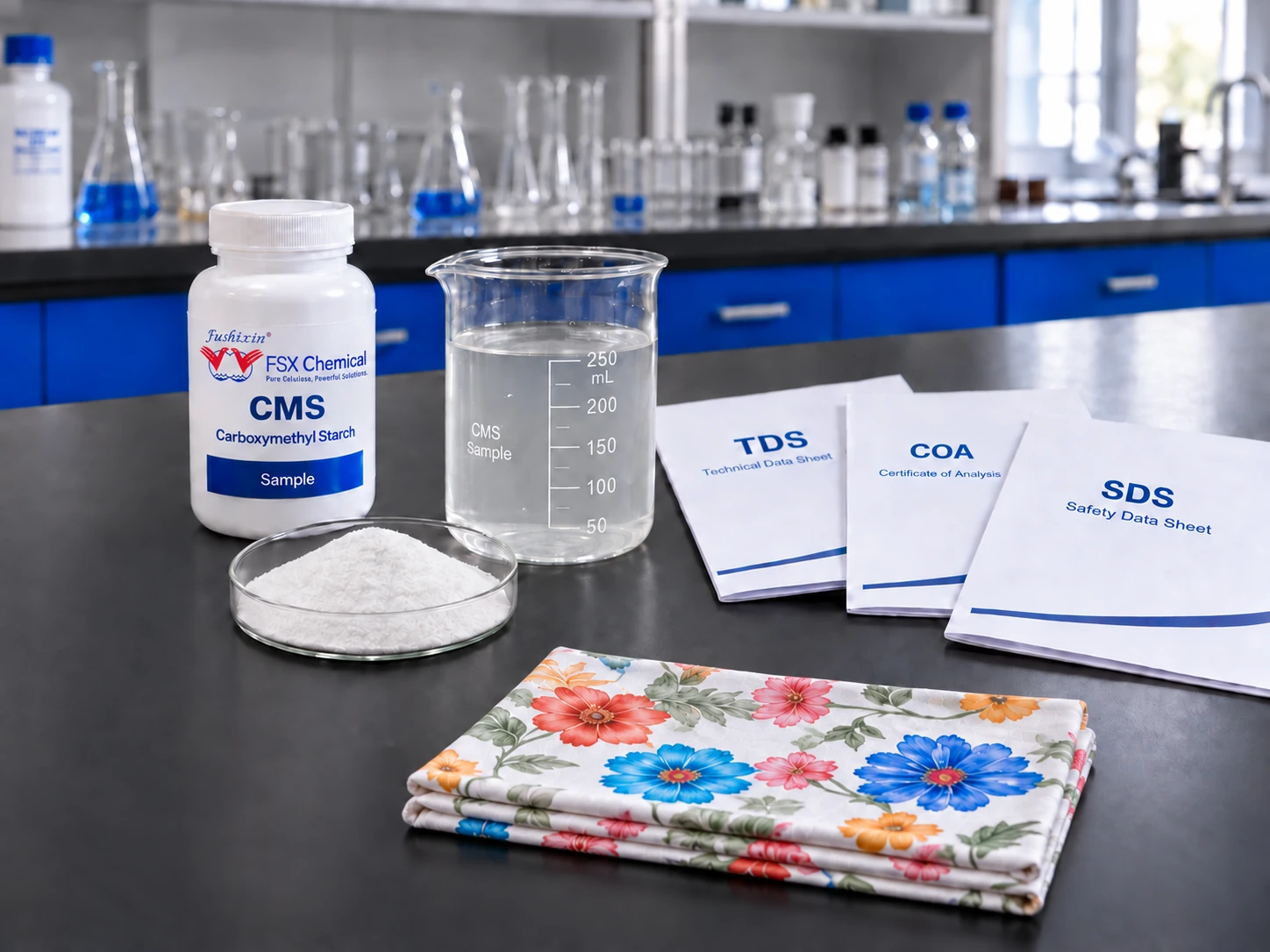
FSX Chemical CMS thickener sample and textile printing paste laboratory evaluation CMS Thickener · Printing Paste Evaluation

CMS Grade Comparison · Printing Process Selection

Compare CN-R, FS-05 and H5 CMS Grades by Printing Process

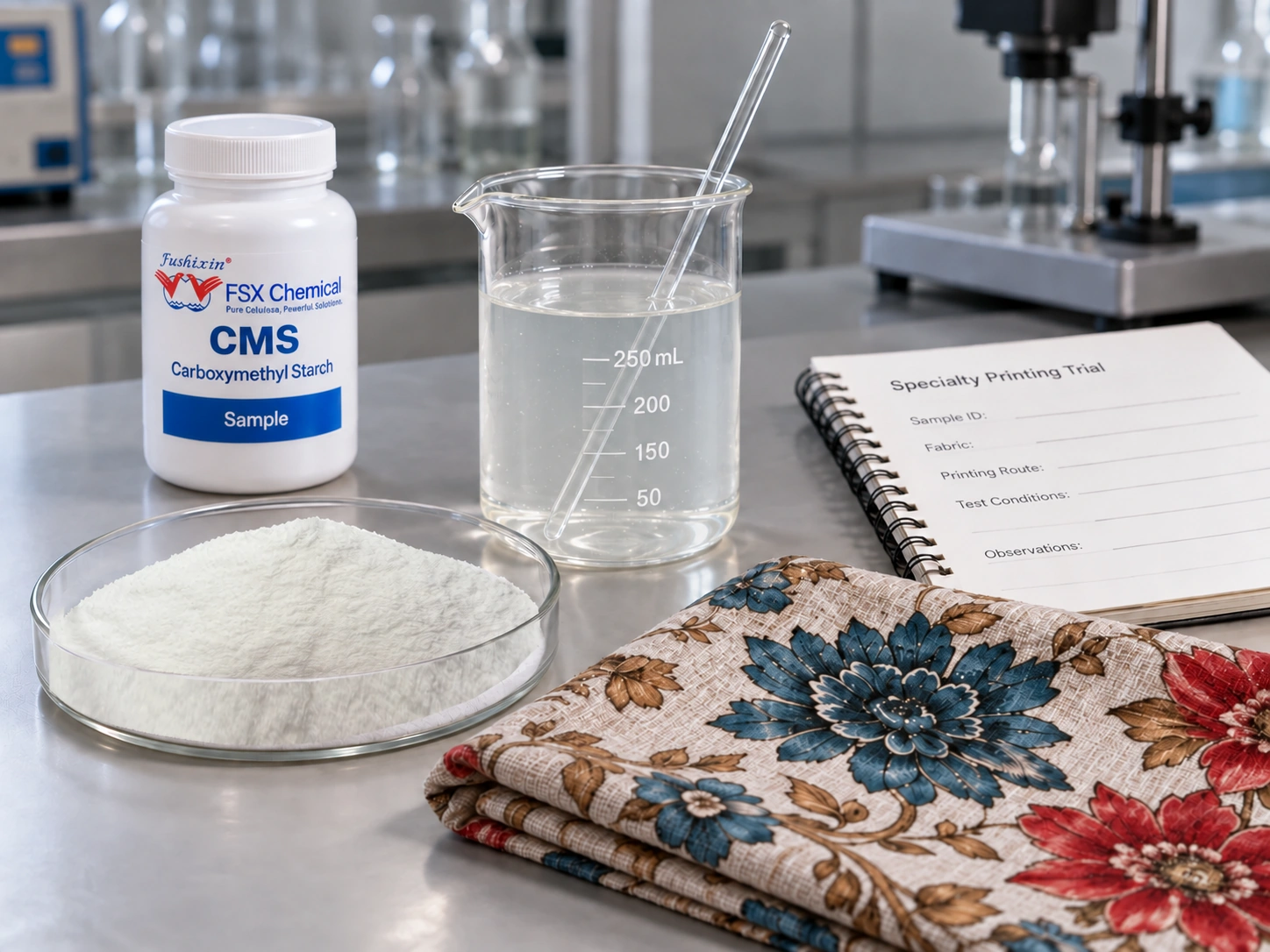
Compare FSX Chemical carboxymethyl starch thickener grades according to the textile printing process, paste preparation and trial result. CN-R is developed for reactive printing, FS-05 for disperse printing, while H5 is a flake starch grade within the FSX CMS range for vat dye, discharge and selected burn-out or devoré printing applications. Buyers can also submit a current CMS sample or TDS for laboratory grade comparison before production trials and bulk purchasing.

FSX Chemical CN-R CMS thickener for reactive textile printing paste evaluation
FSX CN-R

CMS Thickener for Reactive Textile Printing

CN-R is the FSX CMS route developed for reactive textile printing paste. Buyers should evaluate paste preparation, viscosity under the same test method, screen performance, print definition, wash-off and batch consistency under their own fabric, dye system and production conditions.

Printing Route
Reactive printing
Trial Focus
Paste behavior and wash-off
Compare CN-R under the same concentration, temperature and viscosity test method used for your current CMS grade.
FSX Chemical FS-05 CMS thickener for disperse textile printing paste trials
FSX FS-05

CMS Thickener for Disperse Textile Printing

FS-05 is the FSX CMS route developed for disperse textile printing. Evaluation should consider dispersion and paste preparation, viscosity stability, screen running, pattern definition and the final printing result under the buyer’s formulation, fabric and machine conditions.

Printing Route
Disperse printing
Trial Focus
Paste stability and definition
FS-05 should be confirmed through a controlled printing trial before changing an existing CMS formulation.
FSX Chemical H5 flake starch thickener for vat dye discharge and burn-out textile printing
FSX H5 · Flake Starch

Flake Starch Thickener for Vat and Discharge Printing

H5 is a specialty flake starch grade within the FSX CMS range. It is available for evaluation in vat dye printing, discharge printing and selected burn-out or devoré processes. Final suitability depends on the fabric composition, printing paste, chemical system and production conditions.

Printing Route
Vat and discharge printing
Product Form
Flake starch grade
Evaluate paste preparation, screen performance, pattern effect and post-treatment result before bulk use.
FSX Chemical CMS sample and TDS comparison for current supplier grade matching
Current Grade Matching

Compare Your Current CMS Sample or TDS

Buyers already using carboxymethyl starch can submit a current product sample or TDS together with the viscosity test method, printing process, paste formulation and expected result. FSX Chemical can review the information and suggest a comparable CMS route for controlled trial evaluation.

Buyer Input
Current sample or TDS
Evaluation Goal
Comparable CMS trial route
A direct replacement should be confirmed through laboratory comparison and production testing.
Need help selecting the right CMS grade? Send your printing route, current CMS sample or TDS, viscosity test conditions, paste requirements and estimated order quantity for grade comparison and trial guidance.
FSX Chemical H5 flake starch thickener for vat dye, discharge and burn-out textile printing
FSX H5 · Featured CMS Grade Flake Starch for Specialty Textile Printing

Featured CMS Grade · Flake Starch

H5 Flake Starch for Vat, Discharge and Burn-Out Printing

FSX H5 is a specialty flake-form grade within the FSX carboxymethyl starch (CMS) range. It can be evaluated for vat dye printing, discharge printing and selected burn-out or devoré textile printing processes where paste preparation, screen performance and final pattern effects must be confirmed through controlled trials.

01

Flake Product Form

A distinctive flake-form starch grade within the FSX CMS range, supplied for specialty textile printing paste preparation and controlled production trials.

02

Vat & Discharge Printing

H5 can be evaluated as a flake starch thickener for vat dye and discharge printing paste according to the dye system, discharge chemistry and fabric requirements.

03

Burn-Out / Devoré Processes

A specialty route for selected burn-out or devoré printing projects where fibre composition, paste formulation and chemical processing conditions must be confirmed.

04

Trial Before Bulk Use

Compare paste preparation, viscosity, screen running, pattern definition, effect development and post-treatment results before confirming bulk purchasing.

H5 Trial Checklist Evaluate under your actual production conditions
  • Paste Preparation
  • Viscosity & Flow
  • Screen Running
  • Pattern Effect
  • Post-Treatment
Already using a flake starch thickener? Send your current sample or TDS, printing process, fabric composition and trial requirements for H5 grade evaluation.

Technical Data · Grade Comparison

CMS Technical Specifications for CN-R, FS-05 and H5

Compare FSX Chemical carboxymethyl starch thickener grades by printing route, product appearance, reference viscosity, test concentration, pH and recommended trial direction. CN-R is used for reactive printing, FS-05 for disperse printing, while H5 is a flake starch grade for vat dye, discharge and selected specialty textile printing processes.

How to compare the viscosity data: The values below are reference data measured at different solution concentrations. CN-R and FS-05 are listed at 5%, while H5 is listed at 8%. Values obtained at different concentrations or by different instruments, spindles, speeds and temperatures should not be compared directly. Final selection must be confirmed through the current TDS, matched test conditions and printing trials.
Model Printing Route Appearance Reference Viscosity pH Recommended Trial Use Action
Fushixin Print CN-R CMS for reactive printing Reactive textile printing White powder 70,000–90,000 mPa·s 5% aqueous solution at 25°C 7.0–8.0 1% aqueous solution Reactive printing on cotton, viscose and other cellulosic fabrics. Trial evaluation should include paste preparation, viscosity stability, screen performance, print definition, colour yield and wash-off under the buyer’s actual process. Request CN-R TDS
Fushixin Print FS-05 CMS for disperse printing Disperse textile printing White powder 30,000–45,000 mPa·s 5% aqueous solution at 25°C 7.0–8.0 1% aqueous solution Disperse textile printing routes where buyers need to compare paste preparation, viscosity stability, screen running, print definition and cost-performance under their own formulation, fabric and machine conditions. Request FS-05 TDS
Fushixin Print H5 H5 flake starch grade Vat dye, discharge and selected burn-out printing White flakes 30,000–40,000 mPa·s 8% aqueous solution at 25°C 10.0–12.0 1% aqueous solution Flake starch thickener for vat dye printing, discharge printing and selected alkali burn-out or devoré processes. Buyers should evaluate paste preparation, alkaline or reducing conditions, screen performance, pattern development and post-treatment results before production use. Request H5 TDS
Product Family Carboxymethyl Starch

Modified starch thickener grades developed for textile printing paste, viscosity control and process-specific formulation trials.

Reference Concentrations CN-R 5% · FS-05 5% · H5 8%

CN-R and FS-05 viscosity values are listed at 5%, while the H5 flake starch reference is listed at 8%. Compare only under matched test conditions.

Standard Packing 25 kg Bags

Inner lining, pallet loading, shipping marks and export packing arrangements can be confirmed according to the grade, quantity and destination.

Technical Documents TDS · SDS · Batch COA

TDS and SDS support are available for product evaluation. Batch COA and shipment documents are prepared according to the confirmed production batch and order requirements.

Need help comparing these CMS specifications? Send your current CMS sample or TDS, viscosity test conditions, printing route, fabric type, paste requirements and estimated quantity. FSX Chemical can review a suitable grade direction before laboratory and production trials.
FSX Chemical CMS thickener grade selection using test conditions and textile printing trials Printing Route · Test Conditions · Trial Result

CMS Grade Selection · Buyer Checklist

How to Select a CMS Thickener Grade for Textile Printing

Select a carboxymethyl starch thickener according to the printing process, viscosity test conditions, paste behavior and actual trial result. CN-R is the recommended starting route for reactive printing, FS-05 for disperse printing, while H5 is a flake starch grade for vat dye, discharge and selected burn-out or devoré printing processes. Current samples or TDS documents can also be reviewed before production trials and bulk purchasing.

01

Match the CMS Grade to the Printing Process

Start with CN-R for reactive textile printing, FS-05 for disperse printing, or H5 flake starch for vat dye, discharge and selected burn-out applications. Fabric composition, dye system and printing paste formulation should also be confirmed.

02

Compare Viscosity Under Matched Test Conditions

Compare CMS viscosity using the same solution concentration, temperature and test method. Then review paste preparation, viscosity development, paste body, flow behavior and stability before deciding which grade should enter a printing trial.

03

Evaluate Printing and Post-Treatment Results

Run a controlled trial to compare screen performance, edge definition, color yield, penetration, wash-off, background staining and fabric handle. For H5 projects, also evaluate discharge or burn-out development and post-treatment results.

04

Confirm Supply, Packing and Documents

Before ordering, confirm the selected grade, approved sample result, minimum order quantity, production lead time, 25 kg bags, pallet or export packing and required TDS and SDS. Batch COA is prepared for the confirmed production batch.
Current Grade Comparison · Factory-Direct Supply

Compare FSX CMS with Your Current Supplier Grade

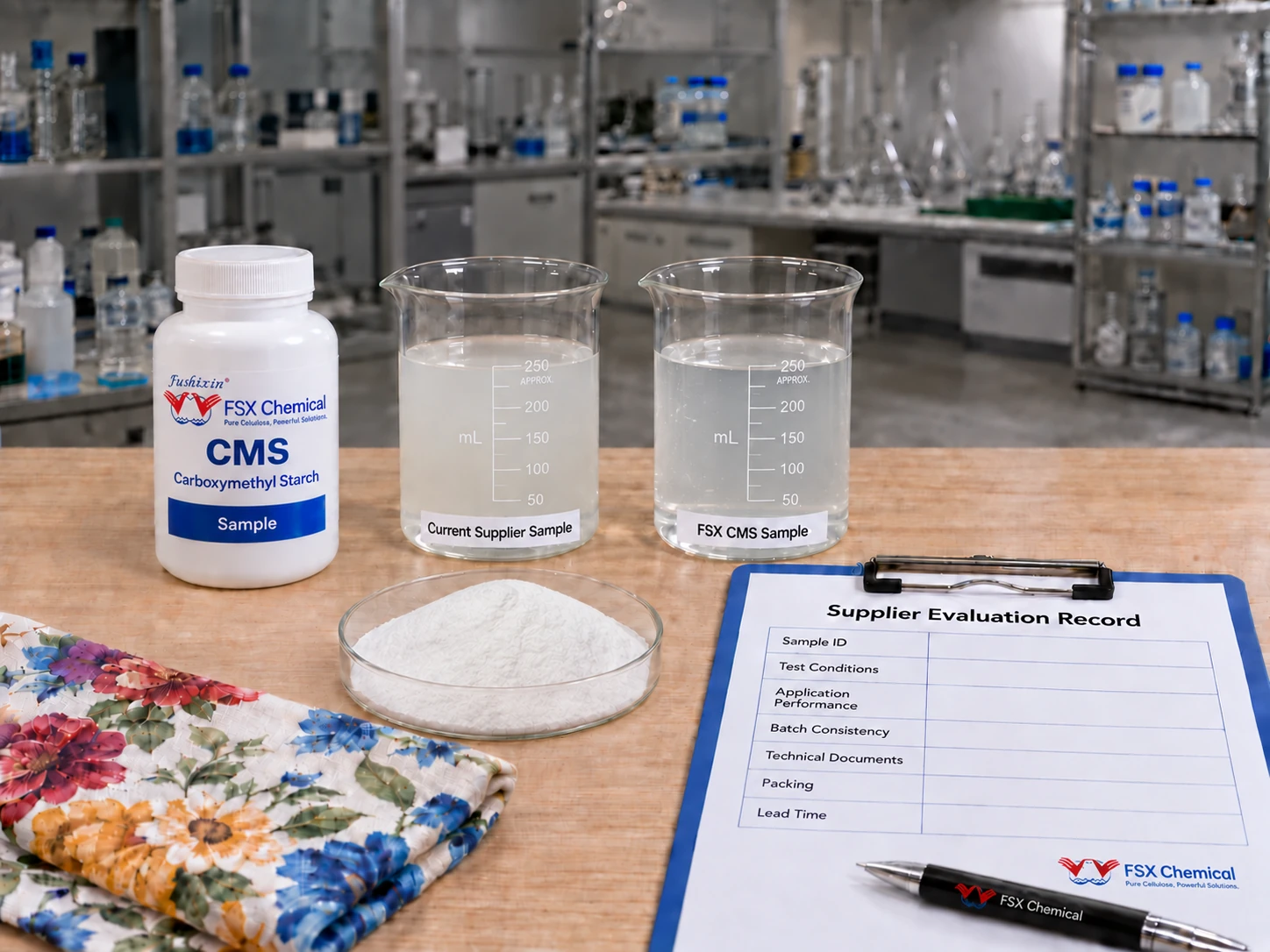
If you already purchase carboxymethyl starch from another supplier, FSX Chemical can compare your current CMS sample or TDS, viscosity test conditions, printing process, paste formulation and supply requirements. Based on the available information, we can recommend CN-R, FS-05 or H5 as a practical grade direction for controlled laboratory and production trials.

Why Buyers Compare CMS Suppliers

Compare Cost, Consistency and Technical Support Before Changing Supplier

Textile printing mills, chemical importers and CMS distributors normally review an alternative supplier when they need better batch consistency, technical response, sample availability, documentation, packing options, delivery coordination or commercial terms. FSX Chemical supports factory-direct CMS supply together with laboratory comparison, production coordination and batch quality control.

01
Factory-Direct Supply

Compare quotation, order quantity, packing, production lead time and long-term supply planning directly with the CMS manufacturer.

02
Laboratory Comparison

Review the current sample and FSX grade under matched concentration, viscosity test method, paste preparation and trial conditions.

03
Process-Based Grade Matching

Compare CN-R for reactive printing, FS-05 for disperse printing or H5 flake starch for vat, discharge and selected burn-out applications.

04
Technical and Batch Documents

TDS and SDS support product evaluation, while batch COA, packing details and shipment documents are prepared according to the confirmed grade and production order.

Start CMS Grade Comparison
FSX Chemical laboratory comparison of a current CMS sample, TDS and viscosity test conditions Current Sample · TDS · Lab Comparison

What FSX Chemical Compares Before a Trial

A current CMS product should not be compared only by model name or a single viscosity value. FSX Chemical reviews the available technical data, test conditions, printing process and actual paste requirements before suggesting a suitable trial direction.

Current Product Sample, TDS and supplier grade
Test Conditions Concentration, method and viscosity
Printing Process Reactive, disperse, vat or discharge
Trial Direction CN-R, FS-05 or H5 comparison

CMS Buyer Questions · Technical & Procurement

CMS Thickener FAQs for Textile Printing and Bulk Supply

Review practical answers about carboxymethyl starch grades, including CN-R, FS-05 and H5 flake starch, viscosity test conditions, sample matching, current supplier comparison, technical documents, packing and bulk export supply.

FSX Chemical CMS thickener grades, samples and technical documents for textile printing CMS Grades · TDS · Sample Review
01

What is the difference between CN-R, FS-05 and H5?

CN-R is the FSX CMS grade for reactive textile printing, while FS-05 is developed for disperse printing. H5 is a flake-form starch grade within the FSX CMS range for vat dye, discharge and selected burn-out or devoré printing processes. Final selection should be confirmed by the printing process, fabric, paste formulation, test conditions and trial result.

02

What is H5 flake starch used for?

H5 is a specialty flake starch grade available for evaluation in vat dye printing, discharge printing and selected alkali burn-out or devoré applications. Suitability depends on the fabric composition, dye or chemical system, paste preparation and production conditions, so sample testing is recommended before bulk use.

03

Why are CMS viscosity values tested at different concentrations?

Different CMS grades may use different reference solution concentrations because their product form, paste behavior and intended printing process are not identical. CN-R and FS-05 reference viscosity values are listed at 5%, while H5 is listed at 8%. Values should only be compared under the same concentration, temperature, instrument, spindle, speed and test method.

04

Can FSX Chemical match my current CMS supplier grade?

FSX Chemical can review your current CMS sample or TDS together with the viscosity test conditions, pH, printing process, fabric type, paste formulation and expected result. We can then recommend CN-R, FS-05 or H5 as a possible comparison route. A direct replacement should only be confirmed after laboratory evaluation and production trials.

05

What information is needed for CMS sample matching or quotation?

Please provide your current CMS sample or TDS, printing process, fabric type, viscosity requirement and test method, paste preparation conditions, expected printing result, estimated order quantity, destination and packing requirements. This information helps FSX Chemical recommend a relevant trial grade and prepare a more accurate commercial quotation.

06

What should buyers compare before changing CMS suppliers?

Buyers should compare more than the quoted price. Important checks include viscosity under matched test conditions, paste preparation, batch consistency, screen performance, printing results, technical response, sample availability, packing, production lead time, document support and delivery coordination.

07

Which CMS technical and batch documents are available?

FSX Chemical can provide TDS and SDS support for product evaluation. SDS may still be called MSDS in some markets. Batch COA is prepared according to the confirmed production batch, while packing lists, shipping marks and other export documents are prepared according to the confirmed order and shipment requirements.

08

What packing and export options are available for CMS bulk orders?

CMS is commonly supplied in 25 kg bags for bulk export orders. Inner lining, pallet loading, shipping marks, neutral packing, private labels and other export packing requirements can be reviewed according to the selected grade, order quantity, destination and shipment method.