How to Qualify a Second Textile Printing Thickener Supplier Without Disrupting Production
A second textile printing thickener supplier should be qualified through controlled side-by-side testing, complete-formula validation,...
Qualifying a second textile printing thickener supplier should reduce supply risk without creating new production risk. The safest route is not to replace the current supplier suddenly, change the formula and run a full production batch. Instead, use a staged approval process: define the current reference, review the candidate supplier and documents, match the viscosity test method, run side-by-side laboratory tests, validate the complete printing paste, conduct a controlled production trial, verify the first commercial batch, and only then approve the supplier for dual sourcing. This guide shows textile mills how to build that second-source qualification process while keeping the current production standard available as a fallback.
Why Qualify a Second Thickener Supplier?
A second qualified supplier can reduce procurement risk caused by lead-time disruption, port or logistics delays, raw-material shortages, unexpected quality problems, single-source negotiating risk and sudden capacity constraints.
But a second source creates value only if the mill can actually use it without losing viscosity control, screen running, color consistency, wash-off, fastness or fabric hand.
The objective is therefore not “Find another supplier with a lower price.”
It is “Build a second supply route that can enter production under controlled conditions with known technical and commercial risk.”
Do Not Treat Qualification as an Immediate Supplier Switch
The highest-risk approach is:
New Supplier → New Thickener → Full Production → Hope It Matches
A safer approach is:
Current Reference → Candidate Sample → Laboratory Match → Complete Formula → Controlled Production Trial → First Commercial Batch → Repeat Batch → Dual-Sourcing Approval
During qualification, keep the approved current thickener available. This provides a positive reference, a production fallback and a way to separate candidate failure from process failure.
The second-source project should run beside normal production, not replace normal production before approval is complete.
Four Approval Levels: Qualified, Trial-Approved, Commercial-Approved, Switch-Ready
Status
What It Means
What It Does Not Mean
Supplier Qualified
Company, capability and documents pass initial review
Product is approved for production
Trial-Approved
Candidate grade passes controlled lab / pilot testing
Bulk batch consistency is proven
Commercial-Approved
First commercial batch passes incoming QC and production
Supplier is ready for unrestricted allocation
Switch-Ready / Dual-Source Approved
Repeat batches, supply terms and change control are validated
Every future batch can skip incoming control
This distinction prevents one successful small sample from being treated as proof of long-term supply reliability.
Step 1: Freeze the Current Production Reference
Before evaluating the second supplier, document the current working system.
Current thickener product and grade
Supplier and batch / retained sample
Standard viscosity and full test method
Текущая дозировка
Printing formula
Ткань
Machine, screen and squeegee conditions
Fixation and washing / curing
Typical finished result
This becomes the qualification baseline. Without a frozen reference, the mill may change the supplier while the process is also changing and then have no reliable way to interpret the result.
Step 2: Review the Candidate Supplier Before Testing Product
Technical product testing should be combined with basic supplier review.
Legal company identity
Production or supply location
Relevant product family
Manufacturing capability
Laboratory / QC capability
Отслеживаемость партий
Complaint-handling route
Packaging and export capability
Lead time and MOQ
Quality-system certificates can support this review, but they do not define the actual viscosity, purity or textile-printing performance of the product.
A supplier can have a strong quality-management system and still offer the wrong thickener grade for your formula.
Supplier-system approval and product approval should remain separate gates.
Step 3: Align TDS, SDS, COA and Test Methods
Ask the candidate supplier for the available TDS, SDS, COA or representative quality data, packaging specification and recommended storage conditions.
Then check the viscosity method carefully.
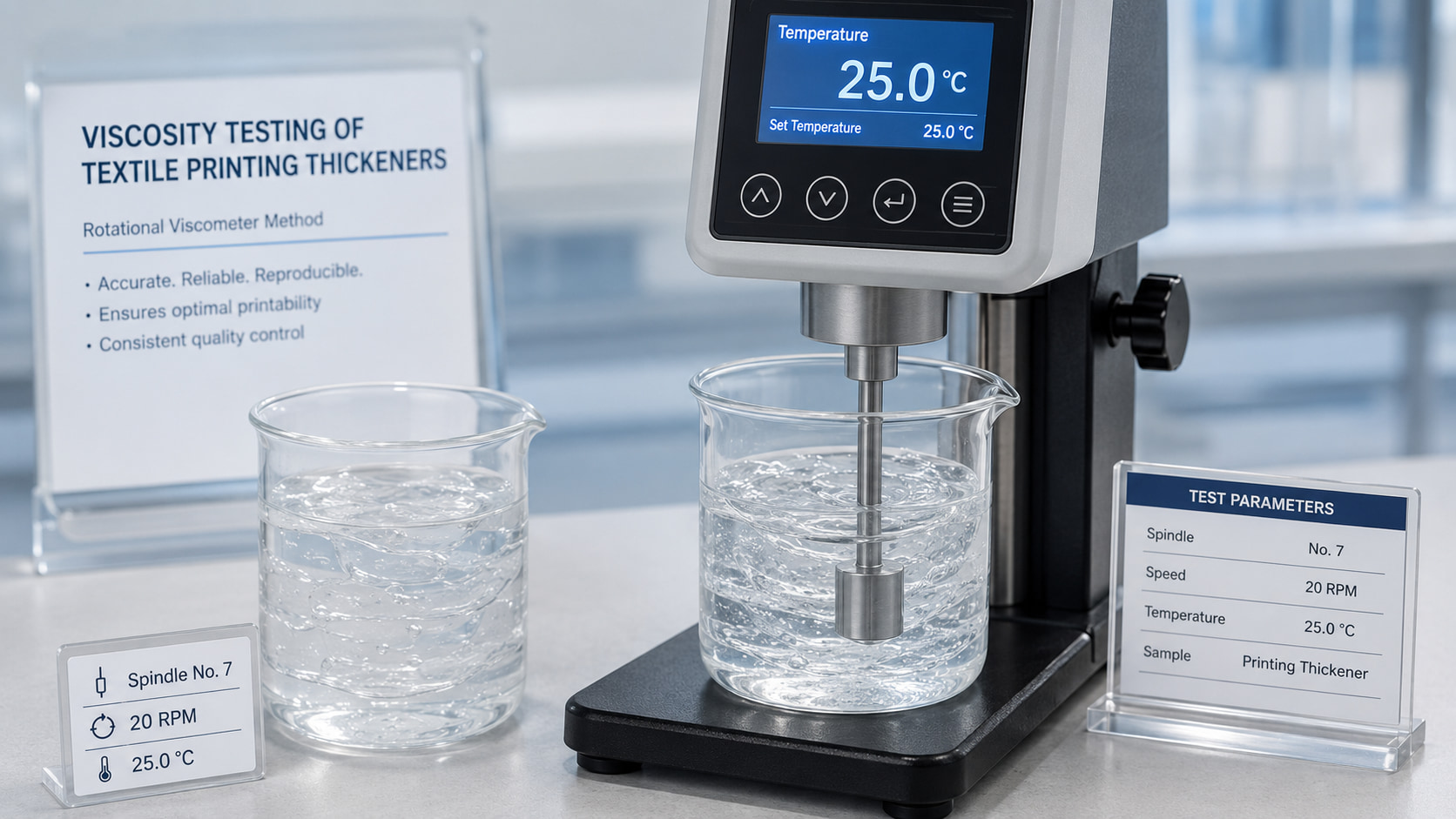
Two products described as “30,000 mPa·s” may be incomparable if they use different concentration, temperature, hydration, instrument, spindle or speed.
Before qualification, align:
Concentration + Water + Temperature + Hydration + Instrument + Spindle/Speed + Reading Time
The buyer should own the comparison method rather than accepting two unrelated supplier test methods as equivalent. State whether the purpose is a fixed-SOP incoming check or application qualification. A fixed preparation and read time can reveal consistency or suitability for the mill’s existing preparation cycle; it does not prove that every candidate grade has reached its developed viscosity.
Step 4: Obtain a Representative Candidate Sample
The candidate sample should represent a real commercial route.
Confirm the exact grade.
Record the sample batch where available.
Confirm whether it is standard production or a custom trial blend.
Confirm which specification would apply after approval.
A special laboratory sample that cannot be reproduced commercially has limited procurement value.
If the trial sample is custom, document the starting specification and confirm how commercial production would control it.
Use Образцы и подбор продукции when a current sample or TDS needs to be compared with a candidate grade under defined conditions.
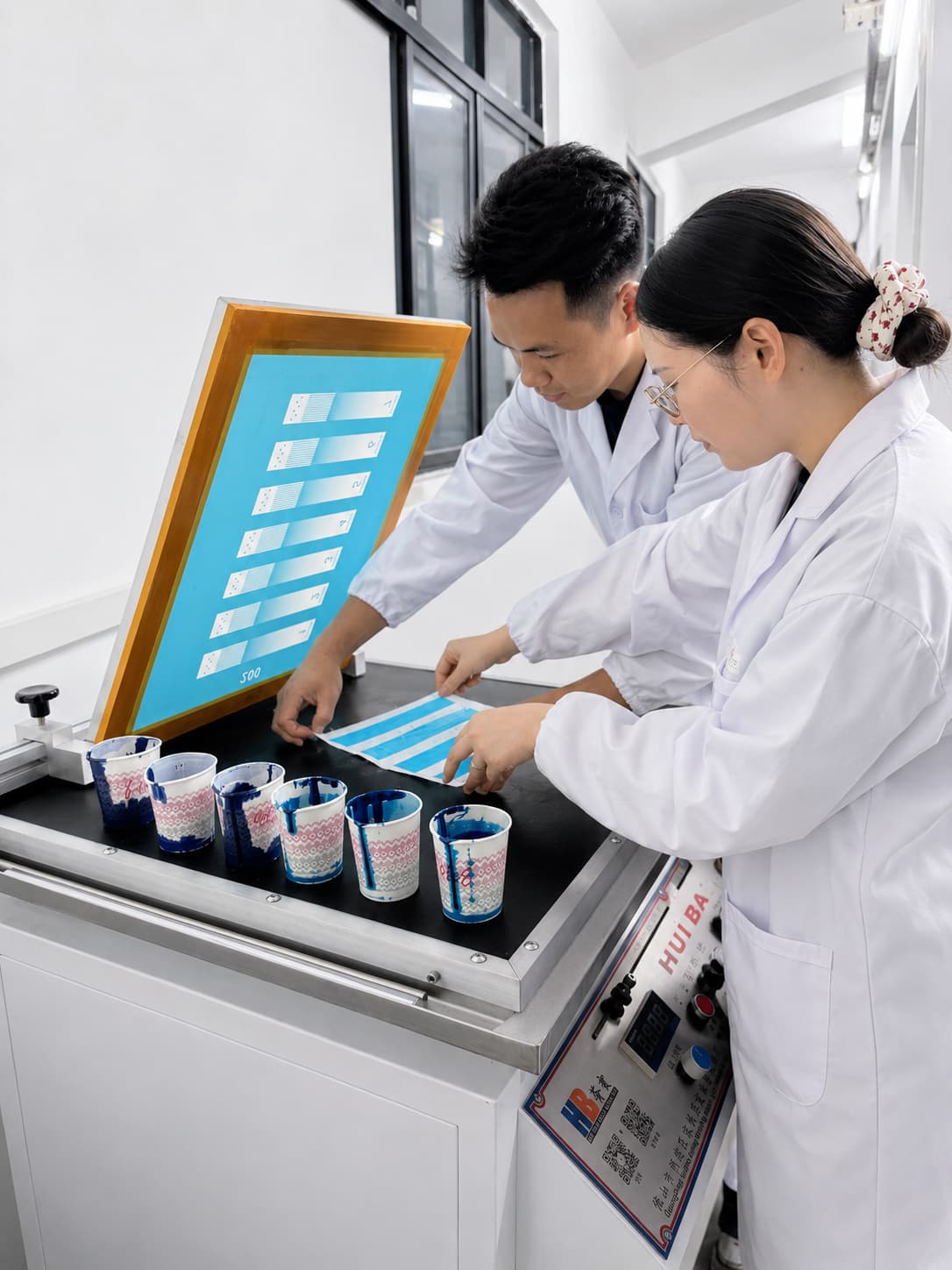
Step 5: Run Side-by-Side Laboratory Screening
Test the current and candidate products at the same time.
For a fixed-SOP screen, keep water, concentration basis, preparation, read time, temperature and viscosity method constant. Identify each product’s supplied form and applicable dispersion, dilution, hydration or activation procedure. If preparation is incomplete at the fixed read time, record that result and investigate it rather than equating it with fully developed performance. For application qualification, prepare each grade to its documented endpoint, then compare at controlled measurement and process conditions; record any difference in preparation time or equipment demand.
Сравните:
Dispersion
Гидратация
Вязкость
pH
Фильтрация
Пена
Стабильность при выдержке
Resolve failed incoming specifications or inability to meet the intended preparation cycle before a machine trial. If a candidate needs a different preparation route, qualify and approve that route separately; do not silently extend hydration or alter activation and report it as a pass under the original SOP.
Step 6: Test the Complete Printing Formula
A water-only viscosity match is not enough.
The candidate must be tested with the actual dye or pigment, salt, alkali, binder, fixer, dispersant and other key auxiliaries.
If a candidate passes water viscosity but collapses after salt or alkali, that is a grade/formula compatibility issue even if the product itself is inside its own specification.
Step 7: Print on the Same Fabric and Process
The current and candidate thickeners should be printed under matched conditions.
Keep constant:
Fabric lot
Dye / pigment lot
Формула
Экран
Скребок
Скорость работы станка
Сушка
Steaming / thermofixation / curing
Washing / reduction clearing
Evaluate screen running, pattern definition, penetration, K/S or shade, wash-off, fastness and fabric hand.
If the candidate needs a different dosage to reach the correct rheology, test that dosage deliberately and document it.
Step 8: Run a Controlled Production Trial
Only candidates that pass laboratory and complete-formula testing should enter production.
The first trial should be controlled, traceable, large enough to expose machine behavior and small enough to limit commercial risk.
Запись:
Paste batch and candidate batch
Machine and fabric
Start, mid-run and end-run viscosity
Beginning-to-end shade
Machine interruptions
Finished result
Choose a trial where the mill can stop or return to the reference product without jeopardizing a critical customer delivery.
Keep the Current Supplier as the Fallback During Trial
Do not consume all reference stock before the second source is proven.
Maintain enough approved material to finish the production order if the trial fails, run a reference comparison, investigate differences and support urgent orders.
The purpose of the second source is risk reduction, so the qualification process itself should not create a new single point of failure.
Step 9: Control the First Commercial Order
After the production trial passes, do not immediately treat the supplier as fully interchangeable.
For the first commercial batch:
Confirm exact grade.
Confirm batch number.
Review COA.
Retain a sealed sample.
Run incoming QC.
Use a controlled production allocation.
Compare the bulk batch with the approved sample, approved specification and current reference.
Step 10: Verify Repeat-Batch Consistency
One commercial batch proves only one commercial batch.
Before calling the second source fully switch-ready, verify repeatability across more than one production batch where practical.
Track viscosity, pH, moisture/solids where relevant, preparation behavior, complete-paste stability, printing result and delivery performance.
If the first batch is excellent but the second behaves differently, investigate lot identity, storage, measurement and preparation, process water and manufacturing variation before increasing allocation. A changed result does not identify the supplier’s manufacturing process as the cause by itself.
How Much Volume Should Move to the Second Supplier?
There is no universal 20/80, 30/70 or 50/50 rule.
The allocation should reflect supply risk, technical interchangeability, repeat-batch evidence, price, lead time, inventory strategy and customer-specific approval restrictions.
A staged volume ramp can be safer:
Controlled First Lot → Selected Production Orders → Repeat Orders → Defined Dual-Sourcing Share
The important principle is that volume should increase only as evidence increases.
Build a Buyer-Owned Specification
Supplier qualification is much stronger when the mill defines its own acceptance criteria.
Depending on the product, this can include product identity, appearance, viscosity, concentration/test method, pH, moisture/solids, purity or substitution where relevant, filtration and application-specific performance.
Incoming Product Specification
Defines what can be checked before production.
Application Approval Criteria
Defines what must pass during complete-paste and printing trials.
This prevents procurement from relying on supplier marketing names alone.
Incoming QC for the Second Supplier
For early commercial batches, incoming QC should be tighter than after a long stable supply history.
COA review for every batch
Identity / appearance
Standard viscosity
pH
Moisture / solids where relevant
Сохраненный образец
Periodic complete-paste verification
As evidence accumulates, the mill can decide whether any controls can be reduced.
Do not reduce incoming verification simply because the supplier has a certificate.
A second supplier should agree to communicate significant changes that may affect the approved product.
Examples include raw-material source changes, major process changes, production-site changes, specification changes and packaging changes that affect stability.
The buyer can define which changes require notification, COA review, sample requalification or a new production trial.
This turns second-source approval into an ongoing controlled relationship rather than a one-time sample test.
For sodium alginate, CMC or other reactive-printing thickeners, compare standard viscosity, salt/alkali response, complete-paste holding stability, screen running, color yield after steaming, wash-off and fabric hand.
Do not qualify a second reactive-printing supplier from water viscosity alone.
Do not approve a candidate because it gives the same water viscosity if binder compatibility is different.
Digital Pretreatment / Paste: Second-Supplier Qualification Checks
For a fabric-applied digital pretreatment, qualify filtration, form-specific preparation, application pickup or measured deposit, drying, ink behaviour on the treated fabric, and the finished print under the selected route. Reactive ink printing normally needs its approved fixation and wash-off sequence; direct-disperse and pigment ink routes need their own validated thermal treatment and any specified after-treatment. Do not impose washing on every digital route or infer that a fabric-pretreatment grade is approved for addition to printhead ink.
For a same-recipe substitution check, hold fabric, application machine, measured pickup/deposit, ink and the route-specific drying and fixation or curing conditions constant. If dose, preparation or deposit must be adjusted, identify that as a separate recipe-development trial and retain the original reference.
Common Mistakes That Disrupt Production
1. Changing Supplier and Formula at the Same Time
If the result changes, the mill cannot identify the cause.
2. Buying Bulk Before Complete-Formula Testing
Water viscosity alone is not application approval.
3. Using a Critical Customer Order as the First Trial
The commercial consequence of failure is unnecessarily high.
4. Consuming All Current Stock Before the Candidate Is Approved
The mill loses its fallback.
5. Approving from One Batch
Repeat-batch consistency remains unknown.
6. Selecting Only by Price per Kilogram
Different dosage, machine efficiency and wash-off can change actual cost.
7. Failing to Freeze the Test Method
Supplier A and Supplier B viscosity results may not be comparable.
8. Treating ISO Certification as Product Approval
A management-system certificate does not replace application-specific product validation.
Define Release Gates and a Usable Fallback Before the Trial
A second source becomes useful when its approval scope and switching procedure are clear. Supplier documents, a passing sample and a successful commercial batch are different evidence levels. The proposed gates below should be adapted to the mill’s product risk and existing authorization process.
Approval state
Required evidence
Permitted next step
Supplier qualified
Identity, capability, documentation, specification alignment and supply review
Obtain a representative candidate sample
Trial approved
Matched laboratory and complete-formula results; signed trial plan and stop criteria
Run only the defined production trial
Commercially approved
Finished-product acceptance, identified bulk lot, traceability and incoming controls
Use within the approved grade, recipe, fabric and process scope
Switch ready
Repeat-batch evidence appropriate to risk, available stock, lead-time plan and validated changeover
Allocate volume or activate the agreed backup route
Agree stop criteria before consuming trial material
Name the trial owner and the people authorized to stop or release the run. Define process-specific limits for paste stability, machine running, finished shade and required quality checks, plus when those results become available. Use the mill’s validated criteria; there is no universal acceptable reprint rate or viscosity deviation for all thickeners. Segregate and trace trial output until the required results are available.
Keep the fallback operational
Reserve enough approved material and production capacity for the planned trial, the time needed to detect a failure and the time needed to resume the reference route. Confirm its lot status and usable life. A supplier name on a backup list is not a fallback if stock is unavailable or line changeover has not been planned.
Document how remaining candidate paste will be isolated, how cleaning or changeover will be handled and which checks release the restarted reference process. Do not mix an unapproved candidate into the incumbent material to dispose of it or hide a failed trial.
Separate substitution from recipe redevelopment
A same-recipe comparison answers whether substitution works under current conditions. A revised dosage or auxiliary package tests a different approved route and needs its own formula version and evidence. Neither result supports a universal 1:1 replacement claim. After approval, monitor commercial lot consistency and delivery reliability; expand scope only when the additional evidence supports it.
Таблица устранения неисправностей
Qualification Problem
First Check
Не делайте поспешных выводов
Candidate viscosity differs from current supplier
Concentration, method, temperature, dosage
The candidate is automatically unsuitable
Lab passes but machine trial fails
Scale-up shear, screen, speed, deposit, holding
Lab data were useless
Sample passes but bulk batch fails
Grade identity, batch COA, retained sample
Production process is necessarily the cause
Candidate needs different dosage
Thickening efficiency and finished result
Different dosage means non-equivalence
Color is similar but wash-off worsens
Polymer solids, water, residue, post-treatment
K/S alone proves approval
First commercial batch passes, second drifts
Batch consistency and supplier change control
One batch proves long-term reliability
Candidate is cheaper but causes more downtime
Общая стоимость эксплуатации
Lower price/kg means lower production cost
Total Cost in Use: Why the Cheapest Second Source May Not Be the Safest
Compare the second source using:
Total cost per accepted metre = allocated monetary costs of consumed materials, preparation, processing, inventory and quality losses ÷ accepted metres. Use one stated currency and comparable fabric width, mass and quality requirements; for different widths, use accepted area or another defined output basis. State the accounting period and avoid counting the same rework or rejected-output cost twice.
A lower price per kilogram can be offset by higher dosage, longer mixing, more screen cleaning, lower machine speed, higher wash-off load, more safety stock or greater incoming inspection.
A slightly higher-priced second source can still be valuable if it reduces single-source risk, shortens lead time, improves batch traceability or runs more consistently.
What Information Should You Send to a Candidate Thickener Supplier?
Current product name, sample or TDS
Маршрут печати
Ткань
Dye / pigment / ink system
Текущая дозировка
Target viscosity and complete test method
Current formula or key components
Machine type
Main performance target
Estimated monthly or annual usage
Required packing
Destination / lead-time requirement
The supplier does not need every confidential formulation detail to start. A current sample, TDS, test method and clear application target are often enough to identify a suitable first trial route.
How Can a Mill Qualify a Second Supplier Without Disrupting Production?
Практическая последовательность действий выглядит следующим образом:
Freeze Current Reference → Review Supplier → Align Test Method → Sample → Lab → Complete Formula → Controlled Production Trial → First Commercial Batch → Repeat Batch → Dual-Source Approval
Second-source qualification should run beside normal production, not replace it prematurely.
Supplier-system approval and product approval are separate.
Use the current approved thickener as the side-by-side reference throughout qualification.
Do not change thickener, formulation and machine settings simultaneously.
A sample pass is not bulk approval; one bulk pass is not repeat-batch approval.
Increase supply allocation only as technical and commercial evidence increases.
Часто задаваемые вопросы
1. Why should a textile mill qualify a second thickener supplier?
A second qualified source can reduce supply disruption, logistics, capacity and single-source risk while improving procurement flexibility.
2. Should the second supplier replace the current supplier immediately after sample approval?
No. Sample approval should normally be followed by controlled production testing, first commercial batch verification and repeat-batch monitoring.
3. Is the same viscosity enough to qualify a replacement thickener?
No. Compare complete-paste stability, screen behavior, color, wash-off, hand and final fabric under matched conditions.
4. Should a second supplier use the same thickener dosage?
Not necessarily. Grades can have different thickening efficiency. Compare the dosage needed to achieve the approved application window.
5. How do I avoid disrupting production during the first trial?
Keep approved reference stock available, choose a controlled non-critical trial window and define a fallback before the run begins.
6. Does ISO 9001 certification mean the product is approved?
No. It can support supplier-system review, but product requirements and application performance must still be defined and validated by the buyer.
7. What if the sample passes but the first bulk shipment does not?
Compare grade identity, COA, batch code and retained samples, and hold the commercial batch until the difference is understood.
8. How many commercial batches should be checked before full approval?
There is no universal number. Use risk, batch history, criticality and repeatability evidence to decide when the supplier is switch-ready.
9. Should the second supplier receive part of regular volume?
It can after technical and commercial approval. The allocation should reflect supply risk, consistency, lead time and total cost rather than a fixed industry percentage.
10. What should incoming QC include for a new second source?
Typical controls include COA review, appearance, standard viscosity, pH, moisture/solids where relevant, retained samples and periodic application verification.
11. What if the second thickener is cheaper but needs a higher dosage?
Calculate Total Cost in Use using actual dosage, machine efficiency, wash-off, quality and logistics—not price per kilogram alone.
12. What should I send FSX Chemical for second-source matching?
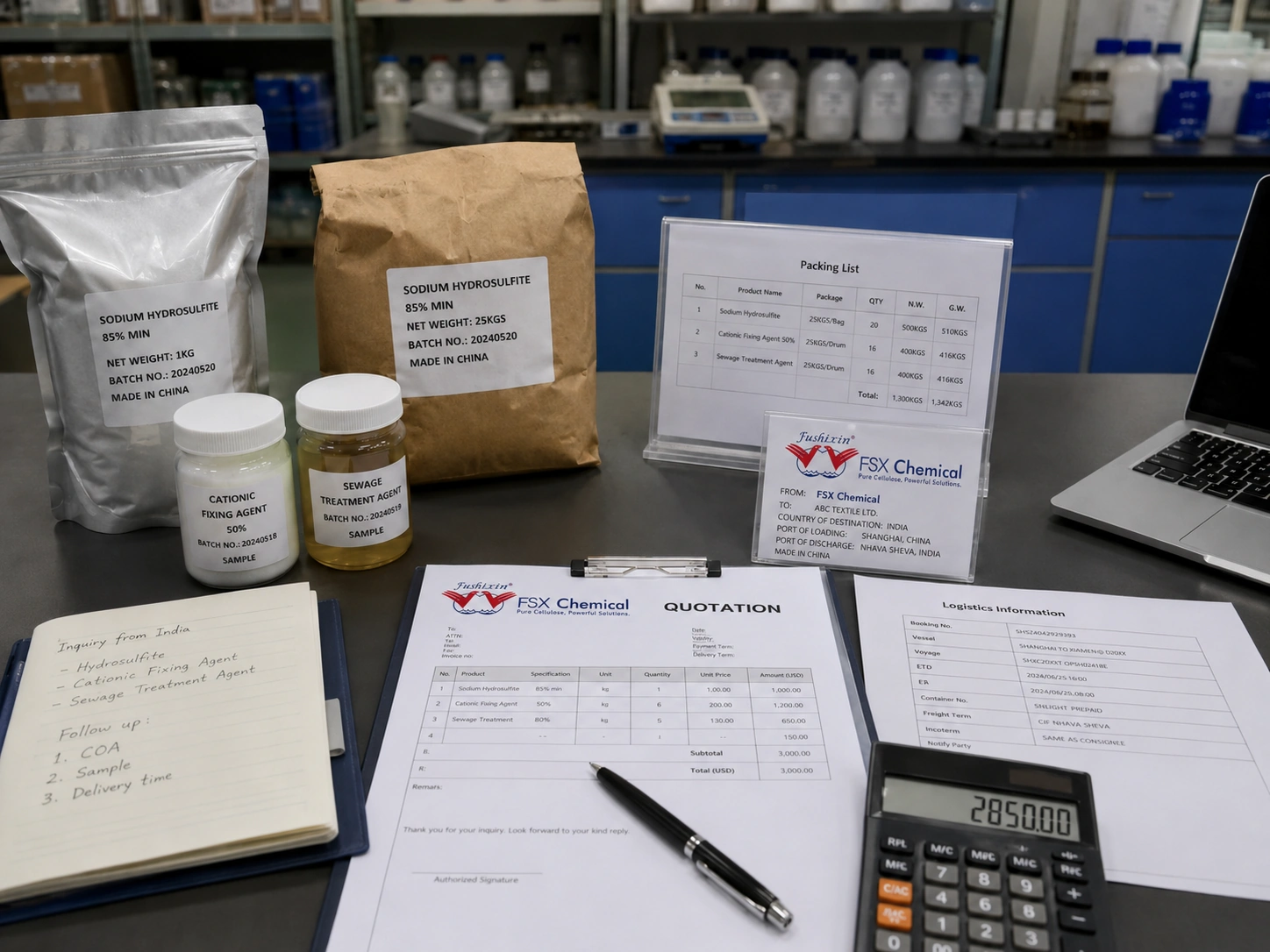
Send the current sample or TDS, application, dosage, viscosity test method, fabric, colorant system, main target and estimated usage so a controlled candidate grade can be selected for comparison.
Build a Second Thickener Supply Route Without Risking the Current One
If your mill is qualifying a backup or second textile printing thickener supplier, FSX Chemical can support a controlled current-vs-candidate comparison before any bulk purchasing decision.
Чтобы получить полезный технический обзор, отправьте:
A strong second-source program does not ask “Can this supplier replace our current supplier today?” It asks “What evidence do we need so this supplier can be introduced safely when we need the second source?”
Узнайте, почему значения вязкости загустителей для текстильной печати нельзя сравнивать без учета таких факторов, как концентрация, температура, прибор, шпиндель, скорость, метод подготовки проб и время испытания.
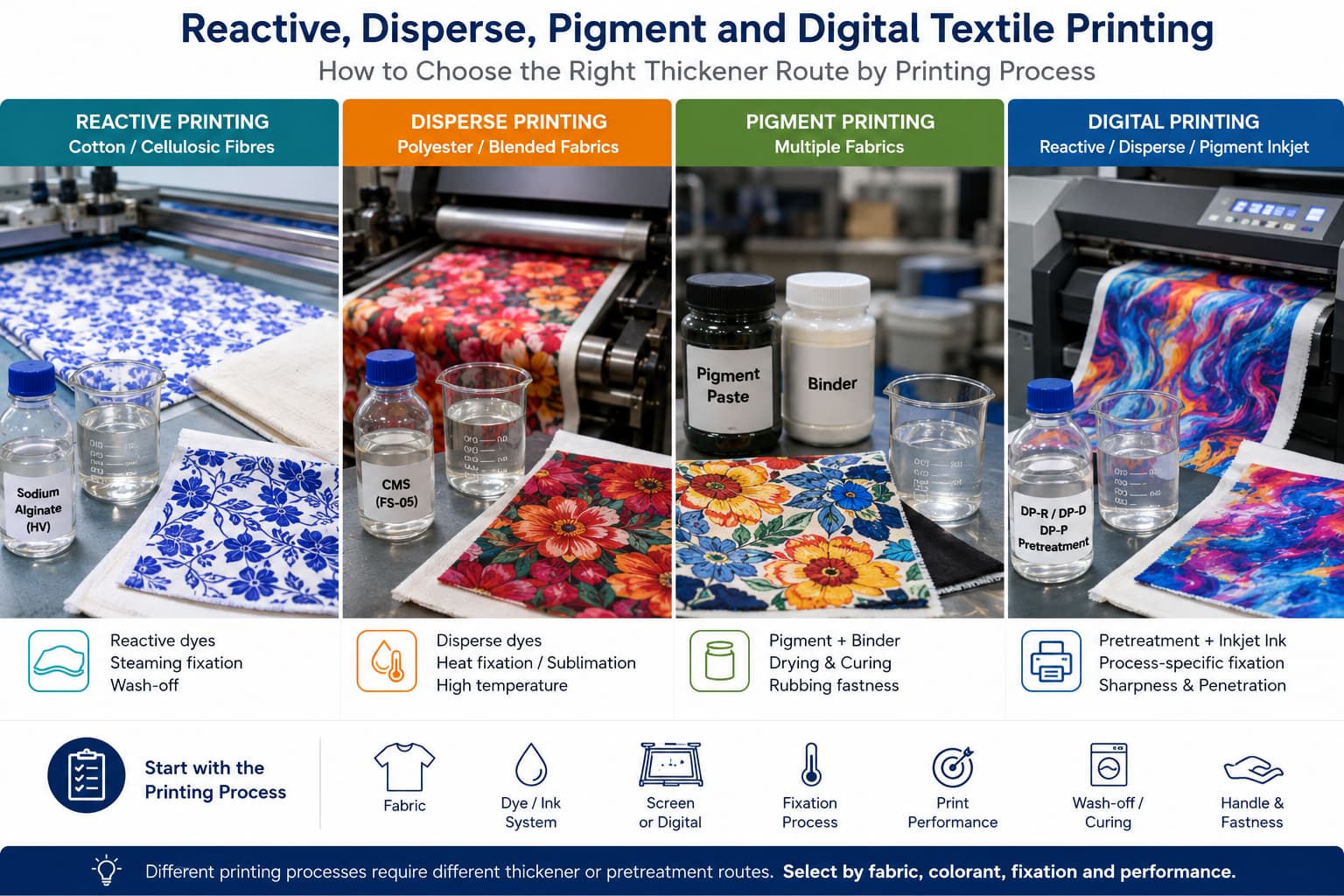
Узнайте, как выбирать загустители и способы предварительной обработки для реактивной, дисперсной, пигментной и цифровой печати на текстиле с учетом требований к ткани, красителю или чернилам, фиксации, вымываемости и качеству печати.
Сравните CMC, CMS, альгинат натрия и пасту для цифровой печати на текстиле. Узнайте, насколько каждый из этих материалов подходит для реактивной, дисперсной, пигментной и цифровой печати, а также на что покупателям следует обратить внимание перед тестированием образцов, подбором марки и оптовой закупкой.
Альгинат натрия широко используется в текстильной печати в качестве стабильного и стойкого к стирке загустителя для реактивных печатных паст. Узнайте, как перед покупкой оценить класс вязкости, степень чистоты и пригодность продукта для конкретного применения, а также о том, как компания FSX Chemical оказывает поддержку покупателям по всему миру, предоставляя технические данные и образцы.
Choose CMC for textile printing by application, DS, viscosity method and formulation trials. Use a practical checklist to compare grades before bulk purchase.
Карбоксиметилцеллюлоза используется в качестве загустителя и стабилизатора в чернилах на водной основе, в глубокой печати и при предварительной обработке для струйной печати. В данном руководстве рассмотрены основные параметры марок этого материала и рекомендации по его закупке для специалистов по снабжению.
И альгинат натрия, и CMC используются в качестве загустителей при печати на текстиле, однако они подходят для разных систем окрашивания и условий производства. В данном руководстве объясняются основные различия между ними и приводятся рекомендации по их применению.
Цифровая струйная печать на текстиле предъявляет иные требования к пасте и предварительной обработке материала, чем трафаретная печать. В данном руководстве объясняется, как альгинат натрия используется в цифровой печати на текстиле и какие параметры качества должны указывать специалисты по закупкам.
Пищевой и промышленный CMC имеют одинаковый химический состав, но значительно различаются по степени очистки, диапазону степени дефибринации (DS) и нормативным требованиям. В данном руководстве объясняются основные различия и причины, по которым использование несоответствующего класса продукта приводит к проблемам в производстве.
Prepare sodium alginate printing paste with a grade-specific concentration and controlled powder dispersion. Validate hydration, viscosity, filtration, air removal and holding time before production.
Assess sodium alginate in reactive-printing wastewater using measured COD load, product-specific biodegradation evidence and controlled process comparisons. Includes a buyer checklist and illustrative load calculation.
Скорость фиксации красителя напрямую влияет на цветоотдачу, стойкость к стирке и загрязнённость сточных вод при печати активными красителями. В данном руководстве объясняется, как альгинат натрия способствует фиксации красителя, какие параметры пасты влияют на скорость фиксации и как устранять проблемы, связанные с низкой фиксацией, в производственных условиях.
Сообщите название продукта, область применения, количество, пункт назначения, а также предоставьте техническое описание продукта (TDS),
фотографию образца или имеющиеся у вас документы. Компания FSX Chemical рассмотрит
эту информацию и порекомендует дальнейшие действия для подготовки коммерческого предложения, подбора образца
или выбора продукта.
Информация о продуктеНазвание продукта, марка, модель, фото этикетки или данные о продукте текущего поставщика.
Доступные документыTDS, SDS, COA, фотография образца, перечень продукции или данные испытаний.
Детали заказаПредполагаемый объем, упаковка, страна назначения, порт или условия торговли.
Область применения или проблемаПроцесс печати на текстиле, требования к составу, текущие проблемы или целевые показатели.