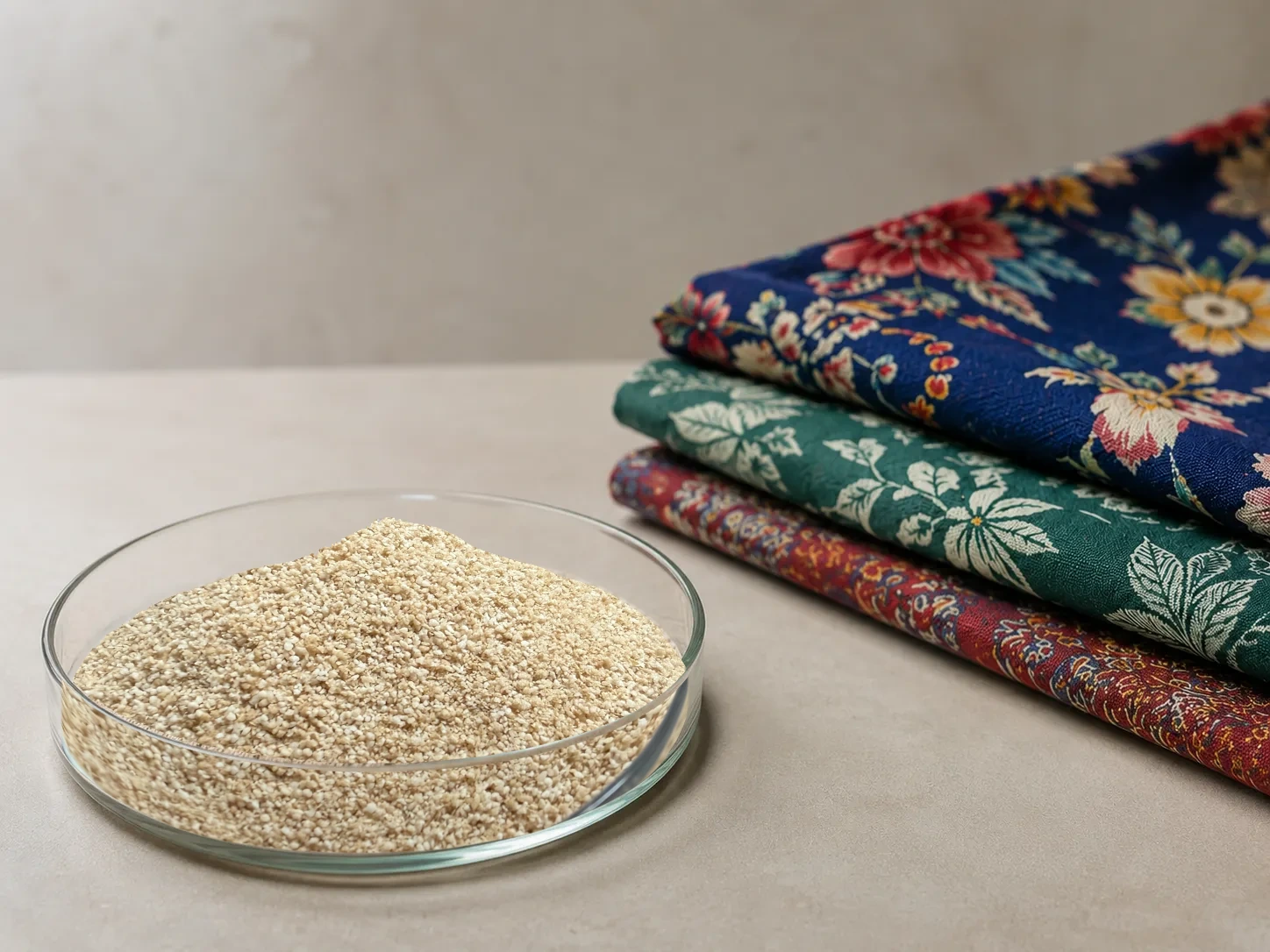
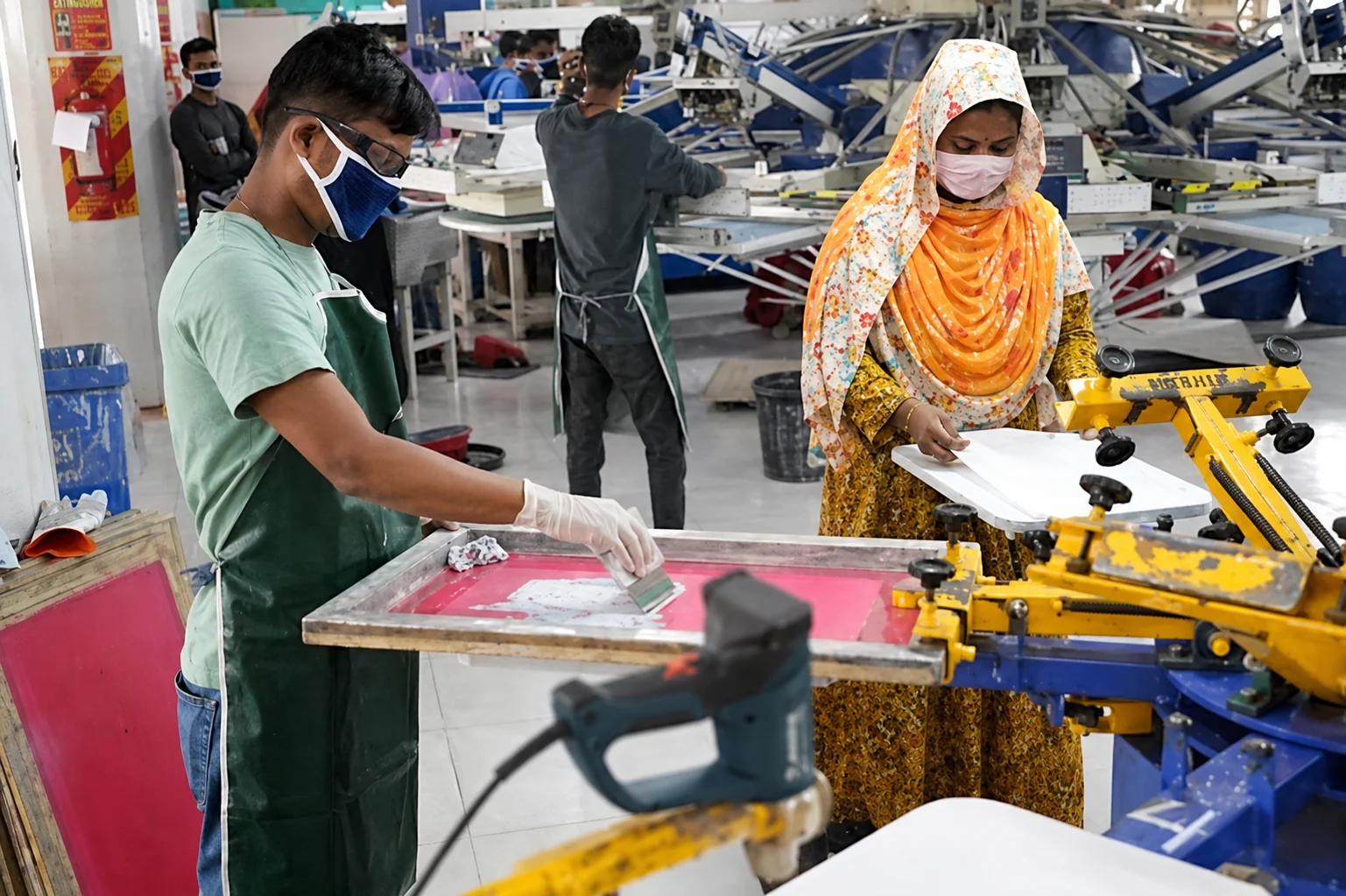
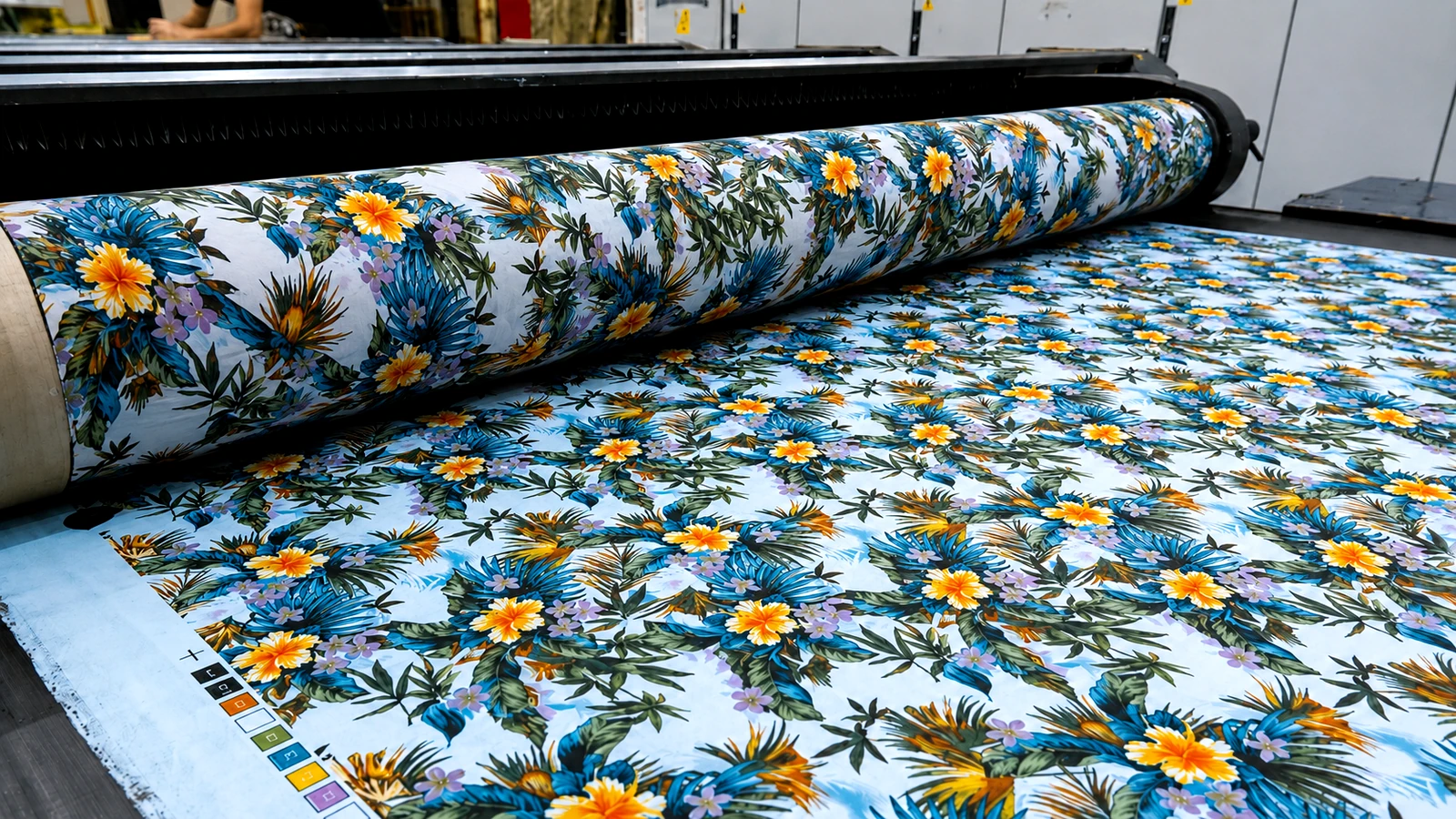
Designing Sustainable Textile Printing with Eco-Friendly Thickening Agents
A sustainable printing thickener should be evaluated by more than its raw-material origin. This guide...
A sustainable printing thickener should be evaluated by more than its raw-material origin. This guide explains how thickener chemistry, dosage, paste stability, wash-off, production efficiency and supplier documentation influence the total environmental and operational impact of textile printing.
Textile printers are under increasing pressure to improve resource efficiency, control chemical risks and reduce avoidable production waste. Thickening agents are only one part of the printing formulation, but their influence extends across paste preparation, printing behavior, fixation, washing, wastewater and final fabric quality.
A thickener described as natural, bio-based or starch-derived is not automatically the most sustainable option. Its real performance also depends on dosage, compatibility, preparation energy, process stability, wash-off requirements and the amount of rejected or reprocessed fabric it may create.
Sustainable textile printing therefore requires a whole-process evaluation. The objective is to select a thickening system that meets the required print performance while supporting efficient chemical use, stable production and responsible purchasing decisions.
What Does Sustainable Textile Printing Mean?
Sustainable textile printing is not defined by one chemical, certificate or raw-material source. It is the result of decisions made across chemical selection, formulation, production, quality control, washing, wastewater management and purchasing.
A printing process may use a bio-based thickener but still generate unnecessary waste if the paste is unstable, the dosage is excessive or the printed fabric requires repeated washing. Conversely, a carefully optimized formulation may reduce avoidable consumption even when it contains more than one type of polymer.
Four practical dimensions of sustainable printing
Chemical responsibility: selecting products with suitable composition, documentation and application compatibility.
Resource efficiency: controlling dosage, water, energy, preparation time and material loss.
Production reliability: reducing paste failure, screen blockage, machine interruption, rework and rejected fabric.
Verifiable purchasing: checking technical data, batch documents and environmental claims rather than relying on general marketing language.
Sustainability should be application-specific
Reactive printing on cotton, pigment printing, acid printing and digital pretreatment have different chemical and performance requirements. A thickener that is suitable for one system may be inefficient or incompatible in another.
Buyers should therefore avoid selecting an “eco-friendly thickener” as a general category. The first question should be whether the grade works efficiently in the intended fabric, dye, ink and production process.
Why Thickening Agents Matter
A textile printing thickener controls the flow and placement of the printing paste. It helps the formulation remain stable during preparation, pass through the printing equipment and retain the required pattern on the fabric.
If the thickening system is not properly matched, the consequences may include poor print definition, excessive penetration, filtration problems, screen blockage, unstable viscosity or difficult wash-off.
Influence on chemical dosage
Different grades can require different quantities to achieve the same application result. Comparing price per kilogram without considering dosage may lead to a misleading purchasing decision.
The most efficient grade is not necessarily the one with the highest viscosity. It is the grade that provides suitable rheology and print performance at a practical dosage under the factory’s actual conditions.
Influence on water and washing
Thickener chemistry can affect paste removal after printing and fixation. However, wash-off is also influenced by dye selection, fabric, pretreatment, alkali, fixation and washing equipment.
A reduction in washing demand should only be claimed after a controlled comparison using the same textile process and final-quality requirements.
Influence on production waste
Stable viscosity and suitable screen passage can reduce avoidable process interruptions. A poorly matched grade may create waste through rejected paste, machine cleaning, reprinting or off-quality fabric.
Production reliability should therefore be included in a sustainability assessment rather than treated only as a quality issue.
What Makes a Thickening Agent More Sustainable?
The word “eco-friendly” is a comparative description, not a complete technical specification. A credible evaluation should define which environmental or operational characteristics are being compared.
Raw-material origin
Sodium alginate, starch derivatives and cellulose derivatives are based on renewable or naturally occurring polymer sources. This can be relevant to material selection, but feedstock origin alone does not describe the full product impact.
Manufacturing, purification, chemical modification, energy use, packaging, transport and end-of-process behavior should also be considered.
Эффективная доза
A concentrated or efficient grade may provide acceptable performance at a lower addition level. However, dosage should be confirmed by application trials rather than estimated from a TDS viscosity value.
Buyers should compare the amount required per batch or per unit of printed fabric, not only the purchase price of the product.
Preparation efficiency
Mixing time, hydration temperature, filtration and resting time can affect production energy and labor. A powder that forms persistent lumps may create additional mixing, filtration and material loss.
Preparation should be evaluated using the factory’s actual mixer, water source and batch size.
Совместимость составов
A thickener that remains stable with the required dyes, pigments, salts, alkalis and auxiliaries can support more predictable production. Incompatibility may cause thinning, excessive thickening, separation or filtration problems.
Wash-off and wastewater behavior
The complete printing paste enters the washing and wastewater system, not the thickener alone. Evaluating wastewater impact therefore requires consideration of colorants, salts, alkalis, binders and all other formulation components.
General statements such as “easy to wash” or “low wastewater impact” should be supported by an agreed comparison method and actual process data.
Стабильность партии
Consistent batches can reduce the need for repeated formulation adjustments and prevent unexpected production problems. Sustainability benefits may be lost if a product requires frequent corrections or causes inconsistent fabric quality.
Packaging and storage
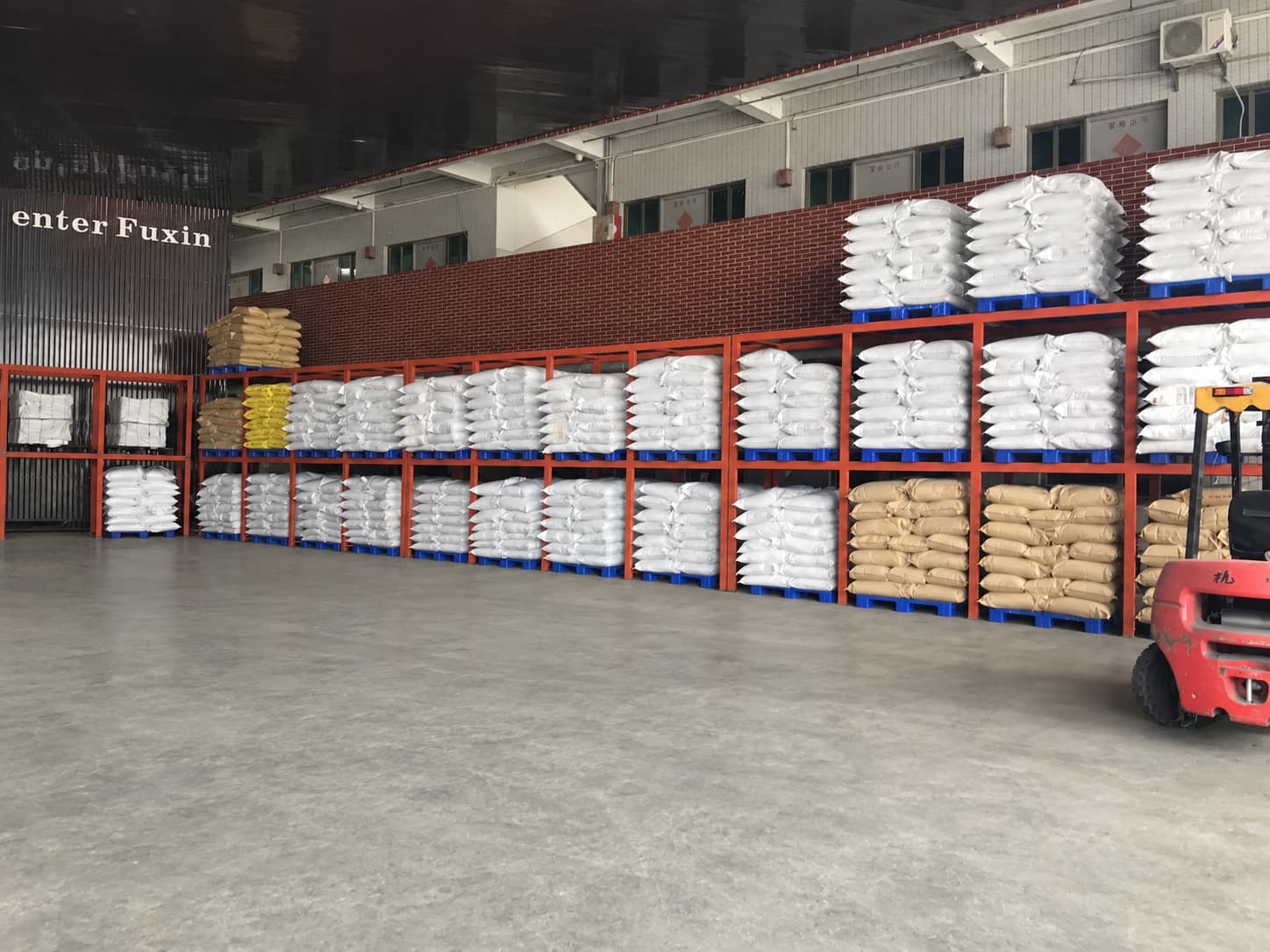
Packaging should protect the product from moisture, contamination and damage during transport. A damaged or improperly stored product may become difficult to disperse and create avoidable waste.
Packaging size should also suit the customer’s normal consumption rate so that opened material is not stored for an unnecessarily long period.
Main Thickener Routes for Textile Printing
No single thickener route is the most sustainable choice for every textile process. Selection should begin with dye compatibility and application performance, then expand to dosage, preparation, washing, waste and documentation.
Thickener Route
Typical Evaluation Direction
Potential Sustainability Consideration
Main Validation Need
Альгинат натрия
Reactive printing on cellulosic textiles
Renewable marine-based polymer route
Dye compatibility, rheology, wash-off and dosage
Карбоксиметилкрахмал
Selected printing and mixed-thickener systems
Starch-derived polymer route and formulation flexibility
Color response, compatibility and final fabric handle
Карбоксиметилцеллюлоза
Selected printing, coating and textile formulations
Cellulose-derived route and broad grade availability
Dye system, salt response, viscosity and wash-off
Compound thickener
Application-specific performance balancing
Potential dosage or process optimization
Complete formulation composition and production trial
Synthetic thickener
Pigment and selected specialized systems
Potentially low addition levels in some formulations
Residual chemistry, compatibility and process performance
1. Sodium Alginate
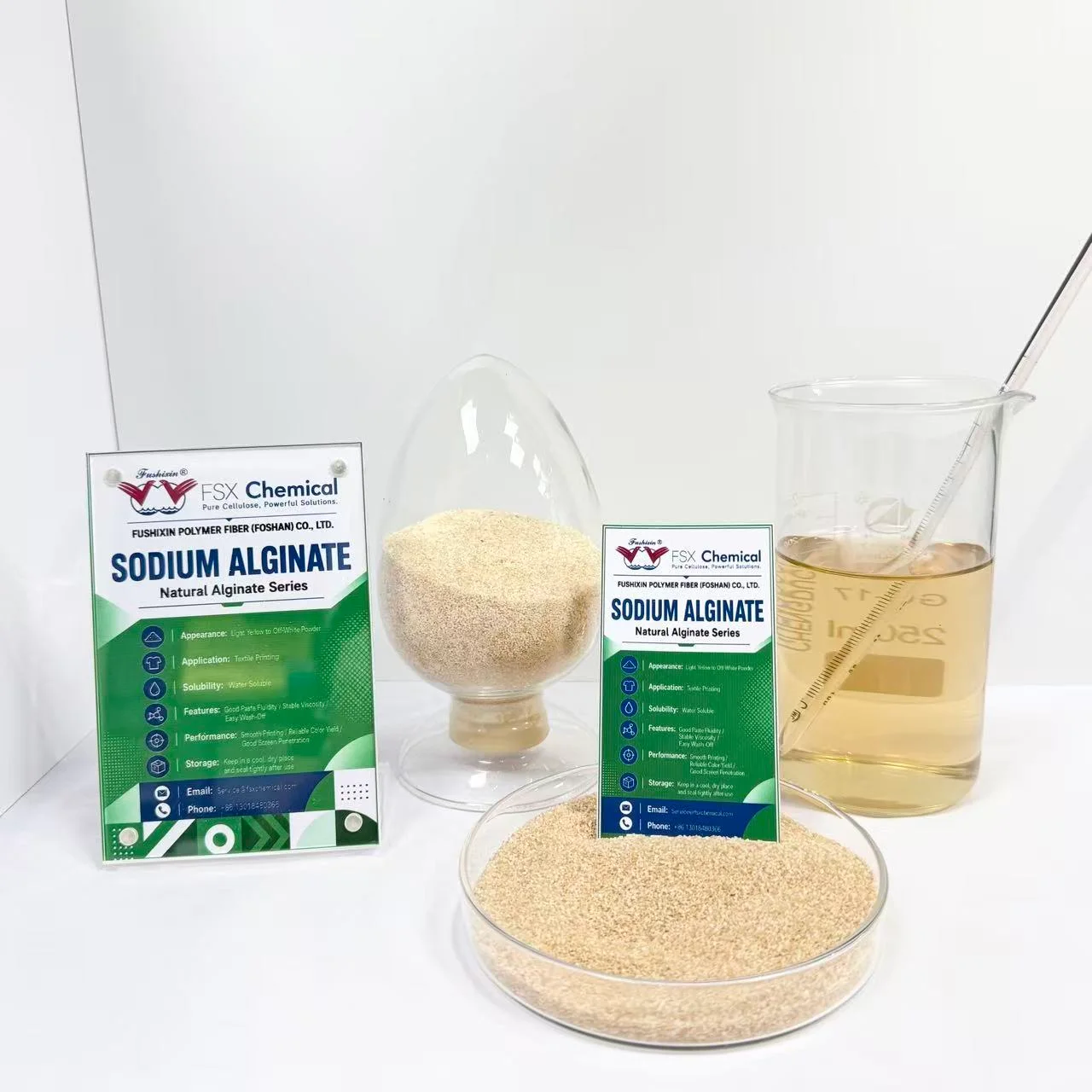
Альгинат натрия is widely evaluated for reactive dye printing on cellulosic textiles. Its suitability is related to its rheology and behavior in reactive printing formulations.
It is derived from marine biomass, but this characteristic alone should not be used as proof of lower environmental impact. Grade efficiency, purity, production consistency, dosage and wash-off performance remain important.
What buyers should evaluate
Viscosity and the complete measurement method
Paste rheology under printing conditions
Dissolution, dispersion and filtration
Compatibility with the selected reactive dyes
Print definition and penetration
Fixation and washing performance
Required dosage and cost in use
Batch-to-batch consistency
Two sodium alginate grades with similar viscosity may not deliver the same result. Buyers should compare candidates in the actual paste formulation.
2. Carboxymethyl Starch
Карбоксиметилкрахмал is a modified starch derivative that may be evaluated in selected textile printing and mixed-thickener formulations.
CMS may provide formulation flexibility and a starch-derived raw-material route. However, it should not be assumed to replace sodium alginate or another thickener on a one-to-one basis.
Potential roles in sustainable formulation design
Serving as one component of a blended thickener system
Adjusting paste viscosity and body
Supporting cost-in-use optimization
Providing an alternative raw-material route
Helping tailor preparation and flow behavior
Important limitations
CMS may interact with reactive dyes, salts, alkalis or other polymers. The effect can vary according to degree of substitution, purity, viscosity grade and the full printing formulation.
Color response, wash-off, residual paste and fabric handle should be tested before commercial approval.
3. Carboxymethyl Cellulose
Карбоксиметилцеллюлоза is a cellulose-derived polymer available in a wide range of viscosities, substitution levels and purity specifications.
It may be suitable for selected textile printing, coating or auxiliary formulations. Its use should be determined by dye compatibility and process performance rather than by its cellulose origin alone.
Potential evaluation advantages
Availability of different viscosity grades
Water-based preparation
Adjustment of flow and formulation stability
Potential use in selected blended thickener systems
Compatibility with certain coating or pretreatment formulations
Parameters that require confirmation
Степень замещения
Viscosity method and concentration
Purity and residual salts
pH and electrolyte response
Compatibility with dyes, binders and auxiliaries
Wash-off and final fabric performance
4. Compound and Synthetic Thickeners
Compound thickeners combine more than one material route to create a specific balance of viscosity, rheology, hydration, electrolyte tolerance or cost in use.
A compound formulation may support process efficiency, but the buyer should understand its recommended application, dosage and limitations. The word “compound” does not describe its environmental profile.
Potential benefits of a well-designed blend
Lower or optimized addition level in a specific formulation
Improved preparation and hydration behavior
Better balance between standing viscosity and flow under shear
Improved compatibility with a defined printing process
Reduced need for factory-side formulation adjustment
Questions buyers should ask
Is the product intended for reactive, pigment or digital printing?
What is the recommended dosage range?
How should it be dispersed and hydrated?
What is the complete viscosity test method?
Which salts, alkalis, binders or inks have been evaluated?
Is a representative sample available for application testing?
What batch parameters are reported on the COA?
A Step-by-Step Sustainable Printing Design Process
Step 1: Define the application
Record the fabric, fibre composition, dye or pigment system, printing method, equipment, fixation, washing process and final quality requirements.
Sustainable optimization should begin with one clearly defined process. Avoid trying to qualify one grade for several unrelated printing systems at the same time.
Step 2: Establish the current production baseline
Record the existing thickener grade, dosage, preparation time, paste holding period, machine behavior, wash-off process and current production problems.
Environmental improvement cannot be demonstrated without a reliable reference point. Use actual factory records where available.
Step 3: Identify the main sustainability objective
The project may focus on lower dosage, easier preparation, reduced paste waste, improved washing, fewer production interruptions or better supplier documentation.
Select one or two primary objectives rather than expecting one material change to solve every environmental and production issue.
Step 4: Screen suitable thickener routes
Select candidates based first on dye and process compatibility. Then compare raw-material route, dosage, preparation, washing and documentation.
Step 5: Standardize laboratory preparation
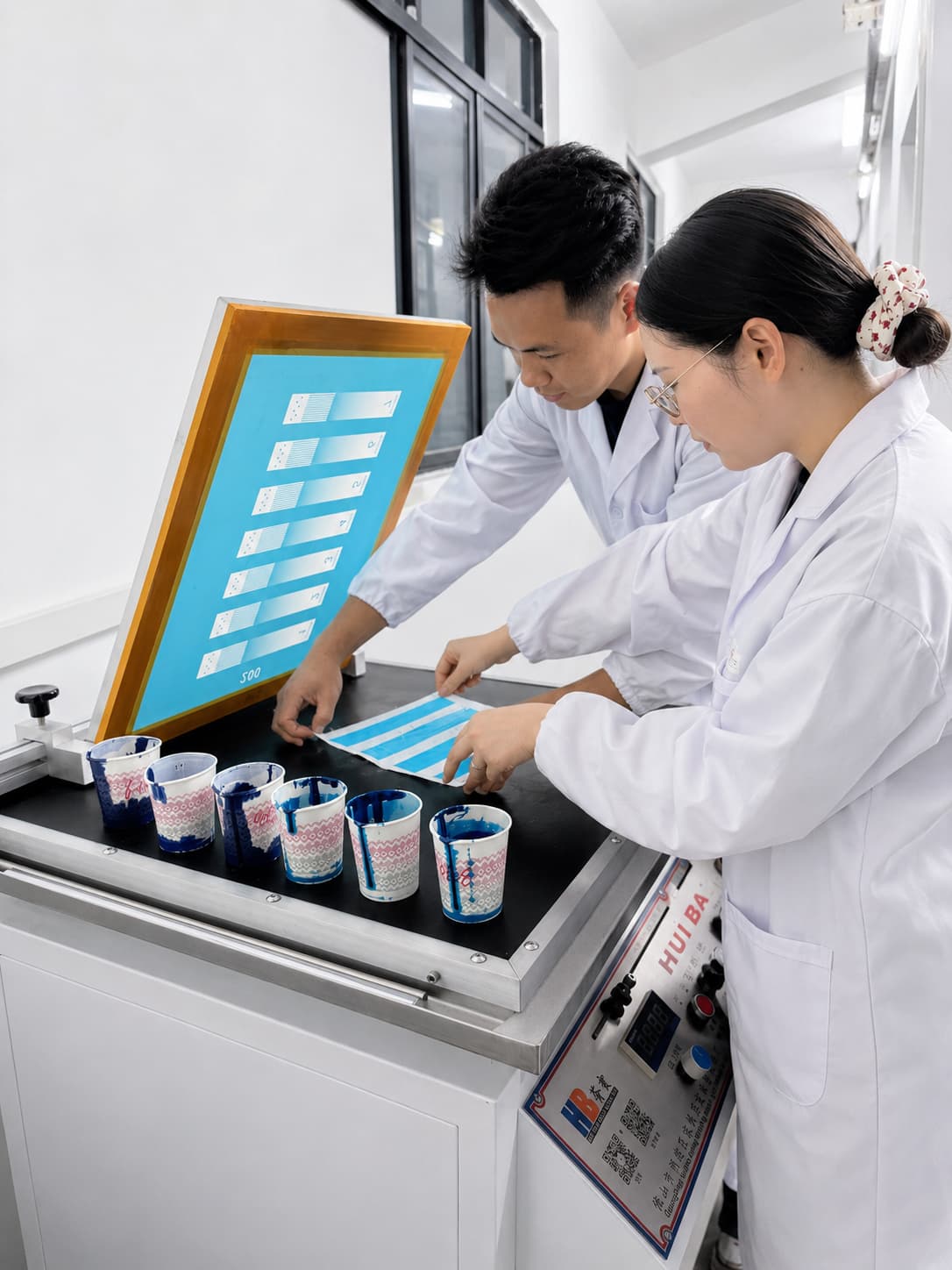
Use the same concentration basis, water, mixer, mixing time, hydration time, temperature and viscosity method for the reference and candidates.
Step 6: Test the complete paste formulation
Add the actual dyes, pigments, salts, alkalis, binders and auxiliaries. Testing a thickener only in water does not demonstrate its production performance.
Step 7: Conduct a controlled printing trial
Compare the reference and candidate on the same fabric using identical machine, fixation and washing conditions wherever practical.
Step 8: Measure relevant process indicators
Actual thickener dosage per paste batch
Время смешивания и гидратации
Filtration and screen-cleaning requirements
Unused or rejected paste
Machine interruptions and corrective additions
Water and washing steps under equivalent quality conditions
Reprocessing or rejected-fabric rate
Final fabric quality and customer requirements
Step 9: Compare cost and impact together
Include dosage, preparation, energy, cleaning, washing, waste, rejected material and technical support. A cheaper raw material can create a higher total process cost.
Step 10: Verify the commercial batch
Confirm that the bulk product uses the same permanent grade code and specification as the approved sample. Complete incoming and application checks before routine production use.
How to Evaluate Environmental and Production Performance
A sustainable thickener comparison should use measurable indicators. Not every factory needs a full life-cycle assessment, but the comparison should extend beyond marketing descriptions.
Evaluation Area
Questions to Ask
Useful Evidence
Raw-material route
What is the main polymer source and how is the product modified?
TDS, supplier declaration and product composition information
Dosage efficiency
How much product is required for acceptable printing performance?
Controlled side-by-side formulation trial
Подготовка
How much mixing, heat, resting and filtration are required?
Laboratory and production preparation records
Стабильность пасты
Does the paste remain stable during normal holding and printing?
Viscosity and application checks at defined time points
Printing reliability
Does the grade create blockage, interruption or corrective work?
Machine trial and production records
Стирка
Can equivalent fabric quality be achieved with an optimized process?
Controlled wash-off trial and final-quality testing
Waste
How much unused paste, rejected fabric or cleaning waste is created?
Batch records and material-balance data
Supplier control
Are specifications, batch documents and claims verifiable?
TDS, SDS, COA and valid supporting documentation
Avoid comparing different quality levels
Environmental comparisons are meaningful only when both processes meet the same print definition, shade, fastness, handle and customer requirements.
Reducing washing or dosage at the expense of acceptable fabric quality is not a valid improvement if it creates rejected or reprocessed goods.
Technical Parameters Buyers Should Compare
An eco-friendly positioning does not replace a technical specification. Buyers still need to verify whether the product can perform consistently in the intended printing formulation.
Вязкость и реология
Product concentration used for testing
Water source and preparation method
Гидратация и время отдыха
Температура измерения
Instrument, spindle and rotational speed
Behavior under more than one shear condition where relevant
Composition-related parameters
Polymer family and intended application
Степень замещения (если применимо)
Purity and residual salts
Содержание влаги
pH
Particle size and dispersion behavior
Производительность приложения
Compatibility with the dye, pigment or ink system
Electrolyte and alkali response
Filtration and screen passage
Paste stability during storage and printing
Print definition, penetration and levelness
Fixation, washing and final fabric handle
Commercial and supply parameters
Permanent product and grade code
Batch-specific COA availability
Packaging suited to storage and consumption
Sample-to-bulk consistency
Technical support for grade matching
Change-notification arrangements where agreed
Supplier Documentation and Environmental Claims
Sustainable chemical purchasing requires evidence that can be reviewed. A product name, green package or general environmental statement is not sufficient for technical approval.
Basic documents to request
Current Technical Data Sheet
Current Safety Data Sheet
Permanent product and grade identification
Representative sample
Recommended preparation and application method
Batch-specific Certificate of Analysis for commercial supply
How to review certification or compliance claims
Where a supplier claims compliance with a chemical standard, restricted substance program or environmental certification, buyers should request the relevant document.
Check the certificate holder, product name, scope, issuing organization, version, validity period and whether the document applies to the specific commercial grade being purchased.
Bio-based does not automatically mean biodegradable
A polymer can originate from starch, cellulose or marine biomass without automatically meeting a specific biodegradability test. Chemical modification, additives and disposal conditions can affect its behavior.
Biodegradability claims should identify the test method, sample tested and conditions under which the result was obtained.
Product claims are not the same as process results
A supplier may provide product-level information, but only the textile factory can confirm actual dosage, water use, wash-off and production waste in its own process.
Common Greenwashing and Selection Mistakes
Selecting only by natural origin
A naturally derived polymer can still perform poorly in an unsuitable formulation. If it creates higher dosage, unstable paste or repeated washing, the complete process may not improve.
Treating “eco-friendly” as a technical grade
Eco-friendly does not define viscosity, purity, compatibility or application. Buyers still need a permanent grade code and measurable specification.
Comparing price per kilogram only
Low purchase price can be offset by higher dosage, longer mixing, filtration, cleaning, rework or rejected fabric.
Claiming water savings without an equivalent control
Water comparisons should use the same fabric, shade, fixation, washing equipment and final-quality requirements.
Ignoring the complete paste formulation
The thickener may represent only part of the chemical load. Dyes, pigments, salts, alkalis, binders and auxiliaries also affect washing and wastewater.
Approving from a TDS alone
A TDS supports initial screening, but it cannot replace a representative sample and application trial.
Using unverified certification language
Do not publish certification or compliance claims unless the document clearly applies to the relevant supplier, grade and validity period.
Ignoring rejected production
A formula that appears efficient in the laboratory may have a larger impact if it creates unstable production or off-quality fabric at scale.
How FSX Chemical Supports Thickener Evaluation
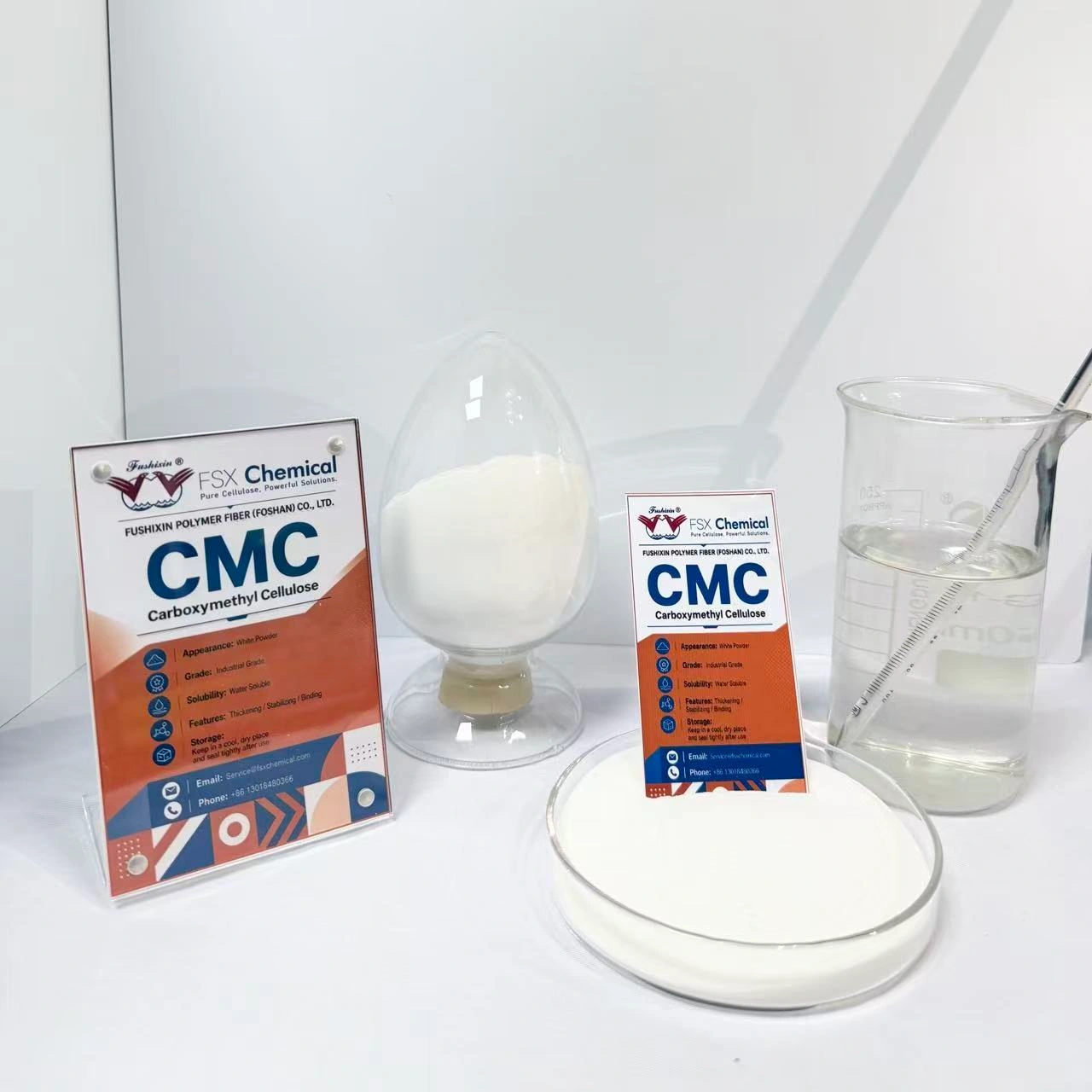
FSX Chemical supplies sodium alginate, CMC, CMS and printing-paste materials for different textile applications. A suitable starting route can be reviewed according to the customer’s fabric, colorant system, process and current formulation.
Information buyers can provide
Текущее название продукта, TDS или репрезентативный образец
Fabric and fibre composition
Система красителей, пигментов или чернил
Printing method and equipment
Current formulation and dosage
Viscosity target and complete test method
Preparation, fixation and washing conditions
Main production or sustainability objective
Evaluation support may include
Review of the existing thickener specification
Selection of a suitable candidate grade
Provision of relevant TDS and SDS documents
Representative samples for laboratory evaluation
Guidance for side-by-side formulation testing
Review of dosage, viscosity and application feedback
Batch documentation for the selected commercial grade
A candidate grade should be treated as a starting point for controlled evaluation. Final sustainability and application conclusions should be based on the customer’s own production data and quality requirements📧 Электронная почта: Service@fsxchemical.com
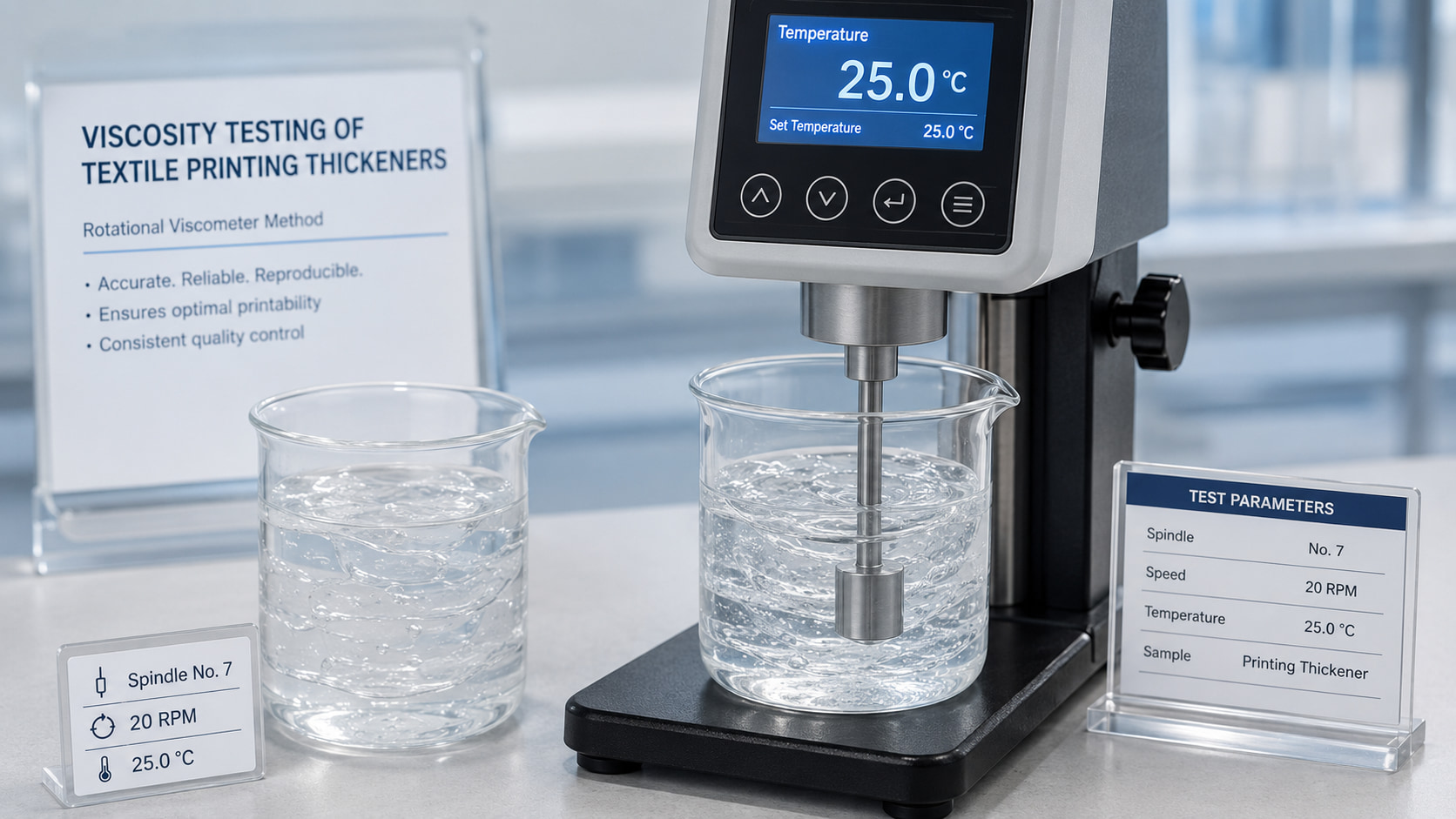
Узнайте, почему значения вязкости загустителей для текстильной печати нельзя сравнивать без учета таких факторов, как концентрация, температура, прибор, шпиндель, скорость, метод подготовки проб и время испытания.
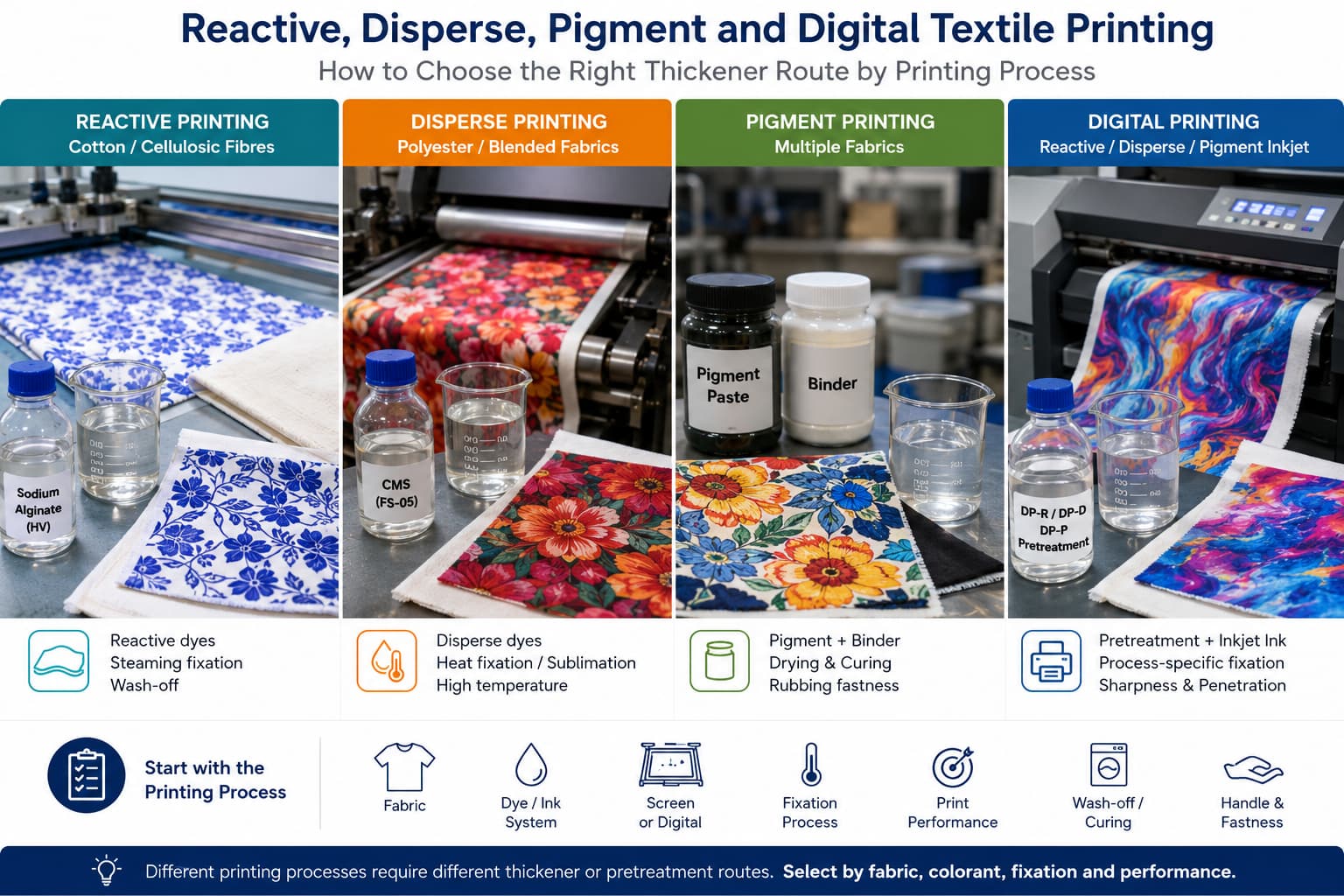
Узнайте, как выбирать загустители и способы предварительной обработки для реактивной, дисперсной, пигментной и цифровой печати на текстиле с учетом требований к ткани, красителю или чернилам, фиксации, вымываемости и качеству печати.
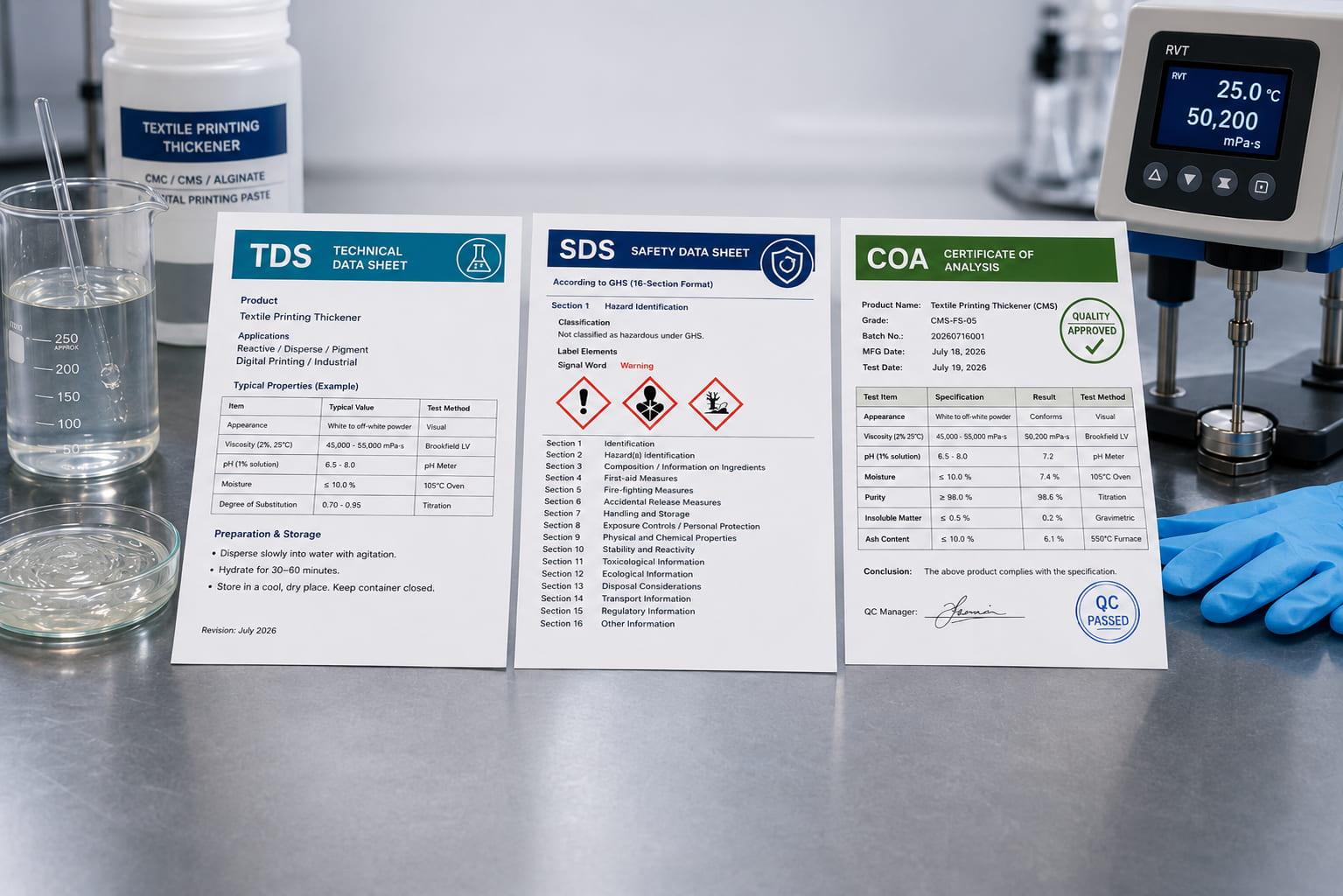
Узнайте, в чём заключается разница между документами TDS, SDS и COA, на что следует обратить внимание покупателям текстильной печати, а также как проверять технические характеристики, данные по безопасности, методы испытаний, результаты испытаний партий продукции и информацию об издателях документов.
Сравните CMC, CMS, альгинат натрия и пасту для цифровой печати на текстиле. Узнайте, насколько каждый из этих материалов подходит для реактивной, дисперсной, пигментной и цифровой печати, а также на что покупателям следует обратить внимание перед тестированием образцов, подбором марки и оптовой закупкой.
Альгинат натрия широко используется в текстильной печати в качестве стабильного и стойкого к стирке загустителя для реактивных печатных паст. Узнайте, как перед покупкой оценить класс вязкости, степень чистоты и пригодность продукта для конкретного применения, а также о том, как компания FSX Chemical оказывает поддержку покупателям по всему миру, предоставляя технические данные и образцы.
Карбоксиметилцеллюлоза (КМЦ) широко используется в процессах печати, проклеивания и окрашивания текстиля. В данном руководстве рассказывается, как оценивать марки КМЦ, какие параметры являются наиболее важными и как компания FSX Chemical может помочь в принятии решений о закупках.
Печатная паста на основе CMC используется в пигментной, реактивной и цифровой текстильной печати. В данном руководстве объясняется, какие параметры имеют значение, как сравнивать поставщиков и что следует уточнить перед размещением оптового заказа.
И альгинат натрия, и CMC используются в качестве загустителей при печати на текстиле, однако они подходят для разных систем окрашивания и условий производства. В данном руководстве объясняются основные различия между ними и приводятся рекомендации по их применению.
Цифровая струйная печать на текстиле предъявляет иные требования к пасте и предварительной обработке материала, чем трафаретная печать. В данном руководстве объясняется, как альгинат натрия используется в цифровой печати на текстиле и какие параметры качества должны указывать специалисты по закупкам.
При печати на текстиле реактивными красителями правильная подготовка пасты не менее важна, чем выбор сорта краски. В данном руководстве рассматриваются методы растворения альгината натрия, диапазоны концентраций в зависимости от области применения, условия хранения, а также способы устранения типичных проблем при подготовке пасты.
Альгинат натрия — это природный биоразлагаемый полимер, однако его использование в текстильной печати приводит к образованию сточных вод, требующих соответствующей обработки. В данном руководстве рассматриваются экологические характеристики альгината натрия, свойства сточных вод после вымывания, а также то, что специалистам по закупкам необходимо знать о выборе загустителя и его воздействии на окружающую среду.
Скорость фиксации красителя напрямую влияет на цветоотдачу, стойкость к стирке и загрязнённость сточных вод при печати реактивными красителями. В данном руководстве объясняется, как альгинат натрия способствует фиксации красителя, какие параметры пасты влияют на скорость фиксации и как устранять проблемы, связанные с низкой фиксацией, в производственных условиях.
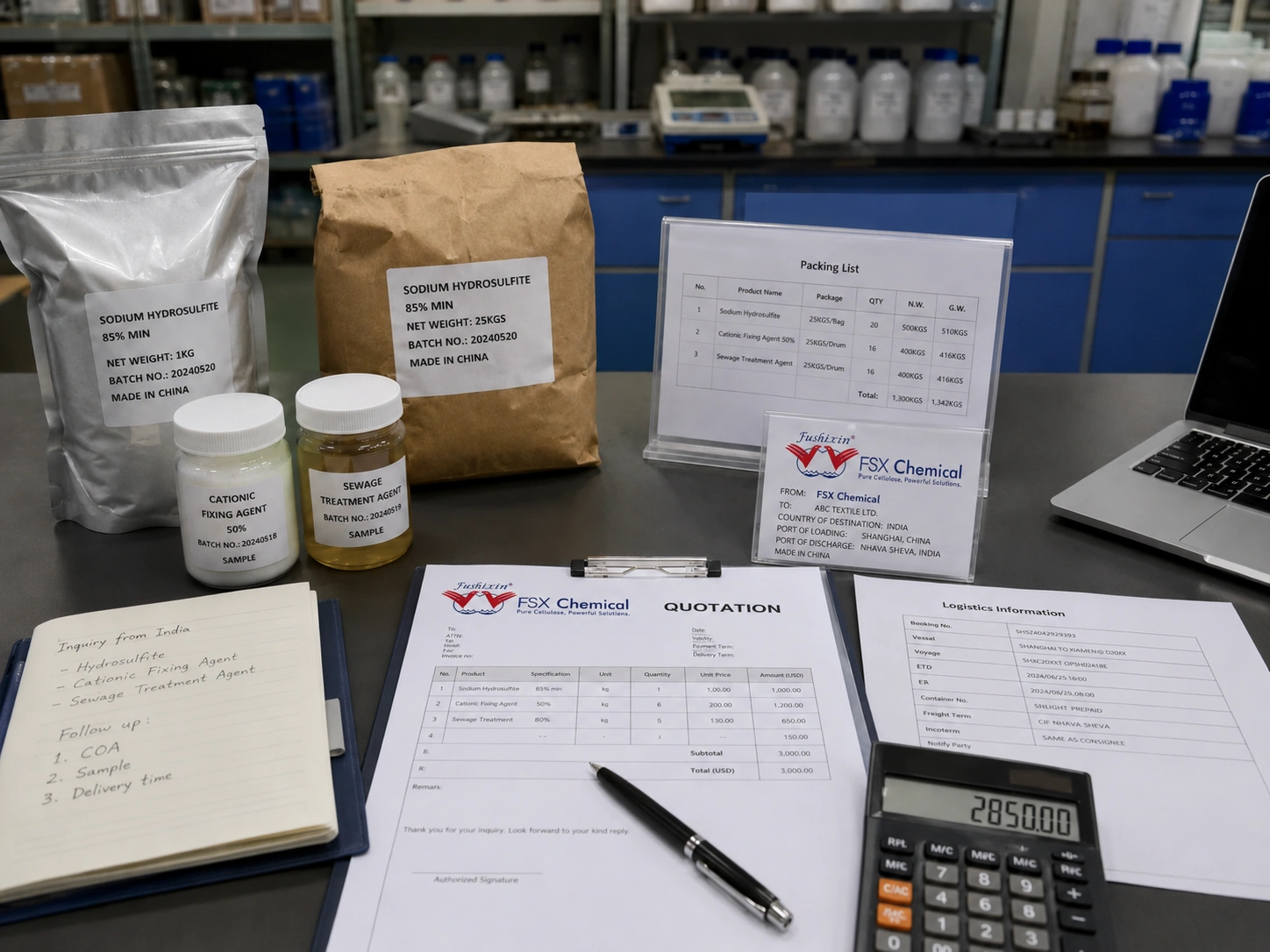
Сообщите название продукта, область применения, количество, пункт назначения, а также предоставьте техническое описание продукта (TDS),
фотографию образца или имеющиеся у вас документы. Компания FSX Chemical рассмотрит
эту информацию и порекомендует дальнейшие действия для подготовки коммерческого предложения, подбора образца
или выбора продукта.
Информация о продуктеНазвание товара, класс, модель, фотография этикетки или артикул поставщика.
Доступные документыTDS, SDS, COA, фотография образца, перечень продукции или данные испытаний.
Детали заказаПредполагаемый объем, упаковка, страна назначения, порт или условия торговли.
Область применения или проблемаПроцесс печати на текстиле, требования к составу, текущие проблемы или целевые показатели.

 RU
RU  EN
EN  BN
BN  ES
ES  TR
TR  FR
FR  ID
ID  AR
AR  UR
UR  VI
VI  TL
TL  HI
HI  UK
UK  KK
KK  KA
KA  UZ
UZ