














| Result or test | What it indicates | Important limitation |
|---|---|---|
| Pre-wash color depth | Total apparent color before removal of unfixed dye | Cannot distinguish fixed dye from unfixed or hydrolyzed dye. |
| Post-wash reflectance or K/S | Comparative retained color under a standardized wash-off | Useful for controlled comparisons, but not a direct universal fixation percentage. |
| Wash-off liquor or extraction analysis | Amount and behavior of removable dye under the selected method | Depends on sampling, extraction, calibration and mass-balance assumptions. |
| Wash and rubbing fastness | Resistance of the processed print to defined test conditions | Affected by fixation, wash-off, surface deposition, fabric and test method. |
| Direct fixation calculation | Applied dye compared with validated fixed and unfixed measurements | Requires a documented analytical method and controlled material balance. |
What Is Dye Fixation and Why It Matters
Fixation Rate and Its Practical Consequences
Fixation rate is the percentage of the total dye applied that successfully bonds to the fiber. Low fixation creates compounding problems: reduced color yield means more dye is needed to achieve the target depth, and more unfixed dye in the fabric increases washing-off difficulty and effluent dye concentration.
The Relationship Between Fixation and Wash Fastness
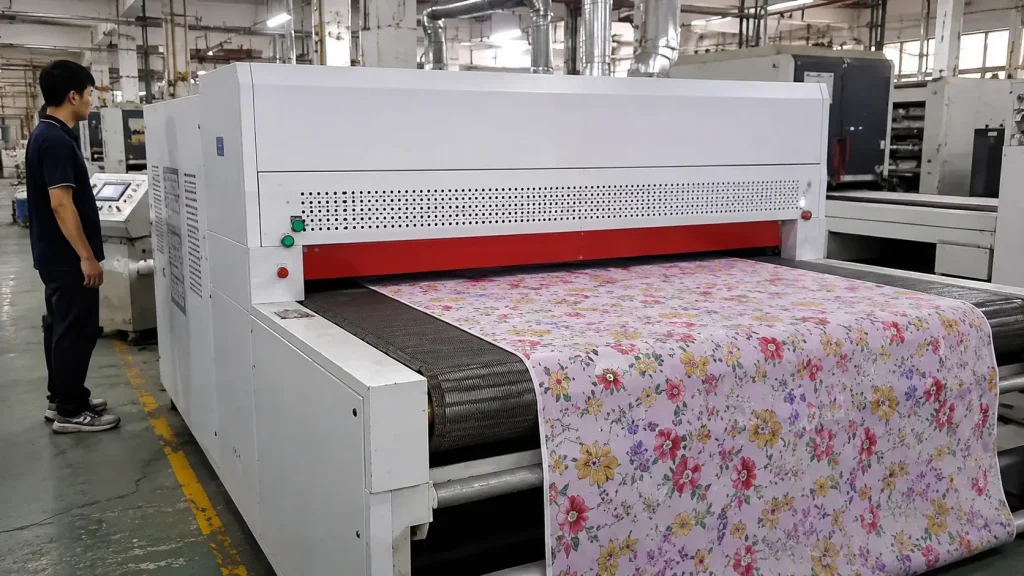
Optimizing both fixation (through paste formulation and steaming) and washout (through adequate washing-off procedure) are both necessary to achieve target fastness grades. Paste formulation, including the choice and grade of sodium alginate, affects both.
How Sodium Alginate Supports Dye Fixation
Chemical Inertness Under Alkaline Conditions
The most important contribution sodium alginate makes to dye fixation is what it does not do: it does not react with reactive dyes under the alkaline steaming conditions used in fixation. This preserves the full reactive dye concentration in the paste for fiber fixation.
Some thickeners — including certain CMC grades and starch derivatives — can react with reactive dye molecules under alkaline conditions. When this happens, the thickener competes with the fiber for reactive dye, consuming dye molecules that would otherwise fix to the fabric. The result is a lower effective fixation rate and reduced color yield.
Sodium alginate’s chemical stability under alkaline conditions (typically pH 10–12 during reactive dye fixation) is a fundamental reason it remains the standard thickener for reactive dye printing on cotton and other cellulosic fibers.
Moisture Retention During Steaming
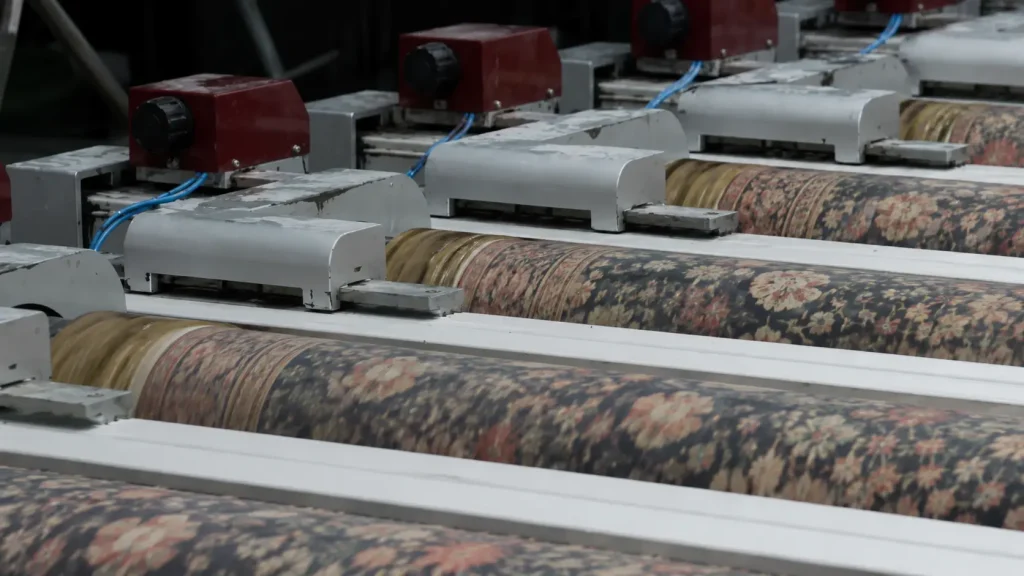
Reactive dye fixation requires moisture to proceed — the fiber must be in a swollen state for dye molecules to diffuse into the fiber structure and react with hydroxyl groups. In the steaming stage, the paste on the fabric surface must retain adequate moisture to support this process.
Dye Distribution and Migration Control
Paste Parameters That Influence Fixation Rate
Sodium Alginate Concentration and Viscosity
Alkali Type and Concentration in the Paste
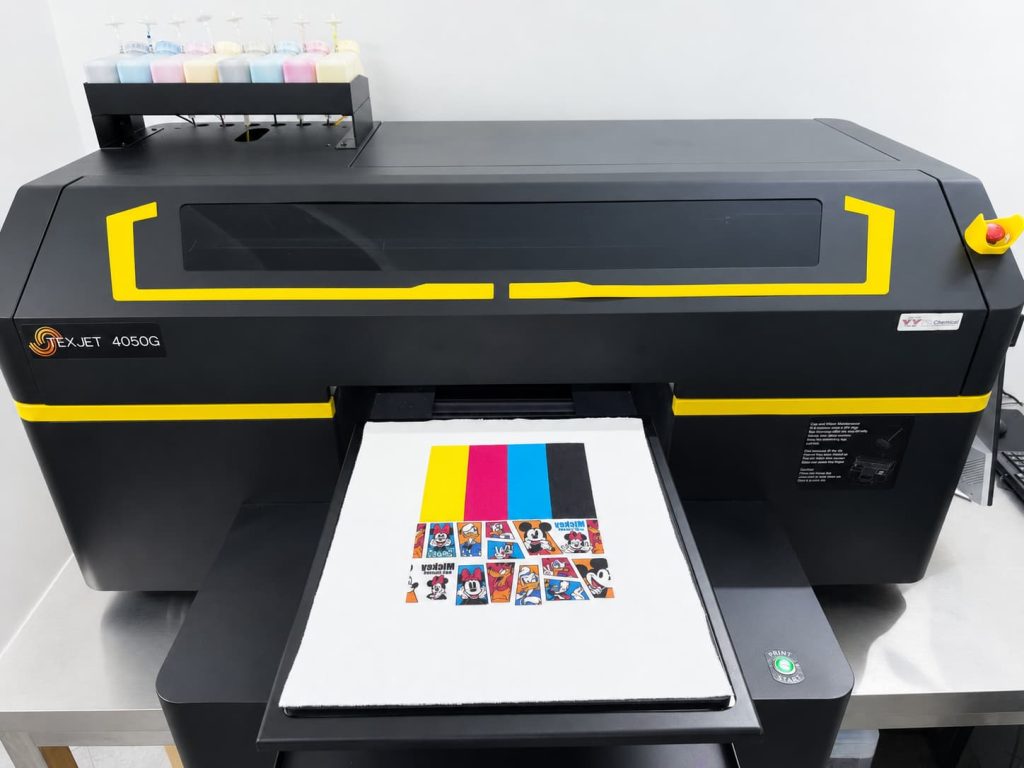
The alkali component of the reactive dye printing paste is essential for fixation — it raises the pH to the level needed for the reactive dye to bond with the fiber hydroxyl groups. Common alkali sources include sodium carbonate, sodium bicarbonate, and blends of the two.
Alkali concentration affects both fixation rate and paste stability. Too little alkali reduces fixation; too much alkali can cause premature hydrolysis of the reactive dye in the paste before steaming, reducing the dye available for fiber fixation. The optimal alkali level depends on the specific reactive dye class and the steaming conditions.
Urea and Hygroscopic Agents
Urea is commonly added to reactive dye printing paste as a hygroscopic agent — it attracts and retains moisture in the paste film during steaming, supporting dye dissolution and diffusion into the fiber. Urea also assists in dissolving reactive dyes at higher concentrations.
The interaction between urea, sodium alginate, and moisture retention during steaming is a key variable in fixation rate optimization. In steaming systems where steam saturation is lower than ideal, increasing urea content can partially compensate by improving in-situ moisture availability for fixation.
Steaming Conditions and Their Interaction with Paste Formulation
Temperature and Time Requirements
Reactive dye fixation requires steaming at sufficient temperature and for sufficient time for the dye-fiber reaction to proceed to completion. For most reactive dye classes on cotton, steaming at 100–102°C for 8 to 12 minutes in saturated steam is standard, though this varies with dye class and fabric construction.
Under-steaming — either too short a time or insufficient temperature — leaves reactive dye partially unfixed. This appears as lower color yield and reduced wash fastness. Over-steaming with excessive moisture can cause dye migration and pattern bleeding.
Steam Saturation and Moisture Content
Saturated steam — steam at 100% relative humidity at the steaming temperature — is required for optimum fixation. Superheated or unsaturated steam dries the paste film during steaming rather than maintaining moisture, reducing fixation rate.
If your production shows consistent under-fixation despite correct steaming time, check steam saturation in your steamer. Steam quality issues are a common but sometimes overlooked cause of low fixation rate.
How Paste Formulation Affects Steam Penetration
For heavy fabric constructions or dense color areas where paste volume is high, consider whether the paste concentration and viscosity grade are optimized for steam penetration in your specific steamer and fabric combination.
Common Low-Fixation Problems and Paste-Related Causes
Low Color Yield Despite Correct Dye Concentration
Switching to a fresh batch of paste and comparing fixation rate is a quick diagnostic — if color yield improves with fresh paste, the issue is in paste stability or formulation rather than the steaming process.
Uneven Fixation Across the Fabric Width
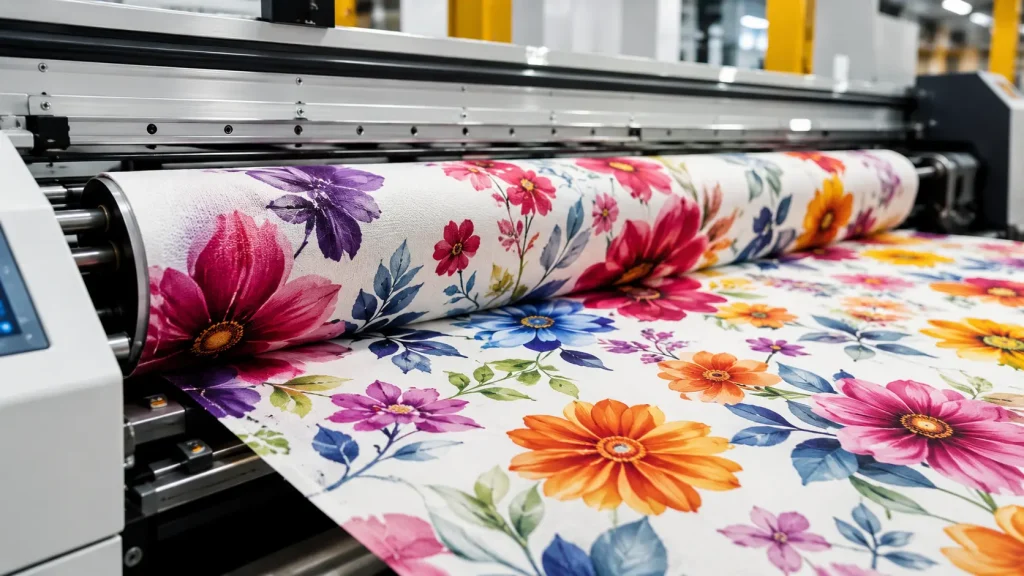
Fixation variation across the fabric width — showing as color streaks or uneven depth — is typically related to uneven paste application, uneven steam distribution in the steamer, or fabric moisture variation before printing. Paste-related causes include viscosity inconsistency within a batch (from incomplete dissolution) or separation of paste components during storage.
Check paste consistency by measuring viscosity at multiple points in the storage vessel before use. If viscosity varies within the batch, the paste preparation process needs adjustment.
High Unfixed Dye in Washing-Off Effluent
High dye concentration in the first washing-off rinse indicates either low fixation rate (more unfixed dye to remove) or incomplete removal of fixed surface dye. If fixation rate is confirmed adequate through color yield testing, the issue is in washing-off procedure rather than paste formulation.
If fixation rate itself is low — indicated by lower than expected color yield on the fabric — investigate paste formulation, alkali level, and steaming conditions systematically, changing one variable at a time to isolate the cause.
How to Evaluate Fixation Performance When Trialing a New Grade
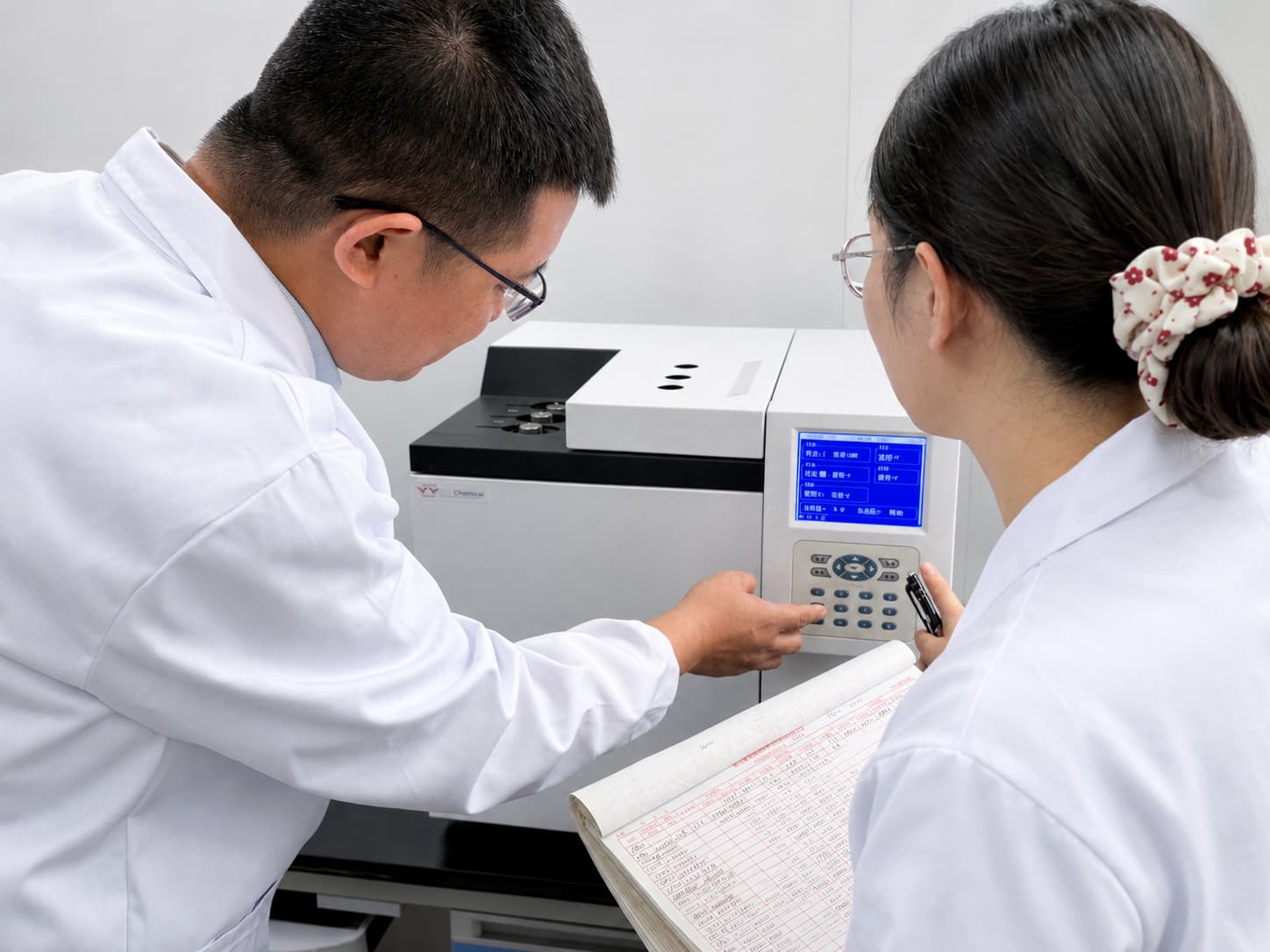
A direct fixation calculation requires a validated laboratory method that accounts for applied dye and the fixed or unfixed fraction, such as an extraction or mass-balance approach with suitable spectrophotometric measurement. The method, sampling and calculation must be documented; reflectance alone should not be labeled as a universal direct fixation rate.
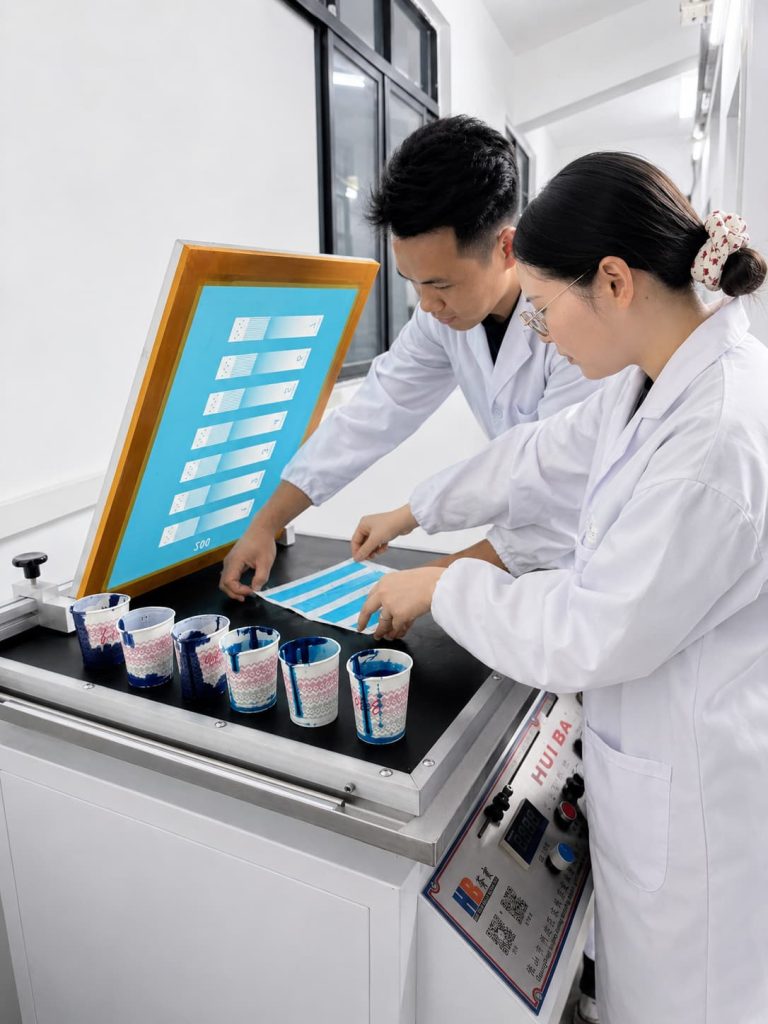
Where direct fixation analysis is unavailable, compare post-wash K/S or shade, wash-off liquor behavior and relevant fastness results under the same controlled process. Consistent results support process and batch comparability, but they do not prove that sodium alginate alone caused the outcome.
Часто задаваемые вопросы
Does sodium alginate chemically fix reactive dye to cellulose?
No. The dye-fiber reaction occurs under the required alkaline and thermal or steaming conditions. Sodium alginate mainly supports paste rheology, placement, moisture behavior and removal.
Is K/S the same as fixation percentage?
No. Post-wash K/S is useful for comparing retained color under controlled conditions. A direct fixation percentage requires a validated method that accounts for applied, fixed and unfixed dye fractions.
Why can fixation fall even when paste viscosity is unchanged?
Dye hydrolysis, alkali condition, fabric moisture, drying, steam saturation, time, temperature and wash-off can change while the measured viscosity remains similar.
How should two sodium alginate grades be compared for fixation-related performance?
Hold the fabric, dye lot, formulation, preparation, add-on, drying, steaming and wash-off constant. Compare complete-paste behavior, post-wash K/S, filtration, fastness and reproducibility.
What production data helps diagnose low fixation?
Provide fabric preparation, dye and alkali levels, complete paste recipe, viscosity method, paste age, print add-on, drying, steaming records, wash-off sequence and pre- and post-wash results.
For grade comparison, submit the current TDS, test method and trial results through FSX: химические образцы и их сопоставление. For whole-process troubleshooting, see How to Improve Color Yield and Fastness in Reactive Printing. For sodium alginate procurement and repeatability checks, see Sodium Alginate Color Quality and Process Control.
How FSX Chemical Supports Your Fixation Optimization
If you are troubleshooting low fixation rate or evaluating a grade change, our technical team can assist with formulation review and grade selection recommendations based on your dye system, fabric type, and steaming equipment.
Следующие шаги:
- Запросить TDS — review grade specifications relevant to your reactive dye printing process
- Запросить образец — run fixation trials before committing to bulk volume
- Попросите о приравнивании оценок — share your dye class, fabric type, and steaming conditions for a specific recommendation
- Свяжитесь с нашей технической службой — for paste formulation review or fixation troubleshooting support: Service@fsxchemical.com