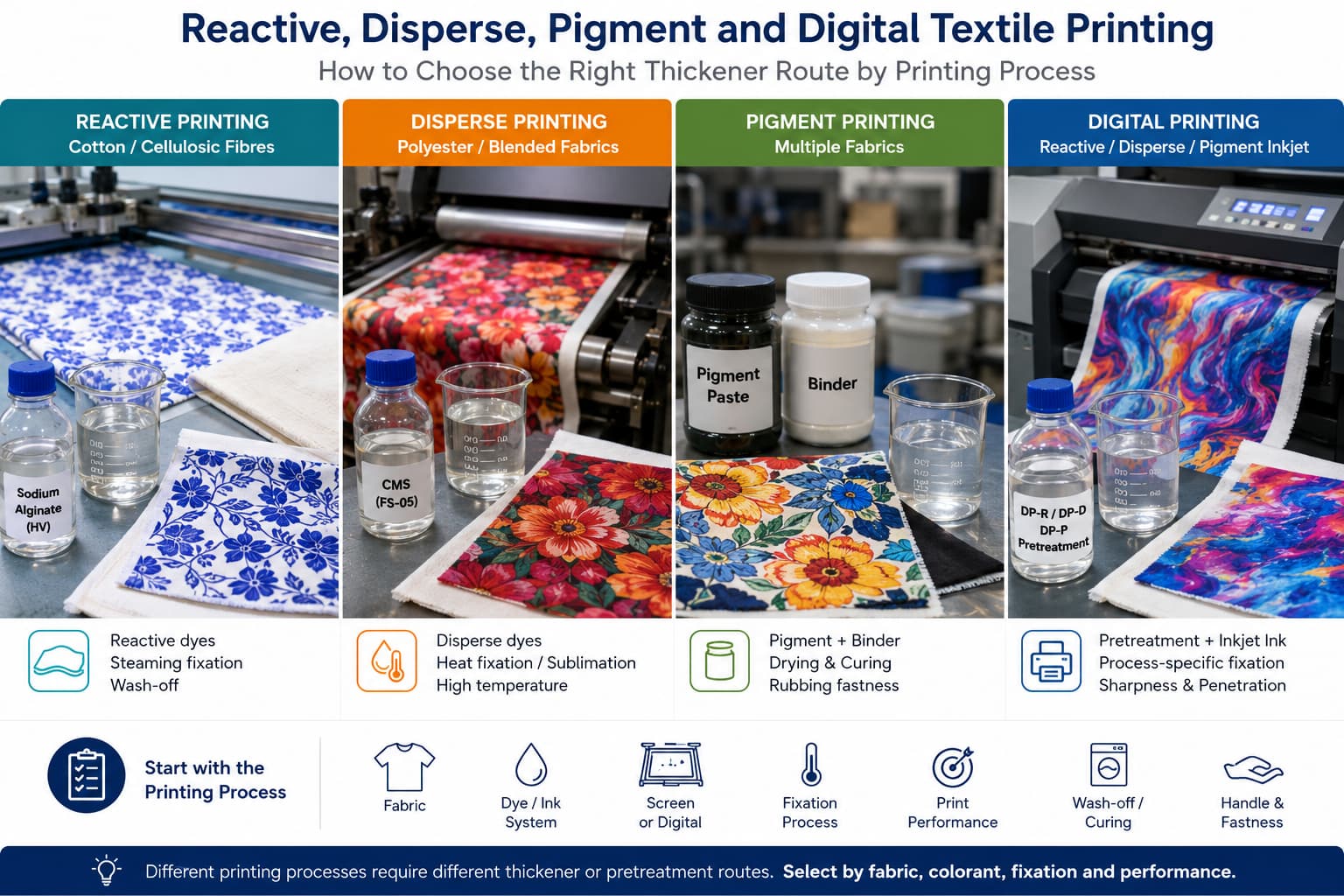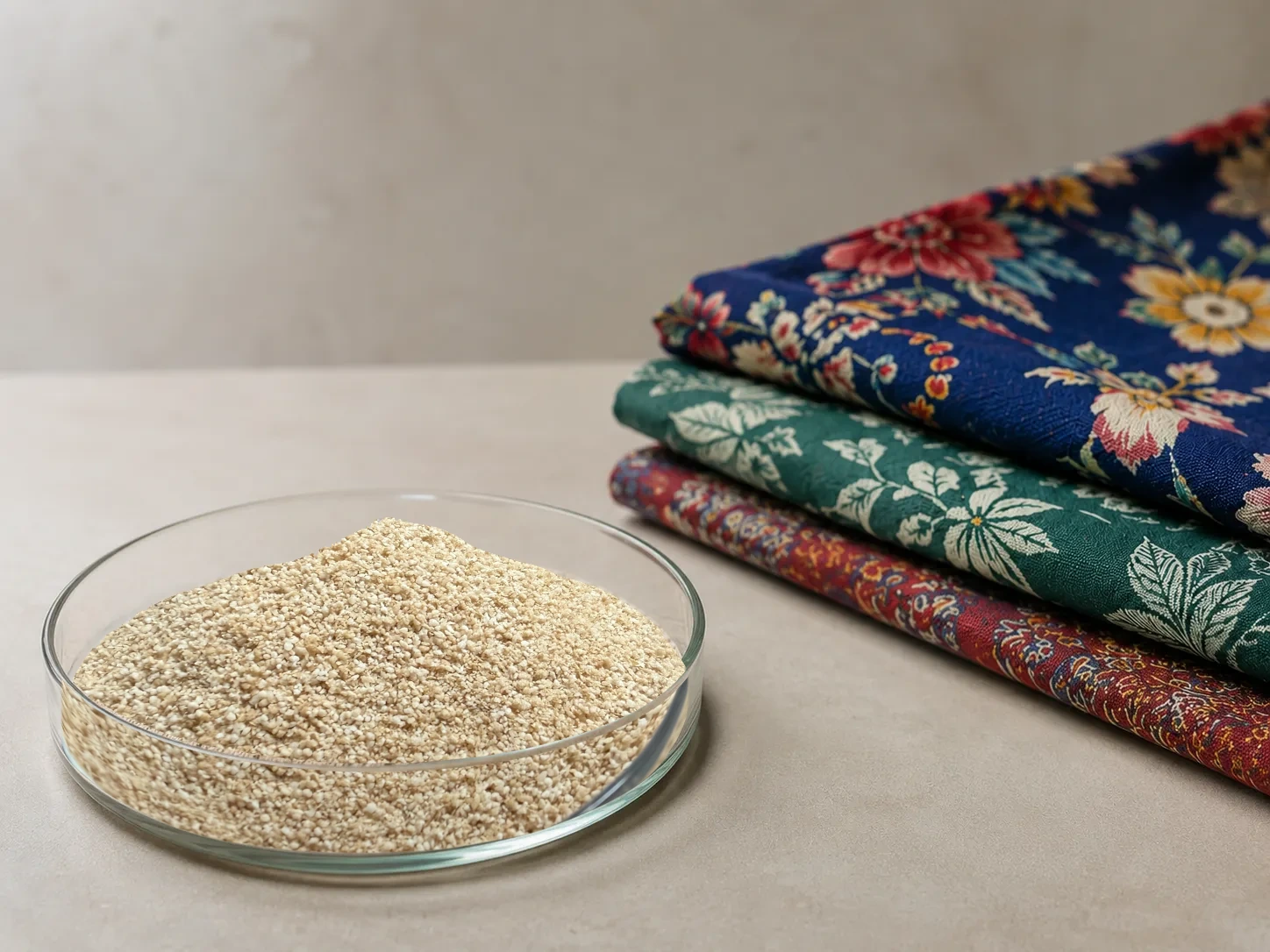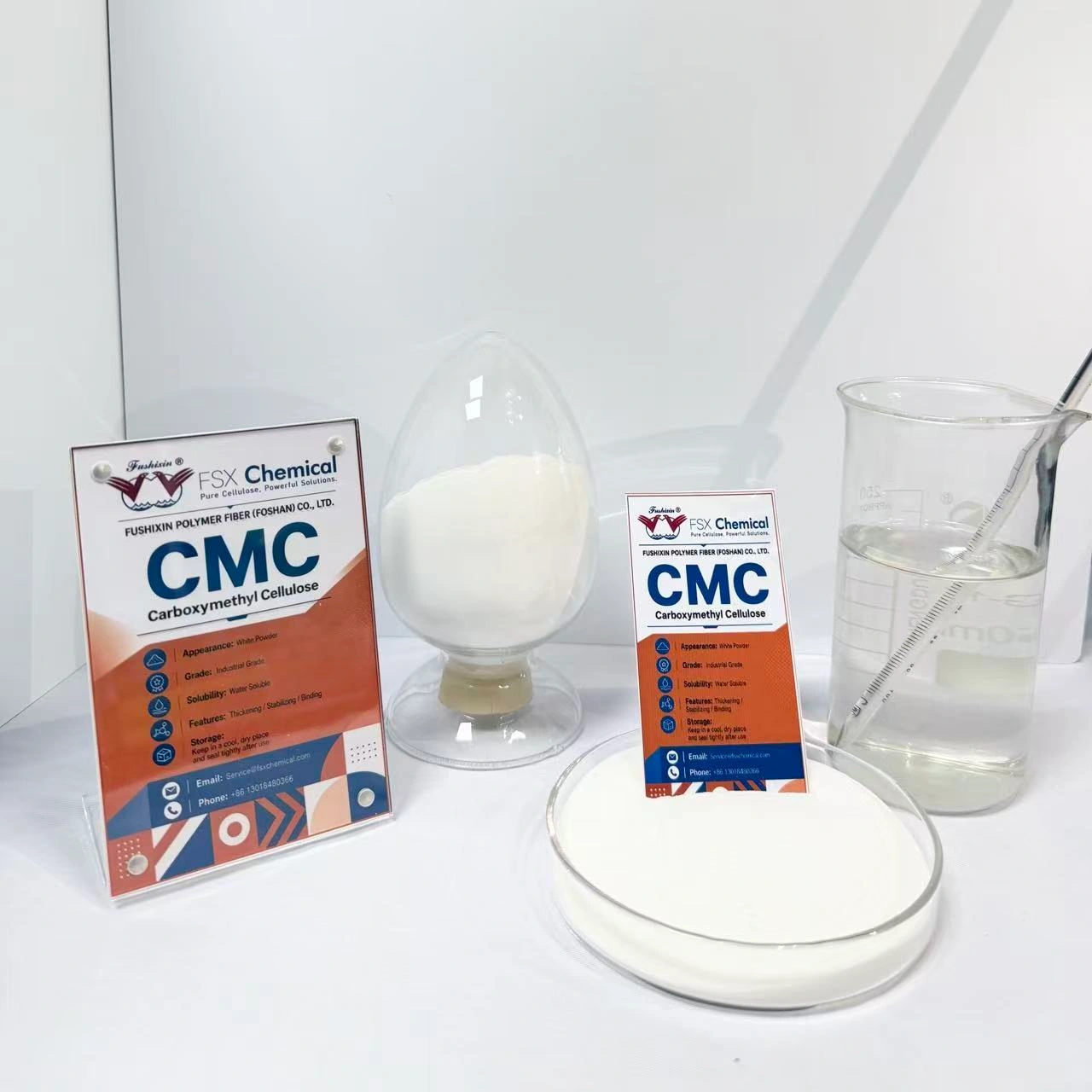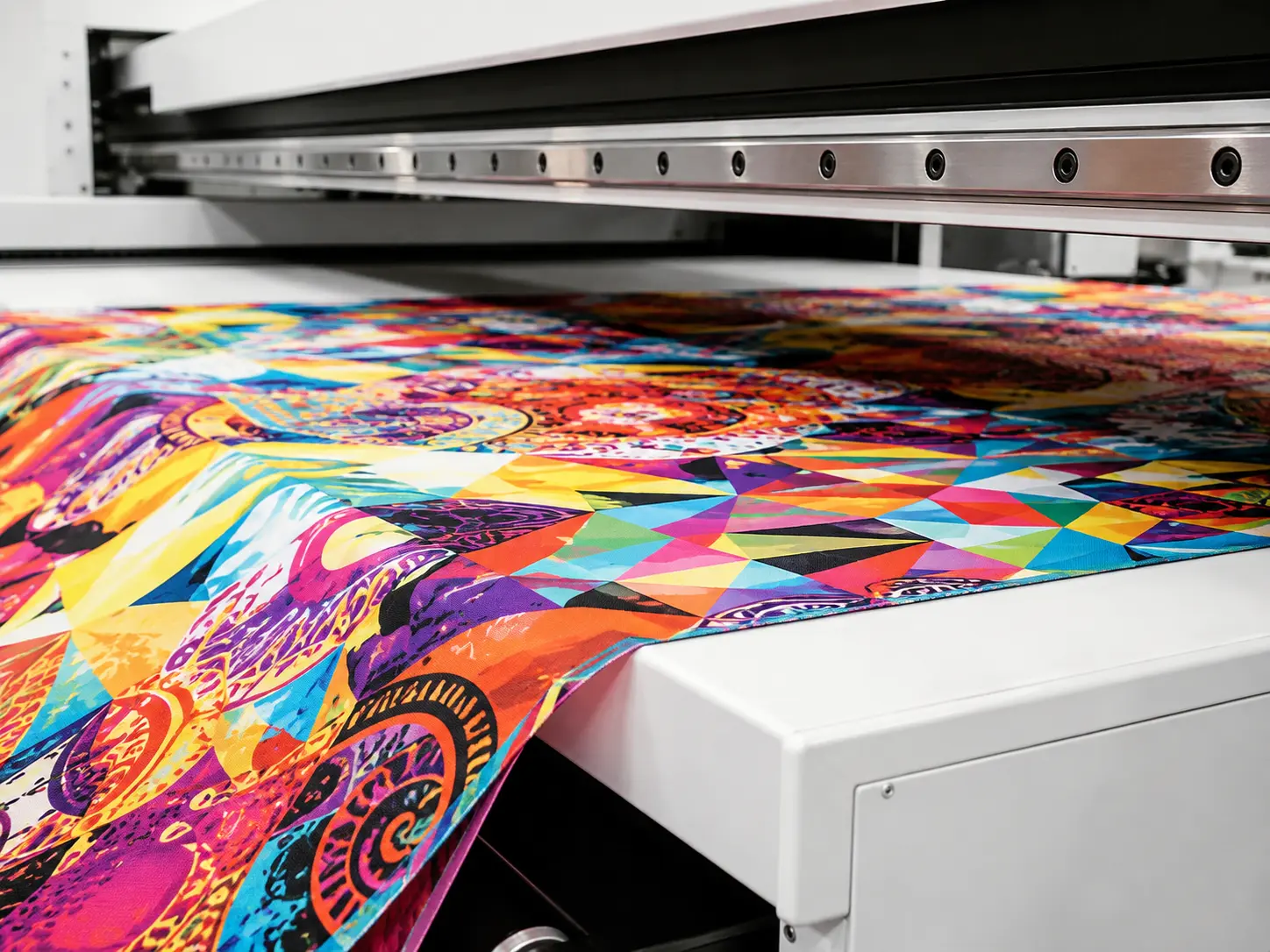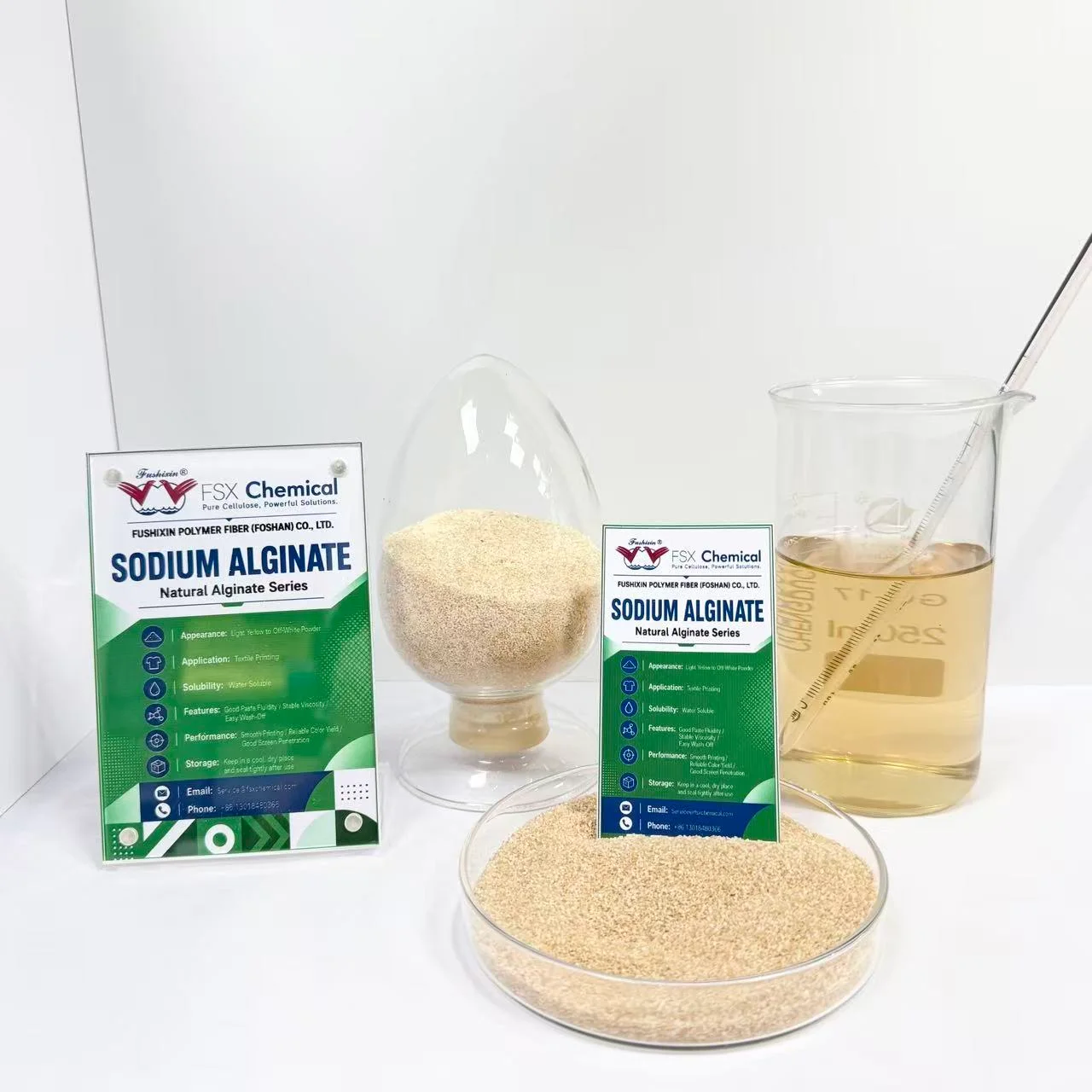
For reactive printing on cotton or viscose, sodium alginate is usually the lower-risk starting thickener because it has low reactivity toward reactive dyes and generally good wash-off. CMC can be suitable for pigment printing, sizing and selected reactive or blended systems only after its degree of substitution, purity, salt tolerance, rheology and color yield have been verified.
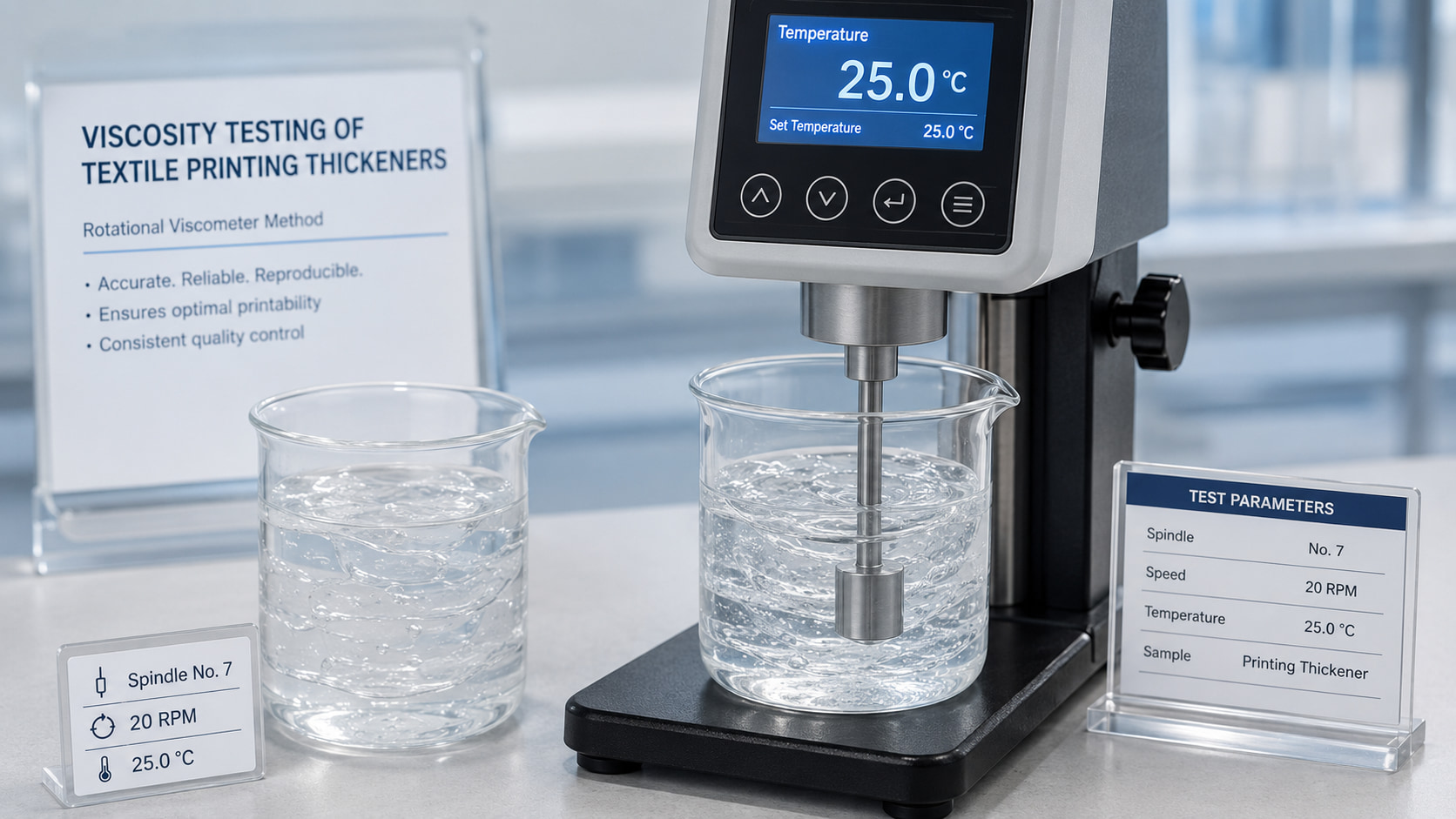
Neither product should be approved as a universal 1:1 replacement from viscosity alone. First match the concentration and test method, then compare the complete printing result: flow, screen release, penetration, outline sharpness, fixation, color yield, wash-off, handle, paste stability and total cost in use.
Sodium Alginate vs CMC: Technical Comparison Table
| Decision factor | Альгинат натрия | CMC |
|---|---|---|
| Печать активными красителями | Common reference route for cotton and viscose | Use only after grade-specific dye-compatibility and print trials |
| Пигментная печать | Possible, but reactive-dye inertness is not the main requirement | Can be evaluated with the binder, pigment and electrolyte system |
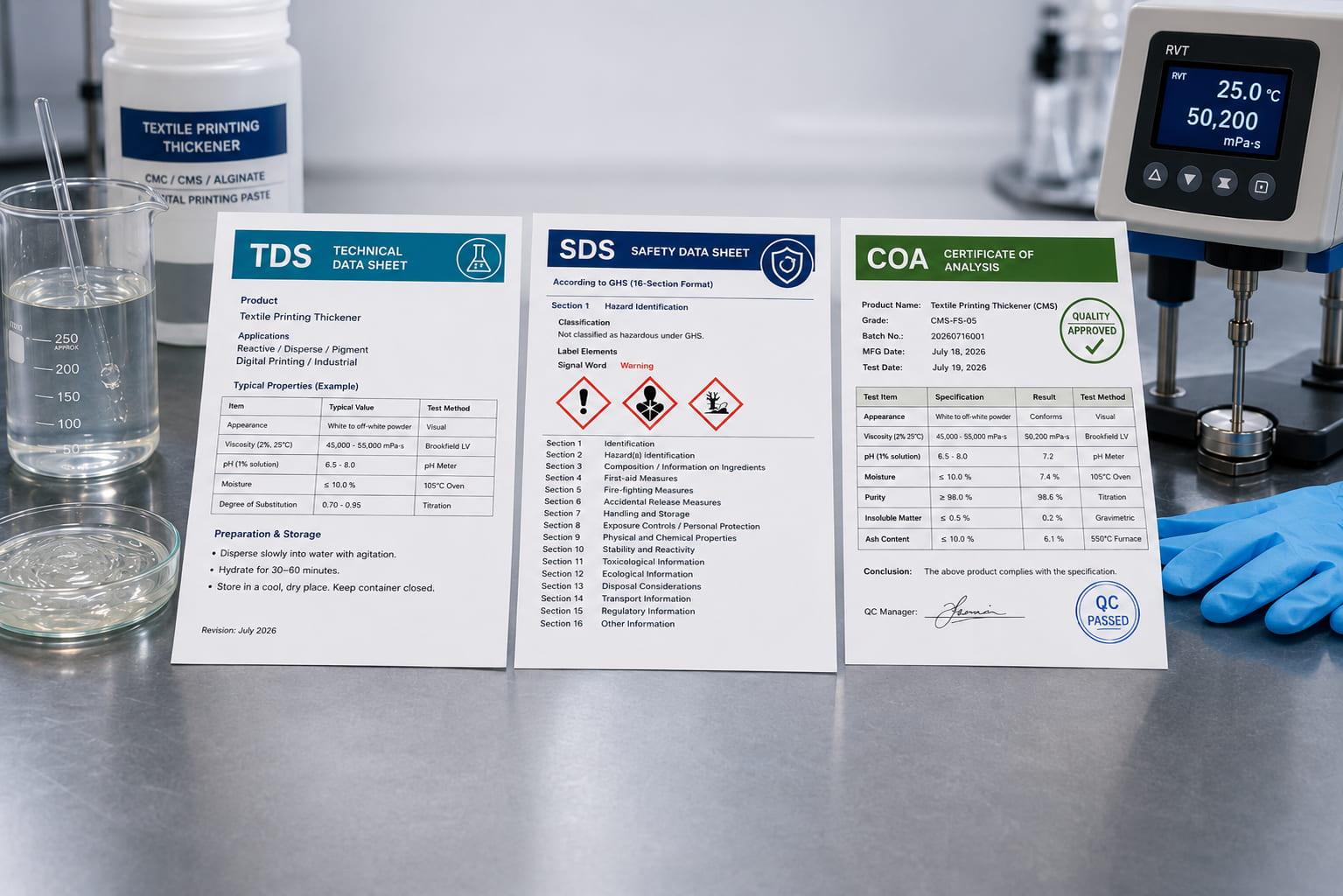
| Key specification | Defined viscosity method, purity, insoluble matter, moisture, pH and particle size | DS, substitution uniformity, purity, viscosity method, salt tolerance and solubility |
| Ionic sensitivity | Divalent ions such as calcium can cause gel or lump formation | Electrolyte response depends on DS, purity and formulation |
| Реология | Grade-dependent flow, screen release and water retention | Grade-dependent; equal viscosity does not ensure equal shear response |
| Wash-off and handle | Generally favorable in reactive printing | Must be checked by grade, fabric and process |
| Cost decision | Compare use level, yield and production consistency | Potential cost advantage must survive the complete print trial |
Use the detailed sodium alginate grade guide и CMC procurement guide to define the two candidate specifications before comparison.
Why Thickener Selection Matters in Textile Printing
Role of the Thickener in Printing Paste
The thickener in a printing paste controls paste rheology — how the paste flows during screen contact, how it transfers onto the fabric, and how it holds the dye in position before fixation. A well-chosen thickener gives the paste the right viscosity for your printing method, prevents dye migration during drying, and washes out cleanly after steaming without leaving residue that affects color or hand feel.
Thickener selection also affects dye yield, pattern sharpness, and paste stability during storage. In high-volume production, inconsistency in paste behavior between batches — caused by thickener variation or incompatibility — can create color variation and increased rework.
How the Wrong Choice Affects Print Quality
Using a thickener that is chemically incompatible with your dye system is the most common source of problems. Some thickeners react with certain dye classes, causing viscosity breakdown, reduced color yield, or paste instability. Others may be technically compatible but deliver poor rheology for your specific printing method — resulting in screen blocking, bleeding, or uneven coverage.
Understanding why each thickener behaves differently in reactive versus pigment systems is the starting point for making the right selection.
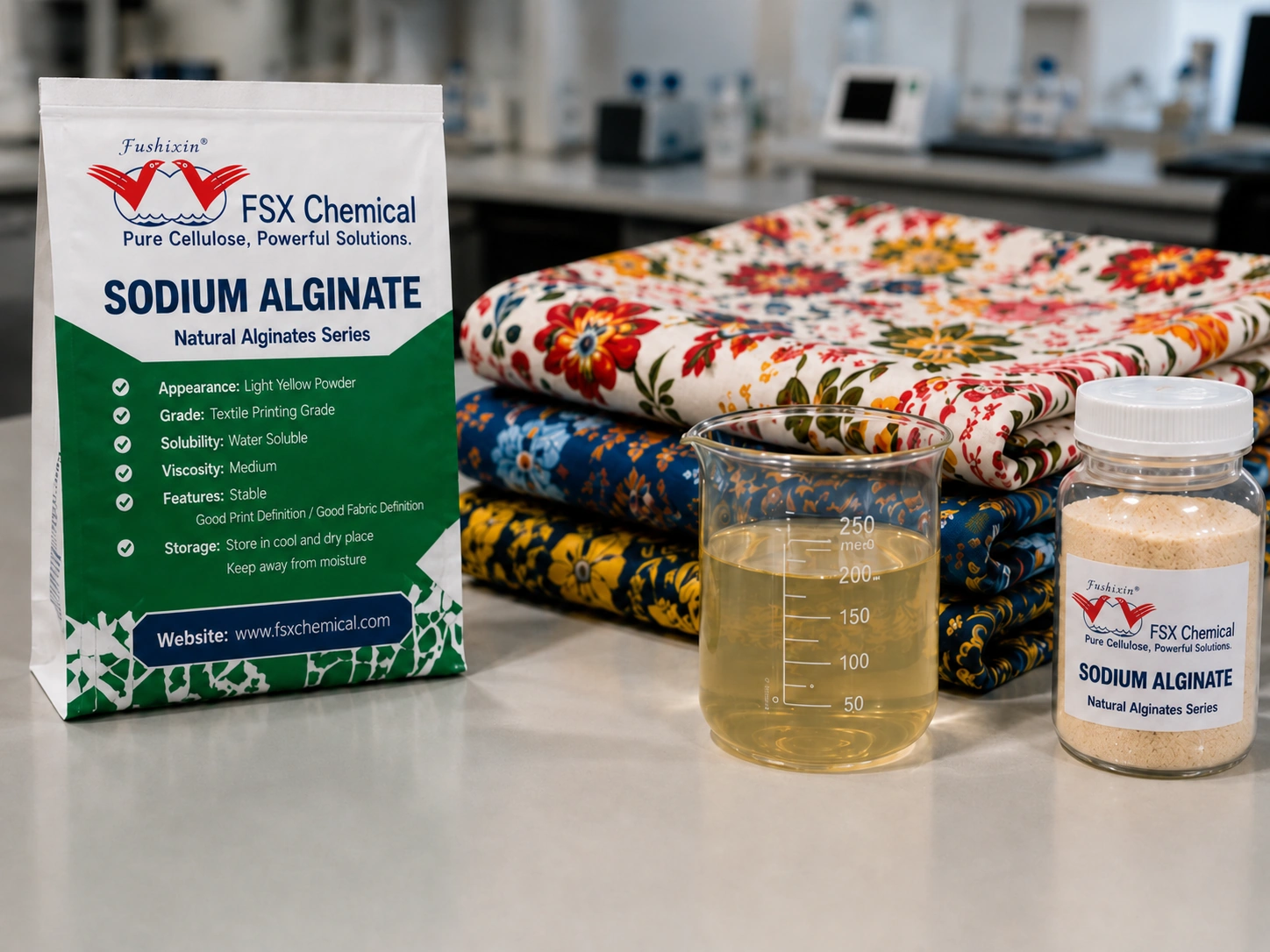
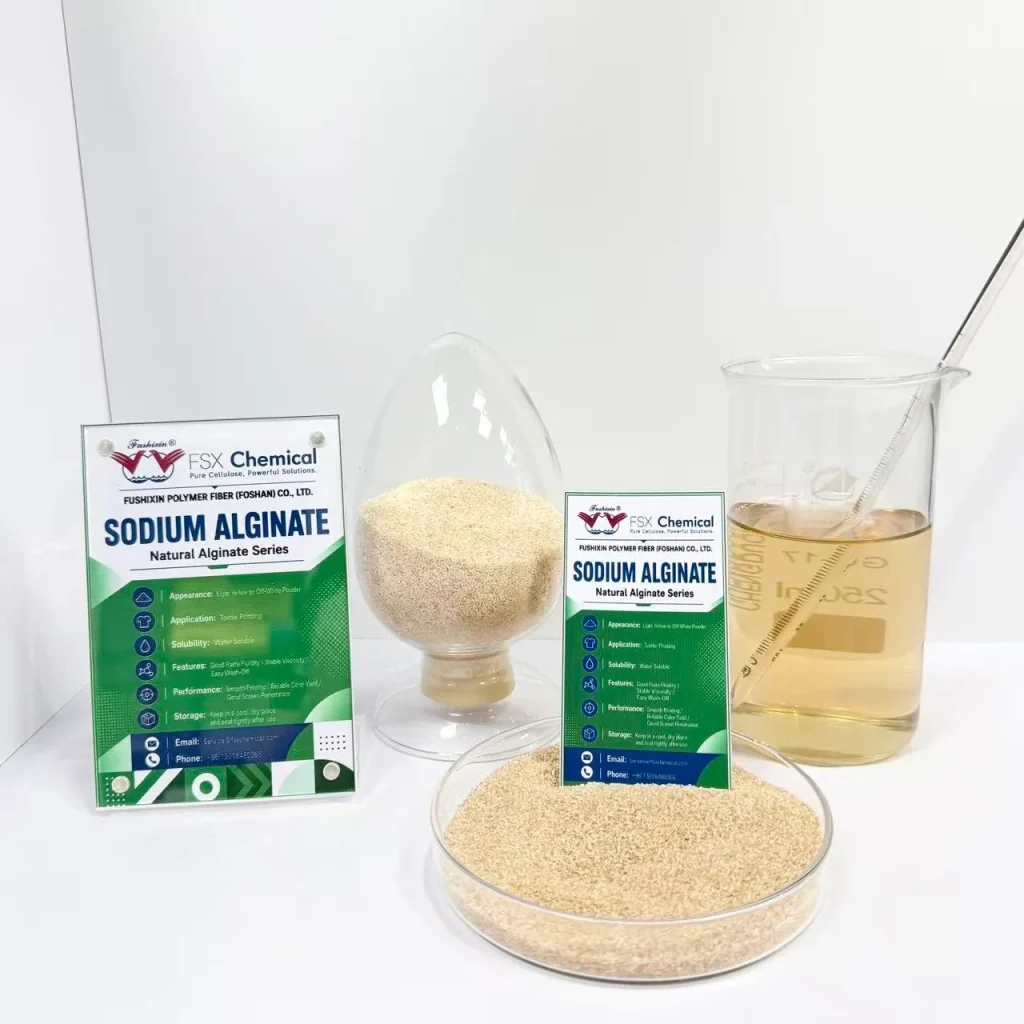
Sodium Alginate: Strengths and Typical Applications
Performance in Reactive Dye Systems
Sodium alginate is the industry-standard thickener for reactive dye printing on cellulosic fabrics — cotton, viscose, linen, and their blends. The primary reason is chemical inertness: sodium alginate does not react with reactive dyes under the alkaline fixation conditions used in reactive printing. This means the dye remains available to bond with the fiber rather than reacting with the thickener.
This property directly affects color yield. When a thickener reacts with reactive dyes, it competes with the fiber for dye molecules, reducing the amount of dye that fixes onto the fabric. Sodium alginate avoids this issue, which is why it consistently delivers higher color yield in reactive dye systems compared to thickeners that are chemically reactive under alkaline conditions.
Viscosity Behavior and Paste Stability
Sodium alginate pastes exhibit pseudoplastic (shear-thinning) behavior — they thin under the shear of squeegee application and recover viscosity once shear is removed. This behavior helps the paste transfer cleanly through the screen and hold definition on the fabric surface.
Paste stability at standard preparation and storage conditions is generally good, though sodium alginate pastes can degrade over extended storage or under high-temperature conditions. Preparing paste freshly for each production run is standard practice in most reactive printing operations.
When Sodium Alginate Is the Standard Choice
Sodium alginate is the default thickener for:
- Reactive dye flat screen and rotary screen printing on cotton
- Reactive dye digital pre-treatment formulations
- Discharge printing where paste chemistry is compatible with alginate
- Any application where maximizing color yield in reactive dye systems is the priority
If your primary production involves reactive dyes on cotton or viscose, sodium alginate is the starting point for thickener selection.
CMC: Strengths and Typical Applications
Performance in Pigment Printing Systems
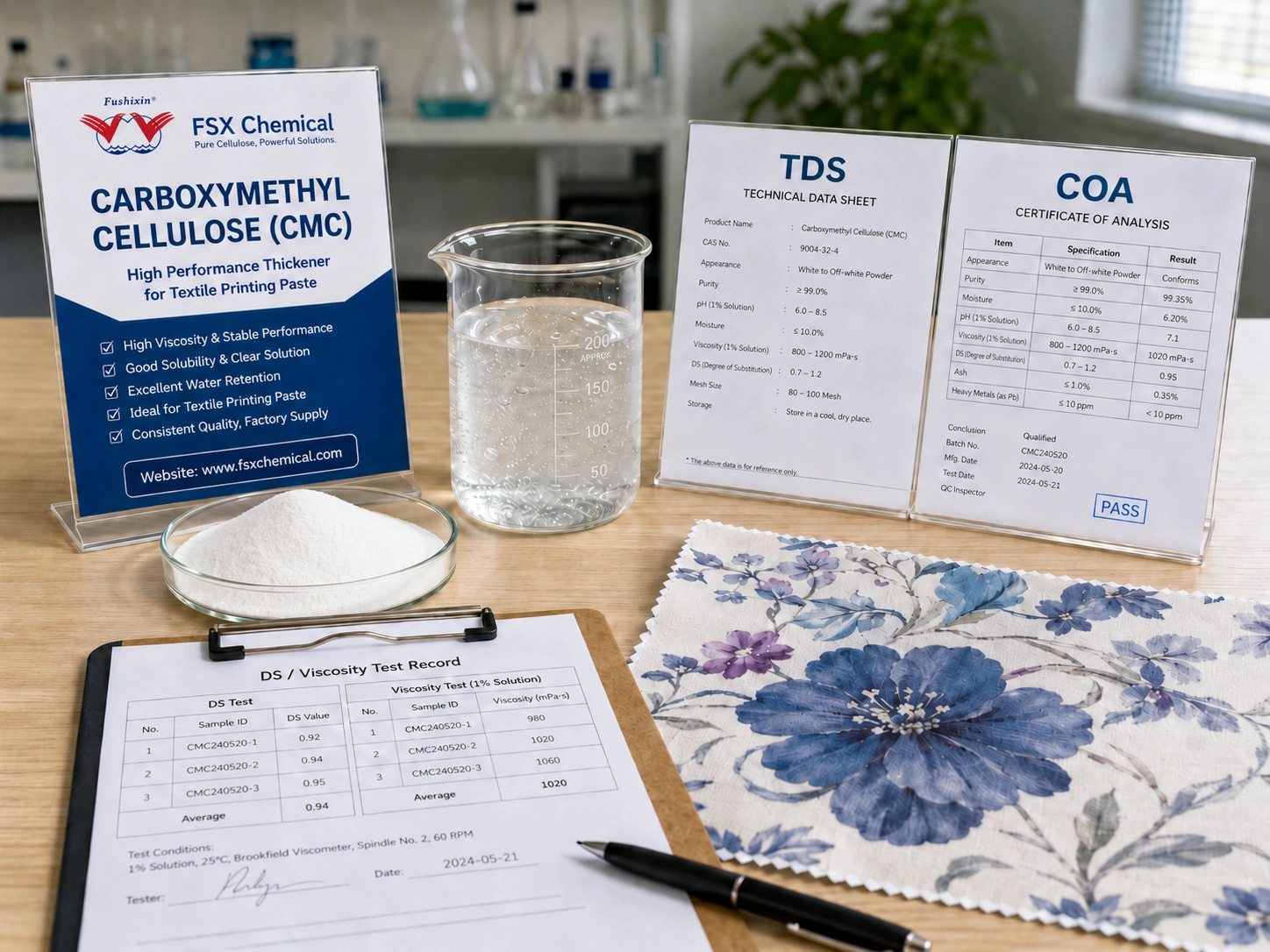
CMC is more commonly used in pigment printing, where the dye mechanism is fundamentally different from reactive printing. In pigment printing, color particles are fixed to the fabric surface through a binder rather than a chemical bond with the fiber. The thickener in pigment paste needs to be compatible with the binder system and should not interfere with binder film formation during fixation.
CMC is chemically compatible with most pigment binder systems and contributes to paste body and stability without the specific dye-compatibility constraints that apply in reactive printing.
Role as a Co-Thickener or Sizing Agent
Beyond pigment printing, CMC is widely used in textile sizing (warp sizing before weaving) and as a co-thickener in blended paste formulations. In sizing applications, CMC forms a protective film on yarn surfaces that reduces breakage during weaving — a different function from its role in printing paste.
In some printing paste formulations, CMC is used alongside sodium alginate or synthetic thickeners to adjust rheology or reduce cost, rather than as the sole thickener.
When CMC Is the Preferred Option
CMC is typically the better choice for:
- Pigment printing on cotton, polyester, or blended fabrics
- Textile warp sizing applications
- Formulations where cost is a significant factor and full reactive dye performance is not required
- Blended paste systems where a co-thickener is needed to adjust viscosity or paste body
Direct Comparison: Sodium Alginate vs. CMC
Dye System Compatibility
This is the most important differentiator. Sodium alginate is chemically inert to reactive dyes under alkaline conditions — it does not react with the dye, preserving color yield. CMC, under certain conditions, can react with reactive dyes to a limited degree, which may reduce the amount of dye available for fiber fixation.
For reactive dye printing, sodium alginate is the technically correct choice. For pigment printing, CMC is generally more suitable. Using sodium alginate in pigment printing is not wrong — it can work — but it offers no specific advantage over CMC in that application, and may cost more.
Viscosity Profile and Rheology
Both sodium alginate and CMC show shear-thinning behavior, but the degree and recovery rate differ between grades and concentrations. Sodium alginate pastes tend to have a more pronounced shear-thinning profile, which can be advantageous in high-speed rotary screen printing where rapid viscosity recovery after screen contact is important.
CMC viscosity is generally more stable across a wider temperature range, which can be relevant in production environments with significant temperature variation. For applications where paste is prepared and stored before use, CMC may show better viscosity stability over time in certain formulations.
Washout and Desizing Behavior
Both sodium alginate and CMC are water-soluble and wash out from the fabric after fixation. Sodium alginate typically washes out well under standard reactive print washing conditions (hot wash, soaping, cold rinse). CMC in sizing applications is also removable by hot water, without requiring enzymatic desizing agents.
If your process involves a particularly sensitive washing stage — for example, delicate fabrics or limited water temperature — confirm washout behavior with your supplier through a trial before committing to a thickener choice.
Cost and Availability Considerations
Sodium alginate is derived from seaweed and its price is influenced by raw material availability and harvesting conditions. CMC is produced from wood pulp or cotton linter cellulose and tends to have more stable pricing.
For high-volume production where reactive dye performance is essential, the cost difference between sodium alginate and CMC is typically secondary to the quality requirement. In applications where either thickener can work — such as pigment printing — cost may be a reasonable factor in the final selection.
Blended Formulations: Using Both Together
When Blending Makes Sense
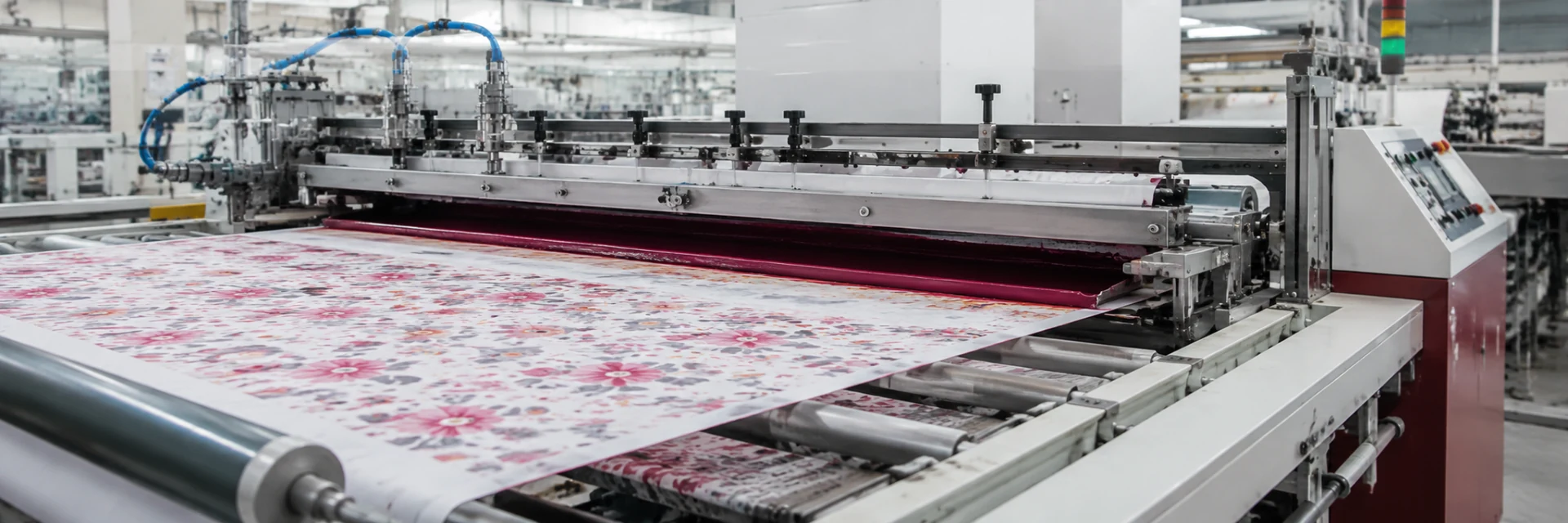
Some printing paste formulations use both sodium alginate and CMC together, typically to achieve a specific rheology profile that neither thickener delivers alone. Blending can also allow partial substitution of a higher-cost thickener with a lower-cost alternative while maintaining acceptable performance.
Blended formulations are more common in pigment printing than in reactive printing, where the chemical inertness of sodium alginate to reactive dyes makes it the clear single-thickener choice.
Practical Blending Considerations
If you are considering a blended formulation, the compatibility of both thickeners with each other and with all other paste components needs to be confirmed through trial. Viscosity behavior of blended systems is not always predictable from the individual thickener specifications — a small-scale formulation trial is essential before adopting a blend in production.
How to Decide Which Thickener Is Right for Your Process
The decision between sodium alginate and CMC for textile printing comes down to three questions:
- What dye system are you using? Reactive dyes → альгинат натрия. Pigment → CMC or either.
- What is your primary performance priority? Color yield and pattern sharpness in reactive printing → sodium alginate. Paste cost efficiency in pigment printing → CMC.
- Are there specific formulation constraints? Compatibility with binders, fixatives, or other auxiliaries may affect which thickener works in your full recipe.
If you are uncertain, request samples of both thickeners from your supplier and run a direct comparison trial in your standard formulation. This gives you objective data specific to your process rather than relying on general recommendations.
Laboratory-to-Production Qualification Checklist
- Confirm dye or pigment system, fabric, printing method and where the thickener is added.
- Use identical water, concentration, hydration time and viscosity test conditions.
- Compare paste rheology, filtration, storage stability and response to alkali and electrolytes.
- Print the same design and assess penetration, outline sharpness, color yield and screen release.
- Use the same fixation and washing process, then compare fastness, residue and fabric handle.
- Approve a representative bulk batch only after the laboratory result is repeatable.
Часто задаваемые вопросы
Can CMC replace sodium alginate 1:1?
Do not assume a universal ratio. CMC grades differ in DS, purity, salt response and rheology, while sodium alginate grades also differ by viscosity profile and purity. Determine the workable ratio through a controlled formulation and print trial.
Is CMC suitable for reactive printing?
Some textile-grade or blended CMC systems may be evaluated, but compatibility is grade- and dye-dependent. Confirm color yield, paste stability, fixation and wash-off rather than relying on the generic CMC name.
Which product has the lower cost?
Compare total cost in use: workable concentration, color yield, washing, correction time, batch consistency and rejected fabric risk. The lower price per kilogram may not be the lower production cost.
How FSX Chemical Supports Your Selection Process
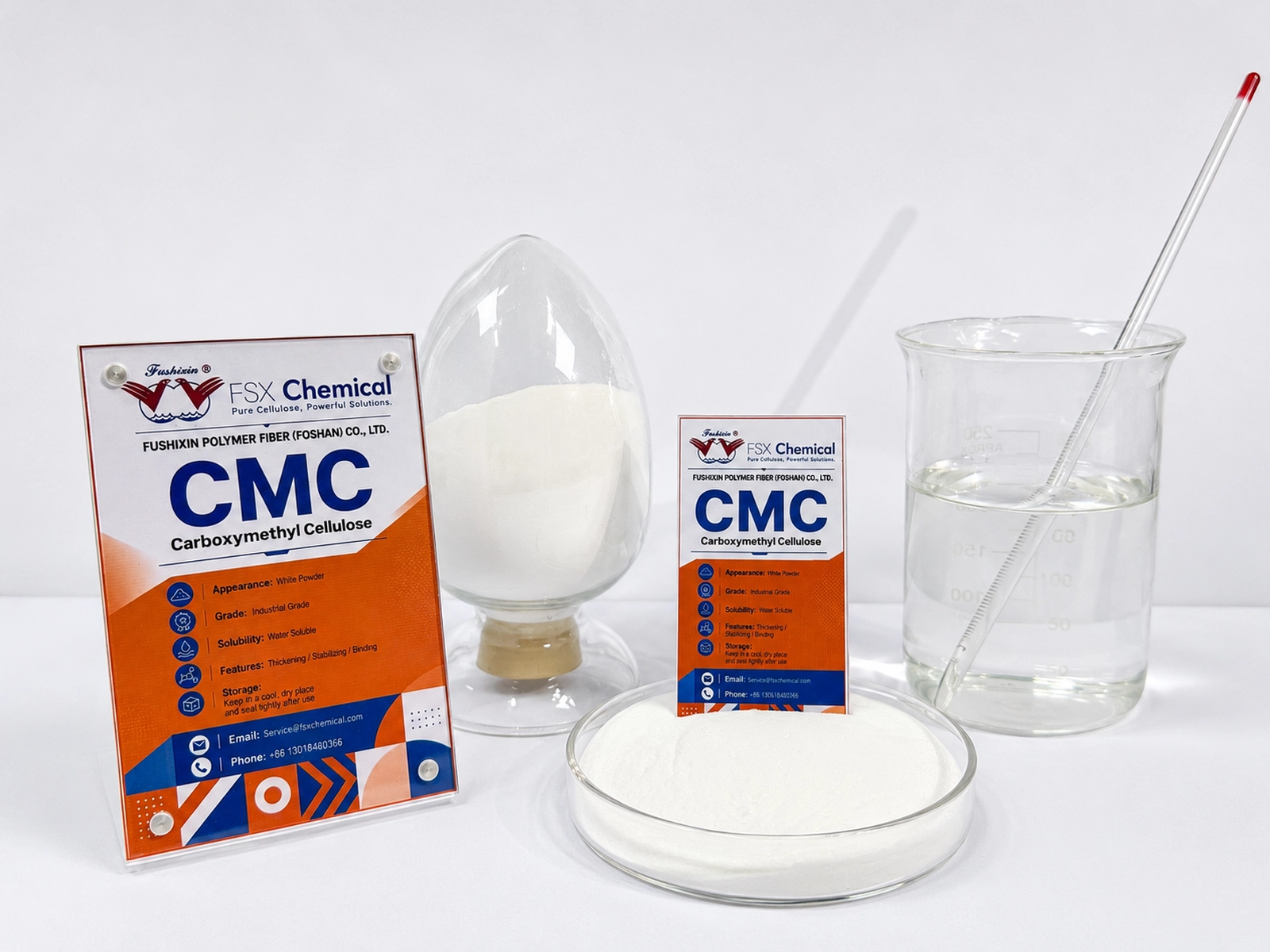
FSX Chemical supplies both sodium alginate and CMC for textile printing applications. We can provide samples of both products for comparative trials, along with technical datasheets that specify the relevant parameters for each grade.
If you share your dye system, printing method, and fabric type, our technical team can recommend a starting point for your trial — whether that is sodium alginate, CMC, or a blend of both.
Следующие шаги:
- Запросить TDS — for sodium alginate, CMC, or both, depending on your application
- Request Samples for Comparison — run a direct side-by-side trial in your own formulation
- Попросите о приравнивании оценок — share your process details for a specific starting recommendation
- Свяжитесь с нашей технической службой — for formulation questions or switching between thickener systems📧 Электронная почта: Service@fsxchemical.com