Жидкий загуститель на акриловой основе для пигментной печати: как pH и нейтрализация влияют на вязкость
Many acrylic liquid thickeners develop viscosity after neutralization, but the correct pH is grade-specific. Pigment,...
Acrylic-based liquid thickeners used in textile pigment printing can develop very different viscosity depending on pH, neutralization method and the chemistry of the complete pigment-binder paste. Many alkali-swellable acrylic systems are supplied as relatively low-viscosity acidic emulsions; after neutralization, carboxylic acid groups ionize, the polymer expands and viscosity rises. But there is no universal “best pH” for every grade. Neutralizer type, addition order, active solids, electrolyte load, pigment dispersion, binder, temperature and holding time can all shift the final viscosity. This guide shows how textile mills can build a controlled pH–viscosity activation curve and validate the thickener under real pigment-printing conditions rather than judging it from water viscosity alone.
How Do pH and Neutralization Control Acrylic Thickener Viscosity?
Many acrylic liquid thickeners used in water-based formulations are based on acid-functional polymers.
At lower pH, the polymer can remain relatively compact and the supplied product may have low viscosity.
Crosslinked polyacrylate / polyacrylic-acid systems
Application-specific acrylic compound thickeners
These product families can differ significantly in:
Initial pH
Solids content
Activation mechanism
Толерантность к электролитам
Associative thickening behavior
Low-shear / high-shear rheology
Совместимость связующих веществ
Therefore, two products both called “acrylic thickener” should not be assumed to use the same neutralization procedure.
The Neutralization Mechanism: Why Viscosity Can Rise Rapidly
In an acid-functional acrylic polymer, carboxylic acid groups are less ionized at low pH.
The polymer chain is therefore relatively compact.
As the system is neutralized, more carboxyl groups become ionized.
The negative charges repel each other and the polymer structure becomes more expanded.
As polymer chains occupy more hydrodynamic volume and interact with surrounding water, viscosity can increase rapidly.
This explains why some alkali-swellable acrylic thickeners are supplied as easy-to-handle low-viscosity liquids but become highly effective rheology modifiers after neutralization.
For the mill, this creates an important handling advantage:
Total Cost in Use = Thickener + Neutralizer + Preparation + Machine Efficiency + Curing + Rework + Quality Loss
A well-activated grade at lower dosage may be cheaper than a lower-priced product that requires more thickener and more corrections.
Compare the approved complete-paste dosage rather than supplier price per kilogram alone.
Какую информацию следует предоставить поставщику загустителей?
For useful acrylic-thickener matching, provide:
Current thickener name / sample / TDS
Дозировка в том виде, в котором поставляется
Тип нейтрализатора
Конечный уровень pH пасты
Вязкость и полная методика испытаний
Пигментная дисперсия
Binder type and dosage
Фиксаторы / вспомогательные элементы
Ткань
Плоское или ротационное сито
Время удержания
Условия отверждения
Main problem: low viscosity, viscosity collapse, screen running, rubbing, hand or cost
Компания FSX Chemical может использовать эту информацию посредством Образцы и подбор продукции to define a controlled activation and complete-paste comparison.
pH controls viscosity development in many alkali-swellable acrylic systems, but the target pH is grade-specific.
Neutralizer identity and addition order can change the result even at similar final pH.
Electrolytes can reduce the viscosity gained through neutralization.
The water activation curve and the complete pigment-paste curve should be treated separately.
Final selection must include screen behavior, curing, rubbing fastness and fabric hand.
The best neutralization point is the most stable operating window—not the highest viscosity point.
Часто задаваемые вопросы
1. Why does acrylic liquid thickener become much thicker after adding alkali?
In many alkali-swellable acrylic systems, neutralization ionizes carboxylic acid groups, causing the polymer to expand and occupy more hydrodynamic volume, which increases viscosity.
2. What pH should an acrylic pigment-printing thickener reach?
There is no universal target. Start with the commercial grade’s TDS or supplier-defined activation window and validate it in the complete pigment-binder formula.
3. Can I use sodium hydroxide to neutralize every acrylic thickener?
No. Different grades may be designed for different neutralizers. Use the supplier-approved neutralization route and validate compatibility.
4. Why is viscosity still low even though the pH looks correct?
Check active solids, dilution, electrolyte load, pigment dispersion, binder and temperature. pH is only one variable.
5. Why does viscosity drop after pigment is added?
Pigment dispersions can introduce salts, surfactants or pH changes that reduce the expanded polymer structure or alter the complete paste.
6. Why does viscosity drop after binder is added?
Binder can introduce electrolytes, surfactants and pH changes. Test the thickener and binder together rather than relying on water viscosity.
7. Does higher pH always give higher viscosity?
No. Many systems reach a useful plateau, and excessive neutralizer can increase ionic load or create formulation-compatibility problems.
8. Why should I add alkali gradually?
Gradual addition reduces local over-neutralization and helps the polymer swell more uniformly.
9. Should pH be measured immediately after neutralization?
Record the immediate value, but also allow the validated equilibration time before final adjustment because mixing and polymer swelling may continue.
10. Can two acrylic thickeners use the same pH but give different viscosity?
Yes. Polymer architecture, solids, crosslinking and hydrophobic modification can produce very different thickening efficiency at the same pH.
11. Should I choose the pH that gives the maximum Brookfield viscosity?
Not automatically. Choose the range that gives stable complete-paste rheology, screen transfer and finished-fabric performance.
12. What should I send FSX Chemical for pH/neutralization troubleshooting?
Send the current thickener or TDS, dosage, neutralizer, pH, viscosity method, pigment, binder, holding time, machine and the current viscosity or print problem.
Build a Stable pH–Viscosity Window for Your Acrylic Thickener
If your pigment-printing paste develops too little viscosity, over-thickens after neutralization or loses viscosity after pigment or binder addition, FSX Chemical can help structure a controlled pH and complete-paste comparison.
Чтобы получить полезный технический обзор, отправьте:
Ваш текущий образец акрилового загустителя, спецификация TDS или протокол анализа COA
Текущая дозировка
Neutralizer type and dosage
Конечный уровень pH пасты
Вязкость и полная методика испытаний
Пигментная дисперсия
Система связующего вещества и фиксатора
Технология нанесения рисунка на ткань и трафаретной печати
The right neutralization strategy is not the one that creates the highest viscosity in water. It is the one that gives a stable complete pigment paste, reliable screen rheology and the required fastness and fabric hand under real production conditions.
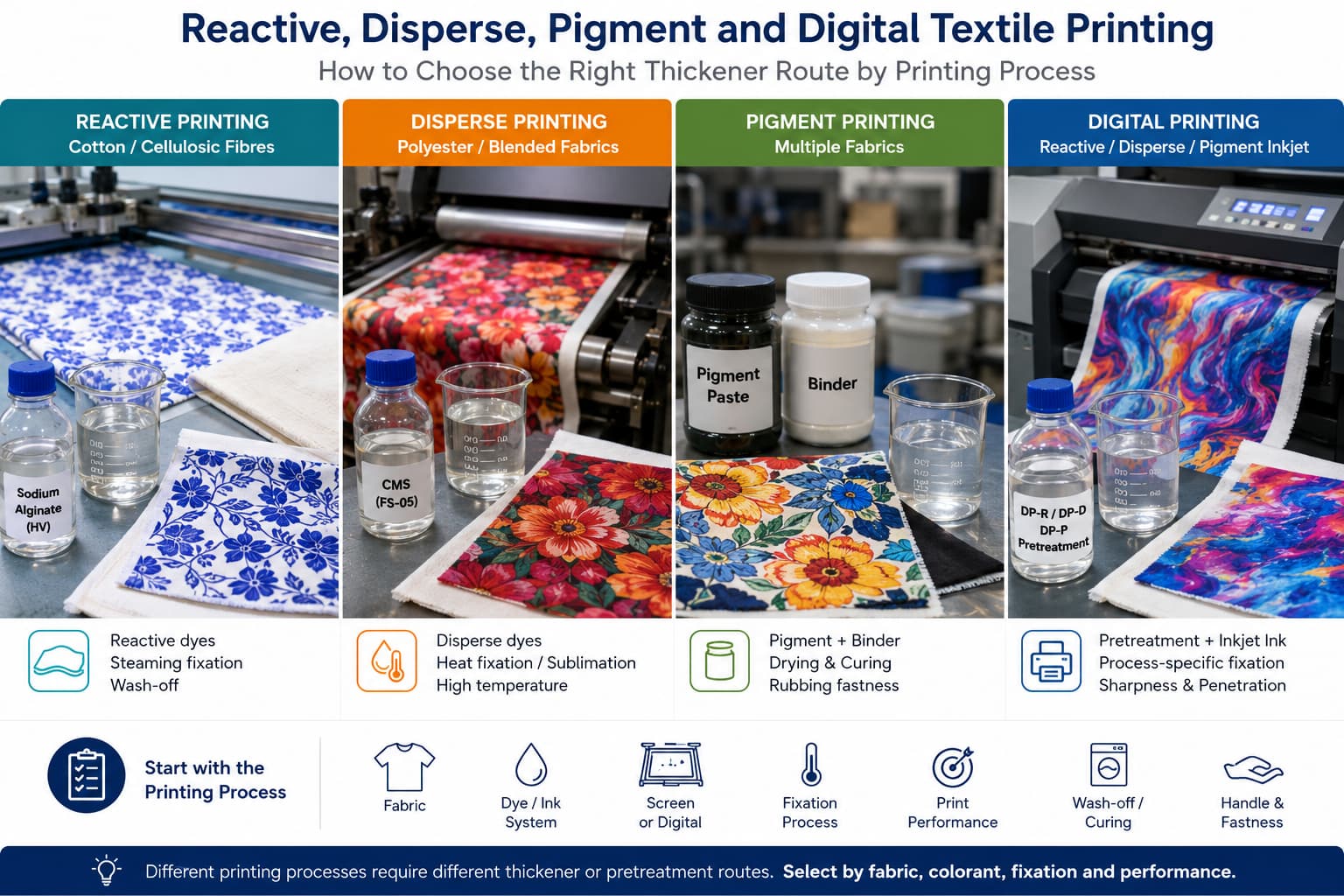
Узнайте, как выбирать загустители и способы предварительной обработки для реактивной, дисперсной, пигментной и цифровой печати на текстиле с учетом требований к ткани, красителю или чернилам, фиксации, вымываемости и качеству печати.
Печатная паста на основе CMC используется в пигментной, реактивной и цифровой текстильной печати. В данном руководстве объясняется, какие параметры имеют значение, как сравнивать поставщиков и что следует уточнить перед размещением оптового заказа.
И альгинат натрия, и CMC используются в качестве загустителей при печати на текстиле, однако они подходят для разных систем окрашивания и условий производства. В данном руководстве объясняются основные различия между ними и приводятся рекомендации по их применению.
Выбор подходящего загустителя для текстильной печати зависит не только от типа ткани. Покупателям следует подбирать загуститель с учетом системы красителей или пигментов, метода печати, требуемых реологических характеристик, требований к стойкости к стирке, а также фактических условий производственных испытаний.
Эффективность печати на текстиле зависит от сбалансированной химической системы, а не от одной универсальной добавки. В данном руководстве описаны десять важных групп химических веществ, их функции, сферу применения, а также то, что покупатели должны проверить перед проведением производственных испытаний.
Загустители для текстильной печати различаются по химическому составу, реологическим свойствам, совместимости с красителями и характеристикам вымывания. В данном руководстве сравниваются основные группы загустителей, их типичные области применения, а также параметры, которые покупатели должны проверить перед проведением производственных испытаний.
Выбор паст для цифровой печати следует осуществлять с учетом химического состава краски, типа ткани, метода нанесения и последующей обработки. В данном руководстве сравниваются методы предварительной обработки с использованием альгината натрия, CMC, CMS, синтетических полимеров и смешанных составов для струйной печати на текстиле.
Компания FSX Chemical предлагает отдельные технологические схемы нанесения пасты для цифровой печати, предназначенные для реактивных, дисперсных и пигментных систем, которые сопровождаются анализом условий применения, подбором образцов и технической документацией. В данном руководстве объясняется, как покупатели могут определить подходящую технологическую схему перед оптовой закупкой.
Для получения стабильной пасты для цифровой печати недостаточно просто соблюдать заданную вязкость. В данном руководстве объясняется, как выбор продукта, качество воды, последовательность добавления компонентов, перемешивание, уровень pH, температура, фильтрация, соблюдение гигиенических норм, условия хранения и ведение документации по качеству влияют на предварительную обработку и стабильность производственного процесса.
В данном обзоре продукта рассматривается паста FSX Digital Printing Paste в качестве средства предварительной обработки текстиля для струйной печати и средства для увеличения вязкости, при этом особое внимание уделяется совместимости с системой чернил, реологическим свойствам, фильтрации, четкости печати, стабильности и испытаниям в реальных производственных условиях.
Для цифровой печати на текстиле требуется не только современные чернила и печатающие головки. Ознакомьтесь с химическими решениями, специально разработанными для процессов струйной печати реактивными, дисперсными и пигментными чернилами — от предварительной обработки и регулирования реологических свойств до фильтрации, фиксации и проверки производственных процессов.
Textile printing chemistry is evolving beyond simple viscosity and price comparisons. Explore five innovation directions shaping 2026, including safer chemical inputs, hybrid biopolymer thickeners, advanced pigment binders, shorter digital processes and multifunctional formulations.
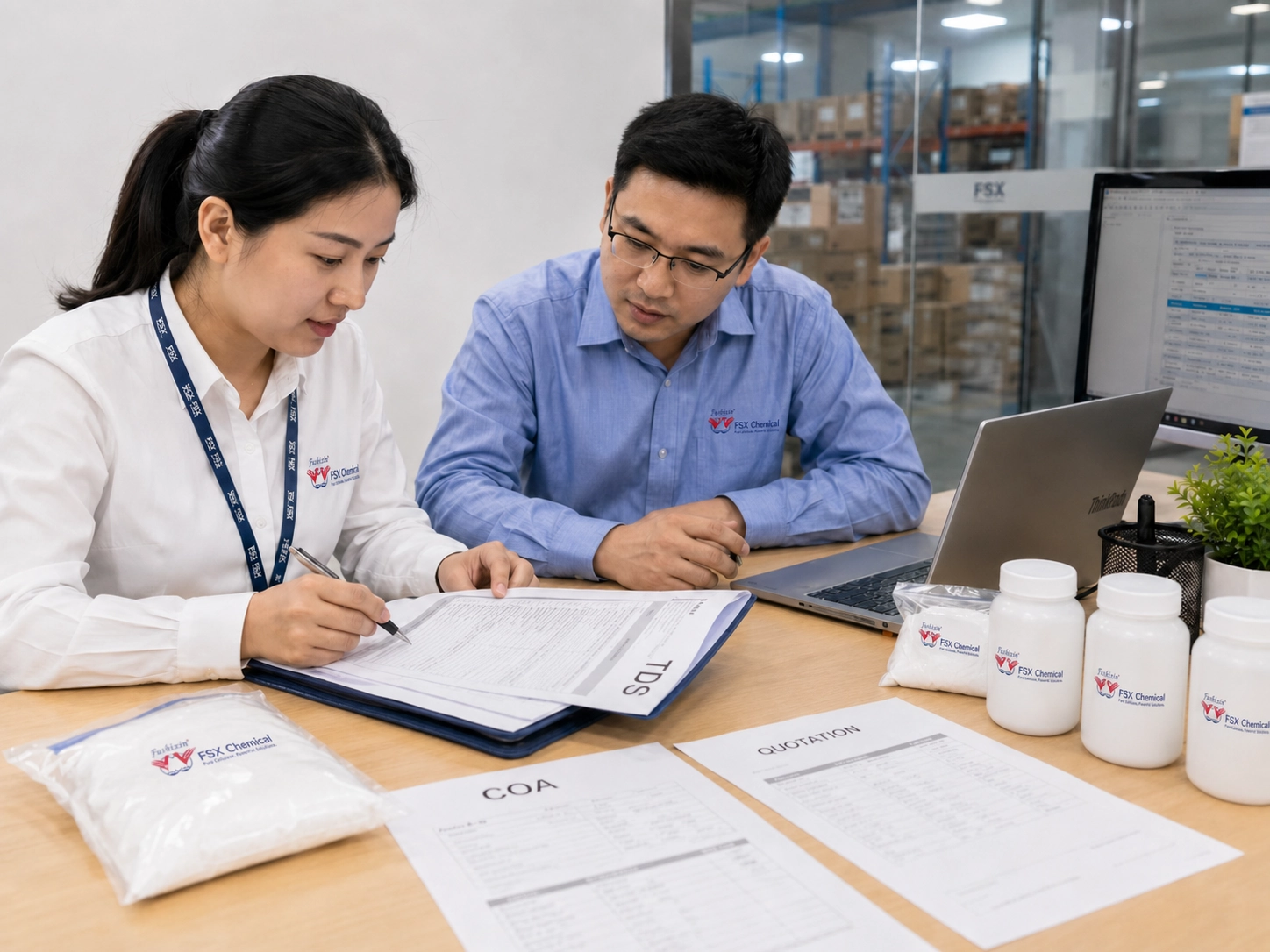
Сообщите название продукта, область применения, количество, пункт назначения, а также предоставьте техническое описание продукта (TDS),
фотографию образца или имеющиеся у вас документы. Компания FSX Chemical рассмотрит
эту информацию и порекомендует дальнейшие действия для подготовки коммерческого предложения, подбора образца
или выбора продукта.
Информация о продуктеНазвание товара, класс, модель, фотография этикетки или артикул поставщика.
Доступные документыTDS, SDS, COA, фотография образца, перечень продукции или данные испытаний.
Детали заказаПредполагаемый объем, упаковка, страна назначения, порт или условия торговли.
Область применения или проблемаПроцесс печати на текстиле, требования к составу, текущие проблемы или целевые показатели.