Technical Insights: Improving Viscosity Control in Textile Pastes
Improving viscosity control in textile printing pastes requires more than adjusting a final cP or...
Improving viscosity control in textile printing pastes requires more than adjusting a final cP or mPa·s value. Reliable control starts with a standardized test method and continues through powder addition, hydration, temperature, water quality, formulation sequence, shear history, holding time and actual printing performance.
Viscosity is one of the most frequently measured properties in textile printing, yet it is also one of the most frequently misunderstood.
A printing paste can meet its numerical viscosity target and still show poor screen passage, excessive penetration, weak fine-line definition or unstable performance during a long production run. Another paste can measure slightly differently in the laboratory and still print more consistently because its rheology, hydration and chemical compatibility are better matched to the process.
Effective viscosity control therefore requires a process-control approach. The objective is not to force every batch toward one number regardless of conditions. The objective is to produce a repeatable paste that remains inside an operating window suitable for preparation, transfer, printing and post-treatment.
This technical guide explains the main variables that influence textile-paste viscosity, how to standardize measurement, how to troubleshoot viscosity drift and how to connect laboratory data with actual printing performance.
What Does Viscosity Control Really Mean?
Viscosity control means keeping the printing paste within a defined and repeatable operating range under a defined test method.
This definition contains two important ideas: the viscosity range and the measurement method.
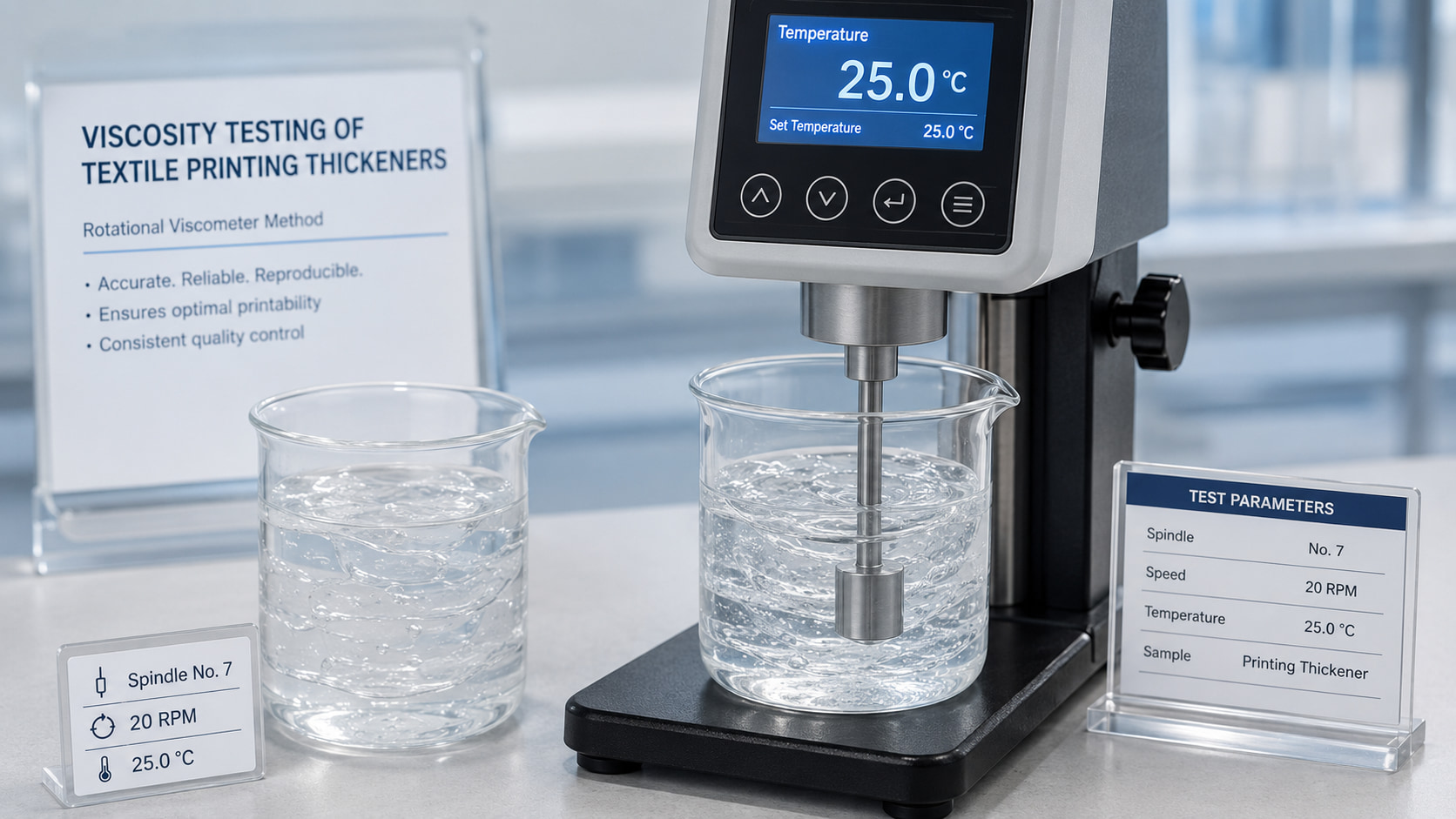
A target such as 5,000 mPa·s is incomplete if the concentration, temperature, instrument, spindle, speed, preparation procedure and reading time are unknown.
Good viscosity control should support
Repeatable paste preparation
Stable pumping and circulation
Practical screen passage
Controlled paste transfer
Predictable penetration
Sharp print boundaries
Consistent production from batch to batch
The best viscosity target is therefore an application-specific operating window, not a universal number for every textile paste.
Viscosity vs Rheology: Why the Difference Matters
Viscosity describes resistance to flow under defined conditions. Rheology describes the broader way a paste responds when the applied mechanical force changes.
During textile printing, a paste does not remain under one constant shear condition.
In the preparation tank
The paste may experience relatively low or moderate shear.
During pumping and circulation
The mechanical forces can increase substantially.
During screen passage
The paste experiences another high-shear application condition.
After transfer to the fabric
The strongest mechanical force decreases and the structure of the paste begins to recover.
Two products with the same single-point viscosity can therefore behave differently in production if their shear-thinning behavior and structural recovery are different.
1. Standardize the Viscosity Test Method
The first requirement for better viscosity control is a written and repeatable measurement procedure.
Record at least
Концентрация пробы
Concentration calculation basis
Источник воды
Preparation procedure
Время и скорость смешивания
Время для питья или отдыха
Температура измерения
Viscometer model
Шпиндель, ротор или геометрия
Скорость вращения
Время чтения
Reported unit
If one operator measures immediately after mixing and another waits for complete hydration, their results may differ even when both samples came from the same product.
Method control should therefore come before product correction.
2. Control Thickener Concentration Accurately
Small concentration errors can create large differences in apparent viscosity, especially with high-efficiency polymer thickeners.
Use controlled weighing
Powdered thickener and water should be weighed or measured using equipment appropriate to the batch size.
Define the concentration basis
Laboratories should be clear about whether the percentage is calculated on total solution mass, water mass or another defined basis.
Do not correct concentration from memory
Repeated manual additions of water or polymer without recording the actual amounts can make the final formula impossible to reproduce.
Every correction should be documented so that the final composition of the batch remains known.
3. Control Water Quality
Water is often the largest component of a textile printing paste, yet it can receive less attention than the thickener itself.
Differences in hardness, dissolved salts, pH and contamination can change polymer hydration or interaction with the complete formulation.
For comparative testing
Для эталонного и исследуемого продуктов следует использовать один и тот же источник воды.
For routine production
Monitor meaningful changes in water quality when unexplained viscosity variation appears across batches or seasons.
For supplier comparison
Do not compare laboratory data generated with different water unless the effect has been understood.
4. Improve Powder Addition and Dispersion
Poor powder addition can create lumps that hydrate slowly and distort both viscosity and filtration.
Avoid rapid dumping into weak circulation
When a large quantity of polymer reaches the water surface at once, the outer layer can hydrate before the inside is fully wetted.
Create a repeatable addition rate
The laboratory and production team should define how the polymer enters the vortex or mixing zone.
Observe dispersion before judging viscosity
A paste containing visible agglomerates has not reached a reliable measurement condition.
Better dispersion can improve repeatability without changing the product grade.
5. Allow Complete Hydration Before Correction
Many polymer thickeners do not reach their stable viscosity immediately after powder addition.
If an operator measures too early and adds more thickener, the batch may later overshoot the target as hydration continues.
Develop a hydration profile
Measure the same formulation at defined time intervals during development work. This helps determine when the result becomes sufficiently stable for routine QC.
Use the same waiting period every time
Comparing a 10-minute reading with a 60-minute reading is not a controlled comparison.
Hydration time is product-specific
Do not assume that sodium alginate, CMC, CMS and compound thickeners all reach equilibrium at the same rate.
6. Control Temperature
Temperature can influence measured viscosity and can also affect the apparent stability of the printing paste.
Standardize laboratory temperature
Reference and candidate products should be measured at the same defined temperature.
Do not compare a warm production sample directly with a cool laboratory sample
Allow the samples to reach the defined test condition before deciding that a batch is off specification.
Monitor heat generated during mixing
High-speed mixing can raise sample temperature and create an apparent difference that is partly related to the test condition rather than the polymer itself.
7. Control Mixing and Shear History
Mixer design, rotational speed, batch size and mixing time can all influence the condition of a polymer paste.
Laboratory and production mixers are not automatically equivalent
A small high-speed laboratory mixer may create a different shear history from a large production vessel.
Do not assume longer mixing is always better
Excessive mixing can introduce air, increase temperature or alter the apparent behavior of the paste.
Record the mixing sequence
A repeatable SOP should state when the thickener is added, how long it is mixed and when other chemicals enter the batch.
This becomes particularly important when moving from laboratory sample to commercial-scale production.
8. Standardize the Chemical Addition Sequence
A printing paste is a multi-component system. The order in which ingredients are added can change local concentration, hydration and chemical interaction.
Depending on the process, the formulation may contain
Dyes or pigments
Соли
Щелочи
Папки
Увлажнители
Смачивающие вещества
Пеногасители
Other polymers
A grade that has stable viscosity in water may react differently after one of these components is introduced.
Use staged addition during troubleshooting
Measure or observe the paste after each major component is added. This can help identify where the viscosity shift begins.
9. Monitor Salts, Alkalis and Other Electrolytes
Ionic polymers can respond to changes in electrolyte concentration.
For this reason, viscosity measured in pure water may not predict the result after salts, alkalis or other ionic components are added.
Use the complete production formula
Supplier comparisons should include the actual chemical environment used in production.
Keep addition quantities accurate
A weighing error in an electrolyte can appear to be a thickener problem.
Change one variable at a time
When troubleshooting, avoid simultaneously changing thickener dosage, salt, alkali and water because the source of improvement or failure will become unclear.
10. Control pH Where It Is Relevant
pH can influence the behavior of some polymer and formulation systems and is also critical to several textile printing chemistries.
The acceptable pH window should therefore be defined according to the actual printing route rather than treated as one universal value.
When viscosity changes unexpectedly
Check whether pH changed at the same time.
During supplier comparison
Use the same pH conditions for both materials unless the objective is specifically to study pH response.
11. Monitor Holding-Time Viscosity
A paste that meets specification immediately after preparation may behave differently after several hours in production.
Useful checkpoints can include
Immediately after complete preparation
After the defined hydration period
After a realistic production holding period
After circulation where relevant
Record more than viscosity
Appearance, separation, pH, foam and filtration can help explain why the viscosity changed.
A small numerical drift may be acceptable if the paste still prints consistently, while a similar numerical change may matter more in a sensitive application. The operating window should be linked to printing results.
12. Prevent Evaporation from Distorting Viscosity
Water loss increases the effective solids concentration and can make a stable polymer system appear to thicken over time.
Check tank and sample exposure
Open containers, warm environments and long holding periods can increase evaporation.
Do not correct every upward viscosity drift by adding water immediately
First confirm whether the change is caused by evaporation, temperature, hydration or another formulation factor.
Uncontrolled water addition changes not only viscosity but also the concentration of dyes, pigments, salts, binders and other components.
13. Separate Foam Problems from Viscosity Problems
Entrained air can make a paste look more voluminous and can interfere with repeatable sampling or measurement.
Observe the sample before measurement
If the paste contains significant air, allow a defined de-aeration period or use the controlled production method before taking the final reading.
Do not solve foam by changing thickener first
Review mixing intensity, addition sequence and defoamer compatibility before concluding that the polymer grade is responsible.
14. Use Filtration as a Supporting Diagnostic
Filtration does not measure viscosity directly, but it can reveal preparation problems that make viscosity less reliable.
High residue can indicate
Incomplete hydration
Polymer gel
Contamination
Chemical incompatibility
A batch containing a large amount of retained polymer may show a different apparent viscosity from the material that would actually pass through the production system.
Standardized filtration should therefore be used together with viscosity and visual inspection when troubleshooting.
Viscosity Control with Sodium Alginate
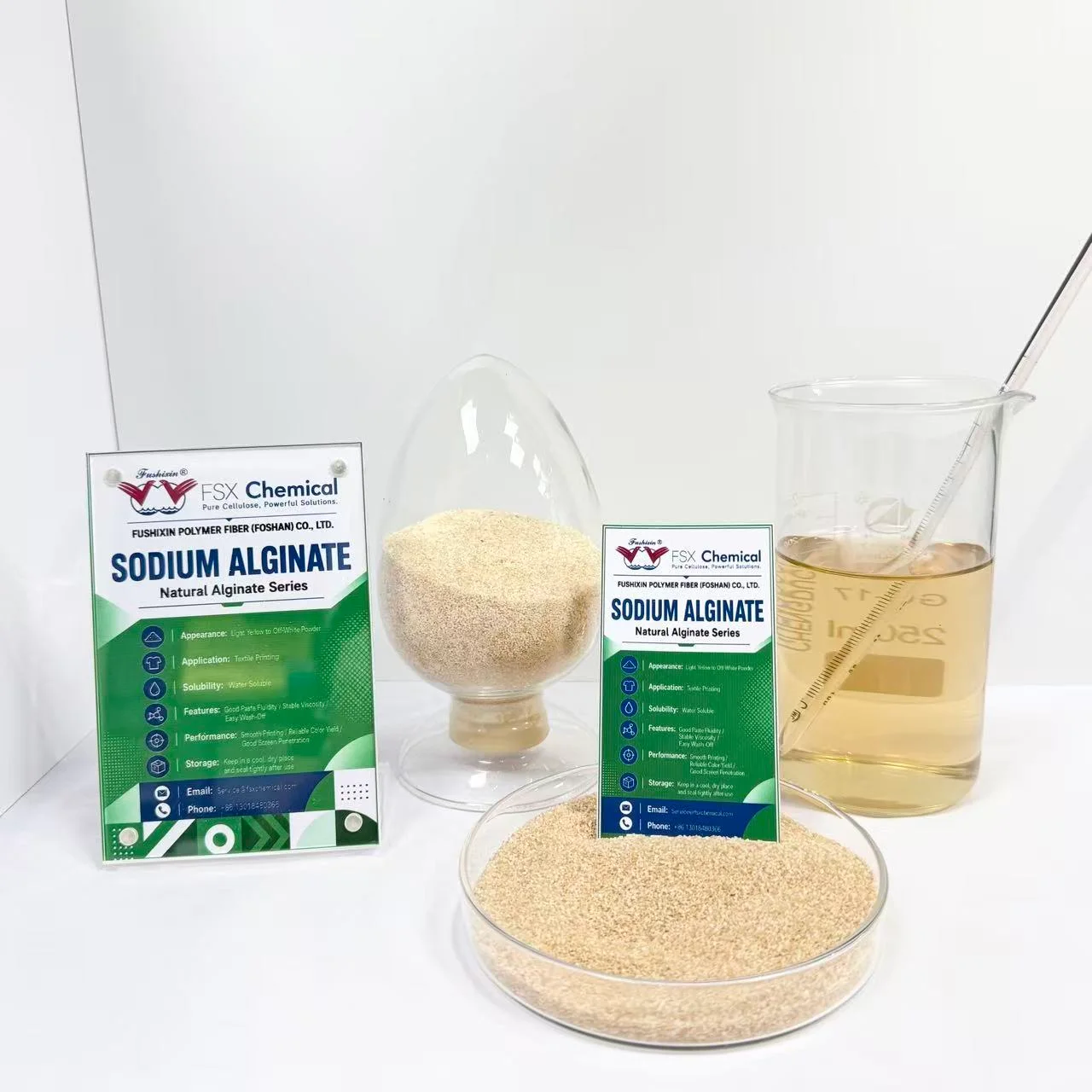
Альгинат натрия является стандартным загустителем, используемым при традиционной реактивной печати на подходящих целлюлозных тканях.
Do not control sodium alginate by HV, MV or LV labels alone
These labels are supplier-specific grade descriptions. The actual viscosity value and method are more useful for production control.
Monitor hydration
Incomplete hydration can produce unstable readings and filtration residue.
Evaluate the complete reactive paste
The final viscosity should be understood together with reactive dyes, alkali, other auxiliaries and the actual printing process.
Evaluate wash-off and finished fabric
A higher paste viscosity is not useful if the resulting printing, fixation or wash-off performance becomes unacceptable.
Viscosity Control with CMC
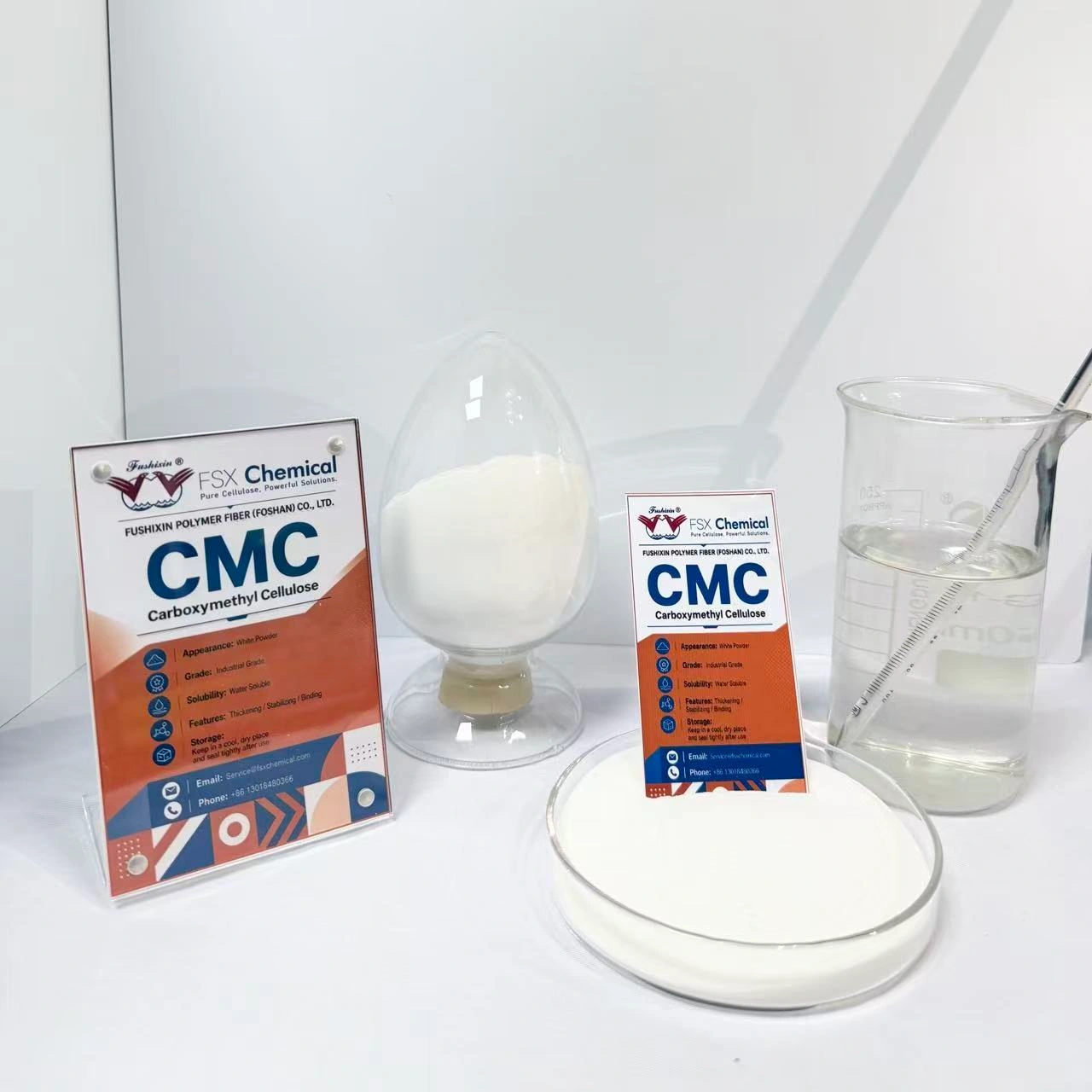
Карбоксиметилцеллюлоза is available in multiple commercial grades with different viscosity and substitution characteristics.
Control concentration carefully
Different CMC grades can provide different thickening efficiency, so the same dosage should not automatically be expected to produce the same result.
Keep the test method constant
Concentration, hydration, temperature, spindle and speed must remain consistent when comparing CMC suppliers.
Degree of substitution is not a viscosity specification
DS is an important structural parameter, but similar DS does not mean two grades will have the same viscosity or rheology.
Final grade selection should include complete-paste and printing evaluation.
Viscosity Control with CMS
Карбоксиметилкрахмал могут быть протестированы в отдельных системах дисперсной, комбинированной и специальной печати на текстиле.
Watch hydration and preparation
CMS grades can differ in preparation behavior even when their reported viscosity appears similar.
Check holding stability
A candidate should maintain practical paste behavior during the intended production period.
Compare cost only after dosage optimization
A lower-priced CMS is not necessarily more economical if a much higher dosage is required to achieve the necessary viscosity and printing performance.
Viscosity Control in Compound Thickener Systems
Compound thickeners combine different polymers or rheology-control components to create an application-specific balance.
Do not control only total viscosity
A blend can reach the same viscosity through different component ratios while showing different shear response, filtration or compatibility.
Control total solids and component ratios
Unrecorded changes in the blend make future batch reproduction difficult.
Evaluate interactions between components
The full system should be tested after the complete formulation is prepared.
Compound systems are most useful when each component has a defined function rather than being added only to raise viscosity.
Реактивная печатная паста
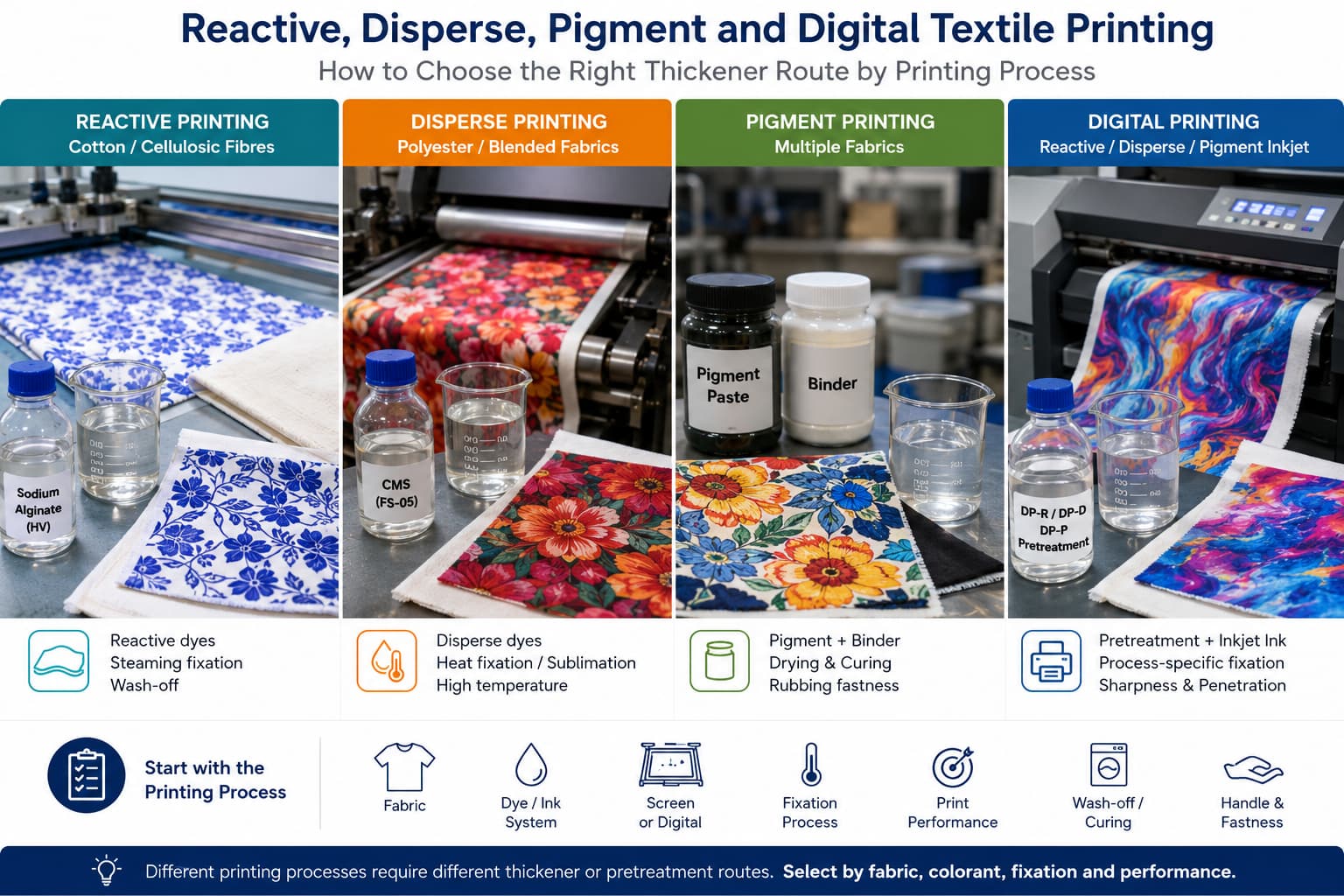
Reactive printing paste viscosity should be controlled together with rheology, reactive-dye compatibility, application behavior, fixation and wash-off.
Useful production checks include
Stock thickener viscosity
Complete color-paste viscosity
Вязкость при выдержке
Фильтрация
Отрывок с экрана
Определение термина «печать»
Проникновение
Смываемость
A change in viscosity after alkali or other formulation components are added should be investigated as a complete-system response rather than attributed automatically to poor thickener quality.
Disperse Printing Paste
Disperse printing on polyester uses a different colorant and fixation route from reactive cotton printing.
Viscosity control should therefore be developed specifically for the disperse formulation and production equipment.
Монитор
Стабильность пасты
Фильтрация
Отрывок с экрана
Перевод
Large-area uniformity
Thermal-fixation compatibility
A viscosity target transferred from a reactive printing formula should not be assumed to be suitable for disperse printing.
Pigment Printing Paste
Pigment printing introduces another important variable: the binder system.
The thickener must remain compatible with pigment dispersion, binder, electrolytes and curing chemistry.
Viscosity control should be evaluated together with
Совместимость связующих веществ
Стабильность пасты
Определение термина «печать»
Film formation
Отверждение
Характеристики при трении
Тканевая ручка
Increasing thickener concentration to solve one flow problem can change the balance of the entire pigment formulation.
Flat-Screen and Rotary-Screen Printing
The same paste can experience different mechanical conditions in flat-screen and rotary-screen printing.
Плоскошаблонная печать
Squeegee pressure, speed, screen parameters and paste transfer all influence the useful viscosity and rheology range.
Ротационная трафаретная печать
Continuous pumping and circulation increase the importance of shear stability, practical filtration and long-run viscosity control.
A laboratory target should therefore be validated on equipment representative of the intended production process.
Troubleshooting Common Viscosity Problems
Выявленная проблема
Возможная причина
What to Check First
Viscosity is lower than expected
Low concentration, incomplete hydration, temperature or chemical interaction
Weighing, hydration time, temperature and addition sequence
Viscosity is higher than expected
Overdosage, evaporation, continued hydration or lower test temperature
Final formula, water loss, waiting time and temperature
Viscosity rises during storage
Continued hydration or evaporation
Hydration profile, container condition and solids
Viscosity falls after adding chemicals
Electrolyte, pH or compatibility effect
Stage-add ingredients and compare each step
Same viscosity but poor screen passage
Different rheology, gels or filtration
Multi-speed behavior, residue and hydration
Same viscosity but excessive bleeding
Insufficient structural recovery or fabric interaction
Rheology, fabric absorbency and application conditions
Batch-to-batch viscosity varies
Method, raw material, water, mixing or weighing variation
QC method and production records
Lab viscosity matches but production does not
Scale-up, shear or temperature difference
Mixer, batch size, circulation and sample temperature
The troubleshooting sequence should move from measurement method to preparation, formulation and application. Changing the thickener grade should not be the first reaction to every viscosity problem.
How to Correct an Off-Spec Paste Safely
Correction should begin only after the likely cause of the viscosity difference has been identified.
If viscosity appears too low
Confirm hydration, temperature, concentration and measurement method before adding more thickener.
If viscosity appears too high
Confirm evaporation, temperature and final formula before adding water.
Avoid uncontrolled dilution
Adding water reduces not only thickener concentration but also the concentration of colorants, salts, binders and other auxiliaries.
Use documented correction procedures
Any adjustment should be calculated, recorded and followed by complete mixing, equilibration and re-testing.
For critical production, a heavily corrected batch may require a small application check before release.
Building a Better Viscosity QC System
Strong viscosity control depends on data consistency rather than occasional laboratory checks.
Define one approved method
The same method should be used for incoming comparison, production QC and supplier discussion whenever possible.
Use an operating range
A practical process normally works within an acceptable range rather than one infinitely precise number.
Trend results over time
Batch history can reveal gradual changes that are difficult to see from one isolated COA.
Connect QC data with printing results
Record whether batches near the upper or lower part of the viscosity range produce meaningful differences in screen passage, definition or penetration.
Keep retained references where practical
A retained sample from a successful batch can help investigate future differences.
Comparing Thickener Suppliers
Supplier comparison should not begin with a viscosity number copied from two different TDS documents.
First align the method
Confirm that concentration, temperature, instrument and speed are comparable.
Then compare the products side by side
Гидратация
Вязкость
Реология
Фильтрация
Стабильность держания
Полная совместимость с вставкой текста
Printing performance
Optimize dosage only after the baseline comparison
Different grades can have different thickening efficiency, so final cost should be calculated at each product’s approved production dosage.
Viscosity Control and Total Cost in Use
Poor viscosity control creates costs that may not appear on the raw material invoice.
Overdosage
Repeated addition of thickener increases chemical consumption.
Excessive dilution
Repeated water correction can increase batch volume and disturb the rest of the formulation.
Filtration and cleaning
Poor hydration or unstable paste can increase filter use and machine cleaning.
Production variation
Uncontrolled rheology can contribute to inconsistent penetration, definition and solid-area appearance.
Rework and rejected fabric
A small chemical-saving decision becomes expensive if the finished textile requires reprinting or cannot be accepted.
Better viscosity control should therefore be evaluated as both a technical and economic improvement.
How FSX Chemical Supports Viscosity and Grade Matching
When a customer is experiencing unstable viscosity or evaluating a new supplier, the current product can be used as the technical benchmark.
Через Образцы и подбор продукции , customers can provide their existing product information and test method for candidate-grade review.
Полезная информация включает в себя
Current manufacturer and commercial grade
TDS или недавний отчет о соответствии (COA)
Физический эталонный образец
Current viscosity result
Концентрация продукта
Источник воды
Preparation and hydration procedure
Температура измерения
Viscometer, spindle and speed
Текущая дозировка
Complete printing formula
Fabric and printing machine
Current viscosity or printing problem
The objective is to identify whether the issue comes from grade selection, test method, preparation, formulation or process conditions before a product change is recommended📧 Электронная почта: Service@fsxchemical.com
Узнайте, почему значения вязкости загустителей для текстильной печати нельзя сравнивать без учета таких факторов, как концентрация, температура, прибор, шпиндель, скорость, метод подготовки проб и время испытания.
Узнайте, как выбирать загустители и способы предварительной обработки для реактивной, дисперсной, пигментной и цифровой печати на текстиле с учетом требований к ткани, красителю или чернилам, фиксации, вымываемости и качеству печати.
Узнайте, как оценить производителя загустителей для текстильной печати, проверив данные о компании, производственные возможности, методы испытаний, отслеживаемость партий, техническую документацию, предоставление образцов и возможности экспортных поставок.
Сравните CMC, CMS, альгинат натрия и пасту для цифровой печати на текстиле. Узнайте, насколько каждый из этих материалов подходит для реактивной, дисперсной, пигментной и цифровой печати, а также на что покупателям следует обратить внимание перед тестированием образцов, подбором марки и оптовой закупкой.
Альгинат натрия широко используется в текстильной печати в качестве стабильного и стойкого к стирке загустителя для реактивных печатных паст. Узнайте, как перед покупкой оценить класс вязкости, степень чистоты и пригодность продукта для конкретного применения, а также о том, как компания FSX Chemical оказывает поддержку покупателям по всему миру, предоставляя технические данные и образцы.
Карбоксиметилцеллюлоза (КМЦ) широко используется в процессах печати, проклеивания и окрашивания текстиля. В данном руководстве рассказывается, как оценивать марки КМЦ, какие параметры являются наиболее важными и как компания FSX Chemical может помочь в принятии решений о закупках.
Карбоксиметилцеллюлоза используется в качестве загустителя и стабилизатора в чернилах на водной основе, в глубокой печати и при предварительной обработке для струйной печати. В данном руководстве рассмотрены основные параметры марок этого материала и рекомендации по его закупке для специалистов по снабжению.
И альгинат натрия, и CMC используются в качестве загустителей при печати на текстиле, однако они подходят для разных систем окрашивания и условий производства. В данном руководстве объясняются основные различия между ними и приводятся рекомендации по их применению.
Цифровая струйная печать на текстиле предъявляет иные требования к пасте и предварительной обработке материала, чем трафаретная печать. В данном руководстве объясняется, как альгинат натрия используется в цифровой печати на текстиле и какие параметры качества должны указывать специалисты по закупкам.
Пищевой и промышленный CMC имеют одинаковый химический состав, но значительно различаются по степени очистки, диапазону степени дефибринации (DS) и нормативным требованиям. В данном руководстве объясняются основные различия и причины, по которым использование несоответствующего класса продукта приводит к проблемам в производстве.
При печати на текстиле реактивными красителями правильная подготовка пасты не менее важна, чем выбор сорта краски. В данном руководстве рассматриваются методы растворения альгината натрия, диапазоны концентраций в зависимости от области применения, условия хранения, а также способы устранения типичных проблем при подготовке пасты.
Альгинат натрия — это природный биоразлагаемый полимер, однако его использование в текстильной печати приводит к образованию сточных вод, требующих соответствующей обработки. В данном руководстве рассматриваются экологические характеристики альгината натрия, свойства сточных вод после вымывания, а также то, что специалистам по закупкам необходимо знать о выборе загустителя и его воздействии на окружающую среду.
Сообщите название продукта, область применения, количество, пункт назначения, а также предоставьте техническое описание продукта (TDS),
фотографию образца или имеющиеся у вас документы. Компания FSX Chemical рассмотрит
эту информацию и порекомендует дальнейшие действия для подготовки коммерческого предложения, подбора образца
или выбора продукта.
Информация о продуктеНазвание товара, класс, модель, фотография этикетки или артикул поставщика.
Доступные документыTDS, SDS, COA, фотография образца, перечень продукции или данные испытаний.
Детали заказаПредполагаемый объем, упаковка, страна назначения, порт или условия торговли.
Область применения или проблемаПроцесс печати на текстиле, требования к составу, текущие проблемы или целевые показатели.